

Key Takeaways
Treat Indian cooking as engineering, not inherited magic, and recipes become optional.
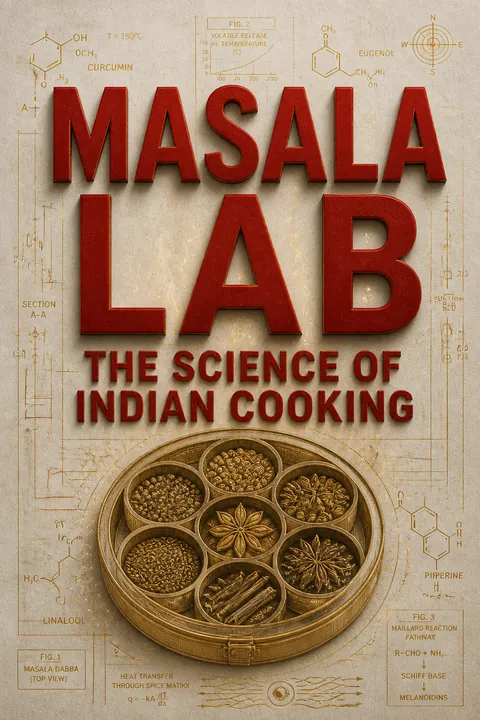
The hidden craft. The book begins with a family memory: when Ashok asked his grandmother how to make adai, a crisp lentil pancake, she gave him ratios and steps, then pointed out that his notes left out patience. Her instinctive skill was real, but hard to transfer without explaining what ingredients, heat, and timing do. Ashok argues that food science can make that tacit knowledge teachable without dismissing tradition.
Beyond authenticity. Indian dishes vary across homes and regions, and ingredients change as they travel. Tomatoes and chillies, now central to many Indian dishes, arrived from the Americas. Rather than police a single authentic version, the book treats recipes as starting points and cooking principles as tools for adapting them.
The book’s central move resembles translating craft knowledge into an engineering model: preserve the skilled practice, then make its decisions easier to inspect and repeat. That matters because recipes often record what to do without showing which conditions make it work. The grandmother’s reminder also keeps the model human. Cooking depends on attention and patience, not merely a temperature chart. A useful caution is that documenting a technique does not capture every sensory judgment or cultural meaning. The strongest version of the argument treats science as a bridge to inherited expertise, not a replacement for it.
Time pressure cooking from full pressure, not from a stove-dependent whistle count.
Measure the real variable. A pressure cooker raises the boiling point of water, allowing food to cook at about 121°C rather than the roughly 100°C of an open pot. The book estimates that this can reduce cooking time by 30 to 40 percent. But a whistle is a release of excess steam, not a dependable unit of cooking time. Its timing changes with the burner, heat setting, cooker, and altitude.
Start the clock. For consistent results, begin timing once the cooker reaches full pressure, then lower the heat enough to maintain it. The advice is especially useful when switching from gas to induction, which may build pressure faster. Rice and lentils suit pressure cooking; meat can dry out under its high heat.
This is a lesson in choosing the variable that actually governs a process. A whistle is an audible proxy for pressure, while elapsed time at pressure is closer to the cooking condition that matters. The same distinction appears in engineering: a signal is useful only if it reliably tracks the state of the system. The method also shows why instructions can fail when equipment changes. Still, timing cannot eliminate every difference. Cooker design, ingredient age, and altitude remain relevant, so a clock should support observation rather than silence it.
Grind spices fresh and control when heat, fat, and timing release their aroma.
Aroma needs a route. Much of what people call flavour comes from smell. Many spice aromas are carried by volatile molecules that fade as powdered spices sit exposed to air. Buying whole spices and grinding small amounts when needed preserves more of that fragrance. A low-cost coffee grinder can do the job.
Choose the extraction. Fat dissolves many aroma molecules better than water, which is why spices often bloom in hot oil or ghee. Dry-roasting can intensify their flavour, while prolonged cooking drives aromas away. Whole spices added early give a different result from finely ground spices added near the end. Fresh herbs are delicate and usually belong at the finish. Layering several treatments of one spice, such as cumin in oil, powder, and a final tempering, creates more dimension than simply adding more.
This approach makes spice use less mysterious by treating aroma as something to extract, preserve, and sequence. It also connects cooking with sensory science: smell before eating and aroma released during chewing both shape what a dish tastes like. The practical payoff is control. A cook can make one spice dominant or let it sit quietly in the background. The limitation is that volatile aroma is only one part of flavour. Texture, personal sensitivity, and learned associations matter too, so the same spice technique will not produce the same experience for every eater.
Brown ingredients before building the gravy to give ordinary vegetables deeper flavour.
Dry surfaces transform. The Maillard reaction is a set of browning reactions between amino acids and sugars. It begins once a food’s surface is dry enough to rise above water’s boiling point, roughly within 110°C to 170°C. The resulting compounds contribute roasted, nutty, sweet, and savoury notes. That is why browned onions taste markedly different from onions cooked only until translucent.
Brown with intention. The same idea can improve cabbage, cauliflower, pumpkin, and potatoes. Cook vegetables separately until browned, then add them to a gravy rather than relying on simmering alone. A little baking soda can speed browning by making conditions more alkaline and softening plant cell walls, but excess can taste bitter or turn vegetables mushy. Browning rewards attention: leave food in contact with the hot pan, but intervene before it burns.
Browning is a useful example of how a visible change can stand in for many underlying chemical changes. It gives cooks a practical target, not just a vague instruction to add more seasoning. The method also separates two jobs: soften an ingredient, then build its roasted flavour. That distinction is valuable in any cuisine. But darker is not automatically better. Browning can overwhelm delicate ingredients, and burning introduces harsh flavours. The technique works best as a deliberate choice about the dish’s character, rather than a universal command to cook every ingredient until brown.
Tune salt, acid, sugar, and umami to make spices register clearly.
Balance is active. Salt can amplify other tastes, while a small amount of sugar may soften perceived bitterness or sourness without making a dish taste sweet. Acids such as tamarind, yoghurt, vinegar, and citrus add brightness and can make rich food feel less heavy. Their timing matters: tamarind tolerates simmering, while citrus juice is usually best added at the end.
Add savoury depth. Umami is the savoury, lingering taste associated with glutamates. Tomatoes and onions contain glutamates; meat and mushrooms contain compounds that can intensify their effect when paired. MSG supplies glutamate in a concentrated form. The book argues that it is chemically the same glutamate found in foods such as tomatoes, and that ordinary culinary amounts are not inherently dangerous for most people.
These ingredients act less like independent flavours than like controls on perception. A little acid can sharpen a dish’s contours; salt can make aromas seem more vivid; glutamate can prolong savouriness. This helps explain why small adjustments can outperform adding another handful of spices. The framework also resists the idea that flavour is simply a property of ingredients: it emerges from their interaction and from the eater’s senses. Balance remains personal, however. Taste thresholds vary, and a proportion that feels lively to one diner may seem too sharp or salty to another.
Brine meat for moisture, then cook it gently because plant and animal tissues respond differently.
Salt behaves differently. Brining means soaking meat in salted water before cooking. The book presents it as a more reliable way to season meat and help it retain moisture than relying on a long marinade. Marinades mostly flavour the surface; acids can even toughen meat if exposure is excessive. A short marinade can still add useful surface flavour after brining.
Match heat to the ingredient. Vegetables usually soften with sustained moist heat, while animal proteins can tighten and lose moisture when overheated. Tough cuts may need time for connective tissue to soften, but lean cuts such as chicken breast have a much narrower window for tenderness. Eggs also benefit from gentle heat: the book recommends salting beaten eggs about 15 minutes before cooking to encourage a softer texture.
This takeaway corrects a common habit of treating all ingredients as if they respond to heat in the same way. The distinction is useful beyond meat: good process design starts by understanding the material being changed. Brining also clarifies why flavouring and tenderness are separate problems. A marinade can make the outside taste seasoned without protecting the interior from drying. Precise temperature guidance should still be paired with appropriate food-safety practice, especially for poultry. Culinary tenderness is important, but it does not replace the need to cook food safely.
Build dishes from regional templates instead of obeying fixed recipes.
Think in patterns. A metamodel is a generalized structure for creating many dishes, rather than a single recipe for one dish. For Indian cooking, the book uses modular patterns for gravies, rice, breads, chutneys, raitas, and salads. A Bengali-style gravy might begin with mustard oil and a regional spice blend; a Malabar-style one might build around coconut milk, curry leaves, and shallots. The pattern guides choices without claiming that one version is authentic.
Prepare for speed. Restaurants often make base gravies ahead, then finish individual orders with fresh ingredients and spices. Home cooks can do the same by preparing components, freezing portions, and assembling a dish quickly. The book calls this preparation mise en place, or putting ingredients and tools in place before cooking.
A template is more generative than a recipe because it shows which choices define a style and which can vary. This is close to a grammar: a few rules can produce many valid dishes without prescribing every sentence. It also makes cooking more resilient when a pantry is incomplete. The risk is that regional patterns can become caricatures if treated as definitive. The book acknowledges that its models mainly serve urban home kitchens and cannot represent every community or household. Their value lies in helping cooks explore, not in certifying cultural authority.
Use modern tools to make precision easier, not to chase kitchen gadgets.
Let tools solve bottlenecks. A microwave heats water inside food, making it useful for quick steaming, reheating, and even a small serving of rice or a simple chickpea dish. An electronic pressure cooker uses sensors and timers to regulate pressure and heat, reducing the need to watch the stove. These tools are practical because they make a cooking condition easier to control.
Apply precision selectively. Sous vide cooks food sealed in a bag in a circulating water bath held at a chosen temperature. It can help prevent lean meat from overcooking, though browning still requires a hot pan afterward. The book also introduces ingredients such as xanthan gum, which can help bind gluten-free dough, and sodium citrate, which can keep melted cheese smooth. None is mandatory; each is useful when it solves a specific problem.
The strongest argument for kitchen technology is not novelty but reduced uncertainty. Sensors, timers, and stable temperatures can make a difficult result more repeatable, especially for cooks without years of tactile experience. That is a human-factors benefit as much as a culinary one: fewer simultaneous demands make a busy kitchen easier to manage. Yet a tool can also add cleaning, cost, and new failure modes. The sensible test is whether it improves a result or saves meaningful effort. Precision is a means to better cooking, not a status symbol.
Assemble biryani in separate tracks, then finish it under sealed, gentle heat.
Treat each layer separately. Biryani combines rice and meat or vegetables that are partially cooked on their own, then layered and finished together. The book’s method washes and soaks the rice, boils it in salted water until full-sized but still raw at the centre, and par-cooks the protein separately. Brining helps season the meat and preserve moisture; its cooking liquid, called yakhni, can be saved for the final dish.
Finish without rushing. Layer the protein, rice, herbs, fried onions, and spiced milk in a heavy pot, seal it to retain moisture, and cook gently for about 30 minutes, followed by a 15-minute rest. Rice is the texture test: if it becomes sticky or overcooked, the whole dish suffers. In 2019, Swiggy reported 43 biryani orders a minute, a measure of its broad appeal, not proof of one definitive recipe.
Biryani makes the book’s method visible: different ingredients have different ideal cooking conditions, so they are prepared separately before a final integration. The dish is less a single recipe than a coordinated process, with timing and moisture linking its layers. That systems view explains why the rice can matter more than elaborate seasoning. It also offers a useful model for other mixed dishes. Still, the method is one approach among many. Regional versions may combine ingredients differently, and a flexible process should leave room for local rice, equipment, and taste.
Keep a kitchen notebook and test one variable at a time.
Make experience cumulative. Flour, water, weather, altitude, stove power, and ingredient age can all change a result. The book therefore treats its timings and ratios as starting points, not universal laws. Record what was used and what happened, especially when a chapatti, idli, or batch of rice turns out as desired. Sensory notes matter too: a grain of par-cooked rice can be tasted and crushed to judge whether it is ready for biryani.
Compare deliberately. A/B testing means comparing two versions of a dish while changing one factor, such as minced garlic versus garlic paste. Repeat the comparison across different days when ingredients cannot be split between batches. The aim is not laboratory perfection. It is to discover which method works reliably in a particular kitchen and for the people who eat there.
The notebook turns cooking into a form of local knowledge building. Rather than relying on a supposedly universal instruction, the cook learns how a specific stove, flour, and household behave together. This is a modest but powerful version of experimental design: isolate a variable, observe the result, and keep a record. It also respects sensory expertise by pairing measurements with sight, touch, and taste. The constraint is time. A/B testing every dinner would turn a necessary chore into research labor, so the best experiments target recurring problems with a payoff worth documenting.
Analysis
Masala Lab is both a practical guide and an argument about who gets to understand cooking. Its most important contribution is not any single temperature or spice combination. It is the shift from treating recipes as commands to treating them as models of cause and effect. A cook who understands why pressure changes boiling, why fat carries spice aromas, or why acid timing matters can adapt when a brand of rice, a stove, or a regional ingredient changes.
The book’s engineering language is especially effective because it does not require advanced science. It converts abstract chemistry into decisions that can be made in a home kitchen: grind now or later, brown first or simmer directly, brine or merely marinate. The repeated movement from mechanism to action gives readers a way to learn, not just a stock of instructions. Its treatment of biryani brings that method together as a coordinated process, with rice, protein, aromatics, and moisture prepared for different purposes before they meet.
There is an important tension in this approach. Measurement can make tacit skill more accessible, but not all culinary knowledge is easily measured, and a practical algorithm can flatten regional variation if mistaken for a complete account. The author’s skepticism toward authenticity helps open space for experimentation, though cultural histories and household traditions still shape what a dish means. The book is strongest when its models are treated as provisional, local, and revisable.
It also recognizes that experimentation is a privilege. Daily cooking is often unpaid labor performed under time pressure, not a leisure activity. Convenience tools, batch preparation, and simpler rules can reduce that burden, but the ideal of a kitchen laboratory will not fit every household. The lasting lesson is therefore generous rather than technocratic: science should make cooking more understandable and adaptable, while leaving room for patience, memory, taste, and the people who already know how to make dinner work.
People Also Read










Glossary
metamodel
Reusable dish-making patternA generalized structure that describes how to make a family of dishes rather than one specific recipe. In the book, a gravy metamodel organizes choices such as fat, aromatics, spices, main ingredients, liquid, and finishing flavours. Cooks can vary those elements to create different dishes or evoke regional styles.
A/B testing
Compare two cooking methodsA way to compare two versions of a dish by changing one factor while keeping the rest as similar as practical. A cook might compare lime juice with amchoor, or minced garlic with garlic paste. Repeating and recording the tests helps distinguish a reliable preference from a result caused by chance or other variables.
Maillard reaction
Browning from sugars and proteinsA complex series of reactions between sugars and amino acids that produces browning and many roasted, nutty, sweet, and savoury aromas. In the book’s account, it becomes prominent when a food surface is dry and hot, generally between about 110°C and 170°C. It contributes flavour to browned onions, seared meat, bread crusts, and fried foods.
flavour layering
Build flavour in stagesThe deliberate use of different ingredients or treatments at different stages of cooking so that a dish has more than one level of flavour. For example, cumin might be infused in oil at the beginning, added as a powder during cooking, and used again in a final tempering. The goal is depth and contrast, not simply greater intensity.
umami
Savoury, lingering tasteOne of the five basic tastes, associated with glutamates and certain related compounds. It is perceived as savoury and can linger on the tongue. The book highlights ingredient pairings such as tomatoes with meat, or glutamate-rich foods with mushrooms or other protein-rich ingredients, as ways to deepen savoury flavour.
brining
Salt-soak meat before cookingSoaking meat in a salt solution before cooking. The book presents brining as a way to season meat more thoroughly and help it retain moisture during cooking. Additional spices can be included in the liquid, but brining serves a different purpose from marinating, which mainly adds flavour to the meat’s surface.
sous vide
Precise water-bath cookingA technique in which food is sealed in a food-safe bag and cooked in a circulating water bath held at a controlled temperature. The steady heat helps cook the food evenly and limits overcooking once it approaches the bath’s temperature. Meat cooked this way is commonly browned briefly in a hot pan afterward.
yakhni
Meat cooking liquidThe flavourful liquid produced while partially cooking meat for biryani. The book treats it as a useful part of the dish rather than something to discard: it can be poured over the layered rice and protein before the final covered cooking stage, contributing moisture and flavour.
mise en place
Prepare ingredients before cookingA kitchen practice of assembling and preparing ingredients and tools before beginning the main cooking sequence. In the book, preparation includes more than chopping: it can involve soaking rice, brining meat, steaming vegetables, and preparing base gravies. This makes cooking more organized and allows dishes to be finished efficiently.
Special Theory of Indian Cooking (Conditions Apply)
Practical Indian cooking algorithmsThe book’s deliberately limited name for a set of generalized methods for common Indian home dishes. It offers flexible approaches to gravies, rice dishes, breads, chutneys, raitas, and salads, mainly using ingredients and equipment found in urban homes. It is a practical guide, not a complete account of every regional or community cuisine.
Download PDF
Download EPUB
.epub digital book format is ideal for reading ebooks on phones, tablets, and e-readers.








