

Key Takeaways
Turn meditation from a self-improvement project into wholehearted play
Concentration serves survival. Osho distinguishes concentration, which narrows attention onto a chosen task, from meditation, which opens awareness to what is present. Narrow focus helps people function, but it becomes limiting when every activity is judged by its payoff. Even leisure can turn into work if winning matters more than playing. Meditation, in his account, begins when an activity is enjoyed for itself, without using it to secure a future result.
Make the moment sufficient. He calls this attitude celebration: meeting the immediate experience without reducing it to a means. That does not require abandoning practical responsibilities. It means treating usefulness as one part of life, not its sole purpose.
What's striking is the distinction between attention as a tool and attention as a way of inhabiting experience. Research on intrinsic motivation and flow similarly suggests that engagement can deepen when the activity itself is rewarding, rather than merely a route to status or payment. Still, focused attention is not the enemy: driving, caregiving, and skilled work often require selective concentration. The sharper lesson is flexibility. A life organized only around outcomes becomes narrow, while a life that can also play has room for curiosity, rest, and unplanned contact with the world.
Use meditation methods as doorways, not machines that manufacture awakening
A method creates a setting. Osho argues that meditation cannot be produced by calculation, because calculation belongs to the very mind the meditator is trying to move beyond. Techniques are devices that help create a break in habitual thinking; they do not mechanically cause a spiritual realization. He points to vigorous dance and Zen koans, deliberately paradoxical puzzles that frustrate ordinary reasoning, as ways to occupy the mind until its usual control loosens.
Choose a workable doorway. A method may help one person and not another, and a familiar technique can lose its force. Osho therefore treats methods as provisional aids, not exclusive paths or guaranteed formulas.
This account resembles scaffolding in education: a temporary structure can help someone reach a capacity that cannot be installed by instruction alone. It also fits the distinction between a practice and its hoped-for outcome. The caution is that calling methods deceptive devices can excuse dishonesty by teachers. A useful practice need not be presented as a trick. Clear expectations protect trust, especially when spiritual authority is involved. The strongest version of the idea is that practice can prepare attention for change without guaranteeing what that change will be.
Let deliberate intensity exhaust itself, then rest as the witness
Activity can prepare stillness. Osho's Dynamic Meditation is an active practice designed to move from intense action into non-doing. In the version described here, it begins with irregular, forceful breathing, continues with uninhibited emotional expression, and then uses the sound Hoo as a focus before ending in still observation. The first stages are preparation, not meditation itself. The aim is to reach a point where effort gives way to quiet awareness.
Do not confuse exertion with insight. Osho presents vigorous methods because simply sitting still can make some people more aware of inner agitation. The sequence is meant to discharge tension before stillness, not to make intensity a spiritual achievement.
The sequence has a recognizable psychological logic: movement and expression may make internal states more noticeable, while a quiet phase can support observation rather than reaction. But fast breathing can cause dizziness, tingling, or panic, and emotional release is not automatically therapeutic. The book's spiritual interpretation should not be mistaken for a clinical protocol. Any intense practice calls for personal judgment, a safe setting, and stopping when distress becomes overwhelming. The broader insight remains useful: different people may need different entry points into stillness.
Meet anger and sexuality consciously instead of burying them as shame
Suppression can split experience. Osho argues that social conditioning teaches people to disown impulses such as anger and sexuality, leaving a conflict between what they feel and what they permit themselves to express. He calls the resulting accumulation neurosis. His proposed alternative is conscious catharsis: noticing an impulse and allowing it a safe outlet, rather than condemning it or pretending it is absent. He gives the example of directing a child's anger toward a pillow instead of forbidding the feeling altogether.
Expression is not permission to harm. The point is to recognize an emotion without identifying with it or acting destructively. For Osho, accepting an impulse reduces inner division and makes change more possible.
Contemporary emotion research supports part of this argument: avoiding or suppressing feelings can carry costs, while labeling emotions and observing them can improve regulation. But the book's claim that neurosis is universal, or that sexual repression is the root of other problems, is much broader than evidence warrants. Unstructured emotional discharge can also intensify arousal rather than resolve it. Acceptance is not the same as acting out. A careful application separates permission to feel from responsibility for behavior, and favors safe expression over impulsive release.
Enter the present through what you already know, not imagined destinations
Start near, not far. Osho says the divine cannot be pursued as though it were a familiar object. Instead, he advises going deeply into an experience already available, such as love, listening, or dancing. In his view, seeking turns attention toward a future achievement, while full participation in a known activity can bring attention into the present. A listener, for instance, can hear words superficially, attend to their meaning, or become fully absorbed in listening.
Let the activity take the lead. He describes meditation as participating without making the self-appointed doer or the hoped-for result the center of the experience. The destination is not a new object to acquire, but a different depth of contact with what is happening.
This is a compelling account of how direct experience can be more transformative than abstract pursuit. Present-focused practices in psychology likewise train attention to return from rumination to immediate sensation. Yet the claim that desire itself creates time is best read as spiritual philosophy, not a literal account of how time works. Future planning has practical value; the problem is allowing imagined outcomes to consume every present moment. Going deeper into ordinary experience can enrich life without requiring the belief that it opens a supernatural realm.
Track each breath until attention becomes witnessing, then let the witness dissolve
Build attention in stages. Osho distinguishes ordinary, often unconscious action from conscious action, which he calls witnessing. As a simple practice, Anapana-sati Yoga means observing the incoming and outgoing breath without deliberately changing its rhythm. The breath becomes an anchor: when attention wanders, the practitioner returns to it. Osho describes awareness as a further step beyond witnessing, in which the separate observer and observed are no longer experienced as distinct.
Differentiate the terms. Consciousness is awareness of something; witnessing is deliberately observing it; awareness, in Osho's specialized use, is a state beyond that subject-object division. He also treats intuition as contact with what reasoning cannot explain, rather than as another chain of logical inference.
The progression offers a practical distinction between noticing an experience and becoming absorbed in it. Breath observation is also used in contemporary mindfulness programs, where it can train attention without requiring metaphysical commitments. Osho's final step, the dissolution of observer and observed, belongs to contemplative philosophy and cannot be established by describing the practice alone. Such language can still name a meaningful subjective experience. Keeping that distinction clear lets readers explore meditation while remaining cautious about turning private experience into proof of universal claims.
Treat kundalini maps as personal spiritual language, not universal anatomy
The map is not the territory. Osho describes kundalini as a life force moving through a subtle body, with chakras as centers along its possible route. He warns that traditions differ in the number and arrangement of these centers, and that imagined maps can shape what people think they experience. In his account, chakras are not physical structures discoverable through dissection; they belong to a spiritual model, with possible bodily correspondences.
Notice before interpreting. He recommends beginning with meditation rather than trying to visualize a prescribed system. Some people, he says, may feel energy or centers, while others may not. He also presents kundalini as one possible route to realization, not a necessary stage for everyone.
The warning against imposing a map onto experience is epistemically valuable: expectations can influence perception, and spiritual traditions often supply the vocabulary people use to interpret unusual sensations. The distinction between a subtle body and physical anatomy is essential. Kundalini and chakras are not established anatomical structures, and sensations attributed to them may have many explanations. A useful approach allows the imagery to function as a personal contemplative framework without treating it as medical fact or assuming that everyone should have the same experience.
Face death directly; desirelessness is not another prize to win
Desire can renew itself. Osho distinguishes desirelessness from replacing one goal with another. Someone disappointed by worldly success may begin chasing spiritual attainment with the same restless drive. He retells the story of Buddha struggling for years to reach enlightenment, then becoming exhausted with the pursuit and sitting without another plan. In Osho's telling, realization comes when the urge to achieve finally falls away, not when a new object satisfies it.
Look at mortality without turning it into a goal. Osho treats meditation as a conscious encounter with death, meaning a loosening of identification with the self and its plans. This is not a recommendation to seek physical death. It is an invitation to face impermanence rather than let fear of it dictate every choice.
The paradox is psychologically sharp: striving for inner peace can reproduce the very agitation it promises to end. Acceptance-based therapies similarly distinguish making room for experience from trying to control every feeling. Mortality awareness can also clarify priorities, though it may provoke anxiety rather than insight for some people. Osho's retelling of Buddha is a spiritual teaching story, not evidence that all striving is futile. The practical test is whether a practice loosens compulsive pursuit or simply gives it a more exalted name.
A powerful altered state is a glimpse, not proof of lasting transformation
Experience and growth differ. Osho argues that LSD may produce an intense encounter with unfamiliar states, but an experience alone does not establish durable change. He distinguishes a temporary glimpse from transformation that changes how a person lives. He warns that repeated drug use may turn the substance into a new dependency and says traditional practitioners who used chemicals first undertook extensive physical and mental preparation.
Do not mistake a shortcut for a foundation. In his view, a meditation practice may take longer, but it can build a capacity that remains when the session ends. The book's central distinction is between something happening to a person and the person developing through it.
The distinction between an acute altered state and lasting change is useful well beyond drug experiences. Contemporary psychedelic research also separates the intensity of a session from outcomes that depend on context, support, and follow-up. However, the book's claims about special bodily preparation and control of chemistry are not established medical guidance. Psychedelic substances carry real risks, and this section should not be read as a dosing or safety manual. A memorable experience may matter, but its value is better judged by durable changes in functioning and perspective.
Use sannyas to loosen your identity, not replace it with a uniform
Renunciation can mean freedom. Osho redefines sannyas, traditionally associated with renunciation, as a decision to live without letting the past dictate every moment. He presents a new name, clothing, and a mala as reminders of that decision, not as the essence of spiritual life. In his account, changing outward habits can expose how strongly identity is tied to familiar roles and appearances.
Initiation carries responsibility. He describes initiation as a sleeping person asking an awakened teacher for help, with the teacher accepting responsibility for the disciple. He also says his version of sannyas carries no fixed obligation. The central promise is freedom from automatic identification, not obedience to a permanent set of rules.
Ritual markers can help people notice a change in identity, much as uniforms and ceremonies shape group belonging. But the same symbols can create conformity, and the idea of a teacher assuming responsibility for a follower introduces a serious power imbalance. Guidance can be valuable without surrendering independent judgment. The most defensible reading of sannyas is therefore inward and voluntary: a commitment to question inherited conditioning, paired with clear boundaries around authority. Freedom that depends on unquestioned submission is not much of a freedom.
Analysis
This book is a spiritual psychology assembled from talks, not a linear argument supported by a single body of evidence. Its central movement is from a narrowed, outcome-driven life toward a wider form of attention. Osho builds that case through recurring contrasts: concentration and celebration, effort and non-doing, repression and expression, desire and desirelessness, the body and the witness. The repetition gives the work a strong oral rhythm, while its many spiritual vocabularies make a compressed account challenging. Readers encounter Buddhist breath practice, Zen koans, Sufi dance, yoga, kundalini, and psychoanalytic language within one expansive theory of consciousness.
The most portable insight is practical rather than metaphysical: attention can be trained, emotions can be noticed instead of denied, and a method can prepare a person without guaranteeing a particular realization. The book is also unusually clear that the same practice can help or hinder depending on the person and their expectations. Its strongest internal caution is against projecting inherited maps onto private experience.
Its largest weakness is the tendency to present speculative spiritual claims as universal facts. Assertions about seven subtle bodies, energy moving through chakras, the origins of neurosis, and sexuality as the root of social control are not established by the text's anecdotes. Nor does the force of a vivid experience demonstrate that an interpretation is true. That gap matters because the book also invites surrender to teachers and intense practices. A contemporary reader can preserve its inquiry into attention and identity while separating introspective usefulness from medical, historical, and anatomical claims. Read as an invitation to experiment carefully, the book is provocative; read as a complete science of mind, it overreaches.
Review Summary
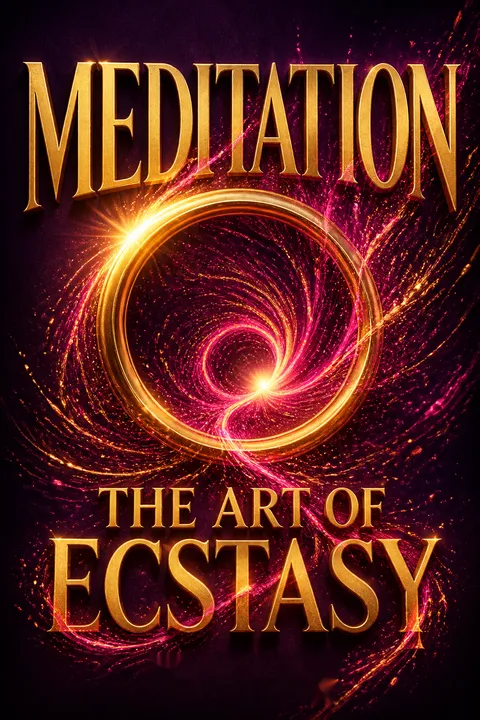
Meditation by Osho receives generally positive reviews, with readers praising its insights on meditation techniques and spiritual concepts. Many find it thought-provoking and transformative, appreciating Osho's unique perspective on consciousness and self-awareness. Some readers note the book's challenging ideas and occasional repetitiveness. The work is described as refreshing, honest, and critical, offering a new outlook on life and spirituality. Several reviewers express how the book has expanded their understanding of meditation and its potential benefits.
People Also Read










Glossary
Dynamic Meditation
active preparation for stillnessOsho's active meditation method uses vigorous breathing, emotional expression, a repeated sound, and a final phase of silent observation. The active stages are presented as preparation for non-doing, not as meditation's ultimate state. The book treats the sequence as one device for loosening habitual control, not as a universal or medically validated technique.
Anapana-sati Yoga
breath-awareness practiceA meditation practice associated with Buddha in which attention follows the breath entering and leaving the body without intentionally changing it. Osho presents the breath as an anchor for sustained awareness and as a route toward noticing subtler experience. In the book's account, the practice can help attention move from bodily sensations toward inner stillness.
kundalini
subtle life-energy pathwayIn Osho's spiritual framework, kundalini is a life force associated with the subtle body. He describes it as potentially moving upward through a route connected with chakras, while emphasizing that experiences and pathways vary among individuals. The term refers here to a spiritual model, not an anatomically demonstrated structure or a condition diagnosed by medicine.
chakra
subtle energy centerA chakra is a center in the subtle body within yoga's spiritual vocabulary. Osho describes chakras as becoming active when life energy moves through them, and says traditions differ about their number and arrangement. He explicitly distinguishes these centers from structures visible through physical dissection, although he proposes that bodily points may correspond to them.
prana
vital energyOsho uses prana to mean the vital energy that animates life, rather than the breath itself. Breath is one way this energy is expressed in the physical body. He extends the idea across several levels of existence, describing paired movements such as inhalation and exhalation, attraction and repulsion, or creation and dissolution.
seven bodies
layers of human existenceOsho's model divides human existence into seven bodies: physical, etheric, astral, mental, spiritual, cosmic, and nirvanic. Each is said to have its own expression of life energy and its own form of polarity. This is a spiritual map for interpreting experience, rather than a scientific classification of anatomical or psychological systems.
witnessing
conscious observation of experienceWitnessing is Osho's term for observing one's actions, thoughts, or sensations consciously rather than behaving automatically. It retains a distinction between the observer and what is observed. In his account, witnessing is an intermediate practice: it can prepare a person for awareness, which he describes as going beyond that separation.
awareness
consciousness beyond separationOsho uses awareness to describe a state beyond the ordinary division between observer and observed. He distinguishes it from consciousness directed toward an object and from witnessing, which still involves someone watching something. Awareness, in this framework, is a nondual condition rather than merely concentrated attention.
satori
temporary glimpse of awakeningOsho uses the Zen term satori for a brief glimpse of enlightenment that begins and ends. He contrasts it with samadhi, which he describes as a lasting transformation rather than a temporary experience. A satori may be remembered and inspire further seeking, but it does not by itself demonstrate that a person's identity or habits have changed.
samadhi
enduring meditative realizationSamadhi is a state of realization that, in Osho's account, begins with the ending of ordinary ego-centered experience and does not have a final end. He distinguishes it from temporary glimpses such as satori. The term belongs to Indian contemplative traditions, and the book uses it to describe a spiritual transformation, not a measurable clinical state.
sannyas
commitment to inward freedomOsho reinterprets sannyas, traditionally linked to renunciation, as a decision to loosen identification with the past and live more freely in the present. A new name, clothing, or mala may serve as a reminder, but he says these symbols are not the essence of the commitment. His account emphasizes freedom rather than fixed obligations.
brahma randhra
crown opening in kundalini yogaBrahma randhra is Osho's term for an opening associated with the crown of the head in kundalini yoga. In his account, it can be a culmination when life energy follows the kundalini route, though he says realization may occur by other routes as well. The term describes a spiritual concept, not a known anatomical opening.
About the Author
Other books by Osho








Download PDF
Download EPUB
.epub digital book format is ideal for reading ebooks on phones, tablets, and e-readers.








