

Key Takeaways
Use the mat to practice being present in the life you already have
A different kind of workout. Gates first tried yoga because his girlfriend brought him to a retreat. After an early-morning class, he felt unusually joyful simply walking to breakfast. Yoga became more than exercise when it helped him show up for demanding work with young people, and later helped him see teaching as service. The lasting measure of practice, he argues, is not a harder pose but a more authentic way of living once the class ends.
Return, do not escape. The book presents yoga as a path back to a deeper sense of self, not a project of becoming impressive or flawless. Its eight limbs offer a map, but the work happens in ordinary moments: how a person treats a stranger, faces a fear, or meets a difficult day.
What's compelling is the bridge between bodily sensation and ordinary conduct. The opening experience is modest, a pleasant walk after class, yet it gives the author a concrete reason to continue before he adopts any doctrine. That sequence resembles experiential learning: a person first feels a difference, then develops language for it. The spiritual claim that a true self lies beneath distraction may not persuade every reader, but the practical test is broadly available: does practice make attention, choice, and care more available outside the studio?
Pair daily practice with the behaviors you are ready to leave behind
Effort needs an exit. Gates uses two Sanskrit terms to describe complementary work. Abhyasa is steady practice, the repeated action that builds a chosen priority. Vairagya is nonattachment or renunciation, the willingness to release habits that obstruct it. Neither works alone. Postures and breathing can provide strength during change, but they cannot substitute for ending harmful behavior. Renouncing a habit without building supportive practice also tends to be fragile.
Pain tests the promise. After Gates's sister died by suicide, her husband developed cancer. His spiritual practice did not protect him from grief or make the losses acceptable. Instead, he and his brother-in-law continued taking the next right action according to their respective beliefs. Gates presents commitment not as a guarantee of good outcomes, but as something cultivated in ordinary times and available when life becomes difficult.
This pairing avoids two common traps: believing insight alone changes behavior, and treating discipline as punishment. Behavioral science likewise distinguishes intention from repeated action, while addiction recovery often combines abstinence with routines and social support. The book's account of grief adds an important limit: spiritual practice is not a bargain that ensures safety. Its value is how a person meets what cannot be controlled. Renunciation also requires care and context, especially when behavior is tied to trauma or illness, rather than a simple failure of resolve.
Treat yoga's ethical commitments as its foundation, not optional philosophy
Ethics untie the boat. The yamas are yoga's five moral restraints, meant to guide conduct toward oneself and others. Gates compares posture-only practice without these commitments to rowing a boat that remains tied to shore. The eight limbs are interdependent, not a ladder climbed one rung at a time: a student's physical practice can support ethical choices, while ethical choices give physical practice purpose.
The five yamas are:
1. Ahimsa: nonharming in thought, speech, and action.
2. Satya: honesty and alignment with what is true.
3. Asteya: nonstealing, including small acts of taking what is not one's due.
4. Brahmacarya: moderation rather than excess.
5. Aparigraha: nonpossessiveness, including letting go of ideas and resentments.
Gates's move from military training toward nonviolence illustrates how a commitment to service can remain while beliefs about enemies change.
The framework's strength is that it makes spirituality answerable to behavior. Compassion is not merely a feeling if it changes speech, fairness, or restraint. This resembles virtue ethics, where character forms through repeated choices rather than abstract assent. Nonviolence, however, should not be mistaken for passivity or a demand to tolerate abuse. Ethical restraint can coexist with boundaries, protest, and protection of vulnerable people. The book's emphasis on personal responsibility is most useful when it deepens care, not when it shifts blame onto people harmed by others.
Build spiritual steadiness through care, contentment, effort, study, and surrender
Five habits sustain change. The niyamas are five observances that support a life shaped by the yamas. Sauca means purity, including care for the body, surroundings, and thoughts. Santosa is contentment, a practice of meeting reality without making every circumstance a verdict on one's worth. Tapas is committed effort or zeal in practice. Svadhyaya is self-study, including reflection and engagement with wisdom literature. Isvara-pranidhana is surrender to God or a higher power.
Gates urges readers to begin with practical acts: care for the body, notice the beliefs that intensify distress, and return to a chosen practice. His account of contentment is not resignation. It is the attempt to remain open both when life is painful and when things are going well, rather than postponing peace until conditions are perfect.
The value of this set is its breadth. It joins bodily maintenance, emotional posture, sustained effort, reflection, and humility, instead of asking one technique to solve every problem. That combination has parallels in health behavior, where routines, self-monitoring, and meaning can reinforce one another. The spiritual language remains flexible in the book: surrender may involve God, nature, or another source of reverence. Still, contentment needs careful interpretation. Accepting a situation as real is not the same as declaring it just, harmless, or beyond change.
Observe difficult thoughts without turning them into your identity
Notice the old scripts. Gates describes five kleshas, or afflictions that cloud judgment: avidya, spiritual ignorance; asmita, an exaggerated sense of separate self; raga, attachment to pleasure; dvesa, aversion to pain; and abhinivesa, the clinging fear of death. In his account, these patterns lead people to seek permanent security in unstable outcomes, then suffer when life changes.
The practice is not to shame every angry, fearful, or desirous thought. Gates describes his own habit of becoming angry about having felt anger, which only added another layer of distress. The alternative is to notice a reaction, recognize that it is present without treating it as the whole self, and choose the next action. His experience of returning to Boston after childhood racism shows how attention can shift from rehearsing old injury toward seeing people as individuals in the present.
This resembles cognitive defusion, a concept used in acceptance-based therapies: thoughts can be noticed as mental events rather than obeyed as facts. The approach is especially useful when self-criticism turns an ordinary emotion into a character indictment. The author's spiritual account goes further, proposing an enduring witness beneath thought. Readers need not accept that metaphysics to use the practical distinction between an impulse and an action. At the same time, shifting attention should not erase real injustice or discourage accountability. Awareness can support action as well as acceptance.
Let the body teach you, but never confuse pain with progress
Practice without conquest. Asana means the physical postures of yoga. Gates reads the ideal posture as both steady and relaxed, a balance that differs from forcing a pose to prove something. He recommends noticing pride, fear, and avoidance, and making rest part of practice before exhaustion or resentment takes over. A beginner can pause in a resting posture; a more experienced student can ease back within a pose and continue with care.
The body's limitations can also reveal assumptions. Gates describes learning to activate his toes and arches after a teacher drew his attention to his feet. He reports that his practice coincided with major changes in his back pain and scoliosis, but these are personal experiences, not proof that yoga cures such conditions. His wife's change from self-described klutz to confident mover illustrates that physical skill can develop through patient practice.
The emphasis on process is a useful corrective to exercise cultures that equate intensity with effectiveness. Contemporary movement science also treats adaptation as specific and gradual, while pain can signal many things and should not automatically be interpreted as a moral or spiritual lesson. The book's best safeguard is its call for moderation and rest. The personal recovery stories are vivid testimony, not controlled evidence. A sound application preserves the invitation to explore movement while respecting injury, medical advice, and the fact that bodies differ.
Use the breath to return attention from imagined trouble to now
A practical anchor. Pranayama is the deliberate regulation and observation of breath. Gates treats it as a bridge between physical practice and inward attention. He suggests beginning simply: lie comfortably supported, breathe gently through the nose, and notice the pauses after inhaling and exhaling. Do not force the breath; if the exercise becomes difficult, return to ordinary breathing and try again when comfortable.
The point is not to control every sensation. It is to notice how breathing and attention move together. Gates describes a tendency to inhabit imagined arguments, future worries, and old grievances, then experience agitation as if those events were happening now. Returning to the felt breath can interrupt that drift and make it easier to meet the situation actually present.
Breath is unusually accessible because it is both automatic and partly voluntary. That makes it a useful attentional object: noticing it can create a pause without requiring a person to solve every thought first. Slow, comfortable breathing is also used in stress-management practices, although the book's claims about spiritual energy belong to its yogic worldview. The instruction to avoid force matters. Breath exercises are not universally calming, and people who feel dizzy or distressed should stop rather than interpret discomfort as progress.
Train attention by returning gently, not by demanding a silent mind
Distraction is the training ground. The inward limbs are pratyahara, turning attention away from sensory distraction; dharana, directing it toward one point; dhyana, a sustained, relatively effortless flow of attention; and samadhi, absorption in which the usual separation between observer and experience recedes. Gates presents these not as trophies but as related experiences that can arise in practice and daily work.
A meditation class taught him that beginners often discover how unruly the mind is. The book calls this encounter a useful failure, because wandering shows why practice is needed. The instruction is simple: notice that attention has wandered, then return it to breath, sensation, or the task at hand. The same skill can improve listening, work, and the ability to stay with difficult situations.
The progression gives readers a helpful vocabulary for distinguishing effortful focus from absorption. Research on attention and expertise similarly describes practice as repeated redirection, while flow states tend to emerge when challenge and skill are well matched. The spiritual endpoint of samadhi is a larger claim than these psychological descriptions can establish. Yet the practical lesson does not depend on that claim: a wandering mind is not evidence of failed meditation. Treating each return as practice can reduce the perfectionism that otherwise drives people away.
Measure spiritual growth by whether your practice makes you more useful
The mat points outward. Gates repeatedly connects inner work to service. He began his spiritual life in recovery, then worked with adolescents and other people facing hardship. Teaching yoga became a way to help students draw out their own capacities, rather than simply copy a teacher's performance. In this view, calm and concentration matter partly because they help a person respond more thoughtfully to other people.
The book's examples range from small gestures, such as speaking with a stranger, to public service and sustained care. Gates warns against using practice to hide from difficult responsibilities or to treat personal wellbeing as the whole point. The test is whether the habits cultivated in practice shape conduct: listening more fully, taking responsibility, keeping commitments, and acting with compassion when it costs effort.
This outward test helps prevent contemplative practice from becoming self-absorption dressed in spiritual language. It also connects individual regulation to social life: a person who can pause before reacting may be better able to listen, repair harm, or contribute reliably. Personal calm cannot by itself solve structural injustice, and the book's focus on individual choice sometimes leaves institutions less examined. Still, service need not be grand to be real. Its quality can be judged by whether it responds to actual needs rather than merely reinforcing the helper's self-image.
Use duty, livelihood, enjoyment, and letting go to audit a whole life
A map for ordinary life. Gates describes the purusartha, or four aims of life: dharma, living one's responsibilities and values; artha, creating material and relational stability; kama, enjoying life's goods; and moksa, liberation through letting go. The aims balance one another. Work without enjoyment can become grim, while enjoyment without responsibility can become indulgence. Action without release can turn into control.
This framework complements the eight-limb path, which the book presents as a set of connected practices rather than a strict sequence. A reader can use the four aims to examine a real week: Are commitments aligned with values? Is work supporting a sustainable life? Is there room to appreciate what is good? Can outcomes be released after a sincere effort? The goal is not a perfect schedule, but a life whose parts do not continually contradict one another.
The four aims offer a useful counterweight to both relentless productivity and spirituality that treats material needs as beneath consideration. They bring livelihood and pleasure into the same ethical conversation as inward growth. This resembles whole-person models of wellbeing, which treat purpose, relationships, resources, and enjoyment as interdependent. The categories are broad, so they do not settle hard tradeoffs or explain unequal access to money and time. Their value is diagnostic: they help reveal where a life has become lopsided and where a small adjustment may restore coherence.
Analysis
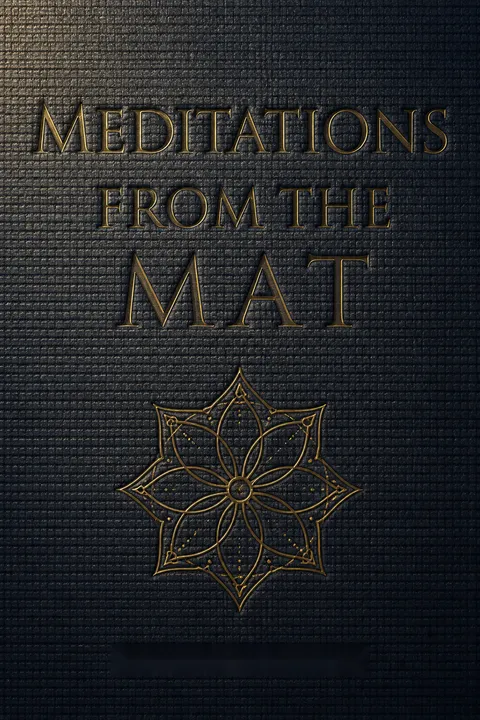
Meditations from the Mat is both a memoir of recovery and a guided tour through Patanjali's eight-limb yoga. Its daily-reflection format resists a single linear argument: themes recur, each revisited through a different story, teaching, or bodily experience. That repetition is not merely redundancy. It models the book's central claim that practice is made through returning, not through one decisive insight.
Gates's distinctive contribution is to make ethical and spiritual ideas concrete in the body. Nonviolence becomes a question of how a student handles effort. Honesty becomes the humility to see current ability clearly. Moderation includes when to rest. Breath and posture then become rehearsal spaces for attention and conduct. His autobiographical trajectory, from military service and addiction to yoga teaching, gives these reflections stakes without presenting him as a finished sage. Bereavement and illness remain in the story; practice does not erase them.
The book's inclusive spiritual language is generous, but its underlying metaphysics are not neutral. Claims about a divine self, universal oneness, and the universe's support are offered as lived convictions rather than demonstrated facts. Readers can still use much of the method without accepting those claims: repeat a helpful practice, observe reactions without self-condemnation, and assess change by its effects on relationships and responsibilities. Likewise, personal stories of pain relief and healing should not be mistaken for clinical evidence.
A modern reading can hold both the book's ambition and its limits. Yoga is portrayed not as an escape from ordinary life but as training for inhabiting it more fully. The most durable insight is therefore practical and ethical: inward attention matters when it changes how a person acts. The mat is a beginning point, not a sealed spiritual territory. The book's promise is not perfection, but a more deliberate return to one's body, choices, and obligations.
Review Summary
Meditations from the Mat receives mostly positive reviews, with readers praising its daily reflections on yoga philosophy and practice. Many find it inspirational and transformative, appreciating Gates' personal anecdotes and exploration of yoga's eight limbs. Some criticize the book for being too religious or preachy, while others value its spiritual depth. Readers enjoy the daily format and relevant quotes. The book is seen as beneficial for both yoga practitioners and those seeking personal growth, though some find it repetitive or too focused on the author's personal experiences.
People Also Read






Glossary
Eight-limb path
Yoga's connected practicesA framework from Patanjali's Yoga Sutras that organizes yoga into eight interrelated limbs: ethical restraints, personal observances, postures, breath regulation, turning inward, concentration, meditation, and absorption. Gates emphasizes that these are not simply steps completed in sequence. They support and influence one another, and the path can be practiced in ordinary life as well as on the mat.
Yamas
Ethical restraintsThe first limb of yoga, comprising five commitments that shape conduct: nonharming, truthfulness, nonstealing, moderation, and nonpossessiveness. In Gates's account, the yamas are not abstract rules or a test of moral perfection. They are practical ways to reduce harm, fear, and self-deception in relationships with oneself and others.
Niyamas
Sustaining observancesThe second limb of yoga, consisting of five practices that support inner steadiness: purity, contentment, disciplined effort, self-study, and surrender to God or a higher power. Gates treats them as daily habits rather than ideals reserved for monastic life. They complement the yamas by cultivating the conditions that help ethical choices endure.
Abhyasa
Steady spiritual practiceRepeated, committed practice, along with the attitude brought to that practice. Gates uses the term for returning to yoga, meditation, or another spiritual discipline through changing circumstances, including discouragement and grief. Abhyasa is not a promise of specific results; it is the sustained action that makes a chosen value a real priority.
Vairagya
Nonattachment and releaseThe practice of relinquishing habits, attachments, or beliefs that obstruct growth. Gates stresses that vairagya is not simply giving something up through force or denial. It involves recognizing what is causing suffering and releasing it, often with relief, while making room for healthier action. It works alongside abhyasa, not in place of it.
Asana
Yoga posturesThe physical postures of yoga, treated in this book as training in attention, balance, and relationship with the body. Gates emphasizes a quality of steadiness joined with ease, rather than achievement at any cost. Asana can reveal habits such as pride, fear, and avoidance, while requiring sensitivity to effort, breath, and rest.
Pranayama
Breath regulationYogic practices for observing and regulating breath. Gates presents pranayama as both a physical discipline and a bridge toward inward attention, with breath helping steady the mind and bring awareness into the present. His beginner guidance emphasizes gentle breathing and warns against forcing the breath or continuing when an exercise becomes uncomfortable.
Kleshas
Five sources of distressFive afflictions identified in the Yoga Sutras as sources of suffering: spiritual ignorance, egoism, attachment, aversion, and clinging fear of death. Gates uses them as a diagnostic map for recurring reactions that pull attention away from the present. They are not treated as proof of personal failure, but as patterns that can be noticed and worked with.
Pratyahara
Turning attention inwardThe inward-turning limb of yoga, in which attention withdraws from habitual engagement with external sensory objects and moves toward inner experience. Gates describes it as a shift away from distraction and from painful patterns of behavior. It can begin in meditation, but also appears whenever a person stops reacting automatically and attends to what is happening within.
Dharana
Focused concentrationThe practice of directing attention to a chosen point or region and returning it there when it wanders. The focus may be a breath, a physical sensation, or an object of meditation. Gates describes dharana as an effortful but trainable capacity that can support understanding, steadier relationships, and more complete participation in a task.
Dhyana
Sustained effortless attentionMeditation understood as an unbroken, relatively effortless flow of attention. In Gates's description, concentration deepens until the act of focusing no longer feels like a separate effort. He relates this experience to absorption in meaningful work, music, teaching, or practice, while distinguishing it from ordinary effortful concentration.
Samadhi
Absorption or unionThe eighth limb of yoga, described as deep absorption in which the usual division between the observer and the object of attention recedes. Gates presents samadhi as an experience of profound connection or oneness, not a status to claim or a reward to chase. It is part of the inward progression associated with concentration and meditation.
Purusartha
Four aims of lifeA framework of four aims that Gates uses to connect spiritual practice with a whole life: dharma, duty and values; artha, material and relational stability; kama, enjoyment; and moksa, liberation or release. The aims are not isolated stages. Together they help a person consider whether work, pleasure, responsibility, and nonattachment are in balance.
Samskara
Habitual mental impressionsImpressions formed by repeated thoughts and actions that can influence future reactions and behavior. Gates describes samskaras as patterns that reinforce themselves: repeated anger, for example, can make anger more readily available. Sustained spiritual practice is presented as a way to notice and alter these patterns, rather than as a way to deny that they exist.
Prana
Life forceA yogic term for the vital energy associated with life and breath. Gates uses prana to describe the energy he believes is cultivated and regulated through yoga, especially pranayama. The term belongs to the book's spiritual model of the body and should not be confused with a measurable medical substance or used as a substitute for clinical explanation.
FAQ
What's Meditations from the Mat about?
- Daily Reflections on Yoga: Meditations from the Mat by Rolf Gates is a collection of daily reflections that delve into the spiritual and practical aspects of yoga.
- Eight Limbs of Yoga: The book is structured around the eight limbs of yoga from Patanjali’s Yoga Sutras, including ethical precepts, physical postures, breath control, and meditative practices.
- Personal Journey: Gates shares his personal experiences with yoga, illustrating its transformative power and guiding readers to find their own path.
Why should I read Meditations from the Mat?
- Practical Guidance: The book offers practical advice for incorporating yoga into daily life, suitable for both beginners and experienced practitioners.
- Spiritual Growth: It emphasizes spiritual growth and self-awareness, encouraging readers to explore their inner selves.
- Daily Reflections: The format allows for gradual learning and contemplation, making the teachings easy to digest and apply.
What are the key takeaways of Meditations from the Mat?
- Integration of Philosophy and Practice: Yoga is not just about postures but also about ethical living and self-awareness.
- Emphasis on Self-Study: Gates highlights the importance of svadhyaya, or self-study, for spiritual growth.
- Living with Intention: The reflections encourage mindfulness and intentional living, viewing every moment as an opportunity for growth.
What are the best quotes from Meditations from the Mat and what do they mean?
- Honesty and Authenticity: “The only true currency in this bankrupt world is the truth that we share with one another when we are being uncool.” This emphasizes the value of honesty in relationships.
- Transformative Power of Love: “The spiritual journey is the relinquishment—or unlearning—of fear, and the acceptance of love back into our hearts.” It highlights the need to let go of fear to embrace love.
- Freedom from Rigid Beliefs: “The mark of a moderate woman is freedom from her own ideas.” This suggests that true freedom comes from being open to new experiences.
How does Rolf Gates define yoga in Meditations from the Mat?
- Path to Self-Realization: Yoga is a journey inward to realize one’s true nature and connect with the divine within.
- Integration of Body and Mind: It integrates the body, mind, and spirit, promoting wholeness and balance.
- Daily Practice: Gates encourages viewing yoga as a daily practice encompassing all life aspects, not just time on the mat.
What role does self-study (svadhyaya) play in Meditations from the Mat?
- Understanding Oneself: Self-study is crucial for understanding thoughts, behaviors, and motivations.
- Connection to Spiritual Growth: It leads to spiritual growth and a deeper connection with the divine.
- Practical Application: Gates suggests journaling, meditation, and mindful observation as ways to engage in self-study.
How does Meditations from the Mat address the concept of surrender (isvara-pranidhana)?
- Letting Go of Control: Surrender involves letting go of control and trusting a higher power.
- Embracing the Present: It allows practitioners to fully embrace the present moment, freeing them from past and future burdens.
- Connection to Divine: Surrender fosters a sense of trust and acceptance in one’s life journey, connecting with the divine.
What is the significance of tapas (zeal in practice) in Meditations from the Mat?
- Cultivating Enthusiasm: Tapas is about maintaining enthusiasm and commitment to spiritual growth.
- Overcoming Obstacles: It provides the energy needed to overcome life’s challenges.
- Balance and Moderation: While encouraging dedication, it also calls for balance to avoid burnout.
How does Meditations from the Mat define success in yoga?
- Effortlessness as Success: Success is defined by effortlessness, finding harmony within rather than striving for perfection.
- Personal Growth: True success is about personal growth and self-discovery, not achieving specific goals.
- Connection to the Present: Being present and engaged in the moment fosters fulfillment and joy.
What insights does Meditations from the Mat offer about self-acceptance?
- Embracing Imperfection: Readers are encouraged to embrace their imperfections and recognize their inherent worth.
- Letting Go of Comparison: Focusing on one’s own journey helps cultivate a positive self-image.
- Finding Wholeness: Yoga is a means to discover wholeness, integrating mind, body, and spirit.
How does Meditations from the Mat relate to the concept of interconnectedness?
- Unity of All Beings: Yoga teaches the interconnectedness of all beings, fostering compassion and empathy.
- Shared Human Experience: Our struggles and joys are shared, encouraging a sense of community and support.
- Spiritual Connection: Recognizing interconnectedness leads to a deeper spiritual connection and unity with the universe.
What practices does Meditations from the Mat suggest for cultivating a deeper yoga experience?
- Daily Reflection: Engaging in daily reflections enhances mindfulness and self-awareness.
- Integration of Breath and Movement: Integrating breath with movement in asana practice deepens the experience.
- Commitment to Practice: Consistent practice leads to greater insight and transformation, avoiding the mistake of stopping.
Download PDF
Download EPUB
.epub digital book format is ideal for reading ebooks on phones, tablets, and e-readers.








