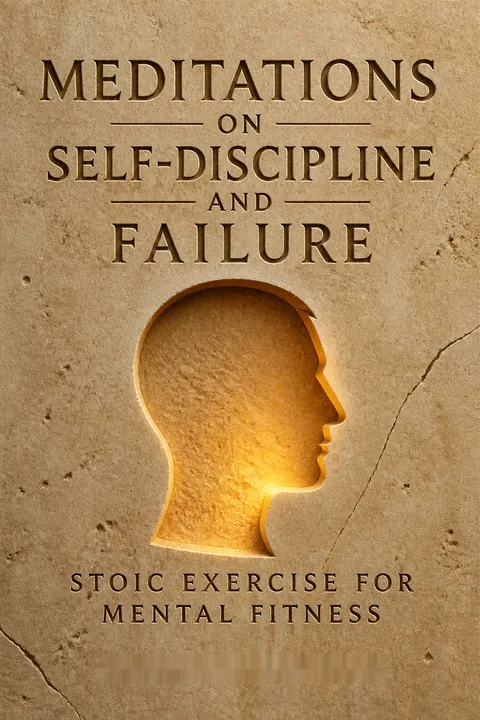


Key Takeaways
Govern your judgment and conduct, not the weather of events
Separate agency from outcome. Ferraiolo builds his Stoic practice around a sharp distinction: your judgments, values, choices, and efforts are yours to direct; events, other people’s beliefs, and results are not. You can argue, prepare, protect, and persuade, but you cannot make another person agree or ensure that the world follows your preferred script. The recurring question is practical: what, here and now, is actually yours to do?
Act without demanding control. This is not an instruction to ignore politics, danger, or hardship. The book urges preparation and responsible action, while warning against making inner steadiness depend on success. Its image of a person facing changing weather captures the point: adapt to conditions, then use the powers that remain yours.
The distinction is useful because it redirects attention from rumination toward decisions that can still be made. It also resembles modern approaches to stress management, which separate a problem’s controllable parts from its uncontrollable ones. The nuance matters: influence is not control, but it is not nothing. Civic action, caregiving, and persuasion can change probabilities even when they cannot guarantee outcomes. Read narrowly, the principle supports steadiness; read too broadly, it could excuse passivity. The strongest application is to release demands for certainty while continuing to act where effort can make a difference.
Measure failure by your effort, not by outcomes others control
Separate performance from verdict. A lost contest, rejected application, or poor assessment may hurt, but Ferraiolo argues that none alone proves a person has failed morally. Outcomes depend on forces beyond one person’s will, including other people’s judgments. The more important audit asks whether the person acted honestly, prepared seriously, and tried to improve. Praise and ridicule are not reliable measures of character.
Use setbacks as information. The book does not ask readers to dismiss every criticism. If a detractor identifies a real mistake, the useful response is to learn and change. If the criticism is false, the other person’s belief does not define the target. This makes failure less a public label than a prompt to inspect effort, conduct, and what can be done differently.
This reframing can protect ambition from becoming hostage to applause, a lesson that applies in sport, art, and professional life. It also resembles process-focused coaching: feedback is most useful when it identifies a behavior that can be adjusted, rather than assigning a fixed identity. Still, outcomes contain information. Repeated rejection may reveal a mismatch in preparation or strategy, even when it says nothing about moral worth. A sound assessment therefore holds two ideas together: external judgment is not the final measure of a person, but evidence about performance should not be discarded merely because it is uncomfortable.
Make self-discipline a daily practice, not an occasional mood
Return to the work. The book treats discipline as repeated training, not a burst of resolve. Ferraiolo compares sporadic self-improvement to repeatedly dieting and returning to old habits: temporary progress disappears when attention lapses. He recommends watching recurring weaknesses, noticing when the mind wanders, and reviewing one’s conduct each day. One proposed exercise is to name, at night, where responsibilities were neglected, then identify what needs correction.
Make honesty a habit. The practice begins with ordinary facts, such as admitting that little work was done, rather than embellishing the day. From there, the reader can confront more uncomfortable shortcomings. The method is persistent self-examination, but the goal is changed behavior, not simply a more elaborate record of guilt.
The book’s emphasis on repetition fits what behavioral science finds about skill acquisition: intentions become dependable through practice in recurring situations. A brief daily review can turn vague regret into specific feedback. Its weakness is the assumption that harsher self-judgment reliably produces better discipline. Shame can narrow attention and encourage concealment, while accurate self-compassion can help people acknowledge mistakes without treating them as permanent identity. The most productive version of the exercise is candid but not punitive: identify the behavior, its trigger, and one next action, then resume the practice.
Treat criticism as evidence to test, not a verdict to obey
Examine the claim first. Ferraiolo repeatedly asks the reader to separate a critic’s judgment from the facts. When criticism is accurate, it can reveal a weakness and offer a chance to improve. When it is mistaken, the critic’s opinion remains that person’s own mental state, not a force that can rewrite the reader’s character. The same rule applies to praise, which may be sincere, mistaken, or offered for personal advantage.
Refuse both flattery and conformity. The book invokes Galileo as an example of a thinker whose view was unpopular but supported by evidence. It urges readers not to accept a belief simply because a crowd does, while also warning against treating disagreement as proof of insight. The task is to assess reasons, revise beliefs when evidence changes, and avoid making approval the goal.
This is a strong defense of intellectual independence, especially in settings where social approval can reward confident repetition over careful thought. The symmetry between praise and blame is valuable: both can distort judgment when taken as proof. Yet distrust is not the same as discernment. If every mainstream source is presumed corrupt, suspicion becomes its own form of conformity, just with a smaller tribe. Good skepticism asks how a claim was supported, what evidence could disconfirm it, and whether independent sources converge. That standard protects a reader from both crowd pressure and reflexive contrarianism.
Let mortality sharpen gratitude, preparation, and attention to today
Remember the limits. Across the meditations, death, aging, illness, loss, and social change are treated as unavoidable parts of life, not exceptions that reality owes anyone an explanation for. The practical response is to prepare where preparation helps, care for people while they are present, and avoid spending the whole day rehearsing disasters that may never arrive. The author returns often to gratitude for ordinary capacities and opportunities that were never guaranteed.
Grief is not a command performance. One meditation confronts the suicide of a close family member and the shock that the rest of the world continues its routines. Ferraiolo asks how grief can be endured without demanding that others stop living. The underlying lesson is that loss does not cancel a person’s remaining responsibilities, though the book expresses this with severe self-reproach.
Mortality can clarify priorities because it makes postponement visible: attention given today cannot be recovered later. The book’s insistence on preparation also usefully distinguishes readiness from anxious prediction. Its treatment of grief needs care, however. Bereavement is not simply a voluntary state of mind, and enduring loss does not require minimizing pain or treating mourning as weakness. Contemporary trauma-informed practice makes room for both acceptance and support. The humane reading is not that grief should be hurried away, but that grief and continued life can coexist, with each person allowed a different pace.
Use money and pleasure as tools, never as measures of worth
Keep material goods in proportion. Ferraiolo does not argue that money is useless. It can secure food, shelter, health care, and support for family. His warning is against treating wealth as proof of virtue, or treating every advertised want as a necessity. Possessions are temporary and useful only for what they help people do; they do not confer wisdom or dignity.
Let virtue guide desire. The book also challenges the pursuit of happiness as the highest aim. It argues that decency and self-command should come first, even when they do not produce immediate pleasure. Contentment may follow virtuous conduct, but it is not guaranteed, and should not be the price demanded for doing what is right. The practical test is whether a desire serves a meaningful responsibility or merely feeds restless wanting.
This account distinguishes instrumental goods from ends, a useful idea in consumer cultures that routinely turn status into a proxy for personal value. It also avoids the simplistic claim that money never matters: material security can protect health and give people room to meet obligations. The harder question is what counts as enough, especially for people facing instability or caring for dependents. The book’s answer is ethical rather than numerical: money should serve life, not organize identity. That leaves readers with a judgment to make, but also a clear warning against confusing accumulation with character.
Build character through obligations, chosen company, and kept promises
Practice virtue with people. The meditations locate character not only in private reflection but in family life, friendships, work, and promises. Ferraiolo gives special weight to obligations toward close family, while warning that children learn more from adult behavior than from lectures. He also advises choosing companions carefully, since repeated exposure to their habits can shape one’s own.
Keep your word. A promise is presented as a serious obligation, not a casual expression of good intent. The same practical ethic appears in the advice to forgive family members when possible, avoid turning money disputes into lasting enmity, and give guidance without incessant moralizing. These are not claims that every relationship should be preserved. They are reminders that decency is tested in ordinary dealings, where patience, reliability, and restraint have visible consequences.
This relational emphasis gives the book’s private discipline a public test. Character is not only what someone believes about themselves; it is also the pattern others encounter in repeated interactions. Developmental psychology supports the importance of modeling, particularly for children, whose learning often comes through observation rather than instruction. Still, loyalty and forgiveness require boundaries. The author’s counsel is most persuasive when applied to ordinary conflicts and repairable harms, not as a blanket demand to remain in unsafe relationships. Keeping commitments matters, but so does recognizing when a promise or association has become harmful.
Question authority without turning skepticism into reflexive contempt
Demand reasons, not status. Ferraiolo distrusts politicians, media narratives, experts, and majority opinion when they substitute reputation or confidence for evidence. Socrates serves as his model of questioning people considered wise, while Galileo illustrates the risk of treating popularity as a test of truth. Readers are urged to inspect claims, listen to opposing views, and admit when they do not know enough to defend a position.
Stay willing to revise. The book’s skepticism is not supposed to end in paralysis. A person must sometimes decide with incomplete information, act, and reassess when new evidence appears. This is especially important because the author’s political commentary often assumes broad social decline and widespread corruption. His more durable instruction is not to adopt that diagnosis automatically, but to keep one’s own reasoning answerable to evidence.
The refusal to outsource judgment is timely in an information environment where authority can be manufactured through credentials, repetition, or sheer volume. Socratic questioning also has a constructive side: it can expose hidden assumptions without requiring instant certainty. But the book sometimes moves from skepticism about institutions to sweeping distrust of whole groups and systems. That risks replacing deference with cynicism. A stronger method combines source criticism with calibrated confidence: distinguish well-supported findings from speculation, compare independent evidence, and revise conclusions without treating revision as defeat.
Choose courage deliberately, but do not confuse brutality with virtue
Act when duty requires it. Ferraiolo rejects cowardice as a default response to danger or injustice. He argues that a person responsible for protecting others may sometimes need to act forcefully, and that fear of an unfavorable outcome should not settle every moral choice. The same theme applies to speaking an unpopular truth or accepting consequences for a principled decision.
Keep force under judgment. The book’s language about violence can be extreme: it presents force as necessary in some circumstances and urges decisive defense of the vulnerable. Its underlying demand is that action serve protection rather than appetite, revenge, or display. Courage, in this account, is not aggression for its own sake. It is readiness to face risk while remaining accountable for the purpose and consequences of one’s conduct.
The distinction between courage and impulse matters in emergencies, where hesitation can put others at risk. Yet claims about when violence is necessary are especially vulnerable to overconfidence, fear, and partisan framing. Ethical and legal traditions typically add constraints such as necessity, proportionality, and protection of noncombatants; these do not eliminate hard choices, but they limit self-authorization. The book is strongest when it rejects passive self-protection at any cost. Its challenge is to pair resolve with disciplined judgment, so that bravery does not become a flattering name for escalation.
Practice truth and humility before offering judgment to others
Speak with purpose. Ferraiolo asks readers to examine not only whether a statement is true, but why it is being said and whether the moment calls for it. He condemns lying, careless speech in anger, and using cleverness or humiliation to win an audience. He also warns that unsolicited advice can become an attempt to manage another adult’s life.
Make room for correction. The book’s ideal is to tell an uncomfortable truth when the speaker has good reason to believe it, while also accepting that the speaker may be wrong. In debate, resorting to distortion can signal that an argument is failing; withdrawing or conceding can be more honorable than defending it dishonestly. Self-scrutiny therefore precedes the right to criticize, and even then criticism should be proportionate and useful.
This ethic links epistemic humility with interpersonal restraint: the person who knows they can be wrong is less likely to confuse confidence with authority. It also echoes practical communication principles, such as separating a claim from the person making it and considering whether advice has been invited. A useful complication is that silence can protect the comfortable as well as preserve civility. Some harms require public naming. The relevant test is not simply whether speech might offend, but whether it is accurate, necessary, and likely to serve a defensible purpose.
Analysis
Ferraiolo’s book is a sequence of self-addressed meditations rather than a step-by-step program. Across thirty books, the voice repeatedly interrogates the same vulnerability: the tendency to demand that events, other people, and public life conform to personal expectations. Its proposed counterweight is disciplined attention to one’s own judgment, conduct, and effort. Mortality supplies urgency; gratitude counters entitlement; intellectual humility checks ego; and daily review turns abstract virtue into a repeated practice. Socrates, Epictetus, Diogenes, Marcus Aurelius, Galileo, and religious traditions appear as examples or standards, not as a single system the reader must master.
The form is part of the argument. The second-person voice makes each meditation feel like a private confrontation, and repetition resembles rehearsal: the reader is asked to revisit principles until they become available under pressure. The bluntness can be memorable, especially when it punctures vanity or self-excusing habits. But it also creates the book’s largest weakness. Ferraiolo frequently treats distress, grief, weakness, and complaint as evidence of failed character. That may motivate some readers, yet it can misread trauma, illness, depression, or legitimate anger as moral defects. Stoic steadiness is more sustainable when it allows emotion to be noticed without letting emotion dictate every action.
The book’s political passages are also more sweeping than its most useful core. Distrust of authority can prompt independent inquiry, but generalized contempt for institutions or populations can harden into another untested belief. Similarly, its defense of force requires safeguards that the rhetoric sometimes obscures. The soundest reading preserves the central discipline while applying it with care: distinguish what can be controlled from what can be influenced, test criticism rather than obeying or dismissing it, prepare without obsessing, and practice virtue without using self-punishment as a substitute for change. The book’s recurring question is not whether the world is fair, but what kind of conduct remains possible within it.
Review Summary
Meditations on Self-Discipline and Failure receives mostly positive reviews, with readers praising its thought-provoking content and modern take on Stoicism. Many appreciate the author's direct, no-nonsense approach, comparing it to Marcus Aurelius' Meditations. Some find the book challenging and potentially harsh, but view this as a strength. Readers value its practical advice and ability to inspire self-reflection. Critics note repetitiveness and oversimplification of certain ideas. Overall, the book is seen as a powerful tool for personal growth and mental fitness.
People Also Read









Glossary
failure
A failure of self-disciplineFerraiolo distinguishes external defeat from what he treats as genuine failure. Losing a contest, receiving criticism, or having work rejected depends partly on conditions outside one’s control. The more important failure is neglecting the effort to improve one’s judgment and character. The distinction is meant to shift attention from public results toward the quality of one’s own conduct.
citadel of your own mind
An inward place of reflectionThe book uses this phrase for a person’s capacity to turn inward, examine thoughts and perceptions, and seek a measure of calm apart from surrounding turmoil. This inward refuge is not automatic: an undisciplined mind can remain agitated even in solitude. The practice requires attention to one’s mental habits and deliberate effort to govern them.
Imp of the Perverse
An urge toward self-defeating actionBorrowed from Edgar Allan Poe, the term names a disturbing impulse to do what one knows is harmful, dangerous, or plainly ill-advised simply because it is forbidden or destructive. Ferraiolo treats the impulse as something to recognize without romanticizing it. Awareness is meant to help a person resist acting on it, rather than mistake its intensity for a meaningful desire.
Karma
Character shaped by one’s actionsFerraiolo uses Karma to describe consequences that need not arrive as external punishment. A dishonest or exploitative person may evade legal or social consequences, yet still forms a character built around dishonesty or exploitation. In this usage, actions help shape both the person who performs them and, collectively, the kind of society people create.
Serenity Prayer
A guide to acceptance and actionThe book refers to the prayer’s distinction between accepting what cannot be changed, finding courage to change what can, and developing the wisdom to tell the difference. Ferraiolo presents this as useful whether or not the reader believes in God. It condenses the book’s practical emphasis on accepting limits while remaining responsible for one’s own choices.
FAQ
What's "Meditations on Self-Discipline and Failure" about?
- Stoic Philosophy: The book is a contemporary adaptation of Stoic philosophy, drawing heavily from the works of Marcus Aurelius and Epictetus.
- Self-Discipline and Failure: It explores themes of self-discipline and the inevitability of failure, encouraging readers to confront these aspects with courage and wisdom.
- Practical Guidance: Through meditations, the author provides practical guidance on how to live a life aligned with Stoic principles, focusing on mental fitness and personal growth.
- Philosophical Reflection: It invites readers to reflect on their own lives, challenging them to regulate their actions and thoughts according to Stoic ideals.
Why should I read "Meditations on Self-Discipline and Failure"?
- Personal Growth: The book offers insights into personal growth through the lens of Stoic philosophy, which can be transformative for those seeking to improve their mental resilience.
- Timeless Wisdom: It provides timeless wisdom from ancient philosophers, adapted for modern life, making it relevant and applicable today.
- Practical Exercises: Readers can benefit from practical exercises that encourage self-reflection and the development of self-discipline.
- Challenge Your Perspective: It challenges readers to reconsider their views on success, failure, and the control they have over their own lives.
What are the key takeaways of "Meditations on Self-Discipline and Failure"?
- Control Your Mind: The only thing you can truly control is your own mind, attitudes, and efforts.
- Embrace Failure: Failure is inevitable and should be embraced as a learning opportunity rather than feared.
- Focus on Virtue: True success lies in being a virtuous person, not in external achievements or the opinions of others.
- Live in Accordance with Nature: Accept the world as it is and focus on what you can change—yourself.
How does William Ferraiolo incorporate Stoic philosophy in his book?
- Meditative Style: The book is written in a meditative style similar to Marcus Aurelius' "Meditations," encouraging introspection.
- Stoic Themes: It incorporates key Stoic themes such as the dichotomy of control, the importance of virtue, and the acceptance of fate.
- Practical Application: Ferraiolo adapts Stoic teachings to modern life, providing practical advice on how to apply these principles daily.
- Philosophical Insights: The book offers philosophical insights that challenge readers to think deeply about their values and actions.
What are the best quotes from "Meditations on Self-Discipline and Failure" and what do they mean?
- "You can control nothing other than your own attitudes, values, and efforts directed at mental discipline." This emphasizes the Stoic belief in focusing on what is within our control.
- "Success and failure do not, in any way, depend upon states of affairs that lie beyond the direct control of your will." It highlights the importance of internal success over external validation.
- "Do not pretend to respect other persons either more or less than you actually do respect them." This encourages authenticity and honesty in relationships.
- "The deepest struggles that we all face...cannot always be addressed in language suited to a seventh-grade reading level." It suggests that understanding and addressing life's complexities require deep thought and reflection.
How does "Meditations on Self-Discipline and Failure" address the concept of failure?
- Inevitable Aspect: The book presents failure as an inevitable part of life that should be embraced rather than feared.
- Learning Opportunity: Failure is seen as a valuable learning opportunity that can lead to personal growth and self-improvement.
- Redefining Success: It challenges the conventional notion of success, suggesting that true success is about maintaining virtue and integrity.
- Emotional Resilience: The book encourages developing emotional resilience to handle failure with grace and wisdom.
What practical advice does William Ferraiolo offer in "Meditations on Self-Discipline and Failure"?
- Focus on Self-Control: Concentrate on controlling your own thoughts and actions rather than external circumstances.
- Embrace Simplicity: Cultivate a simple life, free from unnecessary desires and distractions.
- Practice Gratitude: Regularly remind yourself of the unearned benefits and opportunities you have received.
- Develop Self-Discipline: Engage in regular self-reflection and practice self-discipline to improve your character.
How does "Meditations on Self-Discipline and Failure" compare to traditional Stoic texts?
- Modern Adaptation: It adapts traditional Stoic teachings to address contemporary challenges and lifestyles.
- Accessible Language: The book uses accessible language to make Stoic philosophy understandable to a modern audience.
- Practical Focus: While traditional texts often focus on philosophical theory, this book emphasizes practical application.
- Personal Reflection: It encourages personal reflection and introspection, similar to the meditative practices of ancient Stoics.
What role does self-discipline play in "Meditations on Self-Discipline and Failure"?
- Central Theme: Self-discipline is a central theme, seen as essential for achieving mental fitness and personal growth.
- Daily Practice: The book advocates for daily practice of self-discipline to cultivate virtue and resilience.
- Overcoming Weakness: It emphasizes overcoming personal weaknesses and bad habits through disciplined effort.
- Foundation for Virtue: Self-discipline is portrayed as the foundation for living a virtuous and fulfilling life.
How does "Meditations on Self-Discipline and Failure" encourage readers to handle emotions?
- Emotional Control: The book stresses the importance of controlling emotions to maintain inner peace and rationality.
- Acceptance of Reality: It encourages accepting reality as it is, rather than being swayed by emotional reactions.
- Rational Response: Readers are advised to respond to situations rationally, rather than reacting impulsively.
- Emotional Resilience: Developing emotional resilience is seen as key to handling life's challenges effectively.
What is the significance of the meditative style in "Meditations on Self-Discipline and Failure"?
- Reflective Practice: The meditative style encourages readers to engage in reflective practice, similar to ancient Stoic exercises.
- Personal Insight: It allows for personal insight and deeper understanding of one's thoughts and behaviors.
- Continuous Improvement: The style supports continuous self-improvement and the cultivation of wisdom.
- Mindful Living: It promotes mindful living, where readers are encouraged to be present and thoughtful in their daily actions.
How does "Meditations on Self-Discipline and Failure" address the concept of control?
- Dichotomy of Control: The book emphasizes the Stoic concept of the dichotomy of control, focusing on what is within one's power.
- Letting Go: It encourages letting go of the need to control external events and focusing on internal mastery.
- Empowerment: By understanding what can and cannot be controlled, readers are empowered to live more peacefully.
- Practical Application: The concept is applied practically, guiding readers to focus their efforts on self-improvement and personal growth.
Download PDF
Download EPUB
.epub digital book format is ideal for reading ebooks on phones, tablets, and e-readers.








