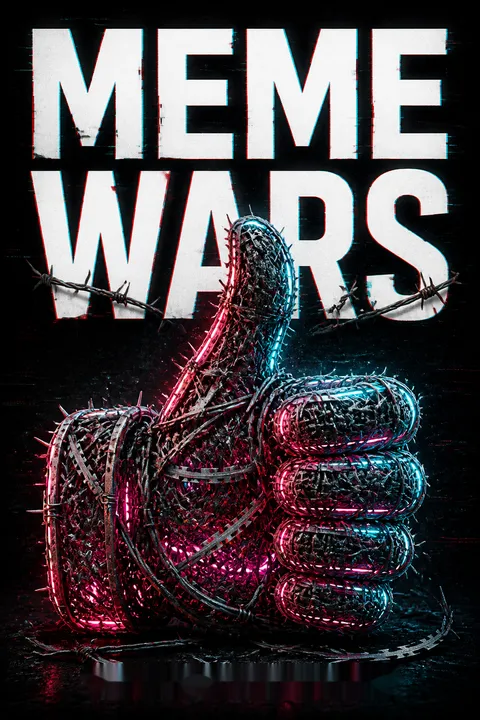


Key Takeaways
Read political memes as identity signals, not disposable jokes
A meme picks a side. A meme is an image, phrase, or clip that people copy and alter, often to express a point of view and signal belonging. At the Capitol on January 6, 2021, a video of a Trump supporter named Elizabeth went viral. Some remixes cast her as a victim of police; others mocked her. The same footage became evidence for opposing stories because each group recognized its own values in it.
Symbols carry history. Flags and slogans work similarly. The Gadsden flag has been adopted by very different movements over centuries, so its meaning depends on who displays it and where. Memes are not just jokes attached to politics. They compress beliefs, announce an in-group, and help turn scattered viewers into a community that can recognize itself.
What's striking is how efficiently a meme makes political identity visible. Social psychology calls this signaling: people use shared symbols to show affiliation, while outsiders may read the same signal differently. That helps explain why fact-checking a clip may not settle an argument about it. The audience is also defending group membership. Yet symbols are not magic; a shared image can unite people briefly without giving them common goals or durable organization. Reading a meme therefore means asking both what it says and what kind of belonging it offers.
Track repetition, cross-posting, reaction, and recommendations as one influence system
Four forces reinforce reach. The authors call their framework the four Rs of media manipulation: repetition, redundancy, responsiveness, and reinforcement. Repetition circulates a message again and again. Redundancy places it across several platforms. Responsiveness adds visible reactions such as comments and reposts. Reinforcement occurs when recommendation systems surface similar content to users. Together, these forces can make an idea seem important and widely accepted, even when its reach has been deliberately manufactured.
The system rewards heat. Platforms make posting and sharing easy, while their engagement-based designs can favor emotionally charged material over nuance. A slogan such as #StopTheSteal could travel through social networks, partisan media, and political accounts, gaining visibility at each step. The authors argue that this is not simply a matter of users encountering content. Platform design helps determine which ideas are repeated, noticed, and normalized.
The framework connects media studies with familiar feedback loops: visible engagement can attract more attention, which produces still more engagement. That process can make popularity look like credibility. It also helps explain why isolated moderation decisions may not stop a campaign that can shift across platforms. A useful caution is that repetition alone does not guarantee persuasion. People interpret messages through prior beliefs and relationships, so the same high-reach campaign can mobilize supporters, provoke opponents, or be ignored by both.
Build movements with clear demands, or others will define them
Occupy made participation simple. After the financial crisis, Occupy Wall Street rallied people around inequality and the identity of the 99 percent. A Tumblr project invited participants to post photos of themselves holding handwritten messages. The format was easy to copy, and the phrase spread across social networks before protesters gathered at Zuccotti Park in New York. Activists also used the hashtag #OccupyWallStreet to coordinate and draw media attention. Police confrontations and widely shared video helped the movement reach a global audience.
Openness had a cost. Occupy welcomed many causes but never settled on a clear policy program. That flexibility helped a broad coalition form, yet made it harder for the public to know what the movement wanted and easier for others to claim what it meant. The Tea Party had already shown how online activity could be converted into organized political action. Right-wing media figures later studied Occupy's tactics and repurposed them for their own campaigns.
Occupy illustrates a classic organizing tension: open participation lowers the barrier to entry, while explicit goals make collective action easier to evaluate and sustain. The 99 percent identity was a powerful frame, but it could not settle differences over remedies. Horizontal movements can resist hierarchy and invite creativity; they can also struggle to make decisions or prevent outside actors from speaking in their name. Clear demands do not eliminate disagreement, but they give participants a shared test for whether a tactic or alliance serves the movement.
Recognize racial pseudoscience when it is packaged as forbidden truth
A search can become a funnel. After Trayvon Martin's killing, Dylann Roof said he searched for information about Black-on-white crime and reached white supremacist material. Such communities circulated what the authors call hate facts: misleading or outdated claims presented as suppressed evidence. The online label human biodiversity, or HBD, was repurposed to give racial hierarchy a scientific-sounding gloss, including through selective use of disputed research on intelligence and crime.
Grievance became identity. These online spaces gave users language, explanations, and a sense that they had awakened to a hidden reality. Roof joined white supremacist forums and wrote a manifesto before murdering nine Black worshippers in Charleston. The book also traces a parallel path in misogynist communities, where Elliot Rodger's attack was reframed as proof that women and society had wronged men. In both cases, personal resentment was converted into a broader political story.
The pattern resembles conspiracy-driven learning: a person is offered a dramatic explanation, then encouraged to treat conflicting evidence as proof that authorities are hiding the truth. That structure can make a false claim feel more convincing than a careful account. The phrase HBD is especially instructive because it borrowed the authority of science while reversing the term's original intent. Still, online exposure does not mechanically produce violence. The important question is how communities, leaders, and institutions respond when grievance is repeatedly directed toward a dehumanized target.
Treat online harassment campaigns as rehearsals for political power
Gamergate scaled a grievance. In 2014, a former partner of game developer Zoe Quinn published allegations about her private relationships. Some gamers turned the claims into a much larger accusation that the games press was corrupt and hostile to its audience. The campaign used a hashtag, forums, and video commentary to coordinate attention. Quinn and other women faced harassment, doxing, and swatting, in which false emergency reports brought police to targets' homes.
The tactics traveled. Gamergate showed how a loose online coalition could choose targets, create a shared enemy, and attract coverage from right-wing outlets. Milo Yiannopoulos helped frame it as a fight against feminists and social justice activists, bringing the conflict to a wider audience. The campaign did not simply debate game journalism. It trained participants to treat media, critics, and public institutions as battlefields, a pattern that later appeared in wider political organizing.
Gamergate demonstrates how a real or perceived grievance can be used to recruit people into an abusive campaign. The distinction matters: calls for transparency in journalism are not equivalent to threats against individual women. But when attention rewards the most aggressive participants, the public argument can be displaced by a contest over who can intimidate whom. Research on collective action often emphasizes shared identity and common targets; here those same ingredients produced coordination without a constructive policy goal.
A candidate can become the meme that unites otherwise incompatible factions
Trump offered a shared avatar. When Donald Trump announced his candidacy in 2015, his blunt style, celebrity image, and attacks on political elites made him easy to remix. Online supporters circulated Trump-themed Pepe images, created the Reddit community The Donald, and rallied around #MAGA. Right-wing influencers and partisan outlets translated material from fringe message boards into language that could reach broader audiences. The campaign's opposition to mainstream media also connected people who disagreed on many other issues.
A coalition formed around him. White nationalists, conspiracists, anti-feminist gamers, and ordinary Trump supporters were not one movement with one doctrine. The candidate gave them a common focus and a way to present distinct grievances as one insurgent cause. The authors emphasize domestic organizing and media dynamics alongside foreign interference: online groups, political operatives, influencers, and conventional campaign activity all helped build momentum.
A political figure can function as a coalition symbol when supporters project different hopes onto the same person. That flexibility is a strength for recruitment, but it leaves the alliance vulnerable to conflict once members demand different policies. The book also shows why media attention can be double-edged: critical coverage may inform the public while supplying fresh material for the candidate's supporters to circulate. Virality explains how an idea travels, not why each voter accepts it; longstanding grievances and offline political organization still matter.
Follow the loop from online provocation to street spectacle and back
Online conflict can become recursive. The authors call the movement between online activity and physical events going from the wires to the weeds. In its more consequential form, an online appeal leads to a real-world gathering; conflict or spectacle then draws media coverage, which fuels more online discussion and another gathering. This cycle is what they mean by a meme war. Shia LaBeouf's livestream project He Will Not Divide Us became a vivid example: trolls hijacked an open camera, turning a project of resistance into a meeting place for provocation.
Charlottesville raised the stakes. In August 2017, white nationalists organized the Unite the Right rally through social media and chat platforms. Livestreams carried the rally and its violence to far larger audiences. A participant drove into a crowd, killing Heather Heyer. The aftermath brought arrests, lawsuits, and widespread deplatforming of organizers, but it did not erase the networks or grievances that had helped organize them.
The wires-to-weeds model is valuable because it treats online speech as part of an event sequence, not as a separate virtual world. Livestreams can document abuses and support accountability, yet they can also reward spectacle and invite copycat attention. This is not proof that platforms cause offline violence on their own. Political leadership, organized groups, local conditions, and individual choices remain consequential. The model's strength is showing how these forces can amplify one another without reducing the outcome to a single cause.
Conspiracy communities recruit by making believers feel like investigators
Q turned browsing into a mission. Starting on 4chan in 2017, an anonymous poster called Q issued cryptic claims that Trump was secretly fighting a powerful cabal. Followers were encouraged to interpret clues, search public information, and share their conclusions. This participatory style felt different from receiving news from an expert: believers experienced their findings as personal discoveries. YouTuber Tracy Diaz helped introduce Q's posts to a broader audience, while Q supporters built communities and explanatory videos across platforms.
The format adapted to fear. The movement joined older conspiracy stories about a New World Order and a hidden deep state to current events. During COVID-19, pastel graphics and child-safety messaging helped Q-related ideas reach wellness and parenting communities. The #SaveTheChildren campaign made an alarming cause a pathway into broader conspiracies. QAnon followers later joined the Stop the Steal movement, carrying their belief system from online research into public action.
The appeal of this model is not just its claims, but the role it gives participants. A person becomes a researcher, detective, and messenger, gaining agency and social recognition. In education, active inquiry can deepen understanding; here, the inquiry lacked reliable standards for testing claims, and failed predictions could be explained away. That difference is crucial. Encouraging people to investigate is not inherently dangerous, but investigation without methods for correcting error can turn curiosity into a self-sealing belief system.
Don't confuse a viral win with political change or human benefit
Attention is not a policy result. Occupy helped make inequality visible but did not produce a clear policy program. Black Lives Matter mobilized huge crowds and changed public debate, yet the book notes that public support fell after the 2020 protests and that few policy changes followed. The meme wars around Gamergate did not drive women out of gaming. In each case, a slogan could become culturally powerful without delivering the outcome its supporters wanted.
The costs were concrete. Stop the Steal failed to keep Trump in office, but people who joined the January 6 attack faced arrest, lost jobs, and damaged relationships. Some leaders and influencers had gained attention, money, or access; many foot soldiers carried the consequences. Memes can outlast the people who spread them, detach from their origins, and keep circulating after a campaign's practical goal has failed.
The distinction between attention and change is central to evaluating political communication. A campaign can alter vocabulary or group identity without changing laws, budgets, or lived conditions. Communication scholars often distinguish agenda-setting, which makes an issue salient, from policy implementation, which requires institutions and sustained negotiation. The book's examples make that gap visible. It is also worth noting that cultural shifts can matter even when legislation does not follow immediately, so the absence of quick policy results is not the same as no impact.
Election lies become dangerous when leaders turn slogans into marching orders
Stop the Steal built momentum. The phrase first appeared in 2016 as a plan to challenge a possible Trump nomination loss. In 2020, Trump and his allies used it to claim the presidential election was stolen. Rallies, online posts, partisan broadcasts, and repeated accusations made the slogan feel like a movement. On January 6, Trump told supporters to go to the Capitol as Congress certified the election. Thousands arrived, including people who had organized online and groups prepared for confrontation.
The attack was recorded in real time. Participants posted videos and images from inside the Capitol, while livestream audiences encouraged some of them. The breach interrupted certification and produced deaths, injuries, arrests, and a fierce struggle over how the event should be described. The book's conclusion is not that one meme caused the insurrection. It is that years of media manipulation, organized grievance, and political leadership made the outcome foreseeable.
This account clarifies the difference between a slogan and a command. A slogan can create shared identity; a leader's appeal can direct that identity toward a concrete act. The result depends on organization, opportunity, and the authority of the speaker, not merely on the message's popularity. The case also complicates simple platform blame: companies shaped visibility and later removed accounts, while political actors actively exploited those systems. Responsibility is distributed, but it is not equal. Leaders with institutional power carry a distinct obligation for the consequences of their calls.
Analysis
Meme Wars is a media history organized around a causal sequence: social platforms lowered the cost of publishing and finding allies; subcultures developed shared symbols and grievances; political operators learned to translate those symbols into larger campaigns; and repeated online conflict sometimes spilled into physical events. Its strongest contribution is not the claim that memes are uniquely powerful. It is the account of how memes become connective tissue between otherwise separate communities, alternative media, political personalities, and street mobilization. The historical arc from Occupy to January 6 also complicates the idea that digital organizing belongs to one ideology. Occupy and Black Lives Matter demonstrated how networked media could support protest and expose injustice. Right-wing actors studied the same techniques, then used them to promote reactionary causes and undermine trust in institutions.
The book's central framework is persuasive as a description of mechanisms, especially its account of repetition, cross-platform circulation, audience response, and algorithmic reinforcement. Its chronological case studies make a diffuse ecosystem legible. But a mechanism is not a complete causal explanation. Online communities interact with economic insecurity, racial hierarchy, institutional distrust, party strategy, and offline organizations. The book acknowledges these contexts, yet its rich narrative can make the internet feel more causally decisive than the evidence can establish. Memes help explain how messages travel and acquire group meaning; they do not, by themselves, explain why a person believes, votes, or commits violence.
The most useful implication is therefore not to treat every meme as dangerous or to blame one platform feature. Memes can help people recognize shared experience, coordinate protest, and challenge gatekeepers. The democratic risk arises when attention incentives reward outrage, when communities lack dependable ways to test claims, and when powerful figures use that environment to delegitimize elections or target opponents. A sound response would protect space for public expression while strengthening verification, transparent platform governance, accountable political leadership, and organizing that connects viral attention to specific civic goals. The book's warning is less that the internet makes people irrational than that infrastructure can turn existing distrust into a scalable political weapon.
Review Summary
Meme Wars explores how internet memes and online culture have influenced American politics from 2011-2021. Reviews praise its comprehensive timeline and analysis of alt-right movements, but some criticize its loose definition of memes and repetitive content. Readers found it informative yet disturbing, highlighting the power of social media in shaping public opinion. The book traces the evolution of online communities and their real-world impact, culminating in the January 6th insurrection. While some reviewers felt overwhelmed by the detail, most agreed it offers valuable insights into recent political events.
People Also Read



Glossary
Meme wars
Recursive online-offline conflictA meme war is a cycle in which online appeals lead to real-world gatherings, conflict or spectacle draws media attention, and that attention fuels further online coordination and offline action. The term describes more than the spread of a popular image. It emphasizes how memes, groups, media coverage, and physical events can reinforce one another.
wires to the weeds
Online action entering real lifeThe authors' phrase for the movement between internet activity and physical-world behavior. A simple example is an online request that brings people to a protest. In a more sustained cycle, an event generates spectacle and coverage, which returns online as new discussion, recruitment, or planning. The phrase rejects a strict separation between online and offline politics.
four Rs of media manipulation
Four ways to amplify contentThe framework names repetition, redundancy, responsiveness, and reinforcement. Repetition circulates a message repeatedly. Redundancy spreads it across platforms. Responsiveness includes visible audience reactions, such as comments and shares. Reinforcement occurs when algorithms recommend related content. Together, these processes can increase a message's reach and apparent importance.
red-pilled right
Anti-establishment online factionsThe book uses this umbrella term for varied right-wing online groups united by opposition to what they regard as the establishment. The factions include white nationalists, conspiracists, anti-feminist communities, trolls, and militia members. They do not share one doctrine, but often distrust mainstream media and institutions and sometimes rally around common political figures or grievances.
red pill
A claimed awakening to hidden truthBorrowed from The Matrix, a red pill is presented by online communities as knowledge that reveals a hidden reality and changes a person's worldview. In the book, it often functions as a recruiting device: a provocative claim is framed as forbidden truth, and the newly convinced person is encouraged to investigate further and persuade others.
human biodiversity (HBD)
A racial hierarchy claimHBD originally named a way of discussing human variation without assuming that humanity divides into discrete, uniform races. Online white nationalists repurposed the term to give racial determinism a scientific-sounding label, often using selective or disputed claims about intelligence and crime. The book describes this usage as a rebranding of racist ideas, not a neutral scientific framework.
meme magic
Memes seeming to shape eventsAn ironic belief, developed in online communities during Trump's 2016 campaign, that memes could influence real-world events or even help bring about political outcomes. The term mixed jokes about internet culture with sincere enthusiasm. When Trump succeeded despite expectations, supporters treated the result as evidence that their meme-making had helped produce a historic victory.
digital soldiers
Online political campaignersA name for supporters who see social media activity as participation in an information war. The phrase gained force through Michael Flynn's description of pro-Trump online activists as citizen journalists and political fighters. QAnon followers adopted the identity as they researched cryptic posts, shared interpretations, and promoted claims about a hidden political enemy.
open-source intelligence (OSINT)
Research using public informationOSINT is the collection and analysis of information available in public sources. Online communities use it to examine posts, images, records, and other digital traces. In QAnon circles, this style of investigation encouraged followers to search for clues and share interpretations. Unlike professional intelligence work, much of the community's speculation lacked reliable verification and correction.
QAnon
A pro-Trump cabal conspiracy movementQAnon grew around anonymous online posts claiming that Trump was secretly fighting a powerful cabal of corrupt elites. Followers interpreted the posts, searched for supposed clues, and circulated explanations across social platforms and video channels. The movement drew on older conspiracy narratives, developed its own slogans and communities, and became a significant source of political mobilization.
FAQ
1. What is Meme Wars: The Untold Story of the Online Battles Upending Democracy in America by Joan Donovan about?
- Explores meme-driven political warfare: The book investigates how internet memes evolved from simple jokes to powerful tools that shape American politics, culture, and democracy.
- Focuses on online subcultures: It examines the rise of fringe communities on platforms like 4chan and Reddit, and how their meme tactics influenced real-world events, including elections and protests.
- Connects digital and real-world impact: The narrative traces the journey from online activity (“the wires”) to offline mobilization (“the weeds”), culminating in events like the January 6 Capitol insurrection.
- Interdisciplinary research: Written by a team from Harvard’s Shorenstein Center, the book blends sociology, ethnography, and journalism to analyze meme culture’s effects on democracy.
2. Why should I read Meme Wars by Joan Donovan?
- Understand modern political influence: The book reveals how memes and online culture have reshaped political discourse, activism, and the mechanisms behind democratic challenges in the U.S.
- Gain insight into hidden online worlds: Readers are introduced to obscure internet subcultures that have had outsized influence on mainstream politics, such as the alt-right, manosphere, and conspiracy communities.
- Learn about media manipulation: The book provides frameworks for recognizing and countering disinformation, including the “four Rs” of media manipulation: repetition, redundancy, responsiveness, and reinforcement.
- Enhance media literacy: It encourages critical thinking about meme-driven content and its role in shaping public opinion and political outcomes.
3. What are the key takeaways from Meme Wars by Joan Donovan?
- Memes as cultural weapons: Memes act as “selfish objects” that rapidly replicate ideas, mobilize people, and define in-groups and enemies, often regardless of the harm they cause.
- Social media accelerates polarization: Platforms amplify polarizing content, creating echo chambers and making it difficult to distinguish truth from misinformation.
- Meme wars have real consequences: Online meme battles have led to significant offline events, including protests, violence, and the Capitol insurrection, but rarely result in meaningful policy change.
- Systemic solutions needed: The authors argue that only public-interest internet protocols and political will can address the challenges posed by meme wars, not just algorithm tweaks or free speech laws.
4. How did meme culture and online communities influence the 2016 U.S. presidential election according to Meme Wars?
- Alt-right meme dominance: Pro-Trump online communities mastered meme warfare, using memes like “basket of deplorables” and #HillarysHealth to shape public perception and energize Trump’s base.
- Meme magic and mobilization: Supporters believed in “meme magic,” the idea that online activity could influence real-world outcomes, and used memes to coordinate attacks and discredit opponents.
- Blurring news and entertainment: Memes forced mainstream media to cover meme-driven stories, while the Clinton campaign struggled to counter these narratives.
- Strategic disinformation: The campaign saw unprecedented use of disinformation, hacking, and targeted social media advertising, with meme warfare central to shaping voter perceptions.
5. What are the most important concepts and definitions in Meme Wars by Joan Donovan?
- Meme and meme wars: A meme is a piece of media remixed and shared to convey meaning and signal group membership; meme wars are battles fought online using memes, slogans, and disinformation.
- Red-pilled right: Refers to far-right factions united by opposition to the establishment, using the “red pill” metaphor from The Matrix to signify awakening to hidden truths.
- Four Rs of media manipulation: Repetition, redundancy, responsiveness, and reinforcement are tactics that amplify memes and disinformation online.
- Red pills: Memes or ideas that claim to reveal hidden truths, often leading to radicalization and deeper involvement in meme wars.
6. How did the Occupy Wall Street movement shape the meme wars described in Meme Wars?
- Digital activism origins: Occupy Wall Street pioneered the use of social media and memes (#OccupyWallStreet, “We Are the 99 Percent”) to organize decentralized protests.
- Open-source movement dynamics: Its leaderless, open nature allowed for broad participation but also made it vulnerable to co-option by right-wing actors who learned from its tactics.
- Legacy for future meme wars: Occupy taught both left and right how to use memes and social media to set media agendas, create viral content, and build communities, laying the groundwork for more aggressive meme wars.
7. What role did white supremacist and alt-right internet communities play in the rise of meme wars, according to Meme Wars?
- Radicalization through hate facts: Sites like Stormfront and 4chan’s /pol/ used pseudoscientific “hate facts” and memes to radicalize individuals and spread racist ideologies.
- Human Biodiversity (HBD) meme: The alt-right used HBD to legitimize scientific racism, recruiting new members with pseudo-academic language.
- Alternative media ecosystem: These communities blended shock humor, conspiracy theories, and fascist ideology, enabling the spread of extremist content and coordinated propaganda campaigns.
8. How did the manosphere and Gamergate contribute to the culture wars and meme wars in Meme Wars?
- Manosphere origins: Online communities like MRAs, PUAs, and incels fostered antifeminist and gender-essentialist views, fueling toxic masculinity and violent acts.
- Gamergate as a meme war: Gamergate used coordinated harassment, doxing, and media manipulation to fight perceived feminist influence in gaming, demonstrating the power of decentralized online communities.
- Media and meme tactics: Hashtags like #Gamergate and viral memes allowed these groups to influence public discourse and mobilize supporters for broader political causes.
9. How does Meme Wars by Joan Donovan explain the emergence and influence of QAnon?
- Origins and narrative: QAnon began with cryptic posts on 4chan, claiming insider knowledge of a secret war between Trump and a cabal of elites, blending old conspiracy theories with new digital culture.
- Growth and spread: Influencers and platforms like YouTube helped translate Q’s messages, creating a participatory culture of “digital soldiers” who engaged in collective research and meme creation.
- Political and social impact: QAnon became a powerful force in right-wing media, influencing Trump supporters, fueling distrust in institutions, and contributing to the January 6 Capitol attack.
10. What is the significance of the "Stop the Steal" meme war and the 2020 election in Meme Wars?
- Stop the Steal as a meme campaign: The phrase was revived in 2020 to contest election results, mobilizing a broad coalition of far-right groups, QAnon adherents, and Trump supporters.
- Legal and media strategies: Trump’s team filed lawsuits and promoted memes like “release the Kraken,” while media companies responded by banning related content and accounts.
- Culmination in January 6: The meme war’s climax was the Capitol insurrection, incited by online coordination and meme-driven beliefs, resulting in mass arrests and deplatforming.
- Long-term consequences: The campaign deepened polarization and eroded trust in electoral processes, destabilizing democratic norms.
11. How does Meme Wars describe the January 6 Capitol insurrection and its connection to meme culture?
- Insurrection as meme war culmination: January 6 is framed as the result of a decade of online meme warfare that radicalized and mobilized diverse groups.
- Role of key figures and groups: Trump’s speech and the actions of groups like the Proud Boys and Oath Keepers were central, with influencers livestreaming the chaos.
- Media documentation: The event was extensively documented through livestreams and social media, making it “the most well-documented crime in human history.”
- Impact on democracy: The insurrection exposed vulnerabilities in American democracy and highlighted the dangers of meme-driven radicalization.
12. What are some of the most important memes, slogans, and symbols discussed in Meme Wars by Joan Donovan, and what do they signify?
- #StopTheSteal: A rallying cry for the belief that the 2020 election was stolen, uniting the MAGA community and fueling the Capitol insurrection.
- Red pill: Signifies awakening to a hidden truth, used by far-right groups to describe ideological conversion and recruitment.
- Pepe the Frog: A comic character co-opted by the alt-right as a hate symbol and mascot for their movement.
- Cuckservative and Based: “Cuckservative” mocks mainstream Republicans as weak, while “based” praises unapologetic, often reactionary opinions within right-wing communities.
- Other symbols: Figures like the McCloskeys and Kyle Rittenhouse became meme icons representing white backlash to BLM, illustrating how individuals and events are weaponized in meme warfare.
Download PDF
Download EPUB
.epub digital book format is ideal for reading ebooks on phones, tablets, and e-readers.








