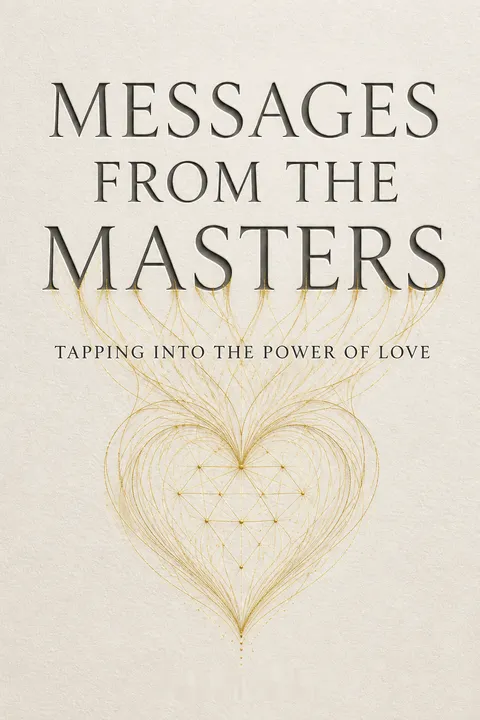


Key Takeaways
Make love your daily practice, not a reward you wait to receive
Love is the central claim. Weiss presents love as more than romance or goodwill. He sees it as the underlying spiritual force that connects people and the universe, and argues that it becomes real through compassion, forgiveness, and care. The book’s many religious traditions are offered as evidence of a shared ethical core: love others, serve, and take responsibility for your actions. The practical task is to give love without making another person’s response the price of admission.
Make it ordinary. Weiss’s examples range from supporting a grieving family to a husband bringing home ice cream for his tired wife. Grand gestures are optional; attention and kindness are not. His account of love is both metaphysical and practical: whatever a reader believes about its cosmic status, its daily expression changes how people treat one another.
The strongest version of this claim does not require accepting love as a measurable universal energy. It treats love as a durable orientation expressed through attention, care, and restraint. That definition connects spiritual language to observable conduct and makes the idea testable in ordinary life. The emphasis on giving without demanding a return can loosen scorekeeping, but it should not become a rule that one person must endlessly give while another takes. Mutuality and boundaries are not failures of love; they are part of how care remains sustainable.
Let beliefs about many lives increase responsibility, not resignation
A larger life story. Weiss’s spiritual model says that souls continue after bodily death, review how their actions affected others, and may return to learn further lessons. He calls karma a process of learning and making amends, not a sentence handed down as punishment. He also insists that a life plan does not erase free will: circumstances may be anticipated, while each person’s response remains a choice.
Andrea’s regression makes the model vivid. She described a past life as a girl on the prairie whose brother was killed, then recognized him as her brother in her present life. Weiss interpreted the memory as a way to understand their closeness and the family’s fear of losing him. The story illustrates his worldview, but does not independently establish reincarnation as fact.
A continuing-life narrative can make loss feel less final and frame relationships as opportunities for accountability. Its most useful ethical feature is the insistence that a person’s harmful choices remain that person’s responsibility. Its greatest risk is the opposite: interpreting trauma as a chosen lesson can make suffering sound deserved or discourage efforts to prevent it. Weiss explicitly rejects that conclusion about abuse. The distinction matters. A spiritual explanation can comfort someone, but it should never replace practical protection, grief support, or attention to the causes of harm.
Treat close relationships as practice for the values you claim to hold
Relationships test ideals. Weiss sees family, friendship, and partnership as places where virtues become behavior. Patience matters when someone frustrates you; forgiveness matters when a conflict hurts; compassion matters when another person’s needs inconvenience you. He recommends giving a relationship undivided attention, listening without preparing a rebuttal, and communicating to understand rather than to win.
Shorten the fight. One couple in therapy routinely stayed angry for five or six days. Weiss invited them to consider resolving a familiar argument in three days, then one day, then a few hours. Because they already knew the pattern and usually made up eventually, they learned to recognize the dispute earlier and reduce the time spent suffering. The point is not to suppress disagreement, but to stop pride from prolonging it.
This approach treats conflict as a process that can be observed and adjusted, rather than as proof that a relationship is doomed. That is close to practical conflict-resolution methods: identify the recurring trigger, notice escalation, and make repair easier. The couple’s progress also suggests a useful question: what part of a familiar quarrel is actually solving the problem, and what part is merely rehearsing injury? Still, rapid reconciliation is not always the right goal. In an unsafe or coercive relationship, distance and outside support may matter more than a faster apology.
Look beneath anger for fear before deciding how to respond
Anger can guard vulnerability. Weiss argues that anger often protects fears of rejection, humiliation, loss, or powerlessness. It can also arise when someone expects another person to meet standards they never agreed to. He calls projection the process of assigning one’s own hidden fears or motives to someone else. A missed dinner, for example, may trigger a story of rejection when the person is actually delayed.
Pause, investigate, choose. Instead of acting at the peak of anger, identify the event that triggered it, the expectation attached to it, and the fear underneath. Then address what can be changed and release what cannot. Weiss recalls that a driver who cuts him off makes him angry at home in Miami but not on vacation. The changed setting reveals that the event alone does not dictate the reaction.
The distinction between an event and the meaning assigned to it is useful across emotional life. Naming the feared outcome can create room between impulse and action, and it helps distinguish a real grievance from an old expectation being replayed. But anger is not always merely a mistaken defense; it can signal a genuine boundary violation or injustice. The aim should not be to abolish anger or shame its presence. It is to extract its information, choose a proportionate response, and avoid letting the emotion dictate needless harm.
Use vivid inner memories to explore distress, but do not confuse vividness with proof
Regression is focused attention. Weiss describes hypnosis as concentrated relaxation, not mind control. In regression therapy, a person is guided through memories or images from childhood, before birth, or what the author interprets as past lives. He reports that some patients’ symptoms improved after they revisited emotionally charged scenes. One woman’s claustrophobia reportedly eased after she recalled being buried in a tomb in an earlier life.
Meaning may matter even when history is uncertain. Weiss says the therapeutic effect can come from bringing painful material into awareness and making a new interpretation of it. He also argues that past-life memories can reveal a soul’s continuity, a claim that goes beyond what the therapy itself can demonstrate. A useful safeguard is to treat imagery as material for reflection, not as verified history, and never as a substitute for medical or psychological care.
Imagination can organize emotion into a story that feels graspable, and guided imagery can provide a person with distance from distress. That can be valuable without proving the story’s literal source. The same vividness that makes a scene meaningful can also make an imagined or suggested memory feel factual. This is why exploratory work needs careful, non-leading questions and attention to the client’s wellbeing. The therapeutic question, what does this image help the person understand now, is distinct from the historical question, did this event happen as remembered.
Build security from inner steadiness, not possessions or other people’s approval
The outer world cannot promise permanence. Weiss argues that money and possessions can be useful, but they cannot provide lasting security or determine a person’s worth. Approval is equally unstable: depending on other people’s reactions makes happiness vulnerable to their changing moods. He encourages readers to say no to unwanted obligations rather than let resentment build until the body or relationship forces a refusal.
Choose what remains valuable. In one regression story, a man reviewed a life marked by loss and prejudice, but identified family love as his consolation. Weiss uses such cases to redirect attention from status and accumulation toward conduct, relationships, and inner peace. This is not an argument to ignore material needs. It is a prompt to distinguish resources that support life from possessions that are mistaken for life’s purpose.
The distinction between security and status is psychologically useful because external rewards are often unstable and socially comparative. A person can have more than before and still feel threatened by what others possess. At the same time, inner steadiness cannot replace housing, healthcare, safety, or financial resources. Spiritual language becomes most responsible when it resists consumerism without minimizing material hardship. The practical question is not whether possessions matter, but whether they are serving a chosen life or serving as a substitute for self-worth.
Protect joy by giving your attention to ordinary life while it is happening
Presence makes experience available. Weiss draws on the image of drinking tea while the mind is elsewhere: the cup empties, but the drinker barely notices. He asks readers to slow down enough to register simple pleasures, from a walk with family to a beautiful tree outside the house. A professional golfer in his practice became less anxious after imagining the course as a place to enjoy, not just a test of his score.
Try a small attention exercise. Weiss’s bubble meditation takes two minutes. Sit comfortably, breathe slowly, and notice thoughts without fighting them. Imagine each thought inside a bubble that rises and disappears, then gently return attention to the present. The goal is not a blank mind or a mystical achievement. It is practice in noticing when attention has wandered and bringing it back without scolding yourself.
The value of this exercise lies in its modesty. It makes attention a repeatable skill rather than a rare state reserved for retreats or unusually spiritual people. The golf example also captures how performance pressure can consume the activity it is supposed to improve. Present-moment practice does not mean ignoring plans, grief, or problems that need action. It means noticing when rumination has replaced useful thought, then choosing whether to return to the task, the person, or the pleasure directly in front of you.
Turn compassion into daily action beyond the people already in your circle
Kindness has a public dimension. Weiss argues that a kinder society grows through ordinary choices, not only through prominent leaders or sweeping programs. He describes a Brazilian project that helped girls in a poor neighborhood learn practical skills and build confidence. He also urges readers to extend care beyond family and friends, because kindness reserved for one’s own group leaves social divisions intact.
Interrupt harm when possible. The book treats prejudice and exclusion as early forms of violence because they divide people into those who count and those who do not. Weiss recounts a classroom ideal in which students avoid humiliating a classmate who cannot answer. The lesson is concrete: do not use another person’s embarrassment as a chance to look impressive. Offer help, speak against demeaning remarks, and make respect visible in small encounters.
This is the book’s bridge from private spirituality to civic ethics. Small acts cannot by themselves repair structural inequality, but they shape the norms through which people experience institutions, neighborhoods, and public life. The example of refusing to profit from another student’s mistake is especially sharp because it exposes how competition can masquerade as merit. Compassion also needs more than good intentions: practical support, fair systems, and willingness to confront power matter. Daily kindness is a beginning, not a complete political program.
Stay open to spiritual claims without handing your judgment to a teacher
Curiosity needs a filter. Weiss’s journey begins with a skeptical psychiatrist who encountered experiences that challenged his assumptions. He advises readers neither to accept every paranormal claim nor to dismiss all of them. When evaluating a psychic or medium, he recommends checking whether information fits, watching for attempts to create dependence or charge heavily, and remembering that unusual ability does not guarantee good character or clinical skill.
Judge guidance by its effects. A trustworthy teacher, in Weiss’s view, encourages kindness, responsibility, and independent judgment rather than fear, division, or obedience. He also sees meditation and prayer as ways to access personal reflection instead of relying indefinitely on outside authority. His account of common ethical teachings across religions supports a pluralist conclusion: traditions may differ, but their calls to compassion and service can be considered on their merits.
The combination of openness and skepticism is more rigorous than either reflexive belief or reflexive dismissal. It asks what a claim does to the believer, as well as whether evidence supports it. That ethical test is valuable but insufficient on its own: comforting messages can still be wrong, and confident teachers can still manipulate. Claims about hidden knowledge need independent verification where possible. The book’s strongest practical safeguard is its refusal to make spiritual talent an automatic credential for authority.
Make spiritual beliefs visible in how you treat people today
The present is the test. Weiss’s stories of death, spiritual guides, and reunion are meant to reduce fear, but he repeatedly returns to the choices available in ordinary life: whether to forgive, help, listen, or refuse to harm. He argues that insight alone is incomplete. A person may believe in an immortal soul and still behave with cruelty; the belief matters only when it changes conduct.
Keep the lesson practical. The book’s closing message is not to wait for certainty about the afterlife before acting with care. It asks readers to notice where fear, pride, or resentment block love, and to take one concrete step toward repair or service. That step might be expressing affection, making time for someone, or choosing not to repeat a hurtful pattern. The spiritual claim is vast; the daily measure is specific.
This ending makes the book’s metaphysics answerable to ethics. Whether souls reincarnate, survive death, or inhabit a universal field of love remains a separate question from whether people should reduce harm and care for one another. That separation protects the practical insight from depending on contested claims. It also creates a demanding standard: spiritual identity is not demonstrated by extraordinary experiences or impressive vocabulary, but by conduct under pressure. The book is most persuasive when it asks what a belief makes a person do.
Analysis
Messages from the Masters combines spiritual memoir, case anthology, and self-help. Its organizing arc is personal: Brian Weiss presents himself as a skeptical psychiatrist whose work with hypnotic regression altered his account of mind, death, and human purpose. The stories are not merely illustrations. They are the book’s evidence, emotional engine, and teaching method. Their repeated pattern is distress, an altered-state experience, a spiritual interpretation, and relief or changed behavior.
That structure gives the book unusual emotional force. Andrea’s prairie-life narrative, the grieving parents who receive messages through mediums, and the small domestic acts of care make abstract ideas memorable. The practical advice also stands apart from the supernatural claims: attend to relationships, notice fear beneath anger, practice meditation, and help beyond one’s immediate circle. These lessons can be used by readers who reject reincarnation.
The central interpretive challenge is that clinical benefit, vivid subjective experience, and proof of an afterlife are different kinds of claims. Weiss often moves from a patient’s report to a metaphysical conclusion. A regression can help someone construct meaning or approach emotion without establishing that its scenes are historical memories. Likewise, agreement among stories may be suggestive to the author, but does not by itself rule out cultural influence, expectation, or errors of recall. The adaptation therefore preserves the stories as Weiss’s reports and separates their therapeutic or ethical implications from their evidentiary status.
The book’s most durable contribution is a moral framework: a person’s worth exceeds status, the quality of relationships matters more than possessions, and compassion should cross group boundaries. Its tension is that predestination and chosen lessons can comfort, yet may also encourage fatalism if applied carelessly. Weiss counters that risk by retaining free will and explicitly rejecting the idea that abuse is deserved. Read critically, the work offers a distinctive spiritual vocabulary for familiar questions about grief, attention, responsibility, and care, while inviting readers to test its claims rather than inherit them whole.
Review Summary
Messages from the Masters by Brian Weiss receives mostly positive reviews, with readers praising its spiritual insights and lessons on love, reincarnation, and past lives. Many find it comforting and life-changing, appreciating Weiss's perspectives on karma and the afterlife. Some readers feel it becomes repetitive or too spiritual, while others consider it less impactful than Weiss's previous works. The book's exercises and meditation techniques are noted as helpful tools for personal growth and understanding.
People Also Read






Glossary
Past-life regression therapy
Guided exploration of remembered scenesA hypnotic or deeply relaxed process in which a person is guided through memories or images associated with childhood, the period before birth, or what the author interprets as earlier lives. Weiss uses the process to explore emotional patterns and symptoms. He presents it as therapeutic, while the historical reality of the recalled scenes is a separate question.
Life review
Reflection on a life’s effectsIn Weiss’s spiritual model, a review that occurs after death in which a soul revisits its actions and relationships. The person experiences not only their own feelings but also the emotional effects their behavior had on others. The review is presented as a compassionate learning process that can inform choices in another life.
Karma
Learning through consequencesWeiss uses karma to mean the continuing consequences of actions and the opportunity to learn, repair harm, and practice forgiveness. He rejects the idea that karma is simply punishment or that someone deserves another person’s abuse. In his account, individuals retain free will, and grace may ease suffering once a lesson has been learned.
Destiny points
Planned life encountersWeiss’s term for major events or meetings that he believes a soul anticipates before birth as part of a life plan. The plan may include important relationships and challenges, while free will shapes how people respond. He suggests that déjà vu can sometimes feel like recognition of a planned event, but presents this within his spiritual model.
Counter-phobic defense
Rejecting before being rejectedA protective reaction in which a person pushes away someone or something that feels threatening before rejection or emotional pain can occur. Weiss treats this as a fear-based defense that can prevent a person from understanding their vulnerability and can damage relationships by turning anticipated rejection into actual distance.
Psychometry
Intuitive impressions from objectsA group exercise described by Weiss in which partners exchange small personal objects, relax, and report any thoughts, feelings, images, or bodily impressions that arise while holding the other person’s item. The exercise is intended to help participants notice and practice intuition. Weiss does not establish whether impressions come from the object or from focused attention.
Faces
Partnered intuitive observation exerciseA workshop exercise in which two people sit facing each other in dim light and gaze gently for several minutes while relaxed. Participants report changes in perceived facial features, images, feelings, or intuitive information about their partner. Weiss interprets some experiences as meaningful perceptions, while the exercise itself cannot independently verify their source.
Energy scanning
Non-contact body impression exerciseA paired exercise in which one participant slowly moves their hands near another person’s body without touching, noticing sensations such as warmth, coolness, tingling, or resistance. The partners then share their observations. Weiss presents the practice as a way to develop awareness and intuition, including impressions that he says may relate to health.
FAQ
What's Messages from the Masters about?
- Exploration of Spiritual Themes: The book delves into reincarnation, past-life regression, and the soul's nature, emphasizing love and understanding for personal and spiritual growth.
- Healing Through Understanding: Brian L. Weiss illustrates how understanding past traumas can lead to present healing, with love as the ultimate healer connecting all beings.
- Messages from Higher Sources: It includes wisdom from "Masters," highly evolved souls offering guidance on living a fulfilling life.
Why should I read Messages from the Masters?
- Personal Transformation: Learn techniques for achieving inner peace and happiness, with practical advice for transforming relationships and mental states.
- Insight into Reincarnation: Gain a unique perspective on how past lives influence current experiences, helping make sense of life challenges.
- Connection to Universal Love: Emphasizes love as a fundamental energy, encouraging readers to cultivate it for profound life changes.
What are the key takeaways of Messages from the Masters?
- Love is Central: Love is the essence of our being and the key to healing and happiness.
- Understanding Heals: Insight into past experiences can alleviate current emotional and physical ailments.
- We Are All Connected: Emphasizes that all souls are connected through love, fostering compassion and empathy.
What are the best quotes from Messages from the Masters and what do they mean?
- "We are love.": Highlights love as our true nature, suggesting personal transformation through recognizing and embodying love.
- "You must get rid of the fear.": Stresses overcoming fear for spiritual growth, as fear blocks love and understanding.
- "You are a carpenter building your spiritual home.": Emphasizes personal responsibility in shaping one's spiritual journey through choices and actions.
How does Brian L. Weiss define past-life regression in Messages from the Masters?
- Therapeutic Technique: Allows individuals to access memories from previous lives, leading to healing and understanding of current issues.
- Accessing Deeper Consciousness: Through hypnosis, individuals tap into their subconscious to retrieve these memories, providing insights into unresolved traumas.
- Healing Through Memory: Recalling past-life experiences can alleviate symptoms and promote emotional healing, helping break free from limiting beliefs.
What role do the "Masters" play in Messages from the Masters?
- Source of Wisdom: Described as highly evolved souls providing guidance and insights on love, life, and existence.
- Channeling Messages: Messages often come through patients during regression sessions, serving as a spiritual roadmap.
- Encouragement for Growth: Inspire individuals to embrace love and understanding, aiming for personal and collective transformation.
How can I apply the teachings from Messages from the Masters in my daily life?
- Practice Self-Love: Emphasizes loving oneself as a foundation for loving others, enhancing overall well-being.
- Embrace Understanding: By seeking to understand oneself and others, foster healthier relationships and reduce conflict.
- Let Go of Fear: Encourages confronting and releasing fears that hinder growth, using mindfulness and awareness.
What techniques does Weiss suggest for achieving inner peace in Messages from the Masters?
- Meditation and Visualization: Regular meditation connects with one's inner self, while visualization helps manifest outcomes and promote relaxation.
- Journaling: Enhances self-awareness by processing emotions and tracking spiritual growth.
- Dream Work: Maintaining a dream journal explores subconscious messages, providing insights into unresolved issues and past-life connections.
How does Messages from the Masters address the concept of karma?
- Learning Through Experience: Karma is about learning and growth, not punishment, with each lifetime offering opportunities to resolve past debts.
- Interconnectedness of Souls: Actions affect not only ourselves but others, fostering compassion and responsibility.
- Grace and Forgiveness: Grace can supersede karma, allowing for healing and forgiveness, encouraging letting go of guilt and embracing love.
How does Dr. Weiss define love in Messages from the Masters?
- Love as Energy: Described as "the ultimate answer," a powerful energy essential for spiritual growth.
- Dissolving Fear: Love helps overcome anxieties and insecurities, highlighting its importance in life.
- Universal Connection: Unites all beings, suggesting greater compassion and understanding among individuals.
How does Messages from the Masters address the concept of death?
- Death as Transition: Presented as a transition to another state, alleviating fear and encouraging peaceful acceptance of life's cycles.
- Continued Existence: Loved ones continue to exist in spirit, providing comfort to those grieving.
- Learning from the Afterlife: Life reviews in the afterlife encourage living with intention and compassion.
What is the significance of the title Messages from the Masters?
- Guidance from Higher Beings: Focuses on teachings from "Masters," offering wisdom for personal and spiritual growth.
- Universal Truths: Messages are universal truths applicable to all, emphasizing humanity's shared spiritual journey.
- Encouragement to Listen: Reminds readers to be open to spiritual guidance, fostering a deeper connection to their spiritual selves.
About the Author
Other books by Brian L. Weiss



Download PDF
Download EPUB
.epub digital book format is ideal for reading ebooks on phones, tablets, and e-readers.








