

Key Takeaways
When childhood explanations stalled, Weiss followed Catherine's memories farther back
A skeptic meets a surprise. Psychiatrist Brian Weiss began as a conventional clinician, doubtful of reincarnation. His patient Catherine suffered lifelong panic attacks, phobias, depression, and nightmares. After more than a year of therapy, hypnosis brought up painful childhood memories, but her symptoms remained severe. When Weiss invited her to return to the source of her distress, she described lives in other eras, including a death by drowning. He reports that her symptoms then receded as she recalled further lives.
A turning point for Weiss. In a trance, Catherine also relayed private details about Weiss's deceased father and infant son, including the unusual heart defect that killed the baby. Weiss says he could not explain how she knew. The case transformed his view of therapy and became the starting point for his argument that regression can heal.
What's compelling is the narrative's honest starting point: a clinician encounters results that unsettle his existing model. The story invites readers to distinguish two questions: did the experience help Catherine, and did it prove memories of previous lives? The book treats the first as clinical evidence for the second, but those are different claims. A patient can benefit from an experience even when its literal interpretation remains uncertain. That distinction preserves the force of Catherine's reported recovery without asking readers to accept more than the account establishes.
Use hypnosis as focused exploration, not as a truth machine
Attention, not sleep. Weiss describes hypnosis as focused concentration in which the person remains aware, can comment on the experience, and can stop. He likens it to becoming absorbed in a book or movie. In his account, the therapist guides rather than controls, while the patient supplies and experiences the material.
Regression looks backward. Regression therapy, as Weiss uses the term, guides a person toward earlier experiences that may be linked to present symptoms. That might mean childhood memories, material interpreted as a past life, or something else. He says preparation matters: taking a detailed history improves the chance of a useful session, and post-session integration helps connect what surfaced to current life. Hypnosis may make exploration more vivid, but it does not guarantee historical accuracy or a cure.
The focus on patient control is a useful corrective to stage-show images of hypnosis as mind control. It also points to a practical therapeutic value: sustained attention can help people examine feelings and memories that are difficult to approach in ordinary conversation. Yet a relaxed state is not a truth detector. The more vivid an experience feels, the more important it is to separate its emotional significance from claims about where its images originated. That separation need not diminish the experience's usefulness.
Track recurring patterns to locate what ordinary explanations leave untouched
Repetition can be a clue. Repetition compulsion is the term Weiss borrows from Freud for the tendency to reenact painful patterns despite their costs. He argues that when tracing a behavior to childhood does not resolve it, a therapist can explore earlier material. He reports that about 40 percent of his regression patients needed to explore what he interpreted as previous lifetimes. That figure describes his own practice, not a general clinical finding.
Two routes through memory. In the classical pattern, a person recounts an extended life story, sometimes including its ending and a review of its lessons. In the key moment flow pattern, the mind presents selected scenes that Weiss sees as central to the current problem. He says either route can help, but the work is not finished when a scene appears: its emotions and possible relevance need careful integration.
The durable idea is to treat recurrence as information rather than a moral failure. A pattern that keeps returning may point to an unresolved fear, a familiar relationship dynamic, or a protective strategy that once made sense. The book's broad time horizon is one interpretation of that pattern, not the only one. A therapist can retain the useful question, what keeps this cycle going, while remaining cautious about declaring a particular memory its definitive origin.
Treat mind-body links as support, never as a substitute for medicine
Symptoms can carry meaning. Weiss presents cases in which a physical complaint seemed connected to an emotionally charged memory. Elaine, for example, recalled being wounded and falling from a tower; Weiss reports that her chronic back pain and fear of heights then disappeared. A pilot named Jack recalled a past-life crash that resembled his fear that his plane's wing would fail. His wing-related anxiety reportedly eased after the session.
An adjunct, not a promise. Weiss connects these accounts to the broader idea that stress, mood, and relaxation can affect bodily experience. He also describes patients with headaches, asthma, and other conditions who improved after regression or visualization. These are case reports, and he acknowledges that he cannot identify the mechanism. He presents hypnosis and visualization as compatible with conventional care, not as established cures for disease.
The mind-body frame can help patients feel less divided from their symptoms and may encourage useful attention to stress, fear, and coping. Its safest form is additive: psychological support alongside appropriate medical assessment. The book's stories sometimes move from improvement after a session to a causal explanation, but timing alone cannot establish cause. That caution matters especially when serious disease is involved. Relief and personal meaning deserve attention without being turned into a reason to delay proven treatment.
Widen the story around conflict without excusing harmful behavior
Old roles can feel present. Weiss recounts couples and family members whose intense reactions seemed out of proportion to current events. Dan, for instance, responded with fury to his partner's flirting. In regression, he saw himself repeatedly harming or abandoning her in imagined previous lives. Weiss reports that his anger softened, and the couple later married. In another case, a mother and daughter separately recalled a past-life rivalry, after which their relationship improved.
A soul group, in Weiss's view. He proposes that people may meet repeatedly across lives, with relationships changing roles from one life to another. The practical lesson he draws is to notice how old expectations shape present behavior. A larger story may make it easier to respond with compassion, but it does not remove anyone's responsibility for choices or make a harmful relationship safe.
Reframing conflict can interrupt the reflex to cast one person as entirely good and the other entirely bad. The book's recurring-life explanation is one route to that distance; ordinary reflection can also ask what fear or expectation is driving a reaction. The distinction between understanding and excusing is essential. Compassion can help people speak more clearly and repair a relationship, but it should not pressure anyone to remain in a damaging situation or surrender boundaries.
Pair inner-child repair with safety, consent, and careful memory handling
Care for the child within. Inner-child work revisits painful childhood experiences from an adult perspective, offering the younger self comfort, protection, and a different way to understand what happened. Weiss describes this as useful for people carrying shame, fear, or self-blame. In Linda's case, this work helped, but her choking fear and asthma persisted until a later regression session, which she interpreted as a memory of execution. Weiss reports that her symptoms then improved.
Trauma needs skilled care. The book also describes Laura, whose childhood memories of abuse surfaced during therapy. Weiss emphasizes that abuse is never deserved and that people are not destined to repeat it. Because memories uncovered in hypnosis can be emotionally intense, he recommends qualified therapeutic support, especially for people with severe symptoms. The goal is to support healing, not to force a particular memory or explanation.
The strongest element here is the focus on the vulnerable person rather than on a tidy theory of why trauma occurred. Comfort, reduced self-blame, and restored choice are meaningful therapeutic aims. The risk is that a therapist's questions or a compelling narrative can influence how ambiguous memories are understood. A careful approach makes room for uncertainty, avoids leading the patient, and does not treat a recovered memory as automatically verified. Protection and agency should remain central throughout.
Ask what weight or substances protect you from before blaming willpower
Look for a behavior's job. Weiss suggests that some people use excess weight as protection from attention, fear, or a remembered experience of deprivation. Kathy, who had panic attacks while driving and struggled with obesity, recalled lives marked by starvation; she understood the weight as protection against being hungry again. Sharon's weight gain followed relationship betrayal, while therapy brought childhood abuse into view. Weiss reports that both women lost weight after addressing the experiences they associated with the behavior.
Addiction can also conceal pain. He describes alcohol and drugs as ways some people numb feelings or avoid difficult problems. He advises people in acute addiction to seek detoxification and structured support, such as Alcoholics Anonymous, before attempting regression work. His approach is to explore the function beneath a behavior rather than rely on willpower or shame. These explanations are possibilities, not universal causes of weight or substance use.
Asking what a behavior does for someone is more humane and often more informative than treating it as a character defect. Protection, avoidance, and relief are plausible functions to explore, but no single psychological story explains everyone. Weight and addiction can involve many interacting factors, and a person's account should guide the inquiry rather than a therapist's preferred theory. The book's own distinction between acute addiction support and deeper exploration is an important safety boundary.
Let spiritual experiences ease grief without mistaking comfort for proof
Death becomes discussable. Weiss describes patients who reported visions, out-of-body experiences, or encounters with deceased loved ones near death. His brother, an oncologist, told patients that such experiences were safe to discuss. One dying man described visitors waiting for him; his wife later found comfort in his account. Weiss also recounts Philip, a grieving father who experienced a reunion with his deceased children during hypnosis and felt relief from guilt and sorrow.
The reported effect is emotional. Weiss argues that near-death experiences and regression can reduce fear of death by giving people a sense that consciousness continues. He describes common elements in NDE reports, including detachment from the body, a light, and a review of one's life. These accounts can provide a language for grief, encourage people to express love, and help families say goodbye, whether or not their spiritual interpretation can be verified.
The practical insight is that caregivers can make room for a dying person's experience without ridicule or forced interpretation. That openness can support intimacy at a moment when ordinary conversation often fails. A spiritual account may be profoundly consoling, but consolation and proof answer different questions. Grief care can honor the meaning a family finds in such experiences while also allowing uncertainty. The humane response does not depend on settling what happens after death.
Stay open to meaning while separating personal conviction from evidence
Weiss looks beyond the clinic. He cites Ian Stevenson's investigations of children who appeared to recall previous lives, including children who reportedly supplied details later checked by researchers. He also recounts adults' dreams, intuitions, and near-death experiences, and describes people who felt they had received accurate information during hypnosis. These accounts helped him argue that memories might extend beyond a single life.
Experience is not verification. Weiss says he sometimes prioritizes whether a patient improves over whether a memory can be proven. He acknowledges that past-life material may contain fantasy, symbolism, or distortion, even as he believes it often includes actual memory. Readers should keep these claims distinct: a report can matter deeply to the person who had it, and a symptom can improve, without either fact proving reincarnation. The book's cases invite investigation, not automatic certainty.
The book is most intellectually generous when it lets personal experience challenge assumptions without demanding immediate agreement. Its accounts also show why standards of evidence matter: an anecdote, a corroborated detail, and a controlled test are not interchangeable. Keeping those categories separate protects both curiosity and credibility. The possibility of spiritual meaning can remain open while claims about memory, prediction, or survival are assessed according to the strength of the evidence offered.
Practice reflection gently, and let the present be enough when it is
Start with attention. Weiss recommends keeping a dream journal, meditating, noticing recurring fears and attractions, and using visualization or word association to explore what comes to mind. He also describes a group exercise called Faces, in which participants gaze at one another in dim light and report changes they perceive. He treats these activities as ways to prompt reflection, not as guaranteed routes to a past-life memory.
Do not force a destination. Weiss says that a session may bring up childhood material, a spiritual image, or no clear memory at all. He also cautions that some people do not need to explore earlier lives and that home regression can provoke anxiety. A guided relaxation exercise can be useful on its own. If an experience is disturbing or difficult to integrate, he recommends seeking a trained therapist rather than pushing ahead.
The best practical advice is the least dramatic: observe, record, and let associations develop without demanding a spectacular result. Journaling and meditation can help people notice patterns even if they interpret images symbolically or simply as products of imagination. The book's playful exercises may encourage curiosity, but suggestive techniques can also make impressions feel more definite than they are. Gentle exploration, a willingness to stop, and attention to present-day needs keep curiosity from becoming pressure.
Analysis
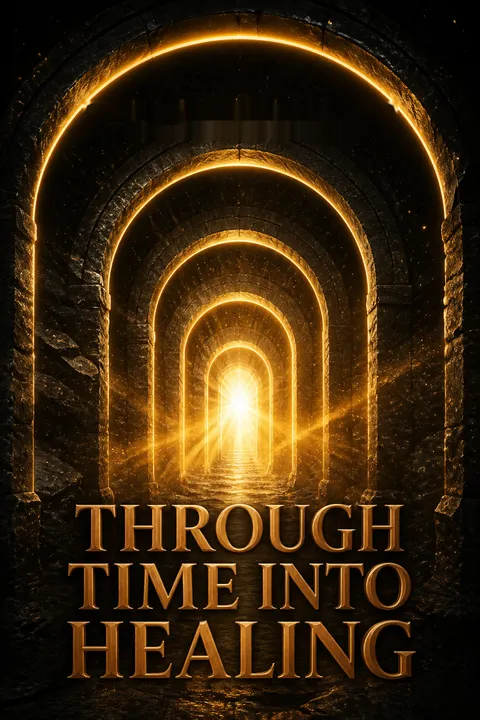
Through Time Into Healing is at once a clinician's account of changing beliefs, a collection of case histories, a spiritual argument, and a practical guide to hypnosis and self-exploration. Its narrative engine is Weiss's encounter with Catherine, whose reported improvement after past-life regression challenges his earlier professional assumptions. The book then extends that claim across physical symptoms, relationships, abuse, addiction, grief, and personal growth. Its organizing idea is consistent: unresolved fear may persist as a pattern, and a vivid experience of its supposed origin can help loosen that pattern.
The central epistemic issue is that therapeutic benefit and historical truth are separate questions. A patient can feel relief after a regression without the scene being a verified memory. Hypnosis can increase attention and emotional vividness, but remembered material can also be shaped by suggestion, expectation, and reconstruction. The book's case reports offer compelling narratives, not controlled evidence that reincarnation explains symptoms or that regression reliably cures them. Its claims about cancer and other serious conditions particularly require caution: anecdotes of improvement cannot establish treatment efficacy, and regression or visualization must not replace medical care.
The spiritual framework also carries an ethical tension. Interpreting abuse or illness as part of a chosen lesson may offer some people meaning, but it can burden others with the implication that suffering was selected or deserved. Weiss explicitly rejects that conclusion, yet clinicians should avoid imposing karmic explanations and should center a survivor's safety, boundaries, and own account.
The book's most transferable contributions are less dependent on accepting reincarnation: focused attention can support reflection; repeated reactions deserve curious investigation; difficult memories require careful integration; and people facing death benefit when caregivers listen without ridicule. Read as a record of one psychiatrist's practice and spiritual interpretation, the book is provocative and humane. Read as proof of past lives or a medical treatment manual, it asks more than its evidence can support.
Review Summary
Through Time Into Healing receives mostly positive reviews, with readers praising its fascinating case studies on past life regression therapy. Many find it thought-provoking and helpful for personal growth. Some appreciate the meditation techniques provided. Critics argue it lacks scientific backing and can be repetitive. Several readers note it broadened their perspective on life, death, and healing. The book is seen as an extension of Weiss's previous work, offering insights into the potential benefits of regression therapy for various physical and psychological issues.
People Also Read








Glossary
Hypnosis
Focused, guided attentionWeiss defines hypnosis as a state of concentrated attention in which a person remains aware and retains control. A therapist's voice can help focus the mind, but the person is not asleep or under another person's command. In the book, hypnosis is used to support relaxation, access memories, and guide regression.
Regression therapy
Guided return to earlier experienceRegression therapy is a therapeutic method in which a person is guided, often through hypnosis, to revisit an earlier period that may be connected to current distress. Weiss applies it to childhood memories and to experiences interpreted as past lives. He emphasizes preparation, patient choice, and integration of the material after the session.
Classical pattern
Extended life-story recallThe classical pattern is one form of past-life recall described by Weiss. A person experiences a relatively continuous account of a life, sometimes moving from early years through major events and death. The account may include a review of lessons from that life. Weiss contrasts this extended narrative with a more selective sequence of key scenes.
Key moment flow pattern
Selected scenes linked to healingThe key moment flow pattern presents selected, emotionally important scenes rather than a continuous life story. Weiss proposes that the subconscious brings forward moments most relevant to a current problem, sometimes across more than one remembered lifetime. The sequence may be fragmentary or brief, and its significance may become clear during discussion and integration.
Faces
Face-gazing visualization exerciseFaces is a group or solo exercise Weiss describes for prompting visual impressions. Participants gaze at another person's face in dim light, or at their reflection in a mirror, and notice apparent changes in features, age, or expression. Weiss presents these impressions as possible prompts for exploring images and associations, not as a dependable test of past-life memories.
Repetition compulsion
Reenactment of painful patternsRepetition compulsion is a psychoanalytic term for the tendency to repeat or reenact painful experiences, even when doing so brings no apparent benefit. Weiss uses the concept to explain persistent behaviors and recurring relationship conflicts. He extends its possible origins beyond childhood, proposing that some patterns may be linked to experiences interpreted as previous lives.
FAQ
What's "Through Time Into Healing" about?
- Exploration of Regression Therapy: The book delves into the concept of regression therapy, which involves revisiting past lives to heal present-day traumas and emotional issues.
- Healing Potential: It highlights the extraordinary healing potential of past-life therapy, suggesting that it can transform the mind, body, and relationships.
- Case Studies: Dr. Brian L. Weiss uses vivid case studies from his clinical experience to illustrate how regression therapy can address various psychological and physical ailments.
- Spiritual Insights: The book also explores spiritual concepts, such as the immortality of the soul and the continuity of consciousness beyond physical death.
Why should I read "Through Time Into Healing"?
- Understanding Regression Therapy: It provides a comprehensive understanding of how regression therapy works and its potential benefits.
- Personal Growth: Readers interested in personal growth and healing may find valuable insights into overcoming emotional and physical challenges.
- Spiritual Exploration: The book offers a spiritual perspective on life, death, and the continuity of the soul, which can be enlightening for those exploring these concepts.
- Practical Techniques: Dr. Weiss includes practical techniques for safe past-life recall at home, such as hypnosis, dream-recall, meditation, and journaling.
What are the key takeaways of "Through Time Into Healing"?
- Healing Through Past Lives: Regression therapy can uncover past-life traumas that influence current life issues, leading to healing and transformation.
- Mind-Body Connection: The book emphasizes the strong connection between the mind and body, suggesting that emotional healing can lead to physical improvements.
- Spiritual Continuity: It presents the idea that consciousness continues beyond physical death, offering comfort and reducing the fear of dying.
- Self-Help Techniques: Dr. Weiss provides techniques for individuals to explore their past lives and heal themselves, promoting self-awareness and personal growth.
How does Dr. Brian L. Weiss define regression therapy?
- Focused Concentration: Regression therapy involves using hypnosis to achieve a state of focused concentration, allowing access to the subconscious mind.
- Past-Life Memories: It aims to retrieve memories from past lives that may be influencing current life symptoms or behaviors.
- Healing Process: By bringing these memories to consciousness, individuals can experience emotional release and healing, alleviating symptoms and improving well-being.
- Integration: The process includes integrating insights gained from past-life experiences into the present life for holistic healing.
What are some of the best quotes from "Through Time Into Healing" and what do they mean?
- "We are immortal. We do survive physical death." This quote emphasizes the book's central theme of the soul's continuity beyond physical existence, offering comfort and reducing the fear of death.
- "Patience and timing... everything comes when it must come." It suggests that life unfolds according to a divine timing, encouraging acceptance and trust in the process of life.
- "The core healing mechanism of past life regression therapy is the transmutation of fear into love." This highlights the transformative power of regression therapy in turning negative emotions into positive ones, leading to healing and growth.
- "We are all teachers and students; we are all patients and healers." This quote reflects the interconnectedness of human experiences and the potential for mutual learning and healing.
How does "Through Time Into Healing" address the mind-body connection?
- Psychosomatic Healing: The book discusses how emotional traumas from past lives can manifest as physical symptoms in the present, and healing these traumas can alleviate physical ailments.
- Case Studies: Dr. Weiss provides case studies where patients experienced physical improvements after resolving past-life issues, illustrating the mind-body connection.
- Holistic Approach: It advocates for a holistic approach to healing, where emotional, mental, and physical aspects are interconnected and addressed together.
- Immune System Impact: The book suggests that emotional healing can boost the immune system, leading to better overall health and resilience.
What techniques does Dr. Weiss recommend for past-life recall at home?
- Hypnosis: Dr. Weiss suggests using self-hypnosis to access the subconscious mind and retrieve past-life memories.
- Dream-Recall: Keeping a dream journal can help identify past-life clues that appear in dreams, providing insights into unresolved issues.
- Meditation and Visualization: These practices can quiet the mind and allow past-life memories to surface, offering a deeper understanding of current life challenges.
- Journaling: Writing about experiences and insights gained during regression can aid in processing and integrating them into daily life.
How does "Through Time Into Healing" explore the concept of soulmates?
- Reincarnation in Groups: The book suggests that souls often reincarnate in groups, forming deep connections with certain individuals across lifetimes.
- Soulmate Relationships: It explores the idea that soulmate relationships can be romantic or platonic, providing opportunities for growth and learning.
- Healing Through Connection: Soulmate connections can help individuals heal past traumas and evolve spiritually, as these relationships often bring unresolved issues to the surface.
- Multiple Soulmates: The book posits that individuals can have multiple soulmates, each contributing uniquely to their spiritual journey.
What role do near-death experiences play in "Through Time Into Healing"?
- Validation of Past Lives: Near-death experiences (NDEs) often include elements that validate the existence of past lives, such as life reviews and encounters with spiritual beings.
- Fear of Death: The book discusses how NDEs can reduce the fear of death by providing firsthand experiences of consciousness beyond the physical body.
- Spiritual Insights: NDEs offer profound spiritual insights, reinforcing the book's themes of immortality and the continuity of the soul.
- Healing Potential: Understanding NDEs can aid in the healing process by offering comfort and a broader perspective on life and death.
How does "Through Time Into Healing" address the healing of relationships?
- Past-Life Connections: The book explores how unresolved issues from past lives can affect current relationships, leading to conflict and misunderstanding.
- Regression Therapy: By revisiting past-life experiences, individuals can gain insights into relationship dynamics and heal longstanding patterns.
- Forgiveness and Understanding: The process encourages forgiveness and understanding, allowing individuals to release negative emotions and improve their relationships.
- Soul Contracts: It suggests that relationships may be part of soul contracts, where individuals agree to help each other grow and learn through shared experiences.
What are some common themes in past-life memories according to "Through Time Into Healing"?
- Trauma and Healing: Many past-life memories involve traumatic events that need to be healed to resolve current life issues.
- Repetition of Patterns: The book discusses how certain patterns, such as fear, anger, or relationship dynamics, can repeat across lifetimes until they are addressed.
- Spiritual Lessons: Past-life experiences often contain spiritual lessons that contribute to the individual's growth and evolution.
- Cultural and Historical Contexts: Memories may include details from different cultures and historical periods, providing a broader perspective on the soul's journey.
What impact does "Through Time Into Healing" suggest past-life therapy can have on personal growth?
- Self-Awareness: Past-life therapy can increase self-awareness by uncovering hidden influences and patterns affecting current life choices.
- Emotional Release: The process allows for the release of repressed emotions, leading to greater emotional freedom and well-being.
- Spiritual Growth: By understanding the continuity of the soul, individuals can experience spiritual growth and a deeper connection to their higher self.
- Empowerment: Gaining insights into past lives can empower individuals to make conscious choices and break free from limiting beliefs and behaviors.
About the Author
Other books by Brian L. Weiss



Download PDF
Download EPUB
.epub digital book format is ideal for reading ebooks on phones, tablets, and e-readers.








