

Key Takeaways
Use regression as a path to healing, while holding reincarnation open.
A changed mind begins the book. Psychiatrist Brian Weiss says he approached reincarnation as a skeptic until a patient, Catherine, described scenes he interpreted as past lives and began to improve. He presents regression therapy as a way to explore such memories, not simply as a hunt for historical identities. In his workshops, he reports that about two-thirds of participants recall episodes and that these can bring emotional or physical relief.
The claim is spiritual. Weiss reads these accounts as evidence that consciousness survives death, returns in new bodies, and learns through relationships. He treats that account as a reality, though readers can distinguish the reported experiences from proof of reincarnation. The book’s practical invitation is to explore what an experience means without requiring prior belief.
The narrative has force because the skeptical clinician is himself changed by a patient, rather than asking readers to accept a doctrine on authority alone. At the same time, a compelling case history cannot establish that a memory belongs to another lifetime. Hypnosis can produce vivid, meaningful material without confirming its origin. That distinction need not make the experience worthless: a person may gain insight from a story while remaining agnostic about its metaphysics. The strongest reading leaves room for both possibilities.
Use a memory’s emotional lesson, even when its details are uncertain.
Meaning is not a transcript. Weiss allows that a regression may contain errors, symbols, or language learned later in life. He compares this to remembering a childhood accident mostly correctly while misidentifying the vehicle. In his view, a mistaken detail does not erase the emotional significance of the scene, and factual accuracy is less central to healing than the feelings and relationships it brings into awareness.
The interpretation matters. One contributor recalls dying as a knight from a throat wound. After the session, her previously unreliable voice became clear, and she connected the story to her fear of neck contact and a past throat operation. The book treats that link as healing insight, not merely as an opportunity to reconstruct a historical biography.
This approach resembles the use of metaphor in psychotherapy: an image can organize difficult feelings even if it is not a literal record. Memory research also describes recall as reconstructive, which makes caution especially important when hypnosis and a therapist’s prompts are involved. The useful question is not only whether a scene is historically true, but whether the interpretation helps the person understand current emotions without creating new certainty or distress. Meaning can be therapeutically potent and epistemically uncertain at the same time.
Treat recurring fears as clues to investigate, not diagnoses.
Follow the pattern carefully. The book proposes that present fears may echo earlier trauma. Heather, who often lost her voice and dreaded pressure near her throat, remembered a knight dying from a wound there. The session appeared to help her speak clearly, and she understood her fear differently. Other stories link fear of drowning, tight clothing, or being alone to remembered scenes of danger or loss.
Look in the present, too. Weiss acknowledges that current-life events can cause or intensify symptoms. Tong, for example, traced a lifelong feeling of abandonment both to childhood neglect and to a regression. The practical prompt is to notice what reliably triggers a reaction, then explore plausible causes with appropriate support rather than assuming every fear has a past-life source.
The book’s pattern-seeking can give a person a coherent account of a reaction that once seemed inexplicable. Trauma-focused therapies likewise attend to triggers, bodily responses, and the meanings attached to them. But a symptom is not a diagnostic clue to reincarnation, and a tidy narrative can be persuasive simply because it fits. Good exploration stays collaborative, tests more than one explanation, and avoids implying that a person’s suffering is their fault or evidence of spiritual failure.
Let grief soften without requiring certainty about the afterlife.
A remembered embrace can matter. Patricia lost both parents when she was eight and had no conscious memories of her mother. During a guided return to infancy, she pictured being held by her mother and felt a lasting increase in calm and confidence. The book presents the scene as contact with a loved one, while its immediate emotional effect is clear even without settling that claim.
Love remains central. Lee describes grieving her husband Richard after his sudden death. She and her sons separately felt his presence and received messages of comfort. Later, a regression helped her understand their relationship through another remembered lifetime. Such accounts offer the bereaved a consoling frame: death ends bodily contact, but need not erase the bond.
Continuing bonds with the dead are common in grief, and many people find comfort in dreams, memories, rituals, or a felt sense of presence. These experiences need not be dismissed, but neither should they be treated as mandatory evidence or as a requirement for healing. The most compassionate use of the book’s approach is to let a person draw comfort from an experience without telling them what they must believe. Grief can change through connection, whether understood spiritually, psychologically, or both.
Make karma a practice of responsibility, not a verdict of deserved suffering.
Consequences are for learning. Weiss describes karma as an opportunity to understand the effects of one’s actions, rather than as divine punishment. In a story told across three remembered lives, a contributor first recalls being a German soldier who helped kill Jewish families, then a Jewish mother whose child was taken, and finally a German officer who aided Jewish people to escape. The sequence frames empathy as learning to see harm from more than one position.
Review behavior, not status. The book’s life reviews ask what a person’s choices did to others and what can be changed now. Its measure of a successful life is not wealth or prestige, but increasing kindness, compassion, and nonviolence. This framework points toward repair in present relationships, rather than endless self-condemnation.
A moral life review can encourage accountability because it shifts attention from intention alone to the consequences others experience. That is a valuable ethical lens whether or not rebirth is accepted. The idea becomes dangerous if it is used to explain another person’s illness, poverty, or abuse as something they chose or deserve. The book rejects punishment as karma’s purpose, but its language of planned lessons can still be misapplied. Compassion requires uncertainty about why another person suffers, alongside practical efforts to reduce that suffering.
Offer love, but leave other people responsible for their choices.
Care is not control. Faith describes repeated memories of a beloved man leaving her despite her love and offers him a way forward in a final imagined scene. Her guide’s message is that she can choose her own path, but cannot make the choice for him. She decides to stop organizing her life around rescuing or waiting for him.
This lesson travels. Mira Kelley recalls feeling responsible for protecting a Native American community from historical violence. A small act of helping neighbors who were locked out clarified the distinction she needed: provide support, but do not assume that another person’s hardship can or should be prevented at any cost. In both stories, love means showing up without claiming ownership of someone else’s journey.
This is a useful corrective to spiritual ideas that can make every relationship seem fated or obligatory. Compassion does not require remaining in a harmful relationship, overriding consent, or treating boundaries as a failure of love. The book’s emphasis on free choice supports a more grounded ethic: help where help is wanted and possible, while recognizing limits. It also guards against the rescuer role, which can disguise a need for control as selflessness.
Practice connection through compassion for people and animals alike.
Connection becomes conduct. The book’s spiritual claim that beings share an underlying nature is meant to change ordinary behavior. Nina’s regression at a workshop led her to imagine bonds connecting everyone in the room, and she concluded that fear and misunderstanding feed pain. Weiss connects that insight to compassion rather than harm.
Animals belong in the circle. Asia describes a difficult bond with her horse, Magic, whose behavior led her to remember a painful life involving loss and guilt. The process helped her recognize her shame and approach the horse with more understanding. Other stories portray animals as sources of loyalty, comfort, and instruction. The point is not that every pet’s action has a supernatural message, but that attention to animals can deepen care.
The book’s interconnectedness theme is most persuasive when translated into observable obligations: attend to suffering, reduce cruelty, and widen the circle of concern. This connects naturally to ecological ethics, where human well-being depends on relationships with other species and living systems. Spiritual kinship can motivate care, but it is not necessary to prove that every being shares one metaphysical energy. The ethical test is simpler: does the belief make treatment of others more humane?
Welcome intuition, then distinguish a meaningful impression from proof.
The exercise is simple. Weiss describes psychometry as a workshop practice in which two people exchange personal objects, relax, and report any images, sensations, or thoughts that arise. Jacqueline saw three dancing pigs beside a pool while holding a stranger’s locket. The stranger recognized the image as a statue at her recently deceased father’s home. The unexpected detail felt like a message of connection.
Other accounts use different routes. The book includes dreams, meditations, spontaneous impressions, and alleged messages from the dead. It also describes xenoglossy, or speaking a language a person has not learned, as a possible form of validation. Such stories are presented as evidence by the contributors, but a striking match alone cannot rule out coincidence, prior information, or memory error.
A low-pressure exercise can sharpen attention to images and associations people might otherwise dismiss. It can also create a strong social moment, particularly when a grieving person feels recognized. The editorial distinction is between the reality of the experience and the explanation assigned to it. Specific, independently recorded details would make a stronger test than a powerful retrospective match. Wonder is compatible with careful verification, and skepticism need not be a refusal to listen.
Do not force a regression; patience matters more than spectacle.
There is no required result. Weiss says some workshop participants remember past lives readily, while others experience relaxation, childhood memories, dreams, or no clear scene. Raymond, initially skeptical and attending for professional education credits, reported vivid experiences; another contributor had no strong workshop memories but later dreamed of an old village. The book treats these different outcomes as valid rather than as failures.
Practice without pressure. Guided relaxation, meditation, and listening to a recording may help people focus, but the book advises against demanding a particular vision. A useful result can be a new perspective or a calmer state, even when no past-life narrative appears. If an experience does arise, it can be revisited and reflected on at the person’s own pace.
This is one of the book’s more practically restrained recommendations. Expectation can shape what people notice and report, so reducing pressure may also reduce the impulse to produce a dramatic story. A calm, voluntary approach respects differences in suggestibility and comfort. The same principle applies beyond regression: reflective practices are more useful when outcomes are not treated as tests of worth, talent, or spiritual advancement.
Keep medical care in place when regression appears to ease symptoms.
The reported changes are dramatic. Nikki says her range of tolerated foods rose from eleven to thirty-six after a regression. Sandy, who had experienced dangerous reactions to cumin, later reported a negative skin test and ate food containing it under her allergist’s observation. Other contributors describe relief from pain, asthma, psoriasis, or vision problems. These are personal accounts, not controlled evidence that regression treats disease.
The book sets a boundary. Its opening disclaimer says the material is not a substitute for medical advice. Weiss also describes regression as complementary to conventional treatment, which can continue while someone explores memories. That distinction matters most for conditions involving severe allergy, breathing, cancer, or eyesight. A reported improvement deserves attention, but it does not establish cause or make professional care unnecessary.
Mind, expectation, stress, and bodily experience can interact, so a psychological intervention may influence how symptoms are felt or managed. That possibility is different from showing that an earlier lifetime caused a medical condition or that regression cures it. The book’s anecdotes can encourage hope, but uncontrolled reports cannot establish efficacy, frequency, or safety. The responsible takeaway is to preserve the person’s meaning-making while keeping diagnosis and treatment decisions with qualified clinicians.
Turn experiences of unity into daily acts of kindness.
The book’s destination is ethical. Across regressions, dreams, and near-death accounts, contributors describe peace, light, a sense of belonging, and connection with others. Weiss interprets these experiences as glimpses of an enduring spiritual reality in which consciousness continues beyond bodily death. Some contributors also report future scenes or unusual forms of consciousness, extending the book’s picture beyond ordinary time and human identity.
The practical message is nearer. The recurring lesson is to reduce fear, judgment, and violence, and to act with patience and generosity now. A child in the book asks his father to donate a dollar to children with cancer because they could help someone. The modest gesture captures the book’s central measure of spiritual insight: what it changes in how a person treats others.
Mystical experiences often feel more certain than ordinary beliefs because they are vivid, emotionally intense, and personally consequential. Their value need not depend on settling claims about the afterlife or parallel realities. The book is strongest when it asks what such experiences make possible in ordinary life: less hostility, more care, and a wider sense of responsibility. That ethical result can be assessed without turning private revelation into universal fact.
Analysis
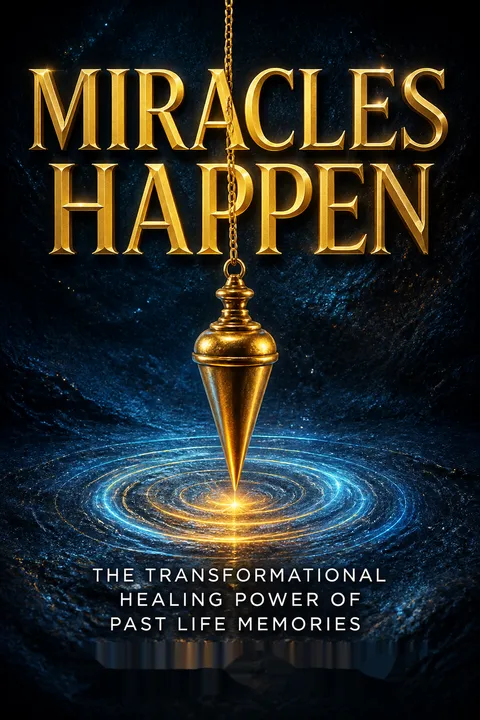
Miracles Happen is a spiritual self-help anthology organized around a clinical turning point: Brian Weiss’s movement from psychiatric skepticism to belief in reincarnation after a patient’s regression experiences. The book then widens from that origin story into dozens of testimonials about fear, illness, bereavement, relationships, intuition, animals, and mystical states. Its central interpretive claim is that memories of previous lives can expose the roots of present suffering, while the larger spiritual lesson is that life is continuous and beings are deeply connected.
The anthology’s form is its great strength and its central limitation. Recurring patterns across contributors give readers a felt sense of how the framework might be applied: identify an emotion or symptom, follow its story, understand its meaning, and release what no longer serves. The stories also make abstract teachings about compassion and forgiveness emotionally accessible. Yet repeated anecdotal reports do not function like controlled evidence. Participants are selected for meaningful experiences, memories are elicited through suggestion, and improvement after a session does not establish that an earlier-life event caused the problem. The author’s occasional acknowledgment of imperfect recall does not fully address these methodological limits.
A careful reader can preserve the book’s humane insights without accepting every metaphysical conclusion. Guided imagery may help people narrate distress, reassess present relationships, or find comfort in grief. Those outcomes matter, but they are not proof of reincarnation, psychic communication, or spiritual causation. The book is most useful when read as an invitation to examine fear and behave with greater compassion, rather than as a substitute for medical care or a definitive account of how consciousness works. Its memorable test is practical: does a belief make its holder kinder, more patient, and less willing to harm?
Review Summary
Miracles Happen receives mostly positive reviews, with readers praising its inspiring stories of past-life regression and healing. Many find comfort in the idea of reincarnation and soul connections. Some skeptics criticize the lack of scientific evidence and view it as pseudoscience. Fans appreciate Dr. Weiss's gentle approach and the book's message of love and spiritual growth. While some find the stories repetitive, others are deeply moved by the transformative experiences shared. The book is seen as thought-provoking, even for non-believers.
People Also Read







Glossary
Past-life regression therapy
Guided recall of earlier livesA therapeutic method using hypnosis or deep relaxation to help a person experience memories interpreted as previous lifetimes. In Weiss’s account, a therapist guides the person through scenes and feelings, then explores how they may relate to present symptoms, fears, or relationships. The book presents healing and insight as primary aims, while treating historical validation as possible but secondary.
Psychometry
Impressions from a personal objectA workshop exercise in which participants exchange personal belongings, relax, and report images, sensations, emotions, or thoughts that arise while holding the other person’s item. The book presents accurate impressions as evidence of intuitive connection, sometimes including messages related to deceased loved ones. It does not establish a verified mechanism for how information might pass between participants.
Xenoglossy
Speaking an unlearned languageThe reported ability to speak or understand a language the person has not consciously learned, sometimes during a regression. Weiss describes this as a possible form of evidence for past-life memories and says that recordings could be assessed by language specialists. The term names the reported phenomenon; by itself, it does not establish the source of the speech.
Life review
Reflection on a lifetime’s lessonsA guided reflection after a recalled lifetime in which the person considers what happened, what was learned, and how the experience might connect to present life. Weiss also describes a spiritual life review after death, in which a soul experiences the effects of its actions on others. Both versions emphasize understanding and learning rather than punishment.
Progression therapy
Guided exploration of possible futuresA practice that moves a person’s guided experience forward in time rather than backward into childhood or a supposed past life. In the book, a participant sees himself teaching in France in 2037 and uses the vision to consider a direction for his life. Weiss frames such scenes as possible or probable futures, not fixed outcomes.
Karma
Consequences that teachWeiss uses karma to describe the continuing moral consequences of actions across lifetimes. It is framed as a process of learning and repair, not divine punishment: people may need to understand harm by experiencing its effects or by making amends. The book’s interpretation encourages compassion, but it should not be used to claim that anyone deserves illness, abuse, or loss.
Akashic records
A proposed record of all knowledgeA spiritual concept mentioned as a possible explanation for information that seems to exceed one person’s ordinary knowledge. In the book, it refers to a universal store of knowledge accessible beyond individual memory, comparable in some respects to the collective unconscious. Weiss favors actual shared past lives as an explanation for matching memories, but presents the records as an alternative idea.
FAQ
What's Miracles Happen about?
- Exploration of Past Lives: Miracles Happen by Brian L. Weiss explores past-life regression therapy, where individuals recall memories from previous incarnations to achieve healing and transformation.
- Healing Through Understanding: The book emphasizes that understanding past traumas can lead to emotional and physical healing, allowing individuals to release fears and symptoms persisting into their current lives.
- Connection to the Divine: It discusses spiritual connections and the idea that love transcends time and space, encouraging readers to recognize their eternal nature and the lessons learned through multiple lifetimes.
Why should I read Miracles Happen?
- Personal Transformation: The book offers insights into how understanding past lives can lead to profound personal change, providing techniques to explore one's past and heal emotional wounds.
- Real-Life Stories: It includes compelling narratives of individuals who have undergone regression therapy, illustrating universal themes of love, loss, and healing.
- Spiritual Growth: Miracles Happen encourages readers to expand their understanding of life, death, and the afterlife, offering a framework for exploring spirituality and interconnectedness.
What are the key takeaways of Miracles Happen?
- We Are All Connected: The book emphasizes the interconnectedness of individuals, illustrating how our actions affect one another through stories of past-life connections.
- Healing is Possible: It provides evidence that understanding the root causes of physical and emotional issues through past-life regression can lead to significant healing.
- Love is Eternal: A central message is that love transcends lifetimes, with relationships continuing beyond physical death, providing comfort and healing after loss.
What are the best quotes from Miracles Happen and what do they mean?
- “We are all connected.”: This quote highlights the idea that every person is part of a larger spiritual web, suggesting that our actions and experiences are intertwined.
- “Sometimes miracles happen.”: It reflects the transformative experiences during past-life regressions, reminding readers that change and healing are possible in unexpected ways.
- “Love is the greatest lesson.”: This encapsulates the book's core message that the ultimate purpose of our lives is to learn and express love, emphasizing its role in healing and spiritual growth.
How does past-life regression therapy work in Miracles Happen?
- Inducing a Relaxed State: The therapy involves guiding individuals into a deeply relaxed state, often through hypnosis, to access memories buried in the subconscious.
- Recalling Past Experiences: In this state, individuals recall vivid memories from previous lives, revealing the origins of current fears, phobias, or physical ailments.
- Facilitating Healing: By understanding and processing these past experiences, individuals can release emotional pain and physical symptoms, leading to healing and personal growth.
What types of emotional pain can be healed through past-life regression in Miracles Happen?
- Phobias and Fears: The book provides examples of individuals overcoming irrational fears and phobias by uncovering their origins in past lives.
- Grief and Loss: Understanding past-life connections can help individuals cope with grief, recognizing that love transcends death and provides comfort.
- Anxiety and Depression: Past-life regression can address feelings of anxiety and depression stemming from unresolved issues, helping individuals find peace and purpose.
How can I apply the lessons from Miracles Happen in my own life?
- Practice Self-Reflection: Engage in self-reflection to identify fears, phobias, or emotional pain, using journaling or meditation to gain insight into their origins.
- Explore Past-Life Regression: Consider seeking a qualified past-life regression therapist or using guided recordings to uncover memories impacting your current life.
- Embrace Love and Compassion: Cultivate love and compassion in relationships, recognizing the interconnectedness of all beings and approaching others with kindness.
How does Miracles Happen address the concept of reincarnation?
- Reincarnation as a Journey: The book presents reincarnation as a soul's journey, with each lifetime offering opportunities for learning and growth.
- Lessons Across Lifetimes: It illustrates how individuals carry lessons from past lives into their current existence, leading to healing and a deeper appreciation of life.
- Interconnectedness of Souls: Reincarnation is tied to the idea of interconnectedness, encouraging readers to recognize bonds shared with others, transcending time and space.
How do past life memories affect current relationships in Miracles Happen?
- Karmic Connections: The book shows how unresolved issues from past lives can manifest in current relationships, influencing dynamics and interactions.
- Understanding Patterns: Exploring past life memories helps individuals identify detrimental behavior patterns, allowing for healing and transformation.
- Forgiveness and Compassion: Emphasizing forgiveness, the stories highlight the importance of empathy and understanding in relationships, recognizing everyone's growth journey.
What role do animals play in Miracles Happen?
- Unconditional Love: Animals are portrayed as loving companions that provide comfort and healing, teaching loyalty and compassion.
- Reincarnation of Pets: The book discusses the idea that pets can reincarnate and return to their owners, offering hope and reassurance to those grieving.
- Spiritual Guides: Animals are depicted as spiritual beings guiding us on our journeys, helping connect with inner wisdom and understanding.
How does Miracles Happen address the concept of karma?
- Karma as a Learning Tool: Karma is presented as a mechanism for learning and growth, where past actions influence current experiences.
- Healing Past Mistakes: Recognizing karmic connections allows individuals to heal past mistakes and improve current circumstances, fostering personal development.
- Compassion for Others: Understanding karma encourages greater compassion, reducing judgment and promoting empathy by recognizing everyone's learning journey.
What is the significance of love in Miracles Happen?
- Central Theme: Love is portrayed as the universe's most powerful force, transcending time and space, and is the essence of our being.
- Healing Power: Love is shown to heal emotional wounds and foster connections, acting as a transformative energy that changes lives.
- Eternal Connections: The book reinforces that love endures beyond physical death, connecting us with loved ones across lifetimes, providing comfort and hope.
About the Author
Other books by Brian L. Weiss

Download PDF
Download EPUB
.epub digital book format is ideal for reading ebooks on phones, tablets, and e-readers.








