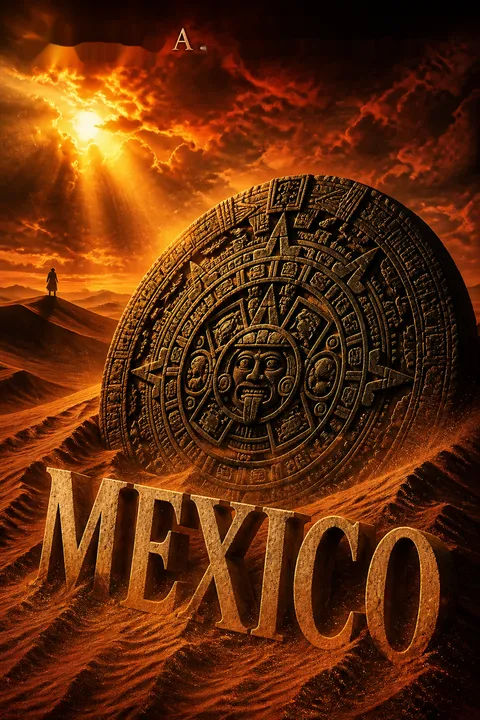


Plot Summary
Kilometer 303 Calls Him Home
In 1961, Norman Clay, a fifty-two-year-old American journalist born in Mexico, accepts an assignment to photograph a rumored deadly rivalry between matadors Victoriano Leal and Juan Gomez. He has spent years avoiding the country that expelled his father and cost him his marriage.
Returning to Toledo for the Festival of Ixmiq, he leaves his bus at Kilometer 303 and walks toward the city he has carried in memory. Its pyramid, cathedral, aqueduct and ruined silver mine are all bound to his family history. The assignment feels less like work than an encounter with an unfinished life. In the plaza, Norman meets Victoriano and learns that Juan Gomez has not yet arrived.
Norman’s return begins as a professional errand but quickly exposes the limits of his chosen distance. He has been able to work around the world by treating places as assignments; Toledo refuses to remain a subject. Its monuments make private ancestry visible, while the abandoned mine recalls the material losses that scattered his family. His ambivalence is not simply divided nationality. He has inherited two homes and acted as though choosing neither would spare him grief. The looming bullfight gives this inward crisis an external deadline.
A Crown for Victoriano
Victoriano’s ancestry explains why his father, the picador Veneno, treats every fight as family business. Victoriano’s grandfather, Bernardo Leal, rose from a Seville wedding to become a celebrated matador in Mexico, where a bull killed him in 1903.
Revolution later destroyed the Spanish household and killed Bernardo’s widow and her parents. Veneno answered that loss by becoming a feared bullfighter and raising his sons and nephew as one troupe.
When twelve-year-old Victoriano showed unusual grace in the ring, Veneno assigned his brothers Chucho and Diego supporting roles and made the youngest the family’s star. Years later, in Seville, Victoriano tried to fight without their control, was gored, and learned that independence would cost him the protection on which his fame rested.
The Leals turn bereavement into a professional system. Veneno’s devotion is genuine, but it also organizes the lives of his sons around one chosen talent. Victoriano receives the glory and the protection, while Chucho and Diego become essential precisely by standing behind him. His Seville crisis reveals the cost of this arrangement: he wants the honor of a matador’s solitary decisions but has been trained to rely on family intervention. His ambition is therefore entangled with dependence. The family’s inherited trauma does not merely motivate him; it gives his career its structure.
Juan Gomez Learns the Bull
Juan Gomez grows up among the Altomecs, landless and poor; his father, once a revolutionary, is killed by Cristeros after sheltering a priest. Sent to work at the Palafox ranch, Juan first sees a bullfight and discovers the vocation that will pull him away from his village. At seventeen, while selling beer during the Festival of Ixmiq, he jumps into the ring and faces a bull with an improvised cloth.
The bull injures him, but photographs of his passes spread through Mexico and give him a foothold. Years of hunger, bad contracts and dangerous provincial fights follow. His manager, Cigarro, and singer Lucha keep him going. By 1960, Gomez is known for killing bulls with unsettling courage, even as Leal’s fame eclipses him.
Gomez’s career begins not with a sponsor or a plan but with the shock of recognizing what he wants. He repeatedly chooses the difficult route over survival through patronage, even when poverty and injury make that choice costly. His knowledge of bulls comes from close observation rather than polish, and his fierce independence protects him from becoming someone else’s instrument. Yet the same self-command can become defiance for its own sake. By the time he meets Victoriano again, his identity rests on a single conviction: courage is not decoration but the work itself.
The Builders Lose Their Purpose
Norman’s family chronicle reaches back to Ixmiq, leader of the peaceful Builders who organized a vast community to raise Toledo’s first pyramid. Centuries later, their descendants prosper but grow complacent.
King Nopiltzin discovers that fermented maguey juice produces pulque, and the people make its pleasures central to their lives. The high priest Ixbalanque sees the danger: without a demanding project or a larger spiritual purpose, the city is losing its cohesion. He urges a new pyramid and warns that the people need something to strive toward.
Nopiltzin rejects him while drinking the new beverage. When Ixbalanque tries to depose the king, Nopiltzin has him killed. The Builders remain prosperous for a time, but their weakened vigilance leaves them vulnerable to northern invaders.
This history complicates any clean division between civilization and barbarism. The Builders are capable of extraordinary design and humane organization, yet comfort gradually erodes their ability to imagine collective obligations. Pulque itself is neither villain nor simple metaphor: it becomes dangerous because it fills a civic vacancy without replacing the purpose that has disappeared. Ixbalanque understands that institutions need more than material sufficiency. His failure to persuade the king shows how a society can possess abundance and still lose its future through the gradual surrender of shared effort.
Gray Eyes Break the Goddess
The Altomecs, once a cave-dwelling people, develop a war cult that sustains conquest through human sacrifice. They take the Builders’ city in 1151, execute King Tlotsin and his queen Xolal, and make the pyramid a center of terror. Generations later, Lady Gray Eyes, daughter of the warrior Tezozomoc, watches the Mother Goddess claim the finest young people, including her son Ixmiq.
His beloved Xochitl becomes pregnant, then is sacrificed after declaring that a new faith is coming. Gray Eyes hides the child, whom she raises as Stranger, and recruits three women to help her topple the hated goddess’s statue. Their act does not end foreign conflict, but it breaks the religious authority that had made sacrifice seem inevitable.
Gray Eyes’s rebellion grows from grief into political action. She cannot save her son or daughter-in-law, but she refuses to let their deaths be absorbed into the machinery that justified them. Her decision to act with three ordinary women matters: change becomes possible through hidden cooperation, not a lone ruler’s command. The new Christian image offers a language of mercy, yet the story does not make conversion a simple rescue. Gray Eyes’s spiritual independence precedes the Spaniards, and she insists that her people’s rejection of their old gods belongs to them.
Palafox Builds Toledo
In 1524, Salamanca scholar Antonio Palafox leaves a threatened career for Mexico, while his brother Timoteo follows as a soldier. Antonio arrives with faith in conversion and a vision of building a city; Timoteo seeks land and wealth to restore their family standing after their father is condemned by the Inquisition.
In 1527, Antonio’s campaign against the Altomecs stalls until Lady Gray Eyes negotiates an honorable truce and entrusts him with her people’s records. The brothers then secure a vast land grant, and Timoteo brands Indian laborers as property.
Antonio eventually stops the branding, builds Toledo’s civic and religious center, and forms a family with Gray Eyes’s granddaughter, Stranger, later called Maria. Their legacy joins architecture and cultural mixture to conquest, coercion and slavery.
The Palafox story refuses to let noble buildings certify noble conduct. Antonio’s city-making creates lasting beauty and institutions, but it depends on military power and coerced labor. Timoteo’s branding exposes the violence hidden beneath the family’s public claims to order. Antonio can oppose his brother and still benefit from the structure they have built together. His relationship with Maria suggests a more intimate form of cultural joining, but it does not erase the unequal conditions surrounding it. Toledo’s splendor is thus not a verdict on its history; it is the visible remainder of competing motives.
The Clays Cross the Border
Norman’s American ancestry begins with Jubal Clay, a Virginia planter and engineer who joins the Mexican War in 1846. Sent to inspect Toledo’s mine, Jubal is struck by the city and befriends the Palafox family.
He returns during the Civil War, fights for the Confederacy at Cold Harbor, and loses his sons, wife and plantation. Refusing life under the victorious North, he eventually returns to Mexico and finds work at the Mineral.
There he marries Caridad, an Indigenous mine worker descended from the Altomec line, and their son John becomes a mining engineer and author of The Pyramid and the Cathedral. John’s later departure from Mexico after the oil expropriation leaves Norman inheriting both the country’s beauty and his family’s unresolved grievance.
Jubal’s migration is driven by defeat, but his attachment to Toledo begins before exile makes it necessary. His connection to the Palafoxes and the mine turns a former battlefield into a possible home. Yet his Virginia assumptions travel with him, including a planter’s acceptance of hierarchy and coerced labor. Marriage to Caridad joins lineages but does not itself abolish the inequalities between them. John’s book later gives the family a framework for understanding Mexico, while his departure makes that understanding emotionally incomplete. Norman inherits belonging as both affection and argument.
A Critic Rewrites the Duel
Before the first fight, Norman meets oilman O. J. Haggard, his daughter Penny, and widow Elsie Evans, then joins critic Leon Ledesma on a tour of Toledo’s pyramid, cathedral and ruined chapel.
Ledesma shows how John Clay’s neat contrast between Indian pyramid and Spanish cathedral misses the tenderness hidden beside violence, and the brutality concealed beneath beauty. Norman has been preparing a simple magazine story that casts graceful Victoriano as hero and awkward Gomez as villain.
Ledesma’s account of bullfighting, death and Spanish art unsettles that formula. Penny listens closely, while her father resists the lecture. Norman sees that his editors’ appetite for a sensational duel is shaping his judgment before the men even enter the ring.
Ledesma’s intervention is not merely an art lecture; it exposes the reporter’s complicity in turning living people into usable opposites. Norman has been arranging evidence to fit a magazine narrative, just as earlier histories arranged Mexico to flatter Spanish or American claims. The critic’s counterexamples insist that contradiction exists inside each monument, not only between them. Penny’s attentiveness matters because she is willing to revise her first impressions, while Haggard wants the promised spectacle. The scene shifts Norman from observation toward self-scrutiny.
Paquito Dies in the Ring
Friday’s opening fight confirms Ledesma’s warning that most bulls disappoint. Gomez struggles with a stubborn animal, while Victoriano dazzles the crowd with a better one and wins two ears. The third matador, Paquito de Monterrey, then tries a dangerous pass with his final bull.
The animal catches him repeatedly and kills him against the barrier. Norman photographs the attack, including the Leals rushing to intervene, and immediately thinks of the story and pictures his editors will want.
That reaction shames him. Gomez finishes Paquito’s bull with care, while the crowd turns the dead matador into a legend through a lament. Norman sends his report and film to New York, but realizes the death has made the supposed Leal-Gomez duel feel secondary.
Paquito’s death breaks the festival’s promotional design and reveals the moral cost of treating danger as narrative material. Norman’s camera is both witness and instrument: it records the killing, but his first response is to judge its usefulness. His shame does not erase his professional appetite; it makes him recognize it. The crowd’s lament gives Paquito a public identity, but it also converts a poor young man into a familiar ritual of grief. The event forces Norman to ask whether witnessing is enough when the witness has already imagined the headline.
The Dead Demand Witnesses
At Paquito’s memorial Mass, Norman sees the rival matadors and their crews gathered in the damaged cathedral, where Father Gregorio conducts the service. A midnight visit to Toledo’s naturally preserved catacombs brings him into conversation with Richard Caldwell, an American Marine who uses the name Ricardo Martin and is trying to become a matador.
Ricardo explains that Korea, his father’s militarism and his country’s appetite for televised violence have made him seek a direct, accountable encounter with danger.
He has fought bulls, been wounded and returned to the ring. Norman recognizes in Ricardo a seriousness absent from his own career, while Penny and Mrs. Evans respond to the young man’s candor. For Norman, the dead in the catacomb make the festival’s talk of mortality immediate.
Ricardo’s choice is not presented as simple rebellion against his father. He rejects a life in which violence is consumed at a distance and seeks a risk whose consequences cannot be edited away. That belief is morally unstable, since bullfighting also turns death into spectacle, but Ricardo’s willingness to stand where harm can reach him distinguishes his commitment from passive appetite. The catacomb places his aspiration among people whose lives have already ended, making his future feel both chosen and fragile. Norman hears a challenge to his own practiced detachment.
Five Horns Are Shaved
On Saturday morning’s approach, Norman learns that Veneno, Chucho and Diego slipped out overnight to intercept the Palafox bulls. Veneno wants to blunt their horns so Victoriano will face less danger after Paquito’s death. At the village of Crucifixion, ranch foreman Candido catches the Leals before they can begin.
He reminds them that Norman once faced Soldado, the famed bull, and condemns the group for trying to tamper with the animals. They return to Toledo, then secretly shave five bulls in the corrals while a paid veterinary decoy draws Candido away. The sixth bull, No. 47, remains untouched. Candido discovers the tampering and mocks Veneno for missing one, warning that the unaltered animal is the very bull he should fear.
Veneno’s fear appears as care for Victoriano, but it crosses into manipulation of the contest and the animals themselves. The barbering is not an abstract symbol of corruption: it changes the physical balance between bull and fighter. Candido’s refusal is grounded in professional honor, while Norman’s participation as observer makes him less innocent than he would like to believe. No. 47’s untouched horns create the danger that the Leals were trying to remove, yet their failure to control the lottery preserves the possibility of an unplanned test.
Saturday Gives Nothing Back
Saturday’s program begins with rejoneadora Conchita Cintron’s farewell performance. Riding a trained horse, she places banderillas with striking precision, then leaves the arena to music, released doves and a grieving crowd. The ordinary fights that follow are mostly dull.
Young Fermin Sotelo briefly redeems himself with beautiful passes and a daring chest pass, but the bull breaks its horn against the barrier. Unable to kill the now-defended animal before the warning signals, Fermin loses the fight and leaves Toledo in shame.
Penny, who had hoped to know him, tells him he was brave and watches him drive away. His failure teaches her that admiration cannot protect someone from chance, while her concern for him becomes more adult than the romance she had imagined.
Conchita’s farewell offers a fully staged public honor, while Fermin’s collapse shows how quickly skill can be nullified by accident. Penny’s emotional investment is genuine, but the fight refuses to reward it with the romance she expected. Her decision to comfort Fermin rather than demand attention marks a small but important shift from fantasy toward empathy. The contrast also complicates spectacle: the crowd can create a beautiful departure for a celebrated performer, yet a struggling young matador leaves alone, carrying the private shame of a failure he did not cause.
A Cowgirl Takes the Ring
On Sunday, Norman and Mrs. Evans watch the Palafox bulls before the final fight and reconstruct the bloodline that runs from Marinero and Soldado to the brave cow Reina. At the ranch, Penny refuses to remain a spectator. When a young cow is brought into the ring, she takes a cape beside retired matador Calesero and is tossed twice, but rises both times.
Ricardo then slips into the ring and demonstrates polished passes, confirming that his ambition rests on skill as well as nerve. Meanwhile, Veneno secretly drops a soaked cement sack onto No. 47’s hindquarters, hoping to weaken the bull whose horns he failed to shave. The sorteo had assigned that dangerous animal to Victoriano; the hidden blow adds another uncertainty to the coming duel.
The ranch visit makes courage visible as practice, not simply a willingness to be injured. Penny chooses to enter, but the matadors guide and protect her, so her act is neither a claim of mastery nor a stunt without consequence. Ricardo’s skill counters the assumption that he is merely reckless. The bull’s lineage also links present danger to generations of breeding decisions. Veneno’s cement sabotage reveals that his fear has become strategy, while the lottery and Candido’s warning ensure that no human scheme can make the final fight fully predictable.
The Unshaved Bull Returns
On Sunday afternoon Victoriano first shines with his two assigned bulls, while Gomez struggles and loses ground with his. When No. 47 enters, the bull’s great horns and injured hindquarters make him both dangerous and difficult to read. He knocks down Veneno, and Gomez risks himself to draw the bull away. Victoriano is later gored but refuses to leave the ring.
Gomez’s brief, courageous work with the banderillas cannot erase his losses, while Victoriano returns to face the bull alone. After being knocked down again, he regains his sword and kills No. 47 with a true thrust over the horn. The injured bull is honored beside him in the circuit of the arena. Victoriano’s triumph is real, but the fight has cost both rivals dearly.
The climax refuses to make courage the property of only one matador. Gomez’s rescue of Veneno and his work under pressure demonstrate the integrity that Victoriano’s family has often overshadowed. Victoriano’s final return matters because he acts without the effortless protection that had shaped his earlier career. The bull, injured by Veneno’s covert blow and driven by its own defensive intelligence, remains more than a prop in their contest. His honored circuit forces the crowd to recognize the adversary as well as the victorious man.
Norman Chooses His Story
After the fight, Norman refuses his editor’s instruction to return to New York, telling him the story of Mexico is only beginning. The festival has shown him both the family’s achievements and the violence they obscured, from Indian labor in the mine to Gurza’s raids and the Leals’ bullring compromises.
He decides to write the broader history he has postponed. Later, he publishes his account of Gurza and reveals that Father Lopez, sheltered by the Clays, killed the general with Gurza’s own gun.
The article circulates widely, and Don Eduardo, who once destroyed Norman’s photograph of Gurza, writes to ask for a good copy for Toledo’s museum and invites Norman back. Norman has not settled whether he is Mexican or American, but he has chosen where to begin writing.
Norman’s resolution is an act of commitment rather than a tidy answer about national identity. He does not recover his wife, undo exile or reconcile every branch of the family. Instead, he abandons the easy story of a handsome matador and a brutal rival for a history that implicates its narrator. His later revelation about Father Lopez also shows that memory changes when private evidence enters public record. The final invitation from Don Eduardo turns the broken photograph into a contested inheritance: Toledo can reject Norman’s version and still ask him to help preserve its past.
Analysis
Mexico makes history tangible by attaching it to things people can see and touch: the steps women climb from the mine, the walls marked by gunfire, the bull’s horns, the photograph of a child on a general’s knee. These objects prevent the novel’s grand claims about civilization, religion and nation from floating free of their costs. Toledo’s buildings testify to artistic achievement, but the labor and conquest behind them remain part of the same record.
The book distrusts clean moral oppositions. The Spanish cathedral can be beautiful and coercive; the Indigenous pyramid can embody both statecraft and sacrifice. Revolutionaries may oppose oligarchic rule and still terrorize civilians. Bullfighters may be brave while participating in a spectacle shaped by money, family control and deception. Even Norman’s father, who writes perceptively about Mexico, cannot see everything beneath the symbols he has chosen. The novel’s argument is not that judgment is impossible, but that judgment requires attention to contradictory evidence.
Norman’s own development follows this demand. He arrives hoping to convert danger into a publishable contest and catches himself wishing for a death that would make a better story. Paquito’s killing exposes the cruelty of that wish. Ricardo, Penny and the fighters then press him toward different forms of commitment: Ricardo chooses the arena, Penny risks disobeying her father, and Victoriano finally acts without relying entirely on his family. None offers a simple model for Norman, but each makes postponement harder to defend.
The ending resolves the novel’s central question by changing Norman’s work rather than his passport. He remains divided between Mexican and American inheritances, yet decides to write about the history he has been circling. The book suggests that belonging is less a settled identity than a responsibility to tell the past without disguising its violence or denying its beauty. Memory becomes honest only when it includes both the monument and the people who paid to build it.
Review Summary
Mexico receives mixed reviews, with praise for its historical elements and bullfighting insights, but criticism for excessive focus on bullfighting and fictional aspects. Readers appreciate Michener's storytelling and character development, though some find the narrative structure disjointed. The book's portrayal of Mexican culture and history is both praised and questioned. Many reviewers express disappointment, feeling it doesn't match Michener's usual standards. Overall, opinions vary widely, with some finding it captivating and others struggling to finish.
People Also Read


Characters
Norman Clay
The returning journalistAn American journalist born in Toledo, Norman returns at fifty-two to cover the matadors’ rivalry. His parents’ exile and his own failed marriage have left him unsure where he belongs. He relies on professional distance, quick copy and the camera, but his family’s Mexican, Spanish and Virginian histories keep challenging that stance. Norman is observant, self-critical and attracted to the authority of inherited stories, yet he knows that inherited accounts can be partial. His central drive is to make his remaining years matter through serious writing. He is especially responsive to people who act with conviction, including Gomez, Ricardo and Penny, because their choices expose how often he has postponed his own.
John Clay
The exiled mining fatherNorman’s American father was born in Toledo and managed the family mine before becoming a respected writer on Mexico. A Protestant and engineer, John values order, work and public responsibility, but his rigid judgments can simplify the people and history he loves. His book, The Pyramid and the Cathedral, gives Norman a framework for understanding the city, even as later discoveries expose what that framework misses. John’s devotion to private property and his distrust of Mexican political upheaval shape his family’s departure. He remains a powerful presence in Norman’s mind because his achievement as a writer intensifies his son’s fear that he has not done enough.
Jubal Clay
The Confederate mine-builderNorman’s grandfather, a Virginia planter, engineer and Confederate officer, first encounters Toledo during the Mexican War. He is practical, militarily capable and formed by the assumptions of his plantation world. Defeat destroys the home and family life to which he is devoted, sending him south to seek work at the Mineral. There he becomes entangled with the Palafoxes and with a society he had once treated as foreign. His later life tests whether a person can build belonging after losing both country and household. Through Jubal, the novel connects American civil conflict to Mexico’s own contested land, labor and memory.
Caridad
The mine's Indigenous survivorNorman’s Mexican grandmother is an Altomec woman who spends her youth carrying ore through the Mineral’s dangerous shaft. Intelligent, proud and unsparing, Caridad refuses to let religious language conceal the labor imposed on Indigenous women. She can be tender with Norman and fiercely confrontational with the powerful, including priests and mine owners. Her judgment of General Gurza differs sharply from the Clays’ and Palafoxes’ because she evaluates him by whether he unsettles an unjust order. Caridad passes on an understanding of mixed ancestry and working-class Mexican experience that neither her son nor grandson could gain from family status alone.
Victoriano Leal
The family's elegant matadorVictoriano is a gifted, handsome matador whose cape work wins admiration in Mexico and Spain. He was raised within the Leal troupe, protected by his father Veneno and brothers Chucho and Diego, and his success is inseparable from their coordinated labor. Beneath his polish is a serious artist who wants to control his own decisions and live up to his grandfather’s courage. That desire conflicts with the family system that has kept him alive and famous. Victoriano is neither simply a hero nor a fraud: his grace is real, as are his hesitations, dependence and capacity for renewed resolve when the arena demands more than performance.
Juan Gomez
The relentless Indian matadorGomez is a short, powerfully built Altomec matador whose career begins in poverty and advances through stubborn effort rather than patronage. He studies bulls closely, trusts his own judgment and takes the final killing work with uncommon seriousness. His plain style contrasts with Victoriano’s elegance, but Gomez is not merely a symbol of Indian grit; he is ambitious, proud and capable of calculated provocation. He relies on his manager Cigarro and singer Lucha while guarding his independence in the ring. Gomez’s personal code makes him difficult to manage and difficult to dismiss, especially when he believes another fighter is being shielded from the true danger.
Veneno Leal
The father who trains and protectsVeneno, whose professional name means Poison, is Victoriano’s white-haired father, a celebrated picador and the architect of the Leal family troupe. Having witnessed the death of his own father in the ring, he treats preparation and protection as sacred duties. His pride in Victoriano is genuine, but his care often becomes control, and his tactics can cross the line between safeguarding his son and compromising the contest. Veneno understands bulls with hard-earned expertise and lives by a demanding conception of honor, even when fear tempts him to bend it. His family’s success is both his life’s work and the source of tension with Victoriano.
Leon Ledesma
The compromised bullfight criticA Spanish Republican exile, Ledesma becomes Mexico’s most influential bullfight critic after his own ambitions as a matador collapse. He is brilliant, theatrical, widely read and openly corrupt in his dealings with fighters who pay for favorable notice. Yet he insists that money purchases his style, not his underlying judgment, and he can recognize courage even in a man he dislikes. His essays push Norman beyond easy contrasts between Indian and Spaniard, brutality and beauty, life and death. Ledesma’s own exile makes him perceptive about belonging, while his vanity and graft keep his moral authority deliberately unsettled.
Penny Grim
The Oklahoma heiress seeking directionPenny is a seventeen-year-old from Tulsa who comes to Toledo hoping to meet a matador and encounter a life beyond her father’s expectations. She is privileged but not passive: she questions what her money is for, wants a serious education and recognizes that growing up requires choices her family cannot make for her. Her fascination with Fermin begins in romantic anticipation, but the fights teach her to respond to other people’s vulnerability rather than demand a happy outcome. Penny’s courage is initially impulsive, then more considered as she engages with the bulls, Ricardo and the women around her.
Elsie Evans
The widowed benefactorElsie Evans is a wealthy Oklahoma widow traveling with her late husband’s business partners. Her grief has made her question what remains meaningful after decades of marriage and the loss of a child. She listens closely, asks direct questions and refuses to let her companions’ discomfort dictate what she is allowed to see. Her sympathy for young people does not become indulgence: she recognizes both Penny’s need for independence and Ricardo’s seriousness. Elsie’s money gives her the power to help, but she tries to make assistance serve a purpose rather than purchase obedience. In Toledo, she becomes a steadier adult presence than Penny’s furious father.
Richard Caldwell, called Ricardo Martin
The American aspiring toreroA former Marine from Idaho, Ricardo uses his mother’s surname and Spanish pronunciation as he tries to establish himself in Mexican bullfighting. He is verbally hesitant around people who judge him but becomes forceful when describing his purpose. Service in Korea and conflict with his militaristic father have left him impatient with distant, consumable violence. He wants a direct test of courage and accepts poverty, injury and uncertainty as the price of that choice. Ricardo’s idealism is not free of vanity, but his willingness to practice among dangerous bulls distinguishes him from a tourist playing at rebellion.
Don Eduardo Palafox
The rancher and festival powerDon Eduardo is the head of the Spanish Palafox branch, owner of the remaining bull ranch and a force in Toledo’s civic life. He is sociable, wealthy and skilled at using family connections, yet his attachment to tradition can make him defensive about the costs hidden beneath it. He raises bulls, supports the festival and takes pride in the city’s buildings, while bargaining hard with critics and matadors. Norman’s uncle in the expansive Mexican sense, Eduardo welcomes him as kin but expects him to understand the practical compromises that keep the festival alive. His loyalty to Toledo is personal, political and commercial all at once.
Lady Gray Eyes
The queen who challenges sacrificeAn Altomec queen and ancestor of Norman’s Indigenous line, Gray Eyes is raised in a warrior society but grows increasingly revolted by the sacrifices demanded by its priests. She is observant, strategic and disciplined, concealing dissent until she can act with trusted women. Her authority comes not only from rank but from her ability to read the fears and private convictions of others. Gray Eyes welcomes the possibility of a gentler faith without surrendering her people’s claim to have chosen it themselves. She represents a form of political courage that works through alliances and memory rather than spectacle.
Fray Antonio Palafox
The priest who builds ToledoAntonio Palafox leaves Salamanca for Mexico as a Franciscan priest with both spiritual ambition and a practical instinct for power. He imagines cities on a monumental scale, serves Cortes and helps establish Spanish rule in Toledo. His conscience is repeatedly tested by the conflict between evangelization, family advancement and the violence carried out in the Church’s name. Antonio’s relationships with his brother Timoteo, Lady Gray Eyes and Maria expose different sides of his character: administrator, builder and man capable of affection. He contributes to Toledo’s architectural legacy without escaping the coercive system that makes that achievement possible.
Hector Sepulveda
The one-handed local poetAn Altomec poet and museum worker, Sepulveda brings Indigenous memory into Toledo’s public celebrations. His poem about the harvest challenges a festival accustomed to honoring Spanish-looking contestants, and his later pageant stages the city’s priests, soldiers, laborers and dead. He is forceful without being merely accusatory, and he knows that public art can make overlooked histories audible. Norman respects his work because it refuses to reduce the plaza to one family’s triumph.
Xochitl
The condemned youth's belovedXochitl is the young woman chosen to accompany the Perfect Youth, Ixmiq, before his ritual sacrifice. Their mutual love disrupts the priests’ carefully managed ceremony and gives Gray Eyes a personal reason to resist the Mother Goddess. Xochitl’s courage is intimate and direct: she refuses to treat the young man as an offering stripped of human attachments. Her choice becomes part of the family memory that Norman inherits.
Conchita Cintron
The departing horsewomanConchita is a celebrated rejoneadora, a bullfighter who works from horseback, and a guest performer at the Toledo festival. Her command of horse and bull astonishes Penny, who rides in rodeos and recognizes the skill involved. Conchita’s farewell is carefully staged, but her authority within the ring comes from hard-won control rather than ornament. She gives the festival one of its most graceful spectacles and expands Penny’s sense of what a woman can do.
Fermin Sotelo
The young matador under pressureFermin is a newly established matador who hopes to prove himself before Toledo’s crowd. Penny meets him before the Saturday fight and becomes invested in his success. His performance swings from failure to a moment of brilliant courage, then collapses when a bull breaks its horn and cannot be killed within the allotted time. Fermin’s embarrassment makes him withdraw, but his effort gives Penny a first hard lesson in the difference between skill and control over events.
Cigarro
Gomez's loyal managerCigarro is a former peon who becomes Juan Gomez’s manager after recognizing the young fighter’s promise. He is shrewd about contracts, publicity and the humiliations that keep obscure matadors poor. His loyalty to Gomez persists despite their tangled history with Lucha. Cigarro understands that talent alone does not secure a career, so he pushes Gomez toward the opportunities and scandals that can make a crowd take notice.
Lucha Gonzalez
The singer beside GomezLucha is a nightclub singer and aspiring flamenco performer who supports Juan Gomez through the lean years of his career. Practical, proud and quick to challenge unfair treatment, she once confronts an impresario who tries to use Gomez without a firm contract. Her hopes for a life in Spain are tied to the matador’s success, but she also knows how quickly his prospects can collapse. She remains emotionally and financially entangled with both Gomez and Cigarro.
Candido
The ranch foremanCandido has spent decades protecting the Palafox bulls and knows their lineage and habits intimately. He regards them as living charges, not interchangeable props, which is why he confronts Veneno over the attempt to shave their horns. His sense of honor is grounded in work and responsibility rather than public reputation. Candido also remembers Norman as a boy and recognizes the scar left by Soldado.
Jubal Early
The Confederate exile generalA veteran Confederate general, Early becomes Jubal Clay’s commander and companion after the Civil War. He remains defiant toward Union authority and carries his military identity into exile. His friendship gives the grieving Clay a fellow fugitive, though Early’s own judgments and ambitions sometimes deepen their shared isolation.
Father Gregorio
The surviving village priestGregorio is a small, unassuming priest who survives the revolutionary attacks by living and worshiping in hiding. He once taught Norman catechism and later conducts Paquito’s memorial Mass. His courage is practical rather than heroic in display: he continues serving communities despite the risk, relying on ordinary people who protect him.
Plot Devices
The Plaza of Toledo
A city-sized memory mapThe plaza gathers the novel’s different histories into one physical setting. The pyramid, cathedral, aqueduct, government hall, theater, hotel and bullring each represent a different community’s labor and power. Norman’s family has touched nearly every building, so walking the square turns his private ancestry into a public landscape. The plaza also hosts the festival, where past conflicts return as ritual, pageant and debate. Its scale allows intimacy and spectacle to coexist: a person can recognize a relative’s statue while hearing thousands respond to a bullfight. The square does not settle what Mexico means; it keeps competing claims in view.
Cactus and maguey
Contrasting inheritances of MexicoJohn Clay’s contrast between cactus and maguey gives Norman an early vocabulary for thinking about Mexican character. Cactus suggests severity, defense and survival; maguey supplies food, fiber, shelter and pulque. The plants share the same land, just as violent and creative impulses coexist in the city’s histories and in its people. Later events complicate the neat opposition: maguey produces both useful materials and intoxicating drink, while institutions that claim to build can also exploit. The image remains valuable not as a fixed key to Mexico but as a reminder that apparent opposites grow beside one another.
The bullfight
A public test of choicesThe corrida organizes the present-day plot and provides its characters with a visible measure of skill, nerve, luck and moral conduct. The bull is not simply a prop: his breeding, prior treatment, horns and reactions alter what a matador can safely do. Different fighters expose different approaches. Victoriano builds beauty and control; Gomez accepts close danger; Veneno intervenes to protect his son; Ricardo seeks a place in the tradition. The staged contest also invites manipulation through publicity, bribery and horn shaving. Its rules create an apparent structure, but the animal’s unpredictable behavior keeps human plans vulnerable.
The family photograph
Evidence that changes historyA photograph of Norman as a child on General Gurza’s knee, with the general’s gun in view, survives because Caridad recognizes its future importance. It ties Norman to a revolutionary figure his family condemns, and later supports the account of how Father Lopez used Gurza’s own weapon against him. The image is simultaneously family keepsake, historical evidence and political provocation. Don Eduardo’s rejection of it shows that preserving history is never neutral: people may welcome an ancestor’s public honor while resisting the facts that complicate it. Norman’s decision to publish the story turns a private relic into public memory.
The festival pageant
History performed in publicSepulveda’s pageant brings the plaza’s overlapping histories onto the cathedral steps. It remembers the priests and nuns killed by revolutionaries, the women sent into the mine, the execution of Maximilian, the ancient Indigenous dead and the Palafox builders. Its dramatic voices disagree, and even the audience’s responses become part of the performance. The pageant cannot resolve responsibility or supply one uncontested national story. Instead, it makes the city hear histories that its monuments alone might conceal. The production also gives Norman a model for how personal memory can become a larger narrative without smoothing away conflict.
About the Author
Other books by James A. Michener


Download PDF
Download EPUB
.epub digital book format is ideal for reading ebooks on phones, tablets, and e-readers.








