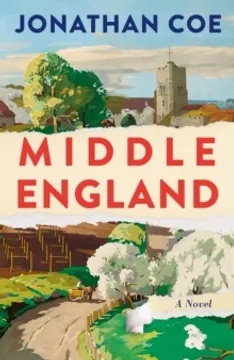


Plot Summary
A Funeral Beside the Severn
In April 2010, Benjamin Trotter leaves his mother Sheila’s funeral with his eighty-two-year-old father, Colin, and takes him to the Shropshire mill house where he lives alone. His sister Lois and niece Sophie soon arrive, followed by Benjamin’s old friend Doug, who is more absorbed in filing election news than mourning.
Benjamin still cannot face his estranged brother Paul, who has flown from Japan for the funeral. That night, a folk song recalls Sheila’s last days, when she weakly tried to sing beside her son. Benjamin weeps, then notices the river rising outside. His private refuge suddenly feels less secure, while the family’s grief sits inside a country already bristling with political anger.
The funeral makes private bereavement and public discontent share the same car journey. Colin’s complaints about speed cameras and politicians are not merely comic irritations: they show how anger can persist after its original causes have blurred. Benjamin’s riverside home promises a life outside history, yet the rising water unsettles that fantasy. Sheila’s faint singing gives memory a bodily form, while the estrangement from Paul shows how grief cannot automatically reunite a family.
A Speeding Ticket Match
Back in Birmingham, Sophie Potter is settling into a university teaching job and sharing her father Christopher’s house. A speeding camera catches her rushing to a train, and the required awareness course puts her in a classroom with Ian Coleman, its warm, quick-witted instructor, and Naheed, his confident colleague.
Sophie resists the other drivers’ complaints about being unfairly targeted, then catches Ian’s interest with an academic joke. Afterwards Naheed passes along Ian’s request for Sophie’s number.
Their dates become a relationship, and Sophie moves into Ian’s plainly furnished flat, where his ordinary habits both amuse and attract her. When she finally visits his mother, Helena, the older woman’s scrutiny and anxious welcome reveal that becoming Ian’s partner will also mean entering his family’s tightly held world.
The speed course turns a minor breach into a meeting point between strangers who interpret rules differently. Sophie is attracted to Ian partly because he is capable and playful, qualities her academic romances lacked. Yet the course also introduces Naheed’s authority and the resentment of people who feel judged by institutions. Helena’s possessive warmth complicates the romance early: intimacy with Ian comes with a family history and a demand for belonging that Sophie has not yet learned to read.
Ian Steps into the Riot
During the 2011 riots in Birmingham, Ian leaves his teaching building and finds streets crowded with police and young people. After helping a woman and her daughter seek a safe route, he follows a man carrying a hammer. When the man begins smashing a sweet-shop window, Ian grabs him and is struck down. Sophie, away in London, later brings Helena to visit him in hospital.
She sees that Ian’s intervention was dangerous and impulsive, but it confirms her admiration for his instinct to protect strangers. As they sit beside his hospital bed, Ian’s proposal becomes real, and Sophie accepts. Their marriage follows in 2012, a choice that joins her to Ian’s family even as she remains wary of its assumptions and politics.
Ian’s injury is not presented as uncomplicated heroism. He acts before considering what his intervention can achieve, exposing the gap between moral courage and effective action. Sophie’s attraction grows because she reads the act as evidence of character, not because it is safe or strategically wise. The proposal at the hospital turns an emergency into a commitment, but the marriage begins with a tension that will persist: Sophie trusts Ian’s personal goodness while not yet understanding how sharply their accounts of society may diverge.
A Book Cut to Size
At Sophie and Ian’s wedding, their families meet across differences that are visible in the seating plan and in Helena’s and Colin’s views of Britain. Months later, the 2012 Olympic opening ceremony unexpectedly holds the attention of relatives watching from separate homes.
Its mixture of industrial history, popular music, NHS imagery and national comedy moves Doug, Sophie and Ian, while Benjamin initially misses much of it as he works. Philip calls him and draws him to the broadcast, where an old Mike Oldfield composition recalls Benjamin’s school friendships.
Earlier that summer, Philip and former classmates had helped Benjamin strip his unfinishable, million-word project down to the love story at its heart. He now has a manageable manuscript, A Rose Without a Thorn, ready to seek a publisher.
The ceremony offers a rare image of national belonging that is made from contradiction rather than purity: industrial struggle, pop culture, monarchy and public services coexist in one broadcast. Its effect varies by character, exposing what each wants Britain to mean. Benjamin’s manuscript undergoes a similar act of subtraction. His friends tell him that the political and musical apparatus obscures the intimate story, forcing him to distinguish the scale of his ambition from the material he can actually make speak.
The Baltic Table
In 2014, Sophie accepts a guest lecture on a Baltic cruise and Ian joins her in Stockholm. The fixed dinner table gathers them with a handful of older passengers, including the outspoken Geoffrey Wilcox.
Sophie’s art lecture proves popular, but when Ian learns that Naheed has received the promotion he wanted, Wilcox suggests her ethnicity explains the decision. Ian does not endorse the accusation, yet his silence leaves Sophie isolated in the argument. The voyage also brings ordinary mortality close: one passenger dies, and his widow insists on continuing the holiday.
Two women leave after one suffers a broken leg, later explaining that they concealed their partnership because they expected judgment. Sophie returns home aware that politeness can shelter both kindness and prejudice.
The cruise compresses Britain into a dining table where strangers test one another’s definitions of fairness. Wilcox offers Ian an explanation that protects his wounded pride by turning disappointment into racial grievance; Ian’s silence matters because it leaves Sophie to challenge that story alone. The widows and the departing partners show how private life is shaped by public assumptions, even in a setting designed for leisure. Sophie's success as a lecturer does not erase her unease about what her marriage can hold.
Two Copies on a Shelf
Benjamin’s novel appears in 2015 through Philip’s small local-history press, with so little distribution that Benjamin finds copies tucked away in garden-centre bookshops. At Woodlands, his father unexpectedly recognizes the children’s entertainer Baron Brainbox as Charlie Chappell, Benjamin’s childhood friend, separated from him when Benjamin went to an elite school.
Charlie buys two copies and invites Benjamin back into his life. Then the novel is longlisted for the Booker Prize. Philip’s small operation is suddenly flooded with demand, journalists and radio requests, while Benjamin struggles to accept attention after years of rejection.
A chance meeting with Jennifer Hawkins, his teenage former girlfriend, revives an old connection and gives him a tentative, awkward intimacy beyond his lifelong fixation on Cicely.
The novel’s path from obscurity to a major prize list repeats Benjamin’s own delayed recognition: value exists before institutions notice it, but recognition still changes what can happen next. Charlie’s return is equally significant because it crosses the class divide that Benjamin once accepted as inevitable. Jennifer’s reappearance tests whether Benjamin can experience affection without making it a substitute for Cicely. His modest success opens doors, but it cannot by itself teach him how to move through them.
The Hashtag Takes Hold
In late 2015, Sophie’s seminar remark to Emily Shamma is reported through Emily’s friend Coriander, Doug’s politically uncompromising daughter. Coriander turns the misunderstanding into a formal complaint, and students circulate accusations online before Sophie has even met her department head.
Her seminars are boycotted; then the university suspends her from teaching while an investigation proceeds. Sophie believes a careless joke about indecision has been mistaken for an attack on Emily’s gender identity, but the speed of the online campaign leaves little room for context.
Her husband urges her not to read the messages, while she tries to reassure herself that procedures will clear her. The accusation begins consuming the career she spent years building and strains her trust in the institution.
The conflict exposes how a small, ambiguous classroom moment changes meaning as it passes through networks of testimony, politics and institutional caution. Emily’s identity is not the cause of Sophie’s remark, but the complaint becomes a public struggle over who gets to define harm. Coriander’s certainty supplies a clear moral narrative where Sophie sees a mistake. The university’s procedural response may be defensible, yet its slowness and silence make institutional neutrality feel like abandonment.
A Tory Victory at Dawn
During the surprise Conservative victory in the 2015 general election, Doug works through the night writing about austerity and the defeat of Labour. When his Conservative MP partner Gail Ransome wins her seat, he celebrates, and Coriander wakes beside him to discover both the result and their relationship.
She sees the affair as proof that her father’s political convictions are hollow and moves back in with her mother. Doug and Coriander had already grown distant: she despises the compromises of mainstream politics, while he hopes patient conversation will moderate her.
Her refusal to reconcile leaves him confronting the failure of his imagined father-daughter closeness. Meanwhile, Benjamin’s Booker longlisting gives Doug’s old friend the public recognition he has never expected, a contrasting change in fortune.
Doug’s private happiness arrives at the precise moment his public world turns against his expectations, and his daughter reads the overlap as hypocrisy. The election does not create their estrangement so much as make it visible: Doug believes good intentions and political nuance should count, while Coriander judges choices by their consequences and affiliations. The novel places recognition and intimacy side by side, showing that success in one sphere cannot compensate for a damaged relationship in another.
Longbridge Becomes a Shop
As the EU referendum approaches in 2016, Colin asks Benjamin to take him to the former Longbridge car works, expecting to see a new shop within the factory. The conveyor bridge is gone; the production buildings have been cleared, and a Marks & Spencer now occupies part of the site.
At the East Works, Colin finds only fenced mud awaiting housing construction. His memory remains vivid enough to summon his mother’s wartime work in tunnels beneath the factory, but he cannot understand how retail and homes can replace the jobs that once supported them.
Benjamin listens as his father grieves not only a building but the people and purpose it contained. Colin’s loss gives material shape to the economic discontent being recruited by the referendum campaign.
Longbridge makes deindustrialization visible as a physical substitution: a workplace becomes a shop, then a promise of homes, without resolving who will earn the money to inhabit them. Colin’s memory is both an archive and a trap. He can recall collective labor with clarity but cannot reconcile it with the present landscape. Benjamin’s patient presence does not correct his father’s politics; it allows the grief beneath them to be heard.
The Vote Breaks the House
On 16 June, the killing of Labour MP Jo Cox reopens Lois’s trauma from the Birmingham pub bombings, while Colin dies alone at home after walking to post his Leave ballot. His stroke has left him frail, and Lois arrives too late to help.
A week later, Britain votes to leave the European Union. Ian treats the result as a victory for people who feel ignored; Sophie experiences it as the removal of part of her identity and fears what his delight says about their shared values.
Their arguments deepen into separation, despite counselling. Doug watches the referendum’s aftermath with alarm, while Benjamin struggles to decide how to speak about a choice that has divided those closest to him. Personal bereavement and national rupture become inseparable.
The referendum makes political preference intimate: Colin’s ballot is at once his last act of participation and a decision Benjamin fears will shape Sophie’s future. Jo Cox’s murder gives the campaign’s language a lethal context, especially for Lois, whose older trauma is reactivated. Sophie and Ian do not simply disagree about Europe; each reads the other’s vote as evidence about their moral character. Their marriage cannot keep politics safely outside the home.
The Clown Throws a Punch
Charlie’s life has narrowed under money troubles, unstable work and his painful attachment to Aneeqa, the daughter of his partner Yasmin. He wants to help her pursue university and languages, but Yasmin resents their closeness and his limited earnings from children’s entertainment.
After the referendum, Charlie confronts rival entertainer Duncan Field at a birthday party where both have been booked. Duncan mocks Charlie’s poverty and celebrates that his own daughter can keep European citizenship through Irish ancestry, while Aneeqa’s plans have become less certain.
Charlie loses control and beats him badly enough to break his jaw. He is arrested, convicted and jailed. His violence ends his career with children, even as his account reveals the grief and humiliation behind the public farce.
The fight is not excused by the political provocation, but the provocation finds its force in older injuries: insecure work, class shame and Charlie’s fear that Aneeqa’s future is closing. Duncan turns Brexit into a personal hierarchy of winners and losers, and Charlie responds with the only power he can immediately exert. The clown’s costume makes the violence grotesque, but the scene strips away the assumption that comic figures are harmless or emotionally simple.
Ashes on Beacon Hill
In 2017, Benjamin and Lois carry their parents’ ashes to Beacon Hill, following Colin’s instructions to scatter them together on his wedding anniversary. As they play Vaughan Williams, Lois tells Benjamin that she has never recovered from the death of Malcolm, her boyfriend killed in the 1974 Birmingham pub bombings.
She recognizes that her long marriage to Christopher has been shaped by an attachment she never released, and admits she needs Benjamin’s help to move forward.
She has already left York and returned to Birmingham to help care for Colin; now she is ready to leave Christopher and the city. Benjamin, whose own romantic life has been dominated by Cicely, understands that their closeness is not merely shared history. They begin imagining a different future together.
The ashes ritual turns the siblings’ shared landscape into a place where memory can be spoken rather than merely endured. Lois’s confession revises the family’s understanding of her marriage: loyalty to Christopher has coexisted with an emotional absence neither sibling named. Benjamin recognizes a kinship between her arrested grief and his own fixation, but the scene does not make them identical. Their decision to help one another suggests that intimacy can be a practice of release, not only preservation.
Nigel Finally Admits It
After sixteen months of silence, Nigel Ives meets Doug in October 2017 and admits the government is in chaos over Brexit. He says ministers lack a plan and that influential free-market think tanks are pressing their agenda on a government that distrusts expertise.
Nigel soon leaves politics, and documents from the Imperium Foundation reach Doug anonymously. The papers outline a strategy to keep referendum anger alive and cultivate media relationships so Brexit can advance deregulation even as public enthusiasm fades.
Doug recognizes the signature of his old school rival Ronald Culpepper, now a wealthy foundation chairman. The documents connect public resentment to private interests, giving Doug evidence that the campaign’s populist language can serve powerful businessmen who claim to speak for ordinary people.
Nigel’s breakdown marks the collapse of the performance he has maintained for years: cheerful certainty can no longer conceal an absence of policy. The leaked papers do not reduce Brexit to a single conspiracy; they show how a coalition of voters with different grievances can be redirected by organized interests. Doug’s reporting therefore has to distinguish popular anger from the actors who seek to manage it. His old school rival becomes a consequential political force, not merely a personal antagonist.
Charlie Writes His Own Case
After leaving prison in 2017, Charlie visits Benjamin with notes and diary pages about the attack on Duncan. He describes the double-booked party, the years of professional sabotage, and Duncan’s final taunts about Aneeqa and the referendum.
Benjamin sees that Charlie has already made a vivid, imperfect record of the events and offers to help edit it. The offer reverses their childhood separation: the former elite-school writer now takes seriously the account of the boy who remained outside that world.
Benjamin also realizes that Charlie’s material may become the next book he needs to write. As they begin working together, Charlie’s confession becomes more than a defence of his actions; it gives shape to a life otherwise reduced to a tabloid punchline.
The collaboration unsettles the conventional division between author and subject. Charlie brings the lived account, while Benjamin brings the craft to make it legible, yet neither can claim the other’s experience. Their renewed friendship repairs a class-shaped break without pretending it never mattered. For Benjamin, editing is also a form of attention: he discovers that creative work can begin in service to someone else rather than in pursuit of his own old obsession.
Sophie Leaves the University
Sophie spends months suspended from teaching while the university delays her tribunal. Emily eventually tells her that Coriander had amplified the original misunderstanding beyond what Emily intended, but the formal process remains exhausting.
The university eventually reinstates Sophie, and she begins presenting a television series about European art. Her marriage has already fractured under the pressure of the referendum and their arguments about identity, fairness and belonging. Sophie moves to London for work, while Ian stays in Birmingham.
They try counselling, but neither can persuade the other that the partner’s vote was merely political. Sophie’s professional standing recovers more quickly than her sense of home: the career she defended no longer feels like a place she can safely inhabit.
The delayed resolution distinguishes procedural vindication from emotional repair. Sophie is cleared, but the institution’s prolonged silence has already altered her relationship to teaching. Emily’s regret also complicates the story’s moral geometry: the complaint did not originate as a campaign to destroy Sophie, yet Coriander’s intervention had real consequences. The marriage faces a different kind of uncertainty, because neither partner can reduce the other’s vote to a misunderstanding that an apology would erase.
Hartlepool and Chicago
In 2018, Sophie attends the wedding of her gay friend Sohan to Mike in County Durham. Sohan, who once mocked the provinces, is moving north with Mike to build a digital-skills charity in a former sports centre.
Their marriage leaves Sophie feeling the absence of partnership, and the quiet, post-wedding morning in Hartlepool intensifies her loneliness. She briefly imagines flying to Chicago to see Adam, the musicologist with whom she shared a charged, unfinished encounter in Marseille years earlier.
Adam’s reply reveals that he is married and has a young daughter. Sophie is mortified, cancels the fantasy visit and goes instead to Birmingham. The detour forces her to stop treating an unrealized romance as a ready-made escape from her actual life.
Sophie’s impulse toward Adam is less a considered desire than a projection of possibility onto an old, unfinished moment. His family news punctures that projection without cruelty. Sohan’s marriage offers a contrasting model: commitment can grow out of difference, but it cannot be borrowed as a solution to Sophie’s own uncertainty. The North East setting, which Sohan experiences as exile, gives Sophie a chance to notice how easily metropolitan judgments mistake unfamiliarity for emptiness.
Grete Tells the Truth
In Birmingham, Sophie unexpectedly meets Grete and Lukas, who explain why they are leaving England. A man abused Grete for speaking another language, smashed her phone and spat at her outside the village shop.
Helena witnessed the assault, then refused to support Grete when she asked her to confirm what she had seen. Ian challenged his mother and stopped visiting her. Sophie understands that Helena’s earlier warnings about political correctness were not abstract opinions: they had become a choice about whether a frightened neighbour deserved solidarity.
Sophie goes to Ian’s flat rather than calling ahead. They talk about the estrangement, the years apart and the ways they both misread one another. Their reunion is tentative, but begins with a concrete act of returning.
Grete’s account transforms a familiar ideological dispute into an ethical test with a witness, a victim and a decision. Helena’s silence is especially consequential because she knows what happened and chooses belonging to her own side over solidarity with Grete. Ian’s break with his mother shows that political identity can alter family loyalties, not just public arguments. Sophie’s unannounced visit matters because she replaces speculation with presence, accepting uncertainty rather than demanding a guaranteed outcome.
The Schoolyard Confrontation
At the 2018 King William’s reunion, Doug leads his old friends out of the dining hall rather than listen to Culpepper promote post-Brexit business opportunities.
Outside, he confronts his former classmate about the Imperium Foundation’s effort to keep anger alive and the threats directed at Gail, a Remain-voting MP who defies her party’s Brexit timetable. Doug grabs Culpepper by the bow tie before letting him go. Nearby, Benjamin returns to the school newspaper rooms and speaks with his former teacher, Mr Serkis, about what work might follow his failed attempt at a second novel.
Benjamin tells his friends he and Lois will move to Provence and run a guest house. His departure is not escape alone: it is a practical promise to build a life together.
The reunion stages two forms of reckoning with the past. Doug’s confrontation turns old school rivalry into a dispute over who is entitled to speak for the public, though his physical threat also exposes how easily resistance can reproduce the aggression it condemns. Benjamin’s return to the newspaper rooms is quieter: he accepts that his future may not resemble the career he once imagined. Both men must decide what to carry forward from their education, friendships and political disappointments.
The Rotters Find Home
Benjamin and Lois establish themselves at a mill on the Sorgue, where Grete and Lukas help run the house and Charlie brings Aneeqa on her way to study in Spain. Sophie has reconciled with Ian and is preparing to move with him to the North East for work at Mike’s new educational charity.
She visits Marseille with Aneeqa, revisiting the place where her earlier encounter with Adam once seemed to promise another life. Before leaving France, Sophie and Aneeqa paint a new name for the mill: The Rotters’ Club. Lois then tells Benjamin that Sophie is pregnant, with a due date of 29 March, the scheduled Brexit date. The news gives the divided family a future they cannot control but can choose to welcome.
The ending gathers the novel’s recurring questions of home, migration and inheritance into a shared household rather than a political resolution. Benjamin and Lois carry their family name into France, while Grete, Lukas, Charlie and Aneeqa create new routes through Europe. Sophie and Ian’s pregnancy does not settle their differences; it makes their willingness to live with uncertainty consequential. The due date sharpens the irony: a national deadline becomes the expected arrival of a child, whose life cannot be reduced to the referendum’s verdict.
Analysis
Middle England builds its political history from ordinary encounters: a speed-awareness class, a Christmas table, a cruise-ship dinner, a department meeting and a walk through a demolished factory site. The referendum matters because its abstractions become tests of intimacy. Sophie and Ian do not split over a technical argument about Europe; they begin to doubt whether they recognize the same moral world in each other. Colin’s vanished workplace gives his resentment a material source, while the Imperium Foundation shows how organized interests can convert varied discontent into leverage.
The novel is equally attentive to the limits of memory. Benjamin’s nostalgia sometimes preserves affection, but it can also edit out the suffering and exclusion that shaped the past. Lois’s trauma, Colin’s factory memories and Charlie’s account of precarious work each challenge the comforting version of England others want to inherit. Their stories do not produce one consensus. They make listening, care and revision difficult but necessary practices.
The ending refuses a simple political cure. Sophie and Ian reunite without resolving every difference, and their pregnancy offers hope without certainty. Benjamin and Lois leave England, yet carry their shared history into a new home where other characters can gather. The renamed mill, The Rotters’ Club, turns a childhood joke into a chosen community. Against the referendum’s demand for a final national verdict, the novel proposes something less decisive and more human: a future made through continued attention to other people, even when belonging remains contested.
Review Summary
Middle England receives mixed reviews, with some praising its portrayal of Brexit-era Britain and others finding it disappointing. Many appreciate Coe's humor, social commentary, and character development, particularly relating to the political divisions surrounding Brexit. Some readers found the book insightful and engaging, while others felt it was too long, biased, or lacked depth. Several reviewers noted its relevance to current events and its exploration of British identity. Overall, opinions varied widely, with ratings ranging from 2 to 5 stars.
People Also Read






Characters
Benjamin Trotter
The inward-looking novelistBenjamin is a shy, music-loving writer whose imagination has been shaped by a teenage romance and an enormous, unfinished literary project. He seeks quiet in a Shropshire mill house and tends to experience the present through memories of school, family and lost possibilities. His first instinct is often retreat: he avoids difficult conversations and lets other people’s needs go unspoken. Yet his attentiveness to grief, his loyalty to Lois and his friendship with Charlie show a capacity for care that his self-absorption can obscure. Writing gives him a way to reconsider the past, but he must learn that a life cannot be made meaningful by art alone.
Sophie Potter
The searching art historianSophie is Benjamin’s niece, an art historian with a quick intellect, romantic hopes and a strong appetite for urban diversity. She wants both emotional security and a life that remains open to new people and ideas. Her relationship with Ian draws her into a family and region she initially finds unfamiliar, while her academic work gives her an independent identity. Sophie is capable of self-criticism, but she can also mistake professional confidence for personal certainty. Her story follows her effort to judge people by their actions without surrendering the values that matter to her.
Doug Anderton
The restless political journalistDoug is Benjamin’s longtime friend and a journalist whose left-leaning politics are inseparable from his interest in the people behind public events. He understands political spin but is less successful at recognizing the compromises in his own life. His wealthy home, strained marriage and complicated bond with Coriander sit uneasily beside his working-class origins. Doug likes analysis and argument, sometimes using them to avoid vulnerable conversations. His attention to threats against Gail and his suspicion of powerful donors show both the value and the limits of a journalist’s critical instincts.
Lois Trotter
The loyal, grieving sisterLois is Benjamin’s practical, devoted sister and Sophie’s mother. She builds her adult life around work, family responsibility and a trauma she rarely discusses. Her marriage to Christopher is shaped by a past loss that remains emotionally present, though she keeps its weight hidden from her brother. Lois is less inclined than Benjamin to dwell in ideas; she tends to act, organize and care for others. Beneath that competence is a need for companionship and the courage to reconsider choices that have long felt settled.
Ian Coleman
The steady driving instructorIan is Sophie’s husband, a driving instructor whose calm competence and generous nature first attract her. He is close to his mother and friends, enjoys sport and values practical forms of care. Ian’s sense of fairness is shaped by his own disappointments at work and by a growing belief that ordinary people are ignored. He can be warm and playful, but his reluctance to discuss painful subjects leaves Sophie to interpret his silences. His character complicates the idea that private kindness guarantees shared political or moral understanding.
Colin Trotter
The grieving factory foremanColin is Benjamin and Lois’s father, a former Longbridge worker and lifelong Conservative voter. He is taciturn, suspicious of politicians and increasingly unsettled by age and loss. Sheila’s death removes the companion who managed much of their shared life, leaving Colin dependent on his children while resisting the idea that he needs help. His pride in industrial work gives his political complaints a concrete history, even when resentment overtakes nuance. Colin’s memories preserve a world of collective labour that his children can visit but never fully inhabit.
Coriander Anderton
The uncompromising daughterCoriander, usually called Corrie, is Doug and Francesca’s daughter. She rejects the wealth, schooling and politics surrounding her upbringing, seeking a more diverse and radical world among London’s young people. Her moral certainty gives her the courage to challenge adults, but it can also make her impatient with ambiguity and repair. Coriander is estranged from her father because she sees his compromises as part of the problem he claims to oppose. Her actions show how activism can express genuine care while still causing harm when conviction outruns listening.
Charlie Chappell
The children's entertainerCharlie is Benjamin’s childhood friend, now a performer known as Baron Brainbox. He is warm, loyal and more thoughtful than his clown costume suggests. His relationship with Aneeqa gives him a sense of family, though his affection for her is complicated by his precarious position in her mother’s household. Financial insecurity and professional rivalry press on his self-respect. Charlie often explains events as accidents or fate, a habit that helps him endure disappointments but can also keep him from confronting the choices he makes.
Aneeqa
The artist with plansAneeqa is Yasmin’s daughter, a gifted artist and language student who is close to Charlie. She is observant, witty and alert to the assumptions other people make about her Muslim identity. Art gives her a way to direct anger and frustration into deliberate work. She wants an independent future shaped by study, language and movement rather than by other people’s expectations. Aneeqa resists being treated as a symbol of either cultural conflict or national possibility; she is a young person trying to make her own decisions.
Sohan Aditya
The scholar of EnglishnessSohan is Sophie’s close friend, an academic whose research turns toward images of English identity. As a gay man of Sri Lankan heritage, he is alert to the gap between celebrated British tolerance and the hostility he encounters in daily life. He is sharp, funny and sometimes inclined to treat provincial England as an idea rather than a place inhabited by people. His relationship with Sophie offers intimacy without romance, and his changing plans challenge his own assumptions about where a meaningful life can be built.
Helena Coleman
Ian's formidable motherHelena is Ian’s widowed mother, proud of village life and deeply attached to the past she shared with her husband. Her grief has made her especially protective of Ian, whom she treats as her closest remaining family. She can be generous and hospitable, but her nostalgia hardens into suspicion of social change and resentment toward people she sees as culturally different. Helena’s warmth toward Sophie carries an expectation that Sophie will protect Ian and share her understanding of the world.
Jennifer Hawkins
Benjamin's former girlfriendJennifer knew Benjamin as a teenager and reconnects with him after his novel attracts attention. Divorced and independent, she is direct about the past and more emotionally perceptive than Benjamin expects. She wants affection that is active rather than merely remembered, and her frankness exposes his tendency to retreat into interpretation instead of making decisions. Jennifer brings humour and physical ease to a life Benjamin has long treated as a record of missed chances.
Gail Ransome
The principled Conservative MPGail is a Conservative politician and Doug’s partner. She is capable, politically moderate and willing to defy her party when she believes legislation is badly designed. Her public composure conceals the strain of being targeted for her position, and her responsibilities as a mother sharpen her awareness of political consequences. Gail and Doug do not share a party, but their relationship asks whether respect and affection can survive disagreement without pretending that disagreement is harmless.
Nigel Ives
The cheerful spin doctorNigel is a young government communications aide who cultivates Doug as a source and interlocutor. He explains political events through breezy slogans, generational confidence and comic evasions. His father once feared Doug at school, a history that gives their meetings an odd personal undertone. Nigel’s fluency in spin conceals how little certainty exists behind the government’s public posture. He is a portrait of a political culture that mistakes upbeat presentation for control.
Grete
The village housekeeperGrete is Helena’s Lithuanian cleaner and a friend to Sophie. She is observant and capable, balancing paid work with family life alongside her husband Lukas. Her experience of village belonging is more complicated than Helena assumes: she can be part of daily life and still be treated as an outsider. Grete’s practical kindness and willingness to speak about what happened to her reveal the human cost of hostility that others dismiss as mere political rhetoric.
Emily Shamma
Sophie's transgender studentEmily is a quiet student of Welsh and Iraqi heritage who is navigating gender transition and academic life. She is thoughtful and not always quick to express herself in a classroom, which can leave other people interpreting her silence for her. Emily’s unease about Sophie’s remark is real, but she does not intend the public storm Coriander creates. Her character makes visible the difference between a person’s experience and the political story others build around it.
Adam Turner
The musicologist Sophie remembersAdam is an American musicologist Sophie meets at a conference in Marseille. Quiet and creative, he shares with her an intense evening of conversation, music and swimming, but does not turn that encounter into a promise. His later career composing for video games reflects a practical choice to keep making music outside the university. Adam represents a possibility Sophie has preserved in memory, although his life continues beyond the role her imagination gives him.
Ronald Culpepper
The wealthy school rivalCulpepper was Doug and Benjamin’s schoolmate and has become a wealthy businessman associated with the Imperium Foundation. He speaks confidently about patriotism, markets and the will of the public, while moving among elite institutions. Doug sees a sharp divide between Culpepper’s rhetoric and his distance from ordinary public services. Their old rivalry becomes politically significant because Culpepper’s influence reaches beyond personal ambition into media and policy.
Philip Chase
Benjamin's loyal publisherPhilip is Benjamin’s school friend and a small publisher specializing in local history. Practical and generous, he recognizes the emotional core of Benjamin’s sprawling manuscript and helps him turn it into a publishable novel. Philip’s friendship is expressed through useful criticism rather than flattery. His modest business also reflects a version of cultural life built outside the largest institutions, one where personal commitment can create opportunity even without a wide marketing reach.
Christopher Potter
Sophie's patient fatherChristopher is Sophie’s father, a personal injury lawyer who remains devoted to Lois despite their long separation and her emotional distance. He is affable and steady, but often accepts an unsatisfactory arrangement rather than forcing a confrontation. His quiet patience can look like passivity, yet he continues to make room for the people he loves. Christopher’s eventual pursuit of happiness beyond the marriage reflects a life shaped by endurance and the need to stop waiting.
Malcolm
Lois's first great loveMalcolm was Lois’s boyfriend during the 1974 Birmingham pub bombings. His place in her memory shapes her relationship with grief, marriage and the city. Though he appears only through recollections, the loss he represents helps explain why Lois has difficulty imagining a future untouched by the past.
Plot Devices
The EU referendum
Private lives become politicalThe 2016 referendum supplies the novel’s central public event, but its function is personal as well as political. Characters attach different grievances to the same choice: Colin sees a chance to reclaim national control, Ian hears a recognition of ordinary people, and Sophie fears the loss of a plural identity. The result exposes differences that had been softened by affection or routine. It also provides a language that opportunists can use to keep anger alive and advance interests beyond voters’ stated reasons.
The speed camera
A small choice changes directionSophie’s speeding ticket sends her to Ian and Naheed’s awareness course, where she meets the man who becomes her husband. The camera turns an ordinary act of rushing into an unintended point of connection. Later, characters reflect on how routes, timings and decisions can alter lives, making the device a concrete version of the novel’s interest in contingency. It also introduces a shared setting where people reveal how they interpret rules, authority and fairness.
The River Severn
Memory given a landscapeThe river surrounds Benjamin’s house, accompanies his grief and gives recurring shape to his desire for solitude. Its rise after heavy rain unsettles the belief that nature is a reliable refuge. The Severn also links places and generations through the journeys Benjamin makes to visit Colin. Rivers in the novel are not simply symbols of continuity: they carry change, danger and the possibility of leaving, while remaining part of the characters’ most intimate memories.
Benjamin’s manuscript
A life edited into formBenjamin’s vast Unrest project combines personal experience, political history and music until the whole becomes too unwieldy to finish. Philip and their friends persuade him to remove much of it and publish the love story at its centre as A Rose Without a Thorn. That revision brings recognition, reconnects Benjamin with Charlie and gives him confidence as a writer. Later, editing Charlie’s account offers a different model of authorship: creative work can shape another person’s testimony rather than simply turn the writer’s own memories into art.
Shirley Collins’s song
Grief carried through musicThe folk song Benjamin plays after Sheila’s funeral recalls the last days he spent beside his mother and her attempt to sing. It returns at the end of the novel, now heard in France, where it brings together memories of both parents, the vanished factory and the landscape of Benjamin’s childhood. Its repeated appearances allow emotion to surface without requiring characters to explain it. The song also holds an uneasy tension between attachment to England and the freedom to leave it.
Rotters' Club Series

About the Author
Other books by Jonathan Coe

Download PDF
Download EPUB
.epub digital book format is ideal for reading ebooks on phones, tablets, and e-readers.








