

Plot Summary
The Girl Leaves Okayama
At twelve, Tomoko1 has already lost her father to cancer. Her mother,9 a widowed dressmaker, plans to study in Tokyo and arranges for Tomoko1 to live with her aunt’s4 family in Ashiya. Tomoko1 boards the new Shinkansen alone, trusting the relatives she has never met because her aunt4 once sent her a splendid German baby carriage.
At Shin-Kobe, her uncle Eric-Ken3 greets her in a Mercedes and drives her up the mountain to a vast, unfamiliar house. Its residents include her reserved aunt,4 elderly Grandmother Rosa,5 the formidable housekeeper Yoneda-san,6 and her cousin Mina,2 a delicate, book-loving girl. From the balcony, Mina2 points out the garden’s most astonishing resident: Pochiko,10 a pygmy hippopotamus.
Tomoko’s departure is more than a practical rearrangement after bereavement. She enters Ashiya with a child’s faith that a beautiful gift predicts a beautiful family, treating the carriage as evidence that she is already loved. That assumption lets her cross the distance between Okayama and Ashiya without yet understanding what she has lost or what her mother must sacrifice. The household’s wealth could make Tomoko feel like an outsider, but its unusual residents and domestic customs quickly turn difference into an invitation. Pochiko’s appearance establishes the novel’s characteristic scale: a child’s emotional life unfolds beside things both extravagant and absurd.
A House Without Its Center
Soon after Tomoko1 arrives, her uncle3 leaves without explaining when he will return. The house loses its laughter; her aunt4 drinks alone, and even Pochiko10 seems subdued. One night Mina2 suffers a severe asthma attack.
Her mother,4 Yoneda-san,6 Grandmother Rosa,5 and Kobayashi-san7 move together with the precision of a practiced rescue, carrying Mina2 to the hospital while Tomoko1 can only watch. Alone afterward, Tomoko1 finds a second German carriage in the attic, far more lavish than her own. The discovery does not make her jealous.
It sharpens her anger at her absent uncle,3 who is not there when his daughter2 cannot breathe. Mina2 returns the next morning, and the girls begin sharing the light-bath room, where Mina2 explains the frightening intimacy of an asthma attack.
The crisis teaches Tomoko that belonging is not the same as being useful. The adults’ coordinated response is reassuring, but it leaves the newcomer outside a family system whose emergencies have become routine. The carriage in the attic intensifies this exclusion: it is an emblem of Mina’s treasured childhood, yet it cannot protect her from bodily danger. Tomoko’s anger at her uncle marks an early shift from admiring his elegance to judging what his absence costs others. In the light-bath room, Mina turns illness into knowledge she can share, allowing intimacy to grow through explanation rather than rescue.
The Library’s False Praise
As school begins, Tomoko’s1 homesickness eases through Mina’s2 company and the household’s routines. She watches Mina2 ride Pochiko10 to elementary school, writes letters to her mother,9 and listens as Grandmother Rosa5 remembers her twin sister Irma,13 left behind in Germany.
After novelist Yasunari Kawabata’s suicide, Mina2 asks Tomoko1 to borrow his books from the public library. There, a young librarian12 recommends The House of Sleeping Beauties and mistakes Tomoko1 for its eager reader.
Tomoko1 carries Mina’s2 chosen books home and repeats Mina’s2 thoughtful interpretations to the librarian,12 accepting praise that she knows belongs to her cousin.2 The exchange embarrasses her, but the borrowed books and library card give Tomoko1 a small independent route into Ashiya’s wider world.
Tomoko’s role as messenger begins as a source of discomfort: she receives recognition for another girl’s intelligence and cannot easily correct the mistake without spoiling the kindness behind it. Yet mediation also gives her a task that matters. She carries books across a boundary Mina cannot cross easily, while letters connect her to a mother at a distance. Grandmother Rosa’s memory of Irma adds another form of separation, one preserved in photographs and repeated attention. The library card becomes a record of shared reading and, gradually, a record of Tomoko’s own emerging mind.
Candles in the Empty Seat
On the first day of Golden Week, Eric-Ken3 reappears after weeks away, greeting the family as if no time has passed. He brings chefs and waiters from the Mount Rokko Hotel, who prepare a formal anniversary menu in the Ashiya dining room. Before the meal, he gives Mina2 the task of lighting the candles, making her match-striking skill the evening’s centerpiece.
The family shares food, stories, and a duet by Grandmother Rosa5 and Yoneda-san;6 even Tomoko1 feels drawn into the celebration. Later, she finds Eric-Ken3 in his study repairing the broken objects that have accumulated on his desk during his absence. His return restores the household’s warmth, though the repaired appliances cannot explain why he keeps disappearing.
The dinner stages Eric-Ken’s particular power: he can make a home feel whole by arranging an occasion that honors each person’s place within it. Mina’s match ritual gives her a visible role, while the duet reveals a long partnership between women who otherwise seem opposites. But the evening’s harmony does not resolve the absences that preceded it. The broken objects on the study desk make absence material, showing what the family has left waiting for him. His skill at repair offers care in concrete form, even as the more consequential fracture in the household remains unnamed.
Stories Under Mina’s Bed
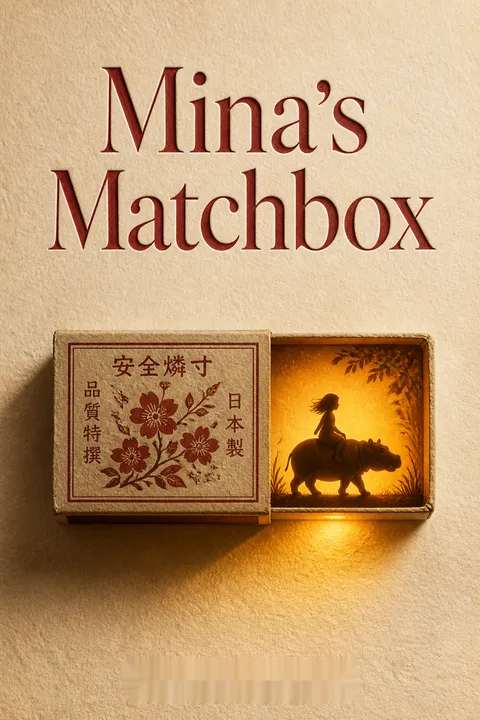
Mina2 finally shows Tomoko1 the boxes hidden beneath her bed. Each contains a matchbox saved for its label, and Mina2 has covered the container’s inner walls with a story inspired by the tiny image. An elephant unable to move a seesaw, for example, keeps adding children until they are stranded in the air.
These private fictions transform disposable objects into places where overlooked creatures can endure. The girls later learn more about the old Fressy Zoo in the garden. Mina2 tells how Saburō,14 a Taiwanese macaque who drove the miniature train, stopped a runaway ride with his body and died saving its passengers. The zoo closed soon after, leaving Pochiko10 and the animals’ small grave as its remnants.
Mina’s stories make preservation an imaginative act. She cannot command her body to travel freely, but she can give a matchbox a protected interior and let its pictured inhabitants continue beyond the moment of ignition. The elephant’s impossible seesaw turns excess weight into a moral trap: a wish to join others can become harmful when no one recognizes the limits of the structure. Saburō’s history gives this concern a local past. His rescue survives as a story told beside an abandoned track, just as Mina’s private writing preserves small lives that the larger world would otherwise overlook.
Wednesday Brings Matchboxes
Tomoko1 discovers how Mina’s collection grows: the young Fressy deliveryman11 brings her unusual matchboxes each Wednesday, gathered along his route. Mina2 waits for the exchanges, and Tomoko1 gradually recognizes that the ritual matters to her cousin2 beyond the labels themselves.
When Mina2 is hospitalized during a stretch of oppressive summer weather, Tomoko1 carries her a new matchbox showing an angel mending its wings. The deliveryman11 has not made a grand promise, but Tomoko1 embellishes his concern to comfort Mina.2
After Mina2 returns home, the girls begin watching a television series about Japan’s men’s volleyball team preparing for the Munich Olympics. Mina2 studies setter Katsutoshi Nekoda’s quiet, essential work, and Tomoko1 learns to see the game through her cousin’s2 attention.
Mina’s affection grows through an exchange that is almost too slight to name: a matchbox changes hands, and the next Wednesday becomes something to anticipate. Tomoko’s embellishment at the hospital reveals both her tenderness and her growing willingness to shape a story for someone else’s comfort. The volleyball broadcasts offer another model of care. Mina is drawn to the setter, whose work enables a visible striker without claiming the spotlight. Her admiration quietly describes the kind of connection she values: support that is indispensable precisely because it does not demand applause.
Ryūichi Comes Home
In August, Mina’s2 older brother Ryūichi8 returns from studying in Switzerland, bringing his charm and restless appetite for summer with him. Tomoko1 is instantly captivated, while Mina2 struggles to hold his attention as he drives off to see friends and pursue his own plans.
Their uncle3 eventually gathers the family for a day at Suma Beach. Mina2 stays close to Tomoko1 in the water, unable to swim confidently, while the adults watch from shore. Then Eric-Ken3 and Ryūichi8 race toward a distant buoy, swimming farther out than Mina2 can bear.
She cries for them to return, her fear cutting through her usual composure. They come back safely, and the family eats shaved ice together. Before Ryūichi8 leaves for Switzerland, he asks Tomoko1 to look after Mina.2
Ryūichi’s visit gives Tomoko a new object of admiration, but its deeper effect is to expose how differently the cousins experience attachment. Tomoko can idealize him from a distance; Mina has already learned that the people she loves can move beyond her reach. Her panic at the buoy is not a general fear of water but a sharp response to the spectacle of her father and brother choosing danger and distance together. The family’s shared dessert restores ordinary closeness without erasing the rupture. Ryūichi’s request assigns Tomoko a role that has been forming since her arrival.
Munich’s Two Histories
The Munich Olympics begin as Mina and Tomoko’s household ritual, with Grandmother Rosa5 listening for the German she has not spoken in decades and the girls following Japan’s volleyball team. The celebration breaks when Palestinian militants seize Israeli athletes and coaches in the Olympic Village.
The hostages are killed during the failed rescue. The news unsettles Rosa,5 who polishes photographs of Irma;13 Tomoko1 learns that her twin sister13 and family died in Nazi camps. After the Games pause, Japan’s team reaches the final by recovering from a two-set deficit against Bulgaria.
During the tense semifinal, Tomoko’s aunt4 spots a misspelling of the coach’s name on television. Japan wins, then takes gold against East Germany. The medal and the massacre remain inseparable in Tomoko’s1 memory.
The Olympics bring distant history into a family living room. Rosa’s German language and Irma’s photographs turn the massacre from a broadcast into an echo of persecution she survived by geography and chance. Tomoko’s attention changes too: she can no longer treat the tournament as a private drama about a hoped-for medal. The volleyball match offers a counter-image to violence, a team depending on coordinated, often uncredited work. The aunt’s typo briefly joins her private search for errors to a public event, but the gold medal cannot correct the deaths around it. The section refuses to let triumph cleanse history.
A Burglar Takes Hokkaido
Yoneda-san6 wins a two-person trip to Hokkaido in a contest, but cannot decide whom to invite or how to leave Mina2 in someone else’s care. Before she chooses, a burglar slips into the house and steals the tickets, along with Fressy, condensed milk, cigarettes, and whiskey. The family calls the police, and Pochiko10 later helps identify the culprit when a footprint is found in her droppings.
Soon afterward, Kobayashi-san7 leaves his infant grandson with Tomoko,1 Mina,2 and Yoneda-san6 while he takes his injured wife for treatment. Mina2 calmly changes and feeds the crying baby, surprising the others with her confidence. The girls wheel him through the garden in the ornate carriage, and Pochiko10 licks his cheek until he laughs.
The burglar’s oddly selective haul exposes a distinction between market value and private value. He ignores the family’s art but takes consumables and the trip Yoneda-san cannot bring herself to claim. The episode lets comic misfortune reveal how little space she has made for her own wishes. The baby’s arrival reverses the household’s usual care pattern: Mina, often treated as fragile, becomes the calmest caretaker in the room. The carriage, once a marker of inherited luxury and childhood memory, becomes useful again as a vehicle for an entirely new child.
The Shower Never Falls
The Young Man from Wednesday11 tells Mina2 that a rare Giacobini meteor shower may fill the sky, and she persuades Yoneda-san6 to let the girls observe it at Okuike reservoir. Kobayashi-san7 drives them into the mountains with Pochiko,10 blankets, hot lemonade, and Mina’s2 careful notebook.
Clouds obscure the sky, but the girls keep watch until dawn. No shower appears, and Mina2 records the failure rather than inventing a result. Soon the Fressy company changes delivery routes, replacing the young man11 with another driver.
Mina2 waits by the kitchen door on successive Wednesdays, then suffers another asthma attack. Tomoko,1 troubled by the deliveryman’s11 disappearance and Mina’s2 worsening health, decides to visit the factory and find out what happened.
The failed meteor watch is a lesson in attention without reward. Mina prepares carefully, studies the sky, and records absence as honestly as she would record spectacle. Tomoko’s private wish that they not encounter the deliveryman complicates her loyalty: she hopes to spare Mina a painful sight, but cannot know what Mina actually wants. When the delivery route changes, the silence becomes a new kind of uncertainty. The girls have learned to make meaning from small signs; now Tomoko must decide whether interpretation is enough or whether she must go looking for facts.
Apartment 202
Tomoko1 travels alone to the Fressy factory, where the dispatch chief tells her the Wednesday deliveryman11 quit after marrying and moving away. A matchbox she recognizes leads her to ask for it, and an entry in the dispatch registry catches her eye: Eric-Ken’s3 car repeatedly visits the Ezaka Royal Mansion.
Tomoko1 follows the address to a modest apartment building and finds the Mercedes outside a unit registered to a woman. The discovery recasts the uncle3 she has admired and the family’s unexplained absences.
She marks a typo in a Fressy pamphlet and leaves it under the car’s wiper. Back in Ashiya, she asks Eric-Ken3 to repair Mina’s2 observation counter and the pamphlet. When Mina2 returns from hospital, Tomoko1 gives her the matchbox and invents a tender farewell from the deliveryman.11
Tomoko’s journey is a shift from borrowed knowledge to direct investigation. The map and library advice that once helped her serve Mina now help her pursue a question the household has left unspoken. The apartment does not provide a complete explanation, but the car and mailbox make the double life concrete enough to alter Tomoko’s trust. Her small act with the typo is neither public accusation nor forgiveness; it is a mark left where Eric-Ken must find it. Telling Mina a gentler version of the deliveryman’s departure repeats Tomoko’s earlier habit of shaping stories, now with a sharper ethical cost.
Christmas Ends in the Pond
For Christmas, Grandmother Rosa5 takes charge of a lavish family meal, directing Tomoko,1 Mina,2 Yoneda-san,6 and Eric-Ken3 through cooking, decorating, and carols. The celebration feels complete, with a special dried-grass cake for Pochiko.10
Before dawn, the house alarm sounds and the family evacuates because a fire is spreading across the mountain. Eric-Ken3 gathers everyone, and they spend the night at a company dormitory. Pochiko10 remains behind in the garden. When the family returns, they find her floating motionless in the pond.
The veterinarian15 rules out the fire and says she appears to have died peacefully. Tomoko1 breaks down, while Mina2 stands rigid with grief. Pochiko’s10 body is cremated, and her ashes are placed beside the grave of the old zoo animals.
The Christmas celebration gathers the household into a carefully made picture of abundance, but the fire reveals the limit of that picture: everyone can be brought to safety except the animal whose home is the garden itself. Pochiko’s death is not presented as punishment or a mystery to solve. Its timing is coincidence, yet the family cannot keep it emotionally separate from their absence. Tomoko’s tears and Mina’s anger show different forms of grief, neither more complete than the other. The grave beside the zoo marker turns the garden’s history into a place where loss can be returned to the earth.
The Last Ride Is Gone
The family mourns Pochiko10 by bringing food to her grave, while Kobayashi-san7 kneels there each day. Eric-Ken3 stays home more often and tells stories about her, and the pond is filled in, closing the Fressy Zoo’s last living chapter. Mina2 begins walking to school without Pochiko,10 accepting no escort beyond the family’s watchful goodbyes.
Tomoko’s mother9 arrives to take her back to Okayama after finishing her dressmaking studies. Before Tomoko1 leaves, Mina2 gives her the two matchboxes showing a girl gathering shooting stars, along with the story inside. Tomoko1 returns her library card to the librarian,12 who tells her to keep it as a record of her reading. The girls part with plans to visit, unwilling to call the moment a final farewell.
The loss of Pochiko changes the girls’ daily geography. Mina’s first solo walk is not a triumph over disability so much as a new arrangement of dependence: she can move, but she carries the animal’s place in her memory. Tomoko’s departure reopens the separation that began when her mother boarded her onto the train, though this time it follows a year of chosen attachment. Mina’s gift and Tomoko’s library card become parallel archives. Each preserves a relationship through objects that can travel when the people cannot.
Ashiya Kept in Memory
Tomoko1 and Mina2 see each other only a handful of times over the decades, but their keepsakes preserve the year they shared. At Yoneda-san’s6 funeral in 1974, Tomoko1 meets Mina2 again and learns that Grandmother Rosa’s5 memory has faded. Mina2 later studies and works in Europe, eventually building a career connecting Japanese and European literature.
In letters, she invites Tomoko1 to visit Cologne and tells her that her parents3 plan to travel there. Tomoko1 remembers the earlier summer too: the Munich gold, Nekoda’s later death, the matchbox stories, and the house in Ashiya, eventually sold and divided into new buildings. When she returns, the myrtle tree still stands near the old zoo grave. The place has changed, but her memories remain vivid.
The novel’s retrospective form makes memory less a perfect replay than a practice of keeping company with the past. Tomoko’s card, photograph, and matchboxes are not substitutes for Mina or the lost household; they are objects that renew attention to people who are elsewhere. The altered Ashiya property tests whether memory depends on physical preservation. Tomoko finds that it does not, though the surviving myrtle tree gives her a material point of contact. Mina’s work with translated books extends the novel’s concern with mediation: stories cross borders and reach readers their makers may never meet.
Analysis
Mina’s Matchbox is organized around the education of attention. Tomoko1 arrives believing that beauty, wealth, and generosity reliably reveal a person’s goodness. Her uncle’s3 polished hospitality seems to confirm that belief, but his repeated absences and the address in Ezaka complicate it. The novel does not turn this discovery into a courtroom drama. Tomoko1 does not expose him or force a confession; she leaves a marked pamphlet and asks him to repair the objects on Mina’s2 desk. That restrained response registers the limits of a child’s power while refusing to erase her judgment.
Mina’s2 restrictions create the novel’s central imaginative method. Unable to travel freely, she makes small containers into worlds and watches volleyball through the movements of a setter whose contribution is essential but easy to overlook. Both practices value connection without possession. Tomoko1 becomes a courier of books and stories, yet she also learns where mediation becomes dishonest, especially when she invents a farewell to soften Mina’s2 disappointment.
The book’s eccentric objects carry emotional weight without being reduced to symbols. Pochiko10 is a real animal with habits and needs, not merely a metaphor for the family. The matchboxes are paper and matches, but Mina’s2 writing gives their illustrations a duration they would not otherwise have. The library card preserves reading; the broken counter preserves a failed night of looking. In this world, care means noticing what others might discard, then handling it precisely.
Historical events interrupt the domestic calm rather than decorating it. The Munich massacre forces Rosa’s5 private grief into view, while the volleyball gold offers joy that cannot cancel violence. The later loss of Pochiko10 likewise resists a consoling explanation. Tomoko’s1 adult narration does not restore the house or the people as they were. It shows memory functioning as an ongoing relationship: imperfect, material, and capable of keeping the past present without pretending it can be recovered.
Review Summary
Mina's Matchbox received mixed reviews. Many praised Ogawa's lyrical writing and the nostalgic coming-of-age story, appreciating the subtle exploration of childhood memories and family dynamics. Some found the quiet narrative engaging, while others felt it lacked plot and excitement. Several reviewers expressed disappointment with pro-Israel sentiments in the book. The unique elements, like the pygmy hippopotamus, were generally well-received. Overall, readers who enjoy slow-paced, reflective stories tended to rate it higher than those seeking more action-driven plots.
People Also Read








Characters
Tomoko
The watchful newcomerTomoko is a twelve-year-old from Okayama who moves to Ashiya after her widowed mother9 goes to Tokyo to study dressmaking. Curious, observant, and initially eager to be useful, she studies the household through its objects, routines, and silences. Her admiration for her elegant uncle3 sits beside a growing ability to notice what his charm conceals. Her friendship with Mina2 gives her a way to care for someone without treating her as helpless, while her library trips and solitary excursions help her become more independent. As narrator, adult Tomoko preserves the year through objects and remembered details, revealing how a brief home can shape a whole life.
Mina
The matchbox storytellerMina is Tomoko’s1 petite cousin, a bright, bookish girl whose asthma restricts travel and makes her family vigilant. She knows the house, its eccentric remedies, and Pochiko’s10 habits intimately, yet she is not simply a fragile child: she has a sharp mind, a dry sense of humor, and a fierce imaginative life. Her matchbox collection gives her small pictures a lasting home in stories she writes by hand. She admires the largely unseen work of volleyball setter Nekoda and accepts affection most easily through shared interests and quiet rituals. Mina’s careful attention makes the ordinary world feel full of hidden lives.
Eric-Ken
The charming family patriarchEric-Ken is Mina’s2 father and the polished president of the Fressy beverage company. Tall, handsome, and attentive, he can make a guest feel singularly welcome, turn a meal into an occasion, or repair an object with his hands. He enjoys pleasing the people around him and understands how to draw a household together. His authority is softened by humor, though his absences leave questions that his charm cannot answer. To Tomoko1, he first embodies the glamorous world she has entered; over time, she learns to distinguish the warmth he offers from the whole truth of the man.
Tomoko’s aunt
The quiet observerMina’s2 mother and Tomoko’s1 aunt is reserved, attentive, and difficult to read at first. She listens more than she speaks, smokes and drinks in private, and searches books and pamphlets for typographical errors, treating each mistake as a small neglected thing worth finding. Her care becomes clearest in moments of practical need, especially when Mina2 is ill or Tomoko1 must face a new school. She shares a sisterly history with Tomoko’s mother9, though the two women have built very different daily lives.
Grandmother Rosa
The homesick twinRosa is Eric-Ken’s3 German-born mother, an elderly woman whose room is crowded with objects brought from Europe and collected across a lifetime. She cares about beauty, ritual, and family celebration, and she welcomes Tomoko1 through small acts such as sharing her cosmetics and explaining the photographs on her wall. Her twin sister Irma13 remains a powerful presence in her memory. Rosa’s Japanese is imperfect, but her feelings are unmistakable, especially when music, family history, or Germany draws her back toward the person she once was.
Yoneda-san
The house’s true authorityYoneda-san has kept the Ashiya household running for decades and commands the respect of every resident. Exacting about food, cleanliness, and routine, she speaks with blunt humor and rarely yields the last word. Her cooking expresses a practical, generous intelligence, and she watches Mina’s2 health with almost constant attention. She and Rosa5 are close companions despite their contrasting temperaments. Yoneda-san’s contest entries and her hesitation over travel reveal a private wish for a life beyond service, even as the house remains the place she knows best.
Kobayashi-san
Pochiko’s steady keeperKobayashi-san is the quiet gardener and caretaker of Pochiko10, following a family tradition that began at the Fressy Zoo. He feeds and cleans the hippopotamus, leads her on Mina’s2 school commute, and drives the family during medical emergencies. His speech is spare, but his practical care is constant. He rarely claims attention for himself; instead, he makes difficult routines feel safe through patience and familiarity.
Ryūichi
The absent-minded older brotherRyūichi is Mina’s2 older brother, a handsome and athletic young man studying in Switzerland. His return fills the family with excitement, though his short visit is dominated by friends, sports, and excursions. He is affectionate toward Mina2 but does not always recognize how much she wants his attention. His request that Tomoko1 look after his sister2 shows a protective concern beneath his restless independence.
Tomoko’s mother
The determined dressmakerTomoko’s mother is a practical, widowed dressmaker who supports her daughter1 through work and careful planning. She arranges for Tomoko1 to live with her sister4 while she studies in Tokyo, a decision made from economic necessity rather than lack of affection. Her letters keep mother and daughter1 close across the distance, and her eventual return to Ashiya allows Tomoko1 to go home with her.
Pochiko
The garden’s gentle giantPochiko is a pygmy hippopotamus brought from Liberia as a childhood gift for Eric-Ken3. She lives freely in the Ashiya garden, cared for by Kobayashi-san7, and is both a domestic presence and a remnant of the family’s short-lived zoo. Slow-moving and seemingly unbothered by the attention around her, she carries Mina2 to school with surprising steadiness. Her sheer physical difference gives the household an everyday wonder, while her habits and needs make affection concrete: she must be fed, cleaned, watched, and allowed to live at her own pace.
The Young Man from Wednesday
Mina’s matchbox courierThe unnamed Fressy deliveryman brings Mina2 unusual matchboxes gathered during his rounds. Shy and taciturn, he communicates more through this recurring exchange than through conversation. Mina’s2 affection for him grows from the worlds he carries to her, not from the conventional glamour that captures Tomoko’s1 attention. His presence gives Mina2 a private anticipation that belongs to her alone.
Mr. Turtleneck
The library’s gentle guideThe unnamed young librarian at Ashiya Public Library recommends books, helps Tomoko1 navigate the collection, and treats her with an encouraging seriousness. He assumes she is reading the novels she borrows for Mina2, but his confidence gradually helps Tomoko1 find her own voice. The library card he gives her becomes a record of her reading and a durable link to Ashiya.
Irma
Rosa’s distant twinIrma is Grandmother Rosa’s5 twin sister, remembered through photographs and through the separation that began when Rosa5 left Germany for Japan. Her pictured life gives Tomoko1 a glimpse of the family history Rosa5 carries across continents.
Saburō
The zoo’s brave engineerSaburō is a Taiwanese macaque who once drove the miniature train at the Fressy Zoo. Mina2 remembers him as calm, dutiful, and devoted to his work. His story survives in the garden’s grave and in the family’s account of the zoo.
The veterinarian
Pochiko’s trusted doctorA veterinarian from Tennoji Zoo has cared for Pochiko10 over many years. He treats the hippopotamus as an animal with her own needs and time, not as a human curiosity, and his visits help the family understand her health.
Plot Devices
Mina’s matchbox archive
Tiny pictures become storiesMina2 saves matchboxes for their illustrated labels, then writes a story inside a separate container for each one. The images are often strange or unexplained, giving her room to invent lives for the figures printed on them. The boxes preserve characters who might otherwise be thrown away, and their hand-sized scale suits Mina’s2 restricted world. Tomoko’s1 growing access to the collection marks the deepening of their friendship. Later, a matchbox can carry a feeling across distance when the girls cannot say everything directly.
The light-bath room
A refuge for private ritualsThis tiled, windowless room contains rotating orange lights that the family believes help Mina2 recover from asthma attacks. It also becomes the girls’ protected space for conversation, games, snacks, and stories. Mina2 lights its oil lamp with a match, making her skill part of the room’s recurring ritual. The light bath links bodily vulnerability with imaginative freedom: Mina2 can be physically confined while her thoughts travel elsewhere. Its privacy lets Tomoko1 and Mina2 form a world that the adults leave undisturbed.
Pochiko and the old zoo
A living link to family historyPochiko10 is both Mina’s2 unusual school transport and the last surviving animal of the Fressy Zoological Garden. The abandoned tracks, ticket booth, and animal grave make the garden a layered place, where the children’s present routines coexist with stories from before Mina2 was born. Pochiko’s10 size and calm temperament create comic and tender moments, but her daily care also gives the family a shared responsibility. The old zoo’s remains turn private family history into a physical landscape Tomoko1 can explore.
The Munich volleyball campaign
A model of unseen teamworkThe family watches Japan’s men’s volleyball team prepare for the 1972 Munich Olympics, and Mina2 becomes especially interested in setter Katsutoshi Nekoda. His role gives the girls a way to discuss coordination, trust, and the difference between visible achievement and the work that makes it possible. Their imagined and imperfect practice in the garden brings the televised matches into their daily life. The Olympic tournament also places their private excitement beside public violence and Grandmother Rosa’s5 memories of Europe.
The Ashiya library card
A record of shared readingTomoko1 first visits the public library to borrow books for Mina2, who cannot easily travel there. The librarian’s12 recommendations and praise initially belong, in Tomoko’s1 mind, to her cousin2. Over time, however, Tomoko1 begins reading and thinking for herself. The card records the titles that passed between the girls and preserves their early conversations with the librarian12. It becomes a portable piece of Ashiya, one that can survive the loss of the house and the distance between the cousins.
About the Author
Other books by Yōko Ogawa

Download PDF
Download EPUB
.epub digital book format is ideal for reading ebooks on phones, tablets, and e-readers.








