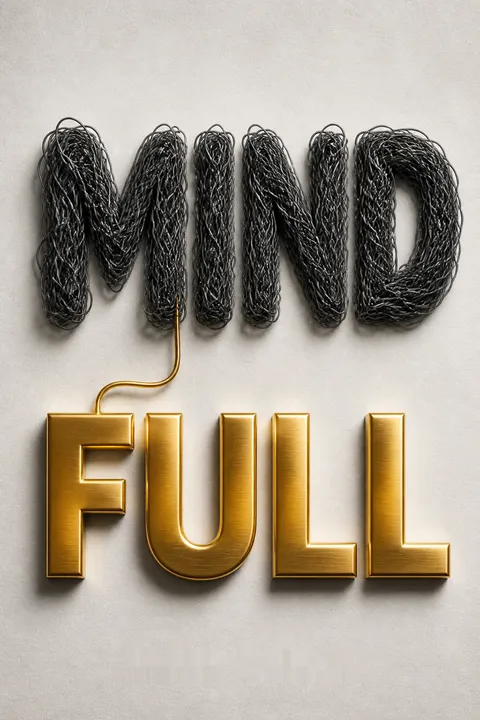


Key Takeaways
Choose fulfillment by purpose, not the size of the audience.
Applause is not enough. Whelan opens with a mismatch: performing comedy for 10,000 people at Dublin’s 3Arena felt merely fine, while giving a meditation talk to 30 insurance employees left him unexpectedly elated. The difference was not the size or glamour of the room. The smaller talk let him share something he believed could help people, and he felt more fully present in it. He does not dismiss comedy; he recognizes that laughter mattered to him, but no longer met every need.
Make room for yourself. Fulfillment, in this account, grows when a person brings more of their values and genuine interests into daily life. Meditation is not a command to abandon a job or remake everything. A little quiet may instead clarify what is missing, or help someone engage more meaningfully with the life already in front of them.
What's useful here is the distinction between external success and experienced meaning. A crowded arena supplies a clear metric, while fulfillment is harder to count and often appears in the quality of attention a task invites. This resembles the difference between acting for external rewards and acting from personally endorsed values. Still, introspection alone cannot repair a bad job, financial strain, or an unsafe environment. The insight is not that purpose solves every problem, but that achievement and fulfillment are separate questions, and both deserve attention.
Treat stress as a protective alarm, not automatic evidence of harm.
Stress has a job. The stress response prepares the body to meet danger or challenge. Heart rate and breathing rise, attention sharpens, and energy shifts toward immediate action. That response can help with performance; the difficulty comes when an alarm meant for brief threats keeps firing in response to everyday pressures.
Beliefs shape the experience. Whelan describes a study following nearly 30,000 adults for eight years. People who reported substantial stress and believed stress harmed their health were 43 percent more likely to die prematurely. That relationship did not hold for people who experienced stress but did not view it as harmful. The study is observational, not proof that changing a belief prevents death. Its practical lesson is narrower: fear of stress may intensify its burden, while chronic, unrelenting stress still deserves serious attention.
This framing usefully separates the body’s alarm from the meaning assigned to it. In appraisal-based accounts of emotion, the same arousal can be interpreted as readiness or danger, and that interpretation can influence what happens next. But reframing should not become a new way to blame people for suffering. Persistent stress may reflect impossible workloads, poverty, illness, or caregiving demands, not a faulty attitude. The strongest application is two-part: reduce avoidable strain where possible, and learn not to treat every surge of arousal as evidence of catastrophe.
Meditation trains returning attention, not achieving an empty mind.
Wandering is expected. Whelan defines meditation simply: place attention on one chosen focus, such as the breath, and gently return when the mind drifts. Thoughts are not a sign of failure or something to eradicate. The practice is the return itself, repeated without turning the session into another occasion for self-criticism.
Start without spectacle. Whelan’s first attempt produced no visions or dramatic revelation, only a little more awareness of breathing. He presents this ordinariness as normal. The book describes a small Harvard-affiliated study in which 16 new meditators practised for about 27 minutes a day over eight weeks; scans found changes in regions associated with emotion, learning, and self-awareness. That finding is promising, but a small study cannot guarantee the same results for every person.
The return-to-focus model is memorable because it turns distraction into the exercise rather than its enemy. It also resembles attentional training in which noticing a lapse is itself a useful metacognitive skill. This matters beyond sitting quietly: noticing an impulse before acting can create a little room for choice. The brain-scan findings add plausibility, but should not be treated as a promise of structural change or a substitute for care. The core practice remains accessible even when the science is uncertain: notice, return, and avoid adding shame.
Use a 16-second breathing pause before your reflexes take over.
A tiny reset. Whelan’s 16-second meditation divides one breathing cycle into four equal counts: breathe in, hold, breathe out, then pause before the next breath. The point is not to force a perfect rhythm. It is to give attention a simple anchor and interrupt automatic escalation. He uses it before performances, during tense conversations, and in everyday waiting moments.
Choose a style that fits. The book also introduces guided meditation, breath awareness, body scans, mantras, visualization, and loving-kindness practice. Each offers a different focus, from noticing bodily tension to imagining a goal or directing goodwill toward someone. The range matters because no single voice or method works for everyone. If counting or breath holds feel uncomfortable, the exercise can be shortened or replaced with ordinary, unstrained breathing.
A short pause is useful because it is portable and does not depend on finding a perfect room, mood, or cushion. In practical terms, it inserts a delay between an emotional trigger and the response that follows. That can protect a conversation from an unnecessary outburst, even if it does not solve the underlying disagreement. Breathing exercises can also feel uncomfortable for some people, especially when breath holds are involved. The aim is steadiness, not performance. A gentler version is preferable to turning a calming technique into another test to pass.
Make the practice small enough to survive your actual schedule.
Build a reliable cue. Whelan recommends tying meditation to an existing routine rather than waiting for an ideal day. His morning cue, RPM, means Rise, Pee, Meditate: practise before checking a phone or taking in the day’s demands. RAW means Right After Work, a pause before evening responsibilities begin. These are suggestions, not rules; the useful principle is to connect practice to a transition that already happens.
Begin with what lasts. A few seconds or minutes done consistently is more useful than an ambitious session abandoned after a week. Whelan cites research suggesting that negative news early in the day can affect people’s later mood, strengthening his case for a quiet moment before outside information takes over. Parents, shift workers, and people with unpredictable schedules may need a different cue. Flexibility protects the habit from becoming another source of guilt.
The practical strength of RPM and RAW is that they reduce the number of decisions required to begin. Behavioral routines often stick more readily when attached to a stable cue, because the person does not have to renegotiate the intention every day. Yet a morning ritual can be unrealistic for someone working nights or caring for others before dawn. The framework works best as a design prompt: identify a repeatable seam in the day, then place a small practice there. A useful routine serves the person, not the other way around.
Question the childhood coping strategy now running your adult life.
Old skills can overstay. Whelan calls a person’s habitual way of thinking and behaving a winning formula. He describes his own as humor, which helped him manage bullying, connect with people, and build a career. The same pattern also encouraged constant performance and overwork. A strategy can be genuinely useful in one stage of life and costly when treated as the only way to cope.
Listen for the shoulds. Whelan’s repeated thoughts about what he ought to do or achieve fed perfectionism and a feeling of never being enough. He tried to excel at radio, television, comedy, and other work at once, with little space for rest. Not every ambition is unhealthy. The warning sign is when goals are driven mainly by fear of missing out or disappointing others, and the body’s exhaustion is ignored.
This account treats coping patterns with more compassion than the usual language of self-sabotage. Humor was not a mistake; it was an intelligent adaptation that produced connection and opportunity. The question is whether the old strategy still fits current needs. That said, tracing adult behavior to childhood can be illuminating without being a complete explanation. Present conditions, relationships, and biology also matter. A flexible identity allows a person to keep a strength while loosening its grip, rather than declaring an entire personality defective.
Test alcohol's effect on your mood instead of calling it harmless.
Relief can have a cost. Whelan describes drinking as a way to quiet self-criticism temporarily, followed by anxiety, shame, poor sleep, and renewed desire for relief. After a hypnotherapy session, he took a year away from alcohol to see how he felt. He reported steadier moods, better sleep, more patience with family, and less time lost to hangovers. He also found that removing alcohol did not erase perfectionism or make him instantly productive.
Observe your own pattern. The book explains that alcohol can affect calming and excitatory brain systems, helping account for the shift from short-term ease to next-day anxiety. Individual experiences differ, and the author does not claim every drinker has the same problem. A deliberate break or closer tracking of mood and sleep can reveal whether drinking is helping, hurting, or serving as an automatic response to discomfort.
The most valuable part of this story is not a universal instruction to abstain, but the experiment itself: compare experience with and without the substance. That is a form of self-observation that can expose habits hidden by social rituals. Alcohol’s emotional effects vary, and severe dependence can require medical support, so a personal experiment is not appropriate for everyone. The account also correctly resists the fantasy that sobriety solves every problem. Removing one source of emotional volatility can make underlying difficulties clearer, which may be useful but not always easy.
Put play back in your week to renew attention and momentum.
Play brings presence. Whelan describes his co-host losing hours while playing bass, and his own renewed focus when he learned to skateboard during lockdown. Both activities demanded attention in the moment and offered enjoyment without requiring a formal meditation session. A new skill can pull someone out of repetitive thinking because the task keeps presenting fresh details to notice and respond to.
Make room for novelty. The book connects play and learning with dopamine, new neural connections, and what neuroscientist Sabina Brennan calls brain reserve, the brain’s capacity to withstand some effects of ageing or disease. These claims should not turn hobbies into another productivity project. The point is to recover an activity that feels absorbing, whether music, sport, crafts, or time outdoors. Play can complement work and purpose, not replace either one.
Play expands the book’s idea of attention beyond formal practice. A hobby can make presence almost unavoidable: a skateboard requires balance, and an instrument demands listening. This is close to the experience often called flow, where challenge and skill hold attention together. The qualification matters: not everyone has equal time, money, safety, or physical access to every activity. Nor does a hobby resolve structural stress. The useful question is modest: what low-pressure activity makes attention feel alive rather than merely managed?
A missing shower song can signal stress before a crisis does.
Notice small changes. Whelan recounts hearing from Declan, a father under financial strain who had become irritable, anxious, and short-tempered. One ordinary sign troubled him most: he had stopped singing in the shower, something he associated with feeling like himself. He tried short breathing meditations and reported feeling more patient and hopeful after two weeks. The story does not prove the technique caused every improvement, but it shows how personal habits can act as early warning signals.
Let the signal guide you. Whelan calls the outward effects of a small change a ripple: calmer or kinder responses can affect the people nearby. Meditation is presented as a way to create enough space to respond, not a cure for unemployment, depression, or every form of distress. If loss of pleasure, sleep disruption, or anxiety persists, professional support may be needed.
The shower song is a vivid example of a behavioral marker: a familiar pleasure disappears, making an internal shift easier to recognize. People can identify their own equivalents, such as no longer calling friends or avoiding a once-loved activity. These signs are informative, not diagnostic. Persistent loss of interest or major changes in sleep and mood deserve more than self-monitoring. The ripple idea adds a social dimension: emotional regulation can change how a person treats others, while reminding readers that their own wellbeing matters in its own right.
Analysis
Mind Full works because its central argument arrives through a life rather than a lecture. Whelan’s panic attack, the karaoke fall, his hangovers, and his later burnout show the accumulating cost of treating exhaustion as ordinary and emotional discomfort as something to drown out. Humor keeps the account approachable, but the jokes do not erase the seriousness: a person can appear successful, energetic, and funny while living with anxiety and a depleted nervous system.
The practical thesis is deliberately modest. Meditation is not an escape from responsibilities or a promise of permanent calm. It is attention practice that can create a pause, reveal habitual self-talk, and make a more considered response possible. The book’s strongest contribution is to lower the entry barrier: no special identity, spiritual conversion, or scenic retreat is required. A breath, a short routine, or a playful activity can begin the work.
Its evidence deserves a careful reading. The cited studies offer reasons to take meditation seriously, including research on stress beliefs, attention, and brain structure. But some studies are small, observational, or presented in popularized form. They cannot establish that meditation alone prevents illness, reliably changes every brain, or replaces therapy and medical care. The author’s own anecdotes are compelling illustrations, not controlled proof. The book is most persuasive when it treats practices as tools to test, rather than guaranteed cures.
That restraint also clarifies its larger claim: self-awareness is useful because it can expose choices, not because it makes external hardship disappear. Sometimes the next step is a breathing practice; sometimes it is changing a workload, seeking help, or rethinking a relationship with alcohol. The promise is not a life without stress. It is greater capacity to notice what is happening, respond with less automatic self-punishment, and recognize when ordinary life no longer feels like one’s own.
Review Summary
Mind Full is a highly praised book on mindfulness and meditation, receiving mostly positive reviews. Readers appreciate Whelan's humorous and accessible approach to the topic, making meditation seem approachable for beginners. Many found the personal anecdotes relatable and the practical techniques useful. The book's conversational tone and Irish humor resonated with readers. Some critics found it repetitive or slow to get to the meditation techniques. Overall, the book is recommended for those new to meditation or skeptical about its benefits.
People Also Read






Glossary
Winning formula
Habitual coping patternA person’s familiar way of thinking and behaving, often shaped during childhood and adolescence, that helps them navigate social and personal challenges. It can become a source of skill and success, as humor did for Whelan, while also carrying costs when relied on automatically. The term invites people to examine whether an old strategy still fits their present life.
Ripple
Effects on people nearbyThe outward influence of a person’s behavior and emotional state on the people and situations around them. In Whelan’s account, a small shift toward patience or calm can affect family, colleagues, and everyday interactions. The concept frames personal care as socially relevant, while not implying that one person is responsible for everyone else’s wellbeing.
16-second meditation
A counted breathing pauseA brief breathing exercise divided into four equal counts: inhale for four, hold for four, exhale for four, and pause for four. It gives attention a simple focus and can be used in everyday situations, including a tense conversation or a moment of nerves. The count can be adjusted if holding the breath feels uncomfortable.
RPM
Morning meditation cueAn acronym for Rise, Pee, Meditate. It describes placing a short meditation after waking and using the bathroom, before checking a phone or taking in the day’s news and messages. The method links the practice to a routine that already exists, making it easier to remember. It is a suggested structure rather than a requirement.
RAW
After-work meditation cueAn acronym for Right After Work. It means taking a brief meditation break after the workday and before evening tasks or family activities begin. The pause is intended to help someone notice and set down some of the day’s mental clutter before entering another demanding part of the day. The timing can be adapted to suit different schedules.
Shoshin
Beginner’s mindA Zen Buddhist term for approaching an experience with openness, without assuming in advance what it should be like. In meditation, it means treating each session as fresh rather than expecting visions, calm, or a particular emotional result. This stance can reduce disappointment and allow attention to rest on what is actually happening.
Metta Bhavana
Cultivating loving-kindnessA Buddhist meditation practice whose name is commonly translated as the cultivation or development of loving-kindness. The practitioner first directs goodwill toward themselves, then extends it to loved ones, friends, neutral people, people in difficulty, and those with whom they have conflict. Whelan presents it as a way to practise compassion, not as a demand to excuse harmful behavior.
Crisis meditator
Meditates only under pressureWhelan’s label for someone who knows about meditation, discusses it, or tries it occasionally, but does not practise regularly enough to build a dependable habit. The person may find the technique helpful during ordinary periods yet lack a well-established routine when pressures intensify. The phrase distinguishes learning about a practice from consistently doing it.
Mindfulness practice leads to increases in regional brain gray matter density
Eight-week brain-imaging studyA study cited by Whelan that examined 16 people new to meditation who practised for about 27 minutes daily over eight weeks. The researchers reported structural changes in brain regions associated with emotion, memory, learning, compassion, and self-awareness. The small study supports further interest in meditation, but does not prove that every meditator will experience identical changes or outcomes.
Download PDF
Download EPUB
.epub digital book format is ideal for reading ebooks on phones, tablets, and e-readers.








