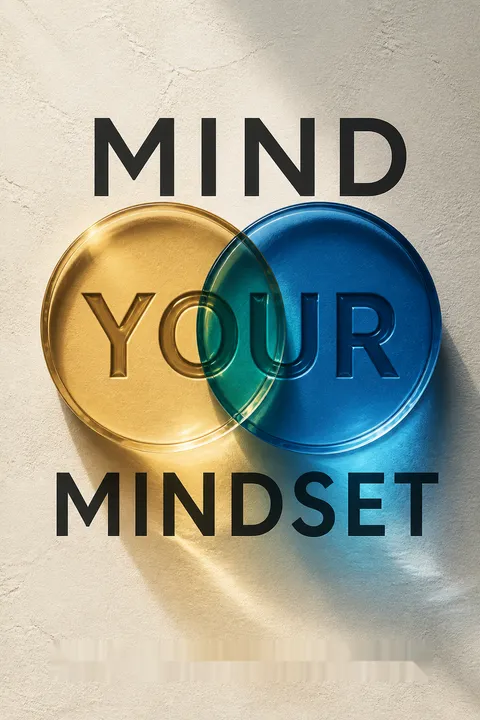


Key Takeaways
Change the story between a problem and your strategy to change results.
Look between problem and plan. The authors argue that results depend not only on the problem and the action chosen, but on the interpretation connecting them. A painful example comes from Megan and her husband, whose familiar parenting methods failed to help their adopted sons, who had experienced early trauma. Progress began when they learned to understand the children’s needs differently and sought specialized support. Their experience illustrates that persistence with a mismatched explanation can make a problem worse, not solve it.
An executive coach made this visible. When Michael blamed weak company sales on market conditions, his coach asked how his leadership had contributed. The question did not erase outside pressures. It brought his own possible influence back into view, opening strategies that an external-blame story had concealed. The practical sequence is to name the problem, examine the account of it, then choose a response.
The useful distinction is between responsibility and blame. Blame turns a setback into a verdict about character; responsibility asks which parts of a system can still be influenced. That distinction fits organizational learning, where teams improve by examining processes rather than searching for a culprit. The approach also avoids the opposite mistake of treating mindset as omnipotent. Trauma, market conditions, and institutional constraints are real. Revising an explanation helps most when it clarifies available action, not when it denies forces beyond a person's control.
Treat your inner Narrator as a prediction engine, not a fact witness.
Meet the Narrator. The book uses this name for the brain’s mostly automatic process of turning experience into connected explanations and predictions. The Narrator helps people anticipate what may happen, but it can mistake a plausible account for a verified one. In split-brain studies described by the authors, a patient acted on instructions shown only to one side of the brain. The other side, unaware of the instruction, nevertheless invented explanations for the action. The impulse to make a coherent story can outrun the evidence.
A fear can sound like proof. Megan’s anxiety about speaking led her to conclude that public speaking was dangerous and that she was incapable of it. The physical sensations were real; the conclusion was an interpretation. A story may guide behavior so automatically that it feels like simple fact, which is why noticing the story is a crucial first step.
This is a strong everyday translation of predictive processing: perception is not a camera recording the world, but an active construction that uses expectations to fill gaps. The metaphor of a Narrator makes that process easier to notice, especially when a person is anxious or defensive. It should not be mistaken for a literal, unified voice in the brain. Neuroscience involves interacting systems, not a tiny storyteller in the head. The metaphor works as a prompt for inquiry, not as a complete biological explanation.
Ask what your explanation protects before trusting its account of events.
Stories carry an agenda. Explanations draw on personal memories, ideas absorbed from other people, and the outcome a person wants. Michael’s sales explanation contained genuine facts about the economy, but it also helped protect his image with the company’s board. Because the story cast outside conditions as decisive, it kept him and his team from looking for changes within their control.
Context changes the lesson. LEGO struggled after leaders adopted innovation principles that had worked elsewhere, then drifted away from the children who valued its building toys. The principles were not necessarily bad; the company’s application failed to fit its customers and situation. Before acting on a familiar rule, ask what purpose it serves, what assumptions it depends on, and whether the current context still matches.
This insight connects to motivated reasoning, the tendency to assess evidence in ways that protect a desired conclusion or identity. Asking what an account protects can uncover why certain explanations feel unusually comfortable. It is also a practical check against importing a successful formula from one setting into another. Yet purpose is not automatically corrupting: goals help people focus attention and make decisions. The key is to name the goal openly, so it can be distinguished from evidence about what is actually happening.
Separate observable facts from interpretations before choosing a solution.
Sort evidence from meaning. A fact can be checked; a conclusion explains what that fact means. The authors illustrate the difference with quinoa. Reports linked rising prices and reduced local consumption to global demand, implying that farmers were being priced out of their own food. The fuller account included higher crop income and greater choice in what farmers ate. A plausible causal story had left out important information.
Inspect your language, too. An emotion is a real experience, but it does not prove the interpretation attached to it. A racing heart may be read as danger, for example, without establishing that danger exists. Metaphors can also narrow thought: calling a colleague a rock may obscure signs of strain. Identify what can be observed, what is inferred, and what remains unknown. Check whether the setting or goal has changed enough to make an old account unreliable.
The method resembles causal inference: observing that two things move together does not establish that one caused the other, and missing variables can reverse an apparent explanation. It also resembles cognitive behavioral approaches, which distinguish a situation from the thoughts and emotions attached to it. That separation can create room for response without dismissing feeling. Still, facts rarely arrive perfectly clean. What counts as relevant evidence depends partly on the question being asked, so the purpose of an inquiry should be stated alongside the evidence.
Use intuition where experience supports it, then check costly hunches.
Intuition is compressed experience. The authors define it as a judgment that arrives before a person can explain its reasoning. A Formula One driver once braked before a crash, later realizing that the crowd’s attention had shifted toward the wreck. He had registered a warning signal without consciously identifying it. Intuition can be useful when time is short or information is overwhelming, especially in a familiar domain.
A gut feeling can also mislead. Michael reviewed his company’s costly annual trade-show attendance and, after examining the evidence with stakeholders, chose a cheaper event of its own. His instinct proved useful. Megan’s confidence in a job candidate did not: she overrode a work-style assessment and the candidate soon left. The authors advise checking high-stakes hunches with evidence and other perspectives, particularly when personal experience is limited.
Research on expertise helps explain why intuition can be sharp in environments where people receive repeated, clear feedback. A seasoned driver may learn to detect cues that are difficult to verbalize. In a novel or politically charged setting, however, a gut reaction can reflect habit, bias, or wishful thinking instead. The useful question is not simply whether intuition feels strong, but whether the person has relevant experience and a reliable record of learning from outcomes. The greater the cost of error, the more valuable an independent check becomes.
Treat uncertainty as room to test, not proof that progress is impossible.
Certainty has a cost. George Kurian, an engineer who became CEO of NetApp, described executive decisions as different from engineering problems with clear answers. Waiting for complete information can mean acting too late. As CEO, he led a struggling company through difficult changes, including major layoffs, while focusing on decisions made with enough information and ongoing review.
Questioning a story is not denying reality. The authors distinguish an objective world from people’s incomplete accounts of it. Scientific explanations have changed as new observations expanded what researchers could see. That history is a reminder that knowledge can be useful without being final. When a belief is challenged, the discomfort may signal that identity or familiar expectations are involved. Name the fear, consider the cost of delay as well as the cost of action, and stay open to evidence that could change the decision.
The strongest version of this argument is not that uncertainty is always beneficial, but that it is unavoidable and can be managed. In decision science, a reversible choice can be treated as an experiment, while a hard-to-reverse choice deserves more scrutiny. This distinction makes action under uncertainty more disciplined than simple boldness. The authors’ emphasis on questioning beliefs is especially useful when certainty protects inaction. It should not become a demand to proceed regardless of risk, particularly when health, safety, or other people’s livelihoods are involved.
Make creativity useful by questioning defaults, then testing unusual alternatives.
Move past the obvious. Familiar ideas often appear first because the brain has practiced them. To reach less predictable options, the authors recommend open-ended questions, deliberate challenges to common assumptions, and consideration of apparent contradictions. During brainstorming, an impractical suggestion can loosen the group’s sense of what is permissible, making more relevant ideas easier to propose.
Treat ideas as experiments. René Redzepi’s restaurant Noma developed new dishes by recombining ingredients and techniques, including ingredients other kitchens might discard. His team produced over a hundred successful new recipes in one year, while rejecting many more. The point is not to defend every unusual idea, but to generate possibilities and learn from testing them. Ask what would have to be true for a solution to work, try it on a limited scale, and treat the result as feedback rather than a judgment of personal worth.
The value here lies in separating idea generation from evaluation. Groups often suppress unconventional suggestions too early because social approval becomes an unspoken constraint. A temporary permission to explore can widen the search space, while later testing restores standards of relevance and evidence. The approach is not a license for novelty as spectacle: bizarre ideas are useful only if they help reveal a workable path. Small experiments are particularly powerful because they turn debate into information without requiring permanent commitment.
Invite outsiders and coaches to reveal thoughts your own experience cannot supply.
One mind has blind spots. Einstein’s early scientific accomplishments were extraordinary, but the authors describe his later isolation from colleagues as a limit on his ability to engage with emerging ideas. The broader lesson is that intelligence does not remove the boundaries of personal experience. Coaches, colleagues, books, and people from other fields can introduce concepts and interpretations that would not occur to one person alone.
Build contact across perspectives. Bell Labs encouraged interaction in a long shared corridor, where researchers from different areas could exchange ideas informally. Research on problem-solving competitions also found that successful solutions often came from contributors outside the immediate field. For personal decisions, a coach can challenge assumptions; for organizational problems, invite people who encounter the issue differently. The goal is not to collect agreement, but to encounter useful friction and insight.
This is a case for distributed cognition: thinking can be spread across people, tools, and conversations rather than confined to one head. Diversity is most useful when differences in knowledge are brought into real exchange, not merely assembled on a roster. Outsiders can see defaults that insiders have stopped noticing, though they may also lack important local knowledge. A productive team therefore needs both boundary-crossing perspectives and mechanisms for testing suggestions against the details of the actual problem.
Prime your mind with focused work, then let it recombine ideas at rest.
Conscious focus is only one mode. The authors distinguish the executive network, associated with deliberate and goal-directed thought, from the default network, which is more active during rest and mind-wandering. Focused effort can supply a problem and relevant material; stepping away gives the brain another way to make connections. Michael struggled with a presentation late at night, slept, and completed it quickly the next morning.
Rest supports problem-solving. The book describes exercise, sleep, and low-pressure activities as conditions that can help thinking, not simply interruptions to work. A long drive gave Megan and Joel room for a meandering conversation that eventually produced a product idea. The practical rhythm is to clarify the problem, work on it deliberately, then take a genuine break. Incubation is not a guaranteed flash of insight, but more effort is not always the same as more progress.
The account connects to incubation research, in which a break after active work can help people return with a different perspective or notice an association they had overlooked. It also challenges the workplace assumption that visible busyness is the only form of contribution. The brain’s networks are not as neatly divided as a two-mode metaphor may suggest, and rest cannot compensate for missing knowledge or an unclear problem. Still, alternating focused effort with recovery is a sensible way to protect attention and create conditions for flexible thought.
Build a new personal story with small actions that create new evidence.
Experience updates self-belief. Megan had long treated public speaking as dangerous. Preparation and support from a speaking coach, her sister, and her team helped her deliver a keynote despite intense anxiety. The successful performance gave her mind evidence that the older prediction was incomplete. Speaking remained uncomfortable at times, but previous success offered a different memory to draw on.
Change the story in steps. René Banglesdorf once saw herself as an outsider in aviation, despite her achievements in the field. Recognizing that her perspective could be an advantage helped her seek out other women and take a more active leadership role. In both cases, reframing was not merely repeating an uplifting sentence. It involved a different interpretation, practical support, and action that produced new experience. Start with a manageable step that tests the old story and observe what actually happens.
This account echoes behavioral experiments used in therapy: a person makes a prediction, takes a bounded action, and compares the expected outcome with what occurs. That can be more persuasive than affirmation alone because it generates personally relevant evidence. The approach also deserves gentleness. Anxiety does not vanish just because a person succeeds once, and some feared situations are genuinely unsafe. Small, supported steps help distinguish discomfort from danger while preserving choice and access to professional care when needed.
Analysis
Mind Your Mindset makes a compelling case that strategy is downstream of interpretation. Its central move is to treat the mind’s explanations not as transparent reports, but as working models assembled from memory, social learning, goals, and incomplete evidence. The authors give this process a memorable character, the Narrator, then organize change around noticing the story, testing it, and developing a more useful account. Their strongest examples make the model concrete: Michael’s market explanation concealed leadership choices, while Megan’s fear of speaking was challenged through support and new experience.
The book is most valuable when it connects reflection to action. It does not stop at positive thinking. It asks readers to distinguish observation from inference, account for context, invite criticism, and test alternatives. Its treatment of intuition is also usefully conditional: experience can compress relevant cues, but desire and bias can disguise themselves as instinct. Similarly, its creativity advice emphasizes iteration, diverse input, and rest rather than inspiration as a mysterious gift.
The main caution is that the neuroscience is often presented through vivid simplifications. The Narrator, executive network, and default network are helpful explanatory handles, not separate brain agents with crisp boundaries. Stories influence behavior, but they do not determine every outcome. Structural conditions, health, trauma, resources, and skill matter, and reframing cannot substitute for changing an unjust condition or obtaining clinical support. The authors acknowledge some of these limits, particularly in the adoption story and their reference to professional help, but the book’s motivational language can make personal agency sound larger than it is.
Used carefully, the method is neither self-blame nor reality-by-affirmation. It is disciplined revisability: hold interpretations as hypotheses, look for missing evidence, and take actions that can teach something. The most reliable new story is not simply the most encouraging one. It is an account that fits the facts better and helps identify a responsible next move.
Review Summary
Mind Your Mindset receives mostly positive reviews, with readers praising its insights on changing thought patterns and overcoming limitations. Many find the book's approach to mindset transformation practical and science-based. Some readers appreciate the personal anecdotes, while others feel they're repetitive. The book is particularly helpful for those struggling with goals or negative self-talk. Critics note that some concepts aren't new, and a few desire more actionable advice. Overall, readers find value in the book's framework for challenging and reframing internal narratives.
People Also Read








Glossary
Narrator
Brain's story-making processThe authors’ name for the brain’s ongoing work of connecting experience, memory, and sensory information into explanations and predictions. The Narrator helps people make sense of events and anticipate what comes next, but it can fill gaps with assumptions and present guesses as facts. It is a useful metaphor for a distributed mental process, not a literal voice or single brain module.
Identify, Interrogate, Imagine
Three stages of reframingThe book’s practical sequence for improving a story that is limiting results. Identify the problem and the interpretation attached to it. Interrogate that interpretation by separating evidence from assumptions and checking missing context. Imagine a more accurate and useful explanation, then explore strategies that follow from it. The sequence is meant to make reflection actionable, rather than leave change at the level of positive thinking.
executive network
Deliberate, focused thoughtThe authors’ term for brain activity associated with conscious, directed attention and deliberate problem-solving. It tends to work with a defined task, prioritize relevant information, and follow familiar routes toward an answer. The book contrasts it with the default network to explain why focused effort and mental downtime can contribute different kinds of thinking. The distinction is a simplified model, not a claim that the brain has two separate systems.
default network
Self-directed associative thoughtThe authors’ term for brain activity that becomes prominent when attention is not tightly focused on an external task. In their account, it can continue working with memories and ideas during activities such as resting, walking, or sleeping, producing new associations. The term helps explain incubation and mind-wandering, though the brain’s activity is more interconnected than a simple two-network contrast suggests.
possibility mindset
Orientation toward alternativesA way of approaching a constraint as a prompt to search for options rather than as proof that no action is possible. The authors contrast it with a limited mindset that treats current resources, habits, or assumptions as fixed boundaries. A possibility mindset uses open questions and alternative explanations to widen the search for solutions; it does not guarantee that every desired outcome is feasible.
divergent thinking
Generating multiple possible answersA creative mode of thought used when a problem has no obvious single solution. Rather than settling on the first familiar answer, a person explores different interpretations and recombines ideas, including possibilities that initially seem unlikely. In the book, divergent thinking helps loosen default assumptions and uncover alternatives. Proposed ideas still need to be tested for relevance and effectiveness.
the invisible obvious
Outsiders notice local blind spotsA term used for facts or habits that seem self-evident to people within a culture but stand out to those outside it. Shared practices become so familiar that insiders may not notice them or consider alternatives. An outsider can reveal these assumptions, whether the culture is national, professional, corporate, or familial. Their perspective can be illuminating, though it still needs to be checked against local knowledge.
adjacent possible
Nearby next-step possibilitiesA concept the authors use to describe options that become imaginable from the ideas and conditions already available. New possibilities often emerge through a series of nearby connections rather than a single leap from the familiar to the radically new. Exploring one option can make further options visible. The idea supports patient experimentation and gradual discovery rather than waiting for an instant breakthrough.
FAQ
What's "Mind Your Mindset" about?
- Focus on mindset: "Mind Your Mindset" by Michael Hyatt and Megan Hyatt Miller explores how our mindset influences our success. It emphasizes the importance of understanding and reshaping our thoughts to achieve better outcomes.
- Science-backed insights: The book uses research from brain science and cognitive psychology to explain how our brains create narratives that can limit or enhance our potential.
- Practical application: It provides actionable steps to identify, interrogate, and imagine new narratives that align with our goals, helping readers to unlock their highest potential.
Why should I read "Mind Your Mindset"?
- Personal growth: The book offers tools to help you understand and change the stories you tell yourself, which can lead to personal and professional growth.
- Scientific approach: It combines scientific research with practical advice, making it a credible resource for those interested in self-improvement.
- Real-life examples: The authors share personal stories and case studies, making the concepts relatable and easier to apply in everyday life.
What are the key takeaways of "Mind Your Mindset"?
- Narratives shape reality: Our brains create stories that influence how we perceive and interact with the world, affecting our success.
- Challenge your thoughts: By questioning and reshaping these narratives, we can overcome limitations and achieve our goals.
- Continuous improvement: The book encourages a mindset of perpetual growth and learning, emphasizing the importance of adapting our stories as we evolve.
How does "Mind Your Mindset" suggest we change our mindset?
- Identify your narratives: Recognize the stories your brain tells you and how they impact your actions and decisions.
- Interrogate your thoughts: Challenge the validity of these narratives by separating facts from assumptions and exploring alternative perspectives.
- Imagine new possibilities: Use creativity and external input to reframe your stories, aligning them with your desired outcomes.
What is the role of the Narrator in "Mind Your Mindset"?
- Internal storyteller: The Narrator is the part of your brain that creates stories to make sense of your experiences and guide your actions.
- Influence on behavior: It can both help and hinder your progress, depending on the accuracy and helpfulness of the stories it tells.
- Reprogramming the Narrator: By becoming aware of and reshaping these narratives, you can turn the Narrator into an ally in achieving your goals.
How does "Mind Your Mindset" incorporate scientific research?
- Brain science: The book draws on research from neuroscience to explain how our brains form narratives and how these influence our behavior.
- Cognitive psychology: It uses principles from psychology to show how we can change our thought patterns and improve our mindset.
- Practical application: The authors translate complex scientific concepts into actionable steps that readers can apply to their own lives.
What are some practical steps from "Mind Your Mindset" to improve mindset?
- Self-awareness: Start by identifying the stories you tell yourself and how they affect your actions.
- Question assumptions: Challenge the validity of these narratives by examining the facts and considering alternative explanations.
- Seek external input: Engage with others to gain new perspectives and ideas that can help reshape your narratives.
What role does intuition play in "Mind Your Mindset"?
- Subconscious knowledge: Intuition is described as knowledge that comes from your subconscious, often guiding decisions when data is incomplete.
- Trust but verify: While intuition can be valuable, the book advises balancing it with conscious reflection and external input to ensure sound decision-making.
- Limits of intuition: The authors caution against relying solely on intuition, especially in unfamiliar contexts where experience is limited.
How does "Mind Your Mindset" address uncertainty?
- Embrace uncertainty: The book encourages readers to view uncertainty as an opportunity for growth and innovation rather than a threat.
- Tolerate discomfort: Developing a tolerance for uncertainty can lead to more creative problem-solving and better outcomes.
- Dynamic thinking: By accepting that change is inevitable, you can remain flexible and open to new possibilities.
What are some of the best quotes from "Mind Your Mindset" and what do they mean?
- "Change the story, change the outcome." This quote emphasizes the power of narratives in shaping our reality and the potential for transformation by altering our stories.
- "You win in the mind first." It highlights the importance of mindset in achieving success, suggesting that mental preparation is key to overcoming challenges.
- "Uncertainty is not the enemy; it points to possibility." This encourages readers to view uncertainty as a gateway to new opportunities rather than a barrier.
How does "Mind Your Mindset" suggest using external input to improve mindset?
- Seek diverse perspectives: Engage with people who have different experiences and viewpoints to gain new insights and challenge your assumptions.
- Leverage expertise: Consider working with coaches, mentors, or experts who can provide guidance and feedback on your thought processes.
- Collaborative thinking: Use group discussions and brainstorming sessions to generate creative solutions and expand your thinking.
What is the significance of storytelling in "Mind Your Mindset"?
- Core to human experience: Storytelling is presented as a fundamental way humans make sense of the world and communicate meaning.
- Influence on behavior: The stories we tell ourselves shape our perceptions, decisions, and actions, impacting our success.
- Rewriting narratives: By consciously crafting new stories, we can change our mindset and achieve better outcomes in life and work.
About the Author
Other books by Michael Hyatt





Download PDF
Download EPUB
.epub digital book format is ideal for reading ebooks on phones, tablets, and e-readers.








