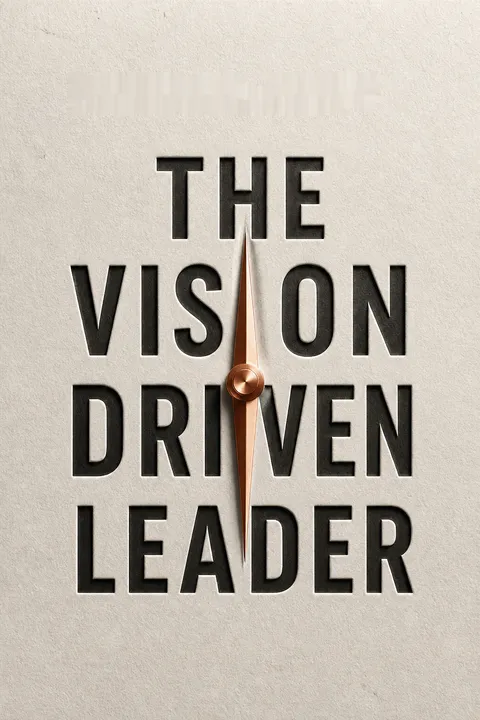


Key Takeaways
Execution can keep a company busy, but only vision gives it direction.
Leadership starts with a destination. Michael Hyatt distinguishes leaders, who describe and champion a future, from managers, who organize its execution. Both roles matter, but execution without a destination can preserve the status quo or generate impressive activity in the wrong direction. President Kennedy’s commitment to land a person on the moon gave NASA and the country a concrete, daunting objective. The achievement followed in 1969, despite widespread doubts and formidable technical barriers.
Failure made the lesson personal. Hyatt and his partner built a young publishing company with energy and ideas, but no clear picture of what they wanted it to become. After a distributor’s sales fell far below expectations, loans and pledged assets could not save the business. He contrasts that collapse with a later turnaround at Nelson Books, where a defined future helped align the team. His argument: ambition and hard work need a destination to become leadership.
What's compelling is the distinction between activity and direction. Organizations can measure tasks completed with great precision while never asking whether those tasks add up to a desired future. Strategy research often describes this as a coordination problem: a shared aim lets separate teams make compatible decisions without waiting for permission at every turn. Still, a vivid vision is not proof that the chosen destination is wise. Kennedy’s moon goal had exceptional political and public stakes, while many businesses face less consensus about what counts as success. Vision works best when it clarifies choices and invites scrutiny, not when it makes a leader’s preference untouchable.
A missing future turns opportunity into distraction and innovation into threat.
The costs compound. Hyatt identifies six recurring consequences of leadership without a guiding future: companies are unprepared for change, miss useful openings, scatter their attention, make poor strategic choices, waste resources, and lose people before results arrive. Kodak illustrates the danger of treating an existing business model as the future. Its engineer developed an early digital camera, but leaders feared digital photography would erode film sales and failed to move decisively. Fujifilm, by contrast, used its capabilities in new markets as film demand fell.
More options can make focus harder. Jawbone reportedly spent about $900 million in funding while moving among products without a durable direction. Apple offered the opposite example when Steve Jobs cut a sprawling product line to concentrate on a small set of priorities. A vision is useful partly because it lets leaders decline attractive opportunities that do not advance the intended future.
This section treats focus as a resource-allocation problem, not a personality trait. In behavioral economics, abundant options can increase the cost of choosing because every attractive possibility competes for attention and capital. A declared destination reduces that search space. But Kodak’s story also cautions against confusing a written vision with adaptability: a company can have a celebrated founding purpose and still defend the revenue model that once served it. Vision must be paired with evidence about customers and technology. Otherwise, the language of focus can become a polished justification for ignoring inconvenient signals.
Write tomorrow in concrete terms before asking anyone to build it.
Separate identity from direction. A mission describes what an organization does now: whom it serves, what problem it addresses, and what change it provides. A vision describes a future destination. Hyatt recommends writing a Vision Script, a fuller account of the organization three to five years ahead, phrased as if that future were already present. It is not a slogan, a forecast, or a strategy document.
Describe four parts of the business. Start with the future of the team, then consider products or services, sales and marketing, and the organization’s wider impact. Hyatt developed this approach after taking charge of the struggling Nelson Books division. He left daily work behind, examined the business honestly, and wrote down what he wanted the division to become. The team surpassed much of the vision in eighteen months. The exercise begins with desire, then turns it into a picture others can examine and improve.
Writing a future in the present tense can make an abstraction easier to inspect. It resembles scenario planning, where leaders construct a plausible future not to predict it, but to reveal assumptions and prepare choices. The four business domains also prevent an overly narrow definition of growth: a bigger revenue number is not automatically a better organization if products, culture, or customer relationships deteriorate. One caution is that a three-to-five-year horizon can be too short in industries shaped by long research cycles or public infrastructure. The useful principle is not the exact interval, but a time frame concrete enough to guide current decisions.
If your team cannot picture the destination, your vision is still fog.
Clarity has two parts. A vision must be concrete rather than abstract, and explicit rather than left for others to infer. Hyatt’s Vision Grid maps those dimensions. A leader may have a vague idea and communicate it poorly, or speak confidently in broad language that still leaves the team confused. Even a detailed idea can fail when it stays in the leader’s head. The goal is a specific picture the team can use to make decisions.
Assumptions are not communication. Hyatt tells of friends who drove to Franklin, Kentucky, when he expected them in Franklin, Tennessee. He had supplied a partial location and assumed they knew the rest. For clearer direction, he recommends admitting uncertainty, noticing blind spots, seeking input, reflecting on that feedback, and starting somewhere. Clarity develops through revision and action, not simply through waiting for a flash of certainty.
The Franklin mix-up is a small example of a large organizational problem: people fill missing information with assumptions, often different ones. Communication research calls attention to the gap between what a sender intends and what a listener can reasonably infer. The Grid is valuable because it separates two failures that leaders often lump together: not knowing what they want, and failing to express it. Yet precision should not become excessive control. A vision should clarify the destination and boundaries while leaving room for teams to discover better routes.
Make the future bold enough to move people, not so reckless it breaks the business.
Inspiration needs contrast. Hyatt argues that a compelling vision names what does not yet exist, reaches beyond routine improvement, takes a meaningful risk, and describes the desired outcome rather than prescribing every step. Uber challenged the assumption that a transport company needed to own cars and employ drivers. Apple’s first iPhone replaced the physical keyboard with a touch screen, a choice many critics doubted. Both examples show how a distinct future can attract customers and talent.
Ambition still needs judgment. Hyatt distinguishes a risky vision from a foolish gamble. A worthwhile risk should be supported by a plausible case, have the team’s considered commitment, and not needlessly destroy the organization’s core purpose. His company tested this with a paper planner, a departure from its digital products. They printed 10,000 copies, sold them quickly, and ordered more. The point is not to ignore constraints, but to avoid letting imagined obstacles settle the question before the idea is tested.
A bold proposition can mobilize people because it offers a break from incremental routines and gives effort a meaningful target. In innovation research, however, novelty is not the same as value. The strongest ideas combine a surprising premise with a testable account of customer need, resources, and downside. The planner example is instructive because the team made a bounded bet rather than staking the entire company on an untested concept. That distinction matters: confidence can energize experimentation, but confidence alone cannot distinguish courage from overreach.
Keep the destination steady while changing routes, plans, and hires.
A vision should shape work. Hyatt links the future to an annual plan, quarterly goals, weekly priorities, and daily tasks. His suggested rhythm is seven to ten annual goals, two to three quarterly priorities, and a short list of weekly and daily high-value actions. Each level should help advance the one above it. He also argues that leaders need to protect substantial time for future-focused work, rather than allowing operations to consume every week.
Routes can change. Free climber Tommy Caldwell studied a difficult route up Yosemite’s Dawn Wall, then had to find an unexpected detour to make progress. Hyatt uses the climb to distinguish a fixed destination from flexible strategy. That distinction also makes the vision useful in hiring: it helps leaders identify the capabilities and values needed, and assess whether candidates can contribute. The vision should inform decisions without dictating one permanent method.
The cascade from long-range aim to daily work is a practical answer to the common gap between strategic plans and calendars. It resembles implementation intentions, which translate broad aims into specific actions and make follow-through more likely. The danger is turning a planning rhythm into another bureaucracy. Annual targets and daily priorities can quickly become obsolete when conditions shift. Caldwell’s detour captures the needed balance: commitments can guide action, while feedback from the terrain revises the route. Hiring against a vision also requires care, so cultural fit does not become a euphemism for recruiting people who all think alike.
Enroll people by listening, explaining their stake, and repeating the direction.
Support is built with people. Hyatt recommends treating an early Vision Script as a draft. Discuss it with direct reports, invite meaningful criticism, and explain what is expected to change and what will remain stable. Employees need to understand how the direction affects their roles, growth, and rewards. Leaders should also seek alignment from bosses, boards, peers, and other influential stakeholders before a broad announcement. When making a case upward, explain the proposal, its rationale, timetable, costs, likely objections, and the decision being requested.
Communication needs repetition. Hyatt says a vision can fade from view as daily pressures take over, so leaders should restate it and connect it to current work. He also urges leaders to respect the past: existing practices often solved real problems, even if they no longer suit the future. This approach makes change less dismissive and gives people a reason to consider it. Selling a vision is not simply delivering a rousing speech; it is building understanding and shared ownership.
This is a useful corrective to the heroic-leader myth. Organizational change is easier to sustain when people can question assumptions, see how their expertise matters, and understand the personal consequences. That process resembles procedural justice: people are more likely to accept difficult outcomes when the process feels respectful and they have been heard. Repetition matters, but repetition alone can become propaganda if leaders never answer questions or adjust to new evidence. The distinction between alignment and unanimity is important: participation can improve a decision without requiring every person to agree with it.
Expect resistance, then protect the vision with grit, ethics, and courage.
Resistance comes in several forms. New work can collide with budgets, technology, routines, and limited capacity. People may oppose an idea because it threatens familiar roles or assumptions. Leaders can also undermine themselves through fear, doubt, or anxiety about rejection. Hyatt illustrates social resistance with Ignaz Semmelweis, whose hand-washing practice sharply reduced deaths among maternity patients but was rejected by many doctors of his era.
Persistence has boundaries. Hyatt names three qualities for difficult moments: tenacity after rejection, integrity when success would require compromising values, and courage when a team is tempted to accept a weaker result. At Nelson Books, he recommended cancelling a costly book after concluding its author’s public teaching conflicted with the publisher’s commitments. The decision sacrificed expected revenue, but senior leadership agreed. Staying committed to a vision does not mean defending every tactic or ignoring ethical costs.
Semmelweis’s case shows that a new idea can be rejected for social reasons even when it has strong evidence. It also highlights a danger in celebrating persistence: leaders can mistake criticism for proof that they are ahead of their time. Resistance may contain valuable information about feasibility, fairness, or harm. Tenacity is strongest when paired with listening and integrity, not when it becomes immunity from correction. The book’s ethical example helps anchor ambition in obligations to customers, colleagues, and the organization, rather than treating success as the only measure of good leadership.
Treat reinvention as a recurring leadership job, not a rescue fantasy.
Organizations move through changing conditions. Hyatt’s Vision Arc describes seven broad business stages: Startup, Rising, Transitioning, Mature, Legacy, Zombie, and Dead. The labels are not rigid categories; they help leaders notice when the current direction no longer fits. A Vision Zag is a revised direction that can renew a company or help it find a viable purpose after an earlier plan fails.
The pivot can happen anywhere. YouTube began as a video-dating service before opening its platform to all kinds of video. LEGO nearly collapsed after expanding too widely, then recovered by refocusing. Microsoft changed direction under Satya Nadella, and a failed game project at Tiny Speck left behind the internal communications tool that became Slack. Hyatt’s final practical sequence is to schedule time, seek input, trust the drafting process, revise as evidence arrives, and launch rather than waiting for a perfect plan. Reinvention is ongoing work, not a guarantee of rescue.
The Arc makes a useful point about organizational life cycles: a strategy that once produced growth can become a source of rigidity. The cases also show that a pivot is often discovery, not simply a leader announcing a new direction. YouTube’s users revealed a broader use; Slack emerged from an asset left by a failed project. This makes experimentation and attentive learning central to reinvention. The framework should not imply that every troubled organization can be saved by a better story. Some markets disappear, and some business models are no longer viable. A new vision must still earn support from customers and evidence.
Analysis
The book’s strongest contribution is its practical account of vision as an organizational instrument. It is not merely an inspiring statement; it is a shared reference point for selecting opportunities, shaping plans, hiring people, communicating change, and deciding what to stop. Hyatt’s own publishing failure gives the thesis credibility without pretending that a vision guarantees success. The book also preserves an important distinction: the destination can remain stable while the route changes.
Its central method is deliberately concrete. A leader imagines a future, writes it across core business domains, tests whether others can understand and care about it, and connects it to nearer-term work. This is closer to disciplined scenario-building than to prediction. A vision provides direction under uncertainty, but it cannot eliminate uncertainty. The strongest examples in the book are those where leaders remain responsive to customers and circumstances, such as YouTube’s shift from dating videos to general video sharing.
The argument is less convincing when successful outcomes are treated as proof that vision caused them. The stories of Apple, Uber, and Microsoft also involve timing, resources, organizational execution, and market conditions. Many failed ventures presumably began with ambitious visions too. That creates survivorship bias: celebrated winners make boldness look more reliably predictive than it is. The book partly addresses this by distinguishing a considered risk from a reckless one, though the distinction still depends on judgment.
A mature use of the method therefore combines aspiration with explicit tests. Does the future solve a real problem? What assumptions would need to hold? What evidence would change the plan? Who bears the cost if the bet fails? These questions do not shrink vision. They keep it connected to reality and make it safer for a team to challenge weak assumptions. The most useful leader is neither a manager trapped in today’s tasks nor a visionary insulated from feedback, but someone who can articulate a worthwhile future and keep learning while pursuing it.
Review Summary
The Vision Driven Leader receives mostly positive reviews, with readers praising its practical approach to creating and implementing a vision for organizations. Many find Hyatt's writing inspiring and appreciate the clear framework provided for developing a vision script. Reviewers highlight the book's relevance for leaders at various levels and its applicability to both business and personal contexts. Some readers note that while the content is valuable, it may be less groundbreaking for those familiar with Hyatt's previous work. Overall, the book is seen as a helpful guide for leaders seeking to drive their organizations forward with a clear vision.
People Also Read







Glossary
Vision Script
Written future pictureA detailed description of an organization’s desired future, usually three to five years ahead, written as if that future were already present. Hyatt recommends covering the team, products or services, sales and marketing, and organizational impact. It is meant to clarify the destination and guide current decisions, not to specify every strategy or predict what will happen.
Vision Grid
Clarity diagnosticA model for checking whether a vision is concrete or abstract, and whether it is explicitly communicated or left implicit. It highlights three unhelpful combinations: a vague idea that is poorly expressed, a vague idea delivered with confidence, and a detailed idea kept in the leader’s head. The useful aim is a future picture that is both concrete and explicit.
Vision Arc
Business-stage mapHyatt’s model of seven broad stages in a business’s life: Startup, Rising, Transitioning, Mature, Legacy, Zombie, and Dead. The stages are points on a continuum rather than fixed categories. The model helps leaders consider whether a company’s current direction fits its circumstances and whether it needs a renewed vision.
Vision Zag
Renewed business directionA change in an organization’s vision that redirects its energy toward a different future. A Zag may help a startup abandon an ineffective first idea, help a mature company adapt to changing markets, or give a struggling business a new path. It does not guarantee recovery; it provides a way to reconsider the organization’s purpose and choices.
Semmelweis reflex
Resistance to disruptive evidenceA term used for rejecting a new idea or finding because accepting it would challenge established beliefs or practices. The book applies it to social resistance against change, using physician Ignaz Semmelweis as an example. His hand-washing practice reduced deaths among maternity patients, yet many colleagues rejected his conclusion.
Leader-manager differential
Direction versus executionHyatt’s distinction between leaders, who create and communicate a future direction, and managers, who maintain operations and execute that direction. The roles are complementary rather than interchangeable. Confusing them can leave an organization competent at routine work but without a compelling destination or a reason to change.
Vision-strategy differential
Destination versus routeThe distinction between vision as the desired end state and strategy as the means chosen to reach it. Hyatt argues that the destination should guide planning, while strategies can change when conditions or new information require it. A specific vision can support multiple routes, and no single route should be confused with the goal itself.
FAQ
What's "The Vision Driven Leader" by Michael Hyatt about?
- Focus on Vision: The book emphasizes the importance of having a clear, inspiring, and practical vision for leaders to guide their organizations effectively.
- 10 Key Questions: It is structured around ten questions that help leaders create and implement a compelling vision.
- Leadership vs. Management: It distinguishes between leaders who create vision and managers who execute it, highlighting the necessity of both roles.
- Practical Guidance: The book provides actionable steps and tools, like the Vision Script, to help leaders draft and communicate their vision.
Why should I read "The Vision Driven Leader"?
- Enhance Leadership Skills: It offers insights into becoming a more effective leader by focusing on vision creation and execution.
- Strategic Planning: The book provides a framework for aligning daily tasks and long-term goals with a clear vision.
- Overcoming Challenges: It addresses common obstacles leaders face and offers strategies to overcome them.
- Inspiration and Motivation: The book is filled with real-world examples and stories that inspire and motivate leaders to pursue their vision.
What are the key takeaways of "The Vision Driven Leader"?
- Vision is Essential: A clear vision is crucial for organizational success and distinguishes leaders from managers.
- Vision Script: Creating a Vision Script helps leaders articulate a detailed and inspiring picture of the future.
- Selling the Vision: Successfully communicating and enrolling others in your vision is vital for its realization.
- Adaptability and Resilience: Leaders must be prepared to face resistance and adapt their strategies to achieve their vision.
How does Michael Hyatt define a Vision Script?
- Detailed Future Picture: A Vision Script is a robust document that describes the future reality of an organization in detail.
- Four Key Areas: It covers the future of the team, products, sales and marketing, and impact.
- Present Tense Writing: The script is written in the present tense to make the vision feel immediate and achievable.
- Guides Strategy: It serves as a guide for strategic planning and decision-making.
What is the difference between a leader and a manager according to "The Vision Driven Leader"?
- Vision vs. Execution: Leaders create and cast vision, while managers receive and execute it.
- Inspiration vs. Administration: Leaders inspire and motivate, whereas managers maintain and administer.
- Risk vs. Control: Leaders weigh and take risks, while managers control and minimize them.
- Long-term vs. Short-term Focus: Leaders focus on the long term, while managers concentrate on short-term goals.
How can a leader overcome resistance according to Michael Hyatt?
- Tenacity: Leaders should persist in the face of rejection and setbacks.
- Integrity: Maintaining ethical standards is crucial, even when facing difficult decisions.
- Courage: Leaders need the courage to stand by their vision and make tough calls.
- Adaptability: Being flexible and willing to adjust strategies is essential for overcoming obstacles.
What is the Vision Zag and how does it apply to businesses?
- Re-visioning: The Vision Zag involves redefining a company's vision to adapt to changing circumstances or revive a struggling business.
- Applicable at Any Stage: It can be applied at any stage of a business's life cycle, from startup to legacy.
- Examples of Success: The book provides examples of companies like LEGO and Marvel that successfully implemented a Vision Zag.
- Continuous Process: It emphasizes that vision should be continually revisited and adjusted as needed.
How does "The Vision Driven Leader" suggest leaders should sell their vision?
- Engage Stakeholders: Involve key stakeholders in the vision creation process to gain their buy-in and support.
- Clear Communication: Clearly articulate the vision to ensure everyone understands and is aligned with it.
- Address Concerns: Be prepared to address objections and concerns from team members and other stakeholders.
- Repetition and Reinforcement: Continually communicate the vision to keep it top of mind and prevent drift.
What are some of the best quotes from "The Vision Driven Leader" and what do they mean?
- "Vision is the essential ingredient for successful leadership." This quote underscores the importance of having a clear vision to guide and inspire an organization.
- "Leaders create things that didn’t exist before." It highlights the role of leaders in envisioning and bringing about new possibilities.
- "A vision that fails to inspire will surely expire." This emphasizes the need for a vision to be compelling and motivating to be effective.
- "The clearer your vision, the easier it will be to decide what next steps to take." It points to the practical benefits of having a well-defined vision for strategic planning.
How does Michael Hyatt suggest leaders should handle setbacks?
- Stay Connected to the Why: Remember the purpose and motivation behind the vision to maintain focus and drive.
- Manage Emotions: Recognize and manage negative emotions to prevent them from derailing progress.
- Leverage Strengths: Use personal and team strengths to navigate challenges and find solutions.
- Seek Support: Engage with mentors, peers, and team members for advice and encouragement.
What role does clarity play in a leader's vision according to "The Vision Driven Leader"?
- Concrete and Explicit: A vision must be concrete and explicit to be effectively communicated and understood.
- Avoiding Miscommunication: Clear vision prevents miscommunication and ensures everyone is aligned with the organization's goals.
- Guiding Strategy: Clarity in vision helps guide strategic planning and decision-making.
- Building Confidence: A clear vision breeds confidence and calm within the organization.
How does "The Vision Driven Leader" address the challenge of aligning daily tasks with long-term vision?
- Through Line from Vision to Tasks: The book emphasizes creating a direct connection from the vision to daily tasks.
- Five Elements of Alignment: It outlines a process involving the Vision Script, annual plan, quarterly goals, weekly objectives, and daily tasks.
- Focus on High-Leverage Activities: Encourages leaders to prioritize tasks that directly contribute to achieving the vision.
- Regular Review: Suggests regular review and adjustment of tasks to ensure alignment with the vision.
About the Author
Other books by Michael Hyatt






Download PDF
Download EPUB
.epub digital book format is ideal for reading ebooks on phones, tablets, and e-readers.








