

Plot Summary
Prologue
On a cold September dawn in 1998, twelve-year-old twins Ellice and Catriona reach Granton Harbour with blood on their clothes and a plan to escape by pirate ship. They have fled a house where danger has become ordinary, carrying only what they can manage and the promise to stay together.
A drunken sailor finds them before any ship does. As police lights approach, the girls cling to each other, and their childhood ends in the harbour’s shadow. Their lives as runaways begin.
The opening presents escape as both practical necessity and imaginative ritual. The twins reach for the pirate world they built because it offers a language for danger that they can control: ships, codes, and a destination beyond the harbour. Yet the adult world arrives not as rescue in any simple sense, but as police lights and a new identity imposed by circumstance. Their promise to remain together becomes the emotional contract the rest of the story will test. By calling this their second life, the novel makes survival feel like a beginning while leaving the first life unresolved.
The Twin Who Comes Home
Twelve years after leaving Scotland, Catriona Morgan is in a New York airport when she finally opens the messages from Ross MacAuley, her estranged sister Ellice’s husband. News reports say El has sailed out of Granton Harbour alone and has not returned. Search crews expect little chance of survival in the cold Firth of Forth, but Cat rejects the idea that her twin is dead.
She flies from California to Edinburgh, returning to 36 Westeryk Road, the childhood home El and Ross now share. Ross is exhausted and terrified, blaming himself for being away at a conference and for buying El the boat. When he embraces Cat, old intimacy presses against years of silence.
Cat’s return begins with an act of refusal: she cannot accept the public narrative of a likely death, even as she has spent years refusing private contact with El. The contradiction gives her denial two functions. It shields her from grief, but it also binds her to the sister she abandoned. Ross’s welcome complicates the homecoming further, making the house a shared emotional space rather than merely a crime scene. The familiar setting promises recognition while threatening to restore the roles Cat fled: the overlooked twin, the guilty sister, and the girl who mistakes avoidance for freedom.
A Card at the Door
The house preserves its old furnishings and oddities, including nailed-shut windows and a bell board linked to pulls in nearly every room. Detective Inspector Kate Rafiq and her partner Logan explain that El’s sailboat, The Redemption, vanished with her, leaving no emergency signal or confirmed sighting after it passed Inchkeith.
Cat insists El may have staged her disappearance, but the police reveal that El had received repeated anonymous cards. A new sympathy card addressed to Cat bears a blunt command to leave.
Ross recognizes the pattern and says El had received similar cards before vanishing. An anonymous email then warns Cat that someone knows something. The threat makes the house feel less like a refuge and more like a place under observation.
The investigation supplies rational categories for El’s absence, but Cat’s certainty refuses to fit them. Rafiq’s procedural caution contrasts with Cat’s conviction, while the threatening card turns an abstract mystery into a physical intrusion at the family threshold. The bells and sealed windows matter because they make the house seem engineered for both warning and confinement. Cat’s return therefore does not simply expose her to old memories; it places her inside a system whose mechanisms she remembers but whose purpose she has not yet recovered. Suspense grows from the gap between what she knows and what she can bear to know.
The Door Behind the Pantry
The anonymous emailer sends Cat a clue to the place where the sisters began their childhood treasure hunts. At the roots of Old Fred, the apple tree, Cat digs up a shoebox holding food tins, rum, red paint, and a page from El’s childhood diary. The page recalls the monsters their mother used to place in their stories.
In the pantry, Cat strips wallpaper from a cupboard and uncovers a bolted door into Mirrorland, the secret alley and washhouse where the twins built a pirate ship, the Satisfaction. She walks through their old forts and play spaces, finding a new version of their childhood pledge taped above the stairs. A sudden blackout sends her running back inside, certain the sender is drawing her toward a buried memory.
Mirrorland is more than an escape fantasy: it is a childhood technology for converting helplessness into rules, roles, and routes. Cat’s physical return to it lets her recover details her adult self has kept inaccessible, but the recovered space is not innocent. Its new message and sudden darkness suggest that someone is using the twins’ private language to direct her. The treasure hunt thus reverses its original pleasure. Instead of leading to a prize, each clue makes Cat confront the possibility that imagination was built around real fear. The mystery depends on her learning to distinguish the refuge from the danger it was designed to contain.
Friends Name a Monster
At the local shop, Cat meets El’s friends Marie Bernard and Anna, who react to her as if El has returned. Anna resents Cat’s long absence, while Marie offers help and asks for news. At the harbour, artist and underwriter Sathvik Brijesh, known as Vik, says El had become frightened, lost weight, slept badly, and carried bruises.
He believes her husband was the source of her fear. Cat rejects the accusation, but she can no longer dismiss it as easily as before. Another card arrives, warning that Cat will die too. Soon the Coastguard suspends its active search, leaving the police to pursue a long-term missing-person investigation. Cat’s confidence that El will walk back through the door begins to weaken.
Vik’s account forces Cat to consider evidence that threatens both her loyalty to El and her attraction to Ross. The people who knew El outside the marriage describe a changed woman, giving the missing sister a social life Cat never knew about. This undermines Cat’s belief that distance has left her uniquely qualified to interpret El. Marie and Anna also expose the cost of Cat’s absence: they do not treat her as El’s natural replacement, and they do not excuse her for having left. The search’s suspension makes the emotional stakes concrete. Cat must now act without the assurance that official effort will bring her sister home.
The Old Triangle Reopens
As Cat follows the clues, memories return of Ross first entering Mirrorland through the washhouse skylight, becoming the sisters’ secret friend. Later, Cat and Ross began seeing each other behind El’s back while El withdrew into grief and silence. El discovered them together at the Rosemount care home, and soon afterward overdosed on paracetamol.
She survived, but her declaration of victory and Ross’s choice to remain with her ended Cat’s place in their triangle. In the present, Ross’s grief draws Cat close again. They kiss, then begin a secret sexual relationship in the childhood home. Cat tells herself that El left Ross behind, but the intimacy leaves her more entangled in his story and less willing to trust the warnings around him.
The triangle’s power comes from more than romantic rivalry. Ross becomes the person through whom each twin measures whether she is chosen, needed, or replaceable. Cat’s renewed affair repeats the original betrayal while allowing her to recast it as consolation for an absent sister. The repetition is psychologically revealing: she is not simply drawn to Ross, but to the old arrangement in which his attention seems to establish her worth. Meanwhile, El’s overdose has become a contest in Cat’s memory, which obscures its seriousness and the emotional distress behind it. Desire and recollection now distort the evidence instead of clarifying it.
Mouse Steps Out of Fiction
A diary clue leads Cat to a page describing Mouse, the timid cabin girl she remembers from Mirrorland. When an email claims to come from Mouse, Cat assumes El is playing another game. She finally tells Ross about the messages and the hidden diary pages. Ross reacts with fury, then produces an old family photograph showing Mouse sitting beside Cat and El in the kitchen.
He explains that Mouse returned to their lives months earlier, after years away, and that El had welcomed her before she became increasingly intrusive. Cat is shaken by the photograph and by the possibility that she has misremembered a real person as an imaginary character. The revelation makes the emailer’s identity more dangerous, not less.
The photograph breaks the boundary Cat has relied on between fantasy and fact. Mouse’s presence in the family album means Cat’s inner world did not merely contain invented companions; it absorbed people and converted them into roles that could be managed. Ross’s account, however, is not neutral. His anger at Mouse and his description of her as unstable may be accurate, self-serving, or both. The scene leaves Cat unable to use memory as unquestioned evidence. Her next task is not simply to recall more, but to ask who benefited when she remembered a person as a character instead of a witness.
The Redemption Comes Up
The search changes when investigators locate The Redemption in the deepwater channel east of Inchkeith. Divers find that its drain plug was removed, its hull drilled with holes, its mast dismantled, and its emergency equipment disabled.
A woman’s body lies inside the cuddy. Cat and Ross provide samples for identification because they are identical twins. The DNA result confirms the body is El. At the mortuary, Cat insists on seeing her sister despite warnings that the water has badly damaged the face.
The sight overwhelms her. Forensic testing finds diazepam, fluoxetine, and oxycodone in the body, but cannot establish whether drowning, cold, or the drugs caused death. The deliberate damage to the boat suggests that the disappearance was engineered.
The recovery converts absence into bodily fact, but it does not resolve intention. Cat receives the confirmation she resisted, then discovers that identification and explanation are separate problems. The damaged vessel points toward planning, while the drugs and El’s past overdose make self-harm appear possible. These clues can be read in more than one direction, leaving grief without a stable account. Cat’s insistence on viewing the body is a desperate attempt to reclaim certainty through sight, yet the damaged face denies her that comfort. Forensic procedure can establish whose body it is; it cannot tell her whether El chose death, was forced into it, or intended another escape.
No Records Before Dawn
Rafiq discovers that neither twin has official records before September 5, 1998. An old police report says two injured girls were found at Granton Harbour by Peter Stewart, who claimed one wore bloodstained clothing.
That same morning, officers entered 36 Westeryk Road and found Nancy Finlay and Robert Finlay dead in what was ruled a murder-suicide. Cat begins telling Rafiq what life in the house was like: home schooling, isolation, forced tooth removal, and her mother’s drills against imagined dangers.
As fragments surface, Grandpa’s affectionate image fractures into the violent figure Cat calls Bluebeard, while her mother’s stories acquire the shape of warnings. Cat confirms the dead were her mother and grandfather, though she still cannot face the whole night of their deaths.
The missing records turn a family mystery into an institutional one: Cat and El were not merely estranged from the world, they were absent from its official systems. Rafiq’s questions act as a counterweight to the family’s private mythology, forcing events into a public chronology. Cat’s language still divides her grandfather into a beloved elder and a storybook monster, showing how children preserve attachment by splitting one person into incompatible selves. Her mother’s lessons and drills also change meaning. What seemed like eccentric fear may have been an attempt to prepare the girls for a danger they could not safely name.
Vik Wears Mouse’s Name
Cat’s messages insist that she is in danger and that Ross killed El. When she confronts Vik at the harbour, he admits he has been sending the emails while pretending to be Mouse. El had asked him to follow Cat, deliver the clues in order, and keep her away from the police until she remembered the night her first life ended.
Vik says El feared Ross and expected to die, but he denies that he and El were lovers. He also admits he failed to give police a proper statement because El had asked him not to involve himself. Cat is furious at being watched and manipulated, yet Vik’s confession proves that at least part of El’s warning was genuine.
Vik’s confession reframes the emails as both protection and control. El tried to reach Cat, but chose a method that withheld authorship and denied her sister an informed choice. The disguise of Mouse is especially loaded because Cat has already learned that her memories cannot be trusted. Vik, meanwhile, has obeyed El’s wishes even when obedience compromised the investigation. His loyalty is sincere but ethically compromised: affection has made him an instrument in someone else’s plan. Cat’s anger is therefore not a detour from the mystery. It is her first clear assertion that survival cannot depend on accepting another person’s account without question.
The Letter Beneath the Urn
Following the last clue, Cat finds a letter from El beneath a garden urn. El says Ross has abused and controlled her, and that she expects him to kill her. She explains that she has hidden evidence connected to The Redemption and arranged for Vik to guide Cat through memories Ross would rather keep buried.
In a sealed chest inside the forbidden bedroom, Cat finds a hole saw and a drain plug matching the objects used to sink the boat. Ross claims he left his London conference early only because El asked him to return, but Cat’s suspicions harden when she learns he concealed his departure. The letter and equipment make his apparent grief impossible to separate from the possibility of murder.
El’s letter supplies an interpretation, not yet a verdict. Cat wants to believe her sister, but El’s history of manipulation and the deliberate structure of the clues make belief feel perilously close to surrender. The hidden tools give the accusation physical weight, while their placement in a room associated with forbidden knowledge turns discovery into a test of courage. Cat’s investigation now joins two timelines: the sabotage of the boat and the childhood escape plan. The central question becomes whether she can trust the evidence without returning to the old habit of letting the people she loves decide what is true.
The Lantern Changes Hands
During a storm, Cat realizes that Ross has locked the house and that he may have been drugging her. She remembers the escape plan from September 1998: she and El were meant to crawl through a hole in the garden wall while Ross kept watch. In Mirrorland, she confronts Ross with his lies about returning from London and the blocked escape route.
He denies betraying the girls, but later tries to stop Cat leaving and puts his hands around her throat. The old stern lantern hangs nearby. Cat remembers using it to stop her grandfather from strangling El, and this time brings it down on Ross. Rafiq and Logan find them in the washhouse; Ross survives, is arrested, and Cat gives police El’s letter and the hidden evidence.
The climax makes memory an active survival tool rather than a passive record. Cat’s recovered recollection does not arrive as a neat explanation; it arrives while Ross is physically threatening her, and she must act before doubt can reclaim her. The lantern changes function from a prop in a childhood pirate ship to an instrument of self-defense, joining fantasy and fact without erasing their difference. The parallel with her grandfather’s attack makes the scene morally brutal: Cat must confront the possibility that violence saved her then and saves her now. Her action ends Ross’s immediate control, but it cannot undo the years in which love and fear were fused.
A Jury Believes Cat
Police find evidence in the house and establish that Ross lied about his movements before El disappeared. A marine insurance inquiry made just before the disappearance, his phone’s location data, and witness testimony undermine his account.
Anna and Marie report signs that Ross had hurt El. At trial, Cat describes the affair she had with him after El vanished, a damaging fact that makes the public see the grieving husband differently. The jury convicts Ross by majority of El’s murder, with the judge citing planning and financial motive.
Cat’s evidence has helped secure the verdict, but she remains emotionally bound to the man she helped imprison. Two days after the conviction, Vik gives her a letter from El that she has not yet managed to read.
The trial turns private knowledge into public judgment, but its most persuasive evidence is also Cat’s most humiliating truth. By testifying about her relationship with Ross, she refuses to protect the version of herself that could be mistaken for an innocent observer. The conviction offers accountability, not emotional resolution. Ross remains legible to her as both a convicted killer and the boy who once made her feel singular. The letter from El arrives after the legal story has apparently closed, reopening the question of what the verdict can and cannot settle. A court can punish a crime; it cannot restore a sister or decide what love meant.
The Black Spot Chosen
Cat visits Ross in prison because she still needs answers. He admits he drugged her and El because he feared being abandoned, but continues to deny killing El. When he explains that he chose El because she seemed to need him more, Cat hears the same possessive logic that had shaped their lives. She leaves him a black paper spot, the old Mirrorland sign for a final punishment, and walks away without promising to return.
Afterward, she reads El’s letter in full. It says El planned to make her apparent death look like an accident and leave evidence implicating Ross, so Cat would return and escape his influence. El also says she expected Cat to choose whether to show the letter to police, making the final decision hers.
Ross’s prison confession clarifies his motive without granting him absolution. His fear of abandonment is real, but he has repeatedly answered that fear by controlling other people’s choices. Cat’s symbolic use of the Black Spot reverses a childhood punishment: she is no longer the child waiting to be judged by a group whose rules El controls. She chooses the meaning herself. El’s letter complicates that autonomy, because her protective plan also manipulated Cat into returning. The key difference is that El leaves the final decision open. Cat can now recognize care and control as overlapping forces without treating them as identical.
The Island Is Real
Cat holds a memorial for El, plants a tree near Granton Harbour, and begins closing the childhood house. Before leaving, she burns documents and El’s letter, then locks Mirrorland behind its cupboard door. She has no clear plan for what comes next, but no longer wants the house to decide for her.
Carrying the ashes identified as El’s, she flies to Santa Catalina, the island that had existed for years in the twins’ pirate stories. After an exhausting journey, Cat crosses the footbridge to the island and visits the bar named for Henry Morgan. There she sees a waitress who moves and smiles with a familiarity that makes Cat stop. El, whom she mourned and buried, is alive.
The act of closing the house is not a denial of memory but a refusal to remain captive to its architecture. Cat leaves behind the rooms that once organized fear, while carrying the consequences of what happened into a new place. Santa Catalina, long treated as a fictional destination, becomes a real landscape, though its reality does not make it an uncomplicated paradise. The recognition of El overturns the apparent ending without canceling Cat’s grief for the body she buried. The novel asks the reader to hold relief and betrayal together: El’s survival is joyous, but Cat has lived through a loss deliberately staged by the person she most wanted to trust.
Three Sisters in the Sea
Reunited on Santa Catalina, El explains that she had planned to die after scuttling The Redemption, then escape from Ross. When Mouse came aboard, El told her the plan and left her alone below deck. Mouse took the diazepam and fluoxetine El had gathered for herself and died.
El used Mouse’s body to support the story of her own death, then fled with help from a false passport and supplies hidden in the house. Mouse had also been El and Cat’s identical sister, Iona, taken away as a child and hidden by the woman the twins remembered as the Witch. El and Cat grieve the sister they never recognized. They decide to make a life together rather than let guilt keep them apart.
The final revelation exposes the deepest cost of the twins’ private mythology: Iona was not a character created to soothe Cat, but a person their family had erased and their games had absorbed. El’s survival depended on another death, and her plan repeated the family pattern of deciding whose life mattered without consent. That recognition prevents the reunion from becoming a simple restoration of sisterhood. Cat and El must face both the love that kept them alive and the harm they inflicted through fear, rivalry, and neglect. Their choice to continue together is therefore not a return to childhood sameness. It is a relationship they must build with the truth included.
Epilogue
At dawn after Christmas, Cat and El carry Iona’s ashes to the lagoon beneath Morgan’s Head. They scatter them across the water and speak a private apology for the years they failed to see her. Asked what she will do next, Cat recalls the story of a prisoner who never stops trying to escape.
She chooses to imagine a future with El, perhaps buying another boat and sailing the Caribbean. As the sun turns the sea red, the sisters clasp hands, not as two halves of one person but as survivors choosing each other again.
The epilogue gives Iona the recognition denied to her in life, while refusing to make remembrance a substitute for justice or repair. Scattering ashes is an act of release, but Cat and El do not discard their history; they carry it into a chosen future. The reference to escape changes meaning once more. Earlier, escape meant flight from an abuser, then flight from grief and guilt. Now it means continuing to move without pretending the past has vanished. The sisters’ renewed bond is neither mystical fusion nor a return to childhood roles. It is a promise made with adult knowledge of what they have lost and what they owe.
Analysis
Mirrorland treats imagination as a survival practice with a double edge. The children’s pirate ship, coded rules, and invented monsters make danger narratable and therefore manageable. Yet the same device that protects them can conceal what is happening: an abusive household becomes a set of roles, and adults become storybook figures whose identities can be divided into good and evil. Cat’s delayed return to memory is not simple forgetfulness. It is a learned strategy that preserves attachment to people she loves by placing intolerable acts outside the version of them she can bear.
The novel also distinguishes intimacy from safety. Ross understands what makes Cat feel chosen and what makes El feel needed, but his attentiveness does not prevent him from using those needs to control them. Cat’s desire is real, which is why recognizing harm requires more than exposing a villain. She must admit that affection, longing, and danger can coexist without canceling one another. El’s elaborate plan offers protection, but it repeats a family habit of withholding truth from the person supposedly being saved. Even her care can become coercive when she decides what Cat is able to know.
The late revelation about Iona extends this pattern beyond the central marriage. The family’s stories and separations have not only shaped the twins; they have erased a sister who wanted belonging and help. The moral cost is not resolved by discovering her identity. Cat and El must acknowledge that they failed to see her, just as they must confront how they were failed by adults. Their final bond is strongest when it stops depending on being two halves of one whole. The book’s hope rests instead on chosen responsibility: remembering accurately, accepting painful complexity, and staying together without making either sister disappear.
Review Summary
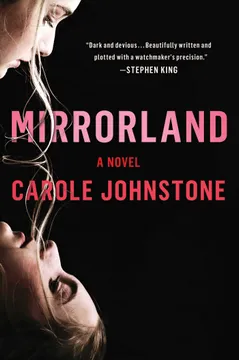
Mirrorland receives mixed reviews, averaging 3.6 stars. Many readers praise its unique atmospheric blend of psychological thriller, mystery, and magical realism, with standout twists and a compelling gothic Edinburgh setting. Stephen King's endorsement drew significant readership. Fans highlight the creative childhood fantasy world and shocking reveals, while critics cite pacing issues, an overly fantastical narrative, and a frustrating protagonist. The divisive magical realism elements either captivated or alienated readers, with some DNF-ing early. Most agree the story's originality is undeniable, even if execution didn't work for everyone.
People Also Read


Characters
Catriona Morgan
The reluctant twinCat narrates the story as a freelance writer who has spent twelve years in California avoiding her Scottish past. She is observant and funny, but often uses wit, alcohol, and denial to keep painful truths at a distance. Her identity has been shaped by comparison with El, her identical twin, and by a long history of wanting to be chosen without admitting how much she wants it. Cat’s imagination is not merely escapism; it gives her a structure for fear, loyalty, and survival. She is drawn to people who make her feel indispensable, even when that closeness threatens her independence. Her central struggle is learning to trust memory without treating every remembered story as fact.
Ellice MacAuley
The older mirrorEl is Cat’s identical twin, four minutes older and accustomed to treating that small difference as a claim to authority. An accomplished artist with a fierce imagination, she creates games, clues, and private codes that give the sisters a world of their own. El is intensely loyal, but also controlling, proud, and capable of using affection as leverage when she feels threatened. Her bond with Cat is full of tenderness and competition, often at the same time. She prizes agency and escape, yet her fear of losing the people she loves can make her plans secretive and costly. El’s life is difficult to understand from outside because she keeps separate versions of herself for different people.
Ross MacAuley
The beloved neighborRoss enters the twins’ childhood through the skylight of the neighboring washhouse and becomes their secret companion in Mirrorland. As an adult, he is a clinical psychologist whose attentiveness and warmth make him easy to trust, especially for Cat, who has loved him for much of her life. He carries an intense fear of abandonment rooted in his own family history, and he wants to be needed as much as he wants to love. His charm is genuine, but it can coexist with a strong desire to shape what others do. Ross’s relationships reveal how care can become possessive when fear is allowed to set the rules.
Mouse
The quiet cabin girlMouse is a pale, timid figure in the twins’ private pirate world, serving as cabin girl, powder monkey, and confidante. She is often treated as a container for the girls’ fears and a target for their games, though her gentleness makes her a source of comfort to Cat. Mouse longs to belong and to be useful, needs that can make her loyalty difficult to distinguish from self-erasure. Her place in the sisters’ memories is unstable, tangled with the invented characters and roles that shaped their childhood. The contrast between her soft manner and the intensity of her attachment gives her scenes a quiet, uneasy charge.
Detective Inspector Kate Rafiq
The unsparing investigatorRafiq leads the police investigation into El’s disappearance. Small in stature but forceful in manner, she questions both Cat and Ross without mistaking grief for proof. Her bluntness can feel combative, yet she knows how to offer practical kindness when a witness is overwhelmed. Rafiq’s work depends on separating what can be established from what people need to believe, a distinction Cat struggles to make. She remains alert to inconsistencies even when the case appears to have a simple explanation, and her persistence gives the story an essential counterweight to Cat’s unstable memories.
Sathvik Brijesh
The artist who warnsVik is an artist and marine insurance underwriter who became close to El through their shared work. He is kind, patient, and attentive to the changes in her behavior, which makes him one of the few people willing to name her fear. His affection for El complicates his judgment and his willingness to follow her instructions. Vik wants to help, but he is also capable of hiding behind promises and staying outside the official investigation when speaking up might matter most.
Marie Bernard
The scarred protectorMarie presents herself as a stylish local shopkeeper and a close friend of El. Her careful appearance conceals visible scars and a fierce belief that women in danger need active protection. She intervenes in ways that are secretive and frightening, convinced that direct warnings can deter an abuser. Marie’s own history makes her unusually alert to signs of control, but it can also lead her to impose her judgment on people she hopes to save. Her compassion is real, though her methods leave others unsure whether she is a rescuer or another source of pressure.
Anna
El’s blunt allyAnna works at the neighborhood shop and is close to El and Marie. She is guarded with Cat because she sees Cat’s long absence as a failure of loyalty. Her bluntness is sharpened by grief and by the feeling that she should have acted sooner when El showed signs of distress. Anna’s anger does not prevent her from caring; it is one of the ways she expresses that care. She is willing to risk discomfort to tell the truth as she understands it.
DS Logan
Rafiq’s steady partnerLogan assists Rafiq with the missing-person investigation and serves as a patient point of contact for Cat and Ross. His careful summaries can be exacting, but his calm presence helps make difficult information bearable. He is not as forceful as Rafiq, and his empathy sometimes shows in small gestures rather than speeches. Logan’s professional steadiness provides a human counterpoint to the police process.
Nancy Finlay
The fearful storytellerNancy is Cat and El’s mother, a home-schooling parent who surrounds her daughters with books, warnings, drills, and elaborate stories. She is intelligent and imaginative, but fear shapes the way she interprets the world and the lessons she passes on. Her tales give the girls tools for understanding danger while also blurring the line between play and reality. Nancy’s love is protective, demanding, and often difficult for her daughters to read. She wants them to be brave, yet her own terror can make courage feel like another task the children must perform for her.
Robert Finlay
The seafaring grandfatherRobert is a retired fishing-boat engineer with a damaged leg, a loud laugh, and a habit of telling sea stories. In the girls’ childhood memories he is both a warm companion and a formidable presence in the household. He takes part in their games, shares treats, and offers a rough kind of comfort, but his authority is rarely questioned. Cat’s affection for him makes it difficult for her to reconcile the beloved grandfather with the frightening figure suggested by her more troubling memories. His life at sea and his attachment to the house make him central to the family’s private mythology.
The Witch
The feared visitorThe Witch is the name Cat and El give to a tall, severe woman who appears in their childhood memories. She is associated with black clothing, a sharp voice, and the girls’ sense that adult attention can turn dangerous without warning. The children fold her into their storybook world, where a frightening visitor can be confronted in imagination even when she cannot be challenged in the house. Her presence unsettles the boundary between a real person and a monster made from a child’s fear.
Shona Murray
The family liaison officerShona supports Ross and Cat on behalf of the police, offering practical information about the search and the difficulties families face when someone is missing. Her careful, earnest manner sometimes clashes with Cat’s anger and impatience. She represents the administrative future the family is being asked to prepare for before they are ready.
Peter Stewart
The harbour witnessPeter Stewart is the sailor who finds Cat and El at Granton Harbour in 1998. His discovery brings the girls into contact with the authorities and marks the beginning of their lives outside the house.
Annie
The fearless first mateAnnie is a bold pirate character in the twins’ imagined crew. A sharp-tongued second mate and navigator, she embodies the courage Cat wishes she could summon when fear makes her hesitate.
Belle
The daring gunnerBelle is a glamorous, fearless pirate in the sisters’ invented world. Cat admires her freedom and confidence, making Belle a fantasy of self-possession as much as a crew member.
Captain Henry
The promised rescuerCaptain Henry is the pirate king the twins imagine as their absent father and future rescuer. His painted portrait and promised return give their games a destination, embodying the hope that someone powerful will eventually take them somewhere safe.
Plot Devices
Mirrorland
A refuge built from playMirrorland is the hidden alley and washhouse where Cat and El build a pirate ship, a town, and a prison from ordinary household objects. Its games give the girls roles, rules, and routes through fear that would otherwise feel shapeless. In adulthood, its rooms and codes become a map through Cat’s memories. The place works both as sanctuary and as a screen: it helps the sisters survive, but it also lets them translate real people and events into safer fictional forms.
The bell board
A warning system in disguisePulls in the rooms connect through hidden wires to bells in the kitchen, each with a distinct sound. As children, Cat and El treat the board as a game and later remember it as an alarm system. Its sounds prompt Cat to move through the house by instinct when danger returns. The device turns domestic architecture into a network of signals, and it lets memory operate physically before Cat has consciously recovered what the signals once meant.
The treasure hunt
Clues that unlock memoryEl’s emails direct Cat to diary pages and objects hidden around the house and garden. The clues borrow places and phrases from the twins’ childhood games, leading Cat from Old Fred and the pantry to the washhouse and beyond. Each discovery supplies a piece of history while testing whether Cat will trust what she remembers. The sequence also lets El communicate at a distance through Vik, guiding Cat toward information she might otherwise refuse to hear.
The identical twins
A mirror that misleadsCat and El’s identical faces cause strangers to mistake one for the other, but the deeper effect is psychological: each sister becomes a living comparison point for the other. Their belief that their bond makes them almost one person shapes their loyalties, rivalries, and memories. The mirror motif also complicates identification and testimony, making it harder for Cat to distinguish her own desires from El’s and harder for others to know which sister they have seen.
The scuttled boat
An apparent death at seaThe Redemption is found deliberately sunk, with its mast lowered, emergency systems disabled, and hull compromised. These details initially suggest a carefully staged accident or suicide, while the body inside the cuddy appears to settle El’s identity. Later revelations change what the evidence means: boat sabotage, drug traces, a hidden kayak, and identical DNA all belong to a larger deception involving escape, mistaken identity, and a failed plan.
Download PDF
Download EPUB
.epub digital book format is ideal for reading ebooks on phones, tablets, and e-readers.








