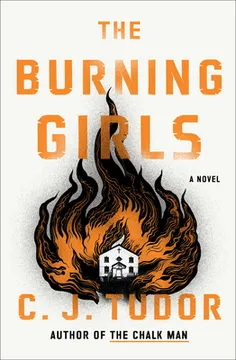


Plot Summary
Prologue
A man in clerical black enters a quiet house and finds its upstairs bedroom soaked with blood. A mother waits in the doorway, insisting that evil had taken hold there; a boy watches from another room.
The man finds an open case of religious objects, but the scalpel and serrated knife lie beside the body, both stained. He understands that the horror inside the house now implicates him too. Rather than summon help, he tells the mother to fetch cloths and bleach.
The opening makes religious authority complicit before the reader knows what crime has occurred. Its ordinary house, frightened mother, silent boy, and practical instruction to clean up create a chilling contrast between spiritual language and physical evidence. The scene also establishes the novel's central ambiguity: evil may be invoked to explain violence, but human beings still choose what to do with the bodies and secrets left behind. By withholding the man's identity and the victim's, the prologue turns concealment itself into the first mystery.
Transferred to Chapel Croft
After five-year-old Ruby dies in Jack Brooks’s Nottingham parish, public outrage over the vicar’s failure to save her makes Bishop Durkin transfer Jack to Chapel Croft, a small Sussex village. Jack resists uprooting her fifteen-year-old daughter, Flo, but the order is final.
At their neglected chapel, twig effigies mark the village’s history of Protestant martyrs. Before Jack can settle in, Flo finds ten-year-old Poppy Harper staggering through the graveyard, covered in blood and convinced someone has killed her beloved pig.
Poppy’s father, Simon, dismisses the scene as a slaughterhouse accident and takes her home without involving police. The churchwarden, Aaron, then delivers a case addressed to Jack. Inside are tools associated with exorcism, stained with old blood. Jack also learns that the former vicar, Reverend Fletcher, died by suicide in the chapel.
The move is not a fresh start freely chosen; it is an institutional response to scandal, imposed on a mother and daughter already carrying grief. Jack’s instinct to investigate Poppy’s blood shows how pastoral duty and the unresolved guilt over Ruby are entangled. The village’s martyrs, the exorcism case, and Fletcher’s death make its religious history feel less like a settled inheritance than a set of warnings. Even the first apparent explanation, a farm accident, is offered by a powerful local man who has no interest in scrutiny.
The Village Remembers
At Sunday service, the villagers measure Jack as an outsider, while Reverend Rushton tries to smooth her introduction and praises the Harpers’ long service to the church. When Jack returns Joan Hartman’s forgotten coat, the elderly former reporter gives her a darker account of Chapel Croft.
Local legend says the ghosts of Abigail and Maggie, two young martyrs, appear before disaster. Joan also recalls Merry Lane and Joy Harris, fifteen-year-old friends who disappeared in 1990 and were dismissed as runaways. Merry’s mother and brother vanished later.
Reverend Fletcher had researched the girls and, Joan believes, discovered something that troubled him. She doubts he killed himself. Jack resists the murder theory, but the warning lands differently when she learns Fletcher tried to burn the chapel shortly before his death.
Joan introduces the village as a community whose memory is selective: it preserves martyrdom as ceremony while treating recent missing girls as an embarrassment best left untouched. Her account destabilizes the official story of Fletcher’s death without yet proving an alternative. Jack’s scepticism is sincere, but it is also protective. If she accepts that the past can reach into the present, she must reconsider the exorcism case and the frightening images already gathering around her new home. Rushton’s emphasis on the Harpers’ standing hints that local history is not merely remembered; it is maintained by people with influence.
A Girl in Flames
While photographing the graveyard, Flo trips over a fallen headstone and sees a headless, armless girl burning in the grass. Her camera records only the cemetery. She tells Jack, who tries to find a rational explanation, but later discovers the chapel door open at night and a child’s Bible on the altar. Its damaged cover bears Merry Lane’s name, and a passage warns about false religious authority.
The chapel also smells of smoke, and scorched cushions lie in an upper storeroom. Jack cannot tell whether the signs come from a prank, Fletcher’s troubled research, or something supernatural. Mother and daughter both recognize that the girls in local folklore may be trying to warn them, yet neither knows what danger the warning concerns.
The apparition matters not because it settles whether ghosts exist, but because it defeats the characters’ usual ways of knowing. Flo’s camera, her trusted instrument for observing the world, fails to validate what she saw. Jack’s faith offers a language for the dead but no reliable test for their presence. The damaged Bible sharpens this uncertainty by placing religious authority under suspicion: its warning concerns false guides, while the church itself has become a crime scene in waiting. Their shared experience draws mother and daughter closer, even as Jack’s need to protect Flo makes her reluctant to share what she fears.
The Harpers Close Ranks
Flo befriends Lucas Wrigley, a withdrawn boy with dystonia who draws the village’s graves and offers to show her an abandoned house. Their first outing exposes the building’s ominous graffiti and a hidden well. Meanwhile, Jack visits the Harper farm to check on Poppy.
Simon and his wife, Emma, insist Poppy is fine, but Simon rebukes Jack for interfering and hints that he knows about her troubled past. Afterward, Jack finds an inverted cross carved into her car. Flo, meanwhile, is baited by Simon’s elder daughter Rosie and her cousin Tom in the village playground.
Tom reaches for Flo’s camera; she strikes his nose and runs, certain the encounter is not finished. During a lift from local reporter Mike Sudduth, Jack finds her prison-release notice in the glovebox and understands that the man who killed her husband has been released.
The Harpers’ power works through ordinary social mechanisms: money, reputation, and the confidence to decide who belongs. Simon’s warning is not just personal hostility; it tells Jack that concern for a child can be recast as outsider meddling. Flo’s collision with Rosie and Tom establishes a parallel vulnerability, one shaped by teenage hierarchies rather than church politics. Jack’s discovery of the release notice brings her concealed past into the new parish. Her transfer has not removed danger; it has placed her family in a village where old secrets and present threats can converge.
The Missing Girls’ Keepsakes
After helping Doreen Harris, Joy’s mother, Jack is invited into the home she has barely changed since her daughter vanished. In a hollowed-out Bible, Jack finds a photograph of Merry and Joy, along with their shared keepsakes.
Joan adds that the missing girls’ case was poorly investigated and that curate Benjamin Grady left Chapel Croft around the same time. Joan remembers Clara Wilson, now Rushton’s wife, as the witness who placed Joy elsewhere when she disappeared, and shows Jack Grady’s photograph, marked by an unusual signet ring.
Jack’s own history surfaces as she tells Mike about Ruby: the warning signs, her unsuccessful appeals for help, and the child’s death beneath her church altar. Soon afterward, Jack learns that Reverend Bradley, her replacement at St Anne’s, has been murdered and robbed. She fears the released killer has found her again.
Joy’s untouched room makes absence tangible: a life is preserved as furniture and objects, while the person herself remains inaccessible. The keepsakes connect the missing girls to the Bible already found in the chapel, turning personal artifacts into evidence. Jack’s confession about Ruby shows why she keeps returning to endangered children, but also why she distrusts her own judgement. Bradley’s murder transforms her fear of the past from private anxiety into an active threat. The novel’s parallel cases now press on Jack from both directions: she is investigating what happened to two girls while trying not to repeat what happened to Ruby.
The Cellar’s Last Recording
Flo takes Lucas to the abandoned Lane house, where years of occult symbols cover one bedroom. From the woods, Rosie and Tom shoot at them with an airgun, injuring Lucas and smashing Flo’s camera; the pair escape before either attacker explains themselves.
While Flo recovers, Jack clears the chapel cottage cellar and finds Reverend Fletcher’s research on the Sussex martyrs and Merry and Joy. A taped recording is labelled as an exorcism of Merry Joanne Lane.
Jack cannot immediately play it, but the label makes the old disappearances impossible to dismiss as a runaway story. At the chapel, another dead crow, a Burning Girl effigy, and a clipping about Jack’s role in Ruby’s death arrive as threats. Someone knows her past and wants her to feel watched.
The damaged camera and the buried tape are parallel records of evidence under attack. Flo’s photographs cannot preserve what she saw, while Fletcher’s recording is physically trapped in a broken machine. In both cases, knowledge is available but not yet usable. The cellar discovery also gives the exorcism kit a history: it is not a generic curiosity but part of an attempt to control Merry. Meanwhile, the crow, effigy, and newspaper clipping turn Jack’s public shame into a weapon. The village’s symbols are no longer merely folklore; someone is using them deliberately to frighten her into silence.
A Vault Beneath the Chapel
When Flo’s injured leg becomes trapped in a crumbling section of the chapel floor, Lucas helps free her. The opening exposes a hidden crypt. Jack, Flo, and stonemason Kirsty descend and find three Harper coffins, apparently belonging to ancestors celebrated as martyrs.
Their dates, however, fall years after the supposed executions. One coffin contains two bodies: an old skeleton and the remains of a blond-haired priest wearing the ring Joan identified. Jack recognizes Benjamin Grady.
The discovery prompts Rushton to admit that Reverend Marsh had uncovered the vault earlier and that Simon Harper funded repairs to keep it sealed, protecting the family’s martyr status. Rushton insists he knew nothing of Grady’s body. Jack now has proof that someone in the church concealed a death, but not yet who killed Grady or why.
The crypt turns historical prestige into material evidence. The Harpers’ public claim to martyrdom rests on dates that the dead themselves contradict, and the extra body shows that the church’s architecture has been made to hide more than one version of the past. Rushton’s confession reveals how institutional compromise often begins as practical maintenance: accept a donation, avoid a scandal, postpone the truth. Yet the hidden body raises a more urgent question than the family’s reputation. A community that can seal a vault can also decide which lives are remembered, and which are buried without explanation.
Bodies in the Well
Flo secretly meets Lucas at the Lane house instead of going to the youth club, and someone ambushes them. A hood is pulled over Flo’s head; Lucas is forced into the old well, where he finds a human body. An unknown man drives off the attackers and frees Flo, but disappears before she can identify him.
Police arrive and recover two sets of remains. Jack worries that Lucas’s closeness to Flo is dangerous, while Flo insists he helped her survive. Rosie soon visits and claims the assault was a staged test arranged by her and Lucas, intended to punish Flo for striking Tom.
Her story leaves Flo confused and isolated. Investigators initially think one set of remains belongs to Merry, but the second body, an older woman, suggests the well may hold more than the missing girls’ fate.
The well concentrates the novel’s central image of hidden history into a literal trap: Flo and Lucas are pushed toward the same darkness that has held unidentified bodies for decades. The rescue gives her reason to trust Lucas, while Rosie’s account turns that trust into doubt. Her explanation is especially potent because it borrows the language of adolescent romance and loyalty to excuse cruelty. Jack’s protective instincts now collide with Flo’s need to choose whom she trusts. The two bodies also destabilize the first convenient answer. Even when evidence surfaces, it can be misread if investigators accept the village’s preferred story.
Saffron’s Locked House
Jack questions Inez Harrington, Lucas’s former headteacher, about the fire at his old school. Inez says Lucas set it after a girl rejected him, and that the girl later died by suicide, though no charge was brought. The revelation makes Jack more wary, but Flo remains emotionally drawn to him.
Seeking answers about Fletcher, Jack visits Saffron Winter, Lucas’s adoptive mother and a young adult novelist. Her house is filthy and silent; upstairs, Jack finds Saffron’s long-dead body and signs that Lucas has been living among her possessions.
Before Jack can call for help, he is struck and loses consciousness. He wakes bound inside a car boot beside Saffron’s corpse. At home, Flo accepts Lucas’s messages and lets Rosie inside. Rosie admits she and Lucas are partners and produces the missing serrated knife, leaving Flo at her mercy.
The threat becomes intimate when the investigation reaches a home rather than a church or an abandoned building. Saffron’s untouched corpse makes Lucas’s double life physical, while the earlier school account warns that his apparent vulnerability may conceal a capacity for harm. Flo’s trust is not simple naivety; it grows from the isolation of a new village and the rare feeling of being understood. Rosie exploits that need by revealing the deception only after Flo has let her in. The chapter’s paired captures show how the adults’ investigation and the teenagers’ relationships have become parts of the same trap.
The Chapel Becomes a Trap
Lucas transports Jack to the chapel, where candles burn around a noose and Rosie helps him restrain Flo. Jack discovers that Lucas’s dystonia was an act designed to attract pity and lower suspicion.
He admits he forced Fletcher to hang himself after the vicar discovered the deception, and killed Saffron when she began asking questions. Lucas threatens Flo with the serrated knife and demands that Jack stage her own death as suicide before he burns the evidence. Jack loosens her restraints over a candle, then hurls a chair at Lucas.
Flo escapes after headbutting Rosie. As fire spreads through the chapel, Lucas attacks Jack; she stabs him twice to stop him. When smoke overwhelms her, a large figure carries her out. She recognizes her brother Jacob, the man who killed her husband, but he vanishes.
The chapel’s sacred functions are inverted: its altar becomes a stage for coercion, its candles ignite the building, and its old instruments of exorcism become weapons. Lucas’s performance of disability exposes how quickly compassion can be manipulated when pity substitutes for genuine knowledge. Jack’s decisive violence is morally distinct from Lucas’s: she acts to stop an imminent attack on Flo, not to preserve a lie or control another person. Her recognition of Jacob complicates the rescue. The person she fears has saved her, forcing the novel’s question about whether a history of violence can ever be separated from a moment of care.
The Well’s Real Secret
After the fire, Jack returns to Chapel Croft and learns that the bones in the well are Joy’s, not Merry’s, alongside Merry’s mother. The necklace misled the first investigators. Jack confronts Reverend Marsh, who confirms that he hid Grady’s body to protect someone; then Rushton admits Clara had urged him to bring Jack to the parish.
At the well, Jack confronts Clara with the truth. Thirty years earlier, Clara followed Joy, who was meeting Merry to escape. Their argument ended with Joy falling into the well; Clara left her there.
Later, Marsh asked Clara to help conceal Grady’s body, killed by Merry and her brother Jacob after Grady abused her. Clara has recognized that Jack is Merry, living under another name. Jack drops the repaired tape into the well rather than expose her own identity or reopen the old crime.
The mistaken identification of the bones demonstrates how a keepsake can be both evidence and misdirection. Clara’s confession finally separates the girls’ fates: Joy did not simply vanish, and Merry did not die in the well. Jack’s hidden identity recasts her investigation as a return to the scene of a childhood she survived by becoming someone else. Her decision to destroy the tape is neither clean forgiveness nor a straightforward cover-up. It is a refusal to let the police, the church, or the village dictate which parts of her past become public, even though that choice preserves Clara’s secret.
A Collar Left Behind
Two weeks later, Jack and Flo stay away from Chapel Croft while the police investigate. Mike reports that Lucas’s crimes have reopened questions about the Harper family, and that Poppy has begun speaking about the cruelty she suffered. Flo grieves the boy she thought Lucas was, even while accepting what he did.
Jack finally tells her more honestly that her marriage to Jonathon was unhappy and that his death did not erase that complexity. Mother and daughter discuss starting again in Australia. At the airport, Jack admits to herself that Jacob, recently released from prison, rescued her from the chapel.
He had also killed Reverend Bradley and an elderly couple while trying to reach her, but no witness identifies him. Jack removes her clerical collar and leaves it behind, stepping toward a future not defined by her role or her assumed name.
The resolution refuses the comfort of a complete moral accounting. Flo can mourn an imagined Lucas without excusing the real one; Jack can acknowledge her brother’s rescue without forgetting the people he harmed. Their conversation about Jonathon extends that honesty into family life, replacing a protective simplification with a difficult truth Flo can bear. Leaving the collar is not a rejection of every belief Jack has held. It is a refusal to let a public identity continue deciding what she owes others. The move offers distance, not erasure, and the unresolved fate of Jacob keeps that distinction alive.
Epilogue
In a hospital near Hastings, an unidentified patient recovers from severe burns and an infected ankle that has cost him part of his leg. He has barely spoken, but begins making small twig dolls in art therapy.
A nurse explains to a new doctor that the patient repeats only one phrase. The dolls resemble the effigies made in Chapel Croft, and the phrase names them: Burning Girls.
The epilogue quietly confirms that the rescuer survived, but it refuses to grant him a clean return to family. Jacob is physically marked by the fire and remains unidentified, while his repeated dolls suggest that the village’s imagery has followed him beyond the chapel. Art therapy offers a fragile form of expression, yet the dolls can signify guilt, memory, or fixation. The ending preserves the novel’s refusal to make rescue equivalent to redemption. Jacob saved Jack, but the lives he took remain part of him, just as the past remains present in the symbols he cannot stop making.
Analysis
The novel’s central conflict is not simply between faith and disbelief, but between care and the systems that claim to organize it. Jack is a priest, yet the institutions around her repeatedly treat reputation as a form of protection: Durkin transfers her to contain scandal, Rushton accepts silence to preserve the chapel, and the village allows powerful families to define what counts as history. Against these official versions, the novel places embodied evidence: a bloodied child, a damaged Bible, a hidden vault, a necklace, and a body in a well. Objects preserve what communities try to suppress, although they can also mislead when interpreted too quickly.
The book gives its women and girls different forms of constrained agency. Ruby cannot make adults respond to her warnings. Poppy’s silence is mistaken for emptiness. Merry and Joy imagine escape, but adults and institutions control the spaces through which they move. Jack’s authority as a vicar does not free her from the vulnerabilities attached to being a woman, a mother, or a person with a disavowed past. Her eventual violence against Lucas is presented as a desperate act of protection, not a tidy moral purification; she must live with what she has done even when it prevents further harm.
The novel is also sceptical of explanations that divide people into monsters and innocents. Bullying helps shape Lucas, but it does not absolve him. Jacob can rescue Jack and still have harmed others. Jack’s faith gives her a vocabulary for mercy, but mercy does not mean that every secret should be exposed or every relationship restored. Her final choice to leave, and to discard the collar, is less an answer than a refusal to let the church or the village assign her a single identity. The lasting lesson is that responsibility requires seeing people clearly, including the damage they cause, without reducing them to either their worst act or their most compassionate one.
Review Summary
Most reviewers praise The Burning Girls for its atmospheric, creepy setting, compelling characters, and unexpected twists. Readers particularly love the unconventional protagonist, Vicar Jack Brooks, and her daughter Flo, finding their dynamic authentic and engaging. The novel's blend of horror, thriller, and mystery genres receives widespread acclaim, with many highlighting the shocking finale. Common criticisms include a slow start, telegraphed clues, and occasionally messy plotting. One reviewer raised concerns about representation of minority groups. Overall, the book holds a strong 4-out-of-5 rating.
People Also Read





Characters
Jack Brooks
The guarded parish priestJack is a mid-forties vicar and Flo’s widowed mother, practical in emergencies and wary of the Church’s concern for reputation over people. Her faith is hard-won rather than unquestioning: she uses prayer for steadiness but trusts evidence, professional help, and her own judgement. Having known instability and loss, she is especially alert to vulnerable children, though that vigilance is tangled with guilt about cases she could not prevent. Her dry humour gives her a way to meet hostility without surrendering her authority. With Flo, she is loving and protective, sometimes so protective that she mistakes control for safety. Jack’s chief struggle is learning how to care for others without letting shame dictate what she must conceal.
Flo Brooks
The watchful photographerFlo is Jack’s fifteen-year-old daughter, a keen photographer who prefers observing a place through her camera to joining its social groups. She has been uprooted from Nottingham and resents being treated as if she cannot judge people for herself. Her independence is real, but so is her need for companionship; she is drawn to outsiders who seem to understand what it is like not to fit. Flo’s loyalty makes her brave and occasionally reckless, especially when she believes an adult is underestimating her. Her bond with Jack is affectionate and candid, though the move forces them to renegotiate privacy, trust, and the difference between protecting someone and deciding for them.
Lucas Wrigley
The village outsiderLucas is a teenage boy in Chapel Croft whose visible dystonia makes him an easy target for other young people. He draws unsettling pictures and finds some refuge in abandoned places, where he can observe without being judged. His guarded manner and bleak humour initially make him seem more comfortable with the dead than with the living. Lucas’s relationship with Flo develops out of shared isolation and her willingness to look beyond his appearance. He is shaped by painful experiences at school and a strained connection to the adults around him. His story raises difficult questions about bullying, responsibility, and how much a person’s suffering explains without excusing.
Jacob Brooks
Jack’s absent family shadowJacob is a troubled man whose connection to Jack belongs to the part of her life she rarely discusses. His history includes imprisonment and a capacity for sudden violence, but he is also capable of fierce loyalty. The people who know him do not agree on what his actions mean, and his own understanding of love is inseparable from a desire to be forgiven. Jacob embodies the danger of treating remorse as if it erased consequences, while his bond with Jack complicates any simple division between protector and threat.
Clara Rushton
The composed schoolteacherClara is the elegant, capable wife of Reverend Brian Rushton and a former teacher with long ties to the local church. She knows the village’s families and history intimately, and she is skilled at making questions sound like friendly conversation. Clara values stability, loyalty, and the preservation of the life she and Brian have built. Her calm manner can conceal the intensity of old attachments, while her history as an awkward young woman gives her a more complicated relationship to beauty and belonging than she first reveals.
Joy Harris
The devoted best friendJoy is one of the two Chapel Croft teenagers who disappeared in 1990. She is the only child of Doreen Harris and Merry Lane’s closest friend. Joy grows up in a strict household where her mother wants to protect her through religious instruction, while Joy wants a life shaped by her own choices. Her friendship with Merry offers intimacy and escape from the pressures surrounding them. Keepsakes and a photograph preserve the warmth of that friendship long after the village has turned the girls into a mystery.
Merry Lane
The restless missing girlMerry is a fifteen-year-old Chapel Croft girl, Joy’s closest friend, and a teenager living with poverty, neglect, and violence at home. She is perceptive and defiant, with a sharp instinct for hypocrisy and a fierce attachment to the few people she trusts. Her hope of escape is bound to Joy, whose friendship gives her a glimpse of a life beyond her household. The village remembers Merry chiefly through her disappearance, but the evidence she leaves behind suggests a more complicated story than the runaway label allows.
Benjamin Grady
The ambitious young curateGrady is a handsome, ambitious young curate who serves in Chapel Croft during the period when Merry and Joy disappear. His theological training and clerical status give him authority over young parishioners, while his confidence makes him attractive to many local girls. He is remembered through the official accounts of the church and the fragments preserved by people who knew him. The contrast between religious office and private conduct makes him central to the village’s struggle over whether its history should be protected or confronted.
Reverend Marsh
The old parish vicarMarsh is Aaron’s father and the long-serving vicar who preceded Fletcher. A deeply religious man, he raised Aaron after his wife died and gave much of his life to the church and community. In old age, Huntington’s disease leaves him unable to communicate easily, but his past still carries weight for those seeking answers. His devotion is sincere, though his understanding of duty is shaped by the belief that protecting the institution can sometimes matter as much as exposing wrongdoing.
Reverend Brian Rushton
The genial neighbouring vicarBrian Rushton is the warm, sociable priest of Warblers Green, responsible for several rural churches and relieved to have help. He prefers community harmony to confrontation and has spent decades becoming part of the local landscape. His humour and hospitality make him easy to like, but his loyalty to the church can lead him to accept silence where investigation is needed. Brian is not indifferent to people; he is simply practiced at treating stability as a good in itself, even when it shelters a damaging compromise.
Aaron Marsh
The watchful churchwardenAaron is the pale, reserved churchwarden and son of Reverend Marsh. He has spent much of his life connected to the chapel and now cares for his father as Huntington’s disease advances. His formal manner and stern views on faith can make him seem difficult to approach, but much of his rigidity is bound to responsibility and fear of disappointing the parent who raised him. Aaron knows the church’s routines and history better than Jack does, though he does not always know how to share what he knows.
Simon Harper
The powerful local farmerSimon is the owner of Harper’s Farm, Poppy and Rosie’s father, and a prominent employer and donor in Chapel Croft. He takes pride in the family’s local roots and expects others to respect his authority. His care for his family is entangled with a strong need to control how outsiders see them. Simon’s influence gives his opinions unusual force in the village, and his instinct to defend reputation can make even legitimate concern feel, to him, like a personal attack.
Emma Harper
The polished farm wifeEmma is Simon’s wife and mother to Rosie and Poppy. She is gracious, socially adept, and more perceptive than her polished appearance suggests. Emma carries grief over a child’s death and guilt about the circumstances surrounding it, which complicate her relationship with the families involved. She often yields to Simon’s decisions, but her private doubts show that outward compliance is not the same as conviction. Her concern for Poppy coexists with difficulty understanding what her younger daughter is feeling.
Poppy Harper
The quiet younger daughterPoppy is Simon and Emma’s ten-year-old daughter. Sensitive and withdrawn, she struggles to express what she feels, especially after witnessing a frightening death. Her attachment to animals and to the memory of her friend Tara gives Jack an early glimpse of the emotional life hidden beneath her silence. Poppy is often treated as a problem to manage rather than a child whose experiences need patient attention. Her quietness makes the adults around her underestimate how much she notices.
Rosie Harper
The sharp-tongued elder sisterRosie is Simon and Emma’s older daughter, a confident teenager accustomed to testing the limits of other people’s patience. She uses social fluency and mockery to control the atmosphere around her, especially with younger girls. Her relationship with Poppy is shaped by family strain and expectations placed on her as the responsible older sister. Rosie is quick to recognize vulnerability in others, though her own motives and loyalties are not easy to read from her polished, self-assured manner.
Mike Sudduth
The grieving local reporterMike is a reporter for the Weldon Herald and a father living with the loss of his young daughter, Tara. He attends Chapel Croft services because they connect him to her memory, and his grief has led him to stop drinking. Mike’s dry humour and modest self-deprecation make him easy company, but he remains alert to the way stories are shaped by those with power. His work brings him close to Jack’s investigation, while his own bereavement gives him a personal understanding of guilt that cannot be reasoned away.
Joan Hartman
The village’s sharp memoryJoan is an elderly former local reporter whose age has made villagers too ready to dismiss her. She remembers the missing girls, Reverend Fletcher, and the people who preferred not to discuss either. Her curiosity is disciplined by years of reporting, and she knows how to use the assumptions others make about her. Joan is both a source of evidence and a reminder that memory is work: someone must keep asking questions after a community has decided to move on.
Saffron Winter
The reclusive young adult authorSaffron Winter is the pen name of Annette Wrigley, a novelist of popular books for young readers and Lucas’s adoptive mother. She is private, absorbed in her writing, and has formed a friendship with Reverend Fletcher. Her home and habits suggest a woman who has withdrawn from the social life around her. Saffron’s attention to stories and imagined worlds contrasts with her difficulty reading what is happening within her own family.
Bishop Durkin
The calculating church superiorDurkin is Jack’s diocesan superior, a polished administrator who values the Church’s public standing. He can be charming when it serves his purpose, but he expects obedience when a difficult decision has already been made. His transfer of Jack reflects the institution’s instinct to manage scandal by moving the person associated with it. Durkin is not a villain in the village mystery, but his priorities show how bureaucratic self-protection can deepen the isolation of someone who is trying to act responsibly.
Ruby
The child Jack could not saveRuby is a young girl in Jack’s former Nottingham parish, placed with foster carers and brought to church by them. She is bright and affectionate at first, but increasingly withdrawn. Jack notices signs that something is wrong and tries to find help. Ruby’s experience shapes Jack’s deep concern for children and her fear that good intentions may not be enough.
Jonathon Brooks
Jack’s troubled late husbandJonathon is Jack’s late husband and Flo’s father. He struggled with depression and could be difficult to live with, even as Jack remembers the love and good qualities that first bound them together. His presence in Jack’s memories is complicated by the strain of caring for him while raising a young child. Jack’s eventual honesty about their marriage helps Flo understand that grief and affection do not require a simplified version of the past.
Reverend Bradley
Jack’s Nottingham replacementBradley is the priest who takes over Jack’s former church and runs its soup kitchen. He welcomes people in need and offers the kind of practical pastoral care Jack once provided there. His brief presence connects Jack’s new life in Sussex to the parish she left behind and to the unresolved dangers attached to her family history.
Tom
Rosie’s aggressive cousinTom is Rosie’s cousin, a well-built teenage boy who joins her in tormenting Flo and Lucas. He relies on physical intimidation and an airgun to assert himself. Tom represents the blunt, ordinary cruelty of the village’s youth, distinct from the more elaborate deceptions unfolding around the adults.
Plot Devices
The Burning Girls
Folklore as warningThe village’s twig effigies commemorate the Protestant martyrs Abigail and Maggie, including two young girls burned in the sixteenth century. Local belief holds that the girls appear when someone is in danger, while the annual burning of the dolls is meant to remember or ward off their spirits. Flo sees figures that resemble the legend, but photographs fail to confirm what she witnessed. The folklore keeps supernatural and psychological explanations in tension, while giving the story a distinct visual language of flames, girls, and warnings.
Fletcher’s Exorcism Case
A buried crime recordThe leather case delivered to Jack contains religious objects and bloodstained instruments associated with an exorcism. Fletcher’s cellar files and a damaged cassette later connect the equipment to Merry Lane and Benjamin Grady. The case makes the church’s history tangible, shifting the mystery from village legend toward human violence hidden beneath religious language. Its contents also become a threat because the recording carries evidence that could expose the past, including Jack’s own connection to it.
The Sealed Chapel Vault
History under stoneA section of broken chapel flooring hides a crypt containing Harper family coffins and a priest’s remains. The crypt proves that the village’s celebrated family history does not match the dates on the dead, and that someone deliberately concealed a body. Its discovery ties the church’s physical structure to the missing-girls mystery, implicates institutional gatekeepers, and forces Jack to ask who knew about the chamber before the floor was covered.
The Keepsakes and Necklace
Identity through objectsJoy’s preserved bedroom, a photograph of the two girls, their hidden belongings, and their initialled necklaces give Jack a personal route into a case treated as a cold file. The objects establish the depth of Merry and Joy’s friendship and provide forensic clues, but the necklace also encourages a mistaken identification of the remains in the well. In the novel, an object can preserve memory without guaranteeing that the story attached to it is correct.
Lucas’s Performed Dystonia
Pity as camouflageLucas’s visible, involuntary-seeming movements encourage adults and peers to see him as vulnerable and harmless. That assumption shapes Flo’s attraction and Jack’s reluctance to distrust him. The eventual revelation that his condition is performed recasts earlier encounters without erasing the real bullying he endured. The device exposes how easily sympathy can become a substitute for knowing someone, and how social prejudice can be exploited by the person it appears to protect.
Download PDF
Download EPUB
.epub digital book format is ideal for reading ebooks on phones, tablets, and e-readers.








