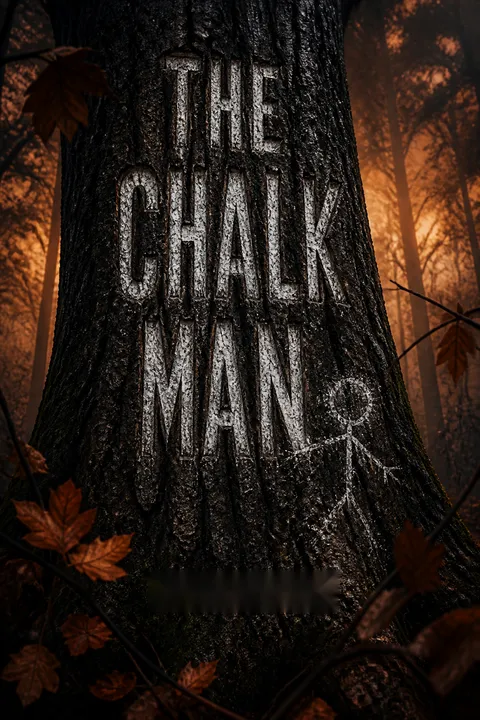


Plot Summary
Prologue
In the woods, an unknown person finds a murdered girl’s scattered remains beneath the leaves. The visitor gathers the missing head, closes the dead girl’s eyes, and carries it away in a bag with pieces of chalk.
Police later recover the rest of the body, but the head is never found. The opening image offers a crime before its history, making the reader wait to learn not only who killed the girl, but who touched the evidence afterward.
The prologue makes concealment physical: the missing head is not merely a gap in the investigation, but an object someone chooses to possess. Its tender gestures sit uneasily beside the practical act of removing evidence, establishing the novel’s central tension between care and control. The chalk beside the remains links a child’s game to a real crime before the reader knows how the connection works. By withholding the visitor’s identity, the opening also warns that apparent witnesses and helpers may have private stakes in the story they later tell.
The Waltzer Splinters
In 1986, twelve-year-old Eddie Adams joins his friends Fat Gav, Hoppo, Metal Mickey, and red-haired Nicky at Anderbury’s fair. While searching for his lost wallet, Eddie sees Elisa, a striking local girl, near the Waltzers. A carriage breaks loose, killing the ordinary afternoon in a crash of metal and blood. Elisa is horribly injured but conscious.
Her new teacher, Mr. Halloran, takes charge, has Eddie hold her severed leg steady, then uses his belt to slow the bleeding. Elisa survives, and the local paper celebrates the pair as heroes. Eddie, however, cannot forget how close he came to fleeing before Halloran told him what to do. The accident makes his childhood world feel suddenly unsafe.
Eddie’s first defining choice is small and compromised: he helps Elisa, but only after an adult gives his fear a task. Halloran’s calm turns panic into procedure, while Eddie’s lasting shame comes from remembering his impulse to run. The accident also introduces the novel’s unstable idea of beauty. Eddie notices Elisa first as an image, then sees what violence has done to her face. That shift matters: the story repeatedly asks whether people can recognize someone once appearance, memory, or reputation has changed.
Chalk Becomes a Code
At Fat Gav’s birthday party, an unwanted bucket of colored chalk gives Eddie an idea. After Halloran has described the secret pavement symbols he once used with friends, Eddie and the others assign colors and drawings to meeting places and warnings.
Their play unfolds alongside a harsher adult conflict: Nicky’s father, Reverend Martin, leads protests against the clinic where Eddie’s mother works. At the party, Eddie’s father, Geoff, punches Martin after an argument about the clinic.
Soon a parcel arrives for Eddie’s mother containing a fetus and a threat. The children’s code now sits beside real intimidation, and Eddie sees that adults can turn conviction into violence. Nicky’s bruises and fear of her father deepen his sense that the danger is not confined to the street.
The chalk code is a child-sized attempt to control access to the world: the friends decide who can read their signs and where the group should gather. The adults around them use different systems, including religious authority and political protest, to claim moral certainty. Geoff’s punch and the threatening parcel expose how quickly stated principles can become bodily threats. Nicky’s injuries complicate the children’s assumption that home is safe, while the code’s innocent beginning prepares it to carry meanings the children cannot yet interpret.
Sean Enters the River
Metal Mickey’s older brother, Sean Cooper, corners Eddie in the playground and sexually assaults him until Halloran intervenes. Fat Gav witnesses the attack but does not step in; afterward, he steals Sean’s beloved red BMX, hoping to punish him.
Sean enters the river to retrieve it and drowns. At his funeral, police officer Andy Thomas publicly accuses Sean of raping his daughter Hannah and fathering her baby, a claim the congregation cannot verify. Mickey bolts from the service, then returns to school angrier and more isolated.
The chalk men begin to feel like warnings rather than a game, especially after one depicts a drowning figure. Eddie recognizes that the friends’ choices have consequences, but he does not yet understand how much each boy is hiding.
The episode binds guilt to action without making the children’s intentions equivalent to their consequences. Gav’s theft is a response to his failure to protect Eddie, but Sean’s death is an outcome he never intended. Mickey’s grief then hardens into aggression, making the group’s compassion feel painfully uneven. The funeral’s accusation supplies a public story about Sean, but its setting does not make it true. By letting the claim stand unanswered, the novel shows how communities convert grief and suspicion into apparent fact.
White Chalk in Church
After Sean’s funeral, Gwen Hopkins finds St. Thomas’s covered in chalk figures and Reverend Martin beaten, stripped, and wounded across his back. Eddie’s father becomes a suspect because of his anger toward Martin, but Halloran tells police he found Geoff drunk and asleep in the churchyard before the attack.
The revelation that Halloran visited Elisa complicates his reputation and leads the school to force him out. Meanwhile, Mickey taunts Hoppo over his dog Murphy, then falsely claims he poisoned the animal; a fight leaves Nicky with a black eye.
Reverend Martin’s assault leaves him unable to care for Nicky, and she moves away with her mother. The friends scatter, carrying separate versions of the summer and no shared account of what happened in the church.
The church attack turns a supposedly sacred space into a surface for accusation, while the carved wounds make religious imagery inseparable from physical cruelty. Halloran’s alibi protects Geoff but exposes Halloran’s private attachment to Elisa, shifting public suspicion onto the man who had been celebrated as a rescuer. The children’s later fight shows grief reproducing itself as cruelty: Mickey tries to make his friends feel the loss he feels. Nicky’s departure removes the group’s strongest counterweight to the boys’ evasions.
The Missing Head
Months later, chalk signs lead Eddie, Gav, Hoppo, and Mickey into the woods, where they find Elisa’s dismembered body beneath separate piles of leaves. Her head is absent. While the others fetch police, Eddie removes a ring from her hand and keeps it, an act he cannot explain even to himself.
Halloran becomes the obvious suspect: he had been seeing Elisa, a seventeen-year-old, and their relationship has cost him his teaching post. Before police can question him, Eddie secretly visits Halloran’s cottage and leaves Elisa’s ring on the kitchen table.
Halloran is found dead in a bath with cut wrists. Investigators treat the ring as evidence linking him to the murder, and the town accepts a tidy conclusion. Eddie stays silent about both the ring and his visit.
The ring changes hands through acts each character can rationalize: Eddie keeps it because possession feels like preservation, then returns it as an attempted kindness. Its evidentiary meaning is therefore built from an innocent child’s secrecy, not a reliable chain of custody. Halloran’s suicide seals the town’s preferred explanation, since a dead suspect cannot contest the story told about him. Eddie’s silence protects him from blame, but it also lets a false certainty become the community’s memory.
Mickey Comes Back
Thirty years later, Eddie teaches English in Anderbury and lives in his childhood home with Chloe, his much younger lodger. A mailed hangman drawing and white chalk unsettle him, though he does not tell his old friends. Mickey, now an advertising executive, returns and asks Eddie to help make a book about the murder. He claims to know who really killed Elisa, but leaves before explaining.
The next day his wallet, including his hotel key, is found at Eddie’s house; staff confirm he never returned to the hotel. Police soon recover Mickey’s body from the river with a matching chalk drawing. They initially consider an accident, while Eddie recognizes the old symbols have dragged his childhood secrets back into reach.
Eddie’s adult life is organized around management: work, collections, and a house inherited from parents whose histories still occupy it. Mickey’s arrival punctures that arrangement by offering both money and an accusation, but his disappearance turns the old mystery into an immediate threat. The repeated chalk image functions less as supernatural proof than as a trigger for unresolved memory. Eddie’s reluctance to disclose his own letter shows how secrecy has become habitual, even when silence could obstruct an investigation.
Chloe’s Other History
Searching for Chloe after discovering she lied about her job, Eddie finds Nicky in Bournemouth. Nicky reveals that Chloe is her half-sister, Hannah’s daughter, and that Chloe had previously stayed with her while researching the old case. She had dismissed Chloe after finding notes about the chalk men. Nicky also corrects the funeral story: Sean did not father Hannah’s baby.
Reverend Martin did, and he pressured Hannah to conceal their relationship. Chloe later returns to Eddie’s house and admits Mickey hired her to gather background for his book. She sent no threatening letters; Mickey did. She followed him on the night he died, slapped him after he insulted her, then left. She gives Eddie Mickey’s notebook before departing again.
The family revelation forces Eddie to revise his understanding of Chloe, but it also exposes the limits of Nicky’s own knowledge: she has returned to investigate a father she has spent years refusing to see. Hannah’s pregnancy reverses the public account of Sean’s violence, showing how a dead boy’s reputation was used to shield a powerful adult. Chloe’s research makes her both a person seeking family history and an instrument in Mickey’s commercial plan. Neither motive cancels the other.
Hair Changes the Case
Mickey’s notebook links the case to hair, and Eddie recalls that Elisa had changed her hair color before her death. His mother, Marianne, finally explains that Geoff told Andy Thomas about Hannah’s pregnancy; Thomas and other men then attacked Martin, though she cannot account for every wound or chalk drawing.
At St. Magdalene’s, Eddie learns that Chloe, not Nicky, has been visiting her father. The nearly unresponsive Martin briefly grips Eddie and urges confession.
Eddie then questions Thomas, who recalls seeing a limping workman near the woods on the night Elisa died. Combining the hair clue with Martin’s fixation on Hannah, Eddie concludes that the reverend may have mistaken Elisa for his daughter. He heads back to the nursing home, where Martin has escaped.
The investigation advances through corrections rather than a single authoritative confession. Marianne’s account distinguishes the men who attacked Martin from the unanswered details of the church scene, while Thomas contributes an imperfect observation that only becomes meaningful beside the hair clue. Martin’s brief lucidity unsettles the assumption that his damaged mind has erased the past. Eddie’s theory remains an inference, not courtroom proof, which preserves the novel’s skepticism about how confidently people narrate events they only partly witnessed.
The Woods Wake Again
Eddie, Gav, and Hoppo reach St. Magdalene’s and learn Martin has slipped out through an unsecured window. Eddie and Hoppo search the woods, where they find Chloe unconscious beside her tent. Martin emerges in overalls, carrying an axe. He wounds Hoppo badly and tries to strangle Eddie while condemning Hannah as a sinner.
Eddie accuses him of killing Elisa after mistaking her for Hannah, whose newly changed hair made the error possible. Martin’s hesitation gives Eddie a moment to resist, but he is losing the fight. Nicky appears and drives the axe into her father’s back, killing him. She collapses beside him, overcome by the fact that she reached the clearing too late to prevent the attack.
The climax makes the past physically present: the woods that once turned chalk directions into a discovery become the site where the surviving characters must act. Martin’s religious language does not explain his violence so much as furnish it with permission. Nicky’s intervention reverses her childhood helplessness before her father, but the act does not restore their relationship or erase her grief. Chloe and Hoppo’s injuries make the rescue costly, while Eddie’s accusation gives Martin’s final violence a likely motive without transforming inference into certainty.
What Eddie Kept
Hoppo survives, and police consider reopening Elisa’s case, though the precise history of the church attack remains unresolved. Nicky faces possible legal consequences for killing her father and returns to Bournemouth.
Eddie learns Murphy was likely poisoned by accident when Gwen confused slug pellets with dog food. At Gwen’s funeral, Hoppo’s knowledge of where Mickey fell in the river raises a darker suspicion: he may also have caused the old car crash that crippled Gav.
Two weeks later, as Eddie prepares to leave Anderbury, he opens the hidden container beneath his floorboards. Inside is Elisa’s skull. He reveals that he found it before the others, took it home, and planted chalk directions to lead the gang to the rest of her remains. Then he drives toward Manchester.
The ending refuses to let resolution mean moral cleanliness. The police may revisit Elisa’s death, but the reader learns that Eddie himself shaped the discovery and withheld its most important evidence for decades. His act began in the language of tenderness, yet keeping the skull made him an accomplice in the very concealment he mourns. Hoppo’s possible responsibility for Mickey remains uncertain, preserving the book’s pattern of suspicion without final proof. Eddie’s move offers distance, not absolution, and the final memory lapse makes his future feel newly precarious.
Analysis
The Chalk Man treats memory as an active force, not a storage room. Eddie’s 2016 investigation depends on the boy he was, but that boy did not understand the adult conflicts around him, and the man he becomes has spent decades editing the past through silence. The alternating timelines make this limitation structural: each return to 1986 revises the apparent meaning of the present, while each present-day discovery reveals how much the childhood account omitted.
The chalk figures embody this unstable knowledge. The children invent them to control who can understand their messages, but once the drawings enter public spaces, they become evidence without a stable author. Their apparent clarity invites overconfidence. So do the novel’s other objects: the ring seems to prove Halloran’s guilt, a bicycle seems like a prank, and a missing head seems like an unsolved police failure. In each case, an object acquires meaning through the person who handles it, not merely through what it is.
The adults offer no secure moral order. Martin’s religious authority conceals private harm; Geoff’s anger has consequences he cannot predict; Marianne’s professional ethics collide with family loyalty; Halloran’s acts of care coexist with troubling boundaries. These contradictions resist easy sorting into heroes and monsters. Yet the book does not flatten responsibility. Children may not foresee every consequence, but the damage their choices cause remains real, and adult power carries greater obligations.
Eddie’s final confession complicates the familiar detective pleasure of identifying a culprit. He has sought truth while withholding the most intimate evidence, partly because he mistook possession for care. His story suggests that remembering someone is not the same as honoring them, and that guilt can disguise itself as devotion. The closing move toward a new life offers no clean escape: the past has been named, but Eddie’s own memory is beginning to falter. Truth arrives, imperfect and late, just as certainty becomes least reliable.
Review Summary
The Chalk Man received mostly positive reviews, praised for its compelling mystery, nostalgic 1980s setting, and unexpected twists. Many readers found it reminiscent of Stephen King's works, particularly "It." The story alternates between 1986 and 2016, following Eddie and his friends as they uncover dark secrets in their small town. While some criticized its slow pacing and similarity to other thrillers, most appreciated Tudor's storytelling skills and the book's creepy atmosphere. The ending surprised many readers, leaving them eagerly anticipating the author's future works.
People Also Read





Characters
Eddie Adams
The keeper of evidenceEddie narrates the story as a cautious child in 1986 and a solitary teacher in 2016. He collects objects, arranges his belongings, and relies on routine, habits that offer control in a family increasingly unsettled by illness and conflict. His attention to small details makes him a useful witness, but his attachment to possessions clouds his judgment. He is not simply a reliable recorder: shame, fear, and memory shape what he tells and withholds. As an adult, he wants to believe that careful reflection can settle the past, even as his own silences show how difficult it is to separate remembrance from self-protection.
Nicky Martin
The defiant childhood friendNicky is the only girl in Eddie’s childhood gang, a red-haired, sharp-tongued climber who refuses to perform the meekness expected of her. Her father’s strict authority shapes her guardedness, while her friendship with the boys gives her a place to test her independence. She is observant and brave, but neither quality makes her invulnerable to family pressure. As an adult, she has built a life away from Anderbury and keeps its history at arm’s length. Her divided loyalties, especially around family, give the novel one of its clearest portraits of how escape can coexist with unresolved attachment.
Fat Gav
The gang’s generous leaderGav is the loud, physically imposing center of the childhood group, generous with money and quick to use humor as armor. His confidence helps organize the other boys, but it can also conceal fear and a need to be liked. As an adult, he runs The Bull and has become muscular and reserved, his wheelchair a lasting consequence of an old accident. He values loyalty intensely, which makes perceived betrayal difficult for him to forgive. His protective instincts and poor youthful judgment exist side by side, so his affection cannot be separated from the harm caused by his choices.
Hoppo
The steady-hearted friendDavid Hopkins, known as Hoppo, is the group’s gentle peacemaker. He lives with his mother, Gwen, and grows up accustomed to responsibility without making a show of it. He is not the cleverest boy, but he reads emotional situations well and offers food, help, and loyalty before anyone asks. As an adult he works as a plumber and remains tied to his childhood home through caregiving. Hoppo’s quietness can be mistaken for simplicity; in fact, it gives him room to observe the people around him. His attachment to those he loves is deep, sometimes painfully so.
Metal Mickey
The sharp-tongued survivorMickey Cooper is a clever, sarcastic member of the gang whose braces and younger-brother status invite teasing, but whose wit often lets him control a room. He is quick to bend the truth and skilled at provoking people, yet his cruelty grows from grief as well as temperament. His bond with his brother Sean leaves him especially vulnerable to loss. As an adult he has built a polished career in advertising, retaining his talent for persuasion. Mickey’s need to shape the story around him makes it difficult for friends to know when he is being candid.
Mr. Halloran
The pale artist-teacherHalloran is an albino English teacher and gifted painter whose unusual appearance makes children and adults project strangeness onto him. He intervenes when Eddie is frightened or in danger, and his art suggests a capacity to see people beyond their surfaces. At the same time, he keeps private attachments and boundaries that trouble the town’s image of him. His awkwardness with conventional life and his willingness to act where others hesitate make him both compelling and difficult to categorize. The novel invites readers to distinguish kindness from innocence without assuming that either cancels the other.
Chloe Jackson
The guarded lodgerChloe is Eddie’s younger lodger, a quick-witted woman whose black clothes, blunt humor, and apparent self-possession make her hard to read. She is comfortable challenging Eddie’s habits and assumptions, and their companionship brings warmth to his isolated adult life. Beneath her teasing manner lies a guarded relationship with family and a reluctance to explain her past. Chloe’s presence draws the adult storyline toward the secrets of 1986, while her own reasons for seeking answers remain distinct from Eddie’s. She is neither simply a confidante nor merely a mystery for him to solve.
Elisa Rendell
The fairground survivorElisa is the young woman Eddie calls Waltzer Girl after seeing her at the fair. A catastrophic ride accident leaves her severely injured, and her long recovery changes the way others see her and the way she must see herself. Halloran’s paintings reflect an effort to recognize beauty beyond an uninjured face, while Eddie’s memories often preserve the image of her rather than the full person. Elisa’s story exposes the danger of treating a woman as an appearance, an emblem, or a clue instead of someone with a life and choices of her own.
Reverend Martin
Nicky’s stern fatherMartin is the vicar of St. Thomas’s and a forceful organizer of the campaign against Eddie’s mother’s clinic. He presents himself as a guardian of moral order, and his authority shapes both Nicky’s constrained home life and the town’s public arguments. His public piety makes people hesitant to challenge him, even when his behavior causes private harm. To the children, he is initially frightening because adults defer to him. The gap between his religious role and his personal conduct is central to the novel’s examination of authority and moral reputation.
Marianne Adams
Eddie’s formidable motherMarianne is a doctor who works at a clinic serving women in difficult circumstances. Tall, decisive, and difficult to intimidate, she gives Eddie a model of practical courage, though her demanding work can leave him feeling overlooked. She is not emotionally simple: duty, love, and regret pull at her in ways she does not always reveal to her son. Her later candor helps Eddie reassess the adults he once understood only through fragments.
Geoff Adams
Eddie’s erratic fatherGeoff is a freelance writer whose humor and affection make him an unconventional but loving father. His uncertain income leaves him sensitive about money, and his declining health gradually unsettles family life. He can be impulsive when angered, especially by injustice, but he also teaches Eddie to question easy assumptions. His creative temperament and vulnerability contrast with Marianne’s discipline, forming the unstable but caring home Eddie depends on.
Hannah Thomas
The policeman’s daughterHannah is a teenage girl drawn into her father’s religious circle and struggling with an unplanned pregnancy. Her vulnerability is visible to Eddie, though he understands little of the adult pressures around her at the time. Other people speak for her and use her story to justify their own actions, making her a quiet example of how easily a young woman’s choices can be displaced by family authority.
Andy Thomas
The stern local policemanThomas is a local constable and Hannah’s father. His protectiveness becomes entangled with anger, and his uniform does not prevent him from acting on personal loyalties. In the present, he is retired and guarded, but old investigative instincts remain. His memories provide Eddie with useful fragments rather than a complete account, reflecting the limits of both policing and recollection.
Gwen Hopkins
Hoppo’s devoted motherGwen works as a cleaner and raises Hoppo with little money and little help. Her modest manner contrasts with her son’s steadiness, and the house she maintains is far less orderly than her occupation might suggest. In later life, dementia disrupts her memory and speech, echoing Eddie’s fear of his father’s decline. Her presence connects the children’s early losses to the adult burden of caregiving.
Plot Devices
The chalk figures
Children’s code, crime-scene mapThe children use colored chalk to leave private messages about meeting places and warnings. The game gives them a shared language, but its images later appear around deaths and discoveries, making it unclear who is communicating and why. Chalk is temporary, easy to alter, and difficult to assign to one person, so it becomes an ideal instrument for both misdirection and memory. Its simplicity lets a childhood pastime carry a weight the children never intended.
Alternating years
Past revises the presentThe narrative moves between Eddie’s childhood in 1986 and his adult life in 2016. Each strand changes the meaning of details introduced in the other: adult clues reopen childhood memories, while childhood scenes expose the assumptions behind Eddie’s present-day investigation. This structure makes recollection part of the mystery rather than a neutral record. The reader must continually distinguish what Eddie knew then, what he understands now, and what he may still be withholding.
The missing head
Hidden evidence, hidden guiltThe head missing from Elisa’s recovered body becomes a lasting gap in the police case and in the town’s public story. The prologue shows an unidentified person carrying it away, while the final revelation identifies Eddie’s role in its disappearance. The device makes possession look like protection: Eddie believes he is preserving something precious, but his choice also interferes with the investigation and sustains his private guilt.
The stolen ring
A false trail of proofEddie removes a ring from Elisa’s body and later leaves it in Halloran’s cottage. Police treat it as evidence connecting Halloran to the murder, though Eddie’s secret intervention has contaminated the meaning of the clue. The ring demonstrates how a physical object can feel more convincing than a witness’s uncertain memory while still carrying a false history. Its passage from victim to child to suspect makes Eddie’s private impulse part of the public case.
Changed hair
Appearance fuels mistaken identityElisa changes her hair before her death, a small alteration that gains importance when Eddie revisits Mickey’s notes and speaks with Andy Thomas. The clue connects a change in appearance to the possibility that the killer acted against the wrong person. It also echoes the novel’s repeated concern with how people are recognized: by face, reputation, family role, or a memory fixed long ago. This device contributes to Eddie’s theory rather than supplying incontrovertible proof.
FAQ
Synopsis & Basic Details
What is The Chalk Man about?
- Childhood game turns sinister: In 1986, a group of twelve-year-old friends in a seemingly idyllic English town invent a secret code using chalk figures, but the game takes a dark turn when mysterious chalk drawings begin appearing on their own, leading them to a dismembered body in the woods.
- Past trauma haunts present: Thirty years later, the now-adult Eddie Adams receives a chilling reminder of the past – a chalk drawing – forcing him to confront the unresolved mysteries, fractured friendships, and buried secrets surrounding the 1986 murder and other tragic events that summer.
- Unraveling a tangled web: The narrative alternates between 1986 and 2016, revealing the complex relationships, hidden motivations, and devastating consequences of that fateful summer, as Eddie attempts to uncover the truth behind the chalk figures and the girl in the woods before the past claims another victim.
Why should I read The Chalk Man?
- Masterful suspense and atmosphere: C.J. Tudor creates a palpable sense of unease and dread, blending childhood nostalgia with creeping horror, making for a gripping and atmospheric thriller that keeps you guessing until the very end.
- Complex characters and relationships: The novel delves deep into the psychological impact of trauma and guilt on its characters, exploring the enduring bonds and bitter resentments forged in childhood, offering a compelling study of human nature under pressure.
- Intriguing mystery with twists: The central mystery of the chalk figures and the murder is layered with secrets, misdirection, and unexpected revelations, culminating in a shocking and debated ending that recontextualizes everything that came before.
What is the background of The Chalk Man?
- Setting reflects thematic decay: The fictional town of Anderbury, initially presented as picturesque, is revealed to have underlying social and economic decay, mirroring the rot beneath the surface of seemingly normal lives and relationships.
- 1980s cultural touchstones: The 1986 timeline is steeped in specific cultural references (music, movies, toys, fashion like bumbags and rara skirts) which ground the story in a particular era, highlighting the contrast between childhood innocence and the encroaching darkness.
- Exploration of religious extremism: The presence of Reverend Martin and the "Anderbury Angels" protesting the abortion clinic provides a backdrop of fervent, sometimes violent, religious conviction, which becomes intertwined with the personal conflicts and tragedies of the characters.
What are the most memorable quotes in The Chalk Man?
- "Friends are everything.": Uttered by Fat Gav in 1986, this seemingly simple statement encapsulates the central theme of friendship's importance and fragility, becoming poignant as the gang's bonds are tested and broken by secrets and tragedy.
- "History itself is only ever a story, told by the ones who survive it.": Eddie's reflection in 2016 highlights the novel's exploration of unreliable memory and narrative, suggesting that the accepted version of past events may not be the objective truth but rather a subjective account shaped by those who lived through it.
- "Confess.": This single, chilling word, whispered by Reverend Martin in his seemingly vegetative state and echoed in Eddie's nightmares, serves as a powerful motif of guilt, hidden truths, and the inescapable demand for accountability.
What writing style, narrative choices, and literary techniques does C.J. Tudor use?
- Dual timeline structure: The narrative expertly weaves between 1986 and 2016, building suspense by gradually revealing past events and their present-day consequences, creating a sense of inescapable fate.
- First-person unreliable narration: Told primarily from Eddie's perspective, the story is filtered through his childhood memories and adult anxieties, leading to moments of misinterpretation, forgotten details, and subjective truth, challenging the reader's perception.
- Symbolism and motif: Recurring symbols like the chalk figures, the woods, water, and specific objects (the ring, the coat) are used effectively to represent deeper themes of secrets, guilt, trauma, and the blurred lines between innocence and corruption.
Hidden Details & Subtle Connections
What are some minor details that add significant meaning?
- Eddie's collecting habit foreshadows: As a child, Eddie's compulsion to collect small, often insignificant objects ("shells, bird skulls from the woods, keys") hints at his later tendency to hold onto secrets and pieces of the past, culminating in his most significant, and darkest, collection.
- Hoppo's mum's cleaning job is crucial: Gwen Hopkins's work cleaning the church and vicarage, and her habit of leaving keys accessible, provides the seemingly innocuous detail that allows access for both the chalk drawings and the later attack on Reverend Martin.
- Penny the Garden Lady's fragmented memories: The elderly resident at St. Magdalene's, seemingly lost in dementia, offers cryptic clues ("He's got them all fooled," "strong legs," "Alfred") that, when pieced together, point towards Reverend Martin's feigned state and his physical capabilities.
What are some subtle foreshadowing and callbacks?
- The unlocked back door recurs ominously: In 1986, Hoppo's mum leaves the church back door unlocked, facilitating the attack on Reverend Martin; in 2016, Eddie finds his own back door ajar, signaling Chloe's presence and the return of danger to his home.
- Water imagery links deaths: Sean Cooper drowns in the river after his bike is thrown in; Mickey Cooper is later found drowned in the same river, a callback that initially suggests a tragic coincidence but hints at a deeper, perhaps orchestrated, connection.
- Chalk colors hint at identity: The initial game assigns specific colors to each friend, but the appearance of white chalk figures, particularly the drowning man and the dismembered girl, signals an outside, unknown, and ultimately more sinister presence.
What are some unexpected character connections?
- Chloe is Nicky's half-sister: The revelation that Chloe is the daughter of Hannah Thomas and Reverend Martin links her directly to two key figures from the 1986 events and makes her Nicky's half-sibling, adding a layer of complex family history to the present-day mystery.
- Mr. Halloran's connection to Elisa is deeper: Beyond being her rescuer and teacher, Mr. Halloran was romantically involved with Elisa, a secret relationship that becomes public after his death and fuels the town's suspicion, revealing a hidden motive perceived by others.
- PC Thomas is Hannah Thomas's father: The policeman who investigates the parcel at Eddie's house and later disrupts Sean Cooper's funeral is revealed to be Hannah's father, providing a personal motive for his actions and linking law enforcement directly to the tangled web of relationships.
Who are the most significant supporting characters?
- Mr. Halloran: The enigmatic teacher is central to the 1986 timeline, not only for his heroic act at the fair but also for his secret life, his connection to Elisa, and his eventual implication in her murder, serving as the initial "Chalk Man" suspect.
- Reverend Martin: The seemingly pious vicar is revealed to be a deeply flawed and manipulative figure whose secret life, affair with Hannah Thomas, and eventual attack are pivotal events that ripple through the decades and are directly linked to the murder.
- Chloe: As Eddie's lodger and a seeker of truth about her own past, Chloe acts as a catalyst in the 2016 timeline, uncovering secrets, stirring up trouble, and ultimately leading Eddie towards the final confrontation, while also representing the next generation grappling with the past.
- Hannah Thomas: Though not a main character, Hannah's relationship with Reverend Martin and the lie about Sean Cooper being the father of her child are foundational secrets that drive much of the conflict and reveal the hypocrisy and desperation of key figures.
Psychological, Emotional, & Relational Analysis
What are some unspoken motivations of the characters?
- Eddie's need for control: His childhood collecting habit and later hoarding of objects and secrets stem from a desire for control in a chaotic home life and a world where traumatic events happen unexpectedly, providing a sense of order and ownership over his experiences.
- Gav's guilt over inaction: Gav's intense hatred for Mickey, initially presented as anger over the accident, is rooted in his deep-seated guilt for witnessing Sean Cooper's attack on Eddie and doing nothing, believing his later paralysis is karma for this failure.
- Nicky's complex relationship with her father: Nicky's outward hatred for Reverend Martin ("I wish he'd killed him") masks a deeper, perhaps unresolved, need for connection or understanding, evidenced by her secret visits to him in the nursing home years later.
What psychological complexities do the characters exhibit?
- Trauma and repression: Eddie, Gav, Hoppo, and Nicky all exhibit signs of unresolved childhood trauma from the events of 1986, manifesting as anxiety, guilt, anger, and a tendency to repress or distort painful memories, impacting their adult lives and relationships.
- Feigned vs. genuine mental states: Reverend Martin's decades-long catatonia is revealed to be partially feigned, raising questions about the nature of his delusion and control, while Gwen Hopkins's genuine dementia highlights the tragic reality of losing one's mind and memory.
- The nature of evil and sadism: Sean Cooper's bullying and attack on Eddie, described with chilling detail, explore the presence of sadism in childhood, contrasting with the more complex, perhaps delusional, motivations behind Reverend Martin's violence.
What are the major emotional turning points?
- The fairground accident: This event shatters the children's innocence, exposing them to sudden violence and death, marking the point where their world stops being "normal" and setting the stage for the summer's subsequent tragedies.
- Finding Elisa's dismembered body: The gruesome discovery in the woods is the central traumatic event, solidifying the sinister nature of the chalk figures and leaving the children with profound psychological scars and secrets.
- The fight at Sean Cooper's funeral: The public confrontation between PC Thomas and Metal Mickey's dad, culminating in the desecration of the coffin, is a raw display of grief, anger, and the explosive consequences of hidden truths being revealed.
How do relationship dynamics evolve?
- The gang's splintering: The tight-knit group of five friends is gradually torn apart by secrets, trauma, and external pressures (Nicky leaving, Mickey's grief/new friends, the fight over Murphy's ashes), illustrating how shared trauma can both bond and break relationships.
- Eddie and Chloe's complex bond: Their relationship evolves from landlord/lodger to tentative friendship, complicated by Chloe's hidden agenda and lies, but ultimately revealing a mutual need for connection and understanding as they navigate their intertwined pasts.
- Parent-child secrets and lies: The novel explores the damaging impact of parents keeping secrets from their children (Reverend Martin lying about Nicky's mum, Mum and Dad hiding the truth about the parcel and the attack on the reverend) and children keeping secrets from parents (Eddie's collecting, Nicky's visits to her dad), highlighting the erosion of trust.
Interpretation & Debate
Which parts of the story remain ambiguous or open-ended?
- Reverend Martin's true mental state: While the ending reveals he was feigning catatonia to some extent, the degree of his delusion versus conscious manipulation throughout the thirty years remains open to interpretation. Was he always aware, or did his lucidity come and go?
- The full extent of Mr. Halloran's relationship with Elisa: The narrative hints at a romantic relationship, but the specifics of their interactions and Elisa's true feelings remain somewhat obscured, filtered through Eddie's limited understanding and the town's judgmental rumors.
- The origin of the initial chalk figures: While the friends start drawing them, the text suggests they began appearing "on their own" before the body was found, leaving a lingering question about whether this was just the children's game evolving or something else entirely.
What are some debatable, controversial scenes or moments in The Chalk Man?
- Sean Cooper's attack on Eddie: The graphic depiction of the attempted sexual assault is a disturbing and controversial scene that highlights the presence of extreme cruelty and sadism in childhood and the lasting trauma it inflicts.
- The dismemberment of Elisa's body: The choice to portray the victim's body as dismembered adds a layer of horror and psychological disturbance, prompting debate about the necessity and impact of such graphic detail in the narrative.
- Reverend Martin's motive for dismemberment: The biblical justification he quotes ("If your hand causes you to sin, cut it off") is a chilling and debatable interpretation of his actions, leaving readers to grapple with the twisted logic behind his violence.
The Chalk Man Ending Explained: How It Ends & What It Means
- The true killer is revealed: The ending exposes Reverend Martin as Elisa's murderer. Driven by a delusional, twisted sense of morality and mistaking Elisa for Hannah Thomas (his pregnant teenage lover), he killed and dismembered her, believing he was punishing a "sinner" and ensuring her soul could enter heaven.
- A cycle of violence and consequence: Nicky, arriving just in time, kills her father with an ax to save Eddie and Hoppo. This act brings a violent end to the cycle initiated by her father's actions, but also burdens her with the consequence of taking a life, mirroring the inescapable nature of the past.
- Eddie's final secret: The ultimate twist reveals that Eddie found Elisa's head in the woods before the police arrived and kept it hidden for thirty years. His final act of packing the skull as he leaves Anderbury signifies that while the mystery is solved, he remains haunted by his past and his own complicity in keeping secrets. This "The Chalk Man ending explained" highlights themes of guilt, memory, and the things we can never truly leave behind.
Download PDF
Download EPUB
.epub digital book format is ideal for reading ebooks on phones, tablets, and e-readers.








