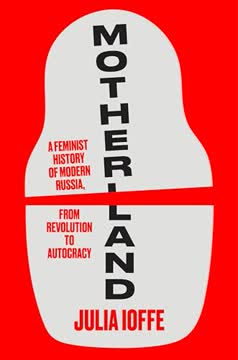
Key Takeaways
1. The Bolshevik Revolution launched an unprecedented, radical experiment in women's emancipation.
In just a couple of years, Soviet women were granted freedoms and rights that their Western counterparts would have to fight for, in most cases, for another several decades.
Unprecedented freedoms. The Bolsheviks, seizing power in 1917, embarked on a radical social experiment to dismantle gender roles and the "bourgeois family," which they viewed as imprisoning women. Led by figures like Alexandra Kollontai, the world's first female cabinet minister, Soviet women gained rights years ahead of their Western counterparts.
Groundbreaking reforms. These reforms included:
- The right to vote (1917)
- No-fault divorce and child support (1918)
- Paid maternity leave and free higher education, including in sciences (1918)
- Free, state-provided abortion (1920)
- Abolition of religious marriage and legal equality of spouses.
A new Soviet woman. This radical experiment aimed to create a "new Soviet person" free from gender constraints. The first post-Revolutionary generation of women, trained in paramilitary skills, served en masse in the Red Army during WWII, a phenomenon unparalleled globally. By 1977, 70% of Soviet doctors were women, a testament to the early educational reforms.
2. Stalin systematically dismantled early feminist gains, re-establishing conservative family norms.
The new state legalized abortion in 1920, becoming the first country in the world to do so. In a move that would determine the fate of Soviet women for decades to come, the Soviet Union did not get around to legalizing birth control until 1923.
Reversal of radicalism. Despite initial revolutionary zeal, the Bolsheviks harbored ambivalence about birth control and family planning, viewing them as undermining population growth. Lenin himself, while supporting legal abortion, denounced it as "egotistical." This internal contradiction foreshadowed a broader shift.
Conservative turn. By the mid-1920s, the initial dizzying success of dismantling traditional family structures led to unintended social chaos, including rising prostitution and men abandoning families. Aron Zalkind's "twelve sexual commandments" promoted conservative monogamy and sublimation of sexual energy for revolutionary work, becoming state dogma. The 1926 family code was far more bourgeois, reflecting a retreat from Kollontai's radical vision.
Stalin's traditionalism. Under Stalin, the state's stance became puritanical and sexophobic. Abortion was largely re-criminalized in 1936, and divorce became harder to obtain. This era saw the re-segregation of schools by gender and the reintroduction of home economics for girls, effectively ending the most radical phase of the Soviet feminist experiment.
3. The Great Terror disproportionately impacted women through the loss of men and their own suffering as "traitors' families."
Most of the victims of Stalin’s terror were men. They made up the bulk of those executed and most of those sent to the camps. The female prisoner population rarely topped 20 percent of the Gulag’s total population. The vast majority of Soviet women affected by the purges suffered on the outside.
Targeting the elite. The Great Terror, initiated by Stalin in the mid-1930s, decimated the male-dominated Party and military elite. While women were less likely to be executed or imprisoned, they bore the immense burden of being "ChSIRs" – family members of traitors to the Motherland. This meant:
- Arrest and exile for wives and children.
- Forced separation from children, who were often sent to state orphanages and given new names.
- Psychological trauma and uncertainty about the fate of loved ones.
Gulag's gendered horrors. Women in the Gulag faced unique challenges:
- Pregnancy and childbirth in brutal conditions.
- Sexual violence and exploitation.
- The agonizing decision of abortion or abandoning children to camp orphanages, where infant mortality was high.
- The emotional toll of nurturing life in a system designed to destroy it.
Enduring trauma. The terror inflicted trauma even on those it didn't directly touch. Families like the author's great-grandmothers (Riva, Buzya) experienced suicides, disappearances, and the constant fear of arrest, leaving a legacy of suspicion and unspoken pain that lasted for generations.
4. Post-WWII demographic crisis led to Khrushchev's policies that institutionalized male irresponsibility and the "lonely mother."
What all of this meant in practice was that the law implicitly sanctioned and even encouraged male adultery.
Devastating losses. WWII claimed 27 million Soviet lives, mostly men, creating a severe demographic imbalance. In some regions, only 19 men remained for every 100 women. To address this, Khrushchev's 1944 family law aimed to rapidly repopulate the USSR.
Khrushchev's reforms:
- Childless tax: Expanded to penalize those with fewer than three children.
- "Hero Mother" awards: Medals for women with five or more children, a concept ironically borrowed from Nazi Germany.
- "Single mother" status (odinokaya mat'): A legal category for unmarried mothers, who received state support but lost the right to name the father or seek child support. This effectively absolved men of responsibility for children born out of wedlock.
Institutionalized irresponsibility. The law, intended to boost births, inadvertently sanctioned male adultery and polygamy, as men could impregnate women without legal obligation. This led to a surge in illegitimate births and a dissolution of the concept of fatherhood, leaving millions of women as "lonely mothers" (odinokaya mat') burdened with sole childcare.
5. Soviet women endured a "double burden" of full-time work and domestic labor, leading to widespread exhaustion and stifled aspirations.
The new Soviet woman was utterly and totally exhausted.
Mandatory labor. Despite the postwar emphasis on motherhood, Soviet women were still required to work full-time to rebuild the war-ravaged country. They worked in factories, rebuilt infrastructure, and filled jobs across all sectors, often in physically demanding roles.
Lack of support. The state's promise of collectivized services (nurseries, laundries, cafeterias) largely proved hollow due to chronic shortages and underfunding. Women faced:
- Hours spent in lines for scarce food and goods.
- Lack of modern appliances (refrigerators, washing machines).
- Crowded, often unheated, communal housing.
- An additional 40-55 hours per week on housework, compared to men's average of six.
Stifled potential. This "double burden" led to physical and psychological strain, hindering women's professional advancement and creative potential. While women dominated professions like medicine (70% of doctors), they were concentrated in lower-paying, less prestigious roles, with men holding most managerial and specialized positions. By the Perestroika era, women were exhausted, with only 15% supporting mandatory work, preferring the choice to be full-time mothers.
6. The role of the political wife mirrored the regime's evolving stance on women, from partnership to subservience.
In the Soviet Union, the fate of the woman at the top reflected the fate of the country.
Krupskaya's partnership. Nadezhda Krupskaya, Lenin's wife, was a peer, advisor, and colleague, instrumental in building the Bolshevik party and shaping educational policy. Their relationship, though complex, was largely one of equals, reflecting the early revolutionary ideals.
Alliluyeva's isolation. Nadya Alliluyeva, Stalin's wife, was 22 years his junior and struggled against his "purely Oriental approach to women." Despite her education and desire to work, Stalin demanded she be a homemaker, leading to frequent conflicts and her eventual suicide, mirroring the country's increasing subjugation under his rule.
Khrushcheva's public role. Nina Petrovna Khrushcheva, a former Marxist professor, became the USSR's first public First Lady. She tempered her husband's image and presented a "homey" face to the world, particularly in the West, reflecting Khrushchev's thaw and desire for peaceful coexistence, even as her own life was dictated by Party loyalty.
Gorbacheva's intellectual influence. Raisa Gorbacheva, a highly educated sociologist, was her husband's closest confidante and an active participant in crafting his Perestroika reforms. Her intelligence and style challenged Soviet norms and impressed Western leaders, symbolizing a more open, cultured Russia, though she faced criticism at home for her visibility.
Navalnaya's defiance. Yulia Navalnaya, wife of opposition leader Alexey Navalny, emerged as a symbol of strength and defiance, battling the state to save her poisoned husband. Her public composure and unwavering support, even in the face of immense personal tragedy, contrasted sharply with Putin's secretive, patriarchal regime, embodying a different vision for Russia.
7. Post-Soviet economic collapse fueled a desperate "hunt" for men and a return to idealized traditional roles for women.
One hundred years after Kollontai and Lenin railed against traditional, economically motivated marriage as a prison for Russian women, it had become their ultimate fantasy.
Disillusionment and male disengagement. The Soviet collapse in 1991 brought economic chaos, unpaid wages, and widespread male alcoholism and unemployment. This led to a profound disillusionment with the "emancipated" Soviet woman ideal.
The "hunt" for men. Many Russian women, exhausted by the "double burden" and the instability of the 1990s, began to idealize a "civilized patriarchy" where men provided and women could choose to be stay-at-home wives. This created a fierce competition for "good men" (those with stable jobs and no drinking problems), seen as an endangered species.
- Women invested heavily in appearance and beauty procedures.
- Infidelity was often tolerated, as men were seen as "veal calves on a rope" to be snared and kept.
- Marriage became an economic strategy, a "cold calculation" for security.
Life Academy's teachings. Institutions like the Life Academy emerged, teaching women to manipulate men's "simple instincts" by embodying feminine archetypes (little girl, seductress, queen, khozayka) and avoiding "masculine" behaviors like nagging or career focus, which were believed to "destroy" men's potency.
8. Putin's Authoritarian Traditionalism and the "Manly Man" Ideal.
He’s a man that 70 percent of women dream of in their moistest fantasies.
Putin as the ideal man. Vladimir Putin, in stark contrast to the "weak" Russian men of the post-Soviet era, cultivated an image of sobriety, discipline, and physical prowess ("ZOZh"). This resonated deeply with Russian women, who saw him as the "manly man" they lacked in their own lives.
- He doesn't drink or smoke.
- He engages in judo, hockey, and outdoor activities (tagging tigers, flying with cranes).
- His image is carefully curated by the Kremlin, often shirtless, to project strength and decisiveness.
Deadly masculinity. This ideal, however, contributed to a crisis in Russian male mortality. Traditional gender norms, which discourage men from showing weakness or seeking help, led to:
- Higher rates of heart disease.
- Excessive alcohol consumption (four times that of women).
- Increased deaths from accidents, murder, and suicide.
- A 13-year life expectancy gap between men and women, with 52% of men dying before 65.
Women as enforcers. Putin's traditionalist vision, which emphasized women's maternal and domestic roles, found support among many Russian women. They became the foot soldiers of his autocracy, filling roles in local government and the judiciary, enforcing his policies, and voting for him, often seeing him as the strong, protective figure their own men failed to be.
9. The state's decriminalization of domestic violence sanctioned intimate brutality and suppressed broader dissent.
When people became used to violence in the most intimate spheres of their lives, in other words, violence everywhere else—in domestic politics, in foreign affairs—became not only tolerable but expected.
Decriminalization of abuse. In 2017, Russia decriminalized domestic abuse that resulted in only scratches or bruises, moving it from the criminal to the civil code. This was championed by female parliamentarians who argued it protected families and aligned with "traditional values."
State sanctioning of violence. This law, despite opposition from law enforcement and human rights groups, effectively gave police a green light to ignore domestic violence. It sent a clear ideological message:
- Violence in the home was normalized and considered a "manifestation of love."
- It served as a "steam valve" for male frustrations, diverting aggression from the state to women.
- It accustomed society to violence as a problem-solving mechanism, making state violence (in politics, war) more tolerable.
Pussy Riot's challenge. The Pussy Riot "punk prayer" in 2012, a feminist critique of the Church's fusion with Putin's state, was met with harsh state retribution. Their trial, a "travesty" and "performance art," exposed the regime's intolerance for dissent and its embrace of patriarchal, religious dogma. The women were jailed for "hooliganism motivated by religious hatred," a charge that became law months later.
10. The Enduring Strength and Sacrifice of Russian Women.
They were the women of Russian history and Russian lore, the people who held the place together in spite of itself, but they were not the kind of mothers and wives Vladimir Vladimirovich was looking for.
Historical resilience. From the women who initiated the 1917 Revolution to those who fought in WWII and rebuilt the country, Russian women have consistently borne the brunt of national crises. They are the "superhuman figure[s] who could stop a galloping steed and enter a burning hut," often out of necessity when men failed or disappeared.
Modern endurance. In contemporary Russia, women like Margarita Gracheva, who survived her husband chopping off her hands, and Maria Andreeva, fighting to bring her drafted husband home, exemplify this enduring strength. They navigate a system that often fails them, finding resilience and purpose in protecting their families and advocating for change, even in the face of state repression.
Unacknowledged sacrifice. Despite their pivotal role in holding society together, these women are often not the "ideal" women promoted by the state. Putin's regime seeks loyalists who sacrifice their men to the Motherland and produce more soldiers, rather than those who question or challenge the system. The ongoing war in Ukraine further highlights this dynamic, with women once again stepping into the breach, often at immense personal cost, to care for their families and navigate a future made desolate by male-led conflicts.
Last updated:
Similar Books