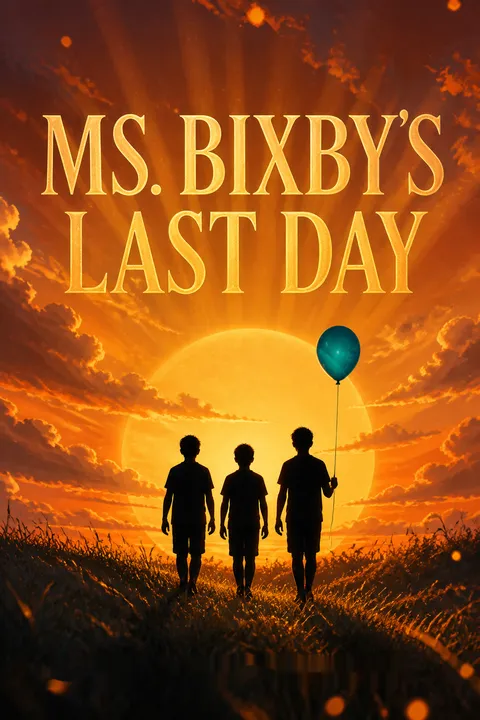


Plot Summary
Cootie Quarantine
At Fox Ridge, Topher Renn, an imaginative sixth grader, and his closest friends, Steve Sakata, a fact-loving perfectionist, and Brand Walker, a guarded newcomer, torment Rebecca Roudabush with a fake cootie diagnosis.
Rebecca retaliates by licking her hand and smearing it on Steve and Brand, sending all three boys running across the playground. They collide with Ms. Bixby, their unusually attentive teacher, and Rebecca explains the prank. Ms. Bixby makes the boys apologize, then reminds them that jokes can hurt even when their invented disease cannot.
Topher remembers meeting her earlier at a circus, where she juggled and remembered his preferred name. After the children return inside, he sees her clutching the bogus diagnosis and staring beyond the playground, suddenly frightened and far away.
The opening lets childish comedy become a way of measuring adult unease. The boys invent an imaginary contagion to police closeness, but Ms. Bixby's unexpected sadness shifts the scene from harmless play toward the limits of what children can interpret. Topher notices the change without understanding it, which establishes his distinctive form of attention: he watches closely, then turns uncertainty into a story. Ms. Bixby corrects the boys without humiliating them, showing that her authority depends on seeing both the joke and its target. Their first encounter with impending loss arrives as a mood they cannot yet name.
The Bottom Drawer
When Topher's mother is late to collect him, he returns to room 213 and catches Ms. Bixby lifting his rejected spider drawing from the recycling bin. She admits she likes it, then opens a hidden drawer containing folders of writing by a former student and Topher's own discarded sketches.
Ms. Bixby explains that the former student became a writer after she quietly encouraged her, and she tells Topher how laughter at a failed childhood magic trick made her abandon her own ambition. She has kept his work because she believes he deserves to know someone sees it. Topher takes back the spider drawing and places it with the others. Her private collection gives him evidence that his imagination matters even when he himself has dismissed it.
The drawer turns recognition into a physical act: Ms. Bixby preserves papers their creators have thrown away. Her mentorship is not simply praise, since she discloses the injury that made her abandon magic and risks exposing her own vulnerability. Topher's drawings reflect his private wish to matter, while the folders show that adults can protect a child's work without owning it. By returning the spider drawing to the collection, Topher accepts that his judgment of his own value may be incomplete. The scene also establishes a quiet reciprocity: Ms. Bixby once encouraged another student's voice, and now she is trying to make Topher trust his.
A Tuesday Diagnosis
Steve remembers the Tuesday when Ms. Bixby gathers room 213 and explains that she has ductal adenocarcinoma, a pancreatic cancer that will keep her from finishing the year. She says treatment gives her a chance to fight, but schedules her final school day for the following Friday.
Steve records the medical term so he can research it, while Topher looks to him for an explanation and Brand sits silent at the back. Ms. Bixby tries to steady the class, but her abrupt departure soon becomes more immediate than the diagnosis.
On the Monday before her planned farewell, Principal McNair announces that Ms. Bixby has entered the hospital and will not return. Her recorded message promises a future visit and party, leaving the pupils with an unfinished book and questions no school official can answer.
Steve's impulse to spell and research the diagnosis is an attempt to turn fear into a problem with a defined answer. Ms. Bixby's reassurance gives the children a story of recovery to hold, while the principal's later announcement quietly strips that story of certainty. Their questions about the unfinished Hobbit and postponed party show how children approach catastrophe through the ordinary plans it interrupts. The book does not make them instantly wise or eloquent; they first notice missing routines. The discrepancy between the hopeful message and the hospital reality creates the pressure that drives the boys from passive waiting toward action.
Three Boys Go AWOL
After substitute teacher Mrs. Brownlee reveals that Ms. Bixby is hospitalized and may be transferred to Boston, Brand proposes that he, Topher, and Steve visit her rather than rely on the class's paper cards.
He bases the plan on a journal prompt in which Ms. Bixby described a last-day outing: food, music, friends, and a grassy park. When the boys overhear that she will leave Saturday morning, Topher reshapes their weekend scheme into a Friday mission.
They meet behind Fox Ridge before school, with a picnic blanket and wineglass among their supplies, and invent sick calls to keep their parents unaware. Mr. Mackelroy catches them near his apartment, but Brand uses the teacher's own complaint about being late to turn him back toward school. The boys set off, committed despite Steve's dread.
Brand's plan begins as a practical response to a canceled goodbye, but its deeper force comes from his reluctance to explain why Ms. Bixby matters so much. Topher converts the outing into an adventure, while Steve supplies routes, schedules, and anxious risk calculations. Each boy contributes a different kind of competence, even as their secrecy makes them vulnerable. The encounter with Mr. Mackelroy tests whether their imagined mission can survive contact with an adult who might stop it. Brand's quick use of the teacher's own words lets the group continue, marking him as more assertive than his quietness at school suggests.
Cheesecake at Michelle's
The boys ride a city bus to Michelle's Bakery, where they learn that Ms. Bixby's chosen white-chocolate raspberry cheesecake costs far more than their pooled cash. Eduardo, the muscular baker whose name is not on the storefront, listens as Brand explains why the boys need it.
He offers the cake without charge, but Brand leaves twenty-five dollars anyway, unwilling to accept a gift without contributing. Topher and Steve wait outside, where Steve wonders whether their extravagant plan will seem strange to their teacher.
Brand emerges carrying the whole cake, and the boys head to a nearby used-book shop for a novel Ms. Bixby had recommended. The successful purchase lifts their spirits, but the detour starts to unsettle their timetable and places Topher's private sketchbook at the center of a new conflict.
The bakery visit recasts generosity as something negotiated rather than simply received. Eduardo recognizes the emotional purpose of the purchase, while Brand insists on paying part of the cost, preserving his dignity and his sense of responsibility. The mismatch between the shop's name and its owner also echoes the boys' questions about identity and who gets recognized. Steve's concern about whether the gesture is appropriate anticipates the group's later uncertainty about their entire plan. Their cake is not a cure or a symbol with magical power; it is a costly, tangible effort to make another person feel remembered.
The Shark Toilet
At Alexander's dusty bookshop, the boys meet the small, eccentric bookseller and discover a painted shark inside the toilet bowl. Brand's memory of his disabled father's old pranks makes the image sting, and he recalls how the accident ended their shared jokes.
While Brand is away, Topher and Steve trade riddles with the bookseller and Topher finds the novel about Atticus Finch that Ms. Bixby had urged Brand to read. Their delay makes them miss the bus.
At the stop, Brand leafs through Topher's sketchbook and finds a carefully drawn portrait of Ms. Bixby. He grabs for the page, but Brand will not immediately release the book; their struggle tears the sketchbook in half and sends Topher to the pavement. The arriving bus catches them mid-fight.
The bookshop gathers the boys' different relationships to imagination. Topher sees stories and riddles as invitations, Steve seeks a solvable puzzle, and Brand encounters the shark image as a reminder of a lost family ritual. The portrait then exposes an intimacy Topher has not explained to his friends: he draws Ms. Bixby to preserve what he fears losing. Brand's jealousy is less about the drawing than about feeling excluded from an attachment he cannot name. The torn sketchbook makes that insecurity concrete. Their reconciliation will require interpretation rather than a simple apology, because each boy has mistaken another's private feeling for a threat.
Wine Money Vanishes
On the way downtown, the boys stop outside a liquor store and ask George Nelson, a tattooed stranger, to buy wine for Ms. Bixby's picnic. Topher first invents a story about a birthday, then admits the truth about their teacher's cancer; George agrees to help but pockets their money and escapes with a bottle of whiskey.
The boys chase him through traffic. Topher trips over a fallen trash can, spraining his ankle, while Steve's backpack crushes the cheesecake. Brand returns to help his injured friends, but the ruined food and stolen cash make him declare the mission pointless.
He turns toward home, insisting that no picnic can change Ms. Bixby's illness. Topher limps after him, and Steve stays beside them, but Brand's tears reveal that the failed plan has reopened a burden he has been carrying alone.
The theft punctures the boys' movie-shaped expectations with genuine danger and consequences: a hurt ankle, damaged food, and no dependable adult to call. Topher's fall exposes the cost of confusing heroic performance with practical judgment. Brand's decision to quit is not mere pessimism; it is a defense against hope, which has repeatedly asked him to carry more than he can control. His anger at the ruined plan is also anger at the larger helplessness around Ms. Bixby and his father. Steve's insistence that trying still matters cannot yet reach him. The mission must become something more than its original checklist.
The Alleyway Bluff
On their return bus, the boys spot George Nelson and follow him off, determined to recover what they can. Brand corners him in an alley while Topher circles around with Steve's nearly dead phone. George shoves Brand, swings at him, and strikes Steve in the jaw.
Brand tackles the man, and Topher claims the phone recorded the assault and can summon police. The battery is actually dead, but George believes the bluff and leaves behind his whiskey and the two dollars still in his wallet.
The boys escape with less than they lost, and then laugh at the danger they barely controlled. The confrontation changes Brand's direction: instead of abandoning Ms. Bixby's visit, he shoulders the whiskey and joins the others as they continue toward the hospital.
The alley scene makes courage neither clean nor invulnerable. Steve absorbs the blow because he is physically caught in the struggle, while Brand's nerve and Topher's improvisation prevent the adult from controlling the encounter. Their bluff works through George's fear of accountability, not through actual power; the dead phone keeps the boys' victory precarious. The laughter afterward releases tension without erasing the injury. More importantly, Brand's decision to continue is a shift from believing that care must succeed to acting despite its limits. They cannot undo the theft or the punch, but they can still choose what to do next.
Steve Defies Christina
At McDonald's, the boys buy water and fries with the two dollars they recovered. Christina, Steve's high-achieving older sister, finds him with a swollen, bleeding lip and reaches for her phone to call their mother. Steve, who usually avoids open conflict, stands and stops her, telling her that this day matters and that he does not need her to take control.
Christina privately checks his injury, then agrees not to expose the trip, though she warns him to be home by dinner. Her choice unsettles Topher, who expects her to betray Steve, but Steve trusts his sister's promise. The three boys leave with the fries and walk toward St. Mary's Hospital, tired, bruised, and carrying a damaged cake, the bottle, and the book they meant to share.
Steve's confrontation with Christina is a small but consequential break in a family pattern where achievement and supervision have often defined his place. He does not reject his sister's concern; he asks her to express it as trust rather than control. Christina responds by protecting his choice without endorsing every risk he has taken. Topher's suspicion reveals how readily he turns affection into competition, while Steve's confidence in his sister exposes a more complex bond. The scene also gives Steve a form of agency distinct from his encyclopedic knowledge: he acts before he can calculate every consequence.
The Fridays Brand Hid
Before the boys enter the hospital, Brand finally explains that Ms. Bixby had driven him to the grocery store every Friday for ten weeks. After Brand's mother died and his father, Abe, was left disabled by a construction accident, Brand took on cooking, shopping, and much of the housework.
Ms. Bixby first found him trudging through snow with groceries, then returned each week without telling the school or his friends. On their last drive, she and Brand found Abe unconscious on the porch after a fall.
Ms. Bixby called emergency services and stayed with Brand through the night. At the hospital, she encouraged him to face his father rather than retreat from the responsibility. Having told his friends why the visit matters, Brand joins them in approaching Ms. Bixby's room.
Brand's disclosure reframes the entire outing: his insistence on visiting Ms. Bixby grew from a relationship built through unglamorous, repeated care. The grocery store is a setting where he has been forced into adult responsibility, but Ms. Bixby makes the burden shareable for an hour without pretending to solve it. Her discretion preserves Brand's control over his story, while the accident on the porch makes clear that silence also has limits. His friends now understand that his attachment is neither a secret crush nor a simple debt. It is gratitude for being noticed at a moment when he was close to giving up.
The Hospital Door Opens
Ms. Bixby is nearly unrecognizable without her hair, weakened by treatment and bandages, but Topher recognizes her and tells her he has come to rescue her. Brand signals their shared understanding by mentioning the book she recommended.
She agrees to meet them by the elevators, and the boys distract Nurse Georgia long enough to escape the hospital together. In a nearby park, they spread the blanket and reveal their battered offerings: whiskey instead of wine, a smashed cheesecake, and salted fries.
Steve sings rather than playing the music trapped on his dead phone. Ms. Bixby accepts the imperfect meal, and Brand gives her a carnation. They eat together, then she reads the remaining pages of The Hobbit. Nurse Georgia eventually finds them and takes Ms. Bixby back.
The picnic's emotional force comes from the distance between the boys' careful plan and what they can actually deliver. Every object is damaged or substituted, yet the gathering succeeds because Ms. Bixby recognizes the intention carried by each failure. Her choice to leave the hospital briefly is an act of participation, not denial of her illness. Reading The Hobbit completes a routine that the class could not finish without her, while the carnation carries Brand's private understanding of her preferences. The nurse's arrival restores institutional limits, but it cannot cancel the hours the four of them have made together.
Carnation Days
After the nurse returns Ms. Bixby to the hospital, the boys part at Fox Ridge. Topher gives Brand the torn portrait he had drawn, and Brand walks home carrying it. In June, Principal McNair calls to say Ms. Bixby has died following complications from surgery. Brand's father comes to his room with the news instead of calling from his chair, a small change that matters.
Later, he agrees to order pizza with the boys, visit Michelle's for dessert, and stop at the bookshop. The larger shift comes when Abe asks Brand if he wants to take a walk. Ms. Bixby cannot return, but the care she offered has helped Brand speak honestly and has given his father a reason to move toward him again.
The ending refuses to turn affection into a cure. Ms. Bixby's death remains final, and the boys have to live with the fact that their effort could not alter it. What does change is the circulation of care: Brand's father knocks, shares a meal, and eventually proposes a walk, gestures that begin to loosen his retreat from family life. Topher's return of the portrait repairs a friendship as well as a damaged object, giving Brand a way to keep the day without claiming ownership of Ms. Bixby. The story's measure of success is modest and relational: someone who had stopped reaching out begins to do so again.
Epilogue
The epilogue returns to room 213, where Ms. Bixby gives her students a writing prompt about how they would spend one final day. The pupils imagine family, games, and impossible adventures. Ms. Bixby describes a day with the people she loves, a grassy hill, music, cheesecake from Michelle's, and McDonald's fries.
Her students tease her, but they listen. She explains that even after she is gone, they will remember her in their own ways. The scene does not undo the loss that has already been told. Instead, it preserves the classroom version of Ms. Bixby, still asking children to imagine and still making room for laughter.
Placed after the account of Ms. Bixby's death, the classroom coda operates as an imaginative return rather than a new plot resolution. Its familiar prompt turns the novel's tragic premise into a question the children can answer through play, while Ms. Bixby's menu quietly anticipates the picnic they will later attempt. The scene gives her an imagined voice in the space where illness had silenced her, but it does not erase the preceding facts. Instead, memory allows the students to hold two truths at once: she is gone, and her way of teaching remains active in how they remember, joke, and picture a meaningful day.
Analysis
Ms. Bixby's Last Day makes care visible through tasks that are too small to look heroic on their own. A teacher saves a discarded sketch, gives a boy a ride through the snow, remembers his grocery list, and listens while he describes a home life he has been managing alone. The boys answer in the same practical register: they collect food, make a route, risk punishment, and try to create a day their teacher once imagined. Their efforts cannot reverse cancer, and the novel refuses the comforting fiction that love earns control over illness. Instead, the picnic matters because it gives Ms. Bixby a choice and gives the boys a shared memory that is not organized around a hospital bed.
The alternating narrators show how friendship depends on imperfect interpretation. Topher's inventions disguise his fear of being overlooked; Steve's facts and routines disguise pressure to be flawless; Brand's jokes and abrupt exits protect him from admitting how much help he needs. Their conflicts are not solved by a single speech. Steve must act without certainty, Topher must let another person see his art, and Brand must risk telling the truth about his father. These changes are modest, but each alters how the boys can care for one another.
The book also complicates the adult-child boundary. Ms. Bixby is not an idealized source of wisdom who never needs help. She has abandoned a dream after being laughed at, and she faces an illness no teacherly affirmation can fix. Her influence lies in attention, not omnipotence. The children briefly reverse the usual direction of care by bringing her beyond the hospital walls, but they do not become substitutes for medical treatment or family. Their act is meaningful precisely because it cannot solve the larger crisis.
The final image of Brand's father asking to walk extends the story's ethic beyond the farewell. Grief does not restore what was lost, yet it may interrupt a pattern of withdrawal. The novel's central claim is therefore not that every effort succeeds. It is that showing up can change what happens next, even when it cannot change what has already happened.
Review Summary
Ms. Bixby's Last Day is a highly praised middle-grade novel about three sixth-grade boys who embark on an adventure to give their beloved teacher a memorable final day. Readers consistently commend the book for its humor, emotional depth, and well-developed characters. Many reviewers were moved to tears by the story's poignant exploration of the impact a great teacher can have on students' lives. The novel is praised for its ability to balance heartwarming moments with genuine sadness, avoiding clichés and maintaining authenticity throughout. Readers of all ages find the book engaging and relatable.
People Also Read



Characters
Maggie Bixby
The teacher who truly listensMs. Bixby is a sixth-grade teacher whose pink-streaked hair, stories, humor, and habit of quoting writers make her classroom feel different from the rest of school. She can enforce rules without reducing children to their mistakes, and she gives them the rare experience of being heard to the end. Her affection is practical as well as verbal: she notices discarded drawings, remembers students' interests, and makes room for private conversation. Her own abandoned ambition as a magician complicates her confidence, revealing that the person who encourages others has also known the sting of being laughed at. She treats imagination not as escape from reality, but as a way to keep approaching it.
Topher Renn
The boy who makes storiesTopher is a restless, inventive sixth grader who narrates ordinary events as missions, battles, and heroic rescues. Drawing and storytelling let him shape a world in which he can be central, a need sharpened by parents who are busy with work and a younger sister. His humor can protect him from embarrassment, but it can also make him reckless or insensitive, especially when he provokes Steve's sister or overestimates a plan. Topher's art is more vulnerable than his bravado: he privately draws Ms. Bixby because he wants to preserve what matters to him. He is loyal to Steve and Brand, though he sometimes mistakes their different needs for challenges to his place in the group.
Steve Sakata
The careful keeper of factsSteve is an exceptionally knowledgeable boy who reaches for numbers, definitions, and remembered facts whenever events become uncertain. His orderly habits make him valuable to his friends, but his parents' emphasis on high achievement has taught him to treat mistakes as evidence of failure. Steve is observant about other people even when he struggles to interpret their feelings, and his loyalty to Topher is both deep and quietly insecure. He worries that friendship can change without warning, especially after Brand joins the group. His carefulness is not cowardice: it reflects a genuine desire to understand consequences. When pressure rises, Steve can act with more courage than he expects of himself.
Brand Walker
The friend carrying too muchBrand is a resourceful, dryly funny boy who makes up words and often lets his friends mistake his quietness for indifference. Since his father was disabled in a workplace accident, Brand has taken on responsibilities that most children never see, while keeping the strain largely private. He longs for connection but fears that explaining his home life will make him an object of pity. His humor and occasional anger help him preserve pride, though they can also keep friends at a distance. Brand is capable of decisive action when someone else needs help; his challenge is recognizing that he also deserves support. Ms. Bixby's attention matters because it does not demand that he perform gratitude or disclose more than he is ready to share.
Abe Walker
Brand's withdrawn fatherAbe is Brand's father, a former construction worker whose spinal injury leaves him using a wheelchair and walker. Before the accident, he shared practical jokes with Brand; afterward, pain, discouragement, and withdrawal shrink his world. He loves his son but struggles to participate in family life, leaving Brand to assume adult tasks at home. Abe's presence gives Brand's secrecy its source and emotional weight.
Christina Sakata
Steve's accomplished sisterChristina is Steve's older sister, praised by their parents for her grades, piano playing, and discipline. Her success makes Steve feel measured against her, and Topher's teasing turns sibling tension into open hostility. Beneath her bossiness is a genuine concern for her brother's safety, though she often expresses it by taking charge. Christina is more complicated than Steve's fear of being controlled allows him to admit.
Rebecca Roudabush
The cootie-game counterattackRebecca is a classmate with a quick temper and an equally quick sense of play. When Topher, Steve, and Brand label her contagious, she turns their joke against them with a deliberately gross prank. Her confidence makes her a lively foil to the boys' elaborate rules and shows that she can defend herself without waiting for an adult to do it.
Christina and Steve's parents
The achievement-minded familySteve's parents value discipline, academic success, and careful planning. Their high expectations give Steve structure and opportunity, but also make him anxious about disappointing them or stepping outside approved routines. They are important to the pressure he feels, even when they are not present in the boys' adventures.
Mr. Mackelroy
The strict teacher nearbyMr. Mackelroy is the severe sixth-grade teacher whose cigarette, briefcase, and scowl make him a figure of school authority in the boys' private taxonomy. His lateness and overheard complaint give Brand an unexpected opening to divert him.
Eduardo
The generous bakerEduardo owns and bakes at Michelle's Bakery, despite the storefront's misleading name. He is proud of his cheesecake and amused by the boys' urgent request. When Brand explains their purpose, Eduardo responds with generosity while allowing Brand to contribute.
Mr. Alexander
The riddle-loving booksellerMr. Alexander runs a crowded used-book shop and startles the boys with theatrical readings, an owl, and riddles. Beneath his eccentric performance, he is welcoming, and his puzzles give the friends a brief place to linger.
George Nelson
The opportunistic strangerGeorge is a tattooed adult the boys approach outside a liquor store, hoping he will buy wine for them. He sees their inexperience as an opportunity to take their money, then becomes an unpredictable physical threat when they pursue him.
Nurse Georgia Bonner
The hospital gatekeeperNurse Georgia supervises the hospital floor where Ms. Bixby is staying. She is alert to visitors and protective of patients' rest, yet her sternness does not prevent her from recognizing the boys' devotion.
Principal McNair
The bearer of bad newsPrincipal McNair informs room 213 that Ms. Bixby will not return to school and plays her recorded message. She tries to manage the children's questions, but cannot give them the certainty they want.
Plot Devices
Rotating first-person narrators
Three angles on one friendshipThe story alternates among Topher, Steve, and Brand, so the same friendship is seen through three different habits of mind. Topher turns events into adventures, Steve tests them against facts and probabilities, and Brand notices the strain that others do not know he carries. Their accounts fill in one another's blind spots without making any narrator omniscient. This structure makes misunderstandings feel intimate rather than merely plot-driven: readers understand why Topher fears exclusion, why Steve distrusts disorder, and why Brand sometimes withdraws before the other boys do. The changing voices also make the central day feel larger than a single escapade, because each boy brings a different emotional history to it.
Ms. Bixby's last-day menu
A wish becomes the boys' mapDuring a classroom writing exercise, Ms. Bixby imagines a final day with friends, food, music, and a hillside. Brand remembers the details when she is hospitalized, and the boys turn them into a list of items to gather: a particular cheesecake, wine, fries, music, and a place to sit. The plan supplies practical goals for the novel's city journey while also giving the boys a way to express affection they cannot easily put into words. As mishaps replace the planned objects with damaged or improvised versions, the list shifts from a test of successful preparation into a measure of whether the friends can still show up for one another.
The hidden folders
Proof that discarded work mattersMs. Bixby's secret drawer contains a former student's poems and Topher's rejected drawings. The folders reveal a form of mentorship that operates outside grades and classroom display: she saves work its creators have not yet learned to value. The device gives Topher a concrete reason to reconsider his art and later explains why he draws Ms. Bixby privately. It also connects her own abandoned magician dream to the book's concern with how easily a young person's ambition can be dismissed as play. The folders are not a magical solution to insecurity. They are evidence that attention can preserve the possibility of a different self.
The missed and altered gifts
Care survives failed plansThe boys' intended offerings repeatedly fail: they lose most of their money, damage the cheesecake, cannot obtain wine as planned, and lose the music when Steve's phone dies. The changes prevent the picnic from becoming a tidy reward for competence. Instead, the final gathering depends on their willingness to accept an imperfect outcome and offer what remains. The whiskey, fries, broken cake, old book, drawing, flower, and shared reading each carry a different part of the boys' relationship with Ms. Bixby. The device makes the emotional resolution earned through adaptation rather than through the successful completion of a checklist.
Bixbyisms and borrowed books
Advice becomes remembered practiceMs. Bixby uses quotations, reading recommendations, and stories as ways to open conversations rather than end them. Her sayings sometimes frustrate Steve's demand for measurable proof, but the boys remember them when action is difficult. Books matter in similarly personal ways: The Hobbit is the class's unfinished shared ritual, while the novel about Atticus Finch becomes a private link between Brand and Ms. Bixby. These references give the children language and images for experiences they cannot yet explain. The story treats the quotations as seeds rather than answers; their meaning changes as the boys encounter fear, responsibility, friendship, and grief.

Download PDF
Download EPUB
.epub digital book format is ideal for reading ebooks on phones, tablets, and e-readers.








