

Plot Summary
Prologue
A later editor presents Inspector Frank Grasby’s memoir as papers recovered from two crates, warning that damaged pages and the inspector’s1 digressions complicate the record. The chosen case begins with a 1949 police report: Elderby Inspector Moore left a pub and never reached home; his body was found in the River Lise the next morning.
Grasby1 says this case changed his career and life, though he did not know the report existed until after the events. The archive makes the story both recollection and reconstruction, with evidence sometimes arriving after its consequences.
The frame establishes a useful tension between memory and evidence before the mystery begins. Grasby’s account is lively but self-protective, while the police report is clipped, official, and unable to explain what happened to Moore. The editor’s admission that pages are damaged primes the reader to treat omissions as part of the case rather than mere gaps in storytelling. This also gives the village’s older death a double function: it is a cold record of an unresolved event and a warning that the Christmas assignment will reopen a history the authorities have already failed to settle.
A Winter Posting
In December 1952, Inspector Frank Grasby1 is already in trouble: while arresting a servant at an estate, he left a stable unsecured, and seven thoroughbreds remain missing. Superintendent Arthur Juggers4 sends him away from York to investigate farm thefts around remote Elderby, promising that a quick solution might bring him back.
Grasby1 leaves his widowed father,6 the Reverend Cyril Grasby,6 and receives an oddly urgent warning from the family friend Lord Parsley5 to call if needed. His battered Austin breaks down on the village’s old, snowbound road, forcing him to carry his suitcase uphill. Elderby greets him with watching windows, a half-forgotten church, and locals who somehow already know his name.
The posting begins as comic punishment, but the dead car and the village’s watchful quiet turn it into a forced passage into unfamiliar territory. Grasby’s self-deprecation lets him present misfortune as harmless, even as the assignment strips away the routines that have protected him: the city station, his father’s home, and Juggers’s supervision. His father and Parsley both react to Elderby as if it carries a history Grasby cannot see. The gap between his cheerful interpretation and their caution establishes the novel’s central problem: he repeatedly mistakes partial knowledge for safety.
Death in the Fireplace
At Elderby station, Grasby1 meets Sergeant Elphinstone Bleakly,3 whose sudden sleep episodes make him seem less alert than the case requires, and Daisy Dean,2 an American criminology student working as an intern. Before they can properly review the farm thefts, Lord Damnish8 reports an intruder at Holly House. Grasby1 goes with Daisy2 and finds the household gathered around a smoking fireplace.
When he reaches into the blocked chimney, a dead man tumbles onto the hearth. The body’s injuries and a smear of blood leave Grasby1 uneasy about the apparent break-in. Damnish8 wants the corpse removed quickly, but Grasby1 insists the police control the scene. Outside, he notices head gamekeeper Arthur McGill15 watching him with a shotgun.
The corpse converts an assignment about property theft into a death investigation, but the scene also exposes the unequal ways the characters value a life. Damnish treats the body as damage to his house, while Grasby’s first instinct is to preserve evidence and establish authority. The dead man arrives literally through a hidden passage, making concealment the case’s first physical fact. Daisy’s composed attention unsettles Grasby, who expects visible distress to prove ordinary feeling. His assumptions about class, gender, and professional competence begin to fail almost as soon as he reaches the village.
Three Accounts, One Intruder
Damnish8 says his wife,9 Lady Marion,9 saw a man on the grounds, while McGill15 claims the stranger tried to climb a drainpipe and escaped. Chambermaid Martha Thornlie’s16 statement adds a complication: she thought Lady Damnish9 spoke with the man, though McGill15 urged her to say as little as possible. Grasby1 also learns that Damnish8 suspects his son,11 Beauregard,11 known as Harry,11 of the farm thefts.
Harry11 apologizes for his father’s8 rudeness, then admits he resents the man’s obsession with money and neglect of the land. Grasby1 treats the young heir as a likely thief, not a killer. The corpse is sent away for examination, but nobody at Holly House seems especially interested in identifying it.
These accounts do not merely disagree about details; they show how power determines which version is safe to tell. Martha’s hesitation suggests that the household’s staff must navigate instructions as carefully as facts, while McGill’s authority reaches beyond estate security into witness testimony. Harry’s resentment gives Grasby a tempting, simple explanation for the thefts, but the separation between those crimes and the dead man remains unresolved. The scene rewards attention to contradiction rather than rank. In a house built on hierarchy, the least powerful witness may be the one whose small correction matters most.
Starr Found at Dawn
Before dawn the next morning, Bleakly3 summons Grasby1 to the ridge behind St Thomas’s-on-the-Edge. The Reverend George Croucher14 found Charles Starr,13 an American journalist and D-Day veteran, dead in the snow. A stab wound and the dark marks around his neck point to violence, while torn clothing and damaged fingernails suggest he struggled before someone left him there.
Daisy2 knew Starr13 and is visibly affected, but she insists on joining the inquiry. Croucher14 says he heard voices and saw a flash near the church before finding the body. Grasby1 sends Daisy2 to accompany him to Dr Elizabeth Starr,12 the victim’s wife,12 and starts assembling a timeline from the few witnesses who were awake in the night.
Starr’s murder makes Elderby’s apparent isolation impossible to maintain: a foreign war veteran has been killed in a village where the first corpse has not even been identified. The physical evidence carries a history of resistance, while the body’s placement turns the churchyard into a public message. Grasby tries to manage the scene through procedure, but Daisy’s personal connection complicates his neat division between investigator and witness. Croucher’s report of voices could open a path toward the killer, yet it also makes the vicar vulnerable to pressure. The inquiry’s facts are already entangled with relationships and fear.
Orders from the Shadows
At the Starr cottage, Elizabeth12 explains that her husband13 was writing a critical account of the D-Day landings, but his manuscript has vanished. Grasby1 finds the study ransacked, with the drawer where Starr13 kept the pages empty. Before he can pursue the clue, Juggers4 and an unnamed government official summon him to the station.
They order him to make Starr’s13 death appear accidental and describe the chimney corpse as a failed burglar, claiming national security demands the cover story. The official supplies a Webley pistol and instructs Grasby1 to report suspicious activity, especially from Daisy.2 Grasby1 agrees outwardly, but the order confirms that someone powerful knows more about both deaths than the local police do.
The missing manuscript gives Starr a motive for attracting attention, but the government’s response reframes the investigation as a threat to institutional reputation. Grasby is not asked to solve the murders and then keep quiet; he is ordered to manufacture an explanation in advance. That inversion makes his police identity unstable. The pistol appears to offer protection, yet it is also a sign that the state expects danger and intends to manage him rather than trust him. His outward compliance preserves access to the case, but it begins a private conflict between obedience and the evidence he can see.
Parish Hall Prophecy
After someone strikes Grasby1 in the woods, Daisy2 drives off the attacker with a rock and helps him back to the station. At the parish council meeting that evening, he faces Lady Damnish,9 retired police officials, Bleakly,3 and villagers demanding answers. Hetty Gaunt,7 his landlady, falls into a trance and predicts that another stranger will die.
The outburst makes the room look toward Grasby,1 though he suspects Daisy2 may be the person in danger. Bleakly3 then explains that Inspector Moore, his predecessor, died in the river in 1949 after leaving the same pub where Starr13 was seen. Moore had privately suspected Lord Damnish,8 whose rise displaced the old Lord Elderby and divided the village.
The council places police authority inside the very community it must protect, making Grasby’s cover story harder to sustain. Gaunt’s prophecy translates local anxiety into a prediction, but its vagueness forces Grasby to decide whom he thinks it names. Moore’s death then gives the current crimes a longer timeline: Elderby has not suddenly become dangerous; it has been storing suspicion for years. The tale of a title traded for money also reveals that status here is not simply inherited or earned. It is a weapon used to dictate whose account of the past will be believed.
The Salt House Signal
After the meeting, a note directs Grasby1 to the abandoned Salt House on Withernshaw Fell. He goes alone and discovers a white van raising a tall antenna inside a cleared yard, far from the road. Ingleby,10 Lady Damnish’s9 estranged brother10 and a tenant farmer, appears with a gun and hustles Grasby1 away before McGill15 can spot them.
Over tea at Briarside, Ingleby10 claims the equipment is part of a military operation and says the estate’s gamekeepers guard it for Damnish.8 He connects the site to rumors of a secret installation near Catterick and suspects foreign intelligence is involved. Grasby1 leaves with a plausible theory, but no proof and no certainty that Ingleby10 is telling the truth.
The antenna makes the novel’s political unease visible: a village landmark has become infrastructure for an operation nobody will acknowledge. Ingleby seems to offer Grasby the explanation he lacks, yet his grievance against Damnish gives him a personal reason to shape the story. The gun that first looks like a threat also becomes a means of moving Grasby out of danger, leaving intent unresolved. The Salt House functions as a test of interpretation. Grasby must distinguish what he actually sees, a hidden communications setup, from the ideological explanations supplied by people who want him to choose a side.
Harry in Custody
Back at Holly House, Damnish8 has Harry11 detained for taking valuable objects, and Grasby1 agrees to stage an arrest while using the young man as an informant. Martha16 has disappeared from her room, which contains almost none of her belongings. A warning letter arrives at the station, telling Grasby1 that she knows dangerous things and trusts nobody at the house.
He discovers that calls from the station are being monitored, so he uses a bakery telephone to contact his father6 and seek Lord Parsley’s5 direct number. Soon after, he sees Lady Damnish9 share a tender farewell with Ingleby,10 contradicting their public hostility. At the church, someone grabs Grasby1 from behind and strangles him into unconsciousness.
The apparent arrest offers Grasby a chance to turn Harry’s access into information, but Martha’s empty room and letter show how quickly a witness can vanish. The tapped telephone strips the police station of its presumed safety, so even ordinary investigative tools become liabilities. Grasby’s glimpsed affection between Lady Damnish and Ingleby destabilizes the feud that had seemed to explain the family’s behavior. He is learning that public antagonism can hide private coordination. His strangling at the church is the consequence of trying to assemble these fragments without knowing who can hear him.
Hanging Above the Salt
Grasby1 wakes suspended by his ankles in a dark outbuilding near the Salt House, where two masked men beat him. Before they can kill him, McGill15 and his gamekeepers arrive after hearing the struggle and cut him down. McGill15 gives him whisky, lends him rough clothes, and helps him avoid being recognized.
Grasby1 then reaches Wally the baker,18 retrieves a telephone number his father6 has obtained, and calls Lord Parsley5 for advice. Parsley5 confirms that rumors of political factions and secret military activity are circulating, but warns Grasby1 not to trust anyone casually. When Grasby1 later reaches the Hanging Beggar, he finds his father6 and Bleakly3 waiting, along with news that the night will bring a major operation.
The suspended body echoes Starr’s unexplained injuries and makes the investigation physically personal: Grasby has become a piece of evidence someone intends to dispose of. McGill’s rescue unsettles the policeman’s earlier suspicion of the gamekeeper, but gratitude cannot yet establish trust. Grasby’s disguise and borrowed telephone route show him adapting to a village where official channels have been compromised. Parsley’s advice sounds protective because their relationship predates the assignment, which gives his later actions emotional force. The rescue is not a resolution; it merely returns Grasby to a dangerous network with fewer reliable assumptions.
The Empty Farmhouse
At the pub, Grasby1 tells Bleakly3 that the two new constables19 abducted him, while Bleakly3 reveals that Parsley5 expects a night operation. Grasby,1 Bleakly,3 and his father6 slip away during a staged disturbance, then shelter in the abandoned cottage of a dead villager. Bleakly3 sends Grasby1 toward a nearby farm to call for help.
The farm is deserted, and when Grasby1 returns, Bleakly3 has vanished with the whisky bottle beside him. Grasby1 realizes the sergeant3 knew he had been hung and may have lured him away. Daisy2 finds him before the conspirators do. She admits that her earlier account of her work was false and warns that men are moving weapons through Elderby toward Catterick.
The farmhouse betrayal converts suspicion into immediate isolation. Bleakly’s disappearance hurts more than a stranger’s attack because his service record and shared police work have made him seem legible to Grasby. The empty farm also shows how an apparently practical instruction can be a trap when local knowledge is controlled by the people directing him. Daisy’s arrival provides rescue, but her admission forces Grasby to reconsider the relationship on which he has been relying. Trust in this section is no longer a feeling; it is a provisional judgment that must survive concrete tests.
Church of False Names
Daisy2 explains that she was sent to watch Starr,13 whose political claims first seemed delusional but now fit what is happening in Elderby. When the impostor constables19 confront them, she shoots Thomas19 and runs Hardy19 down as they escape in a car.
At St Thomas’s, the Reverend Croucher14 reveals that he served with the Special Operations Executive and is helping track a fascist conspiracy. Daisy2 is part of the covert effort too, though not in the role she first claimed.
They identify the Salt House as a base where weapons and money will be brought together before the conspirators move toward Catterick. McGill’s15 gamekeepers and retired officer Finan Whales are working with them. The group prepares to disrupt the delivery and expose the plot’s leaders.
The two constables’ attack proves that the corruption reaches inside the police station, while Daisy’s decisive violence overturns Grasby’s habit of treating her as an inexperienced student. Croucher’s transformation from fragile parish priest to trained operative similarly reveals how a public role can conceal a second competence. Their explanation does not make the political danger abstract: weapons are being moved toward an army base, and the village is the staging ground. The allies’ plan relies on limited knowledge and improvised action, not omniscience. The novel’s disguises therefore create both danger and the possibility of resistance.
The Salt House Battle
In heavy snow, Grasby1 and Daisy2 take position above the Salt House while Croucher14 and Whales approach from below. The incoming military convoy reaches the site, but a vehicle from the expected reinforcements skids across the road, blocking help. Croucher14 and Whales use explosions and gunfire to confuse the armed men; Grasby1 and Daisy2 join the attack.
Daisy2 falls with what appears to be a fatal chest wound. Parsley5 arrives and reveals that he is backing the coup, while Bleakly3 stands with him. They capture Grasby,1 beat him, and prepare to execute him. Before the shot can finish the job, Juggers’s4 armed force storms the Salt House. In the confusion, Parsley5 and Bleakly3 seize bags of the conspirators’ money and escape with Grasby.1
The storm does more than make the assault difficult: it disables the promised chain of command and leaves a handful of people to improvise against an organized force. Daisy’s apparent death turns Grasby’s emotional vulnerability into a tactical blind spot, while Parsley’s betrayal collapses the last personal refuge he trusted. The armed intervention rescues him, but it does not yet resolve the danger because the conspirators escape with money and a hostage. This climax tests whether loyalty is inherited through affection or earned by action. Grasby survives the first assault, but must still judge what survival will require.
Money in the Footwell
In the getaway car, Daisy2 reveals that her wound was staged with theatrical blood and that she hid in the footwell. She holds Parsley5 at gunpoint, but the car crashes in the snow. Bleakly3 remains trapped inside and dies when the vehicle explodes. Parsley5 runs uphill toward a helicopter, carrying the stolen money, while Daisy2 collects a dropped bag and Grasby1 pursues in his troublesome Austin.
Juggers4 and soldiers intercept Parsley5 before he can take off. Daisy2 later leaves Elderby with the other bag of cash and a note urging Grasby1 to use it for a settled life rather than gambling. Her departure leaves him alive, grateful, and newly aware that his comic failures have not prevented him from acting with courage.
The staged wound reverses the novel’s most painful misreading: Grasby has grieved Daisy before learning that she controlled the appearance of her death. Bleakly’s death, by contrast, cannot be revised into a trick, and the burning car gives his betrayal a brutal material cost. Parsley’s flight with the money reduces his grand political rhetoric to a bid for escape and profit. Daisy’s gift recognizes a future Grasby has repeatedly postponed through gambling and failed attachments. The resolution offers no clean emotional accounting, but it gives him a choice beyond survival: whether to turn an unexpected reprieve into a different life.
Epilogue
Grasby’s memoir records that the Salt House operation ended the planned revolt, though the public was told only that a fire had been contained by snow. Lady Damnish9 and Ingleby10 were arrested for conspiracy to murder; Lord Damnish8 exposed them and later withdrew to France. The chimney victim was an MI5 operative killed by a needle driven into his neck, while Starr’s13 murder was officially classified as misadventure.
Bleakly’s3 death was reported as a car accident, and Parsley5 escaped prosecution through a quiet deal before dying less than a year later. Grasby1 received a vague commendation. Years afterward, Elderby looked unchanged, while Daisy’s2 money remained another story he had yet to tell.
The epilogue refuses the consolations of a public reckoning. The conspiracy is stopped, but the official account conceals the murders, Bleakly’s betrayal, and the extent of the state’s involvement. Grasby’s private record preserves what public memory has been instructed to forget, yet even that record cannot establish every motive or identify the chimney killer with certainty. His account of Daisy’s money and the unchanged village returns the reader to the book’s central tension: survival does not guarantee justice, and memory is both a form of evidence and a personal burden. The tidy landscape becomes the most effective cover story of all.
Analysis
Murder at Holly House uses a comic, self-mocking narrator1 to approach a story in which nearly every institution has something to hide. Grasby’s1 humor is not simply decoration. It is a defense against fear and embarrassment, and it lets him keep moving when his authority has been compromised. His repeated mistakes, from the failed journey to Elderby to his premature trust in familiar people, make him an imperfect investigator1 whose best quality is not infallibility but revisability.
The village’s social structure is as important as its geography. The old estate, the replacement mansion, the tenant farms, the parish hall, and the abandoned Salt House each hold a different version of power. Lord Damnish’s8 acquired title cannot erase the older family’s claim to status, while Lady Damnish9 and Ingleby10 turn public hostility into a performance that obscures their private alignment. The villagers’ habit of watching one another creates both an informal intelligence network and a crowd eager to join a story, whether or not its members have reliable evidence.
The book also treats wartime memory as politically unstable. Starr’s13 writing, Grasby’s1 service, Bleakly’s3 Chindit history, and Croucher’s14 hidden work show people carrying the war into a supposedly peaceful present. Their experiences do not guarantee moral clarity: one veteran becomes a traitor, another a victim, and others must decide whether secrecy protects the country or merely protects powerful people. The conclusion preserves this ambiguity. The coup is stopped, but murder is officially softened into misadventure, and the public record conceals the police betrayal. Grasby’s memoir becomes a counter-record, not a complete victory over secrecy. The novel’s emotional resolution is smaller and more human: after repeated disappointments, Frank1 is offered a chance to build a life that is not organized around flight, gambling, or the next reprimand.
Review Summary
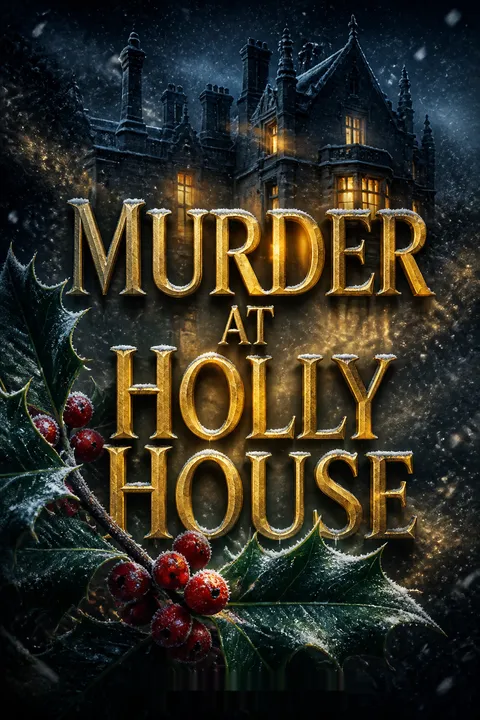
Murder at Holly House receives mixed reviews averaging 3.43/5 stars. Readers praise protagonist Frank Grasby's witty narration, humorous father-son dialogue, and authentic 1950s atmosphere. However, many feel misled by festive marketing when the cozy mystery unexpectedly shifts into spy thriller territory. While fans appreciate the entertaining characters and twisty plot, critics find the numerous character switches confusing and the espionage elements disappointing. The bumbling detective's likability divides readers—some find him endearing and amusing, others annoying. Despite strong atmospheric writing, several reviewers struggled with pacing, finding sections dull or difficult to follow.
People Also Read
Characters
Frank Grasby
The fallible investigatorA Yorkshire police inspector approaching forty, Frank is an entertaining storyteller whose confidence often outruns his judgment. He is proud of his wartime service, cricketing instincts, and ability to read people, but his record includes avoidable blunders and a talent for turning embarrassment into jokes. His affection for his widowed father6 is hidden beneath irritation, and he longs for companionship while repeatedly sabotaging the possibility of settling down. In Elderby, he begins as a man who wants to do his job and get back to York. His most reliable asset proves less his authority than his willingness to revise a judgment when new evidence makes his certainty untenable.
Daisy Dean
The American internDaisy is an American doctoral student in criminology who joins the Elderby police station as an intern. Her intelligence and curiosity are immediately apparent, though Frank’s1 flirtation and assumptions about her youth often obscure how closely she watches the people around her. She is composed in situations that make others panic, and she has a practical independence that resists being treated as a pupil or protected guest. Her relationships with Frank1 and the villagers are shaped by the gap between what she reveals and what she keeps private. She is both socially warm and difficult to read, a combination that makes her presence in a small Yorkshire village seem increasingly consequential.
Elphinstone Bleakly
The sleepy sergeantElderby’s long-serving sergeant, Bleakly is a veteran of the Chindits who carries the physical and psychological cost of service in Burma. He suffers from sudden sleep episodes, which make him seem comic or unreliable until his military experience becomes clear. His familiarity with the village gives him influence over its routines and history, while his relationship with Grasby1 shifts between collegial and strained. Bleakly is proud of his wartime comrades and wary of intelligence work, yet he also wants the village to remain orderly. His divided position makes him a figure through whom the story examines how loyalty, exhaustion, and institutional duty can pull in competing directions.
Arthur Juggers
The irascible superintendentJuggers is Grasby’s1 superior in York, a forceful superintendent who scolds him for blunders but recognizes the detective’s occasional brilliance. He speaks and acts with blunt authority, and his affection for cricket gives him and Grasby1 a point of connection beneath the reprimands. Juggers is caught between his responsibility to command and the political pressures surrounding the Elderby case. His treatment of Grasby1 suggests that discipline can coexist with a grudging loyalty, though the inspector1 cannot always tell where his superior’s orders originate.
Lord Parsley
The family confidantKnown to Frank1 and his father6 as Mitch, Lord Parsley is a genial family friend with a distinguished military career and a position in Army Intelligence. He has known Frank1 since childhood and treats him with easy affection, mixing practical advice with the relaxed manner of an old companion. His friendship with Cyril Grasby6 seems to bridge differences in temperament and status, and his willingness to help gives Frank1 a reassuring connection beyond the police hierarchy. Parsley’s charm is paired with discretion; he rarely discusses his work in detail. For Frank1, he represents the adult ally who has always appeared to understand how the world operates.
Cyril Grasby
The sardonic vicarFrank’s1 father is a retired clergyman whose sharp tongue, failing age, and fondness for strong home-brew make him an unpredictable presence. He dislikes privilege and institutional hypocrisy, while his theology remains fierce even when his own religious practice is irregular. He and Frank1 needle one another rather than express tenderness directly, but their shared household routines reveal a durable attachment. Cyril has a history connected to Elderby that he does not readily explain. His mixture of eccentricity, insight, and stubborn reserve makes him difficult for his son1 to dismiss, even when Frank1 is convinced he knows better.
Hetty Gaunt
The raven-keeping landladyHetty Gaunt rents rooms in a dark, eccentric house and enforces rules with the confidence of someone accustomed to being obeyed. She dresses in black, keeps a raven named Cecil, and speaks about the future with an unnerving certainty. Beneath her theatrical manner is a deep attachment to Elderby’s past and to the people who once lived there. Her relationship with Frank1 begins in mutual suspicion, complicated by her history with his father6. Gaunt’s food, household rules, and warnings make her home both a refuge and a place where Frank1 senses that the village’s history has followed him indoors.
Lord Damnish
The self-made lordA wealthy fish buyer from Leeds who acquired his title, Damnish is proud of his property and impatient with anyone who obstructs his wishes. He demolished the old Elderby Hall and built Holly House, an act that deepened the village’s resentment. At home he dominates his wife9, son11, staff, and gamekeepers, treating deference as an entitlement. His sensitivity to status sits beside a practical concern for possessions and influence. Frank1 initially sees him as a caricature of the nouveau riche, but Damnish’s power over local life makes him more than a pompous landowner. His household reflects the tensions between inherited rank, purchased prestige, and control.
Lady Marion Damnish
The watchful aristocratLady Marion comes from the old Elderby family and possesses the polished bearing of inherited status. She is small, sharp-featured, and exacting, with a command of legal and civic matters that makes her more formidable than her husband’s8 bluster suggests. Her marriage to Damnish8 ties the displaced family to the man who replaced its former position, while her relationship with her brother10 Ingleby10 remains publicly hostile. She is protective of tradition and attentive to how others behave around her. In a village that remembers the family’s losses, Lady Marion’s authority rests on a complicated blend of lineage, public performance, and private calculation.
Ingleby
The dispossessed artistLady Damnish’s9 brother lives at Briarside Farm, where he paints among unfinished canvases and scattered frames. The loss of his family’s former position has left him economically constrained and estranged from his sister9. Ingleby presents himself as attached to the land and dismissive of the money-driven world Lord Damnish8 represents. He is intelligent, observant, and difficult for Frank1 to read, with artistic work that appears to register his fears about the political forces surrounding Elderby. His relationship with his nephew11 Harry11 is warmer than the young man’s relationship with his father8, and his grievance gives him both a strong sense of history and a reason to shape it.
Harry Damnish
The rebellious heirBorn Beauregard Oscar Damnish, Harry prefers an ordinary name and resists the stiff expectations attached to his family. He is taking time away from Rugby after getting into trouble and has little patience for his father’s8 fixation on wealth and rank. His affection for the land and respect for his uncle10 Ingleby10 distinguish him from the life Lord Damnish8 has planned for him. Harry is impulsive and privileged, but not without conscience; his apology to Frank1 shows that he can recognize his father’s8 discourtesy. He wants independence without yet understanding how much responsibility comes with it.
Dr Elizabeth Starr
The village physicianElizabeth Starr is Elderby’s doctor and the wife of American journalist Charles Starr13. She is trusted by the villagers and carries herself with professional restraint, even when private grief makes that composure difficult. Her medical role connects her to nearly everyone in the community, while her marriage places her close to her husband’s13 troubled memories of war. She is thoughtful and observant, but careful not to intrude on his writing or inner life. The difference between what she knows and what she has chosen not to ask becomes part of the uncertainty surrounding the Starr household.
Charles Starr
The haunted war journalistCharles, called Chuck by friends, is an American journalist and D-Day veteran who settled in Elderby with his wife12, Elizabeth12. His experiences in the war continue to shape his sleep, habits, and writing years later. He is outwardly neat and well turned out, but his study is chaotic, a private disorder Elizabeth12 understands as part of his struggle with the past. His work challenges accepted accounts of the war and its aftermath. Chuck’s friendship with Daisy2 and his closeness to Elizabeth12 place him at the intersection of private memory and political consequence.
George Croucher
The village clergymanCroucher is the vicar of St Thomas’s-on-the-Edge, a nervous, thin man who is easily shaken by disturbing events and uneasy in the dark. His concern for his own composure can make him seem self-absorbed, though he takes his religious duties seriously. He is familiar with the village’s rhythms and its church, which becomes a place where public calm and private danger meet. Frank1 initially sees him as a fragile witness rather than a capable ally, and the vicar’s shifting presence reflects how misleading appearances can be in Elderby.
Arthur McGill
The armed gamekeeperMcGill manages security and gamekeeping on the Damnish8 estate, carrying a shotgun and a reputation that makes people wary of him. He is a disciplined former soldier who understands the terrain around Elderby and is loyal to the people who employ him. His blunt manner can look threatening, especially to Frank1, who first encounters him at Holly House. McGill’s knowledge of the hills, outbuildings, and estate workforce makes him a powerful presence in the village’s hidden geography. Beneath the intimidating exterior, he is practical and capable of acting decisively when someone is in danger.
Martha Thornlie
The uneasy chambermaidMartha is a young live-in chambermaid at Holly House, responsible for domestic work and errands. She is shy and easily overwhelmed by the household’s power structure, yet she notices details others overlook. Her unease when giving an account suggests that she is weighing truth against the risk of displeasing her employers. Martha is not naturally bold, but her conscience makes it difficult for her to remain silent when she believes an important fact has been concealed. Her position among the staff gives her a view of Holly House that its owners may underestimate.
Ethel Robson
The pub landladyEthel runs the Hanging Beggar, a cozy pub with a grim name and limited wartime-era food. She is sociable, practical, and quick to tease Frank1, while also paying close attention to the village’s mood. The pub makes her a natural receiver of rumors and a steady presence amid Elderby’s shifting loyalties.
Wally
The village bakerWally is a former miner who became a baker after an injury ended his work underground. He takes pride in his shop and the craft his father taught him, turning out pies that quickly win Frank’s1 loyalty. Warm and helpful, he becomes one of the few villagers Frank1 can approach outside official channels.
Constables Hardy and Thomas
The imposing newcomersThe two men assigned to Elderby arrive in immaculate uniforms with the posture and physical bearing of soldiers. Hardy does most of the speaking, while Thomas is more taciturn. Their confidence contrasts with the sleepy routines of the local station, and their presence makes Frank1 unsure how much he should rely on the new personnel.
Plot Devices
The memoir and police archive
A damaged recordThe story is presented as Frank Grasby’s1 memoir, later assembled from notebooks, reports, statements, and other police papers. The framing editor admits that some pages are damaged or missing, while Grasby1 himself acknowledges that he starts with a pivotal case rather than the beginning of his career. The documents sometimes offer a colder, more official account than his humorous recollections. This device lets the narrative contrast personal memory with institutional record and makes absence meaningful: a gap in the archive can conceal the very fact the investigation needs.
The chimney corpse
A hidden entryThe dead man lodged in Holly House’s chimney first appears to be an intruder who chose an absurd route into a wealthy home. His body arrives in the middle of a room full of witnesses, but no one can identify him or agree on what preceded his fall. The chimney gives the mystery an immediate physical image of concealment and makes the estate’s domestic space part of the crime scene. Later findings establish that the death was not a simple burglary gone wrong, so this apparently comic discovery becomes an early sign that official explanations will be manufactured.
President cigarettes
A repeated traceThe expensive cigarette brand appears in Grasby’s1 investigation of a cigarette end near Starr’s13 body and again in the pockets of people he is considering as suspects. Because the habit is distinctive and the brand uncommon, it seems to connect individuals to a crime scene. The clue also demonstrates how easily a detective can mistake correlation for certainty: more than one person may possess the same recognizable object. It heightens suspicion without immediately resolving it, directing attention toward the circle of people around the Salt House and the competing accounts they offer.
The Salt House antenna
A hidden operationThe abandoned industrial site on Withernshaw Fell contains a cleared yard and a van raising a tall antenna. Its remote location makes it easy to observe the village and difficult for ordinary residents to notice what is happening there. The equipment gives physical form to rumors of secret military activity and links Elderby’s local disputes to national politics. It also creates a destination toward which evidence and characters repeatedly draw Grasby1, while the explanations surrounding it remain unreliable until the covert operation is exposed.
Stage blood and disguise
A false deathDisguise shapes several reversals: Grasby1 borrows gamekeeper clothes to move unseen, the false constables19 use institutional appearance to approach him, and Daisy2 uses theatrical blood to make a wound appear fatal. These deceptions are not interchangeable. Some protect a person, some disguise an attack, and one creates a strategic advantage during the Salt House confrontation. The device forces Grasby1 and the reader to question what appearances prove, while showing that performance can be as consequential as weapons in a conflict where trust and identification are unstable.
Download PDF
Download EPUB
.epub digital book format is ideal for reading ebooks on phones, tablets, and e-readers.








