

Plot Summary
Black Feathers in Snow
Meg Corbyn1 wakes from a vision of bloodied snow and broken black feathers, though she cannot yet identify the sound behind it. The dream opens onto Walnut Grove, where three teenage boys bait garbage cans with drugged spaghetti to draw in Crows. Their sedated birds cannot escape when hunting dogs attack; a girl is caught in the violence, and police take the boys into custody.
One boy has already helped assault Priscilla, a schoolmate who remains badly injured. The episode is no adolescent prank: the boys have tested drugs that can disable Others and intensify violence. When Lakeside Lieutenant Monty Montgomery3 brings Simon Wolfgard2 news of the deaths, Meg’s1 dream becomes the first warning that the danger is moving north.
The opening places Meg’s gift between two kinds of involuntary exposure. Her body receives images before she understands them, while the boys deliberately turn drugs, food, and scavenging habits into weapons. The attack’s banality matters: a garbage route becomes a killing ground because the perpetrators know what the Crows will find irresistible. By beginning with a dream that is incomplete rather than authoritative, the story makes prophecy a demand for interpretation, not a convenient answer machine. Meg’s warning matters because Simon listens to her uncertainty instead of dismissing it as trauma or ordinary sleep.
The Garbage Truck Warning
When the prickling in Meg’s1 skin sharpens, she matches the missing sound in her dream to a garbage truck and warns the Courtyard that the Crows must stay away from collection day. Simon’s2 flock initially resists, distracted by discarded treasures, until he threatens to expel those who ignore him. The warning comes just in time.
A truck enters a baited street, drugged crows fail to fly, and cars deliberately run them down while striking a city worker. Simon2 moves the dead birds so an ambulance can reach the injured man, then brings the Crow witnesses to safety. Police later find jars containing a hand and eyes at the attackers’ home, exposing a grotesque trade in supposed terra indigene body parts and a threat beyond the birds.
Meg’s warning becomes effective only through a chain of trust: she recognizes a pattern, Simon believes her, and the Courtyard’s leader uses authority when persuasion fails. The episode also complicates the line between animal and person. The human attackers exploit uncertainty about whether the dead are ordinary crows or Crow people, while Simon treats the bodies with care before human authorities arrive. His choice is practical as well as ethical, preserving a fragile civic relationship. The jars widen the story’s danger from isolated violence to a culture that packages the Others’ bodies as objects of curiosity and power.
The Prophet Business
At a distant compound, the Controller12 uses captive blood prophets to advise wealthy clients, then turns their blood into products for the Humans First and Last movement. He plans drugs that will pacify the Others with one effect and drive human attackers into reckless aggression with another.
His staff’s casual cruelty shows how ownership has replaced care: girls are cut for profit, bred for stronger visions, and denied names. A battered prophet called Jean4 secretly preserves her identity and watches the Controller’s12 ambitions through forced prophecies.
In Lakeside, Monty3 discovers that his former partner15 Elayne15 plans to take their daughter3 Lizzy to Cel-Romano with Nicholas Scratch,14 an HFL speaker whose identity and intentions are difficult to verify. The private family decision now touches the political threat.
The compound’s polished administration disguises violence as a service industry. The Controller’s language of investment and output allows him to treat pain as both commodity and research material, while the girls’ lack of names makes that conversion feel bureaucratically ordinary. Jean’s insistence on an identity is therefore an act of resistance, not merely personal pride. Monty’s family concern supplies a human-scale version of the same problem: persuasive political promises can recruit people by offering status or security while concealing their costs. The two plots converge around the question of who gets to define another person’s future.
A Wolf's Human Shape
After a nightmare, Simon2 shifts into human form to share Meg’s1 bed and ask what frightened her. Meg1 worries that his appearance means he expects sex, so she turns to her friends Merri Lee8 and Heather for help understanding the difference between Wolf customs and human courtship.
She tells Simon2 she wants friendship, not sex. His first response is to withdraw from their familiar play and movie nights, which hurts her more than she expected. When a small scrape triggers prophecy and she fears the razor is becoming impossible to control, Simon2 confronts her again.
They explain their misunderstandings: he had shifted only to speak, while she had read the situation through the expectations of human men. They agree to rebuild their friendship carefully, with Nathan returning as Meg’s1 watch Wolf.
This relationship develops through a genuine mismatch of social grammar. Simon sees fur and human skin as alternate bodies; Meg has learned to associate a man’s body with danger and coercion. Her boundary is not a rejection of Simon but an assertion of agency after a life in which others made decisions about her body. Simon’s retreat shows how easily an attempt at respect can become abandonment when he mistakes a clear limit for a verdict on the entire friendship. Their repair depends on naming concrete behaviors, not assuming that affection makes either person automatically understood.
The Island's Old Shame
Simon2 travels to Great Island with Monty3 and Captain Douglas Burke10 to ask its Intuit community to accept Roger Czerneda, a police officer driven from Jerzy after helping the Crows. Mayor Steve Ferryman9 agrees, then tells Simon2 that cassandra sangue once came from Intuit families.
In earlier generations, frightened communities surrendered gifted girls to men promising protection; the practice became a system of captivity and breeding. Steve9 cannot explain how to make Meg’s1 constant skin-prickling stop, but he offers to ask other Intuit settlements.
Meanwhile, the terra indigene refuse to renew Jerzy’s lease after humans attacked Crows there, making clear that human cities exist by agreement, not entitlement. Simon2 returns with more reason to protect both Meg1 and the fragile Lakeside partnership.
Great Island offers a counterexample to the assumption that human and terra indigene contact must end in conquest. Its residents survive through negotiated limits, shared work, and a wary understanding of what each group needs. The history of the prophets shows how protection can become a language for taking control: families once surrendered daughters to escape persecution, and the promised refuge hardened into ownership. Simon’s questions expose how much Meg’s condition has been shaped by systems that claim expertise over her. The threatened eviction of Jerzy makes these histories immediate, since broken agreements can cost an entire population its home.
A Prophecy Turns Poisonous
A bomb attack at Talulah Falls kills Crows and a Sanguinati, then leaves the town isolated as the terra indigene retaliate. Meg1 wakes screaming and makes a dangerous, unusually long cut because the visions feel unbearable without release.
Simon2 reaches her and licks the blood, expecting the anger that had once helped him protect her. Instead, he becomes passive and euphoric, unable to respond while Meg1 speaks. The Others rescue them, and the physician Dominic Lorenzo11 recognizes the reaction as an overdose.
He concludes that the two street drugs, gone over wolf and feel-good, are made from cassandra sangue blood, with its effects changing according to the prophet’s state. Meg’s blood is not simply a gift or a vulnerability; it can become a weapon against anyone who exploits it.
The revelation transforms the meaning of Meg’s body without making her responsible for what has been done to it. The same blood can produce aggression or passivity, suggesting that the drugs are not arbitrary inventions but distortions of a bodily response to fear, pain, and euphoria. Simon’s overdose is especially unsettling because his protective instinct puts him in danger: he acts from care, yet loses the capacity to help. Lorenzo’s explanation also reframes the prophets as unwilling participants in a weapon system. Their bodies are being made dangerous by human choices, not by any decision of their own.
The Falls Go Dark
The violence at Talulah Falls escalates after attacks on Crows, a murdered Sanguinati, and a Humans First and Last rally. A tornado and fires destroy university buildings, fog and storms close roads and river crossings, and the Courtyard’s leaders abandon the town rather than continue dealing with humans they no longer trust.
Lakeside’s residents respond to the crisis by shunning Courtyard businesses and labeling employees such as Ruthie17 and Merri Lee8 traitors. When students assault Merri Lee,8 Captain Burke10 gathers the plaza’s merchants and orders them to honor the city’s agreements or face penalties.
He describes the ruin at the Falls to make the consequences plain. Monty,3 meanwhile, learns that Lizzy’s3 planned journey with Scratch14 may carry her into the same political danger.
The town’s isolation is not merely punishment; it is the physical result of a relationship whose institutions have failed. By showing roads, communications, and supply routes disappearing, the novel turns political exclusion into daily material deprivation. Lakeside’s backlash reveals a parallel failure among humans: people attack those who cooperate with the Others, even as that cooperation is the city’s best protection. Burke’s intervention matters because it refuses to treat intimidation as an unavoidable expression of public anger. His authority is used to preserve the agreements that keep both communities alive, though he cannot control the larger conflict or Monty’s family crisis.
The Broom and Teakettle
Steve Ferryman9 identifies a smiling stranger as Phineas Jones,13 a procurer who has come to Ferryman’s Landing searching for vulnerable girls. Meg’s1 skin prickles when Jones13 enters the Liaison’s Office and offers a soothing promise of safety.
Merri Lee8 recognizes the hypnotic pressure in his manner and keeps Meg1 from following him. When Jones13 tries to enter the secured workrooms, Skippy, a young Wolf who cannot shift into human form, drives him outside. Meg1 attacks with a broom while Merri Lee8 strikes him with an electric kettle, preventing him from reaching Skippy.
The Others arrive, but Jones13 bites into poison carried on his own arm and dies before they can question him. Meg’s1 warning keeps the Courtyard from biting poisoned flesh, and the attack turns two ordinary human tools into lifesaving defenses.
The confrontation makes coercion legible through its sensory details. Jones does not begin with force; he offers the kind of safety Meg has been denied, using a voice designed to make surrender feel like relief. Merri Lee’s presence interrupts that script by reminding Meg that trust can be tested against behavior. Their improvised weapons reveal the human pack’s form of courage: neither woman has the strength of the Others, but both act decisively when a vulnerable creature is threatened. Skippy’s rescue also depends on his imperfect, untrained nature, which the adults must protect rather than dismiss.
The Search for Jean
After Jones13 dies, terra indigene leaders arrive in Lakeside divided between ending the threat by killing blood prophets and finding another way. Simon2 shows them Meg,1 whose fear of a mouse undercuts their image of a monstrous adversary.
Merri Lee8 and Ruthie17 organize a search through maps, transport schedules, and photographs to reconstruct Meg’s1 escape from the compound. The trail points toward the Midwest. Meg1 refuses money as a reward and instead asks the leaders to rescue Jean,4 the friend who helped her flee and remains captive.
Simon2 accepts that request while insisting the search must avoid needless harm to the prophets. When Monty3 asks what will happen if police do not help locate the Controller,12 Meg’s1 prophecy shows a Midwest reduced to wind, fire, ash, and bones.
Meg’s request changes the political problem into a moral test. She does not ask the powerful leaders to compensate her; she asks them to recognize Jean as a person whose life matters independently of her own escape. The leaders’ first impulse to eliminate the prophets treats them as hazards, repeating the logic of the compounds in a new form. Simon’s decision to use Meg’s memories rather than her body wherever possible reflects a harder kind of leadership: he must secure cooperation without turning the person he protects into another instrument. The prophecy to Monty makes the cost of inaction collective, but not abstract.
The Midwest Map
Monty,3 Burke,10 and medical evidence help convert the scattered visions into a search. Meg1 makes one controlled cut after Monty3 asks whether the police must assist the terra indigene; she sees destruction spreading across the Midwest if they fail.
Lorenzo11 maps clinics and institutions that have treated blood prophets, while the Others compare those sites with towns where people have shot Crows. The overlap suggests that the birds were killed to conceal the compounds.
A lawyer in the Midwest, Pete, confirms a suspicious group home and orphanage, then receives threats against his wife and children for asking questions. Burke10 urges him to bring his family to Lakeside. The combined evidence identifies the likely region and places the police, Simon,2 and Lorenzo11 on a train toward the compound.
Investigation here is an act of translation across systems that do not naturally trust one another. Meg’s images are associative rather than cartographic; police records, medical histories, and Crow surveillance give them practical coordinates. The overlap between anti-Crow violence and prophet facilities shows that suppressing witnesses is part of the infrastructure of exploitation. Monty’s prophecy request carries an ethical cost, since the knowledge is purchased with another scar, but he does not treat it as a routine police tool. Pete’s family being threatened demonstrates that the Controller’s power reaches beyond the compound and that seeking truth can endanger people who never consented to the conflict.
The Compound Falls
At the compound, the Elementals destroy the wall and the terra indigene overwhelm the guards, using fog, wind, and smoke to open the way for the Wolves. The Controller12 takes gone over wolf and fires wildly, killing his own staff as well as attackers, but Fire, a Panther, a Wolf, and a Sanguinati bring him down.
Monty3 and Lorenzo11 enter the cells and choose five young, unscarred girls to accompany them. Simon2 finds Jean,4 who is badly injured and refuses to live in Lakeside, fearing she would keep Meg1 tied to the past. She asks to be taken beyond the compound instead. Simon2 honors Meg’s1 promise by saving her and carries her razor out of the place where it was kept from her.
The assault is a rescue and a reckoning, but the story refuses to make violence clean. The Controller’s weapons turn against everyone nearby, and the devastation leaves the human witnesses unable to retreat into familiar ideas of orderly justice. Monty’s choice of the youngest girls is an attempt to preserve possibility, not a claim that age alone can heal them. Jean’s refusal of Lakeside is equally important: rescue does not entitle Meg or Simon to decide where she belongs. Her request to leave the compound on her own terms gives agency a final, concrete form.
Honey at the Threshold
The rescued girls cannot manage the flood of sights and sounds on the train, so Simon2 closes the blinds and provides coloring books to make the journey gentler. He takes them to Great Island, where the five younger girls stay at a bed-and-breakfast and Jean4 settles in a quiet cottage with Simple Life hosts. A jar of honey, the image that has followed her prophecies, becomes her welcome gift.
Across Thaisia, the terra indigene demand access to hidden prophet compounds and plan to replace abusive staff with supervised housing. Back in Lakeside, Simon2 returns to Meg’s1 apartment. She cooks spaghetti, listens as he shares Jean’s4 letter, and lets him sleep beside her in Wolf form. Their closeness remains careful, but it is chosen by both.
The ending does not repair the damage by pretending that freedom immediately feels safe. The younger girls are overwhelmed, and Jean needs distance from the friend she helped save. The quiet cottage and honey offer a future made of routine rather than spectacle, while the new oversight of compounds begins to shift control away from owners. Simon’s return to Meg is deliberately modest: a meal, a letter, shared space. These gestures matter because the novel has shown how easily care can become possession. Here, companionship is meaningful precisely because Meg can welcome it, question it, or decline it.
Analysis
Murder of Crows makes the struggle over human and terra indigene coexistence concrete through land, food, education, and the body. Humans are not simply weaker than the Others; they are clever enough to build institutions that conceal violence, from leased towns that ignore their obligations to compounds that convert prophecy into a profitable service. The Controller's12 enterprise is an especially sharp version of this logic. He calls captivity care, and treats a girl’s pain as a resource whose value increases when her choices disappear.
Meg’s1 development counters that system without turning her into a conventional weaponized heroine. Her visions matter, but the plot repeatedly shows that they require listeners, interpreters, and people willing to act on uncertain information. Merri Lee8 preserves gestures, Monty3 supplies investigative knowledge, and Simon2 makes decisions within the Courtyard. Their work is collaborative because no single character can understand the whole danger alone. Meg’s1 refusal to accept money, and her request that Jean4 be rescued, insist that human value cannot be measured by what a person can provide.
Simon’s2 changing relationship with Meg1 parallels the political problem at a smaller scale. He must learn that guarding someone does not grant ownership, just as human settlement does not grant ownership of the land beneath it. Their friendship survives because Meg1 can set limits and Simon2 can revise his behavior without pretending he has become human. The book’s resolution remains deliberately provisional: rescued girls need different degrees of quiet and support, and the terra indigene’s new oversight may still be coercive if it ignores their wishes. Yet the ending establishes a meaningful alternative to both abandonment and captivity. Safety becomes something negotiated with the people it is meant to protect.
Review Summary
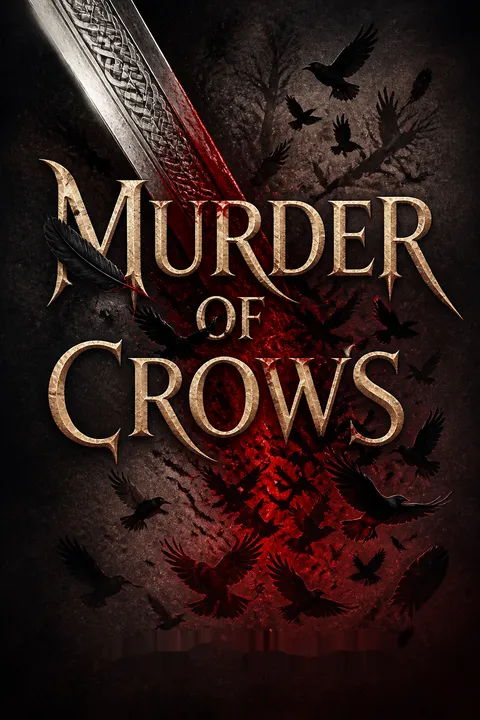
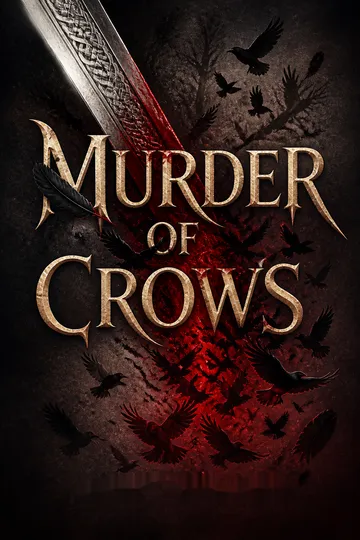
Murder of Crows is praised as an addictive and engaging sequel in The Others series. Readers appreciate the unique world-building, well-developed characters, and slow-burn romance. The book expands on the conflict between humans and Others, introducing new plot elements like tainted drugs and prophecies. While some found the pacing slow and repetitive, most enjoyed the blend of mundane details and supernatural elements. Simon and Meg's relationship development is a highlight for many. Overall, fans of urban fantasy highly recommend this series for its immersive world and compelling characters.
People Also Read



Characters
Meg Corbyn
The Courtyard's blood prophetMeg is a young cassandra sangue, a woman whose blood opens visions when her skin is cut. After escaping a compound where she was treated as property, she becomes the Lakeside Courtyard’s Human Liaison and begins learning ordinary choices for herself: how to work, make friends, manage fear, and live among people who do not want to own her. Her mind organizes prophecy through concrete images and associations, while new experiences can overwhelm her. She is gentle without being passive, and her instinct to help others often puts her own safety at risk. The central tension in Meg’s character is not whether she is powerful, but whether she can exercise that power without surrendering agency again.
Simon Wolfgard
The Courtyard's dominant WolfSimon leads the Lakeside Courtyard, where Wolves, Crows, Sanguinati, and other terra indigene live among human businesses. He is observant, territorial, and often baffled by human customs, yet his practical curiosity has made him more willing than most leaders to let humans work and interact in the Courtyard. Meg1 disrupts his assumptions about friendship, leadership, and closeness. He wants to protect her, but protection can become controlling if he forgets that she must make her own choices. Simon’s bluntness and animal instincts are not a disguise for human behavior; they are part of who he is. His challenge is to remain a Wolf while learning that some human ways of caring are worth understanding.
Crispin James Montgomery
The Courtyard's police bridgeMonty is a Lakeside police lieutenant who becomes one of the Courtyard’s most important human contacts. Courteous and disciplined, he has to reconcile police procedure with a world where human law cannot compel the terra indigene to tolerate an offense. His concern for Meg1 is professional as well as personal, and his responsibilities as a father to Lizzy make political danger immediate rather than theoretical. Monty is neither a fearless mediator nor a naïve optimist; he knows that good intentions cannot guarantee safety. He keeps trying to find practical ways for humans and Others to cooperate, even when the choices available to him may protect one group by exposing another.
Jean
Meg's defiant first friendJean is another blood prophet held in a compound and the one person there who insists that a designation cannot erase a name. She gives Meg1 crucial encouragement and helps her imagine a life beyond captivity. Jean’s endurance is quieter than Meg’s1 flight: she preserves memory, watches for opportunity, and understands the emotional cost of being kept alive as an object. Her attachment to Meg1 is protective rather than possessive, and she wants her friend to become more than a survivor of the compound. Jean’s distinctive strength lies in recognizing that freedom may require distance, patience, and a life chosen on her own terms.
Vladimir Sanguinati
Simon’s vampire partnerVlad manages Howling Good Reads with Simon2 and serves as a thoughtful, often wry counterweight to the Wolf’s impulsiveness. As a Sanguinati, he understands secrecy, danger, and the cost of revealing a weakness to human authorities. He is also one of the first Others to recognize that Meg’s1 safety cannot be handled by simple rules. Vlad’s loyalty to Simon2 and concern for the Courtyard coexist with a careful political intelligence: he knows when to speak, when to withhold information, and when an apparent joke is masking a serious warning.
Henry Beargard
The Courtyard's steady spirit guideHenry is a Grizzly and the Courtyard’s spirit guide, a grounded presence whom Simon2 trusts when confused or emotionally unsettled. He is patient with Meg1, attentive to what she fears, and willing to learn practical human care rather than assuming the Others already understand it. Henry often slows a crisis long enough for others to think, but his calm is not softness without limits. His formidable strength and protective instinct remain close beneath his measured manner.
Tess
The coffee shop's hidden predatorTess runs A Little Bite, the Courtyard coffee shop, and watches both human and terra indigene behavior with unusual acuity. Her changing hair reflects emotions she often keeps carefully contained. She is fiercely protective of the Courtyard’s residents and especially attentive to the vulnerable human pack forming around Meg1. Tess can be warm, practical, or terrifying, depending on what the situation demands. Her presence reminds others that some dangers in the Courtyard cannot be measured by a human appearance.
Merri Lee
Meg's resourceful human allyMerri Lee is a university student and Courtyard employee who becomes one of Meg’s1 closest human friends. She understands social cues and practical routines that Meg1 was never taught, and she translates them without treating Meg1 as foolish. Her quick thinking helps turn Meg’s1 image-based prophecies into usable clues. Merri Lee is compassionate but not timid; when danger reaches the Liaison’s Office, she acts decisively to protect Meg1 and Skippy. Her friendship shows how ordinary human skills can matter beside supernatural strength.
Steve Ferryman
The Intuit village mayorSteve is the mayor of Ferryman’s Landing on Great Island and a member of the Intuit community, whose people sense danger or opportunity through instinctive feelings. He understands that survival depends on careful bargains with the terra indigene and is wary of outsiders who arrive with persuasive promises. Steve’s judgment combines local responsibility with a deep awareness of history, including the harm done to blood prophets who came from Intuit families. He offers practical cooperation while guarding his community’s privacy.
Douglas Burke
Lakeside's hard-nosed captainBurke commands the Chestnut Street police station and is Monty’s3 superior. He understands that keeping the peace with the terra indigene requires more than enforcing human law; it requires recognizing what happens when humans break agreements. His manner is fierce and direct, but his decisions are shaped by a protective sense of responsibility for his officers and city. Burke is willing to use his influence and personal obligations to prevent a local crisis from becoming a regional catastrophe.
Dominic Lorenzo
The Courtyard's human doctorLorenzo is a physician who begins working in the Courtyard despite his reservations about the Others. He is curious about cassandra sangue and wants better medical knowledge of their needs, but Meg’s1 experiences force him to confront the difference between research and consent. His clinical understanding helps the Others interpret how prophet blood affects bodies, though he does not have every answer. Lorenzo’s professional conscience is tested when helping the Courtyard means facing violence he cannot control.
The Controller
The proprietor of captive prophetsThe Controller runs a compound system that confines blood prophets and sells access to their visions. He presents exploitation as efficient management, treating the girls’ injuries, abilities, and family histories as assets to be controlled. His ambition extends beyond prophecy sales into political influence, and he sees the Humans First and Last movement as a route to greater power. The Controller is most dangerous when his cruelty appears orderly: staff, schedules, and business language make a prison look like an institution.
Phineas Jones
The smiling recruiterJones is a practiced procurer who finds girls with blood-prophet abilities and persuades or abducts them into compounds. His mild appearance and gentle manner conceal a talent for making coercion sound like care. He studies the fears and needs of families, then uses those vulnerabilities to gain access to his targets. Jones represents the human face of a system that can recruit its victims through promises before resorting to force.
Nicholas Scratch
The HFL movement's speakerScratch is a motivational speaker associated with Humans First and Last, traveling from Cel-Romano to promote the movement. His background is difficult to verify, and his connection to Elayne Borden15 brings Monty’s3 family concerns into the political plot. Scratch’s public message appeals to human resentment and promises a larger share of a world constrained by the terra indigene. His presence illustrates how political rhetoric can turn fear and scarcity into recruitment.
Elayne Borden
Monty's estranged former partnerElayne is Monty’s3 former partner and Lizzy’s mother. She wants greater social standing and believes her relationship with Nicholas Scratch14 offers access to a more promising life. Her conversations with Monty3 reveal a history of withholding information and treating disagreement as obstruction. Elayne is not simply careless: she is attracted to a future that seems to promise security and importance, even when she does not fully examine its risks.
Sam Wolfgard
Simon's recovering nephewSam is Simon’s2 young nephew, a Wolf pup who has been deeply affected by the loss of his mother. Meg’s1 patience helps him reconnect with other Wolves and with the world around him. He is energetic, curious, and eager to spend time with both Simon2 and Meg1, though his puppy enthusiasm can make him physically dangerous to someone as fragile as Meg1. Sam’s gradual confidence gives Simon2 a personal reason to value the human friendship he once would have dismissed.
Ruthie Stuart
The Courtyard's human teacherRuthie is a schoolteacher and Kowalski’s partner, part of Meg’s1 expanding human circle. She sees how small omissions in education can leave the terra indigene disadvantaged in human institutions, and she is willing to teach practical social and classroom skills. Ruthie’s decision to work with the Others puts strain on her human relationships, but she believes cooperation is more responsible than retreating into resentment.
Jane Wolfgard
The Wolfgard bodywalkerJane is a Wolfgard bodywalker who helps care for young Wolves and understands the needs of those who cannot easily adapt to a Courtyard. Her balanced, partly furry human shape reflects a different relationship to human appearance than Simon’s2. Jane is practical and observant, and she recognizes that even an awkward youngster such as Skippy can thrive when others accommodate his limitations.
Plot Devices
Cassandra sangue blood
Prophecy with a bodily costA cassandra sangue sees possible futures when her skin is injured and speaks images connected to the blood drawn. The vision is not automatically clear: Meg’s1 memories come as sounds, pictures, sensations, and associations that require careful interpretation. Speaking brings euphoria but blurs what she remembers, while trying to retain a prophecy without speaking causes severe pain. The compounds exploit this cycle by cutting the girls on a schedule and selling their visions. Their blood also has powerful effects on others, which makes the prophets targets for people seeking drugs or weapons. The device links knowledge to bodily autonomy, asking who benefits when insight is extracted through injury.
The silver razor
A measure of controlMeg’s1 folding razor bears her compound designation and has a blade width chosen to keep prophecy cuts evenly spaced. To the compound, it is a tool for managing valuable skin. To Meg1, it is both a trigger for addiction and a possession that lets her choose when a prophecy begins. Simon2 and the others worry that the razor could kill her, yet taking it away would repeat the control she escaped. Its meaning changes as Meg1 learns to plan cuts, seek a listener, and recognize when distress is making her judgment less reliable. The razor makes the conflict between safety and self-determination tangible.
Images and associations
A puzzle made from visionsMeg1 does not receive straightforward predictions. A garbage truck, black feathers, jars, a shark, or a teakettle may be literal details or parts of a larger pattern. Merri Lee’s8 index cards help preserve gestures and images that Meg1 cannot later recall, while maps and transport schedules turn remembered impressions into investigative leads. This method lets the story combine prophecy with ordinary collaboration: Meg1 supplies the raw material, and friends with different kinds of knowledge help interpret it. It also prevents her gift from becoming an effortless solution, since each vision can be incomplete, costly, or misunderstood.
Courtyard bargains
A fragile civic boundaryHuman communities in Thaisia survive on land and resources leased by the terra indigene. In return, they must honor agreements governing what they take, make, and deliver. The system shapes daily life in Lakeside, where human businesses trade with the Courtyard, and it explains the consequences when towns break trust. Jerzy’s eviction and Talulah Falls’ isolation show that a lease is not permanent ownership. Great Island offers a more cooperative model, where Intuits, Simple Life residents, and Others share work while accepting limits. These bargains make politics material: broken trust can mean lost food, closed roads, or the disappearance of a town.
The Crowgard network
Eyes across the territoryCrows and Crow people collect discarded objects, remember unfamiliar faces, and communicate with ordinary crows throughout human settlements. Their curiosity makes them vulnerable to bait, but it also gives the terra indigene a surveillance network no other Courtyard group can match. Meg’s1 warnings protect the Lakeside Crows from a planned attack, and later their observations help identify towns where the blood-prophet compounds may be hidden. The network depends on trust and reciprocity: the Crows share what they see, while leaders must protect them from humans who want secrets to remain buried.
The Others Series
About the Author
Other books by Anne Bishop
Download PDF
Download EPUB
.epub digital book format is ideal for reading ebooks on phones, tablets, and e-readers.








