

Plot Summary
The Ghost Gun’s Price
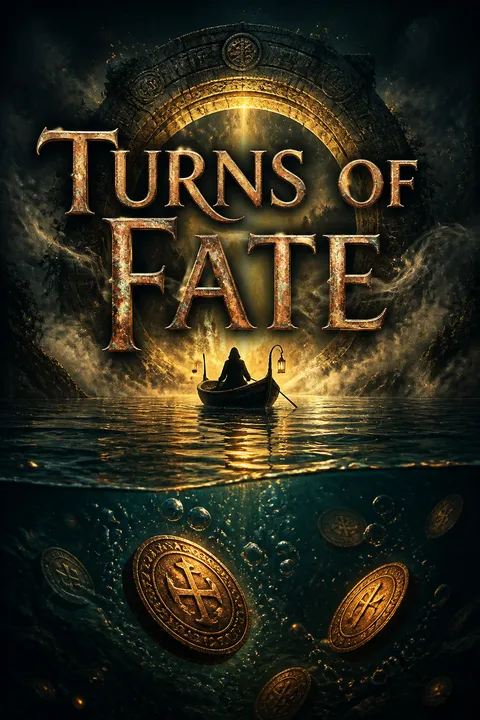
Newly assigned to Penwych’s special investigations team, Detective Beth Fahey is sent across the Fate River after a man named Gerry Palowski uses a ghost gun to shoot his former partner, their daughter, and his current girlfriend. All three survive, but Palowski dies decades older than his body should be.
At Destiny Park, Lucas Frost guides Beth to the Ladies Three, who explain that Palowski traded ten years of his life for the gun and twenty for each bullet. His victims were not fated to die, but one may live fewer years because of the bargain. Beth pays for the answers with three future favors. The Arcana let her handle the returned weapon, an unusual privilege that unsettles her captain.
The first case establishes Wyrd’s governing distinction between price and outcome. The gun’s cost is fixed, but the victims’ survival is not something the Arcana guarantee; Palowski chooses the violence and spends the life he might have lived. Beth’s investigative habits make her ask how the transaction works rather than retreat from its strangeness. That curiosity earns her information, but also binds her to obligations whose future terms she cannot control. The case turns supernatural law into a pressure on ordinary moral responsibility.
A Ferry Refused
Before Beth’s first visit is over, Reginald Hampton III refuses to pay the Ferryman for his ride back from Wyrd. The wealthy businessman has just sought advice about controlling his reckless brother, Alistair, and assumes his money and status will excuse him from the ordinary fare.
The Ferryman instead makes the broken agreement costly: Reginald is transformed into a fish and must survive a year in the Fate River before he can become human again. A coin and scales are sewn into his body to mark the debt. Reginald tries to follow the ferry, then discovers he has fins, gills, and predators to evade. His punishment becomes a second thread in the story, running beneath the human investigations until the year is nearly complete.
Reginald’s transformation makes the book’s transactional logic physical. His wealth has taught him that rules are negotiable when he can pay or intimidate, so the Ferryman answers a breach not with a fine but with a year of vulnerability. The fish form strips away the identity Reginald relies on: executive power, family name, and command of other people. Yet the punishment does not erase his agency. He must survive the consequences of his own refusal, and even survival leaves him answerable to the bargain.
Rachel Runs to Wyrd
Rachel Nightingale reaches the ferry after years of Alistair Hampton’s control have left her isolated, underfed, and afraid he will seize her money or have her confined. Lucas recognizes her from the Ladies Three’s vision and hides her in the hotel’s private wing, where his brother Jack keeps watch.
The Ladies Three offer a way out: Rachel will become another person and another creature for one year, while the Arcana secure her assets and remove her belongings before Alistair can interfere.
Their plan requires a portion of her flesh so Arcana women can temporarily imitate her and empty her apartment, bank accounts, safe deposit box, and storage unit. Rachel accepts because ordinary escape routes would leave her exposed to the man pursuing her.
Rachel’s escape begins with a difficult form of consent. She is not choosing between safety and danger so much as between a known abuser’s shrinking world and a frightening bargain that might restore her ability to choose. The Arcana’s price is bodily, financial, and practical, not sentimental. Their assistance does not rescue Rachel by declaring her helpless; it gives her a demanding plan whose success depends on her cooperation. The arrangement exposes how coercive control works through access to money, food, work, and social connection, then makes those resources the first things she must reclaim.
The Butterfly Gate
At school, bully Darren Palmer, known as Dare, forces his anxious classmate Ted Ocampo to accompany him to Destiny Park and search for a moon gate. When its keystone shifts between transportation and transformation, Dare treats the warnings as a joke and declares himself a rat-faced chicken as he passes beneath it.
He becomes exactly that, then a giant bird with a woman’s face drops from above and carries him off. Ted runs in terror, strips down to avoid being dragged under by the Fate River, and tries to swim home. A man in a dinghy, Alan Naylor, hauls him aboard. Naylor has been missing for decades after bargaining to disappear aboard a ghost ship, but Ted’s presence gives him a chance to escape it.
Dare’s end is not random punishment for being a bully; the gate responds to his careless intention, and his body becomes the joke he performs. Ted, meanwhile, has spent years surviving by anticipating Dare’s demands. His refusal to enter first is a small act of resistance, but it saves him from the transformation. The scene gives intention a frightening literal force while showing that courage may begin as fear with one boundary held. Naylor’s rescue also complicates the island’s danger: Wyrd can trap people, but one person’s choice to help another can change the terms of a fate.
The Ship Lets Go
As Naylor rows Ted toward land, the ghostly pirate ship that has held him for years appears on the river. Its captain signals that Naylor may go, because he saved the boy rather than letting him drown. Naylor gives Ted a sealed package containing a letter for his wife, Emma, and a list of former criminal associates, then disappears before reaching shore.
Police identify the old man as Alan Naylor, missing for fifty years, and confirm that Ted’s account matches the evidence. Naylor’s enemies are dead or incapacitated, so Emma and their children can finally receive the letter and learn what became of him. The encounter leaves Ted traumatized, but his testimony also gives Beth her first close view of a ghost ship.
Naylor’s release depends on an action he did not undertake to secure his own freedom. By saving Ted, he makes a new choice that changes what the old bargain permits. The letter matters because it converts a supernatural disappearance into something his family can actually receive: explanation, apology, and a history rather than an empty absence. Ted’s role is not to solve Wyrd but to witness what happened and carry the evidence home. His rescue demonstrates that compassion can alter a bargain’s path without making its costs disappear.
Four Rachels at Once
After taking flesh from Rachel’s thighs, the Arcana create temporary copies of her to act in several places at once. One group removes her possessions from Alistair’s apartment, while others close her accounts, empty her safe deposit box, redirect her mail, and leave her phone at the library to create a trail.
Alistair’s security man, Jeremy Swayne, follows one apparent Rachel, but an Arcana woman changes into Swayne’s likeness after Jack kills him. Swayne is hauled aboard the ghost trawler Last Breath, where the dying and dead crew offer him a place instead of a return to shore.
Police meanwhile find Rachel apparently present in multiple locations, and the three dead women used for the copies are identified in Jackson. The evidence points toward Wyrd, but not toward Rachel’s hiding place.
The escape plan reverses the surveillance that has confined Rachel. Alistair uses staff, money, and social reputation to monitor her; the Arcana answer with coordinated false appearances and a carefully constructed trail. Their imitation is not a simple trick: it requires vulnerable bodies and leaves real consequences, including the dead women’s remains and Swayne’s fate. The police are right to see contradictions, but their usual tools cannot distinguish a person from a temporary likeness. The episode asks what counts as proof when power can manufacture both an apparent presence and a convincing absence.
A Lark’s New Name
With Alistair’s reach disrupted, Rachel must decide what form her year of hiding will take. She concentrates on regaining joy, singing, and freedom, then walks through a moon gate and becomes a lark. Lucas names her Rahele and gives her a protected cage while she learns to perch, feed, and fly.
A crow named Faulkner becomes her first companion, bringing her berries and helping her practice movement outside the cage. The arrangement is difficult: Rachel cannot speak as she once did, and the body that shelters her also limits her. Still, she begins to experience the park as a place for learning rather than merely concealment. Her new life is a deliberate choice, not another identity imposed by Alistair.
Rachel’s transformation makes recovery more than a return to her former appearance. Her wishes take bodily form, but the new body brings dependence, awkwardness, and grief alongside possibility. The cage is both protection and constraint, echoing the difference between shelter freely accepted and confinement enforced by an abuser. Rachel’s first progress comes through small embodied acts: tasting fruit, flapping, and learning to trust the hands that lift her. Her new name marks a provisional self, one that can exist before she is ready to reclaim the public identity attached to her books.
The Detective’s Missing Past
Beth’s interest in her childhood deepens when she studies the old sketchbook she has carried since living with Bonnie Wilson. After drinking the first of three teas sent by an unknown Arcana patron, she dreams of a mother and daughter named Arianna and Maxine Greenwood.
The next dreams reveal that Beth’s birth mother, Maxine, was half Arcana, died after complications in childbirth, and entrusted Beth to her human father, who raised her with his wife before abandoning her with Bonnie. The family’s support payments had concealed the arrangement.
Separately, Detective Amanda Gibson learns that her mother Angela was murdered by her stepbrother and bargained to become a protective spirit. These revelations show Beth that the strange has shaped lives on both sides of the river long before her police assignment.
Beth’s family history emerges through imperfect evidence: a sketchbook, dreams, a birth certificate, and the gaps in adults’ explanations. The truth does not retroactively make Bonnie’s cruelty harmless or turn Beth’s childhood into a tidy origin story. Instead, it clarifies why Beth’s attraction to Arcana imagery and her ease around Wyrd have always felt like private deviations. Gibson’s revelation offers a parallel, not a duplicate: Angela’s bargain was an act of protection, while Beth’s inherited connection becomes a question of belonging. Both women must interpret family love through secrecy and cost.
Colin Chooses a Route
In spring, Dare’s surviving Doggs kidnap Colin Forrester, the sixteen-year-old son of Beth’s captain, and threaten his younger sister to keep him quiet. Colin remembers a card reading that warned him about sacrifice, enemies, and a moon gate.
At the gate, he waits until its inscription offers transportation rather than transformation, then pulls two attackers through with him and escapes toward the transit station. He buys a ticket by focusing on the safe place he needs, arriving in Llamalidia, a remote Wyrd neighborhood with no phones or internet.
The remaining attackers split among perilous routes: four become wild dogs, while Devl boards a ghost bus and Acid takes a train that leads to graveyards. Colin’s careful choice gives him a chance to survive, but leaves his family waiting for news.
Colin’s escape is an act of interpretation under pressure. The gate is not a puzzle he can solve once; its changing words require attention at the exact moment of choice. Unlike Dare, he understands that his language can shape his destination, and he uses need rather than bravado to choose a route. Still, good judgment cannot guarantee an easy return. Colin saves himself from immediate violence by entering a world where ordinary communication is impossible. His predicament tests the difference between being lost and being protected, a distinction his parents cannot yet know how to make.
The Dogs Reach Dawn
Lucas and Jack lead the Arcana in a night hunt for the four transformed attackers. They sedate them and carry them across the river to Albert Palmer’s fenced yard, where they expect the boys to return to human form at sunrise.
Palmer, enraged by his son Darren’s death and bent on revenge against Captain Forrester, has sent his wife and daughter away and keeps a gun ready. Before dawn, the dogs attack his prized breeding dog. Palmer shoots all four, killing them moments before the transformation could reverse.
Police identify the victims as schoolmates and two men who worked with Palmer. The deaths intensify public anger against Wyrd, while Colin remains missing in Llamalidia and Charles must tell his family that there is no confirmed way to bring him home.
The tragedy is produced by overlapping intentions rather than a single villain’s plan. The Arcana choose a location where transformation can be reversed; Palmer’s hatred and the dogs’ violence make that safety fail at the final moment. His grief over Darren has hardened into retaliation, and he can no longer recognize the human lives inside the bodies he shoots. The timing gives the event its devastating force: the boys are nearly restored, yet the window closes before dawn can save them. The consequences are both intimate and political, turning private bereavement into a public campaign against the island.
Letters from Llamalidia
At Llamalidia’s trading post, Tia Downing helps Colin send a letter to his father through Rya Hedden’s mobile library. Colin learns the local language, helps with the shop, and begins weaving with the community’s children.
His parents send clothes, books, money, and a family photograph; Colin trades colorful shirts for scarves and yarn, then sends gifts home and asks to remain for a twelve-week cultural exchange. The letters confirm that he is alive but cannot reveal his location.
When danger begins stirring across Wyrd, Tia tells Colin to leave Llamalidia and focus on reaching Destiny Park. He travels toward the park by bus, carrying the experience of a community that gave him safety, work, and friendship while his family waited across the river.
Colin’s time away becomes more than an interval of suspense. The routines of sweeping, learning, and weaving let him participate in a community rather than remain a rescued child awaiting extraction. Tia recognizes both his curiosity and his age: she allows him a bounded exchange but does not pretend he can make a permanent choice without regard for his family. The gifts traveling in both directions give the separation a material form. Each side learns something about the other, even though geography and rules prevent them from speaking freely.
Beth Takes the Crossing
Bonnie Wilson turns Beth’s hidden heritage into a weapon, publicly claiming Beth is part Arcana and demanding a campaign to expose supposedly nonhuman police officers. Penwych officials order DNA testing, protesters gather outside the precinct, and Beth submits her resignation.
When men vandalize her apartment and Bonnie is later found murdered there, Beth cannot return to her old life or safely cross the river. The Arcana move her belongings and offer her a position protecting visitors and investigating conflicts between humans and Wyrd.
Beth accepts, then joins Jack on a dangerous search for missing people. They rescue two men from a predatory bird and eventually find Yaron Kali, Sheina Kali’s husband, who has become obsessed with exploring the uncanny.
Bonnie’s accusation succeeds not because it establishes a reliable fact but because it gives existing prejudice a target. Beth’s career has depended on concealing the very inheritance that helps her understand Wyrd, so exposure makes her professional and personal identities collide. Her resignation is not a simple defeat: she chooses a new form of public service rather than letting hostile colleagues define what her heritage means. The search with Jack forces that decision into action. Beth’s courage remains real, but the journey teaches her that bravery without attention to Wyrd’s rules can endanger both herself and the people she wants to save.
The Price of Returning
Beth and Jack find Yaron Kali after he has wandered through Wyrd’s shifting neighborhoods for weeks. He resists returning, demanding one more glimpse of the strange, until Beth makes him confront the distress his disappearance has caused his wife.
Jack brings them back to Destiny Park, where Lucas warns Yaron that his wandering has disturbed other lives and deducts fifteen years from his potential lifespan. Lucas also sets a further twenty-year cost for any return to Wyrd.
Yaron reaches the human side, but later tries to slip back across the river. He dies near Wyrd at thirty-five, his body aged into its late eighties. Sheina is left to face a marriage in which her husband’s appetite for the uncanny repeatedly outweighed their shared life.
Yaron’s fate shows how curiosity can become compulsion. He begins as a scholar drawn to Wyrd, but his repeated desire for one more experience eclipses obligations to his work and marriage. The penalties are not simply punishment for curiosity; his wandering has disturbed other people’s paths, and the Arcana make him responsible for that intrusion. Lucas still leaves the final decision to Yaron. Sheina’s pain is therefore not resolved by his return, because the central injury is his repeated choice to leave her waiting.
The Missing Man Returns
As Beth and Jack search for the remaining missing people, they find Colin near a transit stop, where a disoriented Yaron is trying to draw him onto another bus. Beth recognizes the danger, and Jack helps her take Yaron back toward Destiny Park. Colin has already left Llamalidia after Tia sensed a coming disturbance; he carries a suitcase of gifts and a finished set of woven place mats for his mother.
Penwych police meet Yaron at the dock, while Colin stays in the hotel with Beth. He contacts his father, who is still on vacation, and asks to remain at the park until the family can safely reunite. His return gives Charles hope, but does not erase the danger facing Beth across the river.
Colin’s return is shaped by cooperation rather than rescue alone. Tia sends him toward a safer route, Beth recognizes him, and Jack provides the force needed to bring Yaron back despite resistance. Colin arrives with evidence of a life lived elsewhere: the suitcase, the gifts, and the woven work he made for his mother. His family gains contact without immediately reclaiming him, a compromise that respects the danger and the maturity he has acquired. Beth’s presence links the two families, but also draws her more firmly into Wyrd’s responsibilities.
The Hampton Feast
Near the end of Reginald’s year as a fish, Alistair takes his newly acquired yacht onto the Fate River for a fishing party. Reginald, drawn by instinct toward home, takes the bait and attacks the boat, biting through the line before leaping onto the deck.
Alistair and his head of security, Martin Chandler, beat the fish until it dies. The next day, Alistair serves its flesh at a lavish dinner honoring the anniversary of his brother’s disappearance.
Guests find small fish bones and a silver coin in the meal; the flesh begins to seem human, and screams rise from elsewhere in the mansion. The Arcana confirm that Reginald’s year was almost finished. Police find a woman Alistair had beaten and imprisoned, and the scandal threatens his attempted rise to power.
The final reversal is built from Reginald’s earlier refusal to pay and Alistair’s belief that other people exist for his use. Reginald nearly completes the bargain, but his hunger for revenge draws him onto the yacht where Alistair can kill him. Alistair then turns that killing into a celebration of inheritance, only to discover that the feast exposes what he has done. The Arcana do not need to stage a conventional judgment; the brothers’ choices bring them into collision. The result is a moral reckoning that arrives through appetite, money, and the very family power Alistair sought to claim.
A Home in the Teeth
With Alistair’s abuse exposed and his control of the Hampton fortune collapsing, Rachel completes her year as a lark and returns to human form. Now Rahele Larke, she moves into a house in the Teeth, a hidden community for people who needed to disappear.
Beth helps choose a home with room for Rahele’s writing, then introduces her to the guarded boy she knew as Faulkner, who has also returned to human form. He brings her apples, renewing a friendship built while they were both birds. Beth settles into her own cottage and work as a Wyrd security officer.
Colin, after spending the summer at Destiny Park, keeps a connection with his family and considers returning to work there. Their lives remain changed, but the people who vanished have found places where they can begin again.
The conclusion treats home as something chosen and maintained, not a place automatically guaranteed by blood or legal status. Rachel must learn to inhabit a human body and a public identity again; the Teeth offer privacy without demanding that she return to the life Alistair controlled. Faulkner’s reunion gives their friendship continuity across forms, while Beth’s work lets her turn an inherited connection into a practical role. Colin’s return to his family is not framed as erasing his time away. Each character carries a changed sense of self into a community that can hold more than one kind of belonging.
Analysis
Turns of Fate treats destiny not as a script imposed from outside, but as a field of consequences shaped by bargains, habits, and attention. Its recurring warning about intention becomes most legible when characters fail to heed it. Dare’s taunt turns into a body, Reginald’s refusal becomes a year of aquatic survival, and the Doggs’ revenge brings them into a landscape where a choice of gate determines whether they return. Yet the Arcana do not simply punish wrongdoing. They make terms explicit, then allow people to choose, even when the choice is foolish or destructive. That moral structure places responsibility on both sides of the river without pretending that every outcome is fair.
The human stories complicate this system by showing that choice is never made under equal conditions. Rachel’s escape is an act of agency, but she can make it only after years of coercion have narrowed her options and the Arcana offer resources she cannot access alone. Beth’s decisions are similarly shaped by Bonnie’s long campaign of shame and by colleagues who doubt her because she is a woman and, later, because she is part Arcana. Colin’s exile becomes a genuine opportunity because Tia gives him safety and meaningful work, while also setting a limit appropriate to his age. The book thus distinguishes consent from mere compliance: a person may agree to a bargain while still needing care, time, and alternatives in order to make that agreement their own.
Transformation serves as the novel’s clearest image of change without erasure. Rachel becomes a lark, then returns as Rahele Larke; her body changes, but her history and capacity to write remain. Beth’s inherited nature becomes visible, yet it does not cancel her work as a detective. Colin comes home carrying skills and relationships from a place his family cannot know in detail. These arcs resist the fantasy that recovery means restoring an untouched former self. Instead, new life requires acknowledging what happened and deciding what to carry forward.
Wyrd’s bargains also expose the limits of law. Police can investigate missing people, identify remains, and document abuse, but they cannot compel the island to answer ordinary questions. The special team’s task is therefore partly translation: to understand enough of Arcana custom to protect the living without assuming human authority extends everywhere. The novel’s most humane resolutions come when people do not demand control over another’s fate. Naylor helps Ted and is released; Sheina must decide what life she can accept; Beth chooses a home and work that fit her altered sense of belonging. Fate may set the price of a crossing, but the characters’ choices determine what kind of life they build after reaching the other shore.
Review Summary
Characters
Beth Fahey
The cross-river detectiveA junior detective assigned to Penwych’s special investigations team, Beth approaches the supernatural as a difficult case rather than a reason to look away. She is observant, brave, and drawn to strange imagery, but years of Bonnie Wilson’s manipulation have taught her to hide interests that might invite ridicule. Her instinct to help can become recklessness, especially when someone is in immediate danger. As she investigates Wyrd, she learns that her connection to the Arcana is part of her own history, not a defect she must conceal. Beth’s central psychological struggle is not simply whether she belongs among humans or Arcana, but whether she can stop letting other people’s judgments determine what parts of herself she is allowed to use.
Lucas Frost
Wyrd’s watchful rulerLucas is the Sorcerer King who governs Destiny Park and acts as a careful, often intimidating intermediary between the Arcana and human visitors. He understands the danger of Wyrd’s rules and rarely softens a warning merely to reassure someone. His authority is balanced by practical care: he arranges shelter, protects people in danger, and gives them choices whose consequences he does not pretend to control. Beth’s unusual ease around him draws his attention, but he does not treat that interest as permission to decide her future. Lucas embodies a form of leadership in which protection means preparing others to act, even when the responsible choice is to let them bear the consequences of their own intentions.
Rachel Nightingale
The novelist seeking freedomRachel is a successful novelist whose work and independence have been steadily undermined by her abusive fiancé, Alistair Hampton. She is intelligent and resourceful, keeping financial information and private contacts beyond his reach even while he isolates her from friends and writing. Years of control have damaged her confidence, making ordinary decisions feel dangerous, but they have not erased her desire to create, sing, and reconnect with the people she loves. Her request to the Arcana is not merely to hide; she wants the life she had before Alistair to become possible again. Rachel’s story examines how survival may require accepting help without surrendering the right to define what freedom will look like.
Colin Forrester
The curious captain’s sonCharles and Aisha Forrester’s teenage son, Colin is curious about unfamiliar cultures and fascinated by the idea of meeting a genuinely different people. His imagination is shaped by science fiction, but his curiosity is paired with a practical capacity to listen, observe, and adapt. When threatened, he remembers what he has been taught about the moon gates and makes a deliberate choice instead of following the bullies’ lead. Away from home, he accepts work, learns a language, and forms a community beyond his own. Colin’s development moves from adventurous fantasy toward responsibility: he discovers that living among strangers involves chores, rules, and care for others as much as wonder.
Charles Forrester
The wary police captainCaptain of Penwych’s special investigations team and father to Colin and Jazz, Charles has spent years learning how to work with the Arcana without mistaking familiarity for safety. He is a competent investigator who understands that human law cannot simply be imposed on Wyrd. His caution comes from experience, but also from responsibility: he must protect his team and family while accepting that he cannot control every choice they make. Charles is particularly careful not to confuse his son’s curiosity with recklessness, even when fear tempts him to bring Colin home at any cost. He represents the difficult balance between parental protection and respect for a young person’s growing independence.
Jack Frost
The dangerous protectorLucas’s brother, Jack is an exceptionally dangerous Arcana and a skilled protector. His methods are direct, his humor can be sharp, and his confidence in handling threats sometimes makes him impatient with people who do not yet understand Wyrd. When assigned to Beth, he behaves like a trainer who assumes responsibility for every risk she takes, a role that brings their different ideas of partnership into conflict. Jack does not dismiss Beth’s courage, but he expects her to learn when courage becomes a danger to herself and others. His guarded loyalty and fierce competence make him both an ally and a source of friction.
Reginald Hampton III
The powerful missing brotherReginald controls the Hampton family fortune and is Alistair’s older brother. Used to wealth, influence, and getting his way, he seeks help with his brother while assuming he can decide which rules deserve his respect. His polished status conceals a capacity for exploitation, including the use of money and pressure against people in debt to him. Reginald is not a simple contrast to Alistair: both men understand power as something to wield over others, though they exercise it differently. His confidence in his own importance makes him vulnerable to bargains whose terms do not bend for wealth or family reputation.
Alistair Hampton
The polished abuserAlistair is a wealthy, socially adept man who uses charm and status to conceal a controlling, violent nature. He isolates Rachel, attacks her confidence, and seeks access to her money while preparing others to see her as unstable. His ambition is fueled by resentment toward his brother and a conviction that he deserves the family’s wealth. Alistair’s public respectability is not a mask that hides a separate self so much as an instrument that makes his private cruelty harder to challenge. He is most dangerous when other people accept his version of events because it is convenient to believe a powerful man.
Ted Ocampo
The frightened witnessTed is a high-school student often targeted by Darren Palmer’s bullying. He tries to avoid confrontation, not because he lacks judgment, but because he understands how quickly Dare can punish refusal. When fear finally drives him to run, he witnesses Wyrd’s most brutal consequences and carries the memory back to the police. His story gives the adults evidence they might otherwise dismiss, while showing the lasting psychological cost of surviving an event that cannot be explained in ordinary terms.
Alan Naylor
The vanished sailorA man who once made a bargain to disappear aboard a ghost ship, Alan has spent decades cut off from his family and former life. His past includes bad decisions and dangerous associates, but he retains the capacity to recognize another person in danger and help. When he meets Ted, he is still a man shaped by the consequences of his bargain, not a simple victim of them. His wish to reach his family again gives his story a quiet urgency.
Bonnie Wilson
Beth’s manipulative guardianBonnie took Beth in after the girl’s parents disappeared, but her care was entangled with money, resentment, and control. A gambling addict, she uses verbal abuse and threats to draw money from Beth and undermine her confidence. Bonnie knows how to exploit a person’s fear of being disbelieved, and she has a talent for turning private vulnerabilities into public weapons. Her influence helps explain why Beth has spent so long concealing her interests and doubting her place among colleagues.
Sheina Kali
The abandoned detectiveA detective in Jackson and Yaron’s wife, Sheina is a capable officer who has become increasingly aware that her husband’s academic fascination with Wyrd is displacing their marriage. She tries to warn him about the risks without treating him as a child, then confronts the emotional fact that he may choose the uncanny over a shared life. Sheina’s practical independence becomes clearer as she prepares for the possibility of living without him. Her perspective grounds the cost of supernatural exploration in the ordinary work of waiting, worrying, and deciding what one can still control.
Yaron Kali
The obsessive scholarAn English professor interested in mythology and folklore, Yaron wants direct access to the realities behind the stories he teaches. His scholarship gradually gives way to an appetite for experience that he treats as more urgent than his work or marriage. He believes greater preparation will make him safe, yet his confidence keeps drawing him toward places he does not understand. Yaron illustrates how intellectual curiosity can become a rationalization for ignoring other people’s needs and the limits that might protect him.
Amanda Gibson
The grieving detectiveA detective in Penwych’s neighboring precinct, Amanda is direct, skeptical, and resistant to the Arcana because of a private loss she has never fully understood. Her investigative instincts make her challenge explanations that others accept too quickly. She is also capable of revising her beliefs when evidence forces her to confront a painful history. Amanda’s experience reveals how supernatural bargains can be acts of love, while still leaving the living with grief, unanswered questions, and the burden of interpreting what happened.
Grace Russell
The haunted captainA King’s Hill police captain, Grace is disciplined and wary of Wyrd, in part because its ghost ships are bound up with her father’s disappearance. She protects her officers and does not confuse professional curiosity with permission to trespass. Her work with Charles brings her close to the strange events around Rachel Nightingale and the Hampton family. Grace’s grief is complicated by the knowledge that her father may have found a meaningful final journey, even as she still needs a chance to say goodbye.
Faulkner
The curious crowA bold crow living under Lucas Frost’s protection, Faulkner is curious about people, objects, food, and the world beyond his immediate shelter. He approaches Rahele with fruit and companionship, helping her experiment with the unfamiliar demands of a bird’s body. His curiosity can outrun his judgment, so Lucas keeps a close eye on him. Faulkner’s patient, practical friendship offers Rahele a way to explore her new life without being hurried.
Tia Downing
Llamalidia’s steady hostTia runs the trading post in Llamalidia and gives Colin a safe place to stay after he escapes his captors. Formerly in the military, she is practical, protective, and attentive to the difference between a temporary refuge and a choice a young person is old enough to make. She helps Colin communicate with his family while respecting the rules that keep the neighborhood hidden. Tia makes care tangible through work, food, language lessons, and honest limits.
Ashley Laxton
The Arcana’s organizerAshley manages sensitive arrangements for Lucas, including the logistics of people who need to disappear. She is organized, tactful, and willing to take practical risks on behalf of vulnerable people. Her work during Rachel’s escape shows that protection depends on banking details, transport, paperwork, and timing as much as magic. Ashley also helps Beth understand the new role being offered to her, combining professional clarity with a warmth that does not intrude.
The Ladies Three
The keepers of fateLucas’s wife, Justine, and her sisters, Zerah and Lysandra, oversee the scales, cards, and possible paths of fate. They reveal what a person may gain, what it will cost, and which outcomes remain uncertain. Their manner is formal and often unsettling, but their bargains are kept. The sisters do not usually prevent people from making dangerous choices; they make the choices and their prices visible. Together, they serve as both investigators of possibility and arbiters of exchange.
Darren Palmer
The reckless bullyKnown at school as Dare, Darren leads a group of bullies and treats fear as proof of his authority. He targets Ted and pressures him into accompanying him to Wyrd, where Darren’s bravado makes him careless around the moon gates. His behavior draws a sharp distinction between confidence and judgment.
Albert Palmer
The grieving, vengeful fatherDarren’s father, Albert turns his grief into anger at the police and the Arcana. Rather than accept that his son ignored Wyrd’s warnings, he seeks someone else to blame and begins stirring public hostility. His fury makes him dangerous not because he understands the island, but because he insists that his pain gives him the right to retaliate.
Aisha Forrester
Charles’s steadfast partnerCharles’s wife and Colin and Jazz’s mother, Aisha is perceptive about her husband’s fear and attentive to the emotional needs of her children. Her own history of abuse gives her a keen understanding of control and vulnerability. She supports Charles while insisting that family life remain a shared responsibility, even when Wyrd’s dangers unsettle the household.
Justine Frost
Keeper of the scalesLucas’s wife and one of the Ladies Three, Justine weighs what people seek against what they are willing to give. She is measured and deliberate, making clear that a bargain can be honored without producing the outcome a human expects. Her judgments bring structure to the Arcana’s dealings with visitors.
Zerah
Keeper of the cardsJustine’s younger sister, Zerah reads the cards that reveal desire, danger, and possible choices. She does not promise certainty, but her readings help the Arcana understand what a visitor is pursuing. Her role makes intention legible without removing the visitor’s responsibility for acting on it.
Lysandra
Keeper of possible fatesJustine’s older sister, Lysandra sketches the possible paths that may follow a person’s choices. Her drawings can reveal danger or opportunity, but they do not turn possibility into certainty. She helps the Arcana prepare for consequences while leaving room for human decisions to alter the line ahead.
Plot Devices
Moon gates
Choices made physicalThe stone arches scattered through Wyrd respond to a traveler’s intention. A gate may offer transportation or transformation, and its changing inscription must be read before someone passes through. A careless joke or boast can become a literal fate, while a clear need can guide a traveler toward a destination. The gates make the book’s central question concrete: what does a person choose when words and wishes have consequences? Their one-way nature also prevents characters from treating a dangerous decision as easily reversible.
Arcana bargains
A price for every favorThe Arcana offer weapons, protection, information, transformations, and passages, but each transaction has a cost established through the Ladies Three or another authority. Payment can involve money, years of life, service, or flesh. The price is honored even when the human misunderstands what the bargain entails. This system links plotlines that appear unrelated: Palowski’s ghost gun, Rachel’s escape, Reginald’s transformation, and Yaron’s penalties all demonstrate that supernatural help is neither free nor morally neutral.
Shifting neighborhoods
A world larger withinWyrd is not merely an island with a park at its center. It is a convergence of uncanny places, including stable neighborhoods and roaming ones that shift around the equinoxes. Roads and routes can change according to intention, and travel may distort a visitor’s sense of time and distance. Llamalidia and the Teeth give refuge to people who cannot safely remain in their former lives. This geography makes escape possible, but it also makes a search dangerous: someone who loses focus may reach a place from which home is no longer accessible.
Ghost ships
The unfinished voyageThe Bonnie Lass and the Last Breath carry people who are dying, dead, or bound by bargains. They can appear on the Fate River without being visible to most observers, and their crews follow rules about passage, release, and the last breath. Alan Naylor’s escape and Patrick Russell’s final message show different forms of attachment to the ships. The vessels connect the living world to unresolved obligations, giving families a chance at closure while keeping the cost of a bargain visible.
Temporary transformations
Identity through another bodySome Arcana can assume another person’s appearance by consuming that person’s flesh, while a moon gate can transform a human according to intention. Rachel’s year as a lark allows her to hide from Alistair and learn a new form of freedom; temporary doubles help secure her money and belongings. Transformations can also become traps when travelers are careless. The device tests whether identity rests in the body, name, memory, or choices made while inhabiting a changed life.
About the Author
Other books by Anne Bishop
Download PDF
Download EPUB
.epub digital book format is ideal for reading ebooks on phones, tablets, and e-readers.








