

Plot Summary
Prologue
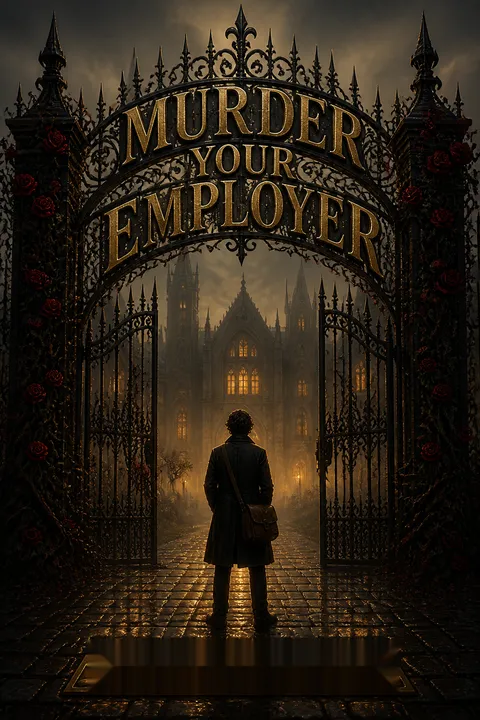
The book presents itself as a guide from McMasters Conservatory, a secretive school that teaches students how to kill people they believe have wronged them.
Its dean, Harbinger Harrow, frames the lessons through three classmates from the same graduating year: Cliff Iverson, an engineer who never meant to become a killer; Gemma Lindley, trapped by a blackmailer; and Dulcie Mown, whose Hollywood career has been strangled by her employer. Their stories test McMasters’ moral rules against grief, ambition, and the practical risks of murder.
The instructional frame makes the novel’s grotesque premise feel like an institution with a syllabus, admissions standards, and a public-relations department. Its comedy depends on that bureaucratic composure: murder is discussed as professional development, while the Four Enquiries give the school a language for distinguishing vengeance from self-interest. The frame also creates productive unease. Harrow’s polished assurance can sound humane one moment and monstrous the next, forcing readers to weigh the school’s ethics against its obvious complicity. The students’ individual stories then become case studies that expose what the institution’s tidy terminology cannot contain: grief, coercion, and the irreducible human cost of a deletion.
Cliff’s Subway Failure
After Woltan Industries fires Cliff Iverson, he disguises himself and follows his former supervisor Merrill Fiedler to a New York subway platform. Cliff wants to stop Fiedler’s cruelty and prevent a dangerous aircraft design from reaching passengers, but he also carries grief for Cora Deakins, a coworker whose death he connects to Fiedler, and Jacek Horvath, his murdered friend.
He shoves Fiedler toward an arriving train. Sergeant Carl Stedge pulls Fiedler clear, and Cliff’s clumsy disguise, fingerprints, and abandoned ticket stub lead Captain Jim Dobson to his hotel. The two former policemen reveal that they have watched the attempt and know why he did it. Rather than arrest him, they drug him and take him toward an unknown school.
Cliff’s first attempt is motivated by a moral argument, but the scene exposes how quickly conviction can be mixed with self-deception. He tries to make the train responsible for Fiedler’s death, even as he carefully engineers the encounter. His failure matters because it prevents the story from treating righteous anger as competence. Dobson and Stedge complicate the apparent law-versus-criminal divide: they recognize Fiedler’s harm and respond by recruiting Cliff into a system outside ordinary justice. The failed shove thus serves both as an inciting incident and a test of the novel’s central question, whether good intentions can remain good once a person begins arranging another’s death.
The School’s First Lesson
Dobson and Stedge deliver Cliff to McMasters, a hidden conservatory behind electrified fences and a convincing claim that it is a home for the criminally insane. At the gate, coded passwords and an obscured journey keep its location secret. Before Cliff can understand the place, an archery class stages a hunting accident around him, and a student named Cubby Terhune later serves him an ice pop made with ground glass.
Dean Harrow stops the attempt and scolds Cubby for targeting a stranger. In Harrow’s office, Cliff learns the school trains would-be murderers and that students who fail may be killed to protect the school. Harrow offers him a way home only if he abandons Fiedler. Cliff refuses, choosing to pursue his target.
The school’s welcome ritual strips away the comforting distinction between educational exercise and actual danger. Cliff is not simply told that McMasters is ruthless; he is made to experience its standards through an attempted poisoning and a simulated shooting. Yet Harrow’s intervention reveals that the institution has rules, including a prohibition against harming uninvolved people. Those rules do not make the school ethical in any conventional sense, but they give its violence a structure that Cliff can learn to inhabit. His refusal to go home establishes a point of no return: he chooses not only revenge, but a community that will teach him how to make it effective.
Cliff Tries to Escape
Still convinced McMasters is a prison, Cliff steals a cane and tricks the gatekeeper into opening the main entrance. He runs along the circular campus road until Cubby’s stalled ice cream truck appears. Cliff takes the truck, then accepts Cubby’s help when a motorcycle pursues them. They reach a hospital marked with signs in English and Chinese, where Cliff bursts into an operating room to seek outside help.
The surgeons are Harrow and other McMasters faculty conducting a lesson, while the hospital is one of the school’s realistic training sets. Stedge and Cubby catch up, and Cliff learns the road only circles the estate. That evening, Harrow feeds him and asks whether his murder is necessary. Cliff decides to stay and study.
Cliff’s escape attempt turns the conservatory’s secrecy into a physical trap, but the false hospital also introduces its more unsettling feature: the school can reproduce ordinary institutions as stages for murder. The sequence makes Cliff’s engineering intelligence useful before he has learned the curriculum, even as his improvisations repeatedly fail. His decision to stay is not a sudden conversion to McMasters’ philosophy. It is a practical and emotional choice: he recognizes that the school offers instruction, companionship, and a chance to stop Fiedler more effectively than he could alone. The meal Harrow provides matters because care and coercion now arrive together, making Cliff’s new belonging difficult to separate from his captivity.
Two Women Arrive
Before Cliff’s arrival, Gemma Lindley works at St. Ann’s Hospital, where Adele Underton steals credit for Gemma’s House Call program and discovers evidence that Gemma ended her suffering father’s life. Adele uses that secret to threaten Gemma’s job, freedom, and mother, so Gemma applies to McMasters for a way out.
In Hollywood, actress Doria Maye loses access to serious roles after studio head Leonid Kosta punishes her for an affair that bruised his pride. He tries to confine her to a humiliating voice role, while his receptionist directs her toward the conservatory.
Doria enters under the name Dulcie Mown, hides her celebrity identity, and studies how to reclaim control of her career. Both women arrive seeking leverage over powerful employers, though their temperaments and resources differ.
Gemma and Dulcie enter the story from opposite social positions, but each has been reduced to labor performed for someone else. Gemma’s idea is appropriated by a superior who can also weaponize her family’s grief. Dulcie’s fame has not protected her from Kosta’s control; in fact, her career gives him another instrument with which to punish her. Their enrollment therefore reframes murder as a response to asymmetrical power, not merely personal dislike. Yet the contrast matters: Gemma’s empathy makes decisive action difficult, while Dulcie’s practiced performance gives her tools for manipulation. Their parallel paths show that skill, status, and moral reluctance shape what kind of escape each woman can imagine.
Cliff Learns the Craft
Cliff’s first weeks at McMasters turn his technical education toward concealment, toxins, disguise, sport, and police procedure. His resident advisor Champo Nanda and a handful of classmates help him settle in, while Gemma remains guarded and fellow student Simeon Sampson openly treats him as unwanted competition.
Sampson rigs a record player so its swelling music masks a blow from beneath Cliff’s bed, embarrassing him in a classroom test. Cliff studies the device, then builds a second record whose looping song electrifies its tonearm when Sampson tries to correct it.
A grounding device limits the shock, but the trap proves Cliff can answer technical aggression with technical invention. He gains standing among students and a place at Harrow’s dinner table.
Cliff’s retaliation marks the shift from impulsive violence to disciplined invention. He does not become more brutal so much as more attentive: he reads the mechanism behind Sampson’s trick and uses its logic against him. That distinction gives his engineering background a moral and narrative function. In the world of McMasters, knowledge is not inherently virtuous, but it can be directed with restraint. Cliff’s grounded shock demonstrates a capacity Sampson lacks: he can defeat an opponent without making the worst possible harm inevitable. The campus respect that follows is also emotionally significant. After losing his job, his friend, and his hoped-for future, Cliff begins to belong somewhere again.
Fiedler’s Damage Comes Clear
Cliff’s account of life at Woltan clarifies why Fiedler became his target. Cliff designed much of the W-10 aircraft with Jack Horvath, while Cora Deakins, the inventory supervisor he hoped to date, became caught in Fiedler’s abuse.
Cora dies by suicide after Fiedler uses drugs and compromising photographs to control her. When Cliff and Jack discover that Fiedler’s cost-cutting changes route flight controls through a vulnerable cargo hatch, Fiedler plants classified documents in their cars and destroys their reputations.
Jack is later found shot in Ellwood Park, his death ruled a murder. Cliff sees the W-10’s flaw as a threat to future passengers, so his reason for stopping Fiedler grows beyond personal revenge into preventing a public disaster.
The reveal of Cora, Jack, and the W-10 turns Cliff’s motive from a private grievance into a layered moral claim. Fiedler’s power works through ordinary institutional mechanisms: he can control access, plant evidence, manipulate reputations, and make dangerous decisions appear commercially sensible. Cora’s death also prevents the novel from treating retaliation as clean compensation. Cliff cannot restore her life, and the thought that his own care might have mattered arrives too late to settle his grief. The plane’s defect gives his mission a future-facing purpose, but it also risks becoming an excuse for revenge. The tension between those motives keeps Cliff’s justification morally active rather than settled.
Three Theses Take Shape
At McMasters, Cliff develops a plan aimed at Fiedler’s vanity and appetite for easy money. Gemma proposes inviting Adele to the River Strid, a deceptively narrow stretch of the River Wharfe that has swallowed every known person who fell in. Her idea depends on making her blackmailer trust her enough to go hiking, a condition her instructors doubt.
Dulcie builds a different approach around Kosta’s fixation on women and his attachment to a character resembling the heroine of a novel he hopes to film. She learns to use disguise, staged intimacy, and an alibi that can place her elsewhere. Meanwhile, Jud Helkampf’s cold ambition and disregard for classmates make the school’s competitive culture dangerous even before any thesis begins.
The three plans reveal how McMasters translates personality into method. Cliff studies Fiedler’s vanity, Gemma relies on a relationship she does not trust, and Dulcie treats performance as a technology for shaping what others believe. These are not interchangeable murder plots; each exposes its executor’s psychology. Gemma’s strategy is fragile precisely because she hopes to make an adversary willingly approach her. Dulcie’s is more adaptable because it begins from the knowledge that appearances can be designed. Helkampf’s presence adds a warning: a school that rewards competence can also attract people who mistake domination for mastery. The plans therefore establish both the protagonists’ tools and the ethical cracks likely to widen under pressure.
The Ravine Takes Cliff
During McMasters’ overnight Track Meet, students draw one another as hunters and quarry. Cliff and Audrey Jäeger discover that their assigned slips appear to name each other, so they plan a harmless mutual-deletion claim.
Gemma, marked as someone’s quarry, hides at Castle Guy beyond a ravine. Cubby trades his assigned target with Jud Helkampf, inadvertently sending Helkampf after Gemma. When Jud begins choking her, Cliff crosses the ravine by gripping the gondola rope in Cubby’s jacket.
Jud burns through the rope, and Cliff falls onto a concealed crash pad below. Simeon, whose apparent student identity masks his role as staff, stops Jud and reveals that he has monitored Cliff. Cliff has passed his trial and is sent home to perform his thesis.
The Track Meet makes the school’s abstraction of murder suddenly bodily. Gemma’s danger is real even though the exercise is supposed to stop short of death, and Cliff responds before he can calculate whether the risk is acceptable. His fall exposes both his courage and the emotional bond he has begun to form with Gemma. Simeon’s reveal then reinterprets their rivalry as an assigned test, while Jud’s behavior demonstrates that some students cannot be trusted with the distinction between simulation and permission. The scene is a graduation in McMasters’ terms, but its emotional consequence is loss: Cliff leaves just as he has found a community and a person whose fate matters to him.
Cliff Builds a False Trail
Back in Baltimore, Cliff resumes his campaign by sending Fiedler apparently winning racetrack tickets under the name Amigo. He uses bets on every horse to guarantee occasional payouts, teaching Fiedler to expect easy money and return to the track.
Cliff also contacts Eddie Alderman, an executive at Woltan’s competitor AirCorp, and arranges to pass along evidence of the W-10’s dangerous design. AirCorp’s security chief photographs Fiedler at a staged newspaper drop, believing him to be the informant.
Cliff then creates a second exchange near a pier, using a decoy scuba diver to carry away a case while AirCorp watches. These moves give AirCorp evidence of the defect and place Fiedler near a suspicious transfer, while Cliff keeps his own identity concealed.
Cliff’s plan now combines two kinds of justice that do not naturally align. The aircraft information must reach someone capable of stopping production, while Fiedler must be made to appear responsible for selling secrets. Cliff solves this by exploiting what each observer already wants to believe: AirCorp sees a corporate whistleblower, and Fiedler sees a profitable scheme. His ingenuity is substantial, but so is the risk that he will turn safety concerns into a tool for framing. The episode extends his engineering ethic into social engineering. He designs not only an aircraft or a mechanism, but an entire chain of mistaken inferences, hoping the consequences will land on the person he considers responsible.
Gemma Opens the Safe
Back in Northumberland, Gemma returns to St. Ann’s and finds Adele still using the sealed letters in solicitor Old Riggins’ safe to control her. Gemma befriends Riggins’ secretary, Kaye Cookson, and learns that Riggins remembers his combination through a private joke about an element of luck.
Seeing the periodic table above the safe, Gemma converts the word into element symbols and their atomic numbers, then opens the lock. She replaces Adele’s accusation letters with comforting biblical clippings and reseals the envelope, removing Adele’s leverage without alerting her.
Gemma still hopes to lure Adele to the Strid, but Adele refuses any outing that does not serve her own ambitions. When Adele later announces she is pregnant, Gemma’s carefully chosen construction-site plan becomes an even more dangerous moral test.
The safe scene is a miniature of Gemma’s wider struggle: she can think clearly and act skillfully when the problem is technical, but the human consequences remain harder to control. The periodic table turns Riggins’ nostalgic joke into a key, allowing her to neutralize blackmail without harming anyone. Yet the relief is incomplete because removing one form of coercion does not make Adele trustworthy or make the proposed murder emotionally easy. Adele’s pregnancy will further complicate Gemma’s assessment of whom her actions could injure. The contrast between a lock that yields to a clever inference and a person who refuses to cooperate underscores the limits of treating social crises as puzzles with elegant solutions.
Dulcie Claims the Oscar
Dulcie returns to the studio and persuades Kosta to let her use her old bungalow while pretending to accept her demotion to a cartoon voice. She arranges for studio guard Finton Flood to believe she is having an affair with rising producer Laddie Graham, then feeds him forged authorization to conduct a secret stakeout.
This gives her a way to establish that she was posing in her bungalow at the time of Kosta’s murder. She also creates a hitchhiking persona modeled on the novel heroine Kosta wants to film, then accepts a ride to his coastal retreat.
Kosta, imagining he has discovered the perfect actress, brings her upstairs. Dulcie reveals herself and offers him one last chance to cast her fairly. When he rejects her with contempt, she strikes him dead with an Academy Award.
Dulcie’s performance does more than conceal identity: it forces Kosta to encounter the character he values while denying the person who created it. She uses the studio’s own machinery of image-making against its most powerful operator, turning casting, publicity, surveillance, and desire into components of a single plan. The Oscar is both a blunt instrument and a bitterly exact symbol, since Kosta has treated recognition as something he alone can distribute. But the killing is not simply a triumph of cleverness. Dulcie’s last appeal shows she still wants professional acknowledgment, and Kosta’s final contempt extinguishes that possibility. Her act is therefore simultaneously revenge, career defense, and a final refusal to remain his creation.
Gemma Takes the Blow
Unable to bring Adele to the Strid, Gemma improvises at the hospital construction site. She rigs cinder blocks above Adele’s convertible so they will fall when Gemma pulls back the car’s roof. She hopes the accident will look natural and kill Adele without requiring a direct attack.
In the parking lot, Adele reveals that she is pregnant and expects Gemma to keep doing her work during her leave. As the blocks fall, Gemma throws herself over Adele. The debris crushes Gemma instead, while Adele and her unborn child survive.
Gemma wakes in intensive care, believing McMasters will punish her for failing her thesis. Harrow and Father Pugh explain that her sacrifice protected innocent lives and offer her a position at the school rather than expulsion.
Gemma’s failure becomes the clearest enactment of the school’s ethical code because she acts before deliberation can turn the pregnant Adele into a target again. Her body answers the question of innocent harm more decisively than her carefully engineered plan could. The result does not erase her earlier intention, and the novel avoids pretending that one brave reflex resolves the coercion Adele imposed. Instead, it reveals a stable limit in Gemma: she can imagine violence as an answer, but cannot consistently treat another person as expendable. Harrow’s offer of a staff role recognizes that this limitation is not incompetence. It is a form of judgment McMasters needs, even if its institution rarely knows how to name it.
Fiedler Signs His Undoing
Cliff returns to Woltan disguised as a delivery worker and meets Fiedler in his private office. He has arranged for AirCorp to hold plans exposing the W-10 defect, and he presents Fiedler with a typed confession and a statement absolving Jack’s widow, Lilliana, of involvement.
Fiedler notices that a check Cliff used in his scheme came from his own account and threatens to implicate Lilliana. Cliff offers to trade his confession for Fiedler’s signature protecting her. After they exchange the documents, Cliff insists they drink to Cora and Jack.
He has poisoned the liqueur but also prepared an antidote, intending to let Fiedler decide whether to poison him. Fiedler adds what he believes is poison to Cliff’s drink. Cliff survives by having neutralized his own glass, while Fiedler dies from the actual toxin.
The climax turns on a psychological wager rather than a physical contest. Cliff builds a situation in which Fiedler can preserve himself only by accepting vulnerability, but Fiedler’s instinct is to regain control through betrayal. The carefully staged antidote makes that choice fatal, raising an uncomfortable question about whether Cliff has offered a genuine chance at redemption or merely designed one that Fiedler is unlikely to take. His insistence on protecting Lilliana complicates the plan further: compassion creates the weakness Fiedler exploits, but it also gives Cliff a reason not to become identical to his target. The final trap punishes Fiedler’s reflexive domination while leaving Cliff responsible for arranging the death.
A Murder Becomes Suicide
After Fiedler dies, Cliff uses the dead man’s fingerprints on the typewriter and other staged evidence to create a suicide letter confessing to gambling losses, the sale of W-10 plans, and responsibility for the aircraft defect.
The letter clears Jack Horvath and Cliff, while the design information already passed to AirCorp can warn others about the danger. Cliff then visits Lilliana and tells her Fiedler is dead and that Jack’s killer has also been punished, without naming the person.
Lilliana reveals that she secretly funded Cliff’s McMasters education with Jack’s insurance money, hoping he could avenge them. Cliff admits he cannot tell her the full truth. In a private letter to Harrow, he explains his belief that Jack arranged his own death to protect Lilliana’s insurance benefit.
Cliff’s final construction is not merely a cover-up; it is an attempt to make Fiedler’s own practices become the record that survives him. A false confession transforms the evidence of corporate sabotage into a public explanation of both the design flaw and the executive’s collapse. Yet the act also exposes how easily justice can be built from fabrication when institutions have already failed to hear the truth. Lilliana’s sponsorship completes the emotional circuit between Cliff and Jack, but it does not produce uncomplicated gratitude. Cliff must conceal the means of revenge from the person whose love made it possible. His theory about Jack’s suicide offers meaning, not certainty, preserving grief as unresolved rather than converting it into a neat mystery.
McMasters Becomes Home
Cliff’s thesis earns him a return to McMasters, though he initially has no idea what life beyond revenge should look like. Gemma accepts Harrow’s offer to become a counselor and assistant athletic trainer, and her mother Isabel joins the school’s kitchen staff.
At the campus welcome for new students, Gemma sees Cliff, whom she believed had died during the Track Meet. He is now a practical physics instructor and Hedge House adviser. Their reunion gives each a future not organized solely around a target: Gemma can teach the limits her own experience revealed, while Cliff can use his technical mind within the institution that reshaped him.
As the school greets its arrivals, Cliff finally understands his relationship to the place. What began as a coerced sentence has become the first community he has chosen to call home.
The ending resolves Cliff’s opening isolation by giving him a vocation and a community, but it does not restore the life he had before Fiedler. He returns to the school as an instructor, carrying both its skills and its compromises. Gemma’s role provides a counterweight to McMasters’ celebration of technique: her authority comes from knowing where a plan can fail because another person matters more than its completion. Isabel’s arrival makes the school feel less like an isolated machine and more like a chosen household. The reunion is emotionally earned because each character has faced a different limit. Cliff learns to belong without revenge as his only purpose, while Gemma turns compassion from a liability into a form of expertise.
Epilogue
In a postscript, Harrow celebrates the book’s publication as a way to share McMasters’ methods beyond the school, despite objections from the board. He announces that a bust of himself is being fired in the kiln and jokes about meeting the person who made him.
As he leaves for the ceremony, he begins considering further volumes for other kinds of targets. The final joke leaves the conservatory’s secrecy uncertain: Harrow has exposed enough to invite curiosity, while still treating the school’s dangerous work as a continuing enterprise.
The postscript turns the novel’s framing device into an ongoing threat and a final joke. Harrow’s willingness to publish the school’s principles suggests that he values institutional legacy as much as secrecy, even when colleagues warn that exposure could endanger graduates. His bust ceremony literalizes the book’s recurring concern with authorship: the dean wants to control the story of McMasters, but the sculptor and the kiln will transform his image without his direct command. His proposed future manuals also imply that the school’s appetite is not limited to employers. The ending therefore refuses moral closure. Cliff and Gemma have found a home, but the institution that trained them continues to reproduce its unsettling logic.
Analysis
Murder Your Employer takes the procedural language of professional training and applies it to an act that resists professional neutrality. McMasters classifies murder as a discipline, with lessons, grading, and quality standards, but the students’ lives keep reopening the human questions its euphemisms try to contain. Cliff’s engineering mind makes him unusually suited to planning, yet his motive depends on grief for Cora and Jack and fear for passengers endangered by the W-10. His story asks whether technical competence can serve justice when legitimate institutions protect the wrong person. The answer remains uneasy: Cliff exposes a real danger, but his solution relies on deception and a deliberately engineered death.
Gemma supplies the novel’s strongest counterargument to McMasters’ definition of success. She can decode a safe and invent a plausible accident, but when Adele’s pregnancy makes the consequences immediate, Gemma protects her instead. This is not a simple conversion to forgiveness. Adele remains coercive, and Gemma’s own history remains painful. Rather, Gemma’s failure shows that moral restraint can be an active judgment, not mere incapacity. The school’s decision to keep her as a counselor acknowledges that its students need someone who understands the limits of their own methods.
Dulcie’s path makes performance both weapon and identity. Hollywood has already taught her to inhabit roles, but Kosta controls which roles she may play and what they mean for her career. Her revenge uses the machinery of fantasy he values, then forces him to confront the actual woman behind it. Across the three plots, the book links institutions through a shared power to author people’s public identities: employers can discredit workers, studios can confine actresses, and schools can rename murder as deletion. Its comedy sharpens rather than cancels that critique. The polished jokes make the violence easier to hear, but the emotional aftermath insists it cannot be made harmless.
Review Summary
Murder Your Employer receives mixed reviews, with an average rating of 3.81 out of 5. Praised for its unique premise, dark humor, and clever writing, the novel follows students at a secret school learning to commit murder. Some readers found it engaging and entertaining, while others criticized its length, pacing, and convoluted plot. The characters and world-building were generally well-received, but some felt the story dragged in parts. Overall, many readers appreciated the originality and wit, despite its flaws.
People Also Read





Characters
Cliff Iverson
The engineer turned deletistAn orphan raised by an aunt and uncle, Cliff builds his life through academic ability, aircraft design, and a habit of thinking in systems. His care for coworkers makes him especially vulnerable to Fiedler’s abuse, and grief gradually convinces him that violence may be a public service as well as personal revenge. At McMasters, Cliff remains observant and technically inventive, but his choices are shaped by a conscience he cannot simply train away. He values friendship, responsibility, and protecting people he will never meet. His central tension is not whether he can learn to kill, but whether he can use McMasters’ methods without surrendering the humane instincts that first made him oppose his employer.
Gemma Lindley
The reluctant moral tacticianA capable hospital administrator from Northumberland, Gemma is practical, observant, and deeply attached to her family. She takes pride in useful work and is especially wounded when a superior claims her ideas as her own. A painful secret gives Adele leverage over her, but Gemma’s defining quality is not fear; it is her difficulty in treating human beings as disposable, even when they have harmed her. She is guarded with strangers and wary of romance, partly because her immediate concerns leave little room for trust. Her intelligence appears in patient observation and resourcefulness, while her compassion complicates every plan. Gemma’s perspective tests whether mercy can be understood as judgment rather than weakness.
Dulcie Mown
The actress in reinventionDulcie arrives at McMasters with unusual confidence in performance, image, and the ways people read one another. She is quick-witted, meticulous, and accustomed to being underestimated or desired for reasons she does not control. Her theatrical instincts help her shape a convincing persona, but beneath her polished manner lies a serious commitment to her work and a fear that someone else can erase her professional identity. Dulcie treats preparation as both craft and self-defense. She is socially nimble where Gemma is cautious, and her willingness to improvise makes her one of the school’s most adaptable students. Her story examines the gap between performing a role and possessing authority over one’s life.
Merrill Fiedler
The predatory executiveFiedler is a senior Woltan executive who treats authority as permission to control colleagues’ careers, private lives, and reputations. He is vain, opportunistic, and skilled at converting ordinary corporate procedures into weapons against people who know too much. Rather than relying on expertise, he protects his position by appropriating others’ work and making dissent look disloyal. His appetite for power extends into sexual coercion and deliberate endangerment, yet he thinks of himself as a successful man entitled to the privileges success brings. Fiedler matters because his harm is not exceptional in form: it travels through offices, contracts, and executive decisions, making personal cruelty inseparable from institutional power.
Dean Harbinger Harrow
The polished schoolmasterHarrow is the urbane dean of McMasters, a gifted teacher who presents the school’s lethal curriculum with warmth, wit, and unwavering composure. He believes students should learn a broad discipline rather than receive a single customized killing plan, and he treats the Four Enquiries as more than decorative rules. His mentorship can be genuinely attentive, particularly when a student’s conscience becomes a danger to their own survival. Yet Harrow’s care exists inside a system that threatens failed students and trains graduates to commit murder. His contradictions are central to the novel’s tone: he can recognize humanity with real precision while helping build an institution that puts it at risk.
Gemma’s mother, Isabel
Gemma’s steadfast anchorIsabel, affectionately known as Isa, is Gemma’s warm, practical mother and a skilled cook who works at a local factory canteen. She and Gemma share a close bond shaped by a modest, loving family life and the memory of Gemma’s father. Isabel is direct about grief and does not mistake suffering for proof that someone should endure more of it. Her steadiness gives Gemma a reason to fear Adele’s threats and a source of emotional grounding when she returns home.
Leonid Kosta
The studio’s controlling mogulKosta runs a Hollywood studio with the instincts of a showman and the entitlement of an owner who thinks talent belongs to him. He can recognize a promising role or performer, but he uses that discernment to reward obedience and punish perceived betrayal. His control over casting, contracts, and publicity makes his personal grudges professionally devastating. He sees affection and patronage as interchangeable with power, a confusion that shapes the pressure Dulcie faces.
Cora Deakins
The silenced coworkerCora is Woltan’s inventory supervisor, patient, perceptive, and more influential in daily operations than executives acknowledge. She and Cliff develop a tentative personal connection through their shared humor at work, but Fiedler’s power reaches into her private life. Cora’s story gives Cliff’s anger its most intimate source and makes the costs of workplace coercion impossible for him to treat as abstract.
Jacek Horvath
Cliff’s trusted mentorJacek, called Jack by colleagues, is an experienced propulsion engineer and Cliff’s close collaborator on the W-10. Older and steadier than Cliff, he functions as a mentor and surrogate family member, offering practical counsel as well as technical partnership. His marriage to Lilliana is affectionate and enduring. Jack’s professional integrity makes him a quiet counterexample to Fiedler’s self-serving leadership.
Lilliana Horvath
The grieving benefactorLilliana is Jack’s devoted wife, a thoughtful woman with a strong sense of loyalty and a clear-eyed understanding of what their life together has cost. She is quietly generous and does not measure care by how loudly it is expressed. Her grief is complicated by her effort to preserve Jack’s home and memory, while her practical concern for Cliff reflects the family bond they built with him.
Jim Dobson
The ex-cop recruiterDobson is a former New York police captain who brings a detective’s attention to detail and a dry, unsentimental manner to McMasters. He understands how ordinary evidence can expose a novice and how official authority can be corrupted. His sympathy for people harmed by powerful offenders leads him to guide students, though his methods place him outside conventional law.
Carl Stedge
Dobson’s blunt partnerStedge is Dobson’s former police sergeant, a physically imposing man whose practical instincts often temper his partner’s severity. He helps bring Cliff to McMasters and serves as a knowledgeable escort through its strange procedures. Stedge’s plainspoken manner makes the school’s dangers feel immediate rather than theoretical.
Cubby Terhune
The hapless inventorCubby is a well-meaning, underprepared student whose ingenuity often exceeds his judgment. His attempts to impress faculty lead to dangerous schemes, but his friendliness is sincere and his optimism persistent. He seeks belonging and approval, making him easy to exploit and unexpectedly capable of loyalty when another student offers him a chance.
Jud Helkampf
The ruthless competitorHelkampf is a gifted but disturbing student who treats McMasters’ competitive exercises as permission to dominate others. He seeks recognition and reacts badly when anyone threatens his standing. His apparent charm does little to hide a lack of empathy, and his presence tests whether the school’s rules can contain a person who values victory more than restraint.
Simeon Sampson
The polished rivalSampson is an articulate, confident student who views Cliff as an unfair competitor because Cliff arrived under unusual circumstances. He enjoys displaying his intelligence and initially uses the school’s exercises to unsettle him. Beneath the rivalry, he is observant and deeply familiar with McMasters’ standards, making him both a formidable classmate and a useful measure of Cliff’s progress.
Audrey Jäeger
The neighboring studentAudrey shares a bathroom wall with Cliff at Hedge House and first appears discouraged about her place at McMasters. She is emotionally transparent, which makes her easy to dismiss until her actions demonstrate how misleading first impressions can be. Her connection with Cliff grows from proximity into a practical trust shaped by their shared vulnerability.
Vesta Thripper
The applied intimacy tutorVesta is an advanced nurse practitioner and McMasters instructor who tailors lessons in seduction and intimacy to students’ particular problems. She combines clinical precision with an instinctive concern for emotional vulnerability. Her advice is practical rather than romantic, but she understands that desire, shame, and trust can be as consequential as poisons or weapons.
Father Pugh
The confessor without judgmentFather Pugh is McMasters’ inclusive chaplain, a priest who listens to students’ moral conflicts without pretending that his own past is spotless. He offers Gemma a confidential place to speak and helps translate the school’s rules into questions of conscience. His humor makes him approachable, while his religious role gives his work at the conservatory an intentional tension.
Alwyn Tarcott
The relentless coachTarcott leads McMasters’ physical training and treats sport as a practical education in timing, balance, and risk. His booming manner and intense exercises can make him seem comically single-minded, but he watches his students closely and recognizes their individual limits. He encourages Gemma’s physical skill and pushes Cliff toward the confidence his plans require.
Champo Nanda
The steady resident adviserChampo is Cliff’s resident adviser at Hedge House, a calm and helpful presence amid the school’s elaborate dangers. He offers practical guidance, observes student rivalries, and helps newcomers understand McMasters’ unwritten expectations. His steadiness gives Cliff an early foothold in the community.
Erma Daimler
The school’s hard accountantDaimler is McMasters’ assistant dean and chief financial officer. She approaches the conservatory as a business and regularly challenges Harrow’s more philosophical management. Her efficiency is formidable, but her arguments also expose the risks of turning an ethically dubious institution into a more profitable one.
Adele Underton
Gemma’s coercive supervisorAdele is a hospital administrator who takes credit for Gemma’s work and uses private knowledge to keep her subordinate compliant. She is socially adept, ambitious, and skilled at presenting self-interest as ordinary workplace necessity. Her dependence on Gemma’s labor reveals how coercion can be maintained through small daily demands as well as explicit threats.
Plot Devices
The Four Enquiries
A moral test before murderMcMasters asks students to consider whether a killing is necessary, whether the target has been given a chance to change, who innocent people might harmfully affect, and whether the world will improve as a result. The questions serve as a comic institutional checklist, but they also expose differences among the students. Cliff can justify his target through the danger to future passengers, Gemma struggles to separate self-protection from harm to her family, and Dulcie evaluates whether her career can survive Kosta’s control. The enquiries do not guarantee virtue. Instead, they make each character articulate the moral costs that a technical plan might otherwise conceal.
The McMasters Curriculum
Murder taught as a professionThe hidden conservatory teaches students a broad range of skills, including poisons, disguises, alibis, sports, forgery, police procedure, and practical science. Classes are staged in realistic sets, and ordinary campus activities can conceal a lesson or test. This device supplies the novel with its episodic comic structure while giving each protagonist tools that later matter to their personal plans. It also keeps the ethics unsettled: the faculty insists on rules and restraint, yet the school itself trains people to commit murder and threatens those who fail. McMasters makes competence possible without resolving whether its project is defensible.
The Track Meet
A live test of student judgmentAt the end of term, students draw one another as hunters or quarry and spend the night attempting to demonstrate a plausible deletion while avoiding one themselves. The exercise compresses the school’s coursework into an uncontrolled social trial. Cliff’s assigned slips, Cubby’s target trade, Gemma’s hiding place, and Helkampf’s refusal to respect the exercise’s limits turn it into a genuine crisis. The event tests more than technique: it reveals who can distinguish a simulated opportunity from permission to cause real harm. Its consequences determine which students are ready to leave campus and which relationships will matter after training ends.
Manufactured Alibis
Control what witnesses believeAcross the three student stories, disguises, staged encounters, misleading locations, and carefully planted evidence reshape what witnesses think they saw. Dulcie turns a false romantic scandal into proof of her whereabouts, while Cliff makes corporate observers interpret his actions as evidence against Fiedler. The device reflects the novel’s interest in performance, especially the gap between an event and its public account. An alibi is not simply a statement that a person was elsewhere; it is a designed explanation that others find easier to accept than the truth. The characters’ success depends on anticipating not only evidence, but the assumptions of the people who interpret it.
The False Confession
Turn corporate evidence against FiedlerCliff prepares a typed statement that appears to connect Fiedler to gambling debts, the transfer of W-10 plans, and the aircraft’s dangerous flaw. By using Fiedler’s fingerprints, a familiar office typewriter, and details already observed by AirCorp, Cliff makes the evidence point toward an executive whose decisions are genuinely culpable. The document is also designed to protect Lilliana from being implicated, reflecting Cliff’s effort to preserve a boundary even while he engineers a killing. This device joins the novel’s two justice tracks: the personal punishment of Fiedler and the public exposure of a design that could endanger passengers.
Download PDF
Download EPUB
.epub digital book format is ideal for reading ebooks on phones, tablets, and e-readers.








