

Key Takeaways
Treat repeated lapses as changes in function, not merely signs of age
Small changes mattered. Prem Jauhar was a celebrated wheat geneticist, yet after retirement he began losing his way on familiar drives, repeating stories, forgetting grandchildren, and mishandling money. At his first specialist visit, he scored 23 to 25 out of 30 on a cognitive test. The diagnosis was mild cognitive impairment, a level of decline beyond what would be expected for his age, but not necessarily dementia. His family initially hoped that retirement and a difficult move explained the changes. His worsening judgment and difficulty managing daily tasks showed why the pattern deserved attention.
Denial was shared. Prem insisted his memory was fine, but his son also made excuses for missed turns, unpaid bills, and other warning signs. The shift from ordinary forgetfulness to impaired independence was gradual, making it easy to minimize.
The episode makes diagnosis a family problem before it becomes a medical label. A forgotten lunch is weak evidence on its own; a cluster of new failures in navigation, finances, and familiar routines is more informative because it shows what daily life now requires. That distinction can help families discuss changes without treating every lapse as disease. It also matters that Prem resisted the diagnosis and that his son hesitated to accept it. Self-report and family observation can diverge, so concrete examples are more useful than arguments over whether someone is simply getting old.
Separate memory for facts from memory for skills
The brain keeps different records. Henry Molaison, known in research as H.M., developed profound difficulty making new memories after surgeons removed parts of his medial temporal lobes, including both hippocampi, to treat severe seizures. He could hold information briefly and converse, but new events soon vanished. Yet he improved at tracing a star while seeing it in a mirror, despite not remembering having practiced. His case showed that conscious memories of facts and events differ from procedural memory, the learned ability to perform actions.
Skills can survive forgetting. The hippocampus helps form explicit, or reportable, memories. Other brain systems support procedural skills. This distinction helps explain why people with dementia may still respond to music, walking, dancing, or familiar routines even when they cannot recall recent conversations.
H.M.'s case is powerful because it separates memory from intelligence and from learned action. It suggests a practical shift for caregivers: when verbal recall fails, connection need not end. Music or a familiar physical activity may reach abilities that a memory quiz cannot. The distinction also cautions against treating a person as wholly absent simply because episodic memory has weakened. Still, preserved skill is not proof of intact understanding or consent. Activities should be adapted to the person's comfort, rather than used to claim that the disease has spared more than it has.
Expect overlapping brain damage and modest treatment, not one simple cause
The pathology is not a single switch. Alois Alzheimer examined the brain of Auguste Deter, a woman who developed severe memory and language problems in middle age. He identified abnormal deposits, now associated with beta-amyloid plaques, and twisted fibers inside neurons, now associated with tau tangles. These findings became central to the disease's history, but the account also describes vascular injury and inflammation as contributors. Prem's later MRI showed changes consistent with both vascular damage and loss around the hippocampus, suggesting mixed dementia.
Available treatments were limited. Drugs such as Aricept and Exelon could offer modest symptomatic help, but they did not stop the disease. Anti-amyloid treatment remained controversial, and clearing plaques had not produced reliably confirmed clinical benefit. The author emphasizes that diagnosis often follows years of underlying brain damage.
The science here resists the appealing idea that one visible abnormality must explain the whole illness. A biomarker can identify a biological process without telling a family what the patient can still do, how quickly decline will proceed, or whether a treatment improves lived experience. That distinction is crucial in medicine, where measurable targets can become substitutes for meaningful outcomes. The account's caution is especially useful amid claims of breakthroughs. It does not make research futile; it argues for judging therapies by their effects on people, not only by changes visible in a scan.
Plan eldercare before crisis, because family devotion cannot replace public support
Care became a second job. After Prem and his wife, Raj, moved to Long Island, their children divided tasks: medication, groceries, household problems, and help with bathing and dressing. They joined an estimated 15 million unpaid family caregivers in the United States. The book cites research finding that the busiest half spend nearly 30 hours a week providing care. As needs grew, the family cycled through aides, struggled with safety and finances, and debated assisted living.
The system left families exposed. Medicare generally did not pay for the ongoing custodial help Raj needed with daily activities. Private care could cost thousands of dollars each month, while long-term care insurance was uncommon or unaffordable for many. The Jauhars could draw on savings and pensions, but still faced difficult choices about home care, institutional care, and how to preserve their parents' independence.
The family drama sits inside a policy design that treats medical treatment as a public concern but much daily care as a private responsibility. That boundary makes family affection carry an economic burden, and the burden falls unevenly on relatives with available time, money, or proximity. The Jauhars' resources do not erase the strain; they show how quickly even a well-resourced family can be overwhelmed. Advance planning cannot guarantee a humane system, but it can make preferences, finances, and practical limits visible before exhaustion turns every decision into an emergency.
Protect social connection, which may buffer the effects of brain disease
Isolation can deepen vulnerability. After Raj died, Prem became more socially isolated, and his cognitive decline continued. The book describes a study of 823 older adults in which those reporting the most loneliness had about twice the risk of developing Alzheimer's as those with the strongest social support. It also discusses a separate study of 257 cognitively unimpaired people with high amyloid levels: widowed participants experienced faster cognitive decline over three years than comparable participants who had not lost a spouse.
Brain damage is not the whole story. The author uses psychosocial reserve to describe the support that relationships and surroundings may provide. Social contact does not erase plaques or replace medical care, but isolation, grief, and chronic stress can affect how well a person functions amid neurological damage.
These findings complicate a purely biological account: the same brain pathology can be accompanied by different levels of disability, depending partly on a person's social environment. Relationships may support routine, emotional regulation, and engagement, giving practical value to connection even when memory cannot be restored. The evidence must be read carefully, however. An association between loneliness and dementia does not prove that social contact prevents disease, and illness itself can make people lonely. The strongest implication is not that families can cure dementia by visiting more, but that isolation is a risk worth taking seriously.
Keep personhood larger than cognition and family labels
A diagnosis can shrink someone socially. The author describes how he and his siblings sometimes spoke about Prem as though he were absent, assuming that his illness made his words and feelings irrelevant. Tom Kitwood called this kind of depersonalizing response malignant social psychology. It can arise through neglect or through everyday habits, such as treating a person's sadness as a symptom rather than a reasonable response to disability and loss.
Identity also lives between people. Philosophers such as Locke and Hume connected personal identity to memory and psychological continuity. But Prem did not need to remember each Sunday lunch at House of Dosas to know that Sandeep was the person who took him there. Their relationship persisted even as the shared details became inaccessible. Personhood was not located in a test score alone.
The section challenges a common mistake in cognitive culture: making independence, rational speech, and reliable memory the price of being treated as fully present. Relationships offer a different account of identity. A person can be held in others' habits, commitments, and recognition, even when self-description becomes impossible. That does not mean families should romanticize decline or ignore distress. It means that care should distinguish impaired capacity from absent feeling, and that the caregiver's interpretation can either preserve or narrow the patient's place in the world.
Enter the patient's reality without casually sacrificing trust
Care settings shape experience. At The Hogeweyk, a Dutch dementia village, residents lived in small households arranged around familiar lifestyles, with places to eat, shop, and gather. Its model used reminiscence therapy, shaping surroundings around habits and memories that might remain meaningful. The founder also defended therapeutic deception: rather than repeatedly confronting a resident who believed a relative would visit, caregivers might validate the feeling and redirect the conversation.
Truth created a real conflict. Sandeep worried that lying would deepen Prem's paranoia and weaken their relationship. But as Prem's memory and insight deteriorated, Sandeep eventually accepted some reassurance that was not literally true. The choice was not between perfect honesty and easy deceit. It was a practical judgment about distress, dignity, trust, and what the person could understand in that moment.
This dilemma is better approached as a question of purpose and proportionality than as a universal rule. Correcting every mistaken belief can turn care into repeated confrontation; inventing a new fiction can also undermine trust or conceal important information. A useful distinction is between joining an existing emotional reality and introducing a false story to control someone. The first may reduce needless distress, while the second risks manipulation. The section's strength is that it leaves the caregiver responsible for the moral cost instead of presenting therapeutic deception as either harmless kindness or automatic betrayal.
Let present comfort and past wishes both shape end-of-life care
An old directive met a changed life. In 2004, Prem and Raj had written that they did not want extraordinary measures to prolong life without meaning. Near the end of Prem's illness, he became bedbound and could no longer eat. His children disagreed about whether to continue intravenous fluids, investigate possible infections, or focus on comfort. His son Sandeep saw a father who had enjoyed a dosa days earlier; his brother saw the man who had clearly rejected burdensome treatment.
The decision was not clean. After hospice care began, the family removed the IV and used medication to ease distress. Prem died four days later. The uncertainty remained: what did his earlier wishes mean for the person he had become, and how could the family know whether continued life or a peaceful death best reflected his values?
Advance directives preserve autonomy across a period when a person may lose the ability to speak for himself, but they cannot script every future circumstance. The tension is between honoring a prior self and taking seriously the comfort and preferences observable in the present. Neither source of evidence is complete. This account shows why end-of-life decisions are not merely technical applications of a form: they require interpretation, family trust, and attention to burdens as well as survival. The family's disagreement does not prove that one side cared more; it reveals how much moral uncertainty remains.
Preserve the person through shared stories, while remembering memory itself changes
Remembering was part of caregiving. Sandeep often reminded others that his father had written books, earned scientific honors, and created scholarships for students with limited means. Those facts resisted the temptation to let dementia become the whole story. Yet memory is not a perfect recording. The book explains that recollection is reconstructed, shaped by both correspondence with what happened and coherence with what a person believes now.
The final image makes that idea personal. As Prem died, Sandeep remembered learning to ride a bicycle as a child. In this version of the memory, his father ran beside him to prevent a fall, though Sandeep doubted that it happened exactly that way. He chose to keep the image. The memory was not evidence for a disputed event so much as a way to carry forward their relationship.
The closing scene refuses two easy conclusions: that memory is a factual archive, or that an altered memory is therefore worthless. Recollection can be inaccurate in detail and still express a durable emotional truth about how a relationship is understood. This is especially resonant in a family affected by dementia, where one person's memories disappear while others inherit the work of remembering. The caution is that cherished stories should not be confused with verified history. Their value lies in what they help people hold, not in making every remembered detail indisputable.
Analysis
The book's deepest subject is not Alzheimer's pathology alone, but the changing distribution of knowledge and responsibility inside a family. Prem once knew his own work, choices, and history; as that authority weakened, his children became interpreters of his finances, behavior, medical needs, and wishes. Their medical expertise gave them vocabulary, not certainty. A cognitive test could register decline, but it could not answer whether a father still wanted to live, whether his anger was illness or character, or whether a comforting lie was compassionate.
That uncertainty is intensified by the family structure around him. The children inherit expectations shaped by an Indian ideal of filial care, while living in a system that largely privatizes long-term support. They want Prem to remain independent, yet independence increasingly requires paid labor and constant supervision. Their conflicts over aides, assisted living, and hospice are therefore not simply personality clashes. They are negotiations among competing duties under conditions of limited time, emotional fatigue, and inadequate public provision.
The memoir also exposes a quiet danger in medical explanation. Naming damaged memory, insight, or impulse control can replace blame with understanding, but diagnostic language can also reduce a person to deficits. Sandeep's changing response to his father makes that risk visible. Knowledge sometimes brings empathy; at other times it makes him impatient, because he expects explanation to produce control. The book's most humane argument is that personhood does not depend entirely on a patient's ability to narrate himself. It persists through affection, habit, bodily skill, and other people's recognition.
The ending does not resolve the moral questions. It gives them a human scale: a son deciding what to remember, a family deciding when treatment becomes burden, and a dying man whose present pleasures cannot be measured by his former ambitions. The result is a memoir that treats care not as a heroic solution, but as sustained interpretation under loss.
Review Summary
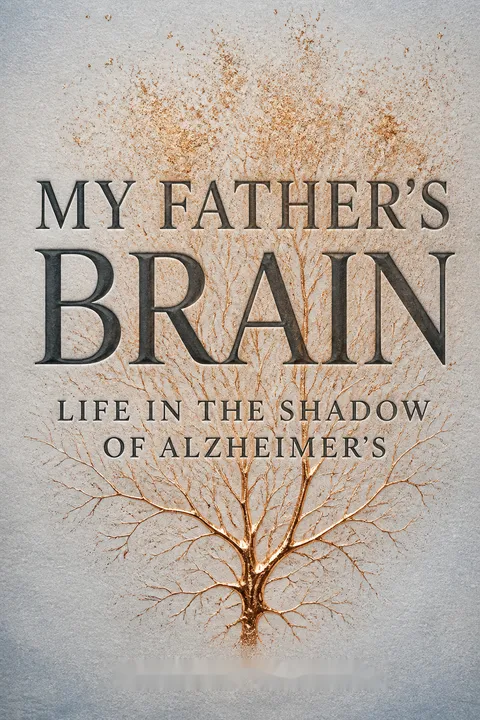
My Father's Brain is a poignant memoir chronicling Dr. Sandeep Jauhar's experience caring for his father with Alzheimer's. Readers found it honest, informative, and relatable, praising Jauhar's blend of personal narrative and medical insights. Many appreciated his candid portrayal of family dynamics and caregiver challenges. While some criticized his approach to his father's care, most found the book deeply moving and valuable for those facing similar situations. Overall, it's regarded as a powerful, well-written account of dementia's impact on families.
People Also Read









Glossary
Mild cognitive impairment (MCI)
Measurable decline short of dementiaMild cognitive impairment describes cognitive functioning that is worse than expected for a person's age but not necessarily severe enough to meet the definition of dementia. A person may still manage most daily life, while needing help with complex tasks such as driving or finances. Some people with MCI develop dementia, but the course cannot be reliably predicted.
Anterograde amnesia
Inability to form new memoriesAnterograde amnesia is a major difficulty forming lasting memories after an injury or other change to the brain. Henry Molaison developed it after surgery removed important medial temporal structures, including the hippocampi. He could hold information briefly and converse, but new events generally disappeared from his memory soon after they occurred.
Long-term potentiation
Strengthened neural connectionsLong-term potentiation is a lasting increase in the strength of communication between neurons after repeated or coordinated activity. Donald Hebb proposed that experiences become associated as connected groups of neurons repeatedly activate together. The book presents this idea as a basis for understanding how repeated neural activity can help establish durable memories.
Cognitive reserve
Capacity to withstand brain damageCognitive reserve refers to the brain's ability to maintain function despite damage or disease. The book associates it with factors such as education, prior intelligence, and social connection. People with similar amounts of visible brain pathology can show different levels of impairment, suggesting that brain changes alone do not fully determine how dementia appears in daily life.
Psychosocial reserve
Support that sustains functioningPsychosocial reserve describes the possible contribution of relationships, surroundings, and family support to how well a person functions despite brain damage. The author uses it to emphasize that social conditions may shape the visible effects of dementia, alongside cognitive reserve and neuropathology. It is not a cure for brain disease, but a way to recognize the role of a person's social world.
Anosognosia
Impaired awareness of one's conditionAnosognosia is a neurological impairment in awareness of one's own illness or disability. In dementia, a person may recognize a problem in one area but not another, or may lack awareness of the extent of decline. The condition is associated with damage to brain networks involved in self-monitoring and error correction, and is not simply stubbornness or denial.
Malignant social psychology
Social behavior that diminishes personhoodMalignant social psychology is Tom Kitwood's term for interactions and environments that undermine the personhood of someone with dementia. It includes neglect, exclusion, or treating a person's feelings and words as irrelevant because of the diagnosis. The concept shifts attention from brain impairment alone to the ways other people can intensify a patient's isolation or loss of dignity.
Reminiscence therapy
Care shaped around familiar lifeReminiscence therapy uses a person's history, habits, and familiar surroundings to support identity and engagement in dementia care. At The Hogeweyk, residents were placed in households arranged around lifestyles they might recognize from earlier life. The aim was to create a more familiar daily environment, not to restore lost memories or reverse the disease.
Reminiscence bump
Strong recall from young adulthoodThe reminiscence bump is the tendency to retain a disproportionate number of autobiographical memories from roughly ages ten to thirty. The book notes that events from these years may remain important to people with dementia, even as more recent memories fade. Care settings can draw on this pattern when selecting music, routines, and surroundings that feel familiar.
Validation therapy
Responding to feelings, not correcting errorsValidation therapy is an approach to dementia care that responds to the patient's perspective rather than repeatedly correcting beliefs that conflict with reality. It may involve acknowledging an emotion or redirecting attention without arguing over facts. In the book, this approach is weighed against truthfulness and trust, since reassurance can reduce distress but deception can also damage a relationship.
Hypercognitive world
Culture that prizes mental performanceA hypercognitive world is a society that treats intellect, reason, and productivity as central measures of human value. The book uses the term to describe why people with dementia can become socially invisible as their cognitive abilities decline. The idea draws attention to cultural attitudes, not only to the individual's neurological condition.
Download PDF
Download EPUB
.epub digital book format is ideal for reading ebooks on phones, tablets, and e-readers.








