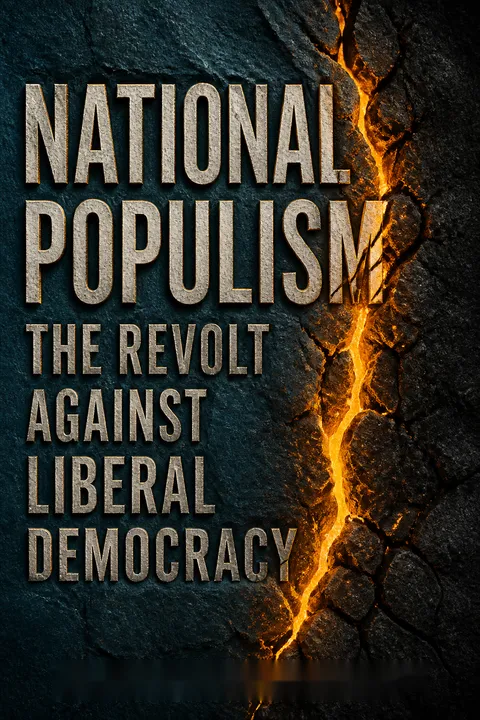


Key Takeaways
Stop explaining populism with one voter, one grievance, or one election
The electorate was varied. The book challenges the picture of national populists as simply poor, elderly, white, or angry about the 2008 financial crisis. During the 2016 US primaries, the median household income of a Trump voter was about $72,000, above the $61,000 median for Clinton and Sanders supporters and the $56,000 national average. Brexit also attracted voters across income groups, ages, and ethnic backgrounds. One in three British voters from ethnic-minority communities supported leaving the EU.
Different groups converged. Trump drew traditional Republicans, affluent free-market conservatives, voters anxious about cultural change, and previously disengaged citizens. Brexit united prosperous Eurosceptics, socially conservative workers, and people experiencing financial hardship. Their motives differed, but distrust of elites and concern about national change created common ground.
The coalition lens is more useful than a stereotype because it separates a movement’s shared political appeal from the very different lives of its supporters. It also guards against a familiar analytical mistake: assuming that income alone explains a vote. Still, broad coalitions can conceal conflicts. A prosperous voter who dislikes EU integration may want something quite different from an insecure worker who wants economic protection. Treating either as representative of the whole can mislead parties, researchers, and the public about what a movement would actually do in power.
National populism joins popular sovereignty to a nation-first politics
A political idea, not just a style. Eatwell and Goodwin define national populism as politics that prioritizes the nation’s culture and interests while promising to represent people who feel dismissed by distant elites. Populism itself is a “thin” ideology: it pits ordinary people against unresponsive elites, but needs other beliefs to supply a fuller political programme. The national version adds an emphasis on national identity, sovereignty, and control of borders.
Different from fascism. The authors distinguish national populists from fascists, who sought an ethnically unified nation, rule by a commanding leader, and an authoritarian state that replaced liberal democracy. Most national-populist voters, they argue, want more public influence, not the abolition of elections. That distinction does not make every populist leader harmless: attacks on courts, media, or minority rights remain serious warning signs.
Careful political labels help distinguish movements that use democratic elections from movements that seek to abolish democratic competition. But a label is not a safety certificate. Institutions can be weakened through legal changes and repeated attacks without a leader openly calling for dictatorship. The useful test is therefore not only what a movement says it wants, but whether it accepts losing elections, independent scrutiny, and equal political rights for opponents. This keeps the distinction from fascism analytically meaningful without turning it into an excuse for ignoring authoritarian conduct.
The Four Ds turn scattered grievances into durable political demand
Four forces reinforce each other. The authors call their long-term explanation the Four Ds. Distrust is the belief that politicians and institutions do not represent ordinary people. Destruction is fear that rapid cultural and demographic change threatens national identity and established ways of life. Deprivation is the sense that one’s group is falling behind others, even when one is not poor. De-alignment is the weakening attachment between voters and traditional parties.
More than one cause. These pressures interact. Economic change can intensify status anxiety, which can sharpen fears about immigration, while political distrust makes established parties seem unable or unwilling to respond. The resulting “pool of potential” includes people receptive to national-populist promises, not a single bloc guaranteed to vote alike. The authors argue that these currents predate the 2008 crisis and are unlikely to disappear with a return to economic growth.
The Four Ds work best as a systems map, not as four rival explanations. They show how material insecurity, group identity, institutional credibility, and party competition can amplify one another. That is a stronger model than asking whether economics or culture matters more. Its limit is that it describes the conditions for support more clearly than the moment a particular leader converts them into votes. Campaign skill, media structures, electoral rules, and political events still shape which grievances become politically decisive.
A demand for more democracy can still endanger liberal safeguards
Democracy has two faces. Liberal democracy combines elections with limits on government, legal protections, and rights for individuals and minorities. A more direct conception emphasizes the people’s authority to decide policy themselves, including through referendums. The authors argue that many national-populist voters support democracy but feel that its representative institutions have become remote and elite-led.
The EU illustrates the gap. European integration often advanced through complex decisions made by political leaders and officials, with limited public involvement. Public resistance became visible in referendums on European treaties and, ultimately, Brexit. Surveys cited in the book found substantial support for voting directly on major national questions. Yet majority votes can also threaten minority protections or produce hard-to-reverse decisions. The challenge is to increase public influence without dismantling the rights and checks that make democracy liberal.
This distinction clarifies why citizens can be attached to democracy while frustrated with how it operates. Voice is not merely a communications problem: it concerns who sets the agenda, whose knowledge counts, and whether decisions feel reversible and accountable. More participation can help, especially when deliberation gives people time and balanced information. But referendums alone do not guarantee informed or inclusive decisions. Institutional design matters: a direct vote can widen participation, while a well-designed process can also protect minorities and make trade-offs visible.
Take identity anxiety seriously without mistaking perception for proof
Change can feel threatening. The book calls rapid, large-scale demographic shifts “hyper ethnic change.” It argues that some voters fear not only competition for jobs or services, but also the loss of shared customs, national identity, and social stability. In the United States, the foreign-born share of the population rose from below 5 percent in 1970 to over 13 percent in 2015. In Boston, England, the share of residents born abroad rose fivefold between 2001 and 2011; three-quarters of the town voted for Brexit.
Perception and reality differ. The authors distinguish racism, which they define as belief in a hierarchy of races, from xenophobia, or fear of what is perceived as foreign and threatening. They stress that lower immigration does not automatically eliminate anxiety: some countries with relatively few immigrants still have strong national-populist movements. Fear can be politically real without every claim behind it being factually sound.
The distinction between a genuine feeling and a verified claim is essential. Ignoring anxiety can deepen alienation, while treating anxiety as proof can turn a perception of threat into a rationale for exclusion. Social identity offers a useful lens: people often assess change through what it means for the standing and continuity of their group. That lens also demands precision. Muslim communities, for example, are not interchangeable with Islamist extremists, and local change does not by itself establish that a group is being displaced or harmed.
Track economic loss through status, security, and comparisons
Insecurity is not only poverty. The book uses “relative deprivation” for the feeling that one’s own group is losing ground compared with others. It connects that feeling to neoliberal economic change: weaker worker protections, insecure jobs, automation, global competition, and rising inequality. In the United States, the share of national income going to the top 1 percent rose from below 8 percent in 1973 to nearly 19 percent in 2012. The authors argue that voters can feel left behind even when employed or earning average incomes.
Status links economics and culture. The concern is also about respect, belonging, and the prospects of children. People may interpret uneven rewards as evidence that elites favor the wealthy or newcomers over established citizens. This helps explain why economic warnings alone, such as forecasts of household losses after Brexit, did not necessarily change minds. For some voters, control and recognition mattered more than a narrow calculation of personal income.
Status helps explain why aggregate prosperity can coexist with political resentment. People compare not only paychecks, but also security, respect, and their children’s prospects. That makes relative deprivation a bridge between economic structure and cultural grievance rather than a substitute for either. A caution is needed: perceptions of unfairness may reflect real inequality, mistaken beliefs about who receives benefits, or both. Policy responses need evidence about actual distribution, while political communication needs to address the recognition and insecurity that headline growth figures cannot resolve.
Education and party drift make whole electorates politically available
Education marks a political divide. The authors argue that college experience often encourages cultural liberalism, while people without degrees are more likely to value tradition, order, and group continuity. This is a broad pattern, not a measure of intelligence or political competence. In Britain, 74 percent of voters without educational qualifications supported Brexit, and age alone did not explain the divide: among under-thirty-fours, degree-holders were much more likely to back Remain than peers without degrees.
Old loyalties weakened. De-alignment made voters more willing to switch parties or stop voting. In Britain, the share strongly attached to a major party fell from about half in the 1960s to one in eight by 2015. When the Brexit referendum offered a clear choice, some previous non-voters returned to participate. Social-democratic parties were especially exposed because they increasingly relied on both liberal professionals and socially conservative workers whose views on immigration and Europe diverged.
Education can shape political outlook through social experience, networks, and exposure to different norms, not simply through the acquisition of information. Yet the category “non-graduate” groups together people with very different skills, jobs, and beliefs. It should not become a polite replacement for the stereotype of the ignorant voter. Party systems also matter: when a traditional party cannot represent opposing constituencies, voters may defect, abstain, or support a new movement. Representation requires understanding those choices, not assuming that education predicts a person’s entire worldview.
Populists can reshape policy even after their vote collapses
Influence exceeds election results. The authors call the mainstream adoption of national-populist positions “national-populist-lite.” In Britain, UKIP won nearly 13 percent of the vote but only two parliamentary seats in 2015. Its pressure, combined with Euroscepticism inside the Conservative Party, helped lead David Cameron to call the Brexit referendum. After the vote, Conservative leaders adopted stronger language on leaving the EU and reducing immigration.
The shift crossed borders. The book also describes centre-right leaders in France, the Netherlands, and Austria adopting tougher positions on immigration, national identity, or Islam to attract voters. A study of more than 500 party manifestos across 17 democracies found that mainstream parties had moved toward more restrictive and authoritarian positions on issues including immigration and law and order. A populist movement can therefore lose votes after its demands have entered mainstream policy.
This is a useful correction to the habit of measuring influence only by seats won. A challenger can change the agenda, make once-marginal positions mainstream, and alter what other parties consider electorally necessary. But imitation has costs. Mainstream parties may validate a movement’s framing without resolving the underlying problem, while weakening trust among voters who see the shift as opportunistic. The policy outcome also matters: adopting tougher rhetoric is not equivalent to improving representation, managing migration effectively, or protecting equal rights.
Judge populism by delivery, representation, and limits on power
The next test is practical. The book uses “post-populism” for an emerging period in which voters can judge whether populist governments have made a tangible difference. Its 2018 questions include whether Trump would create secure jobs and tighter border controls, and whether Brexit would reduce immigration or improve conditions in places that felt neglected. Such tests matter, but the authors caution that supporters are not simply transactional voters weighing income gains against losses.
Values and institutions count. Voters may care about national sovereignty, community, and having a say even if the economic result disappoints them. Populists can also shape politics without governing: UKIP’s electoral decline followed the Brexit referendum victory and a mainstream commitment to carry it out. Evaluation therefore needs to ask both whether promises were delivered and whether democratic checks, minority rights, and political accountability remain intact.
This evaluation avoids two easy stories: that disappointed voters must return to the center, or that any electoral success proves a movement has delivered. Political allegiance can express identity and recognition as well as policy preference. A careful assessment should separate symbolic victories from material outcomes, and ask who benefits from each. It should also track institutional effects. A government can satisfy some demands while eroding protections that matter to other citizens, so democratic performance cannot be reduced to popularity or economic growth alone.
Analysis
The book’s central achievement is to make national populism intelligible without reducing it to either economic pain or cultural hostility. Its Four Ds connect institutional distrust, perceived group threat, relative status loss, and weakening party loyalties into a plausible account of why a movement can recruit affluent conservatives, insecure workers, and people who had stopped voting. The framework also explains why a temporary recovery or a change of leader may not restore old political alignments.
Its distinction between national populism and fascism is analytically useful, particularly because accusations of fascism can blur differences in goals and organization. But the distinction must remain provisional. A movement can enter through elections while attacking the institutions that preserve open competition. The book acknowledges illiberal conduct, yet its emphasis on voters’ legitimate concerns sometimes risks softening the consequences of policies that exclude minorities or weaken independent institutions. Understanding a grievance does not settle whether a proposed remedy is just. The evidence also needs careful handling. The text ranges across countries, elections, and surveys, but much of the material records associations or voter perceptions. These can establish that identity, education, inequality, and distrust travel together; they cannot always show which factor caused a vote, or how much a campaign changed it. The demographic forecasts and political expectations reflect the book’s 2018 vantage point and should not be mistaken for timeless predictions.
The most durable insight is therefore methodological: treat populism as both a demand from citizens and a response shaped by political institutions. Ask who feels unheard, what change they fear, how economic status enters that fear, and which parties have abandoned their old constituencies. Then judge proposed remedies separately from the grievances that make them appealing. That approach takes voters seriously without treating any movement’s account of reality as self-validating.
Review Summary
National Populism: The Revolt Against Liberal Democracy receives mixed reviews. Many praise its data-driven analysis of populist movements, explaining their rise through economic, cultural, and political factors. Critics argue it's too sympathetic to populist views and downplays racism. The book challenges liberal assumptions, suggesting populism isn't a passing phase. Readers appreciate its insights into voter motivations but question some conclusions. Overall, it's seen as a thought-provoking, if controversial, examination of contemporary political trends, particularly useful for understanding populist appeal beyond simplistic explanations.
People Also Read







Glossary
National populism
Nation-first popular politicsA political outlook that prioritizes the culture and interests of the nation and promises to represent people who feel neglected or held in contempt by distant elites. In the book, it combines populist appeals to popular authority and ordinary people with a strong emphasis on national identity, sovereignty, and limits on immigration.
Four Ds
Four roots of revoltThe authors’ framework for the long-term pressures behind national populism: distrust of political institutions, fears of cultural or national destruction, relative deprivation, and de-alignment from traditional parties. The framework treats these forces as connected rather than competing explanations, and argues that together they create a large pool of potential support.
Relative deprivation
Perceived loss against othersA sense that oneself or one’s wider group is losing ground compared with other people, even without poverty or unemployment. In the book, this includes material concerns as well as status, respect, security, and expectations for the future. It helps explain how economic change can become linked to cultural anxieties and political anger.
Hyper ethnic change
Rapid demographic transformationThe book’s term for large-scale, fast-moving changes in the ethnic composition of societies, often associated with immigration and lower birth rates in established populations. The authors argue that such change can intensify fears about national identity and social continuity. They distinguish the political force of those fears from whether specific claims about demographic threat are accurate.
De-alignment
Weakening party attachmentsThe decline of durable ties between citizens and established political parties. As people become less loyal to traditional parties, they are more likely to switch votes, support new movements, or withdraw from elections. The book treats de-alignment as a long-term change that makes political systems more fragmented, volatile, and open to populist challengers.
National-populist-lite
Mainstream adoption of populist positionsThe authors’ label for established parties adopting parts of the national-populist agenda, especially tougher positions on immigration, national identity, or sovereignty. This can occur even when the populist party itself loses electoral support. The concept captures indirect influence: challengers may change mainstream policy and rhetoric without taking power.
Post-populism
Testing populist promisesThe authors’ term for a period in which citizens can assess whether populist politics has produced meaningful change. The test includes concrete promises, such as secure work or greater control over immigration, but also concerns values and political voice. It asks whether supporters value the wider shift in priorities even when specific policy outcomes disappoint.
FAQ
What is National Populism: The Revolt Against Liberal Democracy by Roger Eatwell about?
- Explores rise of national populism: The book analyzes the emergence and persistence of national populist movements in Western democracies, especially in Europe and the US.
- Focus on long-term trends: Eatwell and co-author Matt Goodwin argue that national populism is rooted in decades-long societal changes, not just recent events.
- Identifies core drivers: The authors introduce the ‘Four Ds’—distrust, destruction, deprivation, and de-alignment—as the main forces behind national populism.
- Challenges stereotypes: The book provides a nuanced, research-based understanding of who supports national populism and why.
Why should I read National Populism by Roger Eatwell?
- Nuanced perspective: The book moves beyond simplistic explanations, offering a balanced analysis of national populism’s causes and supporters.
- Debunks common myths: It challenges stereotypes, such as the idea that national populism is only about racism or economic hardship.
- Contextualizes political upheavals: Readers gain insight into events like Brexit and Trump’s election by understanding the deeper forces at play.
- Essential for political understanding: The book is valuable for anyone seeking to grasp the challenges facing liberal democracies today.
What are the key takeaways from National Populism by Roger Eatwell?
- Complexity of national populism: The movement cannot be reduced to single causes or stereotypes; it reflects intertwined cultural, economic, and political anxieties.
- Four Ds framework: Distrust, destruction, deprivation, and de-alignment are essential to understanding the movement’s rise and persistence.
- Distinct from extremism: National populism is not the same as fascism or far-right extremism, operating largely within democratic systems.
- Need for engagement: Dismissing or misdiagnosing national populism risks deepening polarization; understanding supporters’ concerns is crucial for democratic renewal.
What are the ‘Four Ds’ in National Populism by Roger Eatwell and why are they important?
- Distrust: Many citizens feel alienated from political elites and institutions, believing their voices are ignored.
- Destruction: Rapid immigration and ethnic change are perceived as threats to national identity and culture, fueling cultural anxiety.
- Deprivation: Feelings of relative economic loss and inequality, even among those not in poverty, motivate support for populist alternatives.
- De-alignment: Weakening of traditional party loyalties creates political volatility and opens space for new movements like national populism.
How does Roger Eatwell’s National Populism differentiate national populism from fascism and the far right?
- Populism as ‘thin ideology’: National populism focuses on giving voice to ‘ordinary people’ against elites, distinct from fascism’s totalitarian and racist ideology.
- Fascism’s unique features: Fascism seeks a ‘holistic nation’ and authoritarian leadership, which national populists do not advocate.
- Far right distinctions: The book separates ‘extreme right’ (anti-democratic) from ‘radical right’ (critical but democratic), placing most national populists in the latter.
- Terminology matters: Eatwell prefers ‘national populism’ to avoid conflating it with fascism or extremism.
Who supports national populism according to National Populism by Roger Eatwell?
- Diverse coalition: Supporters include working-class voters, middle-class conservatives, skilled workers, some minorities, and younger voters.
- Educational divide: National populism appeals more to those without college degrees, often with socially conservative values.
- Not just economic losers: Many supporters are economically stable; cultural concerns and relative deprivation are key motivators.
- Shared concerns: Core worries include distrust of elites, immigration, ethnic change, and a desire for more direct democracy.
What myths about national populism does Roger Eatwell challenge in National Populism?
- Not just economic desperation: Many supporters are not poor or unemployed but feel relatively deprived.
- Beyond ‘angry old white men’: Significant support comes from younger voters and ethnic minorities.
- Not just protest votes: Supporters actively endorse national populist policies and values, not just reacting to crises.
- Long-term roots: National populism is driven by decades-long trends, not just recent events like the 2008 crash.
How does National Populism by Roger Eatwell explain the role of immigration and ethnic change in fueling national populism?
- Central concern: Immigration and rapid ethnic change are key drivers, provoking fears about cultural and demographic destruction.
- Legitimate anxieties: Many concerns reflect real worries about national identity, integration, and social cohesion, not just racism.
- Demographic shifts: Ongoing changes, such as declining birth rates in the West and population growth elsewhere, intensify anxieties.
- Security and cohesion: Immigration concerns are often linked to fears about terrorism and social disorder.
What economic factors does Roger Eatwell identify in National Populism as contributing to the rise of national populism?
- Impact of neoliberalism: Policies like deregulation and globalization have led to slower growth and rising inequality.
- Relative deprivation: Many feel left behind economically, even if not in absolute poverty, fueling discontent.
- Economic-cultural interplay: Economic worries are intertwined with cultural concerns, especially regarding immigration and globalization.
- Populist promises: National populists pledge to prioritize domestic workers and challenge economic elites.
How does National Populism by Roger Eatwell describe the changing political landscape and voter behavior in the West?
- De-alignment from parties: Voter loyalty to mainstream parties has declined, increasing electoral volatility.
- New political divides: Cultural conflicts over immigration and identity now rival traditional economic cleavages.
- Rise of new movements: National populist parties gain traction by appealing to disaffected voters.
- Mainstream influence: Even established parties adopt ‘populist-lite’ positions in response to these shifts.
How does Roger Eatwell’s National Populism address the relationship between national populism and democracy?
- Not anti-democratic: National populists generally support democracy but criticize liberal democracy’s elitism.
- Direct vs. liberal democracy: Populists favor more participatory forms, like referendums, over representative systems.
- Distrust drives reform demands: Rising distrust in institutions fuels calls for more direct citizen input.
- Potential for democratic renewal: The authors suggest reforms to increase citizen engagement could address populist grievances.
What future trends and challenges related to national populism does Roger Eatwell discuss in National Populism?
- Long-term presence: National populism is likely to remain influential for years, not just a passing phase.
- Demographic and economic shifts: Ongoing changes in ethnicity, religion, and economic security will continue to fuel tensions.
- Political volatility: Traditional party systems will remain unstable, with populists and ‘populist-lite’ parties shaping policy agendas.
- Generational complexity: While younger generations are more liberal, significant numbers also support populists, complicating predictions.
Pelican Books Series Series



Download PDF
Download EPUB
.epub digital book format is ideal for reading ebooks on phones, tablets, and e-readers.








