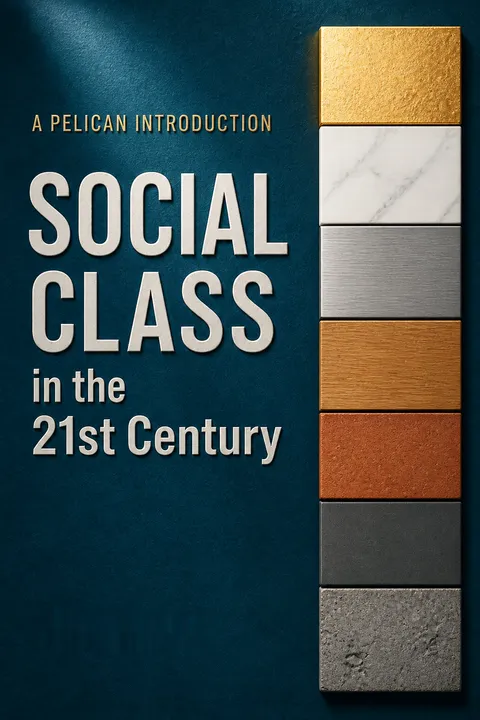


Key Takeaways
A class survey revealed who feels entitled to answer one
The sample told a story. The BBC’s Great British Class Survey drew 161,000 responses in its first wave, and seven million people tried its online class calculator within a week. But it was not a representative portrait of Britain. Chief executives were twenty times more likely to respond than expected, while cleaners and some other basic service workers were absent. Affluent, educated people were especially engaged, and the survey also underrepresented ethnic minorities and some regions.
The researchers widened the lens. They used a separate, nationally representative survey of 1,026 people and conducted fifty interviews, including with people unlikely to complete the web questionnaire. The initial response pattern mattered in its own right: participation in research, like access to other resources, reflects social position.
The survey’s bias is not merely a technical flaw to correct. It reveals how research participation depends on time, trust, education, and a sense that the questions apply to you. That is a useful reminder for any public-facing study: a large sample can still be systematically unrepresentative. At the same time, the response pattern cannot by itself prove why particular groups stayed away. The authors’ combination of a benchmark survey and interviews strengthens the interpretation, while leaving the original web results best suited to exploring patterns, not estimating how common they are across Britain.
Measure class by accumulated advantage, not just by someone's job
A job is only a snapshot. Earlier British classifications emphasized occupational rank and the distinction between manual and non-manual work. Mike Savage and his coauthors argue that these schemes miss how advantage accumulates through time and inheritance. A lottery winner may suddenly have money, but that windfall alone does not make a durable class position. Investing it in property or a business can turn a temporary gain into an enduring resource.
History travels with people. Drawing on Pierre Bourdieu, the authors treat class as accumulated resources that shape future chances. This shifts attention from what someone earns today to what they own, what advantages they can draw on, and what can be passed to the next generation. It also explains why a high salary and lasting security are not the same thing.
The distinction between a flow of income and a stock of assets is central to understanding why two people with similar pay can have very different security. It also connects class analysis to life-course research, which tracks how early conditions compound over decades rather than treating each moment as a fresh start. The framework is powerful, but it should not make occupation seem irrelevant: jobs still shape earnings, status, and exposure to insecurity. The gain is not replacing one measure with another, but recognizing that work and accumulated resources interact.
Track money, cultural confidence, and contacts as separate forms of advantage
Three kinds of capital matter. Economic capital means income, savings, property, and other wealth. Cultural capital refers to tastes, knowledge, and the confidence to navigate institutions and claim that one’s judgments count. Social capital means networks that can provide information, introductions, or practical help. The authors argue that class forms when these resources build up and reinforce one another, though they do not always align.
The mismatches are revealing. Some people have money but limited networks or cultural engagement; others, especially younger service workers, have social and cultural resources without much economic security. In interviews, an upwardly mobile consultant described feeling out of place in elite work settings where casual talk about holidays, schools, and culture helped build professional relationships. Formal qualifications alone did not erase that distance.
Separating these resources helps explain why formal access does not always translate into equal participation. A person may be qualified for a role yet lack the informal confidence or contacts that make advancement easier. This resembles the distinction in organizational research between having a credential and knowing how to use unwritten rules. The framework also avoids reducing culture to expensive hobbies: confidence, ease, and institutional fluency can matter as much as specific tastes. A caution is that cultural judgments can reproduce the hierarchy they claim merely to describe, so measures of taste should not be mistaken for measures of human worth.
Britain’s middle is a patchwork; the elite and precariat stand apart
Seven groups replaced a simple ladder. Using measures of all three capitals, the researchers identified seven classes: the elite, established middle class, technical middle class, new affluent workers, traditional working class, emerging service workers, and precariat. The model describes patterns in the data, not seven sealed communities. Its most pronounced separation is at the ends: the elite made up about 6 percent of the population, while the precariat accounted for about 15 percent.
The middle contains uneven mixes. The elite scored highly across income, savings, property, cultural participation, and high-status contacts. The precariat had few resources across these measures and often faced insecure work and rented housing. In between, groups combined capitals differently. Emerging service workers, for example, tended to be younger and culturally engaged, but had less economic capital than established professionals.
The model’s strongest contribution is not the precise count of classes but its depiction of an uneven middle. A multidimensional map can reveal differences that a single occupational scale hides, including the gap between cultural engagement and financial security. Yet categories built from selected indicators are analytical tools, not natural species. Change the questions or sampling method and some middle groups may shift. The authors acknowledge this limitation, and it strengthens rather than weakens the key insight: the middle is less coherent than the extremes, where advantages and disadvantages tend to accumulate together.
Merit rewards effort, but inherited starting points shape the summit
Mobility depends on where the climb begins. In the representative survey, 51 percent of the elite had parents in senior managerial or traditional professional jobs, while only 11 percent came from the lowest occupational backgrounds. At the other end, 65 percent of the precariat had parents in routine or semi-routine work. The pattern does not mean that people never move between classes; it shows that reaching the most advantaged positions is much harder than moving into the broad middle.
The rules can look fair and still compound advantage. Competitive jobs reward credentials and performance, but some candidates also bring financial support, influential contacts, and familiarity with elite settings. The authors compare this to climbing from different starting camps. Their point is not that achievement is fake, but that identical effort does not begin from identical conditions.
This argument clarifies why equal rules do not necessarily produce equal chances. Competition can amplify small initial differences when one side has better preparation, more time, and a safety net against failure. The mountain image makes the mechanism intuitive without denying individual agency. Still, the evidence should not be read as a direct causal test of each advantage: parental background and later outcomes are associated, but the survey cannot isolate every pathway. The practical implication is to examine access to preparation and support, not merely whether a final selection process appears formally open.
A degree opens doors, but the university name changes which ones
Graduation is not the whole credential. The elite were the most likely class to have degrees, and graduates were about five times as likely as non-graduates to be in the elite. Yet only around three in twenty graduates belonged to that class. Entry depended not only on attending university, but also on which institution a person attended.
Institutions carry unequal returns. Graduates of Oxford, Cambridge, and prominent London universities were disproportionately represented in the elite. In one comparison, more than half of Cambridge graduates in the survey were classified as elite, against roughly one-eighth of Anglia Ruskin graduates. These figures come from a strongly self-selected survey, so they should not be treated as population rates. The broader pattern is that expanding higher education did not remove the hierarchy among universities or the unequal routes into prestigious careers.
When university attendance becomes common, institutional distinctions can become more consequential: the degree is shared, but access to networks, recruitment channels, and prestige is not. This is a familiar form of positional competition, in which the value of a qualification depends partly on how it compares with others’ qualifications. The book makes that hierarchy visible, though its web-survey data overrepresents advantaged graduates and cannot establish the exact size of each institution’s effect. The central policy question is therefore not simply how many people reach higher education, but how opportunity is distributed among institutions and after graduation.
London concentrates class advantage, while inequality also divides every city
The capital draws resources inward. In 2011, London’s gross value added per person was nearly seven times that of its closest urban comparator, Greater Manchester. The concentration is not only economic. London and the south-east also held disproportionate shares of high-status social networks and established cultural institutions. The authors describe the contemporary elite as fundamentally urban, with central London acting as a major hub.
The map is not simply north versus south. Every major city contains sharp internal differences. Greater Manchester had the highest measured concentration of elite respondents, with 82 percent living in just one quarter of its built-up area’s postal sectors. Elsewhere, city centres and gentrifying neighbourhoods attracted affluent groups, while other residents faced rising costs and displacement. Regional stereotypes can obscure these divides within places as well as the resources concentrated around London.
Geography makes class tangible: housing costs, commutes, services, and proximity to influential institutions turn abstract inequality into daily constraints. The focus on neighbourhoods also complicates the familiar national map of a prosperous south and struggling north. But spatial concentration is not automatically evidence that every resident experiences a place in the same way. A city can contain elite enclaves, working-class communities, and extensive social ties across them. The authors’ maps are most useful when treated as evidence of uneven access and power, not as a complete portrait of local identity.
Class persists through stigma and judgment, even when people reject its labels
People often refuse the category. In the nationally representative survey, only 32 percent said they thought of themselves as belonging to a social class. Yet many still identified class boundaries through accent, housing, taste, and encounters with people unlike themselves. The authors call attention to a newer, less explicit snobbery: people may praise openness while judging others as undiscerning, vulgar, or irresponsible.
The bottom is both visible and unheard. Poor respondents understood how surveys and cultural rankings could label them, and sometimes used humor to resist those judgments. Their absence from the online survey did not mean they lacked interests or insight. The book argues that precarious work, low resources, and stigma can make the precariat difficult to see on its own terms. Its political conclusion is that class analysis should expose accumulated advantage and challenge the classifications that turn poverty into personal blame.
The gap between rejecting class labels and recognizing class distinctions is not simply hypocrisy. It reflects a real tension between democratic ideals of equal worth and everyday systems that rank people through taste, speech, and credentials. Social psychology offers a useful parallel: people can oppose explicit prejudice while continuing to rely on implicit cues. The authors’ account also cautions against treating survey categories as neutral. Still, naming groups risks fixing the very stigma it seeks to challenge. Classification is most constructive when it makes unequal structures visible without turning people into stereotypes.
Analysis
The book’s central move is to shift class analysis from occupational labels to the accumulation and interaction of resources. That move is valuable because it explains how people with similar jobs can have sharply different security, confidence, and access to influence. It also makes the top and bottom more visible without pretending that the middle forms a tidy block. The account’s narrative strength comes from placing survey patterns beside interviews: the figures describe unequal distributions, while personal stories show how those inequalities are denied, endured, or translated into judgments about taste and deservingness.
The evidence requires careful handling. The Great British Class Survey was self-selected and disproportionately attracted affluent, educated respondents. The authors counter this with a representative survey and interviews, but the seven-class model remains dependent on the variables and methods used. It should be read as an illuminating map, not a definitive census of natural groups. Nor can cross-sectional associations by themselves establish how much any one form of capital causes later advantage. The book is strongest when it identifies mutually reinforcing mechanisms and shows how institutions and places help sustain them.
Its political challenge is more ambitious than a call to widen access to elite education. If competition rewards people who already possess money, cultural fluency, and contacts, expanding formal opportunity can leave the underlying distribution intact. The authors therefore ask readers to question both extreme accumulation and the moral narratives that blame people at the bottom. This is a useful corrective to explanations focused only on either individual effort or a narrow super-rich minority. The enduring lesson is to examine how advantages compound, who gets to define legitimate knowledge and taste, and whose experience disappears when society is measured.
Review Summary
Social Class in the 21st Century is praised for its accessible analysis of contemporary British class structure. Readers appreciate its use of survey data to redefine class categories beyond traditional working/middle/upper divisions. The book's exploration of cultural capital and emerging class markers resonates with many. Some criticize its focus on obvious conclusions or lack of depth in certain areas. Overall, it's viewed as a thought-provoking introduction to modern class dynamics, though primarily focused on the UK context.
People Also Read









Glossary
Economic capital
Income and accumulated wealthThe financial resources that affect a person’s security and future options. In this book, economic capital includes income as well as accumulated assets such as savings, pensions, and housing wealth. It can build over time and pass between generations, so a person’s salary alone does not capture their economic position.
Cultural capital
Socially valued cultural resourcesKnowledge, tastes, credentials, and ways of engaging with culture that are treated as legitimate or valuable in particular settings. Cultural capital can help people succeed in education, navigate institutions, and speak with confidence. It is not simply a list of refined hobbies: the ease and authority with which people use cultural knowledge also matter.
Social capital
Resources available through networksThe advantages people can access through relationships and social networks. Contacts may provide useful information, introductions, or opportunities, including through acquaintances who are not close friends. The book emphasizes that networks are not entirely closed, but people with greater economic resources and more advantaged backgrounds are more likely to have contacts in influential occupations.
Emerging cultural capital
Knowing engagement with contemporary cultureA form of cultural advantage associated especially with contemporary and popular culture, including digital media, sport, and current music. Its value does not come simply from liking popular activities. It involves displaying informed, flexible, and often ironic judgment about them, and knowing how to discuss and combine cultural choices in socially valued ways.
Precariat
People facing structural insecurityA social group marked by low levels of economic, cultural, and social resources, alongside insecure work and limited protection. The book uses the term to emphasize structural vulnerability rather than suggesting that poverty results from personal failure. It contrasts this language with labels such as underclass, which have often carried stigmatizing claims about the character of poor people.
Great British Class Survey
Large BBC-led class studyA BBC-hosted online survey asking about income, savings, housing, cultural activities, and social contacts. Its first wave attracted 161,000 responses, but participation was heavily skewed toward affluent and educated people. Researchers supplemented it with a separate representative survey and qualitative interviews, using the combined evidence to investigate contemporary class patterns.
Latent class analysis
Method for identifying data clustersA statistical method used to identify groups that share patterns across several measured characteristics. The authors applied it to measures of economic, cultural, and social capital in the Great British Class Survey to produce a seven-class model. The resulting groups depend on the chosen measures and sample, so they are analytical categories rather than fixed natural kinds.
Misrecognition
Advantage hidden as ordinaryA process through which social advantages are not recognized as advantages, but appear natural, deserved, or freely given. In the book’s account, inherited cultural fluency can be mistaken for individual merit, and benefits passed through friendship can seem unrelated to social position. This obscurity helps unequal resources operate without being openly identified as privilege.
Pelican Books Series Series


Download PDF
Download EPUB
.epub digital book format is ideal for reading ebooks on phones, tablets, and e-readers.








