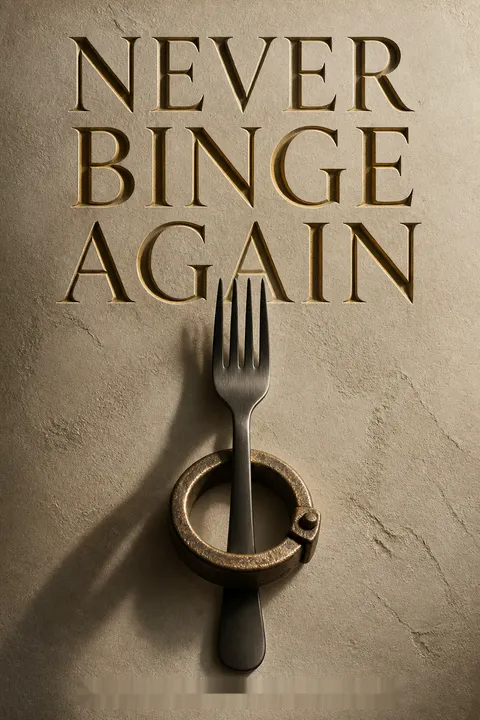


Key Takeaways
Name the craving as an impulse, not your whole identity
A mental separation. Glenn Livingston presents himself as a formerly obese psychologist who spent years struggling with food. His proposed tool is to picture the urge-driven voice as a separate character, the Pig, rather than treating every craving as a considered personal desire. Thoughts that argue for breaking a food commitment become Pig Squeals, signals to notice and set aside rather than debate.
A tool, not a diagnosis. The Pig is a metaphor, not a literal entity or a proven neurological explanation. The point is to create distance between an urge and an action. The author recommends responding briefly, then turning attention elsewhere, instead of letting inner argument dominate the day.
This resembles cognitive defusion, a technique used in acceptance-based therapies: a thought can be noticed as a mental event without being obeyed. That distinction may loosen the link between craving and action. The metaphor is memorable, but its contemptuous framing carries a risk. Treating part of the self as disgusting or criminal could intensify shame for some readers, especially those with a history of disordered eating. A less adversarial label may preserve the useful distance while supporting self-respect.
Choose a nourishing food plan, then take ownership of following it
Your plan, your decisions. The book does not prescribe one diet. It asks readers to use their best judgment, informed by trusted medical or nutrition professionals, and decide what they will eat, when, and under what conditions. Livingston argues that outsourcing the plan entirely to a guru or clinician can leave a person feeling that someone else is responsible for making it work.
Make it workable. The plan should be written down clearly enough that a reader can tell whether a choice fits it. The author calls for full personal responsibility, but also says the plan should be nutritionally sound and livable. His central promise is not a specific body size or menu; it is greater consistency with choices a person has deliberately made.
Personal ownership can strengthen follow-through because decisions feel connected to the chooser's own priorities, not merely imposed rules. Yet responsibility should not be confused with blame. Food access, disability, medication, income, culture, and illness can shape what choices are realistically available. A genuinely owned plan can include professional guidance and practical support. The most useful interpretation is agency within real constraints, not the claim that every difficulty reflects a failure of character.
Replace fuzzy food rules with boundaries you can recognize
Four kinds of rule. The author organizes a Food Plan around foods or behaviors to exclude, practices to do consistently, choices allowed freely, and foods permitted only under clearly stated conditions. For example, someone might specify that a particular snack is allowed only at a certain event, rather than relying on a vague promise to eat it moderately. The details depend on the person, not on a universal diet.
Remove loopholes. Livingston argues that unclear limits make it easier to reinterpret a rule in the moment. He recommends keeping conditions simple and moving a repeatedly troublesome food into the excluded category if no workable boundary holds. The purpose of precision is to reduce on-the-spot bargaining, not to make the plan severe. The book stresses that enough food and nutritional adequacy must remain built in.
Pre-deciding can reduce decision fatigue: a person does less negotiating when a tempting situation arrives. This is related to implementation intentions, plans that specify in advance how to respond in a particular context. But precision is not automatically wisdom. A rule can be perfectly clear and still be medically unsuitable, culturally isolating, or excessively restrictive. The quality test is not simply whether a boundary is unambiguous, but whether it supports health, flexibility where needed, and a sustainable life.
Meet bodily needs without treating every craving as an emergency
Separate need from reward. The book distinguishes the discomfort of wanting food from the intense pleasure of eating highly rewarding foods. It advises maintaining regular, healthy meals, staying hydrated, and keeping warm, since hunger, thirst, and cold can make urges harder to manage. Its aim is to address real physical needs without assuming that a particular treat is the only remedy.
Discomfort can pass. Livingston argues that a craving does not have to be eliminated before a person can follow a plan. He suggests allowing some discomfort while redirecting attention, rather than using food for an immediate high that may fuel further eating. This is not a reason to ignore hunger, illness, or persistent distress. The book's own plan is meant to include sufficient nourishment, not deprivation.
The distinction between a bodily need and a learned reward-seeking urge is useful because both can feel compelling while calling for different responses. Research across behavior science supports the broader idea that cues and rewards can reinforce habits, although the book does not establish that every craving is merely an addictive impulse. Hunger can reflect under-eating, medical conditions, or medication effects. A practical approach pairs urge-management skills with attention to the body's signals and professional care when symptoms persist.
Treat a lapse as a signal to assess, not permission to escalate
Stop the cascade. In the book, a Binge is defined unusually broadly as any eating outside one's written Food Plan, even a small deviation. Livingston warns against the familiar response of deciding that one lapse has ruined everything, then eating more and postponing a return to the plan. He calls this the F It Squeal. A mistake, he argues, does not make the next choice inevitable.
Review, then resume. After a lapse, identify what happened. Was a rule unclear, was the plan unsuitable, or did an urge go unnoticed? If the plan itself needs revision, consider changes carefully. If not, return to it without prolonged self-punishment. The author says guilt is useful only insofar as it prompts reflection and correction, not as a sentence that must be served.
The anti-spiral message is one of the book's most practical contributions: a single deviation need not become a longer episode. It also echoes relapse-prevention approaches that treat setbacks as information about triggers and coping strategies. However, defining any departure from a personal plan as a binge may blur important distinctions. In clinical usage, binge-eating has specific features, including loss of control, and is not simply eating something outside a self-imposed rule. Language should clarify experience, not inflate it.
Revise your food rules deliberately, not during a craving
Change through reflection. Livingston recognizes a tension: a person needs a firm commitment, but a plan can still be wrong or become outdated. He proposes saving dated copies, writing out the reason for a proposed change, and waiting rather than making an urgent exception in the middle of an urge. After a lapse, he advises first considering whether the plan failed or whether the person simply missed the impulse behind the choice.
Keep a workable system. The book compares plan changes to amending laws: preserve the existing structure while considering a revision, rather than creating a gap where no rule applies. If a conditional rule repeatedly proves difficult, the author suggests considering a different boundary. The broader lesson is to distinguish genuine learning from a momentary wish for permission.
A cooling-off period can help separate short-term reward seeking from considered judgment, much as delayed decisions can reduce impulsive choices in financial or organizational settings. Keeping earlier versions also makes experiments easier to evaluate instead of relying on memory. Still, the legal analogy should not make food rules sacred. Bodies change, evidence changes, and a plan that causes harm deserves prompt attention. Reflection is valuable, but it should not become a barrier to responding to medical needs.
Count what a food choice costs, not only what it promises
Two kinds of loss. Drawing on an idea he attributes to Geneen Roth, Livingston asks readers to consider both what they give up by avoiding a food and what they give up by continuing to eat it. A treat may offer taste and convenience, while a person may value energy, confidence, health, or other experiences more. The choice is a trade-off, not proof that pleasure is wrong.
The hiking story. The author describes taking junk food on hikes because he believed it was part of the experience. On one trip, he packed greens, berries, tea, and seeds instead. He says the walk felt calmer and more engaging, and that he realized he had never experienced the hike without the food he craved. The example invites testing assumptions rather than assuming restriction means only loss.
This is a form of opportunity-cost thinking: a choice has both the benefit it delivers and the alternatives it displaces. The hiking anecdote makes that abstract idea vivid by showing how a familiar pleasure can crowd out attention to an experience. But the story is personal evidence, not proof that avoiding processed food reliably produces calm or health gains. The useful move is to compare outcomes honestly, without turning one person's experiment into a prescription for everyone.
Recognize how marketing and social habits shape what feels normal
Food choices have a setting. Livingston argues that cravings are reinforced by social rituals, family expectations, and a marketplace built to sell appealing food. He recounts a conversation with an executive at a meal-bar company: according to the story, removing vitamins improved taste, while packaging was made to look especially nutritious. The example illustrates how a health-oriented image can distract from the product's other qualities.
Choose with open eyes. The author urges readers to decide what belongs in their plan rather than letting packaging, peers, or tradition decide for them. He also advises keeping personal food rules private when discussion would invite pressure, and respecting other people's choices. His broader claim is that opting out can create social friction, so anticipating that pressure makes it easier to respond without turning meals into arguments.
The section usefully moves the problem beyond individual willpower. Marketing, availability, and shared rituals influence what people notice and choose, a point consistent with research on choice architecture. The packaging anecdote is striking but should not stand in for evidence about the whole food industry. Nor does privacy need to mean isolation: supportive relationships can make behavior change easier. Readers can protect their autonomy while still seeking community and asking specific, informed questions about products.
Keep food from becoming the main measure of your progress
Do not live by the counter. Livingston discourages tracking how many days have passed since a lapse, arguing that it keeps attention fixed on food and makes a slip feel like the loss of an identity or achievement. He also rejects the idea that a person must fully explain childhood experiences or emotional triggers before changing eating behavior. In his view, reflection may help, but it is not a prerequisite for making a practical choice.
Responsibility without punishment. The book challenges the sense that eating episodes happen in a literal state of unconsciousness, encouraging readers to notice decisions and learn from them. That emphasis on awareness is paired with a call to release guilt after correction. The book is not a substitute for treatment, however; persistent loss of control, distress, or restrictive eating merits assessment by a qualified professional.
A life organized around streaks can make a single setback feel disproportionately consequential, while a broader sense of identity may support recovery. The book is also right that insight and action need not be sequenced rigidly: practical changes can begin before every cause is understood. Its insistence on control, though, may fit poorly for people experiencing severe binge-eating, trauma, or compulsive symptoms. Personal agency and clinical support are compatible, not rival explanations.
Analysis
Never Binge Again is a prescriptive self-help book built around a single organizing metaphor. It asks readers to treat the urge-driven voice as an adversary, establish personally chosen rules, and stop negotiating with impulses that challenge those rules. Its strongest practical ideas are more modest than its promise of permanent control: make intentions explicit, anticipate rationalizations, interrupt the all-or-nothing response to a lapse, and revise decisions when calm. The author's hiking story gives the method a human center. He describes discovering that a familiar food ritual had shaped his experience of an activity he loved, then finding value in trying it differently.
The method also contains a productive tension. Livingston wants rules to be absolute enough that cravings cannot bargain them away, while recognizing that rules must change when they prove unsound. His proposed distinction between commitment and revision addresses this tension, but risks treating ordinary flexibility as weakness. The metaphor of a hostile inner creature may help some readers create distance from impulses. For others, its language of contempt, domination, and purity could reinforce shame or rigid eating. The metaphor works best as a temporary way to observe an urge, not as a claim that part of the self deserves punishment.
The book's claims about addiction, free will, and the absence of a disease process are argued forcefully but not demonstrated by the anecdotes and reasoning presented here. Its idiosyncratic definition of a binge, any deviation from an individual's plan, is also not equivalent to clinical definitions of binge-eating. A clear plan can support consistency, but excessive restriction can create harm, and eating disorders may require evidence-based clinical care. The most responsible reading therefore preserves the tools of precommitment and lapse recovery while rejecting the guarantee of effortless, lifelong control. A reader's plan should protect health and agency, not turn every bite into a moral verdict.
Review Summary
Readers are divided on Never Binge Again(tm). Some find it life-changing, praising its straightforward approach and the concept of separating oneself from harmful eating habits. Others criticize it as potentially triggering for those with eating disorders, disliking the negative self-talk and "pig" analogy. The book's repetitive nature and formatting issues are common complaints. While some appreciate the practical advice and free resources, others view it as an extended advertisement. Overall, the effectiveness seems to vary greatly depending on individual circumstances and mindset.
People Also Read





Glossary
The Pig
Urge-driven inner voiceLivingston's metaphor for the part of a person's thinking that pushes for eating against their considered food rules. The Pig is not presented as a literal being, but as a way to separate urges from deliberate intentions. The author recommends treating it as an adversarial voice, though readers may find less hostile language more helpful.
Pig Squeal
Thought urging a rule breakA thought, feeling, or impulse that the author interprets as an attempt to justify eating outside a person's Food Plan. Examples include telling oneself that one lapse has ruined the effort or that a treat must be earned. The technique is to identify the thought, avoid extended debate, and return attention to the chosen plan.
Food Plan
Personal written eating rulesA reader's written account of what they intend to eat and under what conditions. The author says it should be clear, personally chosen, nutritionally adequate, and informed by suitable expertise. It is not one diet prescribed by the book. In the author's method, it defines the boundary between following the plan and departing from it.
Pig Slop
Food outside the planThe author's deliberately provocative label for any food or eating behavior that violates a person's Food Plan. In this system, even a small amount outside the rules counts as Pig Slop. The term is metaphorical and not a nutritional classification; what it refers to depends entirely on the individual's chosen plan.
Binge
Any off-plan eatingLivingston defines a Binge as any eating that violates the reader's Food Plan, even one bite or swallow. This is a specialized definition for the book's system, not the standard clinical meaning of binge-eating. The distinction matters because clinical assessment considers features such as loss of control and distress, not simply departure from a personal rule.
Simple Pig Attack
Unnoticed urge-driven lapseThe author's label for a lapse caused by failing to recognize an urge-driven thought before acting on it, rather than by a flaw in the Food Plan itself. He recommends identifying the thought that preceded the choice and recommitting to the plan without changing it unnecessarily. The term describes his model, not a clinical diagnosis.
F__ It Squeal
One lapse excuses moreA rationalization that because a person has already departed from their plan, further eating no longer matters. Livingston argues that this all-or-nothing response turns a limited lapse into a larger episode. His countermeasure is to treat the next choice as separate from the previous one and resume the intended behavior.
Binge Anxiety
Fear of an inevitable lapseThe book's term for worry that a future lapse is unavoidable. Livingston interprets this fear as an urge seeking permission, rather than reliable evidence that a lapse will happen. He advises identifying the thought beneath the worry and checking whether the plan is clear and workable. Persistent anxiety may also warrant professional support.
FAQ
What's "Never Binge Again™" about?
- Author's Background: "Never Binge Again™" is written by Glenn Livingston, Ph.D., a psychologist who struggled with obesity and food addiction. He shares his personal journey and professional insights.
- Core Concept: The book introduces a mental framework to help readers gain control over their eating habits by separating their rational self from their impulsive "Pig" self.
- Goal: The aim is to help readers stop overeating and binge eating by sticking to a personalized food plan without feeling deprived or guilty.
- Methodology: It emphasizes creating clear, unambiguous food rules and treating any deviation as "Pig Slop," which should be avoided at all costs.
Why should I read "Never Binge Again™"?
- Practical Approach: The book offers a straightforward, no-nonsense method to tackle binge eating, which can be more effective than traditional dieting.
- Empowerment: It empowers readers to take full responsibility for their eating habits, promoting a sense of control and self-discipline.
- Psychological Insight: Written by a psychologist, it provides a deep understanding of the psychological triggers behind binge eating.
- Long-term Solution: Unlike temporary diets, the book aims to instill lifelong habits that lead to permanent weight control and improved health.
What are the key takeaways of "Never Binge Again™"?
- Separate the "Pig": Identify and separate your impulsive, binge-eating thoughts (the "Pig") from your rational self.
- Create a Food Plan: Develop a clear, personalized food plan with specific rules that you commit to 100%.
- Ignore Pig Squeals: Recognize and ignore any thoughts or feelings that suggest deviating from your food plan.
- Commitment to Change: Emphasize the importance of a 100% commitment to your food plan to achieve lasting change.
How does Glenn Livingston define the "Pig" in "Never Binge Again™"?
- Conceptual Framework: The "Pig" is a metaphor for the impulsive, binge-eating part of your brain that craves unhealthy food.
- Not You: The book stresses that the "Pig" is not you; it's a separate entity that you can control and dominate.
- Pig Squeals: These are the thoughts and feelings that try to convince you to break your food plan. Recognizing them is key to maintaining control.
- Cage the Pig: The goal is to mentally "cage" the Pig, preventing it from influencing your eating decisions.
What is the "Food Plan" in "Never Binge Again™"?
- Personalized Rules: The Food Plan is a set of personalized, clear, and unambiguous rules about what you will and will not eat.
- Categories: It includes categories like "Nevers," "Always," "Unrestricted," and "Conditionals" to guide your eating habits.
- 100% Commitment: The book emphasizes the importance of committing to your Food Plan 100% to avoid any ambiguity.
- Ownership: You are responsible for creating and adhering to your Food Plan, ensuring it aligns with your health and lifestyle goals.
How does "Never Binge Again™" suggest dealing with cravings?
- Identify Cravings: Recognize that cravings are "Pig Squeals" and not your rational thoughts.
- Simple Mantra: Use the mantra "I will never eat Pig Slop again" to reinforce your commitment to your Food Plan.
- Discomfort Tolerance: Understand that you don't need to be comfortable at all times; you can tolerate discomfort without giving in to cravings.
- Self-Care: Stay nourished, warm, and hydrated to minimize the physical discomfort associated with cravings.
What if I binge according to "Never Binge Again™"?
- Analyze the Mistake: Reflect on what went wrong and determine if it was a simple Pig Attack or a flaw in your Food Plan.
- Recommit: Make a renewed commitment to your Food Plan, treating the mistake as a learning opportunity.
- Avoid Guilt: Let go of excessive guilt and shame, as they serve no purpose once you've recommitted to your plan.
- No Snowball Effect: Recognize the "F___ It" Squeal and avoid letting a small mistake snowball into a full-blown binge.
How does "Never Binge Again™" address changing your Food Plan?
- Serious Reflection: Before making changes, ensure they are well-considered and not driven by the Pig.
- Written Record: Save a copy of your current Food Plan before making any changes, allowing for a rollback if needed.
- Specific Reasons: Clearly articulate the reasons for any changes to ensure they are rational and not impulsive.
- Time Consideration: Allow time for reflection and ensure you're not making changes immediately after a binge.
What is the "Time Counting Trap" in "Never Binge Again™"?
- Avoid Counting Days: The book advises against counting the number of days since your last binge, as it can signal insecurity.
- Focus on Commitment: Emphasize your lifelong commitment to your Food Plan rather than the duration of compliance.
- No Public Recognition: Avoid seeking recognition for how long you've been binge-free; it's a private matter.
- Insecurity Check: If you feel insecure about your ability to stick to your plan, identify and address the underlying Pig Squeal.
How does "Never Binge Again™" suggest dealing with other people's influence?
- Private Matter: Keep your Food Plan private and avoid discussing it with others unless necessary.
- Medical Reasons: If pressured, you can cite medical reasons for your eating choices to deflect further questioning.
- No Mind-Reading: Avoid trying to influence others' eating habits or assuming you know their Pig's thoughts.
- Self-Validation: Rely on your own validation and commitment to your Food Plan, rather than seeking approval from others.
What are some hard-to-recognize Pig Squeals in "Never Binge Again™"?
- Controlled Bingeing: The idea that a planned binge is acceptable is a Pig Squeal to be ignored.
- 90% Compliance: The notion that 90% adherence is good enough is a slippery slope to full binge mode.
- Intellectual Debate: Engaging in debate with the Pig is futile; it uses your intelligence for destructive purposes.
- Exercise Justification: The belief that you can exercise off a binge is a misleading Pig Squeal.
What are the best quotes from "Never Binge Again™" and what do they mean?
- "The Pig is not you": This quote emphasizes the separation between your rational self and the impulsive, binge-eating part of your brain.
- "You will never eat Pig Slop again": A mantra to reinforce your commitment to your Food Plan and reject any thoughts of deviation.
- "A life of discipline is better than a life of regret": Highlights the importance of discipline in achieving freedom and avoiding the regret associated with binge eating.
- "Cage the Pig and let it suffer": Encourages readers to mentally imprison their impulsive thoughts, preventing them from influencing eating decisions.
Download PDF
Download EPUB
.epub digital book format is ideal for reading ebooks on phones, tablets, and e-readers.








