

Plot Summary
A Plane Over Greenland
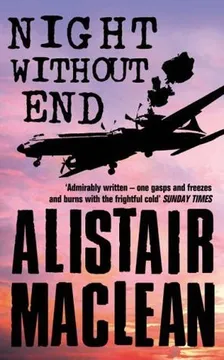
At a buried research station on Greenland's ice-cap, geologist and doctor Peter Mason hears engines circling through a storm. His Greenlandic colleague Jackstraw, whose keen hearing first detected the plane, helps him prepare a dog-sled and emergency clothing. The aircraft passes low, its landing lights searching the snow, then drops onto the ice with its wheels retracted.
Mason and his companions follow the fresh furrow by tying themselves to a line that can lead them back through the darkness. The airliner has ploughed into an ice hummock nearly a quarter-mile from its touchdown point. It is still, rimed in frost, and faint blue cabin lights suggest that someone inside may have survived.
The opening turns a scientific outpost into an accidental rescue station. Mason and Jackstraw cannot control the storm or the aircraft, but their accumulated practical knowledge gives them a narrow chance to act. The homing line matters as much as courage: in this landscape, every rescue depends on keeping a route back to safety. The passengers' comfortable, pressurized world has been abruptly exposed to an environment that makes delay lethal. The crash therefore establishes the novel's governing pressure: human intention matters, but only when it can work within the physical limits of the ice.
Cabin Full of Strangers
Mason and Jackstraw enter through the shattered cockpit and find the co-pilot crushed beneath the controls, the captain dead, and the flight engineer and second officer badly injured. They carry the unconscious second officer and stewardess Margaret Ross back to the station, where Mason tries to warm and stabilize the wounded.
The remaining passengers include boxer Johnny Zagero and his manager Solly Levin, tractor executive Nick Corazzini, singer Marie LeGarde, Senator Brewster, Reverend Joseph Smallwood, Theodore Mahler, socialite Phyllis Dansby-Gregg, and her young German maid, Helene Fleming.
When the group reaches the station, its radio transmitter lies smashed on the floor. Ross admits she brushed against it, but Mason cannot explain why its hinges were forced inward.
The rescue creates a closed society before anyone has chosen to belong to one. The passengers arrive with sharply different kinds of status, from political office to celebrity, but the station offers no private rooms, comforts, or reliable communications. Mason's first duties are material: move the injured, preserve warmth, keep the doors shut. The broken transmitter changes the scale of the problem. The people rescued from the plane cannot simply call for help, so the station becomes both shelter and trap. Ross's apparent accident introduces suspicion, while the discovery of the crew's injuries makes it clear that saving lives will require more than medical skill.
The First Death
The passengers learn they are on Greenland's central ice-cap, far from any settlement, and Mason calculates that the station's dwindling food cannot support them until his absent field party returns. By morning, the injured second officer, Jimmy Waterman, is dead.
Mason recognizes that the head wound does not explain his death: someone smothered him while he lay strapped helplessly in a sleeping-bag. He hides that conclusion from the group and privately suspects Ross, who had stayed beside Waterman through the night.
With the radio unusable and a battered old Citroen tractor their only possible transport, Mason decides to leave for the coast. The passengers must help convert it into a heated shelter, then travel across the ice with scant food and no certainty that the machine will survive.
Mason's authority now rests on an uncomfortable combination of care and concealment. He knows the passengers need accurate information to make decisions, yet keeps the murder secret because he fears panic and wants to observe them. That choice also narrows his attention: Ross's vigil beside Waterman looks incriminating precisely because Mason has already decided to read it that way. Meanwhile, the decision to travel is not a heroic preference but a calculation between two likely deaths, starvation at the station and exposure on the road. The old tractor transforms an abstract survival problem into a shared, exhausting piece of labor.
The Stewardess Is Cleared
At the wreck, Mason finds bullet wounds in the captain and a dead passenger, Colonel Harrison, and discovers that the captain's gun is still loaded. Blood and cloth on the radio equipment point to Ross, so he confronts her, convinced that she attacked Waterman and sabotaged the plane's communications.
But Ross cannot climb through the cockpit windscreen, and the ring on her hand shows she was engaged to Waterman. Her grief is real; Mason's certainty collapses. Ross helps him see that separate gunmen must have controlled the pilots and the second officer.
Someone else has also left the wreck and removed the bamboo markers. Mason follows the few remaining stakes, nearly loses himself in the storm, and reaches the station by finding its antenna pole in the dark.
This reversal exposes the danger in Mason's investigative method. He is not merely wrong about Ross; his confidence has made him cruel to someone already grieving. The ring gives him a concrete reason to revise his theory, while Ross's reasoning supplies a missing structural fact: one assailant could not control the crew in two separated parts of the plane. Her contribution does not simply clear her, it changes the scale of the threat. Mason's near-disappearance after the trail markers are removed makes the cost of his error physical. He has treated suspicion as certainty in a setting where a wrong turn can be fatal.
Markers in the Dark
Back at the station, Mason and radio operator Joss London discover that spare valves and condensers have been stolen and crushed, while explosives and fuses have been disturbed.
Mason suspects the same hidden enemies caused both the aircraft murders and the radio's destruction, but his armed search of the passengers finds no guns. The wreck suddenly catches fire and explodes, destroying much of the evidence and any chance of using its fuel.
With a rare clear moon overhead, Mason and Jackstraw finish the tractor's wooden enclosure and load essential supplies, including flares and weather balloons. They leave Joss behind to await the returning field party, then set out for Uplavnik with the passengers, the dogs, and a machine that may fail at any moment.
The fire converts uncertainty into urgency. Whoever is attacking the group has damaged not just equipment but the options that would make investigation or rescue possible. Mason's unsuccessful search demonstrates that command cannot substitute for evidence: the passengers remain dangerous, but he cannot yet identify who is dangerous. His decision to leave Joss behind is a painful division of responsibility. The supplies loaded onto the sled reveal an alternative way to communicate if the radio fails, but the party's departure is still a gamble. The moonlight offers a temporary opening, not a promise that the ice will remain passable.
A Sugar-Filled Clue
The Citroen grinds west, while the passengers shiver inside its crude wooden cabin and take turns driving and watching the trail. Mason confronts Mahler after finding sugar hidden in his coat and assumes the elderly chemist stole it while tampering with the radio.
Mahler explains that he is diabetic, has missed his insulin, and took the sugar in a desperate attempt to manage his condition. Mason recognizes how little time Mahler may have and orders the others to share their rations.
During a stop beneath the northern lights, Ross recalls a smoke scare aboard the airliner that drew passengers from their seats before dinner. Mason realizes the fire was likely staged to create a distraction and learns that Zagero and Solly Levin had asked when the meal would be served.
The sugar is both a clue and a measure of how little Mason knows. Its theft appears to confirm his suspicions, but Mahler's explanation turns the same evidence into proof of desperation rather than guilt. This is a crucial correction in a story where survival behavior can resemble criminal behavior. The shared rationing also briefly gives the passengers a task that is not simply watching one another. Ross's memory of the smoke incident demonstrates the value of attention that Mason initially failed to offer her. The aurora, beautiful and disruptive to radio reception, mirrors the group's condition: a signal can be vivid and still fail to provide a clear answer.
Voices Across the Ice
As the cold cripples batteries and machinery, Mason and Jackstraw finally make radio contact with their field leader, Captain Hillcrest, who has heard that the airliner is missing and is joining a vast search. Hillcrest is coming toward them, but the rescued passengers' safety still depends on the failing Citroen.
Mason's head is struck during a stop, and the newspaper cutting he found on Colonel Harrison disappears from his pocket. Soon Hillcrest reports that sugar has been dumped into his tractor's fuel, delaying the rescue party.
Mason learns that the aircraft crash may involve a secret important enough to bring ships and planes into the search, but he cannot yet identify what was aboard. Mahler's condition worsens, and Mason must keep moving while trying to understand who is sabotaging both expeditions.
The first successful transmission offers relief only long enough to reveal a larger danger. Rescue is no longer a simple matter of reaching the coast: someone is actively slowing Hillcrest and removing clues from Mason. The stolen newspaper cutting shows that the attackers know what information matters even when Mason does not. At the same time, the radio link makes Mason's words audible to the passengers, creating a new vulnerability. His decision to keep moving protects the group from immediate starvation but also gives the hidden conspirators more time to act. Communication here is not a solution by itself; it is another contested resource.
The Crevasse Misleads Mason
Crossing the Vindeby Nunataks, Helene slips toward a deep crevasse. Jackstraw jumps onto a crumbling snow-bridge to keep her from falling farther, and Mason lowers himself after them so he can secure a rope around her. With help from the others, they pull Helene to safety.
Corazzini then hands Mason back the pistol Mason had misplaced, making it seem he helped rather than endangered them. Later, when the last corned beef disappears, Mason finds the tins in Zagero's locked case and orders Zagero and Levin restrained.
The apparent solution unsettles the group, but Mason accepts it. Mahler, barely able to speak, gives Mason a simple method for cleaning sugar from fuel, allowing him to send Hillcrest the instructions that can get the rescue tractor moving again.
The crevasse rescue reveals how readily courage can be recruited into someone else's plan. Mason and Jackstraw take real risks for Helene, while Corazzini's timely assistance earns trust. The stolen meat then offers Mason a tidy answer, but its neatness is precisely what should make him cautious. His decision to detain Zagero and Levin repeats the earlier habit of converting a clue into a verdict. Mahler's practical expertise provides a counterpoint: his knowledge helps the group without requiring anyone to trust a performance. The section places moral courage, technical competence, and deceptive appearances side by side, then leaves Mason vulnerable to misreading all three.
The Minister's Other Face
Hillcrest's next transmission identifies the missing cargo as a secret guided-missile mechanism disguised as a portable radio. Before Mason can react, Zagero knocks Corazzini down, and Reverend Smallwood reveals a gun and takes control of the party.
Corazzini is Smallwood's accomplice, while Zagero had only pretended to be a boxer and Levin to be his manager to conceal their own harmless arrangement. The real criminals force Mason to help locate a rendezvous using a concealed direction-finding set disguised as a tape recorder.
Smallwood threatens Margaret and keeps the group moving toward a trawler and submarine offshore. Mason understands that the criminals intend to leave no witnesses, but cannot risk an open challenge while they hold hostages and weapons.
The revelation reorganizes the entire cast. Mason's suspicion of Zagero and Levin has been sharpened by their deliberately theatrical identities, while Smallwood's familiar role as a clergyman has made him seem beyond scrutiny. The contrast is not simply between disguise and truth: both innocent and guilty characters have reasons to perform. The secret mechanism explains the scale of the pursuit, but it does not make the passengers' lives expendable. Smallwood's control of the group depends on that very calculus, using the value others place on one another as leverage. Mason's restraint is not passivity; it is an attempt to keep the hostages alive until their captors' advantage changes.
Abandoned in the Blizzard
As the prisoners ride behind the tractor, Jackstraw finds the missing newspaper cutting in Corazzini's wallet. It connects the missile mechanism to an earlier fatal train disaster and explains why Mason was struck before he could read it.
Smallwood later leaves the group in a violent storm with no food or shelter. When Helene knocks his gun aside, Phyllis Dansby-Gregg steps in front of her and is shot dead. Mason, Jackstraw, and Zagero carry the unconscious Mahler, Marie LeGarde, and Helene through the blizzard; Senator Brewster dies on the march.
Balto leads them to an abandoned dog-sledge. Using their weather balloons and magnesium flares as signals, they attract Hillcrest's search party. A naval jet drops insulin for Mahler, and the survivors prepare to pursue Smallwood.
The cutting gives the crisis a history: the airliner is not an isolated crime but part of a pursuit that began with another disaster. Yet the immediate moral test is Phyllis's action, not the classified object. Her intervention protects Helene at the cost of her own life and breaks the social distance that had long separated mistress from maid. The march then strips away every role except the practical one of carrying someone who cannot walk. Balto's return to the group and the improvised signals matter because rescue comes through attention to the landscape, not through a sudden reversal of the storm. The insulin drop also turns survival into a race against Mahler's failing body.
The Glacier's Last Verdict
Hillcrest's party reaches the Kangalak glacier, where Mason spots Smallwood's trawler and plans to stop the tractor without exposing its hostages to a direct assault. Jackstraw's rifle fire disables the Citroen, but Levin attacks Corazzini in the cab and is shot; Zagero beats Corazzini after the men spill onto the ice.
Smallwood still holds Margaret and uses her to keep Mason's party back. When jets and a naval landing force close off the fjord, Smallwood drives the damaged tractor onto the treacherous glacier and crashes beside a rock pinnacle.
He and Margaret fall into a narrowing crevasse. Mason climbs down and overpowers him, then escapes with Margaret and the recovered mechanism. Jackstraw throws Smallwood a rope, but they leave him trapped as the glacier closes and walk toward the landing party.
The final struggle resolves the conflict through several incompatible forms of force. Jackstraw's rifle can stop the machine but not safely free the hostages; Levin's attack buys time but costs him dearly; Mason's choice to enter the crevasse places him within reach of Smallwood, where weapons and official authority have lost their advantage. The mechanism is recovered, yet the ending refuses to let national security settle the moral question. Smallwood is offered a rope, but Mason and Jackstraw do not pull him out. Their decision is shaped by the deaths he caused and by the danger of the moving ice, leaving judgment at the boundary between deliberate punishment and an unforgiving landscape.
Analysis
Night Without End turns a survival thriller into a study of judgment under conditions designed to corrupt it. Mason is trained to observe, diagnose, and act, but extreme cold, sleep loss, hunger, and grief narrow his attention. He repeatedly mistakes a convincing surface for a complete explanation: Ross's proximity to the dead officer, Mahler's stolen sugar, and Zagero and Levin's theatrical identities all lead him toward false conclusions. These are not arbitrary errors. Each arises from evidence that has been deliberately arranged or from a real human need that resembles guilt. The novel makes inference feel physical: a mistaken theory can waste time, divide a group, or put someone beyond rescue.
The ice-cap intensifies this problem by reducing moral and practical choices at once. There is rarely enough food, heat, shelter, or time for every person to be protected equally. Mason's refusal to treat Mahler and LeGarde as expendable slows him and risks the mission, yet that refusal is also the standard by which the reader measures him. Against Smallwood's instrumental view of human beings, Mason insists that a person's immediate suffering remains important even when a secret mechanism could affect national security. The conflict is therefore not simply good against evil; it is between two ways of assigning value under pressure.
The ensemble also tests social identity. The senator, performer, boxer, minister, executive, and socialite arrive with labels that seem to explain them. The crisis strips those labels of authority, while disguises make them actively unreliable. Phyllis's changing relation to Helene shows that class habits can loosen when dependence becomes visible. Zagero's damaged hands and Mahler's illness expose the bodily cost of survival, while Jackstraw's knowledge offers a model of attention earned through familiarity with place.
The ending offers no clean triumph. The mechanism is recovered and the immediate threat is stopped, but lives have been lost and Smallwood is left to the glacier's judgment. Rescue can end the chase; it cannot restore what the chase has taken.
Review Summary
Night Without End is a gripping thriller set in the Arctic, following survivors of a plane crash led by a scientist. Readers praise MacLean's vivid descriptions of the harsh environment and the tense atmosphere. The story combines elements of survival, mystery, and espionage. While some find the characters underdeveloped, many appreciate the fast-paced plot and unexpected twists. The book's ability to make readers feel cold is frequently mentioned. Despite being an older work, it remains an engaging read for fans of adventure and suspense novels.
People Also Read


Characters
Peter Mason
Doctor on the iceMason is a British doctor and geologist leading an International Geophysical Year station in Greenland. After his young wife died in a car accident, he left medicine for geological work, carrying grief into a life built around observation and distance. He is resourceful under pressure, able to improvise treatment and make difficult decisions, but his first-person account also exposes how quickly fear can turn inference into certainty. He repeatedly has to revise judgments about the people around him. Mason's deepest conflict is between the scientist's need to understand the whole pattern and the doctor's refusal to treat individual lives as expendable pieces in it. His growing regard for Margaret unsettles the emotional isolation he has used as protection.
Jackstraw
Greenland's surest guideJackstraw, whose formal name is Nils Nielsen, is a Greenlandic scientist with Danish ancestry, a geologist's training, and exceptional knowledge of the ice-cap. His skill with dogs, navigation, weather, and field survival makes him Mason's closest practical ally. Quietly cheerful and tireless, he rarely wastes movement or speech; that composure conceals a forceful temper and a fierce loyalty to the people he accepts as his own. Jackstraw's competence is not presented as magic. It comes from years of attention to small changes in wind, snow, and terrain. His wife and daughter remain part of the life he has left behind, giving his willingness to risk himself a personal cost beyond his friendship with Mason.
Margaret Ross
Stewardess under suspicionRoss is an Irish BOAC stewardess travelling with a small group of passengers on an extra flight. She is dutiful and attentive, but the crash leaves her shocked, injured, and haunted by the thought that she should have anticipated the danger. Her attachment to the second officer deepens her grief and shapes her fierce concern for the wounded. When Mason suspects her, she has to endure his accusation while still helping him reconstruct what happened aboard the plane. Ross is neither a trained investigator nor a hardened survivor, yet her memory of ordinary details becomes essential evidence. Her kindness persists under pressure, and her relationship with Mason develops through shared danger rather than easy reassurance.
Joseph Smallwood
The minister aboardSmallwood is a Vermont Unitarian minister travelling to an international church assembly. He appears mild, precise, and uneasy with attention, presenting himself as a man whose authority comes from belief rather than force. His habit of reading scripture and his careful speech make him easy for others to categorize. Yet he is observant and controlled, qualities that allow him to assess a room without seeming to dominate it. Smallwood's public role and private certainty sit uneasily together; he treats moral language as a source of order and self-command. His presence asks how much a group relies on familiar social identities when it decides whom to trust.
Nick Corazzini
Tractor executiveCorazzini is an American executive travelling to take charge of a tractor company near Glasgow. He is physically capable, observant, and unusually willing to work alongside people he has just met. His practical suggestions help the group prepare the old Citroen, and he tends to test plans by asking what would actually make them work. Mason notices a hardness beneath his calm manner but cannot confidently interpret it. Corazzini represents the kind of competence that is useful in a crisis and difficult to read from appearances alone.
Johnny Zagero
The heavyweight challengerZagero is a heavyweight boxer with a Princeton education, a cultured manner, and a quick, teasing wit. His physical strength is obvious, but it does not define his whole character: he is perceptive about other people's anxieties and often uses humor to soften a tense room. He is travelling with Solly Levin, who manages his boxing career, and is determined to make that career succeed on its own terms. Mason's doubts about whether Zagero is truly a boxer show how appearance can distort judgment in both directions. Beneath the banter is a man capable of loyalty and decisive action.
Solly Levin
Zagero's managerLevin accompanies Zagero as his manager, supplying a constant stream of boxing talk, publicity instincts, and comic complaints. His loud, exaggerated persona seems designed to entertain and deflect attention, while his relationship with Zagero is marked by affection as well as professional ambition. In the station, his performance makes him difficult for Mason to assess: it is hard to tell where the character ends and the man begins. Levin's concern for Zagero gives the pair an emotional center, even when the rest of the group distrusts them.
Marie LeGarde
The celebrated performerLeGarde is an internationally known music-hall and musical-comedy star, older now but still quick with humor and social intelligence. She uses warmth and playful authority to ease Helene's pain and to challenge Mason when his bluntness becomes needlessly cruel. Her public fame does not make her self-absorbed; she has spent much of her life supporting orphanages and helping others. In the station, she brings a kind of emotional leadership that Mason's technical command cannot provide. Her courage appears in small, repeated acts of attention.
Theodore Mahler
The elderly chemistMahler is a sixty-nine-year-old Russian Jewish immigrant who has lived in the United States and is travelling to Israel after the death of his wife. He tells Mason of a life marked by persecution, family loss, and the long desire to reach a homeland he has never seen. Quiet and self-contained, he does not volunteer personal information until the journey makes it necessary. His scientific training and disciplined intelligence contrast with his fragile physical condition. Mahler's story gives the group a perspective shaped by historical displacement, while his practical knowledge remains valuable even when he has little strength to spare.
Helene Fleming
The injured young maidHelene is a seventeen-year-old German woman from Munich and Phyllis Dansby-Gregg's personal maid. Shy and modest, she has a broken collar-bone from the crash and often struggles to make herself heard among older, more forceful passengers. Marie LeGarde's attention helps her speak and smile despite the pain. Helene's dependence on Phyllis reflects both her youth and her position in an unfamiliar country. She is more observant and resilient than her quiet manner first suggests, though the crisis tests her physically and emotionally.
Phyllis Dansby-Gregg
The society passengerPhyllis is a wealthy London socialite, accustomed to expensive clothing, careful manners, and the protection of status. Her early treatment of Helene exposes a hierarchy she takes for granted, while the Arctic steadily removes the comforts that make that hierarchy feel natural. She is not simply a caricature of vanity: Mason notices that she can endure suffering quietly and that her bond with Helene is more complicated than their public roles suggest. Her character asks whether inherited habits can survive when survival requires a different kind of attention.
Senator Hoffman Brewster
The southern senatorBrewster is a prominent American senator on a European fact-finding tour. Florid, proud, and accustomed to making his authority felt, he initially objects to Mason's command of the rescue effort. The extreme conditions expose qualities that his political bluster hides, including endurance, courtesy, and a strong instinct to help others. Mason's first impression of him is shaped by appearance and class; the senator's conduct complicates that judgment. He carries the tension between public power and private character into the isolated station.
Joseph London
The station radiomanKnown as Joss, London is the young Cockney radio operator at Mason's station. He is technically skilled, level-headed, and capable of painstaking work under severe conditions. His knowledge allows him to diagnose deliberate damage to the station's equipment and to keep attempting repairs after the other survivors have given up hope. Joss is also an important link between the isolated group and the outside world. His dry humor does not erase his seriousness about the risks facing Mason and the passengers.
Captain Hillcrest
The returning field leaderHillcrest leads Mason's absent field party and commands a better-equipped tractor than the station's aging Citroen. He is confident, sociable, and technically capable, with the decisiveness needed to organize a rescue over long distances. His radio contact brings hope, but he is not immune to the same logistical dangers confronting Mason. Hillcrest represents institutional support at its best: experienced people and equipment are only useful when communication, fuel, and weather allow them to reach one another.
Balto
Jackstraw's lead dogBalto is Jackstraw's large, intelligent lead dog, descended from a mixture of wolf and Siberian husky. He is fiercely loyal to Jackstraw and imposes discipline on the rest of the team. On the ice, his instincts for routes and hazards are as valuable as human navigation. Balto's loyalty is practical rather than sentimental: he reads the landscape and acts, giving the expedition a guide who does not need instruments to notice danger.
Captain Johnson
The airliner's captainJohnson pilots the BOAC airliner and is among the crew members found dead after the crash. His actions before the landing become important to Mason's effort to understand why the aircraft reached the ice-cap.
Jimmy Waterman
The second officerWaterman is a BOAC second officer and a member of the airliner's flight crew. He is found gravely injured in the wreck, and Margaret Ross's connection to him gives her grief a private urgency.
Harry Williamson
The flight engineerWilliamson is the airliner's flight engineer. His presence in the crew's rest compartment helps Mason reconstruct who was aboard and how few crew members survived the crash.
Plot Devices
The Greenland ice-cap
The relentless survival clockThe setting is an active force in the plot. Wind, cold, crevasses, darkness, and sudden storms dictate how quickly the survivors can move and what choices remain open to them. The ice-cap also makes ordinary evidence unstable: markers disappear, tracks fill with snow, and a person can vanish within a short distance of shelter. Mason's medical knowledge and Jackstraw's field experience matter because each can interpret a different part of this environment. The landscape magnifies every human decision, turning a delay, a wrong suspicion, or a broken engine into a potential death sentence.
Markers, lines, and flares
A fragile path to rescueMason's party uses a homing line, bamboo stakes, trail flags, and the antenna line to navigate when darkness or blowing snow erases the horizon. Removing the stakes can strand Mason, demonstrating that navigation is a form of life support. Later, weather balloons and magnesium flares turn field equipment into a distress signal. These objects have a double function: they first show how easily the group can be isolated, then provide the means to make its position visible to Hillcrest. Their usefulness depends on preparation, clear weather, and someone outside the immediate group looking in the right direction.
The failed radio network
Communication as contested groundThe crash leaves Mason's station transmitter smashed, while spare components disappear and Hillcrest's tractor is sabotaged. Joss's repair work and Mason's portable set eventually make contact possible, but aurora activity and distance can interrupt transmission. Each successful call carries both information and risk because the suspects can overhear what Mason reveals. The radio therefore does not simply summon help; it shapes what the group knows, how quickly aid can arrive, and what the antagonists can anticipate. The hidden direction-finding equipment later reverses the device's purpose, allowing the criminals to locate their escape route.
The disguised mechanism
A secret hidden in plain sightThe airliner carries a classified guided-missile mechanism disguised as a portable radio. A newspaper cutting found on Colonel Harrison links the object to an earlier disaster, but Mason fails to read it before it is stolen from him. Later, Hillcrest identifies the cargo, and the criminals reveal a direction-finding set concealed in a tape-recorder case. These disguises make ordinary luggage and equipment part of the mystery. They also explain why the plane was forced down, why the attackers destroy evidence, and why the governments mobilize such a large search. The mechanism's value drives the plot, but it does not lessen the danger to the people caught around it.
Download PDF
Download EPUB
.epub digital book format is ideal for reading ebooks on phones, tablets, and e-readers.








