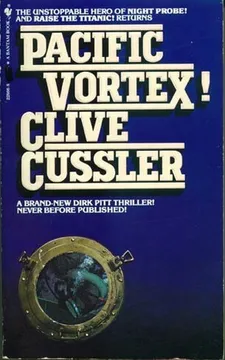


Plot Summary
The Starbuck Enters Fog
On a secret trial voyage, Commander Felix Dupree steers the nuclear submarine Starbuck toward an unexplained fog bank despite orders to stay on course. The seabed rises sharply beneath them, then an explosion floods the forward compartment and drives the submarine into the ocean floor. Dupree seals the remaining sections, but he and his crew cannot escape.
His final log describes dwindling supplies, unseen attackers, and a crew he believes is dead. He launches a message capsule carrying the account and a position that cannot be reconciled with the Starbuck's last confirmed reports. Six months later, with no wreckage found, the Navy declares the submarine lost with all hands.
Dupree's defining strength, methodical obedience, becomes the condition that makes his fatal deviation so striking. The fog offers him a chance to become a discoverer after a career in which recognition has eluded him; curiosity and wounded ambition briefly outrank discipline. The submarine's advanced systems cannot protect it from a threat its crew cannot identify, and the captain's log turns technical uncertainty into psychological collapse. His contradictory testimony does not simply create a mystery. It makes the reader confront how little an official account can explain when fear, isolation, and deliberate deception have corrupted the witness.
A Capsule Reaches Shore
Dirk Pitt, a deep-sea specialist with NUMA, swims into a dangerous current off Kaena Point to retrieve a yellow Navy capsule. Inside he finds pages from Dupree's log, including the impossible location and the claim that unseen men attacked the submarine. Pitt takes the evidence to Admiral Leigh Hunter, who leads the Navy's 101st Salvage Fleet.
Hunter recognizes the capsule and understands that its contents could expose the fate of his missing submarine. That evening, Pitt meets Hunter's daughter Adrian at a hotel bar. Their banter is interrupted by Summer, a striking red-haired stranger who leaves Adrian bruised after a fight and then draws Pitt onto the beach.
Pitt's first consequential act is not an order or an assignment but a voluntary risk: he enters a current because an object has caught his attention. That impulse defines both his courage and his danger. The capsule converts a vast maritime disappearance into intimate evidence, a dead commander's handwriting carried into the hands of a living investigator. Hunter's response gives the mystery institutional weight, while Adrian and Summer introduce a more personal field of uncertainty. The story deliberately places Pitt between official authority and volatile attraction, establishing that his curiosity repeatedly pulls him toward situations where the facts and the people are both dangerous.
Summer's Needle Misses
On Waikiki Beach, Summer knees Pitt and tries to inject him with a syringe. He knocks her unconscious and carries her to his hotel, where she claims to be an American agent seeking information about Adrian's naval connections.
Pitt sees through the story, but Summer escapes by tying bath towels into a rope and climbing from his balcony. The next morning NUMA director Admiral James Sandecker informs Pitt that Hunter has requested him for the Starbuck search and that dozens of ships have vanished inside the same Pacific sector.
Before reporting for duty, Pitt visits the Bishop Museum. Curator George Papaaloa links the vanished waters to Kanoli, a legendary island swallowed by the sea, and recalls an earlier researcher with golden eyes. A gunman follows Pitt from the museum and dies when his truck crashes during their chase.
Summer's attack makes attraction inseparable from threat: Pitt's instinctive physical confidence saves him, but it does not tell him who she is or what she wants. Her escape leaves the encounter unresolved rather than neatly defeated. Sandecker then reframes Pitt's private danger as one piece of a pattern involving the Navy and missing ships. Papaaloa's account of Kanoli adds a cultural memory to the technical investigation, suggesting that local stories may preserve evidence where charts do not. The roadside pursuit confirms that Pitt has crossed from curiosity into active danger, yet the dead assailant supplies no answer, only proof that someone wants him stopped.
The Search Turns South
At the 101st Fleet's concealed Pearl Harbor headquarters, Pitt studies the strange account of the yacht Lillie Marlene, whose crew supposedly died in a ship that later exploded. He argues that the horror may have been staged to frighten sailors away from the Vortex. More importantly, he notices that the yacht operator's final message echoes the phrasing in Dupree's log.
The handwriting may be genuine, Pitt reasons, while the pages themselves were assembled from the commander's writing and printed as a counterfeit. The reported location is false too: if the search fleet looked in the wrong direction, its failure to find any wrecks makes sense. Pitt persuades Hunter to reverse course and send the disguised salvage ship Martha Ann southwest.
Pitt's breakthrough comes from treating language as physical evidence. He does not dismiss the log because its handwriting is authentic; instead, he separates authorship from construction and notices the repeated emotional pattern in supposedly independent distress accounts. The Lillie Marlene story also reveals how terror can function as a barrier more effective than a weapon: sailors avoid a region because they have been taught to imagine it as supernatural. Pitt replaces that imagined explanation with an intentional human scheme, though he cannot yet identify its scale. His reasoning changes the mission from a routine search into a wager on the possibility that the Navy has been manipulated.
The Seamount's Cemetery
The Martha Ann, disguised as a rusting merchant ship, begins a methodical scan of the revised search area. Its automated instruments detect an uncharted rise from the seabed, surrounded by wrecks that match ships missing over several decades.
The crew identifies the rusted Oceanic Star and other lost vessels before a sonar contact reveals the Starbuck resting in only ninety feet of water. The submarine is upright, clean, and apparently undamaged, despite its reported sinking six months earlier.
Pitt points out that its hull has none of the marine growth covering the older wrecks, and that the Starbuck lies on an isolated patch of sand where the surrounding seamount is rocky. The discovery proves that the Navy's search area was wrong, but leaves the crew's fate unexplained.
The wreck field transforms the Vortex from a rumor into a material landscape. Each recovered name is evidence that the mystery has accumulated victims, while the Starbuck's unnaturally clean hull contradicts the passage of time that the other wrecks visibly bear. Its shallow resting place also makes the Navy's failure to find it feel engineered rather than accidental. Pitt's observations matter because he reads absences as carefully as objects: no debris, no hull damage, no growth. The seamount is not merely a setting for the mystery. Its physical anomalies become the clues through which the story's supernatural appearance can eventually be translated into human design.
The Empty Submarine
Pitt and nuclear-submarine veteran Lieutenant March dive to inspect the Starbuck. The escape chamber is dry, and the running reactor has kept power available, so they enter the submarine expecting to find the crew.
Instead they find clean machinery, empty storage lockers, and no people. Seaman Farris, starved and mentally shattered, appears and warns Pitt that guards remain aboard. One kills March in the sick bay; Pitt uses the shark-defense weapon to kill him, then shoots a second attacker while escaping with Farris.
With two Martha Ann sailors, Pitt floods the forward torpedo compartment to delay anyone trying to reclaim the submarine. A hammerhead attacks Pitt as he returns to the surface, but he survives and reaches the ship with Farris.
The submarine's emptiness is more disturbing than a wreck because its systems imply continued life while its human spaces have been stripped of ordinary use. Pitt notices that the reactor can run but the food stores are gone, a practical contradiction that reveals the guards' separate access to the vessel. March's death is the cost of Pitt's decision to open the hatch, complicating the heroism of his curiosity with responsibility for the people he brings into danger. Flooding the compartment is an improvised act of delay, not victory. Pitt has found a living survivor and proof of violence, but the captors still control the larger environment.
Fog Boards the Martha Ann
As the Martha Ann prepares to leave, an unnatural eucalyptus-scented fog closes around it. Pitt realizes that the large shapes detected in the water are men, who climb aboard with grappling hooks and silent weapons. The attackers overwhelm the small crew.
Pitt shoots a path to the helicopter, then turns back for wounded Commander Paul Boland and escapes with the survivors, including Farris. Back in Honolulu, Adrian arrives at Pitt's apartment after gunmen kill Captain Orl Cinana, her father's fleet officer, in her bedroom.
Before Hunter's security team can collect them, Delphi's men break in, knock Pitt down, and abduct Adrian. Pitt wakes to find that Summer has secretly freed his hands and left him a knife, enabling him to kill the remaining guards.
The fog's sensory signature makes the attack feel uncanny, but grappling hooks and armed men reveal its practical mechanics: the Vortex's terror is built from concealment and coordinated violence. Pitt's decision to return for Boland marks a shift from solitary risk-taking to responsibility for a group, even as the rescue leaves deaths behind. Adrian's arrival ties the maritime threat to Hunter's family, and Cinana's murder removes a senior officer just as the enemy's reach becomes intimate. Summer's covert intervention complicates her earlier role as attacker. Pitt cannot yet trust her, but he must accept that she has chosen, at least once, to keep him alive.
Kanoli Beneath the Sea
At Pearl Harbor, Pitt describes Delphi's golden-eyed appearance and the strange men who breathe underwater. Doctors connect those details to the vanished researchers Frederick Moran, hydrologist Lavella, and surgeon Roblemann.
Geologist Raymond York concludes that the Vortex is a sunken island, probably Kanoli, whose caves may have survived a geological collapse. Pitt and Hunter locate Delphi's powerful transmitter on Maui, but the Navy's senior command orders the Starbuck destroyed with a missile rather than risk its nuclear weapons.
Pitt refuses to accept that decision without trying to rescue Adrian and recover the sub. Hunter finally backs him. Pitt recruits his old friend Al Giordino and a submarine crew, then flies a C-54 toward the seamount to put the team underwater before the missile strike.
Scientific explanation does not erase the story's mythic dimension; it gives the myth a physical mechanism. The lost island becomes a geological structure, and the eerie fog becomes a by-product of heat venting from a concealed refuge. The researchers' vanished expedition links that refuge to modern engineering and long-term survival. Pitt's refusal to obey the destruction order is not simply individual bravado: he argues that destroying the site would erase evidence about the crew, the attackers, and the missing ships. Hunter's decision to help him places loyalty to inquiry against institutional risk management, making the mission a moral disagreement as well as a rescue operation.
A C-54 Into the Vortex
Delphi intercepts Pitt's radio signal, cutting the team off from Hunter. Pitt still lands the aging C-54 on the ocean, and Giordino guides the submariners to the Starbuck using a device keyed to the marker left by the Martha Ann.
While the Navy crew enters the submarine, Pitt and Giordino search the seamount for a route into Kanoli. They discover the sunken Russian spy ship Andrei Vyborg and glimpse a miniature underwater craft carrying Delphi's men. A powerful current catches the friends and sweeps them into a cave.
Pitt climbs through a phosphorescent passage and finds Summer asleep in an underground chamber. Exhausted and injured, he collapses before he can escape. Delphi's men capture Pitt and Giordino, while Commander Crowhaven's team fights to reach the Starbuck's controls.
The C-54 landing makes the rescue plan deliberately fragile: Pitt can reach the target, but Delphi's interception removes the safety net of communication. Giordino's technical competence and their long friendship balance Pitt's improvisation, turning their partnership into a practical survival instrument. The Russian wreck shows that Delphi's power has already reached beyond American waters, while the mini-sub provides a concrete path between the sea and the hidden island. The current then strips the explorers of control and carries them into the setting they have been seeking. Pitt's discovery of Summer is not a triumphant reunion; he is too injured to act, and the enemy reaches him first.
Delphi's Last Bargain
Delphi interrogates Pitt and reveals that his father, Frederick Moran, helped establish the underground refuge after fearing nuclear war. After the original researchers died, Delphi turned the sanctuary into a base for hijacking ships, stealing their cargo, and staging disappearances that fed the Vortex legend.
He also captured the Starbuck by snagging its propellers and flooding its systems, then killed the trapped crew. Pitt realizes that Cinana had informed for Delphi and that Summer mistook him for the captain when she tried to poison him.
Meanwhile, Crowhaven's crew sends coded updates through a Honolulu radio station and frees the Starbuck, though casualties mount. Delphi claims the sub remains trapped by suction and plans to sell it, while a Navy missile is already on its way.
The revelation replaces a supernatural mystery with a criminal system whose effectiveness depends on exploiting both technology and belief. Delphi inherits a refuge founded as protection from mass violence, then converts its isolation into permission to inflict violence on others. His operation succeeds because each disappearance reinforces the myth that conceals the next one. Pitt's reconstruction also clarifies his own near-murder: Summer's attempt was a mistaken identity shaped by Cinana's surveillance, not an isolated romantic intrigue. At the same time, Crowhaven's coded radio messages show the Navy crew acting under severe pressure without waiting for Pitt's rescue. The strands converge as the planned missile strike makes time itself an antagonist.
Kanoli Breaks Open
Pitt and Giordino trick their guards and escape with Summer, who leads them to Adrian. The missile strikes the sea above Kanoli, cracking the cavern system and sending seawater through the tunnels. Delphi confronts them near the exit, but a rockslide pins him; as he reaches for his pistol, Giordino jams a finger into its barrel and the weapon explodes in Delphi's hand.
Pitt carries the injured Giordino through the flooding passage while Summer helps them reach the outer cave. There she refuses to leave her father's buried body and turns back into the collapsing refuge. Pitt surfaces with Giordino and Adrian. Crowhaven's crew, helped by the missile's shock, has broken the Starbuck free and brings it to the surface, but no one finds Summer.
The climax makes rescue inseparable from loss. Pitt's physical persistence can carry Giordino and Adrian through the flooded passage, but it cannot override Summer's decision to remain with the dead she considers her family. Giordino's improvised defense turns his battered body into the final obstacle between Delphi and his victims, while the collapsing stone destroys the refuge that once promised safety. The missile's force has a double consequence: it devastates Kanoli, yet its shock helps free the Starbuck. The resolution therefore refuses a clean victory. The submarine and several survivors return, but the person Pitt has come to love disappears into the place the mission has destroyed.
Kaena Point Aftermath
The Starbuck reaches the surface with damaged propellers, and Crowhaven's crew rescues Pitt, Giordino, and Adrian. Searchers find no trace of Summer, and the collapse buries Kanoli and the Vortex's secrets. Later, Pitt returns to Kaena Point, where he first pulled the message capsule from the water.
He stands watching the tide and holds a plumeria blossom whose scent recalls Summer. Rather than keep it, he casts the flower into the surf and turns away. The ocean has returned the submarine and the survivors, but not the woman who helped them escape. Pitt leaves the beach with a measure of relief, carrying grief that has no body, no explanation, and no place to be laid to rest.
The final shore scene closes the narrative's circular structure without pretending that recovery means restoration. Kaena Point is where a fragment of the Starbuck's story entered Pitt's life; returning there lets him acknowledge that the case has ended even though its emotional consequences remain unresolved. The flower functions as a small, chosen act of relinquishment. Pitt cannot retrieve Summer or prove what happened to her, but he can stop holding the symbol as if it were evidence that might lead her back. His departure is neither triumph nor surrender. It is the beginning of living with an absence that the sea has made permanent.
Analysis
Pacific Vortex! makes a familiar adventure question, what is hiding in the sea, hinge on the difference between the unknown and the deliberately obscured. At first the disappearances seem to invite supernatural explanation: fog appears where it should not, ships leave no trace, and a submarine's log describes attackers that cannot be identified. Pitt's method is to test the anomalies against material details. The false coordinates, repeated wording, absent wrecks, clean submarine hull, and empty food stores turn atmosphere into evidence. The mystery's solution is not that nature is harmless, but that human beings can use nature's scale and sailors' fear as instruments of concealment.
The lost island of Kanoli gives this mechanism a moral history. A place first sought as refuge from nuclear catastrophe becomes, in Delphi's hands, a base for predation. The transformation exposes a central psychological danger: fear of a violent world can produce a desire for safety so absolute that other people's lives become expendable. Delphi's survival project is therefore not simply hypocrisy. It is a closed moral system in which he treats his own continued existence as the only obligation that matters.
Pitt counters that closure through attention and dependence. His instincts and nerve make him effective, but March's death and the injuries to Giordino show the cost of treating intuition as sufficient. Pitt's eventual reliance on Giordino, Summer, Hunter, and the submarine crew complicates the lone adventurer ideal. The group survives through specialized knowledge, improvisation, and loyalty rather than one man's mastery.
The ending refuses to equate solving the mystery with repairing its damage. The Starbuck resurfaces, the hidden operation is destroyed, and the Vortex's physical cause disappears. Yet Summer's absence remains beyond Pitt's ability to investigate or control. His return to Kaena Point closes the search while leaving grief unresolved. The ocean gives back evidence and survivors, but it does not promise that everything lost can be recovered.
Review Summary
Pacific Vortex! received mixed reviews, with an average rating of 3.80 out of 5. Some readers enjoyed the fast-paced adventure and pulpy action, comparing it to James Bond stories. Others criticized the dated misogynistic attitudes, shallow characters, and unrealistic plot. Many noted it was Cussler's first Dirk Pitt novel and not his best work. The protagonist, Dirk Pitt, was seen as either an entertaining action hero or an unlikable, womanizing character. Some readers appreciated the maritime setting and underwater mystery elements.
People Also Read



Characters
Dirk Pitt
Restless sea investigatorPitt is NUMA's marine engineer and special projects director, an accomplished diver and pilot whose appetite for risk often outruns his caution. He reads the sea as a physical puzzle, trusting observation and practical inference more than official explanations. His irreverent manner lets him challenge admirals and soothe frightened colleagues, but it can also conceal how personally he takes responsibility when others are hurt. Pitt is drawn to people and mysteries that resist easy classification. Across the story, his self-reliance is tested by the need to accept help, protect a team, and recognize that courage cannot guarantee control over what he loves.
Al Giordino
Pitt's fearless partnerGiordino is Pitt's longtime friend and NUMA colleague, a compact, technically gifted man whose humor persists under pressure. His teasing is not carelessness; it is a way of keeping fear from taking command of a room. Where Pitt tends to move first and explain later, Giordino brings mechanical precision and a steady instinct for what a plan requires. Their friendship is built on shared history, blunt affection, and trust tested in dangerous work. Giordino does not compete with Pitt's heroism or merely follow it. He supplies the practical skill and loyalty that make Pitt's improvisations survivable.
Summer
The red-haired enigmaSummer is a striking, guarded woman whose first encounter with Pitt is an attempted attack rather than a courtship. She moves with the discipline of someone trained to conceal her motives, yet her actions do not fit a simple portrait of an enemy. Her beauty draws attention, but the more revealing traits are her quick decisions, physical courage, and deep attachment to the hidden world that formed her. Summer lives between obedience and independent judgment, and her connection to Pitt unsettles the loyalties on which she has built her life. The story keeps her motives uncertain long enough for trust to become an earned risk.
Admiral Leigh Hunter
Salvage fleet commanderHunter commands the Navy's 101st Salvage Fleet, a capable officer shaped by decades of recovering ships under dangerous and politically delicate conditions. He begins from a position of authority and skepticism, unwilling to mistake an intriguing theory for proof. His daughter Adrian complicates the distance he tries to maintain between family and duty. Hunter respects competence even when it comes packaged in Pitt's insubordination, and his leadership depends on balancing institutional orders against the judgment of people facing the danger directly. He is not naturally reckless, which makes each decision to trust Pitt carry genuine professional and personal weight.
Delphi
The hidden adversaryDelphi is a powerful, controlled presence associated with the disappearances in the Pacific Vortex. He treats secrecy as a form of authority and expects the people around him to obey without asking how his system works. His composure and cultivated appearance make him more unsettling than a plainly impulsive villain; he believes that discipline can make extreme actions rational. Delphi's project is rooted in fear of a world at war, but his methods expose how easily a desire for survival can become a justification for domination. His relationship with Summer is central to the tension between inherited loyalty and personal choice.
Adrian Hunter
The admiral's daughterAdrian is Admiral Hunter's adult daughter, socially bold and accustomed to moving through the military world without accepting its rules as her own. Her strained relationship with her father reflects years of feeling secondary to his maritime work. She uses flirtation and provocation to claim attention, but beneath that performance is someone who wants independence while still relying on the privileges her family name provides. Her connection to Pitt and to the 101st Fleet places her in the path of events that her father's authority cannot simply control.
Admiral James Sandecker
Pitt's NUMA chiefSandecker directs NUMA and knows Pitt well enough to predict both his usefulness and his capacity to create trouble. He serves as a bridge between the civilian marine agency and the Navy, translating institutional pressure into assignments Pitt cannot easily refuse. His dry manner masks genuine concern for Pitt and for the agency's role in the search. Sandecker values capability over ceremony, but he is also aware that Pitt's adventurous instincts can place the people around him in danger.
Paul Boland
Martha Ann's commanderBoland is the executive officer of the 101st Fleet and commands the Martha Ann during the search. He is disciplined, proud of his ship, and initially wary of Pitt's disruptive methods. His bluntness can harden into social clumsiness, yet he is capable of revising his opinion when Pitt proves his expertise. Boland's sense of responsibility is concrete: he thinks in terms of his crew, the vessel, and the consequences of every order.
Commander Felix Dupree
The lost submarine captainDupree commands the Starbuck on its secret maiden trial. A brilliant, highly methodical submariner, he has earned professional respect but lacks the personality and influence that might have advanced his career. His hunger for recognition makes the unexplained fog bank difficult to ignore. Dupree represents the peril of a capable person whose need to be seen can become stronger than his judgment, especially when the unknown appears to offer a chance at lasting distinction.
George Papaaloa
Keeper of island lorePapaaloa is a curator at the Bishop Museum and a devoted preserver of Hawaiian history and cultural memory. He worries that his people's heritage is disappearing as the islands change, and he approaches legends as records worth protecting rather than quaint entertainment. His knowledge of Kanoli gives Pitt a lead that official maps and naval files cannot provide. Papaaloa is careful about the difference between preserving a story and claiming certainty about its truth.
Burdette Denver
Hunter's observant aideDenver is Admiral Hunter's aide, a quick-minded officer with an eye for people and details. He recognizes Pitt when others dismiss him and helps connect the investigative and operational sides of the mission. His curiosity can make room for unusual explanations, though he remains grounded in the need to verify them. Denver is one of the fleet's quiet organizers, more effective than his unassuming appearance suggests.
Orl Cinana
The fleet's senior captainCinana is the heavyset captain responsible for the 101st Fleet's salvage ships. He is physically anxious and socially uneasy, often relying on charm to smooth over uncomfortable exchanges. His position gives him access to the fleet's operations, making him an important presence in Hunter's organization. Cinana's personal entanglements and professional responsibilities place him close to the story's competing loyalties.
Seaman Farris
A broken Starbuck sailorFarris is a young sailor from the Starbuck whose ordeal has left him frightened, malnourished, and unable to make sense of his surroundings. He has survived long enough to provide Pitt with the first human evidence of what happened aboard the submarine. His fragile condition underscores that survival is not the same as recovery, and that a rescue can begin long before a person is able to understand it.
Lieutenant March
The submarine diverMarch is a Navy navigator and experienced scuba diver who accompanies Pitt on the Starbuck inspection. His technical knowledge makes the underwater entry possible, while his understandable hesitation reflects the danger of entering a supposedly dead submarine.
Commander Samuel Crowhaven
The Starbuck's recovery leaderCrowhaven leads the submarine crew sent to return the Starbuck to service. He is an engineer rather than a commando, and he understands the mission as a technical recovery with an unforgiving deadline. His crew's work proceeds even after communications fail, demanding discipline when support and certainty are both absent.
Plot Devices
The message capsule
A clue from the deepThe yellow Navy communication capsule carries pages attributed to Commander Dupree and reaches Kaena Point after the Starbuck vanishes. It supplies the first account of the disaster, but its impossible coordinates and repeated phrasing make it evidence that must be tested rather than trusted. Pitt's analysis separates genuine handwriting from a manufactured message, turning the capsule from a simple clue into proof that someone is manipulating the search.
The Pacific Vortex
A myth built from concealmentThe Vortex is a region where ships have disappeared without wreckage, distress calls, or survivors. Sailors' fear of the area helps keep searchers away, while localized fog and radio interference disguise the people and machinery behind the disappearances. The supposed supernatural zone proves to be a practical cover for piracy, one strengthened by staged evidence such as the Lillie Marlene disaster.
The Starbuck
The dangerous recovery prizeThe Starbuck is the Navy's advanced nuclear submarine, carrying weapons whose possible capture threatens more than the lives of its crew. Its unexplained disappearance forces the Navy to search where it has found no other wrecks, eventually revealing the Vortex's hidden center. Because its reactor remains active and the vessel is intact, it can still be operated, but its missiles make every delay and every recovery decision consequential.
The legend of Kanoli
Folklore becomes a mapPapaaloa recounts the Hawaiian legend of Kanoli, an island whose people became powerful before the gods submerged their home. The story gives Pitt a possible name and history for the unexplained rise beneath the Vortex. Later geological reasoning turns that legend into a plausible lead: a sunken island could preserve caves and tunnels where a hidden settlement might survive. The myth is not treated as scientific proof, but as cultural memory that guides the search toward a real place.
The Martha Ann
A salvage ship in disguiseThe Martha Ann appears to be a rusty merchant vessel, but beneath its false exterior it carries sophisticated salvage equipment, automated controls, and a helicopter. Its disguise lets the 101st Fleet search without advertising a military mission to foreign observers. The ship's small crew reduces the number of people exposed to the Vortex, but also leaves it vulnerable when Delphi's raiders attack through the fog.
Dirk Pitt® Series


About the Author
Other books by Clive Cussler

Download PDF
Download EPUB
.epub digital book format is ideal for reading ebooks on phones, tablets, and e-readers.








