

Plot Summary
Prologue
In 1813, seventeen-year-old Callie Hartwell escapes a humiliating ball and hides in a garden maze. Gabriel St. John, the handsome Marquess of Ralston, finds her there, laughs with her about her unflattering gown, and calls her an empress, making her feel noticed for the first time.
She follows him through the maze and discovers him kissing another woman. The scene turns her admiration into longing and teaches her to distrust the comfort he offered: she decides he was only flattering her so he could return to his lover.
The prologue plants the emotional contradiction that governs Callie’s later choices. Gabriel’s attention gives her a brief, powerful experience of being seen, but the discovery of his lover makes that recognition feel counterfeit. Callie does not simply fall for a handsome stranger; she builds a private ideal from a moment that was real to her and probably incidental to him. The garden maze becomes the origin point of both her romantic fantasy and her insecurity. Returning to that setting at the end can therefore revise the memory without erasing the hurt that made it formative.
An Unexpected St. John
Ten years later, Gabriel wakes at his mistress’s house to find his twin, Nicholas, announcing that their mother has left them a half sister. Juliana Fiori has arrived from Venice after her father’s death, carrying proof that their mother intended her to join the family. Gabriel resents the reminder of the woman who abandoned him and Nicholas, but he will not refuse his sister.
Juliana, twenty, wants to return to Italy and fears she might inherit her mother’s capacity to wound those who love her. Gabriel offers her two months in England before he will arrange her return. The brothers decide to present her openly as their sister, despite the risk that society will question her birth and their mother’s reputation.
Juliana’s arrival reopens the twins’ childhood wound while giving them a chance to act differently from their mother. Gabriel frames his decision as duty, a safer language for him than affection; Nicholas sees that Juliana’s isolation makes family more than a matter of blood or legal standing. Their choice to claim her publicly also places a social cost on private loyalty. The novel’s romance plot begins beside this family plot, establishing that the same question will recur in both: whether responsibility can become care, rather than merely a defense against emotional risk.
The List Begins
In London, twenty-eight-year-old Callie reads romantic classics while her younger sister, Mariana, celebrates her engagement to the Duke of Rivington. At the family dinner, relatives treat Callie’s unmarried status and figure as public property.
Her brother, Benedick, urges her to stop obeying rules that have left her invisible. Callie burns her hated lace cap and writes down nine experiences she wants, from fencing to dancing every dance. After overhearing Mariana and Rivington pitying her passivity, she chooses the most personal item first.
Callie slips out at night and reaches Gabriel’s house, where a servant mistakes her for the woman Gabriel has just dismissed. When Gabriel recognizes her, she asks him for a passionate kiss, and he agrees to it in exchange for her help preparing Juliana for society.
Callie’s list converts diffuse dissatisfaction into chosen acts. Its importance lies less in the thrill of rule-breaking than in her decision to name desires she has trained herself to regard as embarrassing. The first kiss is simultaneously an adventure and a return to the moment that formed her fantasy of Gabriel. Their bargain also complicates the gesture: she asks for pleasure, but the exchange ties it to service for his family. Callie is not yet free of the social world that diminished her; she is beginning to negotiate with it on her own terms.
A Sister Under Watch
The next day, Callie returns to Ralston House in daylight to meet Juliana, while Gabriel insists that lessons take place there rather than at Allendale House. He fears Juliana’s resistance could expose her to society’s judgment before she is prepared.
Juliana is frank, funny, and uneasy about resembling the mother who left her; she also refuses to imagine marriage as anything but a chance to repeat that woman’s harm. Callie teaches her the forms of address and social customs, but answers her deeper fear with friendship rather than correction.
Juliana warms to Callie and suspects she has a private connection to Gabriel. Callie denies being his lover, though the truth of her feelings is harder to dismiss. Their alliance gives Juliana a first foothold in England.
The lessons expose how manners function as both practical knowledge and social gatekeeping. Juliana’s confusion about tea and titles is not a lack of intelligence; it marks the distance between her life in Venice and an English world that treats its customs as proof of worth. Callie’s response is humane because she teaches without requiring Juliana to erase her Italian identity. Their friendship also gives Callie a role beyond the marriage market, even as her attraction to Gabriel makes that role emotionally precarious.
One Waltz, One Wager
Before Mariana’s betrothal ball, Gabriel hears men at Brooks’s discuss Baron Oxford’s search for a wealthy wife and mock Callie as a likely target. He stakes a thousand pounds that she will refuse Oxford.
At the ball, Callie expects another evening in the overlooked seats, but Gabriel arrives and claims her for a waltz, giving her a rare chance to dance in public. He asks when Juliana can enter society and accepts Callie’s plan to use the Rivington family’s standing to help her.
His unexpected attention unsettles Callie, though she tries to treat it as part of their arrangement. She then asks him to recommend a tavern, pretending the request is for Benedick. Gabriel sees through the excuse but gives her the Dog and Dove’s name, setting up her next adventure.
The waltz changes Callie’s position in the room before it changes her understanding of herself. For Gabriel, it is an act of practical support, but for her it revives the possibility that she might be chosen rather than merely useful. The wager complicates that moment for the reader: Gabriel’s confidence that Oxford will be rejected protects Callie from an unsuitable match in intention, yet reduces her future to a public contest in practice. The contrast between his private intervention and the club’s casual betting foreshadows the harm caused when affection and control become difficult to distinguish.
Scotch in the Dark
Disguised in plain clothes, Callie enters the Dog and Dove alone and orders scotch, only to discover that the crowded tavern is more sexually frank and less romantic than she imagined. Gabriel is already there. He warns her that discovery could damage both her reputation and Juliana’s prospects, then escorts her home after she nearly falls into a carriage’s path.
In his coach, their argument over whether love is real turns into an intense kiss, but Gabriel stops before the encounter goes further. At home, Benedick lets Callie try a cheroot; she coughs through it, then crosses both scotch and smoking off her list. The experiences disappoint her senses but exhilarate her freedom, and she keeps planning what to try next.
The tavern exposes the gap between Callie’s romantic imagination and the material conditions of women’s lives. She arrives expecting atmosphere and discovers risks that her sheltered perspective could not anticipate. Gabriel’s protection is both caring and controlling: he recognizes dangers she does not, yet speaks as though her choices belong to him. Their debate about love gives the scene its deeper tension. Callie’s belief is not naïveté so much as a value she has preserved against a culture that treats women’s dependence as ordinary and men’s freedom as natural.
Foil Behind the Mask
With Anne’s help, Callie disguises herself as a young gentleman and enters Benedick’s fencing club. She expects to practice alone, but Gabriel is already using the room. He teaches her the basic movements until an ill-judged lunge makes his foil cut her arm. When he removes her mask and recognizes her, anger gives way to care as he binds the wound.
Callie explains that fencing makes her feel present in her own life, not trapped inside other people’s expectations. Gabriel listens, then kisses her and helps her rebind her chest so she can leave without being recognized. To protect both families from scandal, he insists on accompanying her whenever she attempts another item on her list and threatens to tell Benedick if she goes alone.
The fencing match makes Callie’s ambition physical: she learns by risking a real injury, not by imagining herself brave. Gabriel’s response reveals the limits of his authority. He cannot dismiss her need for self-determination, but he converts concern into a bargain that preserves his control over her choices. Their attraction deepens through an act of care, yet care is not the same as consent or equality. The scene’s intimacy depends on Callie revealing what adventure means to her, while Gabriel must decide whether to hear that meaning rather than simply prevent the danger.
Juliana Meets the Ton
Callie takes Juliana shopping with Mariana, whose ease with London’s shops turns the intimidating outing into a friendship. Madame Hebert agrees to make Juliana an elaborate wardrobe, and Callie orders a blue gown for herself after the dressmaker argues that she should stop hiding her figure.
At a bookshop, Juliana meets the Duke of Leighton before learning his identity. Once Mariana explains his contempt for people of lower rank, Juliana wonders whether English society will reject her for being Italian, Catholic, and the daughter of a merchant.
Callie and Mariana assure her that many people will value her, but neither can promise universal acceptance. Juliana chooses gifts for her brothers, including a Mozart book for Gabriel, an early gesture of connection with the family she is still learning to trust.
Shopping makes social belonging tangible: Juliana needs clothing not simply for vanity but to enter rooms where appearance is read as evidence of rank. Callie’s own gown signals a parallel movement. She begins to consider being seen differently, although she has not yet been able to trust that attention. Juliana’s encounter with Leighton demonstrates how quickly class prejudice can turn a pleasant exchange into a warning. Her gifts complicate the brothers’ protective role; she is not only someone they must provide for, but a person already offering thought and care in return.
An Opera-Side Rupture
At the opera, Juliana’s gold gown and placement in the Rivington box bring a stream of introductions from London’s elite. Callie sees the plan working until she recognizes Nastasia Kritikos, the celebrated singer who is also Gabriel’s mistress. A note summons him during the performance.
Fearing that his departure will undermine Juliana’s carefully arranged debut, Callie follows him into the theatre corridor and confronts him. Gabriel dismisses her help in anger, then kisses her in the heat of their argument.
Callie pulls away, insisting she is not one of his mistresses. He goes to Nastasia’s dressing room and ends their relationship, refusing the singer’s attempt to draw him back. The opera has launched Juliana successfully, but it has also forced Gabriel to choose discretion over an old arrangement.
The opera turns private desire into public consequence. Juliana’s success depends on the visible support of powerful families, so Gabriel’s apparent willingness to abandon her debut for a mistress threatens more than etiquette. Callie intervenes from loyalty to Juliana, but her jealousy makes the intervention personal as well. The kiss that follows does not resolve their conflict; it sharpens the distinction Callie insists on between being desired and being treated as a disposable lover. Gabriel’s break with Nastasia signals change, though it does not yet establish what he wants from Callie.
A Lesson Goes Awry
During Juliana’s dance lesson, she clashes with the strict Monsieur Latuffe and eventually insults him. Gabriel arrives while Nicholas is waltzing with Callie, and his jealousy turns the room colder. When Latuffe disparages Juliana’s birth, Gabriel fires him, then scolds Juliana for driving away a valuable teacher.
She storms off to pack, convinced her brothers would be happier if she returned to Italy. Callie finds her and reassures her that the argument does not mean she is unwanted.
Gabriel later recognizes his overreaction, apologizes to Juliana, and accepts the Mozart biography she bought him. The gift opens a gentler exchange between them, and he invites her to the Royal Art Exhibition. Juliana has not settled her future, but the brothers begin to behave like family rather than guardians.
The lesson reveals a family pattern in miniature: Juliana tests the limits of authority because she fears that acceptance is conditional, while Gabriel responds to disorder by tightening control. His defense of her against Latuffe is meaningful, but his subsequent reprimand confirms her fear that protection can quickly become rejection. Callie interprets the distress beneath Juliana’s anger and makes room for it. Gabriel’s apology and willingness to receive a gift mark a small but crucial shift from provision to reciprocity, the kind of ordinary exchange he and Nicholas lacked in childhood.
Words Heard Through Oak
Callie enters Gabriel’s study intending to tell him that Juliana needs gentleness, then hears him discussing her with Nicholas. Gabriel denies wanting her and describes her as plain and missish. The words strike directly at the insecurities Callie has carried since her first season.
She confronts him about his treatment of Juliana but refuses to reveal how deeply his judgment has hurt her. When Gabriel asks whether Nicholas appears on her list, Callie laughs at the absurdity and leaves.
He tries to detain her by invoking their agreement, but she tells him she will no longer be ordered around. Her exit leaves him with no easy way to explain himself. Callie’s trust has been damaged at the exact moment she had begun to hope he saw her clearly.
The insult matters because it confirms the private story Callie has long told herself: that desire may be possible, but respect and lasting attachment are not. Gabriel’s words are not merely a failed compliment; they expose his habit of reducing women to familiar categories when emotional exposure frightens him. Callie’s response marks a change in her behavior. She does not seek his reassurance or soften her anger to keep access to him. For once, preserving her own dignity takes precedence over preserving the possibility of his approval.
Art Before the Gamble
At the Royal Art Exhibition, Callie attends with Oxford, who treats the event as a status exercise and mistakes her courtesy for encouragement. Gabriel finds her after the two are separated in the crowd and apologizes for what he said in his study.
Callie does not immediately forgive him, but she agrees to let him make amends by choosing another adventure from her list. She selects gambling at Brooks’s, the men’s club, and refuses his suggestion that they play cards privately at Ralston House.
Gabriel understands that the club itself is part of the experience she wants, even though taking her there risks his membership and her reputation. He agrees to meet her after the ball, while Callie returns to Oxford and the increasingly awkward attention he is paying her.
The exhibition brings Callie’s interests into view beyond the romantic plot: she genuinely attends for the paintings, while Oxford sees only a credential to display. Gabriel’s apology is important because it acknowledges a specific injury instead of disguising it as flirtation. Yet Callie does not grant instant absolution. She sets the terms of repair through the list, turning their shared history into a negotiation rather than a surrender. Her insistence on Brooks’s also clarifies that her goal is not simply to be entertained by Gabriel; she wants access to spaces and freedoms reserved for men.
Brooks’s Hidden Room
In men’s clothes, Callie slips into Brooks’s with Gabriel and studies its private rooms, including a chamber where a courtesan entertains several men. At their card table, they wager answers and favors. Callie asks about mistresses, then explains that society’s respectable women are confined too, only behind different doors.
Their argument turns intimate, and Gabriel takes her to the chaise in the private room. He learns she is a virgin only after they have slept together. Alarmed by the weight of what happened, he apologizes and proposes marriage as his duty. Callie hears no promise of love in the offer and refuses. In the morning, she returns to the question of marriage rather than accept a future built on his guilt.
Brooks’s compresses the book’s central tensions into one hidden room: gendered access, sexual knowledge, risk, and the difference between choosing pleasure and being chosen as a partner. Callie is curious about the courtesan because she mistakes visibility and sexual license for freedom; her conversation with Gabriel begins to expose the dependence beneath that image. Their intimacy gives her a new experience of agency, but his immediate proposal reframes it as damage to be repaired. Her refusal protects the distinction between a socially adequate marriage and the mutual love she actually wants.
The Proposal She Refuses
At Allendale House, Gabriel presses Callie to marry him, citing the possibility of pregnancy and his own honorable conduct toward the only other unmarried virgin he has compromised. Callie refuses because she cannot bear a marriage in which he regrets choosing her. Later, while being fitted for her new blue gown, she meets Nastasia, who believes Gabriel has begun an affair with Callie.
Nastasia describes how her own love for a former lover went unanswered and warns Callie not to mistake desire for love. Callie does not accept the singer’s assumption that she is Gabriel’s lover, but her story deepens the fear already behind her refusal. The dress makes Callie feel beautiful; it cannot assure her that Gabriel sees her as more than a duty.
This section separates external transformation from emotional security. Madame Hebert’s gown helps Callie inhabit a version of herself she has not previously allowed, but appearance cannot solve the question of reciprocity. Nastasia’s history offers a counterpoint to Callie’s romantic ideal: she has experienced extraordinary pleasure and still suffered because affection was not returned. Callie’s refusal is therefore not a rejection of marriage itself. It is an attempt to avoid the specific injury of living beside a man who regards her as a responsibility rather than a chosen equal.
Love Spoken, Then Lost
At the Salisbury Ball, Juliana makes her formal debut, but whispers about her birth leave her isolated until Callie, Mariana, and Rivington publicly welcome her. Oxford draws Callie away and proposes marriage, then insults her when she refuses. Gabriel finds her afterward and asks her again to marry him, promising what he can provide but not love.
Callie finally admits that she loves him and tells him she cannot accept a marriage without his heart. She uses their old promise to make him leave. In the same evening, Juliana tells Callie she has decided to stay in England despite the snobbery. Juliana’s choice gives Callie a moment of joy, but Gabriel leaves believing he has lost the woman who has changed his life.
The ballroom makes acceptance visible and uneven. Juliana is welcomed only when Callie’s family and Rivington publicly stake their status beside her, while Callie herself remains vulnerable to Oxford’s contempt. Her confession to Gabriel is not a bid to persuade him; she states the condition under which she can live with herself. Juliana’s decision to stay mirrors that act of self-assertion. Both women refuse to let hostile judgment dictate where they belong, though Callie’s choice carries the immediate cost of separation from the man she loves.
The Boy Beneath the Rake
That night, Gabriel asks Benedick’s permission to marry Callie and learns she is in the library. Benedick agrees not to force her, but makes clear that Gabriel must persuade her himself. Gabriel tells Callie how he once watched his mother leave while his father begged her to stay, then spent years treating love as a path to humiliation.
He cannot promise an instant transformation, but offers to become a kind and attentive husband and to keep showing her how much she matters. This time he asks rather than announces. Callie accepts. They spend the night together in her room, and the next morning share a new intimacy as she completes another item on her list. Their engagement now rests on a truth Gabriel had previously kept buried.
Gabriel’s childhood memory explains his cynicism without excusing the damage it caused. He has mistaken the spectacle of his father’s helpless pleading for the meaning of love itself, then built a life around never occupying that vulnerable position. Kneeling before Callie echoes the scene he fears, but the difference is decisive: he is not asking her to rescue him from abandonment; he is offering honest limits and deliberate care. Callie’s acceptance follows not a grand guarantee, but his willingness to reveal the history behind his refusal to feel.
A Bullet and a Vow
At the Chilton Ball, Callie dances every set and begins to believe she and Gabriel have a future. Then Oxford reveals that Gabriel first bet a thousand pounds she would reject him, and doubled it after pursuing her. Gabriel cannot deny the wager. Callie ends their engagement, convinced he made her part of a game. When Oxford insults her, Gabriel challenges him to a duel.
Callie rushes to the field, and Gabriel is shot in the arm as he turns toward her. As she fears for him, he finally tells her he loves her and that the money never mattered. She accepts his honesty and agrees to fire a pistol; the two complete the last items on her list together. The wound is serious enough to frighten them, but Gabriel survives.
The wager is a betrayal because it converts a woman’s marriage prospects into male entertainment, even though Gabriel believed Oxford would lose. Its timing also poisons the courtship: his later care cannot erase the fact that he once treated Callie’s future as a stake. The duel reverses the wager’s logic. Gabriel risks his body rather than merely his money, but that gesture alone cannot repair the breach; his declaration matters because it names the feeling he had hidden. Callie’s forgiveness follows a real disclosure, not simply the spectacle of masculine risk.
Epilogue
Within a fortnight, Callie and Gabriel marry. At Worthington House, the same gardens where Callie first met him, she slips away from the ballroom and arranges a private rendezvous. Gabriel follows her into the maze, and they tease one another about how their reputations have changed.
Juliana has settled into London society, while the couple no longer cares much about gossip. Callie recalls that the first time Gabriel called her an empress was in this garden, ten years earlier. He regrets the years he failed to notice her; she is glad she had her list. She adds one last adventure, a tryst in the garden, and Gabriel eagerly joins her.
The epilogue returns the couple to the garden that began Callie’s romantic ideal, but the meaning of the place has changed. As a girl, she watched Gabriel from the shadows and mistook a fleeting kindness for a promise; as his wife, she chooses the encounter and directs its terms. The setting no longer traps her in longing. It becomes a space for mutual play, shared memory, and deliberate desire. Her final adventure also resists the idea that marriage ends self-discovery. Callie keeps the appetite for experience that the list awakened, now inside a relationship where she can act openly.
Analysis
The novel treats romantic fulfillment as inseparable from a woman’s ability to act. Callie’s problem is not simply that society has failed to call her beautiful; it is that she has learned to experience her own desires as presumptuous. The list gives those desires a practical form. Each item moves her from watching to doing, and its uneven results matter: scotch tastes harsh, the tavern is more dangerous than imagined, and fencing draws blood. Adventure is not a fantasy of consequence-free freedom. It is Callie’s way of finding out what she wants through experience.
Gabriel’s emotional obstacle is constructed differently. He equates love with the helplessness he witnessed in his father, whose devotion could not prevent his wife from leaving. His cynicism protects him from repeating that vulnerability, but it also encourages him to use duty, money, and social authority as substitutes for honest feeling. Callie challenges him by refusing to accept the material security of marriage as proof of love. His eventual change depends not on being rescued by her devotion, but on naming the history that shaped him and asking for a relationship rather than declaring an obligation.
The novel’s comedy also carries a social argument. Men move through clubs and taverns with few consequences, while Callie’s comparable experiments threaten the reputations of both her and Juliana. The disguise makes that inequality literal, and the wager shows how easily even a protective man can reproduce it. Juliana’s story extends the point: class, nationality, and family history determine who is presumed worthy before anyone has spoken to her. Acceptance comes through personal alliances, but it remains precarious.
The romance succeeds when desire and respect begin to converge. Callie does not have to become a conventional beauty to be loved, and Gabriel does not have to discard responsibility; both must stop using inherited rules to define what the other can choose. The ending preserves the list’s spirit beyond courtship, suggesting that marriage is not the reward for self-discovery. It is most sustaining when it makes room for that discovery to continue.
Review Summary
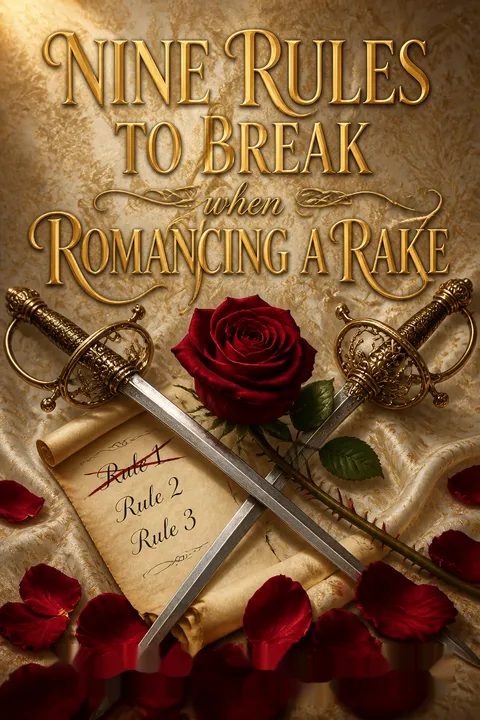
Nine Rules to Break When Romancing a Rake is highly praised for its charming, witty, and steamy romance between a "plain" spinster heroine and a rake hero. Readers love the chemistry between Callie and Gabriel, the entertaining premise of Callie's rule-breaking list, and MacLean's writing style. Many consider it a standout historical romance, with relatable characters and emotional depth. While some criticize predictable plot elements or historical inaccuracies, most reviewers found it an enjoyable, funny, and passionate read that left them eager for more from the author.
People Also Read



Characters
Calpurnia Hartwell
The daring wallflowerKnown as Callie, she is the twenty-eight-year-old eldest daughter of the Earl of Allendale and a lifelong observer of London society. Her romantic imagination is matched by a practical mind, but years of being overlooked have made her distrust her own attractiveness and ambition. A list of experiences she has denied herself gives her a structure for testing the limits placed on women, from drinking scotch to entering a men’s club in disguise. Her loyalty to her siblings is steady, and her affection for Gabriel makes her unusually vulnerable to his judgment. Callie’s defining strength is not fearlessness; it is her growing willingness to act while afraid and to insist that care must include respect.
Gabriel St. John
The guarded marquessThe Marquess of Ralston is wealthy, socially notorious, and more disciplined than his reputation suggests. He relies on duty and self-control because his childhood taught him to associate love with abandonment and helplessness. His twin brother and newly discovered sister matter deeply to him, though he often expresses affection through protection and practical arrangements rather than tenderness. Callie unsettles his habits because she combines intelligence, humor, and an appetite for risk with a belief in emotional generosity. Gabriel’s central conflict is whether he can distinguish genuine love from the destructive attachment he witnessed in his parents, and whether he can care for another person without trying to manage her choices.
Nicholas St. John
The teasing twinGabriel’s twin is a collector of antiquities, a practiced observer, and the more openly sociable brother. His scar distinguishes him from Gabriel, but his wit and warmth do more to define him. Nicholas quickly welcomes Juliana and understands that her arrival means she needs a family, not merely a guardian. He often punctures Gabriel’s self-deception with humor, while remaining loyal when the stakes become serious. His ease with Callie also gives Gabriel an uncomfortable mirror for his own jealousy.
Juliana Fiori
The Italian newcomerJuliana is the twenty-year-old daughter of Gabriel and Nicholas’s mother and a Venetian merchant. Direct, lively, and proud of her Italian identity, she has little patience for English rules whose purpose is not explained. Her fear of resembling the mother who left her makes her wary of marriage and uncertain whether her brothers can accept her. She forms an immediate friendship with Callie and gradually tests what it means to belong to a family she has only just discovered. Juliana’s frankness is not simple defiance; it is also a defense against being judged before anyone knows her.
Benedick Hartwell
Callie’s protective brotherThe Earl of Allendale is Callie’s elder brother and Mariana’s guardian. He is affectionate, dryly humorous, and willing to bend convention for his sister, even when her experiments alarm him. His encouragement helps Callie recognize how much of her life has been shaped by rules she never chose. Benedick understands the responsibilities of his title but does not mistake them for ownership of Callie’s future. His steady presence gives her a place to return to as she takes risks.
Mariana Hartwell
The adored younger sisterCallie’s eighteen-year-old sister is the celebrated beauty of the season and the fiancée of the Duke of Rivington. Mariana is affectionate, excitable, and more perceptive than her angelic reputation implies. Her happiness sharpens Callie’s sense of what she has missed, but Mariana does not treat her sister as a burden. She supports Callie’s experiments, helps her evade household obstacles, and befriends Juliana. Her warmth can tip into indiscretion, especially when she is enjoying a secret.
Anne
Callie’s loyal maidAnne has cared for Callie since childhood and knows her habits too well to be fooled by weak excuses. She worries that Callie’s list will bring scandal, yet helps with disguises and keeps the secret. Her blunt humor makes her a confidante rather than a merely obedient servant. Anne protects Callie without denying her the right to choose, even when she would prefer that choice to be safer.
Rupert Oxford
The fortune-hunting baronBaron Oxford is a fashionable, often drunken gambler whose mounting debts make a wealthy marriage attractive. His bright clothes and broad smile initially conceal how entitled he feels to a woman’s attention. He mistakes Callie’s courtesy for encouragement and regards her unmarried status as evidence that she should be grateful for any offer. Oxford serves as a social threat because he embodies the marriage market’s financial calculations in their bluntest form.
Nastasia Kritikos
The clear-eyed opera singerNastasia is a celebrated Greek singer and a woman accustomed to navigating relationships with powerful men. She understands both the privileges and the limitations of being a courtesan, and her composure can make her seem untouchable. Her history gives her a hard-earned perspective on love that Callie lacks. Though she can be proud and provocative, she is capable of speaking candidly about emotional cost without disguising it as moral judgment.
James Talbott Rivington
Mariana’s devoted dukeThe Duke of Rivington is Mariana’s young, wealthy fiancé. His devotion to her is plain, and his public standing helps Juliana receive a warmer introduction to society. He is a quiet contrast to Gabriel: a titled man whose tenderness is visible rather than concealed behind cynicism. Rivington’s kindness to Callie and Mariana makes him a reliable ally within their intertwined families.
The Dowager Countess of Allendale
The eager family matriarchCallie and Mariana’s mother is delighted by Mariana’s engagement and quickly turns it into a season-long wedding project. Her enthusiasm can overwhelm the people around her, especially Callie, whose clothing and prospects have long drawn her attention. She is neither a villain nor a subtle guide; her expectations reflect the marriage-centered world she knows.
The former Marchioness
The absent motherThe mother of Gabriel, Nicholas, and Juliana is absent from their lives, but her choices shape each sibling’s fears. Gabriel associates her history with the collapse of his father’s happiness, while Juliana worries that she may repeat her mother’s behavior. Her influence persists not through direct action but through the family’s competing interpretations of what love can do.
The Duke of Leighton
The rank-conscious dukeLeighton is a powerful aristocrat known for judging people by rank. Juliana meets him before she learns his identity, then discovers that his social standing does not make him welcoming. He represents the prejudice she must navigate as a foreign newcomer.
Monsieur Latuffe
Juliana’s strict dance masterLatuffe is a highly regarded instructor whose formal rules clash with Juliana’s directness. He expects young women to be graceful, compliant, and discreet. His lessons expose the gap between technical skill and the social performance demanded of a debutante.
Aunt Beatrice
The tactless relativeAunt Beatrice voices the family’s casual cruelty about Callie’s age, body, and unmarried state. Her remarks help push Callie toward rejecting a life built around other people’s judgments.
Plot Devices
Callie’s nine-item list
A map to self-assertionAfter years of observing rather than participating in society, Callie writes down nine experiences she wants to try. The list turns a general wish for a less constricted life into concrete decisions, including kissing, fencing, gambling, riding astride, and dancing every dance. Its tasks create the novel’s episodic spine and repeatedly place Callie in spaces from which women are excluded. The list begins as a private challenge, but Gabriel becomes involved as escort, witness, and romantic partner. Its deeper function is to let Callie measure change through action rather than waiting for society to recognize her.
Juliana’s London debut
A test of family loyaltyJuliana’s arrival forces Gabriel and Nicholas to decide whether to acknowledge their half sister openly, despite questions about her legitimacy and their mother’s reputation. Callie’s good standing and the support of the Allendale and Rivington families help Juliana enter society. Each lesson and public appearance tests the brothers’ ability to protect Juliana without treating her as a problem to manage. The debut plot gives the romance a practical bond: Callie and Gabriel cooperate because Juliana needs allies, even as their private feelings complicate that arrangement.
The disguise
A door into forbidden spacesAnne helps Callie dress as a man so she can enter a fencing club and Brooks’s, institutions closed to respectable women. The disguise provides access but also creates new risks: Callie must avoid recognition, manage unfamiliar clothes, and depend on Gabriel when her safety is threatened. It makes visible how gender rules are enforced through access to places, not only through explicit moral judgments. Callie’s disguise is not a wish to become someone else; it is a temporary means of trying experiences that her own identity excludes.
The Oxford wager
A private bet, public woundAfter hearing Oxford’s circle discuss Callie as a possible wealthy bride, Gabriel bets that Oxford will not win her. He later doubles the stake. Gabriel does not need the money, but the wager turns Callie’s future into a contest between men and becomes a crucial source of distrust when Oxford exposes it. Its dramatic force comes from the difference between Gabriel’s intention and the public meaning of his action: even a bet meant to oppose Oxford treats Callie’s choice as something other men can stake. The revelation tests whether affection can survive a real breach of respect.
About the Author




Download PDF
Download EPUB
.epub digital book format is ideal for reading ebooks on phones, tablets, and e-readers.








