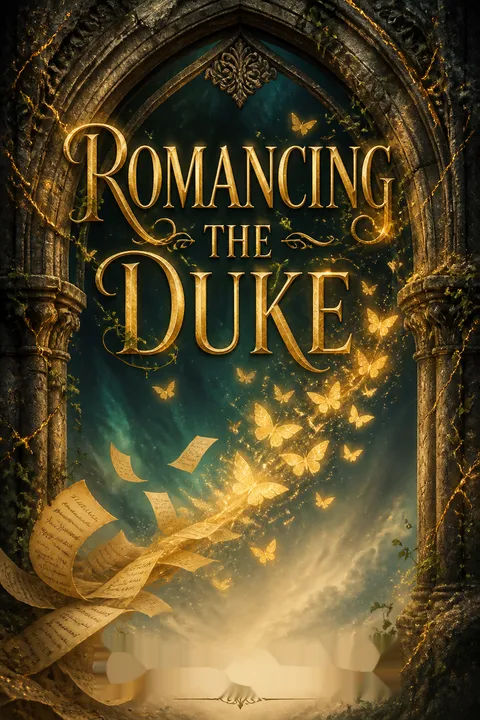


Plot Summary
A Castle in the Rain
Penniless after her father’s death, twenty-six-year-old Izzy Goodnight travels alone to Gostley Castle, summoned by a letter promising an inheritance from the late Earl of Lynforth. The castle is deserted, the rain soaks her clothes, and no executor appears. Instead, a formidable stranger emerges with a wolf-dog at his side.
He denies knowing the lawyer she seeks and answers her questions with teasing hostility. Hunger and exhaustion finally overwhelm her, and she faints in the courtyard. The stranger, Ransom, carries her into the great hall, warms her, and checks for injuries. When he lights a candle at her request, Izzy sees his scarred face and realizes he is blind, though he navigates the ruined castle with striking assurance.
The meeting places two forms of vulnerability in collision. Izzy has been deprived of money and home, while Ransom has lost sight and withdrawn from the world, yet both conceal their need behind practiced stories: her expectation that life owes her romance, his insistence that no one should come close. His physical rescue precedes any emotional generosity, making care an action before either character can trust its meaning.
The Heiress Takes Her Stand
Lord Archer arrives with the earl’s will and reveals that Izzy has inherited Gostley Castle, not the small sum she had hoped might keep her fed. Ransom, who believes the property belongs to his family, smashes furniture in protest. Archer explains that the castle was sold while Ransom was absent, though the duke says he never authorized a sale.
Izzy refuses to leave because she has nowhere else to go, and Ransom tries to carry her out. When he opens her valise, her pet ermine, Snowdrop, bites his finger; Izzy pries the animal loose and tends the wound. Ransom relents enough to offer her a secretary’s post, paying her to read his neglected correspondence while they investigate the disputed transfer.
Ownership is both legal fact and emotional necessity. For Ransom, the castle is the one environment he has mastered since his injury; for Izzy, it is the first substantial thing she can claim without a male relative controlling it. Their conflict therefore cannot be solved by attraction alone. The comic interruption of Snowdrop’s bite also reveals a shared pattern: each protects an unruly, imperfect creature rather than discarding it.
Bats, Darkness, and a Kiss
Ransom grants Izzy one night, expecting the castle’s filth and vermin to drive her away. He puts her in a bedchamber with a ruined mattress, then warns her about its bats. When a colony erupts from the canopy and chimney, he shields her from the swarm. She bolts for the exit, but the road to Newcastle is far too long to walk, and Ransom stops her after she mentions his solicitors by name.
He hires her formally instead. Later, Izzy chooses a narrow turret as her room and admits that darkness frightens her. Ransom kisses her roughly to make her understand he is no storybook hero; Izzy demands a better kiss, and their second embrace leaves both unsettled.
The Gothic hazards externalize fears neither character can comfortably name. Ransom uses the bats as a crude eviction strategy, while the kiss is another attempt to control what closeness might cost him. Izzy’s insistence on choosing how the kiss continues marks a small but consequential refusal to accept disappointment as fate. Her courage is not fearlessness; it is the decision to remain and negotiate while afraid.
A Home Begins
The vicar’s daughter, Abigail Pelham, arrives as a devoted reader of Izzy’s father’s stories. Ransom tries to enlist her help in sending Izzy away; instead, Abigail agrees to live at the castle as Izzy’s companion.
The two women begin cleaning and planning, while Izzy reads Ransom’s accumulated letters. She discovers that his sight varies, and that ordinary household costs have risen suspiciously, suggesting someone may be tampering with his accounts.
When a severe headache leaves Ransom collapsed on the floor, Izzy stays beside him, massages his scalp, and talks about the horse races she once studied with her father. His pain eases. In his disoriented state, he accepts her tenderness and kisses her, then withdraws when his clarity returns.
Domestic labor becomes a form of investigation and attachment at once. Izzy’s attention to minor accounts, learned through years of uncelebrated work, detects what wealth has rendered invisible to Ransom. Abigail’s arrival also changes the castle from a private contest into a nascent household. When Izzy tends Ransom, practical care briefly bypasses his defenses, but his retreat shows how little he trusts tenderness that he has not earned.
The Storybook Army Arrives
A group of costumed devotees of the Goodnight Tales arrives at the castle, led by Sir Wendell Butterfield and the local chapter of Cressida’s Handmaidens. Their enthusiasm overwhelms Ransom, who discovers that they associate his scarred, broad-shouldered appearance with Ulric, a romantic hero from the stories.
Izzy turns their visit into a walk through the park, where Ransom accuses her of mistaking him for a fictional champion. She explains that she wants him as himself, not as a knight. The pair slip into a ruined folly and begin kissing, but a chunk of crumbling masonry strikes Ransom’s head and interrupts them. Izzy checks his injury and tells him honestly that the scar has not made him monstrous.
The fans’ projection sharpens the novel’s distinction between being admired and being known. Ransom initially experiences their attention as another kind of blindness: they see a character where he expects others to see only damage. Izzy’s answer is not to deny his injury but to treat it as one feature of a whole person. The falling stone punctures the scene’s romance without negating its intimacy.
A Secret Behind the Shelves
After Duncan recounts Ransom’s past, Izzy learns that his fiancée, Lady Emily, eloped with a tenant farmer; Ransom pursued them, fought the farmer, and suffered the blade wound that left him partly blind.
At a formal dinner, Izzy reads aloud a letter from Emily, believing it proves the power of love. Ransom recognizes its author and storms into the library. Their argument turns physical, but a hidden bookcase swings open and traps them in a sealed priest hole.
Ransom comforts Izzy when darkness recalls her cousin Martin locking her in a cellar as a child. Together they find the release, then discover human bones in the chamber. The remains are buried in the castle chapel, and the discovery leaves Ransom shaken by the possibility of dying forgotten.
The hidden chamber joins private histories that the characters have tried to keep separate. Izzy’s fear is rooted in a real childhood imprisonment, while Ransom’s terror is less about darkness than the prospect of becoming an abandoned remnant. Their shared confinement reverses their usual roles: the blind man knows how to orient himself, and the imaginative woman must attend to immediate sensation. The bones give their intimacy a material consequence, not merely a symbolic one.
Candles Against the Dark
After the burial, Izzy returns to the castle rather than leave Ransom alone. She quietly restores the great hall’s furniture to its familiar places, recognizing how much he depends on its arrangement.
Later, she finds her turret filled with candles, blankets, and other comforts Ransom has supplied to keep her from making frightened predawn trips downstairs. His attempts to protect her have become care, however clumsily disguised. They stop arguing long enough to choose each other: Ransom pleases Izzy before they make love, and she tells him she has fallen for him.
He falls asleep without answering. In the morning, Izzy assumes the night meant little to him and promises to behave as if nothing changed, leaving Ransom to confront how badly he wants more.
The candles are a practical accommodation, but their emotional force comes from Ransom’s attention to a fear he cannot see. He has learned Izzy’s nighttime pattern and changes the room rather than demanding that she change herself. Their first night together deepens the asymmetry: she risks naming affection, while he can only receive it. His silence is not indifference, but Izzy has good reason to interpret it that way.
The Hearing Comes Due
The morning after their first night together, Ransom tries to turn intimacy into a continuing affair, but Izzy redirects him to the paperwork. They find a letter confirming that his solicitors sold Gostley Castle at his request, a request he never made.
The surrounding accounts suggest deliberate financial manipulation, and a new notice says the solicitors will challenge his mental competence. Izzy, Abigail, Duncan, and Ransom prepare to present the castle as an active, orderly household before the visitors arrive.
The plan falters when Ransom cannot manage a staged dinner with cutlery and food arranged for him; he feels patronized and ends the rehearsal. He then proposes marriage as a financial shield, coldly and in public. Izzy rejects him and leaves.
The legal threat converts Ransom’s private disability into public vulnerability. The rehearsal fails because Izzy’s well-meant assistance repeats the infantilization he fears, showing that care without consent can become another form of control. Ransom’s marriage proposal is protective in intention but transactional in form. Izzy rejects not commitment itself but the demand that she accept security without recognition or tenderness.
A Promise Comes Undone
After Izzy walks away, Ransom orders Duncan to pack for London, determined to raise money for her before his affairs collapse. Duncan refuses to continue as a servant and reveals that he stayed for decades because he promised Ransom’s dying mother he would show her son love. He rebukes Ransom for driving away the people who care for him.
Izzy waits anxiously through the night, then sees Ransom return laughing with Duncan. He has visited Abigail, Wendell, and local taverns, asking readers to help him work through the Goodnight Tales. The stories reveal that Izzy, not her father, wrote them. She believes he will now reduce her to the same childlike image as other fans, and flees before he can explain.
Duncan’s disclosure reframes loyalty as a chosen practice rather than a contract or inherited duty. Ransom has mistaken the absence of affection in his childhood for proof that affection is undeserved; Duncan’s long service contradicts that belief. At the same time, Ransom’s effort to read the stories is an attempt to understand Izzy on her own terms. She cannot yet trust that his new knowledge will make him see more of her, rather than less.
The Author Steps Forward
Ransom follows Izzy and explains that learning she wrote the stories made him proud, not angry. He recognizes that her writing gave thousands of readers courage and helped shape the choices that brought them together. He apologizes for his cruelty at the failed rehearsal, and the two reconcile.
Izzy, who has spent years caring for others, takes the lead in their next intimate encounter, giving Ransom affection without treating it as payment. He asks her to make him breakfast the next morning, signaling that he wants ordinary life with her, not only passion. Abigail arrives with her own secret: she has begun a romance with Wendell and needs Izzy to protect her privacy. The friends then turn together to the approaching hearing.
The authorship revelation reverses the usual direction of recognition: Ransom’s reading does not expose a fraud but reveals the labor and imagination beneath Izzy’s public persona. His pride matters because it addresses the wound at the center of her secrecy, the belief that her real self cannot earn admiration. Izzy’s care for him becomes reciprocal rather than self-erasing, while Abigail’s confidence gives the women a friendship outside their shared work.
Ransom Joins the Order
With the hearing near, Izzy and Abigail summon the Moranglian group to help staff the castle and rehearse its presentation. Ransom first insults the devotees, then realizes the staged dinner and concealment of his blindness cannot work. He apologizes to Wendell and asks to join the group, admitting that he needs help to protect Izzy.
The knights test his knowledge of the stories before accepting him into their order. Wendell then reveals that he is a barrister and offers to act as Ransom’s legal counsel. Ransom accepts his hand and the group’s welcome. The gesture gives him both practical representation against the corrupt solicitors and a community he had previously dismissed as foolish.
Ransom’s membership is not a claim that fiction is fact; it is an act of entering a community on its own terms. His earlier contempt had protected him from the risk of being laughed at or refused. Asking for help costs him that defense, yet produces concrete allies and legal expertise. The scene makes belonging useful without making it conditional on wealth, rank, or perfect performance.
The Hearing Turns Romantic
When the solicitors, a doctor, and a representative of the Lord Chancellor arrive, Ransom first secures an irrevocable fund for Izzy’s restoration of the castle. During the questioning, one of the knights calls him a brother, exposing his membership in the fictional order. Rather than disown the group to protect his title, Ransom openly claims it.
Izzy then tells the visitors that the stories and their characters are invented, and that Ransom is supporting her rather than confusing fantasy with reality. The Lord Chancellor’s representative declines to pursue a lunacy hearing, since his own son has long cherished the tales. Ransom remains prepared to challenge the solicitors’ fraud in London, but he is no longer facing judgment alone.
The crisis is resolved not by proving Ransom can imitate an able-bodied duke, but by showing that his attachments are coherent and chosen. Izzy’s disclosure risks disappointing the readers who sustained her, yet it also frees Ransom from having to disown the people who helped him. The legal reprieve depends partly on personal connection, an imperfect system’s human exception, while the financial trust gives Izzy material security rather than mere reassurance.
A Home They Choose
After the hearing, Ransom and Izzy marry in a small ceremony attended by the costumed knights and handmaidens. Their wedding does not settle every legal dispute, but it makes their commitment public and lets them return together to the castle. Ransom carries Izzy across the courtyard, repeating the gesture from their first day, and this time she stays conscious in his arms.
The ruined fortress is becoming a home through shared labor and chosen company, not inherited grandeur alone. Izzy has gained a place of her own, while Ransom has begun to re-enter a world he had abandoned. Their future rests on a partnership in which each can ask for care and offer it in return.
The repeated carrying scene changes meaning because the relationship has changed: the first time, Ransom acts while Izzy is unconscious; now she is present, consenting, and able to meet the gesture with her own choice. The wedding offers security but does not erase the conflicts over property, disability, or public identity. Instead, it makes the couple’s shared work the basis of their future, turning the castle from Ransom’s refuge into a home they can shape together.
Epilogue
Several months later, Izzy is pregnant and writing new installments of the story world she once kept hidden. Ransom massages her shoulders and helps her answer readers’ letters, including a scathing review that dismisses her work as inferior to her father’s. Rather than retreat, Izzy plans to continue the tale until its intertwined plot reveals both the Shadow Knight’s identity and her own authorship.
Ransom has also completed a nursery, with purple bedding, bookshelves, and stars painted across the ceiling. Some stars are uneven because he painted them himself. Their child will inherit not only a castle, but the stories, security, and affection Izzy longed for.
The ending makes authorship a continuing practice rather than a single revelation. Izzy does not simply claim her past work; she chooses how and when to tell the truth, balancing her readers’ attachment with her own right to be recognized. The hostile review shows that public acceptance remains uncertain, but Ransom’s response is no longer to hide her or settle the matter through money alone. The handmade stars transform the childhood image that once confined Izzy into a room their child can inhabit safely. The family’s future is built from her imagination and his learned tenderness.
Analysis
Romancing the Duke uses the conventions of historical romance to examine how people are misread when others prefer a useful image to a complicated person. Izzy is famous as a fictional child, so admirers bring her gifts and affection while overlooking the adult who has lost her home and livelihood. Ransom is a duke, a rake, and a scarred blind man; each label allows him to control how others approach him, but none answers the question he fears most: whether he can be loved without first becoming invulnerable.
The castle gives these conflicts physical form. Ransom has made it navigable through repetition, while Izzy sees rooms that could become livable. Their disagreement over ownership is also a disagreement over what a home is: a place one has mastered alone, or a place one can alter with others. The restoration depends on work by Abigail, Duncan, the Moranglians, and eventually Ransom himself. Community is not a sentimental backdrop; it supplies labor, counsel, hospitality, and friendship when institutions fail.
The novel also distinguishes care from control. Izzy sometimes offers help in ways Ransom experiences as infantilizing, especially when she arranges his meal without understanding what the gesture means to him. Conversely, Ransom’s candles answer a fear he has taken time to notice. The difference lies in attention and consent, not in who is stronger or more generous.
Finally, the stories within the story are neither simply lies nor substitutes for reality. Their plots can inspire readers, but the public image of little Izzy also constrains the woman who created them. Ransom’s willingness to enter that imaginative community matters because it does not require him to mistake fiction for fact. He chooses connection while knowing the stories are invented. The ending suggests that a happy resolution is not proof that life follows a script; it is the difficult work of recognizing another person, making room for their truth, and building a future together.
Review Summary
Romancing the Duke is a delightful historical romance that captivated readers with its charming characters, witty banter, and steamy scenes. Many praised Tessa Dare's writing style, describing it as humorous and engaging. The story of Izzy and Ransom's relationship in a crumbling castle resonated with fans of the genre. While some found it unrealistic or overly silly, most reviewers enjoyed the book's lighthearted tone and romantic elements. Overall, it received high ratings and was considered a strong start to Dare's new series.
People Also Read

Characters
Isolde Goodnight
The overlooked storytellerKnown as Izzy, she is a resourceful young woman whose father’s popular romantic tales have made her famous without making her known. She is observant, practical, and more resilient than her awkwardness and self-doubt suggest. Years spent supporting her father have taught her to work, read accounts, and anticipate other people’s needs, but they have also left her with little experience of being cared for. She wants a home and the freedom to be regarded as an adult rather than as the child in a fictional story. Her wit and imagination are sources of pleasure and survival, though she must learn that self-effacement is not the price of being loved.
Ransom Vane
The wounded dukeThe Duke of Rothbury is powerful, proud, and accustomed to keeping intimacy brief and controlled. A sword wound has left him scarred and with severely impaired, variable sight; he has responded by mapping Gostley Castle in his mind and resisting assistance that might make him feel dependent. His abrasive humor protects a deeper fear that affection is something he cannot deserve or repay. He is perceptive about sound, touch, and spatial detail, but initially less able to recognize emotional generosity. The castle is both his family seat and the ordered refuge he has built after injury, making change feel like a threat to the independence he has fought to preserve.
Abigail Pelham
The devoted neighborThe vicar’s daughter is a polished, energetic reader of the Goodnight Tales and a lifelong neighbor of Gostley Castle. She arrives eager to meet Izzy, then channels her enthusiasm into making the ruined rooms habitable and finding work for local people. Abigail’s conventional femininity initially makes Izzy wary, but her practical loyalty gives their relationship room to become a genuine friendship. She likes to help, sometimes before checking whether help is wanted, yet she is capable of courage and independent feeling.
Duncan
The steadfast valetRansom’s longtime valet is exacting about clothes, household order, and professional standards. Months of being refused the chance to perform his work have left him frustrated, but he remains attentive to the duke’s needs. Duncan protects Ransom’s privacy and speaks carefully about his employer, even when he carries knowledge that could help others understand him. His dignity is tied to service, yet he is more than a functionary: he has his own history, loyalties, and judgment.
Snowdrop
The fierce little ermineIzzy’s small ermine was given to her by an admirer of the Goodnight stories. Snowdrop is elegant-looking, old, and far more predatory than a conventional lap pet. She can bite the people Izzy cares about and disrupt a carefully managed room, but Izzy refuses to abandon her. The animal links the fiction surrounding Izzy to the untidy realities of her life.
Magnus
Ransom’s loyal wolf-dogRansom’s large dog accompanies him through the castle and acts as a familiar presence in his isolated routine. Magnus is alert to approaching visitors and wary of Snowdrop, whose attacks make him a comic counterweight to the duke’s imposing size. His steady companionship reflects the practical forms of trust Ransom can accept before he is ready to accept care from people.
Lord Archer
The earl’s executorThe lawyer who carries out the late Earl of Lynforth’s will brings Izzy to Gostley Castle and expects to settle the inheritance quickly. He admires her father’s stories, but initially sees Izzy through the childlike image they created. His brisk manner helps trigger the central property conflict, even though he is not its cause.
Sir Henry Goodnight
The celebrated storytellerIzzy’s late father was a scholar and a popular author whose serialized tales created a devoted readership. His public image as a loving father shapes how readers treat his daughter, while the private demands of their household shaped her work and self-reliance. His legacy is both a source of pride and a burden Izzy must learn to carry on her own terms.
Martin
The cruel cousinIzzy’s cousin was her tormentor during childhood visits and later represents the security she lacks within her family. His treatment of her helps explain her fear of darkness and her reluctance to trust that others will protect her.
Lady Emily Riverdale
Ransom’s former fiancéeA young aristocratic woman once engaged to Ransom, Emily chooses a life with a tenant farmer rather than the marriage arranged for her. Her decision and her private explanation become important to how Ransom understands loyalty, love, and his own past.
Lord Lynforth
The unexpected benefactorThe late earl was a patron of Sir Henry and a familiar figure from Izzy’s childhood. His final bequest gives her a chance to claim property at a moment when she has almost nothing.
Wendell Butterfield
The armored barristerA leader among the local enthusiasts of the Goodnight Tales, Wendell participates in their costumed gatherings while maintaining a serious legal profession. His membership in the group is not an escape from adulthood but a chosen community. He is sensitive to the respect owed to its members and brings practical expertise when the castle’s legal troubles intensify.
Lord Peregrine
Izzy’s letter-writing friendA bedridden correspondent who exchanges playful hypothetical dilemmas with Izzy. Their letters give her a friendship beyond the castle and a space to exercise her wit without being treated as a storybook child.
Blaylock
The calculating solicitorOne of Ransom’s solicitors, Blaylock represents the professional authority managing the duke’s affairs during his absence. His actions raise questions about whose interests the legal machinery is serving.
Riggett
The second solicitorA colleague of Blaylock, Riggett participates in the effort to question Ransom’s competence. His role makes the duke’s neglected correspondence and vulnerability before formal institutions consequential.
Mr. Havers
The Lord Chancellor’s representativeHavers attends the competency inquiry on behalf of the Lord Chancellor. His family’s familiarity with the Goodnight stories gives him a personal connection to the dispute, alongside his official responsibilities.
Dr. Mills
The examining physicianA doctor from a London institution, Mills is brought to assess Ransom’s mental state. His presence turns the consequences of blindness and prolonged isolation into a formal question of autonomy.
Plot Devices
Gostley Castle’s deed
The disputed homeThe late Earl of Lynforth’s bequest gives Izzy the ruined castle, while Ransom maintains that it was sold without his consent. The deed forces them into close cooperation: Izzy needs a secure home, and Ransom needs access to the correspondence that may explain the sale. The castle is not merely a setting but the material stake that ties their personal conflict to legal and financial danger.
Ransom’s variable sight
A fragile independenceRansom’s injury leaves his vision profoundly impaired, with brief periods when he can make out shapes and color. He has learned the castle by counting steps and memorizing where objects belong, allowing him to preserve a degree of control. The condition also makes reading and managing documents difficult, which creates an opening for financial abuse and turns ordinary tasks into tests of pride and trust.
The Goodnight Tales
Fiction meets its readersSir Henry’s serialized romance has produced a network of readers who exchange letters, form clubs, and sometimes dress as its characters. Their devotion gives Izzy social support, but it also fixes her in the public mind as the innocent girl represented in the stories. The tales shape the fans’ response to Ransom, bring practical help to the castle, and become a way for him to understand the imaginative life Izzy has guarded.
The unopened correspondence
A paper trail of fraudRansom’s months of neglected letters contain estate accounts, legal notices, and private messages. Izzy’s experience as her father’s secretary helps her sort the material and notice irregular expenses. As the papers accumulate into evidence, they reveal the disputed transfer and the challenge to Ransom’s authority, turning her temporary employment into the central investigation.
The priest hole
A hidden chamber of reckoningA concealed space behind the library shelves opens during an intimate confrontation and traps Izzy and Ransom in darkness. Its concealed remains connect the castle’s violent past to their present fears. The enclosure also strips away their usual defenses: Ransom must guide Izzy through the dark, while she learns how his practiced control depends on routine and an exact mental map.
About the Author




Download PDF
Download EPUB
.epub digital book format is ideal for reading ebooks on phones, tablets, and e-readers.








