Key Takeaways
1. The Personal Ordeal: A Father's Quest for Understanding
For Powers the question of “what to do about crazy people” isn’t just academic; it’s deeply personal.
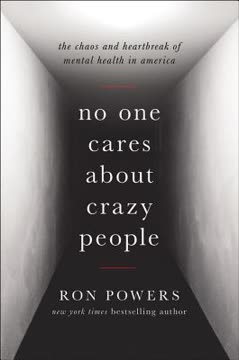
Pulitzer Prize-winning journalist Ron Powers embarks on a deeply personal and historical journey to understand mental illness after both his sons, Kevin and Dean, are diagnosed with schizophrenia. The book is a raw exploration of the "chaos and heartbreak" his family endured, particularly after his younger son, Kevin, a gifted musician, tragically died by suicide at age twenty. This profound loss compels Powers to break a decade of silence, transforming his private grief into a public inquiry.
His odyssey of reportage began after witnessing the devastating impact of schizophrenia on his bright, buoyant sons: Kevin, a talented musician, and Dean, a promising writer and guitarist. The narrative weaves his family's moving saga with a broader social history, highlighting how the personal struggle with mental illness is often mirrored by societal failures. Powers's initial reluctance to write the book, driven by a desire for privacy and fear of exploitation, ultimately gives way to a moral imperative to advocate for others.
The author's determination to forge a way forward stems from his family's suffering, aiming to shed light on the systemic issues that leave many families struggling alone. He seeks to humanize the "crazy people" often dismissed by society, demonstrating that they are individuals who have known love, laughter, and dreams, whose lives are tragically derailed by an inexplicable and destructive scourge. This personal lens makes the historical and societal critique all the more poignant and urgent.
2. Historical Dehumanization: From Bedlam's Spectacle to Modern Stigma
“No one cares about crazy people.”
This chilling quote, uttered by a political aide, encapsulates centuries of societal indifference and cruelty towards the mentally ill. From the sadistic abuse at Bedlam Asylum in London seven centuries ago to today's scattershot treatments, the narrative of mental health care has been appalling, marked by fear, loathing, and systematic dehumanization. Historically, those deemed "mad" were imprisoned, beaten, starved, and even put on public display for amusement.
The historical treatment of the mentally ill reveals a consistent pattern of exclusion and punishment rather than care.
- Bedlam Asylum: Originally a religious sanctuary, it devolved into a notorious madhouse where "lunaticks" were chained, abused, and exhibited to paying visitors.
- Enlightenment "Remedies": Included spinning patients rapidly in chairs, bloodletting, forced ingestion of mercury, and drenching with scalding or frigid water.
- Derogatory Nomenclature: Terms like "lunatics," "imbeciles," "loonies," and "nutcases" served to separate and demonize, reinforcing the "Other" status of those afflicted.
This deep-seated fear and loathing have persisted, manifesting in modern times through inadequate public policies, lack of support, and the continued stigmatization of individuals struggling with mental health conditions. The author argues that this historical context is crucial for understanding the current landscape where too many families face these challenges in isolation.
3. The Promise and Perversion of "Moral Treatment"
Some psychiatric scholars maintain that it remains the most effective of all history’s treatments for the mentally ill.
The late eighteenth century saw the emergence of "moral treatment," a revolutionary approach pioneered by figures like Philippe Pinel in France and William Tuke in Britain. This movement emphasized humane care, a healthful environment, and respectful treatment, believing these could restore an afflicted mind. Pinel famously unchained patients at Bicêtre Hospital, demonstrating that kindness did not lead to violence, while Tuke established the York Retreat, focusing on a harmonious setting and compassionate staff.
In America, moral treatment found advocates in Dr. Benjamin Rush and Dorothea Dix.
- Benjamin Rush: Rejected demonic causes of insanity and identified stress as a contributor, advocating against shackles.
- Dorothea Dix: A tireless reformer who exposed the horrific conditions in jails and asylums, leading to the founding of 32 humane institutions by 1880. Her "Memorial to the Legislature of Massachusetts" is a powerful plea for the "miserable, the desolate, the outcast."
- Worcester State Hospital: Under Dr. Samuel Woodward, it became a model of moral care, emphasizing kindness and personal attention.
However, this golden age was brief. Overcrowding, lack of funding, and the influx of more violent patients eroded the ideals of moral treatment. The vision of elegant, therapeutic asylums, like those designed by Thomas Kirkbride, eventually gave way to institutions focused on mere custodianship, foreshadowing a regression towards less humane practices.
4. Eugenics: A Scientific Justification for Elimination
The laws of nature require the obliteration of the unfit and human life is valuable only when it is of use to the community or race.
Charles Darwin's theory of natural selection, particularly the concept of "survival of the fittest," was tragically misinterpreted and perverted into the pseudoscience of eugenics. Figures like Francis Galton and Madison Grant twisted these ideas to advocate for human engineering, aiming to "purify" the race by eliminating those deemed "unfit," including the mentally ill, the poor, and minorities. This ideology gained alarming traction in the late 19th and early 20th centuries.
Eugenics, meaning "goodly birth," proposed:
- "Positive" Eugenics: Arranged marriages between "fit" individuals (intelligent, sane, Nordic).
- "Negative" Eugenics: Preventing the "unfit" from reproducing through sterilization.
- "Surplus Population": A concept, amplified from Malthus, used to justify the elimination of those deemed unproductive or burdensome.
This dark chapter culminated in the Nazi euthanasia program, which targeted disabled children and then the mentally ill for "disinfection" (mass murder) and forced sterilization. Even in the United States, figures like Theodore Roosevelt and Supreme Court Justice Oliver Wendell Holmes Jr. supported compulsory sterilization laws, with Holmes famously stating, "Three generations of imbeciles are enough." This demonstrates how scientific theories, when distorted by prejudice, can lead to horrific crimes against humanity.
5. The Antipsychiatry Movement: Challenging the Notion of Illness
If you talk to God, you are praying. If God talks to you, you have schizophrenia.
The 1960s saw the rise of the antipsychiatry movement, spearheaded by Hungarian-American psychiatrist Thomas Szasz, who vehemently argued that "mental illness" was a myth—a metaphor for behavioral choices, not a biological disease. Szasz viewed psychiatry as a coercive tool of the state, infringing on civil liberties by enforcing involuntary hospitalization and medication. His book, The Myth of Mental Illness (1961), profoundly influenced public policy and debate.
Key tenets of Szasz's philosophy included:
- Denial of Mental Illness: He asserted that "the mind" itself was a metaphor, and therefore, mental illness could not be a physical disease.
- Civil Liberties: Involuntary treatment was akin to slavery, a violation of fundamental human rights.
- Critique of Psychiatry: He saw psychiatrists as "agents of the state" and their diagnoses as labels to control "undesirable" behavior.
- Alliance with Scientology: Szasz co-founded the Citizens Commission on Human Rights (CCHR) with L. Ron Hubbard, further amplifying his message.
Szasz's ideas, though controversial and often lacking scientific basis, resonated with a counterculture wary of authority and contributed to a climate where involuntary treatment became legally challenging. This led to policies requiring court orders for forced medication, often causing significant delays and worsening conditions for patients in acute psychosis, who, ironically, were least capable of exercising their "free will."
6. Deinstitutionalization: A Catastrophic Policy Failure
The program that Kennedy had signed into action came to be known as “deinstitutionalization,” a name that carried the lilting harmony of silverware spilling from a cleanup tray.
President John F. Kennedy's 1963 Community Mental Health Act aimed to close decrepit state asylums and replace them with local community mental health centers (CMHCs). This ambitious plan, fueled by optimism about new "wonder drugs" like Thorazine, sought to integrate mentally ill patients into society. However, it became one of the century's most disastrous social experiments, leading to widespread unintended consequences.
The failure of deinstitutionalization was multifaceted:
- Underfunding: The Vietnam War diverted federal funds, leaving fewer than half of the planned CMHCs built.
- Medicaid Loophole: Medicaid prohibited federal reimbursement for psychiatric patients in state hospitals, incentivizing states to discharge patients without adequate community support.
- Lack of Infrastructure: Communities were unprepared for the influx of hundreds of thousands of patients, lacking housing, treatment facilities, and trained staff.
This bungled liberation resulted in a massive increase in homelessness and the criminalization of mental illness, as many discharged patients, often unmedicated and unsupported, ended up on the streets or in jails. Ronald Reagan, as governor of California, accelerated this process, further dismantling state hospital systems. The Mental Health Systems Act of 1979, a brief attempt by President Jimmy Carter to rectify the situation, was swiftly rescinded by Reagan in 1981, cementing the crisis for decades to come.
7. Big Pharma's Rise: Miracle Drugs and Moral Compromises
The very notion—Sanity in a bottle! Peace of mind in a popped pill!—so perfectly fit postwar America’s marketing-conditioned faith in E-Z solutions via consumer products that the wonder-drug blitzkrieg was complete almost as soon as it started.
The mid-20th century brought a wave of euphoria with the advent of antipsychotic medications, hailed as "wonder drugs" that promised to cure madness. Thorazine, introduced in 1954, was marketed aggressively for a wide range of ailments, often with exaggerated claims that blurred the line between symptom management and actual cure. This era marked the beginning of "Big Pharma's" immense financial and cultural influence, transforming psychiatry from talk therapy to pill prescription.
The pharmaceutical industry's practices were often ethically dubious:
- Deceptive Marketing: Companies like Smith, Kline & French (Thorazine) and Johnson & Johnson (Risperdal) promoted drugs for unapproved "off-label" uses, insinuating cures where only symptom relief was possible.
- Side Effects and Cover-ups: Clozapine, an early "atypical" antipsychotic, was pulled from the market due to dangerous side effects like agranulocytosis, which companies initially failed to disclose.
- Financial Incentives: Kickbacks to nursing homes and "lucrative consulting agreements" encouraged over-prescription, often to vulnerable populations like the elderly with dementia.
- Massive Fines: Companies faced billions in lawsuits for fraud, false claims, and failure to disclose safety data, yet these penalties were often seen as merely a "cost of doing business," barely impacting soaring revenues.
The Bayh-Dole Act of 1980, which privatized federally funded research, further fueled this commercialization, allowing pharmaceutical companies to profit immensely from publicly funded discoveries. This commodification of health, coupled with aggressive marketing, led to a collapse of public trust and left many patients, especially the mentally ill, vulnerable to over-medication and harmful side effects.
8. The Criminalization of Mental Illness: Jails as Asylums
Instead of treating them, we are imprisoning them.
A devastating consequence of deinstitutionalization and societal indifference is the criminalization of mental illness, turning jails and prisons into the nation's largest de facto mental health facilities. Individuals in psychotic states, often homeless and lacking support, are arrested for minor offenses or survival crimes, then warehoused in correctional systems ill-equipped to provide psychiatric care. This systemic failure exacerbates their conditions and perpetuates a cycle of incarceration.
Examples of this criminalization and its brutal consequences include:
- James "Abba" Boyd: A homeless man with paranoid schizophrenia, shot to death by police in Albuquerque for violating a camping ordinance, despite attempts at de-escalation. His helmet-cam recorded death highlighted police brutality against the mentally ill.
- Rikers Island: Described as "the basket into which society drops the disruptive mentally ill," this notorious jail sees mentally ill inmates subjected to solitary confinement, beatings, and neglect, sometimes leading to death (e.g., Bradley Ballard, Jerome Murdough).
- Kalief Browder: A teenager who spent three years at Rikers, much of it in solitary confinement, for a false accusation. He learned suicide techniques there and later took his own life, illustrating the profound psychological damage inflicted by the system.
- Josh Francisco: A bipolar man whose family desperately sought treatment, but bureaucratic rigidities and legal missteps led him through a cycle of jail, brief hospitalization, and ultimately, suicide in solitary confinement.
These cases underscore a profound moral and fiscal failure: society spends far more on imprisoning the mentally ill than it would on effective treatment and support. The chaotic, violent environments of jails worsen mental illness, leading to further deterioration, victimization, and a tragic erosion of human dignity.
9. Anosognosia: The Cruel Barrier to Self-Awareness and Treatment
Anosognosia, a Greek term connoting a blockage of insight into one’s self (literally, “without knowledge”), is the false conviction within a person that nothing is wrong with his mind.
Anosognosia presents a cruel paradox in mental illness, particularly schizophrenia: the very nature of the disease often prevents sufferers from recognizing their own illness. This lack of insight creates a formidable barrier to treatment, as individuals genuinely believe they are well and resist medication or therapy, often with profound and tragic consequences for themselves and their families. It complicates the ethical and legal debates around involuntary treatment.
The author's family experienced anosognosia firsthand:
- Kevin's Denial: Despite struggling with schizophrenia, Kevin would only admit to having "a condition." He eventually stopped taking his prescribed antipsychotics, leading to a psychotic break and ultimately his suicide.
- Dean's Resistance: Dean, too, initially resisted medication and counseling, believing he was fine, even as his thoughts and behavior became increasingly erratic. His eventual acceptance of "depot" injections (long-acting injectables) was a critical turning point in his recovery.
This symptom highlights the inadequacy of legal frameworks that prioritize a psychotic individual's "free will" over their desperate need for intervention, often requiring them to become an "imminent danger" before help can be legally compelled. The delay in treatment due to anosognosia can lead to deeper entrenchment of the illness, worsening long-term outcomes and prolonging suffering for both the patient and their loved ones.
10. Creativity and Madness: An Enduring, Complex Link
If true—and the distinguished Claridge claims strong experimental and clinical evidence—the implications are enormous and revisive. They would overturn, for instance, the long-held doctrine that schizophrenia can originate only from a genetic flaw, though damaging external, environmental factors must stimulate it to form the dreaded disease.
The perceived link between artistic genius and madness is a pervasive cultural myth, often romanticized through figures like Vincent van Gogh or Sylvia Plath. Modern neuroscience, while cautious, tentatively explores this connection, suggesting that certain personality traits, known as "schizotypy," may underlie both creativity and a predisposition to mental illness. This concept challenges the idea that schizophrenia solely stems from genetic flaws, proposing a spectrum where everyone carries some potential for both.
Key aspects of this complex relationship include:
- Schizotypy: Gordon Claridge's concept suggests a spectrum of inherited personality traits, from nonconformity and unusual thoughts to full-blown psychotic disorders. It implies that everyone possesses some degree of schizotypy.
- Shared Cognitive Features: Creative thinking and schizophrenic thinking may share traits like cognitive flexibility, divergent thinking, and the ability to make unusual associations.
- Genetic Predisposition: Studies, such as the Icelandic research by Robert A. Power, suggest a genetic overlap between creativity and psychosis, implying that genes linked to mental illness might have been favored by natural selection for conferring some creative advantage.
However, the relationship is not definitive. While many artists may experience mental health challenges, working in art or literature is also seen as a therapeutic outlet. The debate continues, but the idea that the human brain's capacity for profound creativity might be intertwined with its vulnerability to madness remains a compelling and active area of research.
11. Glimmers of Hope: Advocacy and Community-Based Recovery
To watch these men as they trudge along Main Street, slowly yet with dignified bearing, is to understand in one’s heart that someone cares about crazy people.
Despite the pervasive chaos in mental health care, glimmers of hope emerge from dedicated advocacy and innovative community-based programs. Organizations like the National Alliance on Mental Illness (NAMI), founded by exasperated parents in 1979, have tirelessly campaigned for education, support, and an end to stigma, challenging the notion that mental illness is a moral failing. Their work, alongside groups like Clubhouse International, emphasizes the power of community, companionship, and psychosocial rehabilitation.
Key initiatives and insights include:
- NAMI's Advocacy: Challenged the "schizophrenogenic mother" myth and demanded equal sympathy for mental illness as for physical diseases like leukemia.
- Clubhouse International: Provides enclaves for mentally ill individuals, offering companionship, work skills, housing assistance, and educational resources, fostering recovery and integration.
- Vermont Longitudinal Study (Courtenay Harding): Validated that community care combined with proper medication can restore many severe schizophrenic sufferers to productive lives. This study, building on George Brooks's work with Thorazine, showed remarkable recovery rates (45-48%) for patients engaged in psychosocial rehabilitation.
These efforts demonstrate that kindness, companionship, and intimate care, when integrated with appropriate psychotropic regimens, can act as powerful counterforces to deepening psychosis. They offer a vision of a future where the mentally ill are not merely managed but supported in building healthy, rewarding lives, enriching both themselves and their communities.
12. An Urgent Call to Action: Reimagining Mental Health Care
America must turn its immense resources and energy and conciliatory goodwill to a final assault on mental illness.
The current state of mental health care in America is a "chaos and heartbreak" that demands urgent, systemic reform. Despite scientific advancements and a wealth of information, societal apathy, political inertia, and economic short-sightedness perpetuate a cycle of neglect, criminalization, and immense human suffering. The costs—both moral and fiscal—are staggering, with billions spent on incarceration while millions remain untreated.
The critical needs for reform include:
- Ending Criminalization: Shifting from jailing the mentally ill to providing accessible, effective treatment. Studies show public care is far less expensive than incarceration.
- Early Intervention: Addressing the fact that two-thirds of children with mental health problems never receive treatment, despite early intervention being crucial for better outcomes.
- Revitalizing Psychiatry: Combating the decline in psychiatry as a medical specialty, especially in rural and underserved urban areas, and integrating sophisticated psychotropic regimens with talk therapy.
- Legislative Action: Bills like Tim Murphy's "Helping Families in Mental Health Crisis Act" aim to increase funding, amend privacy laws (HIPAA) to involve families, and mandate advanced training for law enforcement.
- Public Will and Investment: A historic mobilization of unified public and private investment, akin to preparing for war, is needed to build modern, humane facilities and support comprehensive community-based care.
The author implores society to recognize the mentally ill not as a threat, but as potential partners in community regeneration. By escaping our collective "anosognosia" and embracing empathy, kindness, and sustained effort, America can move beyond its modern Bedlams and honor the inherent dignity of every individual, ensuring that "someone cares about crazy people."
Last updated:
Review Summary
No One Cares About Crazy People alternates between memoir and history, chronicling Powers' experience with two schizophrenic sons—one who died by suicide—and the treatment of mental illness in America. Reviews praise the powerful personal narrative and informative historical sections, though many criticize structural imbalances and excessive focus on his sons' pre-illness lives. Several reviewers take issue with Powers' advocacy for expanded parental authority to involuntarily commit adult children, seeing civil liberties concerns he dismisses. While emotionally affecting and educational about mental healthcare's failings, critics note the book lacks perspectives from mentally ill individuals themselves, including Powers' surviving son.
Similar Books