


Plot Summary
Prologue
An eleven-year-old boy hides beside a shed while someone tortures an animal inside. He hears the victim scream, sees a jar holding its eyes, and realizes his uncle has found his hiding place.
Earlier that day, a classmate had told him about the Sandman, a monster who punished children and collected their eyes. The boy had laughed at the story. Now, trapped in the dark and unable to move, he fears the legend has stepped into his life.
The opening gives a child’s folktale the shape of a family memory. The boy’s terror is not a misunderstanding of ordinary cruelty: his uncle is making the monster real, and the story offers the child a language for what he cannot safely name. That distinction matters throughout the book. Fear becomes a way to recognize danger, but it can also disguise its source. The Sandman myth first seems like childish invention; it will later prove to be a warning attached to an actual pattern of violence.
The Silo at Damen
Before leaving home, Nola argues with her estranged husband, Denny, over money for their son Oliver’s birthday. She promises Oliver they will have a peaceful day, then pawns her wedding ring to buy his cake, presents, and coat. When she returns, both Denny and Oliver are gone.
A tracking app leads her to an abandoned grain silo, where she finds Oliver curled in Denny’s car trunk, trembling and unable to speak. Her brother Jonah arrives with police, then learns that Denny has been murdered inside. Oliver witnessed the killing. Nola leaves the scene holding her son, her marriage’s last argument still fresh in her mind and the life she meant to repair suddenly beyond reach.
The murder lands with a painful double edge: Nola’s anger at Denny was justified, yet his death makes every unfinished argument feel like evidence against her. The birthday errand, meant as ordinary care, becomes the night that divides her family’s life into before and after. Oliver’s silence is not merely a symptom; it is the only form of control available to a child who has seen an adult world collapse. Nola’s first instinct is to find and protect him, but she cannot undo what he witnessed. The story begins with the limits of love when love arrives too late to prevent harm.
Six Months of Silence
Six months later, Oliver attends speech therapy with DeeDee and sees a psychologist, while Nola works extra diner shifts to keep their house. She blames herself for leaving him with Denny that night and resents her husband for taking their son into a dangerous part of Chicago. Oliver’s anger makes even their old routines feel unavailable.
Nola considers renting the in-law suite to cover bills, and the strain recalls an older wound: when Nola was eleven, her sister Nora left for a date and never came home. Nola had concealed what she knew from their parents. In her mother’s pottery room, she repairs a broken vase with gold-filled seams, using the family’s kintsugi practice to give damage a visible history instead of hiding it.
Nola’s guilt has two sources, and the novel refuses to make either easy. She regrets a decision that preceded Denny’s murder, while her childhood secret about Nora has taught her that silence can preserve a fragile moment and still cause lasting harm. The repaired vase gives her a practical image for survival: damage is not erased, but it can be incorporated into a new structure. That idea does not instantly heal Oliver or release Nola from self-reproach. Instead, it describes the labor she is attempting, one careful repair at a time, while money and grief continue to press on her.
The Dead Uncle’s Challenge
In New York, Rhett Voss works for The Gallows, a clandestine agency that employs former soldiers to capture and torture criminal targets. When a paperwork mistake sends him after the wrong man, Voss’s target dies before he can learn that the assignment was invalid. The failure exposes how bored and detached he has become from the work.
Then an encrypted message offers money for a game involving the Sandman killer in Chicago and names Carl Jenson, Voss’s uncle. Voss believes he killed Carl nearly two decades earlier by pushing him from a bridge. A news report describing a killer who removes victims’ eyes makes the connection harder to dismiss. Voss accepts the challenge, drawn by the chance to confront the man who shaped his childhood.
Voss’s professional skill has become a substitute for purpose: he can inflict pain efficiently, but the mistaken killing shows how little meaning remains in doing so. Carl’s name changes the emotional stakes. Voss is not simply taking a job; he is being pulled back toward a family history he thought he had ended. The encrypted game gives him a structure he understands, pursuit and counter-pursuit, while concealing the vulnerability underneath. His self-image depends on believing that his past is settled and his violence is controlled. The message threatens both beliefs, and his choice to answer it is an act of appetite as much as justice.
The Tenant in Black
Nola’s rental advertisement draws Voss, who offers far more than she planned to charge for the small, worn in-law suite. His polished story as a New York securities trader and spotless background check persuade her to accept him, despite his imposing build, tattoos, and facial scar. Voss moves in under an assumed identity and begins watching the property around Nola.
He also returns to the Jansen estate where he grew up, searching a childhood photo album for the first clue in Carl’s game. A motel matchbook has been hidden where his mother’s photograph should be. In the cellar, a memory of a blindfolded, injured girl resurfaces, along with the childhood terror Voss has kept buried. Outside, he finds a starving kitten and brings it home.
The rental is a practical bargain for Nola and a covert foothold for Voss, which makes their first connection unequal from the start. She admits a stranger because money has narrowed her choices; he uses her need to position himself near a woman he has been warned is in danger. The house offers him a version of safety through distance and surveillance, but his return to the estate exposes how much of his present is organized around an unprocessed childhood. The kitten briefly draws out care he does not expect from himself. That small act complicates his practiced detachment without making him trustworthy.
Sweet Dreams Finds Nola
A typed note left on Nola’s car asks her to choose between being strangled and sexually assaulted, then signs off with a phrase linked to the Sandman. Nola assumes the note came from Harv, the diner’s crude, married coworker, and confronts him about it. Later, when Harv corners her while drunk in a bar alley, Simon, a shy regular at the diner, pulls him off and drives Nola home.
Voss hears about the note during dinner at Nola’s house, where he also learns that Oliver has stopped speaking since witnessing Denny’s murder. The note’s forced choice recalls the torment Carl used on Voss as a child. Voss realizes the threat may come from his uncle, not Harv, and keeps that suspicion to himself.
Nola reads the note through the social world she knows: Harv is already intrusive, so his harassment seems like the most plausible explanation. Voss recognizes a more dangerous pattern because the note reproduces the logic of Carl’s childhood games, where choosing between harms falsely made a victim responsible for what followed. The mismatch between Nola’s interpretation and Voss’s private knowledge creates dramatic tension, but it also reflects their different survival strategies. Nola refuses to make every man a monster; Voss expects violence to hide beneath ordinary behavior. Simon’s intervention briefly offers safety without solving the larger threat.
Oliver Faces the Bullies
On his way home, Oliver is surrounded by older boys who have been bullying him. Voss sees one strike Oliver and stops his car. He intimidates the ringleader into backing down, then drives Oliver home and teaches him to watch for weaknesses instead of giving bullies the satisfaction of fear.
The lesson echoes Voss’s own childhood, when being physically smaller forced him to study the people who threatened him. Oliver’s black eye alarms Jonah, who wants to investigate Voss as carefully as he investigates everyone around his sister.
Nola is grateful that Voss intervened, though Jonah warns her not to mistake a clean record for proof of good character. For Oliver, Voss’s attention offers an unfamiliar form of protection that does not require him to speak.
Voss’s protection is effective, but it is not uncomplicated. He gives Oliver tactics built from his own history of abuse, teaching observation and controlled intimidation rather than asking for help. The advice may offer the boy agency, yet it also risks passing on the worldview that survival depends on anticipating violence. Nola’s gratitude and Jonah’s suspicion frame two valid responses to Voss: he has acted kindly, and he remains difficult to know. Oliver’s silence makes the encounter unusually intimate. Voss recognizes a child whose pain is visible but inaccessible, perhaps because he remembers being that child himself.
The Flower on the Windshield
Outside Nola’s diner, Voss finds a Polaroid of Marnee Buckner, a murdered young woman whose eyes have been replaced with sand, accompanied by a Queen of the Night flower. The flower recalls the greenhouse plants Carl once grew, confirming that the killer’s signature reaches into Voss’s past. Voss follows a hooded messenger and a white panel van to the diner but loses them.
Meanwhile, Jonah reports that Harv and Bethany have disappeared. Voss searches their filthy home and finds restraints and latex gear, then escapes through a broken window when Jonah arrives. He cuts his arm on the glass but avoids being identified. The missing couple, the van, and the killer’s staged clues now point to a danger much closer to Nola than she suspects.
The flower turns a murder scene into a message addressed to Voss. Its beauty is not decorative; it is part of a private vocabulary that converts violence into authorship. Voss understands the signature because he has lived near its origins, yet recognition does not give him control of the investigation. He follows the messenger and loses him, then risks exposure by entering the Benningtons’ home. His secrecy protects his cover, but it also places him outside the police effort led by Jonah. The growing overlap between Voss’s private game and Nola’s ordinary life makes his concealment increasingly dangerous to everyone around her.
A Cat for a Warning
As Nola works in her pottery studio, Voss steps close behind her and guides her hands over the clay. Their attraction nearly becomes a kiss, but Jonah’s arrival interrupts them. Voss returns to his suite to find Vince, the kitten he rescued, missing and a taunting note on the door. The theft turns their flirtation into leverage: the killer has entered Voss’s private space and knows what he cares for.
Furious, Voss orders Jackson to gather every available report on the Sandman. Nola, meanwhile, prepares for her pottery show and continues to trust Voss more than Jonah thinks she should. The stolen cat gives Voss a personal reason to pursue Carl, while exposing the cost of letting his attention drift from the investigation.
Vince matters because his care is spontaneous, not strategic. Voss can treat clients and enemies as pieces in a game, but the kitten draws tenderness from him before he has time to disguise it. The theft exploits that unguarded attachment and warns that Carl can reach into the spaces Voss considers secure. At the same time, Voss’s closeness with Nola has shifted from observation toward desire. The scene makes that desire feel risky rather than purely romantic: he is watching her under false pretenses, and an enemy can use their connection against them. Intimacy becomes both a refuge and a vulnerability.
The Witchcraft Convention
Nola arrives at her craft show to discover she has booked a table at a witchcraft convention. Her pottery attracts no buyers until Voss offers a thousand dollars for the collection, then announces that attendees can take it free. The crowd empties the table, and Nola’s embarrassment breaks into laughter.
Voss takes her to a hotel, where they spend hours in an intense sexual encounter that pushes her beyond the restrained intimacy she shared with Denny. They choose to stay together longer than planned. While Nola is with him, Voss secretly has concealed cameras installed throughout her house, including her bedroom, so he can watch for intruders. The night brings them closer, but his protection depends on surveillance she has not agreed to.
The convention mishap lets Nola laugh at a failure she had been treating as another financial defeat. Voss uses money to remove the immediate burden, but his gift also allows him to set the next terms of intimacy. Their sexual encounter gives Nola a chance to experience desire without the shame her upbringing attached to it, and she discovers that pleasure need not be a debt owed to a partner. Yet the hidden cameras sharply complicate this release. Voss frames surveillance as protection, but secrecy removes Nola’s choice. The book places her growing sexual agency beside his controlling behavior, refusing to let attraction resolve the ethical imbalance between them.
The Queen of Night
The killer’s interludes reveal what happened to the missing Benningtons. He immobilizes Bethany and Harv in latex restraints, forces Bethany to choose between herself and her husband, and seals Harv’s breathing tube. He then feeds Beth poisonous moonflower seeds until she becomes delirious and dies.
He treats the murder as a rehearsal, just as he had staged Marnee’s death with sand-filled eye sockets and a Queen of the Night flower. His thoughts settle on Nola as the woman he intends to possess next. By the time Voss has brought Nola closer and hidden cameras inside her home, the killer has already turned her into the center of his private ritual. The novel ends with that threat unresolved.
The killer’s ritual converts consent into theater: he forces victims to choose under coercion, then treats their survival responses as evidence that they belong to him. Flowers, latex, and collected eyes create an aesthetic system that lets him mistake repetition for moral authority. His focus on Nola brings the book’s romantic and suspense plots into direct collision. Voss believes surveillance can keep danger outside, while the killer’s plan exposes how little control either man truly has over her. Because the story ends before Nola learns the full threat, the cliffhanger preserves the central conflict: protection can become another form of possession when the person being protected is denied the truth.
Analysis
The novel builds its suspense from a collision between two kinds of danger. Nola’s is domestic and immediate: financial strain, a traumatized child, and the difficulty of knowing whom to trust. Voss’s is hidden in a professional life that has trained him to treat people as targets and information as leverage. Their attraction does not erase those differences. It makes them harder to ignore, especially when Voss’s protective gestures coexist with secrecy and surveillance.
Trauma appears not as a single event that can be put behind the characters, but as a pattern shaping their choices. Oliver withdraws from language; Nola turns responsibility into self-punishment; Jonah investigates because unresolved loss has taught him to expect danger. Voss has learned to survive by anticipating cruelty and mastering it, a strategy that gives him competence but threatens to reproduce the control he despises. Each character reaches for safety through a different method, and none of those methods is complete.
The recurring forced choices expose the killer’s central delusion. He presents victims with alternatives while denying them any genuine freedom, then interprets their attempts to survive as consent. That logic throws the romance’s questions of power into sharper relief. Nola begins to explore desire on her own terms, while Voss’s appetite for control tempts him to set terms for her. The book distinguishes neither desire from danger nor protection from possession without friction.
Kintsugi offers a counterimage to the killer’s rituals. Its gold seams acknowledge a break and preserve the object’s history; the Sandman’s rituals erase personhood and recast damage as his achievement. The difference is not between a perfect life and a broken one, but between repair that honors another’s agency and violence that claims ownership of it. The unresolved ending leaves that distinction under pressure, with Nola in danger and Voss’s methods of keeping her safe already crossing boundaries she has not chosen.
Review Summary
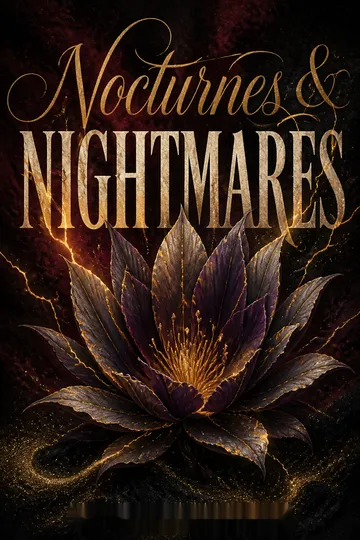
Nocturnes & Nightmares is a dark romantic thriller that captivated readers with its suspenseful plot and complex characters. Many praised the author's skillful writing and ability to create a chilling atmosphere. The story follows Nola, a single mother, and Voss, a mysterious man with a dangerous past. Readers were intrigued by the serial killer subplot and the building tension between the main characters. While some found certain scenes disturbing, most appreciated the book's intensity and unpredictability. The cliffhanger ending left many eagerly anticipating the sequel.
People Also Read








Characters
Nola Tensley
The stubborn single motherNola is an overworked waitress, potter, and mother raising Oliver after Denny’s murder. She is practical and fiercely protective, but guilt makes her treat every decision as a possible failure. The loss of her sister Nora taught her that secrets can shape a family long after the moment that created them. Nola tries to restore safety through routines, therapy, and care, even when Oliver’s withdrawal makes her feel shut out. Her pottery gives her a language for damage that does not pretend it never happened. She is wary of dependence and slow to trust, yet her humor and sensuality persist beneath the exhaustion. What drives her most is the wish to give Oliver a future that is not governed by the worst thing he has seen.
Rhett Voss
The polished violent protectorKnown to Nola as Voss, Rhett is a former soldier and elite operative for The Gallows, an organization that uses torture to extract information from criminal targets. He presents himself as a wealthy New York securities trader and prizes privacy, control, and competence. His childhood under a violent uncle shaped his interest in domination and his fear of resembling the men who raised him. Voss can show real tenderness, especially toward Oliver and the kitten he rescues, but his instinct to protect often turns into surveillance and unilateral control. Nola draws out a less rehearsed kind of attention in him, which unsettles his belief that desire can remain compartmentalized. His central conflict is whether his self-command can keep his capacity for violence from defining every relationship.
Oliver Tensley
The grieving, watchful sonOliver is Nola and Denny’s eleven-year-old son. After witnessing his father’s murder, he stops speaking and carries his distress through anger, withdrawal, and drawings. He is intelligent and observant, with a strong attachment to his mother that has been strained by the trauma and by his parents’ troubled marriage. Therapy offers him a route toward expression, though he resists being hurried into recovery. His encounter with school bullies reveals how exposed he feels beyond the home. Voss’s attention gives him practical tools and a form of recognition he can accept without words. Oliver’s silence is not emptiness; it is a guarded response from a child still trying to understand what happened.
The Sandman
The ritualizing serial killerThe Sandman is an unidentified killer whose victims are marked by missing eyes filled with sand. He stalks women, abducts them, and arranges scenes with flowers and elaborate restraints. His private logic casts cruelty as purification and possession, allowing him to recast victims’ fear as willing submission. He depends on ritual to make his violence feel orderly and meaningful. The contrast between his careful staging and his deluded moral language makes him especially dangerous: he does not see himself as a predator acting from appetite, but as an authority restoring a world he believes is corrupt.
Denny
Nola’s failing husbandDenny is Nola’s estranged husband and Oliver’s father. Once a charming skateboarder and attentive young parent, he has become unreliable, drinks heavily, and leaves Nola carrying the household’s bills and worries. Nola’s memories of his earlier tenderness keep her from reducing him to his worst choices, while his neglect leaves her angry and exhausted. His relationship with Oliver retains traces of the father he used to be, which complicates the family’s grief.
Jonah
Nola’s detective brotherJonah is Nola’s older brother and a Chicago police detective. He helps care for Oliver and investigates threats around his sister, combining professional suspicion with deep family loyalty. He wants to keep Nola safe, but his protective instinct can become intrusive, especially when she resists treating every man as a suspect. His marriage to Diane and memories of their missing sister Nora show how the family’s unresolved losses continue to shape his vigilance.
Nora
The missing older sisterNora is Nola and Jonah’s older sister, who vanished after leaving for a date when Nola was a child. She was affectionate toward Nola and willing to bend their parents’ rules, making her disappearance a formative rupture rather than a distant family fact. Nola’s secret about Nora’s plans remains tied to guilt and the fear that truth, withheld for even a short time, can change what a family is able to know.
Diane
Oliver’s devoted auntDiane is Jonah’s wife and a steady source of care for Nola and Oliver. She takes Oliver for visits, offers financial help, and makes their home a welcoming place when Nola is stretched thin. Her longing to become a mother gives her bond with Oliver particular tenderness, but she supports him as himself rather than treating him as a replacement for the child she hopes to have.
Sarah Buckley
Nola’s compassionate psychologistSarah is Oliver’s psychologist and a compassionate presence for Nola as well. She encourages Nola to separate responsibility from guilt and to care for herself while supporting Oliver’s recovery. Her questions gently expose how Nola’s self-blame is interfering with her ability to grieve. Sarah offers professional help without pretending that reassurance can quickly undo trauma.
DeeDee
Oliver’s speech therapistDeeDee works with Oliver on his speech after the trauma of witnessing Denny’s murder. She provides a patient, structured setting for him, even when he resists participating. Nola values her as more than a clinician because she remains attentive to Oliver’s needs.
Simon Jeffries
The shy diner regularSimon is a young, socially awkward regular at Duli’s Diner who is interested in technology and robotics. He is polite, observant, and uncomfortable pursuing Nola, but acts decisively when Harv corners her. His intervention reveals a moral seriousness beneath his hesitant manner. He has his own painful history with domestic abuse, which makes him especially alert to a woman being threatened.
Bethany Bennington
Nola’s provocative coworkerBethany works with Nola at the diner and is married to Harv. Outgoing and sexually uninhibited, she tries to pull Nola back into social life and often treats boundaries as something to tease. Her appetite for excitement makes her an unpredictable presence at work, though she is also capable of offering practical help and affection.
Harv Bennington
The boundary-crossing husbandHarv is Bethany’s husband and a frequent visitor to the diner where she works. He makes crude advances toward Nola and treats his sexual jokes as harmless even when they frighten her. His behavior provides an immediate, plausible explanation for the threatening note she receives, making it harder for her to identify the danger behind it.
Carl Jenson
Voss’s abusive uncleCarl is Voss’s uncle, a few years older than him, whose cruelty shaped Voss’s childhood. He tormented animals and used fear and forced choices to control the boy. Voss grew up believing Carl dead, but memories of the abuse remain vivid and influence how he understands violence, power, and his own appetite for control.
Milo
Voss’s Gallows mentorMilo is Voss’s mentor and a senior figure in The Gallows. He recognizes Voss’s value to the agency and tries to keep him from abandoning the work after a demoralizing mistake. Their relationship mixes professional authority with personal loyalty.
Jackson Faust
The unreliable researcherJackson works behind the scenes for The Gallows, gathering profiles and information for its operatives. His mistake sends Voss after the wrong target, damaging the agency’s credibility and sharpening Voss’s frustration with the organization.
Marnee Buckner
The missing young womanMarnee is a young woman whose disappearance and case become part of the Sandman investigation. Her name and image help connect the killer’s staged signature to Voss’s memories of Carl’s world.
Dale
The diner’s protective ownerDale owns Duli’s Diner, where Nola and Bethany work. He is generous with his staff and tries to protect them from difficult customers, though he can be manipulated into a staged night out meant to draw Nola from home.
Emmett
Oliver’s frightening storytellerEmmett is Oliver’s classmate, who tells him stories about the Sandman watching children at night. His tale gives shape to Oliver’s fear and leads Nola to dismiss a warning she does not yet understand.
Plot Devices
The Sandman’s signature
A threat disguised as ritualThe killer’s recurring use of removed eyes, bone meal, and the Queen of the Night flower turns separate murders into a recognizable pattern. A threatening note carries the Sandman’s language into Nola’s ordinary life, but she initially associates it with Harv’s harassment. Voss recognizes the connection because the methods echo the abuse he remembers from childhood. The signature advances the mystery while showing how the killer turns violence into a private mythology.
Carl’s clue game
A past turned into pursuitEncrypted messages challenge Voss to find the Sandman and direct him toward clues hidden in the Jansen estate. A baby photograph leads him to motel matches, while the choice of name forces him to consider that the uncle he believed dead may be alive. The game uses Voss’s childhood knowledge against him, pulling him back into a landscape he escaped. Its clues offer a practical route through the mystery, but also make vengeance feel like the purpose Voss has been missing.
Kintsugi pottery
Damage made visibleNola’s family repairs broken ceramics by sealing their cracks with gold. The method reflects her mother’s history of grief and gives Nola a way to treat damage as part of an object’s identity rather than as something to conceal. It also connects her work to the strained history of her family, since the practice was passed down through generations. The pottery brings Nola comfort, supports her modest income, and becomes a point of connection with Voss when he enters her studio.
The hidden cameras
Protection without permissionVoss arranges for cameras to be concealed throughout Nola’s home, including her bedroom, while she is away with him. He believes the devices will help him detect an intruder and protect her from the killer. Because he installs them without telling Nola, the surveillance also reveals how easily his desire to guard her becomes a decision made on her behalf. The cameras raise the stakes of their intimacy and put Voss’s claim to be protecting Nola in tension with her right to know what is happening in her own home.
The silent child
Trauma carried without wordsAfter witnessing Denny’s murder, Oliver stops speaking and communicates through behavior, drawings, and occasional signs. His silence shapes Nola’s guilt and forces the adults around him to interpret rather than simply question him. Therapy offers a patient route toward expression, while Voss reaches Oliver through practical instruction instead of demanding disclosure. The device keeps the murder present in domestic scenes and shows that recovery cannot be measured only by whether a child resumes speaking.
Sandman Series
About the Author
Other books by Keri Lake







Download PDF
Download EPUB
.epub digital book format is ideal for reading ebooks on phones, tablets, and e-readers.








