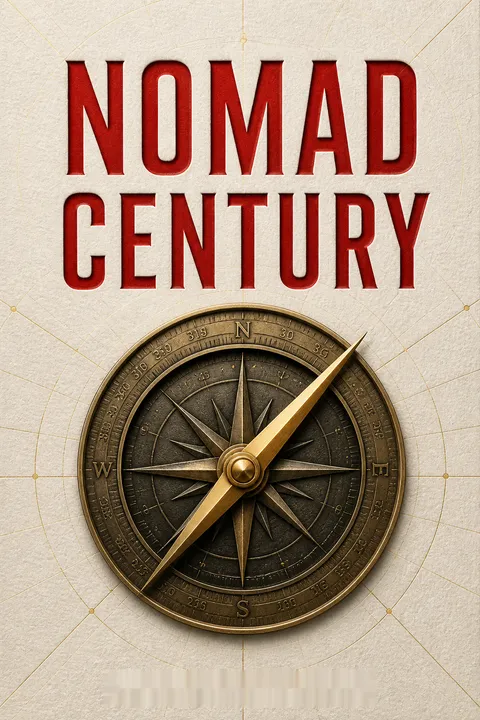


Key Takeaways
Prepare for climate migration before heat, fire, drought, and floods trigger panic.
The hazards compound. In Australia’s Black Summer of 2019-20, Gaia Vince’s aunt Helen fled flames with neighbors and animals, while aunt Margi was evacuated from her home. In 2022, Margi was again cut off, this time by severe flooding. Their experience makes the book’s central warning tangible: climate disruption arrives not as one neat crisis, but as overlapping shocks that can make a community increasingly difficult to live in.
The numbers are projections. Vince describes a world on track for 3 to 4°C of warming this century under policies current when she wrote. She cites estimates that billions could face deadly heat, especially when humidity prevents the body from cooling through sweat. Fire, heat, drought, and floods intensify poverty and inequality, leaving people with the fewest resources least able to escape.
The book’s strongest opening move is to connect planetary averages to ordinary decisions about housing, insurance, work, and safety. That makes climate risk legible as a planning problem, not merely a distant scientific abstraction. Its striking numbers should still be read as scenario-dependent forecasts, not a headcount that is certain to materialize. The practical lesson survives that uncertainty: governments and communities can prepare for foreseeable displacement without pretending to know exactly who will move, when, or how far.
Treat migration as an inherited survival skill, not a social breakdown.
Movement made us adaptable. Humans spread across environments not because individuals could survive anywhere alone, but because groups carried skills, knowledge, and resources with them. The ability to cooperate let people settle unfamiliar places, share risks, and exchange what they needed. Humans also move the planet’s materials: modern life depends on food, clothing, and infrastructure transported from far beyond where people live.
Settlement never erased movement. Agriculture tied people more closely to land, but drought, conflict, trade, and opportunity continued to prompt migration. Trade networks helped early communities secure resources beyond their immediate surroundings. In the book’s account, human success is not a story of finding one permanent home. It is a story of repeatedly adjusting where people live and how they support one another.
This history unsettles the assumption that mobility is an exception to a natural, rooted human condition. It also expands the meaning of migration: a settled city remains mobile through the goods, labor, and knowledge on which it depends. That systems view helps explain why isolating newcomers can damage everyone’s resilience. The past, however, offers no simple moral template. Human movement has also involved conquest, enslavement, and dispossession, so celebrating mobility requires attention to who chooses to move, who is forced, and who controls the destination.
Don’t mistake migration for a burden when economies need workers and skills.
Labor markets are connected. Vince notes that international migrants make up just over 3 percent of the global population, yet estimates attribute about 10 percent of global GDP to their work. She argues that migration can help both destinations facing worker shortages and origin communities receiving money, knowledge, and investment from migrants.
The zero-sum story is weak. In 1980, more than 125,000 Cubans arrived in Miami after Cuba opened an exit route. Economist David Card studied the sudden influx and found no measurable decline in wages for local workers, including lower-paid workers. That case does not prove every migration has identical effects, but it challenges the claim that newcomers automatically take existing jobs. Migrants also spend, start businesses, and fill roles that enable other people to work.
The economic argument is persuasive because it treats workers as participants in a changing economy, not as a fixed pile of jobs to be divided. Yet national gains do not guarantee that every neighborhood, worker, or public service benefits immediately. Housing shortages and weak labor protections can concentrate costs locally while profits spread more widely. That distinction strengthens the case for migration paired with investment and fair labor standards. It also prevents aggregate GDP figures from being used to dismiss real anxieties about wages or strained services.
Build lawful migration pathways before climate shocks strand people.
Plan movement in advance. The book calls for migration to be managed as a global issue, rather than handled through emergency border responses. Vince proposes a United Nations migration body with authority to coordinate relocation, protect refugees, and match people to housing and employment. Her Global Skill Partnerships proposal links training to the needs of both origin and destination countries, with destination states helping fund relevant education.
Give people room to move. Fridtjof Nansen’s post-First World War passport scheme offered recognized travel documents to refugees who lacked national papers. Vince points to it as a precedent for portable legal recognition. Kiribati’s Migration with Dignity program takes a different approach: prepare citizens with education and overseas work opportunities so they can leave voluntarily, rather than wait for a disaster to force an evacuation.
These proposals treat legal status as infrastructure: without it, people cannot reliably reach jobs, services, or safety. That is a useful shift from asking whether movement can be stopped to asking how it can be made orderly and humane. The hard question is who gets to allocate destinations and set conditions. A global agency could reduce arbitrary treatment, but it could also reproduce unequal power unless migrants, origin communities, and receiving cities have meaningful representation in its decisions.
Make belonging civic and material, not a test of ancestry.
National identity is constructed. Vince traces the modern nation state to relatively recent changes in government, mass education, and bureaucracy. Earlier identities were often tied to local communities or rulers, rather than to a single national identity shared by everyone within a border. The belief that nations are naturally homogeneous, she argues, obscures how identities and populations have always mixed.
Inclusion needs institutions. The book describes countries such as Tanzania, where many ethnic groups and languages coexist, to show that diversity need not make a state unworkable. What matters is whether public institutions treat groups fairly. Shared civic life can be built through common rights, services, and participation. By contrast, privileging one group over others encourages people to retreat into narrower loyalties and can turn difference into a political weapon.
The section’s important distinction is between cultural difference and unequal status. A shared identity can help strangers cooperate, but it becomes brittle when membership depends on ancestry or when public goods are distributed selectively. This connects belonging to institutional trust: people have stronger reasons to identify with a society when its rules apply to them as full members. Symbolic celebration alone cannot repair exclusion, though. Equal access to housing, education, work, and political voice is what makes a civic identity credible.
Choose refuge cities by water, institutions, and consent, not latitude alone.
The human climate niche shifts. The book uses this term for the range of average temperatures in which human populations have historically concentrated. A study Vince discusses places that productive range around 11°C to 15°C. As conditions change, many people may move toward cooler latitudes, inland areas, and places with dependable freshwater. The Great Lakes region, Canada, and parts of the far north could attract newcomers.
A map is not a plan. Northern regions face their own dangers, including fires, floods, and unstable ground as permafrost thaws. New development could also damage ecosystems and disrupt Indigenous communities whose lands are already under pressure. Canada’s water and land may look like a refuge from afar, but safety depends on infrastructure, governance, and local agreement, not simply on a cooler climate or a large area of sparsely populated land.
The geographical argument is compelling because it asks planners to connect people with water, food, energy, and workable institutions. But the idea of a northern haven can easily turn inhabited land into an imagined empty resource. Climate suitability does not confer political permission. Indigenous sovereignty and local consent are not complications to be added after the map is drawn; they are central conditions for legitimate settlement. The same scrutiny applies to projected benefits from warming, which can coexist with ecosystem damage and serious local risks.
Build migrant cities with work, transit, services, and room to grow.
A camp is not a city. Kutupalong in Bangladesh became home to roughly one million Rohingya refugees fleeing violence in Myanmar. Yet residents were barred from working and had limited access to education and movement. Vince argues that a settlement with streets and homes cannot function as a city if it is cut off from the wider networks that support trade, employment, and social life.
Design enables opportunity. The Spanish city of Parla paired immigration with legal work, services, transport links, and housing that included space for small businesses. The book also describes architect Alejandro Aravena’s expandable homes: basic units included essential infrastructure, while families could add rooms as their means allowed. Together, these examples point toward dense, connected neighborhoods that make it possible to work, build relationships, and improve a home over time.
The distinction between housing people and enabling a city is crucial. Employment, transit, and public services turn proximity into participation, while flexible homes give residents agency rather than fixing them permanently in emergency conditions. This is also a lesson in urban economics: connections between people create opportunities that isolated buildings cannot. Density alone is not the answer. If housing is badly connected, unaffordable, or separated from work and public life, it can concentrate hardship instead of multiplying opportunity.
Free farmland by wasting less food and making plants the default.
The food system leaks resources. Vince reports that about 35 percent of food is wasted, while roughly one-third of crops is used to feed animals. Those losses matter as climate change makes farming less reliable and land, water, and labor more contested. The book recalls hungry villagers in drought-stricken northern Uganda while produce rotted in the south because poor roads made it too costly to transport in time.
Change what the system rewards. Reducing waste through better storage and transport could make more food available without expanding farmland. Vince argues that plant-centered diets use land more efficiently than current levels of meat and dairy production. She also describes alternative sources of food, including algae, sea plants, insects, and cultivated meat. These technologies are not substitutes for fair access to food, but they could widen the options for feeding dense cities with less pressure on ecosystems.
This is a useful correction to the reflex that feeding more people must mean producing ever more food. Distribution, storage, and diet determine how much land production actually requires. The Uganda example makes infrastructure part of food security, not a separate development concern. Still, a change in consumer preference cannot by itself address ownership, affordability, or who bears the cost of switching farming systems. The food transition works best when producers have viable alternatives and nutritious food remains accessible to people with low incomes.
Treat energy and water as designed public systems, not limitless inputs.
Cities need reliable loops. Energy powers homes, transport, cooling, and food production, but fossil-fuel use drives warming, while unequal access to electricity leaves many people exposed to poverty and heat. Vince argues for clean electricity, electrification, and efficiency, supported by renewable sources and storage. She also notes that roughly 70 percent of global water use goes to agriculture, while billions of people experience water scarcity during at least part of each year.
Reuse what cities receive. Rainwater storage, wastewater treatment, and closed-loop recycling can reduce dependence on irregular supplies. Materials can also be designed for repair and reuse rather than discarded after one use. These changes do not make resources infinite: mines, power networks, reservoirs, and dams have social and environmental costs. The goal is to reduce waste and build systems that distribute essential resources more reliably.
The systems perspective is stronger than treating energy, water, housing, and migration as separate policy files. A reliable water network can support both residents and food production; cleaner power can make cooling less dependent on fossil fuels. Yet efficiency does not eliminate political choices about whose needs take priority or where infrastructure is built. Circular design reduces pressure on extraction, but does not remove it. Public accountability matters because a technically efficient system can still distribute benefits and burdens unfairly.
Restore ecosystems and govern planetary cooling as a shared public risk.
Nature and climate are linked. Healthy forests, grasslands, peatlands, mangroves, and sea grasses store carbon and support biodiversity. Their restoration can strengthen ecosystems while helping limit warming. But planting trees indiscriminately is not a cure: the wrong species or location can undermine local ecology, and a planted forest can burn. Vince favors protecting functioning ecosystems and restoring degraded areas with attention to their specific conditions.
Cooling demands public rules. The book also examines solar geoengineering, including reflective particles released into the stratosphere to reduce some incoming sunlight. Vince argues that such approaches should not remain taboo, but must supplement emissions cuts and carbon removal, never excuse delay. The potential effects on rainfall and regions are uncertain and uneven. Any deployment would therefore require open oversight, international governance, and a way to address harms to people who bear disproportionate risks.
The case for considering climate intervention rests on a stark asymmetry: emissions already alter the planet, while deliberate cooling is treated as uniquely unacceptable. That comparison is worth taking seriously, but it does not make cooling safe or politically neutral. Its effects could cross borders and distribute benefits unevenly, making legitimacy as important as technical performance. Restoration offers a different kind of public value: it can protect living systems without pretending that engineering alone can repair the causes of damage.
Analysis
Nomad Century is both a climate warning and an argument about political imagination. Its central move is to treat migration as adaptation infrastructure: a way to redistribute people toward safety and opportunity, rather than a failure of local resilience or a threat to national security. The historical account supports that reframing by showing how movement, exchange, and cooperation helped create settled societies and the cities that now depend on global networks.
The book’s strongest contribution is to make two usually separate discussions confront each other. Climate policy asks how to reduce emissions and adapt places; migration policy asks who may cross a border. Vince argues that neither can work adequately in isolation. A future of relocation requires housing, jobs, legal status, public services, food, energy, and institutions capable of distributing costs. Without those, movement risks becoming a contest in which wealth determines who can reach safety.
The argument also contains tensions that should remain visible. Migration is not interchangeable with forced displacement, and economic gains do not erase losses of land, language, or community. The proposed northern destinations are not empty, politically neutral spaces. Nor are very large estimates of future migration simple forecasts: they depend on emissions, population, adaptation, and what counts as a migrant. Such uncertainty is a reason for flexible planning, not for treating every number as settled fact.
The book’s most demanding implication is that welcoming newcomers cannot be separated from improving life for existing residents. Public investment, fair rules, and meaningful local participation determine whether migration produces shared prosperity or resentment. The same principle applies to technological proposals such as planetary cooling: effectiveness is not enough without legitimate governance. The coherent response is therefore not migration instead of climate action, or climate action instead of migration. It is emissions reduction, ecological restoration, and humane mobility planned together, with affected communities involved in the decisions.
Review Summary
Nomad Century receives mixed reviews, with praise for its thought-provoking content on climate change and migration. Readers appreciate the author's insights into future challenges and potential solutions. However, some criticize the book for being overly dense, repetitive, or optimistic. Many find it informative and eye-opening, though some question the feasibility of proposed solutions. The book's discussion of climate-driven migration and its impacts on global society is seen as timely and important, despite disagreements on specific points or the overall tone.
People Also Read



Glossary
Pyrocene
Age of expanding fireA term coined by environmental historian Stephen J. Pyne and used in the book for a period in which fire becomes a defining planetary force. Climate change can make fires more frequent, intense, and difficult to contain, while smoke, habitat loss, and carbon emissions extend their effects far beyond the burn zone.
human climate niche
Climate range humans favorThe range of climatic conditions in which human populations have historically concentrated. The book discusses research placing the most favorable average temperatures for human productivity around 11°C to 15°C. As climate zones shift, large populations may find themselves outside the conditions that have supported settlement, agriculture, and economic activity.
wet-bulb temperature
Heat combined with humidityA measure of heat and humidity based on the lowest temperature air can reach through evaporation. It indicates how effectively sweat can cool the body. At very high wet-bulb readings, sweat evaporates poorly, so the body can overheat even in shade. The book describes 35°C as a threshold beyond which survival may become impossible within hours.
Global Skill Partnerships
Jointly funded skills trainingA model in which a destination country helps fund training in an origin country for skills needed in both places. Some trainees remain in their home country, while others can migrate to the destination with relevant qualifications. The proposed arrangement aims to meet labor needs without leaving origin countries to bear all training costs or lose essential expertise.
Nansen passport
Travel document for refugeesAn internationally recognized identity and travel document developed for refugees without national papers after the First World War. Named for Norwegian diplomat Fridtjof Nansen, the document helped holders cross borders and seek work while retaining a degree of international recognition. The book presents it as a historical model for making displaced people legally mobile.
Migration with Dignity
Prepared, voluntary relocationA program initiated by Kiribati to help citizens prepare for possible displacement from islands threatened by rising seas. It emphasizes education, skills, and overseas employment so people can move gradually and voluntarily, rather than leaving only after an emergency. The policy treats preparation and personal agency as central to preserving dignity during relocation.
FAQ
What's Nomad Century about?
- Focus on Climate Migration: Nomad Century by Gaia Vince examines how climate change will compel billions to migrate from uninhabitable regions to more hospitable areas. It frames this migration as a necessary adaptation for survival.
- Human Resilience and Adaptation: Vince argues that migration is a fundamental part of human history and evolution, essential for adapting to climate change challenges. Migration is presented as a solution rather than a problem.
- Future Projections: The book discusses climate impact projections, such as rising temperatures and sea levels, and their effects on global demographics and economies. Vince stresses the urgency of planning for migration to prevent chaos and suffering.
Why should I read Nomad Century?
- Timely and Relevant: With climate change as a pressing issue, the book provides insights into its effects on human populations and the necessity for migration. It offers a forward-looking perspective on a global challenge.
- Comprehensive Analysis: Vince combines scientific research with personal narratives and historical context, making complex topics accessible and engaging. Readers gain a deeper understanding of the interconnectedness of climate, migration, and society.
- Call to Action: The book encourages readers to rethink migration as a viable solution to climate challenges. It advocates for proactive planning and cooperation to ensure a sustainable future.
What are the key takeaways of Nomad Century?
- Migration as a Solution: Migration is not a problem but a necessary response to climate change, allowing humanity to adapt and survive. Managed migration can lead to a more resilient global society.
- Urgent Need for Planning: Planning for mass migration is crucial to avoid humanitarian crises. Vince calls for international cooperation and innovative policies to accommodate displaced populations effectively.
- Changing Demographics: Demographic shifts will occur as populations move from the tropics to northern latitudes, affecting economies and social structures. New infrastructures and policies will be needed to support growing urban populations.
What are the best quotes from Nomad Century and what do they mean?
- “Migration is not the problem; it is the solution.”: This quote encapsulates the book's thesis that migration is a natural and necessary response to climate change, encouraging a shift in perspective towards viewing migration as a means of survival.
- “We are facing a species emergency – but we can manage it.”: Vince emphasizes the urgency of the climate crisis while instilling hope that with proper planning and cooperation, humanity can navigate the challenges ahead.
- “We need to look afresh at our world and consider where best to put its human population.”: This quote highlights the need for innovative thinking about human settlement in response to climate change, suggesting a reevaluation of traditional notions of borders and habitation.
How does Nomad Century define climate migration?
- Definition of Climate Migration: Vince defines it as the movement of people forced to leave their homes due to extreme environmental changes, such as rising sea levels and natural disasters. This migration is expected to increase significantly.
- Historical Context: The book places climate migration within the broader context of human history, illustrating that migration has always been part of human adaptation to changing environments.
- Projected Numbers: Vince cites estimates that up to 1.5 billion people could be displaced by climate change by 2050, highlighting the scale of the impending crisis.
What solutions does Nomad Century propose for managing migration?
- Planned Migration Strategies: Vince advocates for proactive planning, including creating new cities in safer regions and adapting existing urban areas to accommodate incoming populations.
- International Cooperation: The book emphasizes the need for global cooperation and diplomacy to address climate migration challenges, calling for policies that facilitate safe and legal migration pathways.
- Investment in Infrastructure: Significant investment in infrastructure, housing, and services will be necessary to support growing populations in receiving areas, including building resilient cities.
How does Nomad Century address the economic implications of migration?
- Economic Benefits of Migration: Migration can boost economies by filling labor shortages and increasing productivity. Migrants often contribute more to the economy than they take.
- Remittances and Development: Remittances support economies in migrants' home countries, leading to improved living standards and educational opportunities, benefiting both origin and destination countries.
- Addressing Labor Shortages: Many wealthy nations face demographic challenges, such as aging populations, which can be mitigated through immigration, sustaining their economies and social systems.
What demographic changes does Nomad Century predict?
- Population Shifts: Significant demographic shifts are predicted as populations move from the tropics to northern latitudes, impacting social and economic structures globally.
- Aging Populations in the North: Northern countries will face aging populations and labor shortages, necessitating the influx of younger migrants to support their economies.
- Urbanization Trends: More people will move to cities in search of better opportunities, requiring cities to adapt rapidly to accommodate growing populations and changing environmental conditions.
How does Nomad Century suggest we rethink national borders?
- Borders as Barriers: Current national borders often hinder necessary migration and exacerbate humanitarian crises. Vince advocates for rethinking borders to facilitate movement and cooperation.
- Global Citizenship: The book proposes global citizenship, where individuals have rights and protections regardless of birthplace, aiming for a more inclusive approach to migration.
- Regional Cooperation: Regional agreements and partnerships could help manage migration more effectively, allowing for shared resources and responsibilities among neighboring countries.
What role does technology play in the future of migration according to Nomad Century?
- Technological Innovations: Technology can aid in managing migration, from improving infrastructure to enhancing communication and resource distribution, creating more resilient cities.
- Data and Planning: Data is crucial for planning migration, including understanding demographic trends and environmental changes, facilitating better decision-making and resource allocation.
- Sustainable Solutions: Technology can contribute to sustainable solutions for food, water, and energy in new urban environments, crucial for supporting larger populations.
How does Nomad Century envision the future of cities in a changing climate?
- New Urban Centers: Vince envisions new cities in northern latitudes designed with sustainability and resilience in mind, equipped to handle climate change challenges.
- Adaptation of Existing Cities: Existing cities need to adapt to changing conditions, requiring significant investment in infrastructure and services to support growing populations.
- Cultural Integration: Cultural integration is crucial in new urban environments, ensuring migrants can contribute to and thrive in their new communities through inclusive policies.
What are the implications of Nomad Century for global governance?
- Need for a Global Agency: Vince argues for a global agency to oversee migration policies, facilitating cooperation between nations and managing migration complexities.
- Shared Responsibility: Addressing climate migration is a shared responsibility among nations, requiring collaborative efforts to create effective policies.
- Long-term Planning: Long-term planning is essential to anticipate future migration trends and prepare societies, mitigating challenges and fostering an inclusive global community.
Download PDF
Download EPUB
.epub digital book format is ideal for reading ebooks on phones, tablets, and e-readers.








