

Key Takeaways
Treat cosmetic safety as public infrastructure, not a private shopping problem
Exposure is shared. The book opens with a study of umbilical cord blood from newborns. Researchers detected 287 industrial chemicals, including substances associated with cancer, nervous-system effects, and abnormal development. The finding does not show that each chemical harmed each baby, but it makes clear that exposure can begin before birth. The term chemical body burden describes the synthetic chemicals present in a person's body after exposure through air, water, food, household products, and personal care products.
Products add to the mix. The book reports that women used an average of 12 personal care products daily, containing 168 ingredients; men used about six products with 85 ingredients. Cosmetics are one part of a much wider exposure picture, not a separate category.
What's striking is the shift from a bathroom-cabinet question to a systems question. A shopper can change one product, but cannot individually control ingredients in shared air, water, workplaces, or consumer goods. This resembles other public-health problems in which individual behavior matters but cannot replace rules governing production. The cord-blood findings are emotionally powerful, yet they need careful interpretation: detecting a chemical establishes exposure, not a diagnosis or proof that a particular product caused disease. The strongest case is therefore not panic about each bottle, but public access to safety evidence and accountability for products sold at scale.
Act on credible warning signs before uncertainty becomes an excuse
Timing matters. The book argues that chemical risk cannot always be judged by asking whether a high dose causes an obvious, immediate effect. Some chemicals can interfere with hormones, and exposure during fetal development or childhood may matter in ways that appear much later. The term endocrine disruptor refers to a chemical that interferes with the body's hormone-signaling system.
Evidence has limits. Animal studies raised concerns about phthalates and reproductive development, while early human studies were suggestive but limited. The book also describes DES, a synthetic estrogen given to pregnant women until it was linked to cancers and reproductive problems in their daughters decades later. The precautionary principle means taking reasonable steps to prevent possible harm when credible warning signs exist, rather than requiring conclusive proof first.
This is a problem of decision-making under uncertainty, not a claim that every suspected hazard is proven to cause human disease. Waiting for certainty can be costly when effects are delayed, exposures are widespread, and the most vulnerable people cannot consent. At the same time, precaution should not mean treating every preliminary signal as settled science. A sound approach distinguishes levels of evidence, prioritizes avoidable exposures with plausible risks, and updates decisions as research improves. That balance protects public health without turning uncertainty itself into either a reason for paralysis or a license for alarm.
Treat ingredient labels as partial maps, not safety certificates
Disclosure has holes. The book describes fragrance as a trade secret, allowing companies to list the broad term without naming its component chemicals. In 2002, researchers tested 72 popular personal care products and found phthalates in nearly three quarters, including every fragrance product tested. The chemicals were not listed on the labels. Testing one product cost $175, far beyond what most shoppers could reasonably do themselves.
Hidden hazards matter. Skin Deep, an Environmental Working Group database, matched product ingredients with information from government and scientific sources. Its 2005 analysis reported that one third of products contained an ingredient linked to cancer, while 56 percent contained a chemical that could help other ingredients penetrate skin. Separate testing found the contaminant 1,4-dioxane in 18 of 24 products. These findings flag concerns, not proof that ordinary use causes illness.
A label is useful only when it reveals what a consumer needs to assess. This is an information-asymmetry problem: manufacturers know more about formulas than buyers, while trade-secret rules and contaminants can leave important gaps. A database such as Skin Deep helps translate scattered evidence into a usable search tool, but its scores can look more definitive than the underlying data warrant. Ingredient presence, hazard evidence, exposure level, and actual health risk are different questions. Better disclosure and clear explanations of uncertainty would help consumers make choices without mistaking a screening tool for a personalized medical forecast.
Do not let manufacturers grade their own safety homework
Oversight was weak. In the United States as described in the book, the FDA could not require cosmetics to pass safety testing before sale. The industry-funded Cosmetic Ingredient Review panel assessed ingredients, but companies were not required to follow its conclusions. Skin Deep's 2005 analysis found that only 11 percent of cosmetic ingredients had been reviewed by the panel. The book also reports that some reviews focused mainly on short-term skin irritation, not longer-term outcomes such as reproductive harm.
Rules shape markets. The European Union's cosmetics directive prohibited certain chemicals classified as carcinogenic, mutagenic, or toxic to reproduction. Companies reformulated products for that market, while sometimes continuing to sell different formulas elsewhere. The contrast suggests that product safety is not determined by chemistry alone. It also depends on which rules governments establish and enforce.
Industry expertise is necessary for understanding complex formulas, but expertise and independence are not the same thing. A credible system needs transparent methods, adequate resources, relevant scientific disciplines, and consequences when standards are ignored. The book's account also shows why simple comparisons between regions need care: different laws can reflect different choices about acceptable evidence and risk, not automatic proof that every restricted ingredient is harmful at every exposure. The practical point remains strong. Voluntary review can contribute useful information, but it cannot substitute for public oversight when the reviewer and the regulated market are closely connected.
Challenge beauty standards that turn identity into chemical exposure
Beauty is marketed, not neutral. The book examines skin-whitening products sold in Asian markets, including products in which tests reportedly detected banned heavy metals. It also describes airbrushed images that digitally alter skin, faces, and bodies, making commercial ideals look natural and attainable. In the United States, the author connects pressure to meet Eurocentric beauty standards with frequent use of hair relaxers and other products among some Black women.
Exposure is uneven. Some products marketed to Black women contained placental extracts, which may have hormonal activity; the possible health implications were a concern, not a settled causal finding. Nail salon workers, many of them women of color, faced repeated workplace exposure to product chemicals. The book's argument is that people should be able to enjoy beauty practices without having to choose between self-expression and health.
This section makes beauty a question of power as well as taste. Advertising can turn social hierarchies into personal routines, then frame the resulting purchases as freely chosen. That does not mean every person who uses a relaxer, lightener, or cosmetic has been duped; pleasure, culture, and self-presentation are real forms of agency. The sharper question is who bears the cost when products are poorly studied and workplace protections are weak. A fair response protects workers and consumers while avoiding the trap of blaming individuals for adapting to standards they did not create.
A pink ribbon means little if the product adds preventable risk
Follow the money. The book uses pinkwashing to describe companies that present themselves as breast-cancer champions while opposing measures to reduce potentially harmful ingredients in their products. It points to cosmetics companies that promoted breast-cancer fundraising while declining to sign the Campaign for Safe Cosmetics pledge and resisting disclosure proposals.
Awareness is not prevention. The pink ribbon began as a grassroots effort to push lawmakers toward cancer prevention. After commercial campaigns adopted a pink version, the symbol became closely tied to shopping, fundraising, early detection, and hopes for a cure. The author argues that this emphasis can crowd out questions about preventable environmental exposures. Supporting patients and funding research can be valuable, but a charitable campaign does not by itself show that a company's products or policies support prevention.
The useful test here is alignment between a company's public cause and its operating decisions. Cause marketing can raise money and make a disease visible, yet visibility is not the same as reducing risk. This is a broader problem in corporate social responsibility: a memorable campaign can draw attention away from less photogenic questions about sourcing, product design, and lobbying. Still, fundraising and prevention need not be treated as competitors. The stronger demand is for both, with transparent reporting about where money goes and whether a company is changing practices that its health message asks the public to care about.
Organized pressure can change formulas that private shopping cannot
A campaign became leverage. Environmental and women's health groups tested products, publicized their findings, and asked companies to remove phthalates linked to reproductive concerns. The 2002 report found phthalates in 72 percent of its 72 tested products, yet consumers could not identify them from labels. The campaign then asked companies to adopt the Compact for Safe Cosmetics, a pledge to assess ingredients, replace chemicals of concern with safer alternatives, and report progress.
Pressure produced changes. After public campaigns and the European Union's restrictions, major nail-polish brands began removing dibutyl phthalate from products sold in the United States. California's 2005 Safe Cosmetics Act required disclosure to the state of certain chemicals linked to cancer or birth defects. It did not ban those ingredients, but it established a foothold for public accountability.
The campaign's story illustrates how collective action solves a coordination problem. One shopper switching brands has little leverage; a coalition can create reputational pressure, offer companies a clear request, and make regulatory action politically possible. The sequence also matters: testing supplied evidence, communication made the issue legible, and organizing connected private concern to public rules. These victories were partial, not proof that the whole market became safe. Their significance is that changes once dismissed as too costly or impractical became possible when public expectations and policy pressure shifted together.
Simplify your routine, but do not mistake shopping for regulation
Reduce what is unnecessary. The book's practical advice is to use fewer products and favor simpler formulas, especially for products used often or in larger amounts. It suggests paying attention to undisclosed fragrance, choosing companies that explain their ingredients, and using tools such as Skin Deep to compare products. The author also notes that products marketed as natural, pure, or gentle are not automatically safer.
Do not carry the whole burden. The book rejects the idea that consumers can solve the problem by memorizing a perfect list of ingredients. Labels may omit fragrance components or contaminants, and many ingredients have not been adequately assessed. Individual choices can reduce some exposures, but public policy is needed to require meaningful testing, disclosure, and safer product design. The point is not to panic or abandon useful products; it is to make simpler choices while demanding better rules.
This is a useful distinction between personal risk reduction and structural prevention. Simple routines can reduce exposure opportunities and decision fatigue, while buying from transparent companies can reward better practices. But turning every purchase into a research project transfers the cost of weak oversight onto households, especially those with less time and money. A consumer database is a bridge, not an adequate substitute for regulation. The advice is most humane when it lowers pressure rather than adding another standard of perfect living: make reasonable changes where feasible, and direct the larger demand toward manufacturers and policymakers.
Design safer chemistry at the source, not after exposure
Build safety into invention. The book presents green chemistry as designing chemical products and processes to reduce or eliminate hazardous substances from the beginning. A striking example is a plywood adhesive inspired by mussels: a researcher developed a water-resistant glue from soy protein as an alternative to formaldehyde-based adhesive. Another example is a light-activated polymer proposed for curling hair without the harsh chemistry of conventional perms. Biomimicry, the study of nature's strategies for human design, offers ideas such as surfaces that shed dirt instead of relying on cleaning chemicals.
Innovation needs guardrails. The book also warns that cosmetics were adopting nanomaterials before their long-term effects were well understood. New technology is not automatically safer. It needs appropriate testing, and chemists need training to consider health and environmental effects alongside performance and cost.
The strongest environmental strategy is often upstream design: prevent a hazard from entering a product rather than managing exposure after sale. This reframes safety as an engineering challenge and a source of innovation, not merely a compliance expense. Nature-inspired design can widen the options, but biological origin is not a safety certificate, and a novel material can create novel uncertainties. Green chemistry therefore works best alongside testing, transparent standards, and incentives that reward safer performance. The book's examples make the possibility tangible: familiar functions, such as adhesion or hair styling, do not require every familiar toxic input.
Analysis
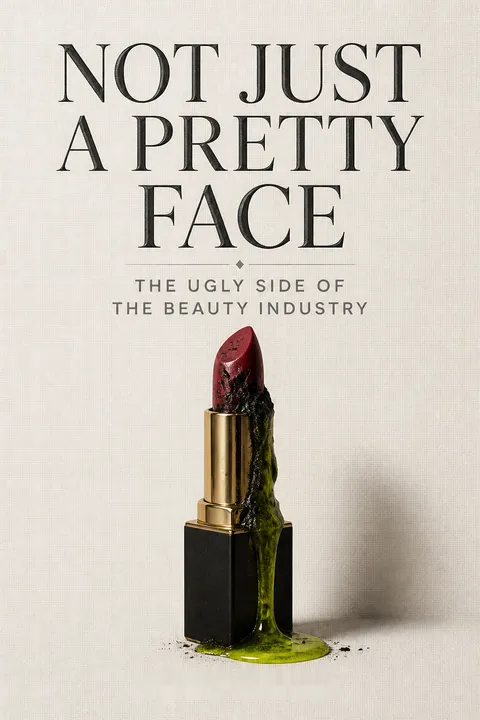
Not Just a Pretty Face is both an investigation of cosmetic chemicals and a narrative about how scattered concern becomes organized political power. Its structure follows that transformation: personal habits lead to biomonitoring and product testing, which expose information gaps, provoke corporate resistance, and give activists a concrete campaign. The book's most durable contribution is not a claim that cosmetics alone explain rising disease. It is the argument that people cannot make informed choices when ingredient disclosure, safety testing, and regulatory authority are inadequate.
The evidence needs careful handling. Biomonitoring demonstrates exposure, not illness; animal findings do not automatically establish human effects; and small human studies cannot settle causation. The book sometimes moves quickly from plausible concern to a broad prevention case. That urgency is understandable, especially for exposures during development, but its strongest policy argument does not depend on proving that a particular bottle caused a particular disease. It rests on preventability, incomplete data, and the availability of safer alternatives in some cases.
The narrative also complicates the usual consumer-versus-corporation frame. It shows how beauty standards shape demand, how workers may face more exposure than shoppers, and how cause marketing can coexist with resistance to prevention. Its proposed response spans several scales: simplify personal routines where practical, improve ingredient information, organize consumers and workers, strengthen oversight, and redesign products through safer chemistry.
The book was published in 2007, so its statistics, regulatory descriptions, product examples, and campaign status are historical snapshots, not a guide to current law or today's formulas. Its larger questions remain useful: Who has the evidence? Who bears uncertainty? Who can change a product before it reaches millions of people? The answer cannot be consumers alone. Individual choice matters most when institutions make safer choices visible, affordable, and normal.
Review Summary
Not Just a Pretty Face exposes the toxic chemicals in everyday cosmetics and personal care products. Readers found it eye-opening and informative, praising its exposure of industry practices and corporate resistance to safer alternatives. Many were motivated to change their purchasing habits and research product ingredients. Some felt it was alarmist or outdated, while others wished for more specific product recommendations. Overall, reviewers appreciated the book's message about the need for greater regulation and consumer awareness in the beauty industry.
People Also Read









Glossary
chemical body burden
Chemicals present in the bodyThe collection of synthetic chemicals detected in a person's body after exposure through sources such as air, water, food, household products, and personal care products. The term describes measured exposure, not a diagnosis. Finding a chemical in blood, urine, or another sample does not by itself establish that it caused harm.
biomonitoring
Measuring chemicals in peopleThe process of testing human samples, such as blood, urine, breast milk, or umbilical cord blood, to detect chemicals or their byproducts. In the book, biomonitoring makes invisible exposures measurable and helps identify possible sources. It can show that exposure occurred, but cannot by itself determine which product caused it or predict an individual's health outcome.
precautionary principle
Prevent harm amid uncertaintyA decision-making approach that supports taking reasonable preventive action when credible evidence suggests a substance could cause harm, even if science has not established every detail conclusively. In the book, it challenges systems that demand definitive proof before reducing exposure, especially when effects may be delayed or involve vulnerable stages of development.
Skin Deep
Cosmetics ingredient databaseAn Environmental Working Group database developed to connect personal care product ingredients with information about potential health hazards from government, academic, and other scientific sources. It lets users compare products and investigate ingredients. Its assessments are screening tools based on available evidence, not individualized medical advice or proof that a product causes disease.
Pinkwashing
Breast-cancer branding without preventionThe book's term for companies or organizations that present themselves as leaders in the fight against breast cancer while engaging in practices that may contribute to preventable risks or opposing measures aimed at reducing them. It critiques the gap between charitable branding and decisions about product ingredients, disclosure, and public policy.
Compact for Safe Cosmetics
Safer-ingredient company pledgeA voluntary pledge created by the Campaign for Safe Cosmetics. Signatory companies agreed to remove chemicals prohibited in the European Union from products worldwide, review products for chemicals of concern, develop plans to replace hazardous ingredients with safer alternatives, and publicly report progress. The pledge was designed to make safer product design an explicit company commitment.
green chemistry
Designing out hazardous substancesAn approach to designing chemical products and manufacturing processes that reduces or eliminates hazardous substances. Rather than adding safety measures after a product has been created, green chemistry considers health and environmental effects during the initial design. The book presents it as a route to safer cosmetics and other consumer goods.
Biomimicry
Nature-inspired designA design approach that studies how living organisms solve problems and adapts those strategies for human technologies. The book describes examples such as learning from mussels' strong adhesion or from lotus leaves that shed dirt. Biomimicry can suggest alternatives to chemical-heavy solutions, though nature-inspired design still requires safety assessment.
Girlcott
Collective purchasing for changeA term used in the book for organizing consumers, especially women, to support safer products and influence companies through purchasing choices. Unlike a boycott framed only as refusal, a girlcott emphasizes directing demand toward products and businesses that meet higher safety standards. The book presents it as one tool among broader policy and organizing efforts.
Download PDF
Download EPUB
.epub digital book format is ideal for reading ebooks on phones, tablets, and e-readers.








