

Key Takeaways
Stop trying to normalize autistic people; make the world easier to navigate.
Change the surroundings. Jolene Stockman’s argument begins with a personal crisis: after years of pushing through discomfort, a crowded shopping centre left her unable to move or speak. A psychologist recognized that her lifelong sensitivities and social exhaustion fit an autistic pattern. The diagnosis did not predict what she could do; it gave her language, community, and strategies. Stockman asks allies to support autistic people rather than identify, fix, or train them to appear typical. A quieter room, different food, or more time to prepare can make participation possible without treating someone’s needs as a nuisance.
Support is not a reward. The central role is neuro navigator: someone who learns what helps a particular person and adjusts the environment accordingly. The person being supported remains the expert on their own experience.
The shift from correcting a person to altering conditions echoes the social model of disability: barriers arise partly from environments designed around a narrow range of bodies and minds. It also resembles good engineering, where a system is judged by whether people can use it, not by whether users can imitate its designers. The distinction matters because accommodations can increase agency rather than lower expectations. Still, support should not be reduced to a universal checklist. A quiet room may help one person and isolate another, so responsive adjustments require ongoing consent and feedback.
Treat autistic identity as part of the person, not a problem to remove.
Words shape belonging. Stockman argues that autism is integral to identity, not an illness hiding a person’s “real” self. She contrasts judgmental descriptions such as “difficult” with language that recognizes specific preferences and sensitivities. The difference may seem small, but children absorb how adults talk about them and what those words imply about their worth.
Ask, then respect. The book says autistic adults overwhelmingly prefer identity-first language, such as “autistic person,” while emphasizing that individual preference matters most. A diagnosis can help someone understand themselves and find community, but nobody should need to disclose a diagnosis to deserve support. The Māori term takiwātanga, meaning being in one’s own space and time, offers a less deficit-focused way to describe autistic experience and individuality.
Language does more than label; it sets the frame through which behavior is interpreted. Calling a child “difficult” invites correction, while describing a specific need invites problem-solving. This resembles the broader insight in social psychology that categories can influence expectations and self-understanding. Identity-first language can affirm belonging, but no single convention fits everyone. The most respectful practice is not to turn a preference into a new rule: ask the person when possible, use their chosen terms, and avoid making them repeatedly defend that choice.
Believe sensory reports before exhaustion turns coping into collapse.
Masking spends energy. Masking means suppressing autistic traits or discomfort to seem neurotypical. It can include rehearsing conversations, forcing eye contact, hiding stims, or acting comfortable in overwhelming places. Stockman describes masking as a survival strategy that can become automatic. Its cost may remain invisible until the person has no energy left to keep performing.
Track the energy budget. The Spoon Theory, an analogy used by people with chronic illness and adopted by autistic communities, describes energy as a limited daily supply spent on tasks. Getting dressed, commuting, socializing, and managing sensory input all draw from it. Repeating foods or clothes can conserve energy, not signal stubbornness. Ask what drains or restores energy, and treat a report of pain or overload as meaningful even when others do not experience the same stimulus.
The energy-budget model makes invisible effort easier to discuss and can help explain why someone completes a workday but has nothing left for home. It also counters the mistaken idea that outward competence proves low support needs. In occupational health, sustained demands without recovery are likewise associated with depletion, though the specific experience varies across people. The analogy is useful, not a literal measurement tool: energy can fluctuate, and outside observers cannot calculate another person’s capacity. The practical response is to ask, offer flexibility, and avoid turning support into a test of endurance.
Read shutdowns and meltdowns as distress signals, not discipline problems.
Different forms of overload. A shutdown may involve silence, withdrawal, stillness, or an inability to think or act. A meltdown may involve crying, shouting, fleeing, or losing control of speech and movement. Both can follow accumulated stress or arrive suddenly; neither is necessarily deliberate misbehavior. Burnout is more prolonged exhaustion associated in the book with long-term masking and insufficient recovery. It can involve reduced functioning, isolation, and difficulty making decisions.
Make recovery possible. During acute overload, reduce demands and stimulation, provide a safe place, and stay calm. Afterwards, consider what built up and what could change. Stockman compares pushing through overwhelm to continuing to walk on an injured leg: it may be possible, but it can make recovery harder. Self-care therefore belongs in ordinary routines, not only after a breaking point.
Treating outward behavior as information rather than defiance shifts attention from punishment to causes: sensory strain, uncertainty, pain, or communication barriers. This is compatible with trauma-informed practice, which asks what happened to someone and what helps them feel safe. The distinction between a brief crisis and longer-term burnout also matters because the necessary support may differ. Compassion does not require guessing or ignoring safety concerns. It calls for calm, immediate protection, and later collaboration with the person to identify triggers and workable prevention.
Change the communication bridge instead of demanding one-sided translation.
Misunderstanding can run both ways. Double empathy theory, developed by autistic researcher Damian Milton, describes how people with different ways of experiencing the world may struggle to interpret each other. Stockman cites research indicating that autistic people can exchange information effectively with autistic peers, just as non-autistic people can with one another; mixed groups may face more communication friction. Direct speech, comfortable silence, or sharing an interest may show connection, even when they differ from conventional social cues.
Do not outsource the work. “Nothing about us without us” means autistic people should shape decisions about autistic supports. Allies should learn from autistic-led organizations and make helpful options available proactively, rather than waiting for someone to disclose or repeatedly request them. Community and role models can also ease isolation and show people that their ways of being belong.
The double empathy idea replaces a one-way deficit story with a relational account: communication depends on shared expectations and interpretation. That reframing is useful in workplaces and families, where a listener’s habits can be as relevant as a speaker’s. It does not imply that every interaction between people of similar neurotypes is effortless, or that every mismatch has the same cause. The important practical consequence is modest but powerful: check understanding, state expectations plainly, and treat autistic people as participants in designing the conversation, not as its sole repair crew.
Build family routines around actual needs, not inherited rules of normal.
Start with the person. Stockman’s autism-friendly home formula links the environment and the individual’s particular sensitivities and preferences to the outcome. A room’s lighting, sounds, textures, routines, food, and exits can all affect whether someone feels settled or overwhelmed. The aim is not a perfect home but fewer harmful outcomes and more opportunities for comfort and joy. Ask the autistic person what helps, allow time to answer, and observe what seems to ease or increase stress.
Protect trust at the table. Food preferences may reflect sensory experience, predictability, or safety, not a wish to be difficult. Offer familiar foods and gentle chances to explore new ones, without tricking or forcing. The book advises families to protect their relationship and respect bodily signals rather than turn every meal into a contest. Seek medical advice when nutrition is a concern.
The home formula resembles person-environment fit: the same setting can support one individual and obstruct another. This is a more useful question than whether a household follows an abstract standard of tidiness, mealtime, or sociability. Food is especially charged because caregivers associate it with health and responsibility. Respecting a child’s sensory limits need not mean ignoring nutrition; it means avoiding coercion while seeking appropriate professional guidance where needed. Small environmental choices can reduce conflict, but shared households also require negotiation so that one person’s accommodation does not become another person’s burden.
Make transitions predictable, then give the autistic person real control.
Prepare for the unknown. Changes between activities, places, people, or expectations can demand substantial processing. Stockman recommends making transitions gradual and concrete: explain what will happen, share schedules or images, visit a new place beforehand, and identify a safe person or space. A construction idea called tolerance can help set honest limits: agree on a minimum outcome that counts as success and a possible maximum if things feel manageable. The minimum must remain acceptable, not a trick to push for more.
After school, lower demands. A child may have spent the day coping with noise, social rules, and uncomfortable facilities. Food, quiet, comfortable clothes, or time alone may matter more than an immediate account of the day. Invite conversation without turning it into an interrogation, and accept “no” as an answer.
Predictability reduces the number of uncertainties a person must resolve at once. In cognitive science, working memory is limited, so external schedules and clear instructions can ease demands even for people who do not identify as neurodivergent. The emphasis on a genuine minimum also protects autonomy: a plan becomes safer when declining the optional part carries no penalty. Preparation cannot eliminate every surprise, and excessive rigidity can become restrictive. The aim is not to promise perfect control, but to make expectations honest and give the person room to adapt at their own pace.
Design classrooms for varied brains before diagnosis becomes a doorway.
Make support ordinary. Stockman describes school as a place where quiet, book-oriented learners can appear successful while hiding distress. Her own strong academic performance concealed social and sensory difficulties. Later, adult language classes that relied on rapid verbal responses and group participation left her feeling less capable than she had at school. The lesson is not to favor one learning style, but to offer different ways to engage and demonstrate understanding.
Build access into the default. Headphones, movement breaks, sensory spaces, clear schedules, mentoring, remote access, and recorded lessons can help many students. A teacher need not identify every autistic learner to make these options available. Universal design means creating spaces, products, and systems usable by people with different needs. Teachers can also treat questions as attempts to make expectations clear, rather than automatic challenges to authority.
Universal supports reduce the administrative burden of proving need and can benefit students whose challenges are hidden or not yet understood. The author’s classroom story shows how a system can mistake success in one format for universal ease. Multiple ways to participate also make assessment more valid by separating subject knowledge from a narrow performance style. Flexibility still needs thoughtful implementation: options should be accessible without stigma, and educators need resources rather than another unsupported mandate. The strongest design combines adaptable structures with attention to the particular student in front of the teacher.
Judge workplaces by whether talent can thrive without masking.
Change the hiring system. The book argues that conventional interviews and job descriptions often reward eye contact, social ease, and comfort with ambiguity, even when these traits are unrelated to the work. Stockman connects her own workplace struggles to direct communication, attention to errors, and a strong concern for fairness. She cites a claim that more than 80 percent of autistic people are underemployed, arguing that exclusion often reflects workplace design rather than a lack of ability.
Measure inclusion by lived experience. Clear expectations, flexible work, quieter spaces, written communication, and practical work trials can help people contribute. Employers should check whether autistic staff are respected across roles, not recruited only for a narrow set of tasks or as a public-relations signal. For autistic workers, understanding that a poor fit is not automatically a personal failure can protect self-trust, while practical constraints may limit the option to leave.
Hiring is a measurement problem: when interviews reward social performance, employers may select for interview fluency rather than job competence. Work samples and explicit criteria can make evaluation more relevant, while adjustments can help retain valuable employees. The book’s underemployment statistic is presented as a structural indictment, but broad figures can conceal differences by country, age, support needs, and definition of employment. That uncertainty strengthens the case for transparent, local data rather than weakening it. Inclusion is best assessed through access, retention, advancement, and employee experience, not the presence of a recruiting slogan.
Analysis
The book’s central move is to relocate the problem. Instead of treating autistic traits as defects that individuals must overcome, it asks how environments, expectations, and communication norms create avoidable distress. Stockman grounds that claim in the account of her late identification: years of apparently successful performance concealed exhausting adaptation, until accumulated pressures became impossible to ignore. That story supplies the book’s emotional logic. A person can look capable while paying an invisible cost. Its most useful framework is practical rather than diagnostic. Notice what increases strain, believe the person describing it, reduce avoidable demands, and make supports available without requiring public disclosure. The approach travels across home, school, and work because it attends to the interaction between a person and a setting. It also redirects attention from symbolic inclusion to concrete choices: lighting, food, schedules, interview formats, and whether refusal is respected.
The strengths-based language is an important corrective to accounts that describe autistic lives only through deficits. Yet strength should not become another performance demand. Not every trait feels like a gift, and some people need extensive, continuing assistance. Respect requires taking both capability and disability seriously, without making one cancel the other. The book’s insistence on individual variation helps, though readers should not treat its personal examples as universal instructions.
The argument is most persuasive when it pairs affirmation with practical adjustment. Its least secure moments are sweeping claims about broad populations, including employment and health outcomes, which require careful attention to definitions and context. Even so, the central test remains useful: does a proposed strategy improve the autistic person’s safety, agency, and ability to live well, or merely make them easier for others to manage? That question turns allyship from a self-description into observable practice.
Review Summary
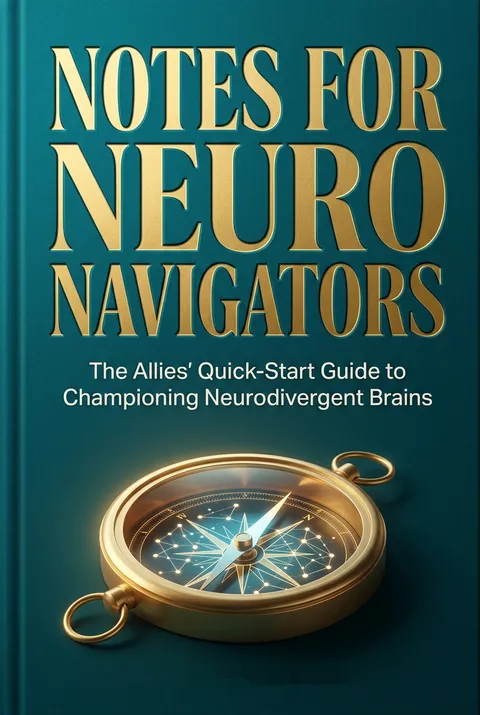
Notes for Neuro Navigators receives positive reviews for its accessible overview of neurodiversity, especially autism. Readers appreciate the author's lived experience, practical advice, and inclusive approach. The book is praised for its easy-to-read format and emphasis on acceptance. Some reviewers note areas for improvement, such as further questioning societal norms and providing more concrete strategies. Overall, it's recommended for allies, families, and educators seeking to better understand and support neurodivergent individuals.
People Also Read





Glossary
Neuro navigator
Supportive environmental guideA family member, colleague, teacher, or other ally who helps an autistic person navigate environments that may not meet their needs. The role involves listening, learning the individual’s preferences, and adjusting expectations or surroundings. It does not mean diagnosing, controlling, or treating the person as a problem to be fixed.
takiwātanga
Autism in one’s own timeA te reo Māori expression for autism, developed by Keri Opai and described in the book as meaning in one’s own space and time. It emphasizes that autistic people experience and move through the world in individual ways, rather than defining autism only through deficits or a single expected presentation.
Masking
Hiding autistic traitsStrategies used by autistic people to appear more neurotypical or avoid negative reactions. Masking can involve rehearsing conversations, forcing eye contact, suppressing stims, concealing interests, or enduring sensory discomfort. It may help someone get through a situation, but the book associates sustained masking without adequate recovery with exhaustion and autistic burnout.
Spoon Theory
Analogy for limited energyAn analogy developed by Christine Miserandino to describe how people with chronic illness allocate limited energy across daily tasks. The autistic community also uses it to explain why activities such as commuting, socializing, masking, and making decisions can consume different amounts of capacity. Having enough energy for one demand does not mean having enough for another.
double empathy theory
Mutual communication mismatchA theory developed by autistic researcher Damian Milton. It proposes that people with different ways of processing and experiencing the world may have difficulty understanding one another because their social expectations and communication norms differ. Communication difficulties are therefore not automatically evidence of a deficit in the autistic person alone.
Autistic joy
Intense absorbed pleasureA form of joy the book associates with deep immersion in a moment, interest, sensory experience, or activity. It may involve focused attention and stimming, a repeated movement or sensation that can relieve stress or simply feel good. Its outward expression varies, so stillness does not prove the absence of enjoyment.
Universal design
Access designed for everyoneThe design of spaces, products, and systems so people with different abilities and circumstances can use them. Rather than adding support only after an individual requests it, universal design builds flexibility into ordinary environments. The book’s examples include adjustable lighting, headphones, movement breaks, clear schedules, and remote access.
Social Model of Disability
Disability shaped by barriersA model that locates disability partly in environments and systems that fail to accommodate human differences. A person may be disabled not only by an impairment, but by barriers such as inaccessible spaces, excessive sensory demands, or processes requiring rapid verbal communication. Removing barriers can improve access without requiring the person to become more typical.
Autism-friendly home formula
Environment-person-outcome modelStockman’s practical framework for considering how an individual’s traits interact with their surroundings to shape an outcome. The formula combines the current environment with the specific autistic person, including their sensitivities and preferences. It guides household changes intended to reduce distress and increase comfort, recovery, and opportunities for joy.
neurodiversity
Variation in human brain functionThe natural diversity of brain function across the human population. The term includes neurotypical and neurodivergent people, rather than referring only to those with diagnoses. In the book, neurodiversity frames different ways of thinking and processing as part of human variation, while neurodivergent describes a person whose neurology differs from what is considered typical.
Download PDF
Download EPUB
.epub digital book format is ideal for reading ebooks on phones, tablets, and e-readers.








