

Key Takeaways
Treat developmental trauma as a body-level adaptation, not merely a bad memory.
The central claim. Developmental trauma begins when overwhelming stress disrupts a child’s early growth, often before autobiographical memory can form. Abuse is one cause, but medical procedures, separation, birth complications, or persistently unavailable care can also disrupt development. The book’s central argument is that these experiences shape the body’s stress responses and relationships, not just a person’s remembered story.
A child’s prognosis can change. Mark, adopted after abandonment and time in an orphanage, was described as unlikely to live independently. His new family and clinicians instead worked to build safety, connection, and regulation. The authors present his story as a reason to treat the underlying physiological and relational disruptions, not only the visible behavior.
The body-level lens helps explain why a person may react intensely without a clear memory of what happened. It also resists the idea that distress is simply a failure of insight or willpower. A useful distinction is between a powerful explanatory framework and a diagnosis: bodily symptoms can have many causes, and trauma-informed care should complement, not replace, appropriate medical assessment. The book is strongest when it treats early experience as one influence on health and functioning, rather than a single explanation for every later difficulty.
Build regulation through responsive relationships before expecting a child to self-soothe.
Calm is learned together. Co-regulation is the back-and-forth process in which a caregiver helps a distressed child settle, while responding to the child’s signals. Infants cannot reliably calm themselves; repeated experiences of being noticed and comforted help build later self-regulation. Bowlby’s attachment model describes a caregiver as both a safe haven during distress and a secure base from which a child can explore.
Play teaches calibration. Charlie, a ten-month-old who startles easily, becomes frightened when his father adds a growl to peekaboo. His father comforts him, then follows Charlie’s small invitation to resume the game more gently. That repair helps Charlie experience excitement without treating all stimulation as danger. The authors call this responsive exchange serve and return.
This account connects emotional development to social learning: children do not merely hear instructions about safety, they experience another person responding to their signals. That makes repair after a misattunement as important as perfect attunement. The framework also broadens caregiving beyond mothers, recognizing fathers, relatives, and other stable adults. Its practical implication is not that caregivers must prevent every distressing moment, but that manageable distress followed by reliable support can teach a child that activation is survivable and connection can be restored.
A felt alarm can reflect old learning, not present-day danger.
The body assesses safety. Interoception is awareness of internal bodily states; exteroception is perception of the outside environment. The authors use neuroception, a term developed by Stephen Porges, for the nervous system’s rapid, largely unconscious assessment of whether people or situations seem safe, dangerous, or life-threatening. Early experiences help calibrate these systems, so a person may miss cues of safety or interpret ordinary sensations as threats.
Past cues can dominate. Kate, who grew up learning to react to earthquakes, wakes repeatedly when wind makes a hotel building sway. She knows the wind is harmless, yet her body responds as though an earthquake may be occurring. The authors’ point is that a strong alarm is real as an experience, but does not by itself establish that danger is present.
This distinction offers a compassionate alternative to arguing someone out of a reaction: the alarm can be acknowledged while the present situation is checked. It also resembles predictive models of perception, in which past learning shapes how ambiguous signals are interpreted. The framework has limits, however. A person’s sense of safety can be inaccurate in either direction, and clinicians should not assume every alarm is a trauma echo. Careful attention to actual circumstances and the person’s own account remains essential.
Read disruptive behavior as a survival strategy before calling it defiance.
Behavior has a history. Defensive accommodation is the book’s term for strategies, including bodily responses and behaviors, that a child develops to manage overwhelming distress and preserve a needed connection. A child may become aggressive, withdraw, comply rigidly, or appear inattentive. These patterns can continue after the original danger has passed, and may be mistaken for deliberate misconduct.
Change the conditions first. Rebecca, an adopted eight-year-old, was labeled oppositional and was constantly moving, scanning the classroom, and reacting to loud noises. Her therapist saw these behaviors as signs of persistent danger, not simply disobedience. A consistent aide helped her explore the room and anticipate disruptions. As home and school became more predictable, her triggers eased, friendships grew, and her grades improved.
Interpreting behavior as communication does not mean ignoring its effects or removing all boundaries. It changes the first question from how to punish this behavior to what conditions make it more likely, and what skills or support are missing. That shift is compatible with behavioral approaches that examine triggers and consequences, while adding attention to felt safety. A caution follows: trauma history should inform assessment, not automatically displace other explanations, including learning differences, medical factors, and current environmental stress.
Use ACE scores to spot population risk, never to predict an individual’s fate.
Adversity leaves measurable risk. The Adverse Childhood Experiences study asked about ten categories of household adversity before age eighteen and compared reported exposure with later health and social outcomes. In the book’s account, nearly two-thirds of participants reported at least one category, and among those participants, 87 percent reported two or more. Higher scores were associated with greater risks of chronic illness, mental health problems, and other difficulties.
A score is not a verdict. The questionnaire does not count how often an event occurred, capture every kind of adversity, or tell clinicians exactly what a person needs now. The authors emphasize that supportive relationships and other protective factors can shape outcomes. Margaret, who answered yes to nine categories, found that understanding the possible connection between her childhood and symptoms reduced shame and helped her consider trauma-focused support.
The study’s enduring contribution is to connect childhood conditions with adult health, challenging care systems that separate physical symptoms from psychological history. Its statistical patterns are useful for public health planning, but individual prediction is more complicated: exposure, timing, severity, later support, and many other circumstances differ. An ACE score can open a conversation, but it should not become an identity or a shortcut to diagnosis. The book’s emphasis on protective relationships helps counter a fatalistic reading of the data.
Do not mistake coping inside a Faux Window for genuine regulation.
Coping can conceal strain. The Window of Tolerance is the range in which a person can experience activation and return to a workable state without becoming overwhelmed or shutting down. The authors call a Faux Window a seemingly manageable range maintained by defensive accommodations, even though the person remains outside genuine regulation. Someone may use substances, compulsive behavior, or withdrawal to keep distress tolerable without restoring flexibility.
Look beneath appearances. Jerry, who experienced separation and limited responsive care as an infant, used medication and later alcohol and cannabis to steady swings between agitation and emotional shutdown. He could function in some settings, so his coping could be mistaken for regulation. The clinical task, in the authors’ model, is to notice the cost and limits of these strategies before adding more stimulation or demanding more social engagement.
The Faux Window is a useful reminder that outward composure does not necessarily equal inner ease. It resembles the distinction between symptom suppression and restored capacity: a strategy can help someone get through a moment while narrowing what they can tolerate over time. The model is clinically suggestive, not a substitute for direct assessment. A therapist should ask what the person experiences, what the coping strategy accomplishes, and what risks it carries, rather than labeling every effective coping behavior as harmful.
Let bodily experience and spoken memory revise the trauma map together.
A life story is more than recall. The authors use trauma map for the verbal and bodily patterns through which a person organizes experience. Memories formed before autobiographical memory is established may be implicit: sensations, reactions, and fragments rather than a clear sequence of events. A person can therefore lack a coherent account while still carrying strong responses linked to early experiences.
Notice what changes. Rodney, raised under pressure to match his high-achieving brothers, interpreted even breathing exercises as tests he might fail. With practice noticing small positive experiences, he began to observe sensations with less self-judgment. The authors argue that clinicians can help clients compare bodily cues with spoken interpretations, while validating the person’s subjective experience without treating every remembered detail as independently verified fact.
This approach joins narrative work with attention to sensation, giving clients more than one route to make sense of experience. It also avoids demanding a complete, linear story from someone whose early memories may not be organized that way. The distinction between validating distress and confirming historical details is important, particularly in suggestible or uncertain memory. A careful clinician can take the person seriously, remain curious about meaning, and avoid steering the client toward a particular account of events.
Begin with regulation, then approach traumatic material in tolerable increments.
Capacity comes before intensity. The book recommends a regulation-informed approach: assess how the client responds to stress, establish predictability and safety, and avoid overwhelming the person with material they cannot yet manage. When a client is outside their Window of Tolerance, verbal reassurance or invitations to connect may not help and can sometimes add pressure. Small, consistent interactions can provide co-regulation while the client builds awareness of internal states.
Proceed in workable steps. The authors suggest monitoring breathing, muscle tone, attention, and other signs of activation or shutdown. They also adapt the idea of completing a survival response to developmental trauma: the central task may be developing a felt sense of safety and connection, rather than reenacting a fight or flight that a young child could not carry out. The work is gradual, responsive, and adjusted to the client’s reactions.
The emphasis on pacing reflects a broader principle in learning and rehabilitation: challenge is useful when it remains within a person’s capacity to recover. The approach also makes the clinician’s steadiness and the structure of sessions part of the intervention, not mere background. This is not an argument for indefinite avoidance of difficult material. Progress requires some challenge, but its dose and timing should be guided by observed response, informed consent, and the client’s goals rather than a rigid sequence.
Use therapeutic touch only when consent, purpose, and practitioner skill align.
Touch can support connection. The authors describe touch as one possible route to soothe, support bodily awareness, and help repair a history in which comforting contact was absent or unsafe. Research discussed in the book links skin-to-skin contact with benefits for infants, while studies of institutionalized children describe developmental effects associated with deprivation. These findings support the importance of responsive care, but do not mean touch is required in therapy.
Consent is ongoing. Touch should have a clear therapeutic purpose, fall within the clinician’s training and scope, and be explicitly accepted by the client. The book names discomfort, unclear boundaries, overwhelming reactions, and unresolved relational dynamics as reasons for caution or avoidance. When physical contact is not appropriate, a clinician can use guided imagery, shared attention, predictable presence, or other ways of helping a client notice bodily experience.
This is a valuable ethical counterweight to the book’s enthusiasm for somatic work. Touch can carry different meanings across histories and cultures, so a technique that feels soothing to one person may feel intrusive to another. The emphasis on purpose, consent, and competence aligns with trauma-informed practice, where control and choice are central. The strongest claim is not that touch heals, but that bodily communication deserves attention and that physical contact is one optional tool among several.
Build resilience through supported challenge, recovery, and repeated experiences of agency.
Resilience is relational. The book defines resilience as achieving positive outcomes despite adversity, and describes it as shaped by supportive adults, self-regulation, perceived control, and sources of hope or cultural connection. It is not simply a tough personality trait. A stable relationship can help a person feel safe enough to try, fail, and recover; successful experiences can then strengthen confidence and broaden future choices.
Keep the challenge manageable. The authors describe a cycle of encountering a workable stressor and returning to stability. Too little challenge may offer no opportunity to build capacity, while too much can provoke overwhelming survival responses. In treatment, clients may need time to become familiar with calm, connection, or pleasure because these states can feel unfamiliar. The aim is not to erase the past, but to make it possible for present experience to include safety, choice, and vitality.
This relational definition resists the cultural habit of praising people for enduring hardship while overlooking whether they had support. It also connects recovery to ordinary agency: choosing, exploring, and noticing successful adaptation can matter as much as recounting pain. The challenge-and-recovery cycle offers a useful guide, though resilience should not be used to romanticize adversity or shift responsibility onto survivors. Communities and care systems also shape whether people can access the relationships and resources that make recovery possible.
Analysis
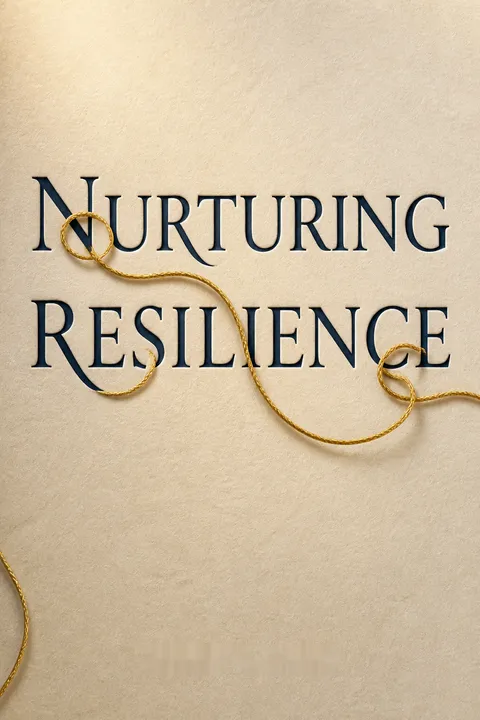
Nurturing Resilience is a clinical framework presented through cases, developmental theory, and somatic practice. Its central move is to shift the question from what is wrong with this behavior or symptom to what early conditions taught this person’s body to expect. Attachment, stress physiology, sensory interpretation, memory, and social behavior are treated as connected dimensions of adaptation. That synthesis gives clinicians a coherent way to understand why a person may react to present circumstances as if danger remains, or may appear calm while relying on costly strategies to stay functional.
The book’s most compelling practical insight is that treatment itself must offer what was missing: predictability, responsive attention, manageable challenge, and room to recover. Its cases make this concrete. Rebecca’s classroom behavior changes when adults address her expectation of danger instead of demanding stillness. The emphasis on pacing is especially important for clients whose distress predates explicit memory or whose bodily signals are difficult to interpret.
The evidence base should be read with distinctions in mind. The ACE study robustly connects categories of adversity with later population-level risk, but does not establish an individual prognosis or prove that any particular symptom arose from childhood experience. The book’s polyvagal framework offers an influential organizing model for autonomic responses, yet some of its detailed physiological interpretations are debated and should not be treated as settled fact. Somatic concepts can guide observation, but they do not replace medical evaluation, differential diagnosis, or client preference.
Taken as a whole, the book is most useful not as a diagnostic manual or a recipe for touch-based therapy, but as a disciplined stance: interpret symptoms in context, treat coping strategies as meaningful adaptations, and build capacity before demanding vulnerability. Its promise is hopeful without requiring a claim that every wound can be fully repaired. Recovery is framed as expanding the range of states and relationships a person can inhabit, with safety and agency becoming more available alongside the history of threat.
Review Summary
Nurturing Resilience receives strong praise (4.25/5) for its integrative approach to developmental trauma, combining neuroscience, attachment theory, and polyvagal theory. Readers value its scientific grounding and concepts like "faux windows of tolerance" and dorsal physiology. Written for therapists, it emphasizes regulation, co-regulation, and relational healing. Critics note it's dense, repetitive, and lacks specific intervention techniques. Many appreciate the diagrams and bibliography, though some desired more practical applications. The book bridges mind-body connections effectively, though accessibility varies—professionals find it invaluable while lay readers may struggle. Overall recommended for trauma-focused clinicians.
People Also Read








Glossary
Developmental trauma
Early stress disrupts developmentThe book uses developmental trauma for overwhelming or chronic experiences that disrupt development during early life, particularly before a child can form an autobiographical narrative. Abuse and neglect can contribute, but so can medical events, separation, birth difficulties, or unavailable care. The concept emphasizes effects across bodily regulation, relationships, behavior, and emotional development.
Co-regulation
Regulation shared between peopleCo-regulation is the mutual process through which one person’s responsive actions help another person manage arousal and emotion. In early childhood, a caregiver notices distress, offers appropriate comfort, and adjusts to the child’s response. Repeated experiences support the child’s developing capacity for self-regulation. The book also applies co-regulation to therapeutic relationships.
Neuroception
Unconscious safety assessmentA term developed by Stephen Porges for neural processes that assess whether people or situations seem safe, dangerous, or life-threatening, often without conscious awareness. In the book’s framework, neuroception draws on internal bodily sensations, external sensory information, and prior learning. Early trauma may bias this assessment toward danger or make safety harder to recognize.
Interoception
Awareness of internal body statesInteroception is the perception of internal bodily conditions, including sensations related to heartbeat, digestion, temperature, and other processes. The book describes it as a source of information about emotion, needs, and felt safety. Its accuracy and interpretation develop in context, and trauma may make sensations difficult to identify or easy to misread.
Polyvagal theory
Model of autonomic responseStephen Porges’s theory proposes a more differentiated account of autonomic nervous system responses, including pathways associated with social engagement, mobilization, and immobilization. The book uses this model to explain how early relationships may affect physiological regulation and perceived safety. It is presented as a clinical framework, not a complete account of every person’s response.
Window of Tolerance
Manageable range of arousalA term associated with Dan Siegel for the range of arousal within which a person can process experience and return to a workable state. Outside this range, someone may become highly activated or shut down. The book presents therapy as partly supporting clients to recognize this range and gradually increase their capacity to remain within it.
Faux Window of Tolerance
Coping that masks dysregulationThe authors’ term for a seemingly manageable state maintained by defensive accommodations while a person remains outside genuine regulation. A person may use withdrawal, substances, compulsive behaviors, or other strategies to contain distress. These strategies can provide short-term stability, but may conceal limited flexibility and the ongoing cost of survival physiology.
Defensive accommodation
Strategy for surviving overwhelmThe authors’ term for behavioral, psychological, or physiological strategies developed to manage overwhelming experience and preserve safety or connection. These responses may have helped a child cope when caregivers were unavailable or frightening. In adulthood, the same strategies can become restrictive or disruptive, even though they continue to serve a protective function.
Trauma map
Organizing story of experienceThe book’s term for the combined verbal and somatic patterns through which a person interprets personal history, bodily sensations, relationships, and behavior. A trauma map may organize new experiences around earlier expectations of danger or disconnection. Therapy can help a person notice these patterns and develop a more flexible account that includes safety and agency.
Allostatic load
Wear from repeated stress adaptationA term from stress research for the cumulative physiological cost of repeatedly adapting to stress. Short-term changes can help the body respond to demands, but chronic activation or conservation can strain bodily systems and divert resources from functions such as digestion, sleep, and immune activity. The book uses the concept to connect prolonged survival physiology with health risks.
Coupling dynamics
Links among traumatic responsesIn the book’s somatic framework, coupling dynamics describe how elements of experience become linked or disconnected in response to overwhelming events. Over-coupling joins experiences that should be distinguishable, such as a cue and a panic response. Under-coupling separates experiences that belong together, which can obscure how a reaction relates to its history.
Adverse Childhood Experiences (ACE) Study
Study of adversity and healthA large public health study developed through collaboration between Kaiser Permanente researcher Vincent Felitti and Robert Anda of the CDC. It examined reported childhood adversity alongside adult health and behavior. Its findings showed associations between greater exposure and increased risk of later difficulties. The ACE score estimates categories of exposure, not an individual’s destiny or treatment needs.
Download PDF
Download EPUB
.epub digital book format is ideal for reading ebooks on phones, tablets, and e-readers.








