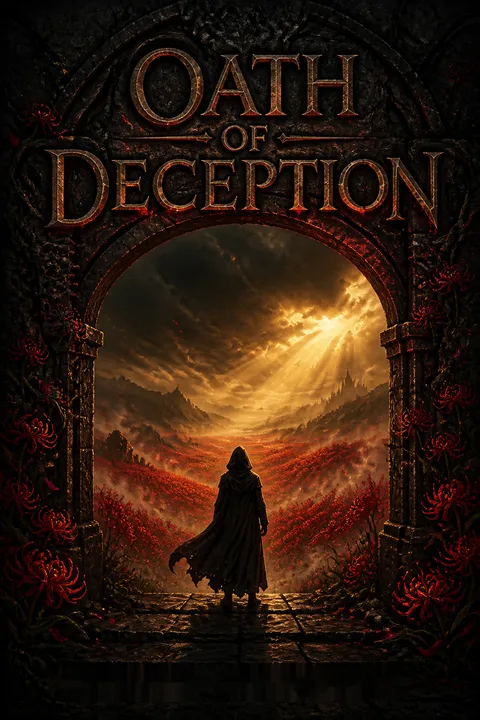


Plot Summary
Prologue
At sixteen, Savenek is still an academy trainee when a routine theft of ship records sends him aboard a vessel from Russek. He finds a dead man beside crates of red powder and recognizes enough to suspect poison.
His father, Nathenek, refuses to let him help destroy the cargo, but Savenek’s discovery gives the Brotherhood of the Crown its warning. Nathenek sets the ship ablaze; the powder ignites, and the vessel explodes. The evidence is gone, but the reason Russek brought poison into Emperion remains unknown.
The opening makes Savenek’s competence inseparable from his impatience. He disobeys orders and finds the danger precisely because he refuses to accept a trainee’s limited view of the mission. Nathenek’s decision to destroy the ship protects Emperion, yet the explosion erases the evidence that might explain Russek’s purpose. The scene establishes a recurring cost of covert work: acting quickly can avert immediate catastrophe while leaving the larger threat obscured. It also frames father and son as allies whose shared instincts are complicated by Nathenek’s need to protect Savenek from risks he himself considers unavoidable.
The Trainee Left Behind
After the ship is destroyed, Savenek returns to the life he has known since childhood: relentless training under Nathenek, his father and the Brotherhood’s chief instructor. He wants to take his vows, marry Hana, the honey seller he visits in secret, and finally be trusted with real work.
Nathenek objects to the romance and, when Savenek’s class is summoned for its final assessment, orders him to stay behind without explaining why. He later admits that war may be coming and that Savenek’s mother had imagined a different future for him. The answer unsettles Savenek, who has been trained for nothing else, but his father’s concern gives the delay a consequence he cannot dismiss.
Savenek experiences Nathenek’s protection as both love and confinement. His training has made service feel like a chosen identity, even though the choice began when he was a child and had little power to refuse it. Hana represents an ordinary future he wants without understanding whether their brief, secret courtship could sustain it. Nathenek’s reference to Savenek’s mother interrupts the certainty of that identity: for the first time, the life he has been prepared for looks less like destiny than an inheritance his father may be reconsidering. The withheld explanation intensifies Savenek’s need to prove himself.
A Mission Without Nathenek
As the Brotherhood rushes its members into the field, Nathenek and Savenek track a suspicious man through the city. The man is a Telmena assassin who stabs himself rather than be questioned, confirming that Emperion faces danger from more than Russek. Nathenek takes the body to the compound, then orders Savenek to leave at sunrise.
In his father’s absence, the Brotherhood’s records keeper gives the young trainee his first solo mission: protect Emperion’s negotiator and interpreter in Apethaga, oversee the weapons purchase, and learn whether the royal family is considering marriage alliances. Savenek sets out with a route to memorize, a secret identity, and no reliable explanation for why his father has been sent elsewhere.
The dead assassin converts vague rumors of war into a personal threat, while his suicide denies Savenek the information he needs. The response forces Savenek into adulthood by removing the mentor who has always controlled the boundaries of his work. His mission also combines protection and intelligence gathering, tasks that demand judgment rather than the physical skill he has spent years sharpening. This is a decisive test of whether he can act without Nathenek’s instructions. Yet the unexplained separation keeps his confidence mixed with suspicion: Savenek is being trusted with danger, but not with the reasons behind it.
The Interpreter in Disguise
After a week on the road, Savenek reaches Lanek and checks into the Lilac Inn under his cover name, Ven. There he meets the supposed interpreter, a young woman dressed as a boy who calls herself Aryam, or Ari. She confirms their secret code and reveals that the negotiator, Morgek, has been murdered and that four men are hunting her.
When danger closes in at the inn, Savenek helps Ari escape through a window and kills two armed men in the stables. Their attackers carry the marks of Telmena’s assassins, linking the ambush to the danger already pursuing Savenek. With both official representatives compromised, the two fugitives take their horses and continue toward Apethaga together.
Ari’s disguise immediately disrupts Savenek’s assumptions about who needs protection. She has survived alone, recognizes the danger, and can handle a weapon, while he has arrived expecting a straightforward escort assignment. Their partnership begins with necessity, not trust: Savenek supplies force and a plan of escape, while Ari supplies information and the judgment to keep moving. The murdered negotiator also changes the mission’s shape. Savenek must now perform duties he was not briefed to handle, and the assassins make clear that reaching Apethaga may be more dangerous than the negotiations themselves.
Sleepwalk Into Apethaga
At Apethaga’s border, Savenek and Ari announce themselves under their aliases and surrender their weapons. The royal guard offers them a choice: drink a sleep-inducing elixir for transport to the palace or leave the kingdom. Savenek judges that refusing would end the mission, so he and Ari take the dose and wake inside separate royal chambers.
Princess Lareissa briefly visits Savenek before disappearing, and guards keep both envoys confined. When Ari reaches his room, they agree to present her as his sister and him as her bodyguard, concealing her real function. Commander Gorditi questions their identity, but Ari convincingly claims authority to negotiate. The royal family schedules their introduction for a ball the following evening.
The tonic is a welcome ritual that is also a means of control: the visitors surrender awareness and arrive without knowing the route or the palace’s arrangements. Savenek accepts the risk through calculation, but the decision leaves him unable to protect Ari during the journey or choose where they are taken. Their fabricated sibling relationship restores some agency by giving them a shared cover, though it also forces them to perform intimacy as strategy. Ari’s composed answer to Gorditi shows that Savenek’s mission partner is not simply someone to guard. Her ability to represent herself becomes essential to their survival.
Flirting for Intelligence
At the ball, Savenek escorts Ari through the court and studies the room’s exits while she watches the royal family. He decides that the younger royals may be easier sources of information: Ari should draw Prince Patteon’s attention, while Savenek provokes Princess Lareissa by dancing with other women. Patteon does approach Ari, and Lareissa follows Savenek into a private evening outside the ballroom.
His flirtation earns no useful intelligence, but Ari learns that Patteon will conduct the negotiations himself. The next day, the prince delays them again. Savenek and Ari recognize that courtship, dancing, and their sibling act can get them close to people who would otherwise keep the Emperion envoys at a distance.
The ball turns social performance into a tool of espionage, but the tactic exposes the difference between Savenek’s practiced charm and Ari’s deliberate reading of power. He treats Lareissa’s attention as an opening, only to find that attraction is not the same as access to reliable information. Ari, meanwhile, accepts proximity to Patteon because it may serve the mission, not because she trusts him. Their growing ease with one another makes the sibling disguise more convincing, while their private attraction complicates a partnership that depends on keeping professional judgment intact.
The King Wants Secrets
When Ari finally meets Patteon about the weapons, he challenges Emperion’s motives and questions why its largest army needs more arms. Ari offers a substantial payment, but the prince refuses to decide and points out that Russek is not directly beside Emperion. Later, hidden behind a palace plant, Savenek and Ari overhear King Theon telling Patteon to prolong negotiations and extract details about Emperion’s army, weapons, and supplies.
Ari understands that the prince’s questions are not routine bargaining. The king wants military intelligence while the envoys wait. Their supposed purchase is therefore a trap for information, and the two agents must investigate Apethaga without revealing how much they have already learned.
The negotiations invert the envoys’ expected roles. Emperion sent Savenek and Ari to acquire weapons, but Apethaga uses the meeting to assess Emperion’s vulnerability. Theon’s instructions make delay an active tactic: every unanswered question buys him time while inviting the visitors to disclose more. Ari’s recognition of the diplomatic protocol matters because she can distinguish a genuine opening from a calculated refusal. For Savenek, the revelation confirms that improvisation is no longer merely a way to complete the mission. It is a defense against an opponent who is shaping the terms of every encounter.
Flowers That Kill
Savenek courts Karolena, one of Princess Conditto’s attendants, hoping she can lead him toward information in the palace. When Conditto catches them in a restricted corridor, Karolena covers for him and secretly warns him to beware of a red flower. Savenek later sees a pale, heavily marked man from Russek inside the palace, making the warning more urgent.
Patteon then invites Ari and Savenek to Golden Lake. The prince encourages Ari to pick the small red flowers growing along its banks, but Savenek recognizes the danger and pulls her away. The flowers stand among bones and without animal life. Their beauty conceals a poison, and the palace’s apparent openness conceals a deadly perimeter.
Karolena’s warning changes Savenek’s attention from political behavior to the landscape itself. The lethal flowers are not simply a weapon; they make the royal capital’s boundary difficult to perceive and turn a peaceful outing into a test of whether the visitors can recognize danger. Patteon’s invitation places Ari in immediate jeopardy, while Savenek’s refusal to let her touch the plants reveals how personal his concern has become. The scene also gives Karolena’s cautious loyalty practical force: she risks herself to communicate information that the palace’s official channels are designed to hide.
Letters Beneath the Desk
Savenek uses Lareissa’s interest in him to enter Princess Conditto’s office. While pretending to sketch the younger princess, he searches a desk and finds letters between Conditto and Queen Jana of Russek. Prince Zare interrupts and drives Lareissa away, but Savenek escapes with his cover intact.
Back in their rooms, Ari reveals that Patteon tried to make her eat something she suspected was drugged. Savenek is shaken by the danger to her, though he has just kissed Lareissa to avoid being caught. Ari objects to his treating intimacy as a disposable tactic, and their argument exposes a jealousy neither can easily explain. The letters remain unreadable, so Savenek needs a cipher key.
Savenek’s deception succeeds materially, but it costs him some of Ari’s trust. He has learned to treat flirtation as an instrument, yet Ari insists that the people caught in his tactics are not props without consequences. Her report about Patteon’s attempted drugging makes the moral distinction sharper: the same method Savenek uses to manipulate Lareissa is being used against Ari. Their emotional conflict is not separate from the mission. It affects how honestly they share danger and whether they can rely on each other when a plan requires personal risk.
The Mine No One Leaves
After the king evades them in open court, Savenek and Ari visit a hidden workers’ tavern and ask about the Kepper Mines. The room falls silent, confirming that the name is dangerous. A patron later slips Ari a note during a card game: the mines lie in the northern mountains, and those sent there do not return.
That night, the pair follow Patteon from the palace to an inn, where he meets the scarred Russek man Savenek had spotted before. Ari gives the innkeeper a false errand to learn which room holds the visitor. Savenek gathers kitchen knives while she secures their route upstairs. Their questions have led them from a secret mine to a direct meeting between Apethaga’s heir and Russek.
The tavern’s silence communicates what official diplomacy refuses to say. The Kepper Mines are not an ordinary industrial site, and the note’s warning transforms them into a possible source of the kingdom’s hidden power. Savenek and Ari then connect that secret to Patteon’s private meeting, following evidence rather than trusting the court’s staged explanations. Their methods differ but complement each other: Savenek prepares for violence, while Ari extracts information through performance. The turn from courtly suspicion to covert pursuit narrows the mystery into a tangible threat with people, weapons, and a location.
The Alliance in Cipher
Savenek attacks the Russek visitor, who tells them they are already too late before dying in the fight. He and Ari find a coded letter, return to Conditto’s office for its cipher key, and escape the palace only long enough to decipher it atop the outer wall. The letter reveals that Apethaga has supplied Russek with weapons and a toxic substance from the Kepper Mines.
King Drenton is to test it on Melenia before marching against Emperion, while marriages join Russek, Apethaga, Telmena, and Fren against them. King Theon catches the envoys before they can cross the flower-covered valley. He admits his plan is driven by revenge for his parents’ deaths in an earlier Emperion invasion, then orders their arrest.
The cipher turns scattered clues into a coordinated political and military design. The poison, the missing weapons deal, the Russek contact, and the proposed marriages now belong to one strategy, with Melenia selected as the first test of its destructive reach. Theon’s motive does not lessen the danger; it explains how private grief has been converted into state policy. Savenek and Ari have enough information to warn Emperion, but their discovery comes at the moment their freedom disappears. Knowledge becomes urgent without yet becoming useful, because they must first escape the kingdom that holds them.
The Prisoner's Bargain
In adjacent dungeon cells, Savenek and Ari wait to learn whether King Drenton will decide their fate. Patteon questions them, but neither reveals their real identities or the Brotherhood’s role. Savenek realizes that breaking out will not help unless they can cross the ring of poisonous flowers surrounding the capital.
He and Ari agree to bait the prince with a false account of being abandoned apprentices. Ari then asks to speak with Patteon and pretends she will trade information for release. On the way back, she overhears one of his guards mock her for failing to notice the tunnel entrance beside the armory. That careless insult gives them the route they need, though the tunnel itself remains unexplored.
Captivity strips away the formal protections of diplomacy and leaves the pair with only their ability to interpret other people. Savenek’s first instinct is to plan an escape, but he recognizes that physical freedom without a route through the flowers would be another dead end. Ari’s deception answers that problem by exploiting Patteon’s belief that she is desperate and uninformed. The breakthrough comes not from overpowering an enemy but from letting a guard’s contempt make him careless. Their partnership has shifted from Savenek directing Ari’s protection to each trusting the other to create an opening.
The Tunnel Beneath Keppers
After night falls, Savenek picks both cell locks and fights the guards at the stable entrance while Ari uses a pitchfork and a stolen sword. She sets the stables ablaze as a distraction, then brings two horses to the concealed door beside the armory. The passage runs beneath the deadly flowers for hours.
At its far end, Savenek and Ari overpower the guards and release the horses from a nearby stable before fleeing into the countryside. The escape costs them food, rest, and the protection of secrecy: the fire will raise an alarm, and Apethaga’s soldiers will search for them. Still, the tunnel gives them a way out of the capital that the king thought no prisoner could find.
The escape depends on a sequence of shared improvisations rather than a single heroic maneuver. Savenek opens the cells and handles the guards; Ari creates the fire and secures the horses. The tunnel’s existence confirms that Apethaga has built its own hidden route beneath the very poison that imprisons visitors. Their freedom is therefore purchased through knowledge gathered under pressure. Yet escape only changes their predicament, not its stakes. They remain inside hostile territory with limited supplies, pursued by a kingdom whose weapons and poison may soon reach the battlefield.
The Gate and Poison
Savenek and Ari ride for the Telmena gate, knowing the Apethaga king can predict their likely route. They disguise Ari as a frightened traveler; while guards attend to her, Savenek unlocks the gate. She rides through, and Savenek fights the soldiers pursuing them before joining her beyond the wall. Archers wound his arm and thigh with poisoned arrows.
He stays in the saddle until the poison weakens him, then collapses. Ari applies a charcoal paste she makes from local materials and keeps him moving toward Lakeside, where the empress’s healer can treat him. Savenek reaches the infirmary alive, but the poison has left his body numb and his survival uncertain.
Ari’s performance at the gate turns the same skill that made her a capable interpreter into a means of physical escape. The successful crossing does not end the danger: poisoned arrows make Savenek’s body the next battlefield, and his dependence on Ari reverses their earlier protector arrangement. Her practical care, including the charcoal paste, buys time but cannot substitute for expert treatment. Their flight thus exposes a central vulnerability of covert work: the agent who survives by controlling every detail can become helpless in an instant, relying on the judgment and loyalty of another person.
The Daughter's Secret
For weeks, Nathenek stays beside Savenek while the healer works to draw the poison from his body. Neco, a powerful figure in the royal circle, arrives after learning Savenek’s name through a tattoo and says that the young woman who brought him to Lakeside is his daughter, Mayra. Ari had used another name throughout the mission, and Savenek now understands why she knew the court and could defend herself.
Neco confirms that the information from Apethaga has reached the Brotherhood: Russek has invaded Melenia, and Fren’s Prince Odar is coming to seek Princess Allyssa’s hand. As Savenek begins recovering, Neco arranges for him and Nathenek to hide at a country manor until he is strong enough to travel.
The revelation about Ari reframes her competence without diminishing it. Her language skills, court familiarity, and combat ability were never accidental, but Savenek has still been right to judge her by what she does rather than by the identity she concealed. His own recovery is prolonged and dependent, while news of the war reaches him through other people. The contrast is deliberate: his body must heal before he can act, even as political events accelerate beyond his control. Neco’s intervention offers safety, but it also confirms that Savenek’s mission has consequences larger than either agent can manage alone.
A Princess Is Murdered
After two months at the manor, Savenek regains his strength and rides back to Emperor’s City with Nathenek. His father explains that Telmena had agreed to move Apethaga’s supplies north and had accepted a request to assassinate the Emperion delegation. At the market, Savenek sees Hana kissing another young man and accepts that she has moved on during his long absence.
Then the city’s mood turns fearful. Nathenek tells him that Russek kidnapped and killed Princess Allyssa after Emperor Darmik and Empress Rema refused to surrender Emperion in exchange for her. Savenek wants to fight, but Nathenek warns that the princess’s death changes the kingdom’s future and that he must first understand what is being asked of him.
Savenek’s return offers several endings that refuse to settle into comfort. His past with Hana has quietly closed, while his father’s account confirms that the conspiracy extended through Telmena as well as Apethaga. The princess’s murder makes the war personal to the ruling family and forces Savenek to confront the cost of choosing a kingdom over an individual life. Nathenek’s warning hints that Savenek’s place in the crisis is not simply that of a trained fighter. After spending the novel trying to earn a defined role, he is again confronted with a future whose terms have been kept from him.
The Bloodline Revealed
Emperor Darmik and Empress Rema arrive at Nathenek’s home under cover. Rema explains that she gave birth to twins sixteen years earlier and, after an attempt on their lives, kept the firstborn daughter, Allyssa, at court while entrusting her son to Nathenek. Savenek is that son. With Allyssa dead, he is the surviving heir and must take his place in the royal family before Darmik goes to war.
Rema reveals that the Brotherhood’s oath and the matching tattoo mark their shared bloodline. Savenek refuses to accept the truth at once, but Darmik insists there is no time: they must leave immediately. The book ends with Savenek facing the parents, crown, and identity he never knew were his.
The final revelation turns Savenek’s entire life into a carefully designed act of protection and concealment. Nathenek’s love has been genuine, but it was also part of Rema’s plan to keep an heir alive beyond the reach of the palace. The Brotherhood’s oath, which Savenek understood as allegiance to the crown, becomes literal kinship. His training and loyalty therefore remain meaningful, but their meaning changes without his consent. The ending denies him time to reconcile the two fathers, the dead twin, or the sudden demand to rule. His next duty begins before he can decide who he is.
Analysis
Oath of Deception makes the work of spying depend on more than stealth. Savenek can read a room, fight, and memorize a route, but the mission repeatedly turns on forms of knowledge he cannot obtain alone: Ari’s languages, Karolena’s warning, a worker’s note, a guard’s careless insult, and the cipher hidden among Conditto’s papers. The novel treats information as something produced through relationships, not simply extracted by an expert operative.
That dependence unsettles Savenek’s training. Nathenek has taught him to avoid attachments because they can compromise judgment, yet Savenek survives Apethaga through trusting Ari and letting her act independently. The romance develops alongside the intelligence work, so his growing care for her is not an ornamental subplot. It tests whether loyalty means controlling danger for someone else or recognizing that person as a partner with her own judgment.
Apethaga’s polished court and lethal flowers make the kingdom’s beauty inseparable from concealment. The poison that protects its capital is also a commodity in a wider political scheme. Marriage proposals, weapons, assassinations, and coded letters all convert people and resources into instruments of power. Theon’s revenge gives the conspiracy an emotional source, but it does not excuse his decision to risk whole kingdoms in pursuit of it.
The final revelation recasts Savenek’s past without erasing the bond he has with Nathenek. His life has been shaped by a secret designed to preserve the royal line, while he understood himself as an ordinary trainee earning his place through service. The book ends before he can reconcile those identities or answer the demand to become heir. Its cliffhanger is therefore psychological as well as political: the coming war threatens Emperion, but Savenek must first decide what his newly disclosed family history requires of him.
Review Summary
Oath of Deception receives mostly positive reviews, with an average rating of 4.26/5. Readers praise the exciting plot twists, character development, and pacing. Many enjoy Savenek's perspective and backstory, though some found the transition jarring. The book provides insight into events concurrent with previous novels. Critics note occasional awkward dialogue and period-inaccurate language. Despite some reservations, most readers recommend the book and eagerly anticipate the next installment in the series.
People Also Read



Characters
Savenek
Restless young assassinA sixteen-year-old trainee of the Brotherhood of the Crown, Savenek is quick, observant, and frustrated by being treated as too young for the dangers he has spent his life preparing to face. Nathenek raised and trained him, giving him discipline as well as a model of loyalty to Emperion. Savenek’s confidence in physical skill can make him reckless, especially when he wants to prove his worth. His craft of carving small wooden figures offers a quieter outlet for feelings he cannot easily express. He is drawn to Hana’s warmth and, later, to Ari’s intelligence and independence, while struggling to keep personal attachment from interfering with his work.
Nathenek
Protective assassin fatherNathenek is an elite assassin and the head instructor at the Brotherhood’s academy. He is controlled, practical, and devoted to the crown, but his decisions about Savenek are shaped by grief and fear as much as professional judgment. He teaches through rigorous routines, tactical exercises, and warnings against emotional attachment. His silence about the past leaves Savenek feeling underestimated, even when Nathenek’s restraint is meant as protection. Their bond is affectionate but strained by the difference between a father’s wish to keep his son safe and a mentor’s duty to prepare him for a dangerous life.
Ari
Resourceful interpreterAri is an interpreter sent from Emperion to accompany the weapons delegation. She is multilingual, alert to changes in people’s behavior, and capable of defending herself, though she initially conceals much of her background from Savenek. Her reserve is not timidity: she chooses carefully what to reveal and keeps her attention on the mission when Savenek’s charm threatens to distract him. Ari values competence, loyalty, and honesty, and she expects others to take her judgment seriously. Her partnership with Savenek develops through danger, teasing, disagreement, and the difficult question of whether affection can survive when duty sends two people in different directions.
Neco
Powerful royal adviserNeco is a senior figure trusted by Emperion’s ruling family and a man whose influence reaches beyond the palace. He is composed and economical in speech, intervening when Savenek’s condition and the approaching war demand careful decisions. His authority is evident in the way Nathenek listens to him, but he also shows gratitude toward those who protect the people he loves. Neco’s judgment balances immediate security with the future needs of the kingdom.
Empress Rema
Burdened sovereignRema rules Emperion with a strong sense of obligation to its people. She is prepared to subordinate private happiness to political stability, a choice that shapes both her family and the secret institution she created to defend the crown. Her public authority coexists with maternal grief and a willingness to make painful decisions for the kingdom’s survival. Rema’s relationship with Nathenek reflects the trust she places in people who serve Emperion, even when that trust asks them to bear enormous personal costs.
Emperor Darmik
Wartime commanderDarmik is Emperion’s emperor and the commander responsible for organizing its defense. He speaks with direct authority and focuses on the practical needs of the throne, particularly the continuity of the royal line during a looming war. His composure is tested by family loss and political danger, but he continues to frame personal decisions in terms of what the kingdom requires. He expects those closest to the crown to act quickly when the realm is threatened.
Hana
Savenek's first affectionHana sells honey with her sister and family in Emperor’s City. Warm, witty, and comfortable with affectionate teasing, she offers Savenek companionship outside the Brotherhood’s discipline. Their meetings are brief and largely secret, and Savenek knows less about her family and expectations than he assumes. Hana represents the possibility of a life that is not organized around missions, though neither of them has established what a shared future would require.
King Theon
Vengeful Apethagan kingTheon rules Apethaga, a wealthy kingdom known for its weapons and guarded by formidable borders. He presents himself as a hospitable host while controlling access to his court and measuring what visiting envoys know. His political decisions are driven by a long memory of violence against his family and kingdom. Theon’s patience and polished manners make him difficult to read until his interests become unmistakable.
Prince Patteon
Calculating crown princePatteon is Apethaga’s heir and the royal family’s principal contact for negotiations with Emperion. He is measured in public, skilled at questioning visitors, and attentive to the military value of information. His careful manners conceal a willingness to use delay and personal attention as political instruments. Patteon assumes that his position gives him control over the terms of an encounter, a confidence that shapes how he treats Ari and Savenek.
Princess Conditto
Guarded royal strategistConditto is one of Apethaga’s senior princesses, closely observed by the court and surrounded by attendants. She is more controlled than her younger sister and appears accustomed to the expectations placed on a royal heir. Her private decisions carry political weight, and she keeps her papers and intentions guarded. Savenek’s attempts to understand her position reveal how much the kingdom’s marriage diplomacy matters to its wider strategy.
Princess Lareissa
Defiant youngest princessLareissa is Apethaga’s youngest princess, known at court for her restless, flirtatious behavior and disregard for her family’s expectations. She enjoys testing boundaries and is quick to pursue whatever catches her interest. Savenek sees her as a possible route to information, but her unpredictability makes her difficult to manage. Beneath her playfulness is a young woman aware that her family often treats her as less important than her siblings.
Karolena
Cautious court attendantKarolena serves among Princess Conditto’s attendants. She is perceptive enough to notice when Savenek’s presence could put her at risk, yet she chooses to help him when she believes he needs warning. Her cautious manner is balanced by a willingness to act, and the information she passes along changes how Savenek reads the palace grounds. She shows how people with little formal power can still influence the course of a dangerous mission.
Prince Zare
Watchful younger princeZare is Patteon’s younger brother and one of Apethaga’s princes. He is protective of his sisters and suspicious of Savenek’s attention to Lareissa. His blunt interventions make clear that the royal family’s private boundaries are defended as firmly as its political interests.
Queen Elesseni
Apethagan queenElesseni is Theon’s queen and the mother of Apethaga’s royal children. She appears at court beside the king, representing the composed public face of the royal household. Her presence helps establish the family structure whose marriage prospects and political alliances shape the negotiations.
Princess Allyssa
Emperion's crown princessAllyssa is Emperion’s young crown princess and the heir whose marriage is considered in diplomatic calculations. Though she is absent from Savenek’s mission, her position links the weapons negotiations to the question of alliances. The choices made around her demonstrate how royal heirs are treated as both people and instruments of state policy.
Aunt Tayek
Savenek's trusted auntTayek is Nathenek’s sister and the relative with whom Savenek feels most at ease. She offers him kindness, humor, and a rare willingness to speak about his mother. Her home gives Savenek a place outside the academy’s strict routines and reminds him that family can be affectionate as well as demanding.
Isek
Brotherhood record keeperIsek is a retired assassin who maintains the Brotherhood’s records and procedures. Formal and exacting, he gives Savenek the instructions and route for his first independent mission. His office represents the institution’s older memory and the rules that keep its covert work organized.
King Drenton
Russek's ruthless rulerDrenton rules Russek, a kingdom known for its harsh military and tense relations with Emperion. He is not present during Savenek’s mission, but his correspondence and political aims shape the threat facing the other kingdoms. His reputation makes the Apethagan negotiations dangerous even before Savenek discovers the full conspiracy.
Plot Devices
The Brotherhood's oath
Loyalty with hidden rootsThe Brotherhood of the Crown is a covert network that trains spies and assassins to protect Emperion’s royal family. Its shared oath, secret entrances, coded identity checks, and concealed academy structure make it both a political institution and a family-like community. Savenek has been raised to regard service to the crown as the organizing fact of his life. The oath’s deeper meaning becomes important at the end, when a tattoo connected to it helps identify his place in Emperion’s history. The device ties practical spycraft to questions of belonging and inheritance.
Aliases and cipher
Truth hidden in plain sightSavenek travels as Ven, and Ari presents herself as Aryam, allowing them to move through Apethaga under manufactured identities. A numerical exchange confirms official contacts, while coded correspondence between Apethaga and Russek conceals plans from anyone unable to find the matching cipher key. The false names protect the envoys but also make intimacy difficult: each partner must decide what to reveal while depending on the other. Recovering the cipher key transforms the letters from a suspicious clue into evidence of a military alliance and impending attacks.
Kepper flowers
A beautiful border weaponThe red kepper flowers around Apethaga’s capital are highly poisonous, killing animals and people who approach too closely. Their presence makes the city difficult to escape and conceals the importance of the Kepper Mines, where the poison is harvested and prepared. Savenek first encounters the danger at Golden Lake, then discovers that the same substance is being transported north for Russek. The flowers function as both landscape and weapon: they create an invisible prison, hide the kingdom’s methods, and make the protagonists’ escape dependent on finding a secret tunnel beneath them.
Marriage diplomacy
Alliances built through heirsThe possibility of royal marriages shapes the negotiations from the outset. Emperion considers whether another kingdom might provide weapons or security, while Apethaga’s royal family weighs its children as links to other courts. The coded letters reveal that Russek, Apethaga, Telmena, and Fren are being joined through planned marriages, creating a coalition against Emperion. This device makes courtship politically consequential rather than merely personal. It also mirrors the novel’s private relationships, where affection and attraction unfold under the pressure of obligations neither Savenek nor Ari fully controls.
The matching tattoo
A hidden family markerA small tattoo connected to the Brotherhood’s oath appears to be a sign of loyalty to Emperion. When Savenek is gravely ill in Lakeside, the mark helps a healer and Neco recognize information about his identity. The symbol links the Brotherhood’s public purpose to a private history that Savenek has never been told. Its final significance changes the meaning of Nathenek’s training, Rema’s trust in him, and the oath itself. The tattoo is therefore both practical evidence and a planted clue whose full importance is withheld until the final revelation.
Reign of Secrets Series


About the Author
Other books by Jennifer Anne Davis




Download PDF
Download EPUB
.epub digital book format is ideal for reading ebooks on phones, tablets, and e-readers.








