

Plot Summary
Prologue
During the invasion of Greenwood Island, Commander Mako finds his wife and infant daughter dead while enemy soldiers search the castle for the remaining royal family. Queen Kayln gives him her baby, Princess Amer, and asks him to preserve the royal line.
Mako wraps his dead daughter, Tabitha, in the princess’s royal blanket so the queen can present the body as proof that the heir is dead. Then he straps the living Amer to his chest and escapes through the castle tunnels, carrying both a child and an oath into the darkness.
The opening makes political survival an intimate, bodily act. Mako does not save the royal line by winning a battle, but by carrying a baby through the same corridors where his family has been killed. The exchange of infants turns names and appearances into instruments of statecraft, while the royal blanket makes grief part of the disguise. Mako’s oath binds him to a future he cannot control; his immediate task is simply to keep Amer alive. The prologue therefore plants the novel’s central tension between inherited identity and chosen loyalty, and gives the later mystery a human cost before it becomes a political question.
The Girl Who Jumps
Seventeen-year-old Rema can outrun Bren on horseback, but she cannot outrun the marriage contract their families arrange without her consent. She wants to leave her small corner of Jarko and see the island, not become a farmer’s wife. After fleeing the news, she seeks her familiar freedom in a dangerous river dive.
Prince Darmik, visiting Jarko to check on his brother, finds her there and learns her registered name is Tabitha. The next day, when Rema’s uncle delivers a black stallion to the governor, Darmik meets her again. She gives him the name Rema, and their teasing familiarity unsettles his usual reserve. His brother, Crown Prince Lennek, notices her too and treats her beauty as a challenge.
Rema’s first act of rebellion is not grand or political. It is a physical refusal to remain still, expressed through riding and the repeated leap into a river. The marriage contract makes clear that the adults around her understand security as a reason to decide her future for her. Darmik’s attention offers a glimpse of another kind of encounter, one based on curiosity rather than ownership, but Lennek immediately converts that possibility into rivalry. The three characters are introduced through contrasting relations to choice: Rema claims it, Darmik is trained to subordinate it, and Lennek assumes he can take it.
A Kingdom Under Hunger
Sent to inspect unrest in Telan, Darmik sees starving residents and hears a speaker question King Barjon’s rule. A little girl sits beside her dead mother, exposing the human cost of taxes Darmik has tried to enforce. When rumors spread that an heir survived the invasion, he arrests seven messengers and orders their public execution, believing fear will prevent civil war.
Back in the capital, King Barjon shows him boxes containing the heads and identifying tattoos of the murdered royal family. Every entry matches the records except Princess Amer’s: she died at six months, before the age the king claims royal children were tattooed. Darmik cannot dismiss the rumor, but he has no proof that the missing mark means a child escaped.
Darmik’s service begins as a sincere attempt to contain violence, yet each practical measure deepens the conditions producing it. He executes messengers to prevent revolt, even though their message reflects the hunger he has witnessed firsthand. The dead mother and child interrupt the tidy logic of military control: the state is not merely unpopular, it is failing to keep its people alive. The empty tattoo pouch introduces uncertainty into the king’s supposedly complete archive. Darmik’s crisis is therefore both evidentiary and moral. He is trained to protect his family’s regime, but the very act of protecting it makes him complicit in its injuries.
The Key and Summons
A royal invitation arrives demanding that Rema attend Lord Filmar’s dinner alone, despite her engagement and the law restricting unescorted women. Aunt Maya recognizes the danger, retrieves a gold necklace concealed in the hearth, and orders Rema to leave as royal riders approach. Uncle Kar reminds her how to find their stocked cave, but soldiers pursue her through the forest before she can reach it.
They seize her and bring her back to the house, where Maya and Kar are held under guard. Rema understands that the summons is not a request she can safely refuse. When she agrees to go with the soldiers, she buys time for her aunt and uncle, though she still does not know why the prince wants her.
The necklace arrives before Rema knows what it means, so its first function is emotional: it is a piece of family trust placed in her hand at the moment her ordinary life breaks. Maya’s urgency suggests a history Rema has not been allowed to understand, while Kar’s prepared cave shows that their caution has been practiced for years. Yet Rema’s escape fails. The state’s power appears not as an abstract law but as riders who can surround a home and make relatives into leverage. Her compliance is not passivity; she calculates that surrender may protect the people she loves.
Lennek's Private Proposal
At Lord Filmar’s dinner, Rema is placed among nobles who judge her plain clothes and merchant background. Lennek chooses her for the first dance, recognizes her knowledge of courtly custom, and hints that her engagement can be erased. After the party, guards lock her in a bedchamber. Lennek visits and offers marriage as if becoming a princess were sufficient reason to accept him.
Rema refuses, choosing her promise to Bren despite the temptation of travel and a larger life. Lennek leaves her under guard. Rather than wait for another demand, she knots blankets and curtains into a makeshift rope, climbs from a third-floor window, steals a horse from the stable, and rides through the night toward home.
Lennek’s proposal exposes the difference between opportunity and freedom. He presents status, travel, and escape from a constrained life, but every benefit depends on her consent being irrelevant. Rema’s refusal is not a simple choice of Bren over adventure; she rejects a future offered by coercion, even when it resembles what she has long wanted. Her improvised escape shows how she thinks under pressure: she uses household materials, a horse, and knowledge of the land rather than waiting for rescue. The scene also establishes Lennek’s favored method, making a cage look like a gift and punishing anyone who names it as one.
Blood on the Farm
Rema reaches home and finds Maya and Kar alive, but soldiers arrive before the family can escape together. Kar slips away briefly to ask Bren to care for their horses. Lennek’s men catch Kar and find Bren in the barn. Lennek calls Bren a thief and orders him killed, using the execution to destroy Rema’s existing marriage contract.
Rema rushes forward, but soldiers hold her while Bren dies in her arms. Lennek then threatens Maya and Kar with blades and demands Rema accept his proposal. She agrees to save them, knowing the promise is made under force. Before soldiers take her away, Maya reminds her of the necklace, and Kar promises someone will find a way to reach her.
This is the point at which Rema’s private refusal becomes inseparable from other people’s survival. Lennek does not merely defeat her resistance; he arranges the scene so that every alternative carries a cost borne by someone else. Bren’s death also destroys the comforting assumption that friendship and affection can protect a person from political power. Rema’s consent is therefore strategic, not romantic, and her guilt arises because Lennek has engineered responsibility to feel personal. Maya’s reminder about the necklace keeps a small line of continuity alive, even as Rema is removed from the only home she has known.
A Bride Across Greenwood
Lennek takes Rema north in a guarded carriage, stopping at elite inns and warning her that her aunt and uncle remain vulnerable. On the journey, she opens Maya’s necklace and discovers a tiny message that urges her to look back, refers to morning, and tells her to trust someone. The clues offer no explanation, but the key gives her something to examine besides her grief.
After nearly two weeks, Lennek brings her to King’s City and presents her to King Barjon. The next day he announces her as his future wife before a crowd, calling her a commoner who represents the people. Rema sees soldiers among the silent faces and understands that her image is already being used to sell the royal family’s legitimacy.
The road to the capital enlarges Rema’s world while narrowing her control over it. She sees landscapes and the ocean she once imagined, but each new sight arrives from inside a carriage controlled by Lennek. The necklace’s riddle turns memory into a method: to move forward, she may need to reinterpret what her family has already given her. At the public announcement, her body becomes political evidence, proof that the crown can reach across class. The crowd’s muted response complicates Lennek’s performance. He claims to offer representation, but Rema can see that spectacle and consent are not the same thing.
The Heir's Cipher
Inside the palace, Rema meets Ellie, a chambermaid who treats her kindly, and learns that Cassie, another servant, is carrying Lennek’s child in secrecy. Ellie’s warning makes clear that the prince’s power reaches even into the servants’ private lives. After Rema’s engagement is celebrated, King Barjon punishes her for criticizing him by having a horse whipped to death in front of her.
Darmik finds her afterward and gives her a book to distract her. Ellie later studies the necklace with Rema and realizes that the instruction to look back means reversing the letters in OK and AM. They form the name Mako. Ellie has heard that Mako was commander of the old king’s army, and says someone in the palace is waiting for the key’s bearer.
Palace life makes violence look ceremonial, but Rema recognizes the same coercion she has already encountered in the countryside. Barjon uses a horse, one of her deepest attachments, to punish her speech and demonstrate that compassion can be made costly. Ellie’s knowledge offers a counter-institution: servants circulate information the court would rather suppress. Their deciphering of the key does not yet identify the person waiting, but it converts an heirloom into a route toward another living memory of the former kingdom. Darmik’s book and Ellie’s interpretation provide different forms of care, one personal and one political.
Whips, Roses, and Mercy
Darmik takes Rema and his guards into Greenwood Forest, where he and Rema race their horses and leap into a pool beneath a waterfall. Away from the court, she explains how Lennek forced her engagement and killed Bren; Darmik promises privately to keep her safe. Back at the palace, Rema objects when Lennek’s father orders a horse beaten for her outburst at breakfast.
Darmik leads her to a hidden rose garden afterward, lets her speak without demanding composure, and gives her a book. Their growing trust brings them close to a kiss, but a summons for Darmik interrupts them. Later, Ellie helps Rema understand that the key’s reversed letters point to Mako, strengthening her hope that someone outside the royal household can help.
The waterfall and rose garden offer two sharply different shelters. In the forest, Rema’s body is free to move; in the palace garden, Darmik makes a small protected space by listening and staying beside her after violence. Neither refuge alters the structure trapping her, but both make trust possible. Darmik’s promise is complicated by his position: he has power, yet remains inside the family that enables Lennek and Barjon. Rema’s attachment to him grows through specific acts of restraint and attention, not through rank. The interruption prevents intimacy from becoming an escape from politics; the threat remains present even in their gentlest moments.
Bread Beneath the Crown
Disguised in plain clothes, Rema leaves the palace hidden beneath a food cart Darmik pushes through its corridors. They use a secret tunnel to reach King’s City, where she gives bread to hungry children and sees how far the crown’s abundance sits from ordinary life. Darmik admits he had not thought to defy his father by helping people until he saw Rema do it.
Their shared outing deepens their affection, though Rema knows a public escape would endanger Maya and Kar. When Darmik later visits her room, Lennek arrives and notices their closeness. He reminds Rema that he controls her future and questions Darmik’s interest. Darmik withdraws rather than provoke him, leaving Rema to see how fear and family loyalty constrain even the commander.
The food cart turns palace logistics into a tool of resistance. Rema does not simply admire the poor from a balcony; she carries food into the streets and meets the children who need it. Darmik’s admission marks a shift from paternalistic enforcement toward ethical action learned through proximity. Their intimacy is built around shared responsibility, not escape into private feeling. Lennek’s interruption restores the asymmetry: he can threaten people beyond the room, while Darmik must calculate what open defiance would cost Rema’s family. His retreat may look like abandonment to her, but it also reveals the damage Lennek’s unpredictability has done to everyone around him.
The Mark Beneath Silk
Darmik consults Trell, a retired strategist who preserved the old royal family’s portraits. The infant portraits show their identifying tattoo from birth, contradicting King Barjon’s claim that babies were marked only at one year. Darmik realizes a royal child may have escaped the massacre. When he returns to the palace, he goes to Rema’s room to say farewell before leaving on army business.
They kiss. Her dress slips from one shoulder, exposing the hidden royal tattoo. Darmik recognizes her as the missing heir, but assumes she has concealed her identity as part of a rebel plan. Lennek enters, catches them, and orders Rema arrested. Darmik, wounded by what he believes is her deception, leaves without defending her.
Trell’s archive turns a family secret into historical evidence, but knowledge does not immediately produce understanding. Darmik can identify the tattoo and still misread Rema because he has been trained to interpret hidden information as a threat. His belief that she has manipulated him grows from genuine political danger and from Lennek’s lifelong habit of making affection a contest. Rema’s silence about her birth is also not proof of plotting; she has not been given the knowledge needed to explain herself. The kiss makes their emotional bond undeniable just as the tattoo makes her political identity legible, and those two revelations collide before either can be discussed.
Treason Before the Throne
Lennek has Rema confined in the dungeon and charges her with treason. Ellie and a sympathetic guard, Greger, bring food and help her change into clean clothes for the hearing. Ellie also confirms that Mako was the old commander and that someone had asked whether the key had arrived. In court, Lennek falsely portrays Rema as a schemer who seduced Darmik to claim the crown.
Darmik publicly supports the accusation, and the nobles find her guilty. Lennek sentences her to death. The court does not know that Darmik expects rebels to attempt a rescue and has positioned soldiers to track them back to their base. To keep his cover, he allows the sentence to stand, leaving Rema believing he has betrayed her.
The trial is staged as procedure, but its outcome is decided by hierarchy before Rema can meaningfully defend herself. Lennek turns the very secrecy that protected her into evidence of ambition, while Darmik’s public agreement makes the accusation seem corroborated. His hidden plan introduces a dangerous split between intention and impact: he wants to trace the rebels, yet Rema experiences only abandonment. Ellie and Greger’s quiet aid show that moral resistance is distributed through small acts rather than concentrated in the royal family. The scene asks whether strategy can remain ethical when the person being used as bait has no informed choice.
The Gallows Open
Rema spends her final days in the dungeon, sustained by food and blankets delivered by palace allies. Darmik prepares the execution site with soldiers concealed nearby, waiting for the rescue he believes the rebels will attempt. No rescuers appear as Rema is brought before the crowd, and she cannot see Darmik’s plan. Lennek places the noose around her neck and signals the execution.
The platform opens beneath her. Rema hears several quick sounds and falls, striking something hard rather than hanging in the open courtyard. Pain overtakes her, and she loses consciousness. The book ends before Darmik, the rebels, or the crowd reveal what caught her, whether the execution has been stopped, or who controls the next move.
The ending withholds the expected resolution at the instant when public spectacle should deliver it. Rema’s fall recalls the river jumps that once gave her chosen freedom, but this descent is imposed and ends in pain rather than exhilaration. The gallows, designed to make the crown’s power visible, becomes an uncertain mechanism whose operation nobody can yet explain. Darmik’s hidden rescue strategy may matter, but the narrative refuses to confirm that it has succeeded. The cliffhanger preserves the novel’s central uncertainty: identity, loyalty, and political legitimacy remain contested, and Rema’s survival cannot be separated from the people who may claim to save her.
Analysis
The novel makes political legitimacy tangible through bodies, records, and access to food. Greenwood’s rulers mark citizens on their wrists, restrict their movement, and decide who may marry; the supposedly administrative system turns people into readable property. Against it, Rema’s identity remains unstable even to herself, while a concealed tattoo and a coded heirloom suggest that the state’s archive is incomplete. The suspense comes from the gap between what the characters can prove and what they must risk believing.
Rema’s independence is not framed as a rejection of attachment. She wants travel and self-determination, yet repeatedly yields her own safety to protect Maya, Kar, and others. Lennek exploits that care by making her responsible for the harm he chooses to inflict. This is coercive control rendered as political strategy: he converts affection into leverage, then recasts resistance as guilt. Bren’s death is the most brutal instance, because Rema’s consent afterward is technically spoken but morally emptied of choice.
Darmik embodies the regime’s internal contradiction. He has built a more disciplined and comparatively fair army, but it still serves a king whose policies create the starvation and revolt Darmik is ordered to suppress. His attraction to Rema unsettles not only his loyalty to Lennek, but his belief that professional competence can remain separate from political responsibility. The two leads approach ethics from opposite directions: Rema acts on compassion before calculating the consequences, while Darmik calculates until action itself becomes a moral decision.
The ending refuses to settle whether Darmik’s covert plan can repair the harm caused by his public betrayal. Rema’s fall interrupts the execution without explaining who has intervened or what has caught her. This unresolved image preserves the story’s central question: whether a damaged political order can be changed by recovering an old claim to power, or whether legitimacy must be earned through different treatment of the living.
Review Summary
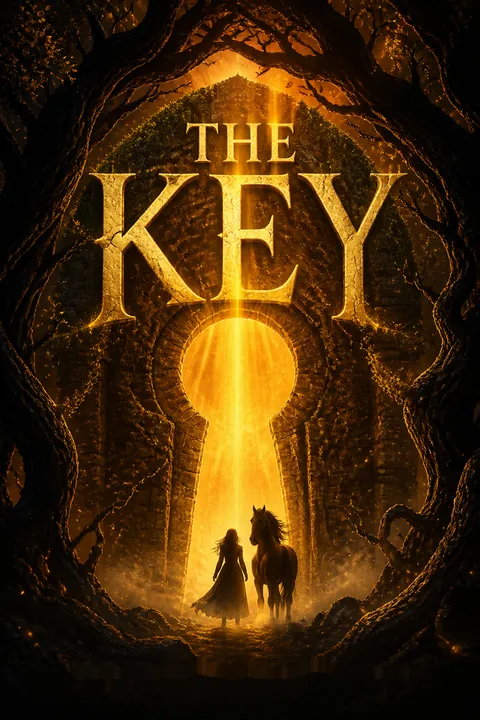
The Key receives mostly positive reviews, praised for its engaging plot, strong characters, and fast-paced storytelling. Readers appreciate the world-building, political intrigue, and romance elements. Some criticize predictable tropes and underdeveloped characters. The cliffhanger ending leaves many eager for the sequel. While some find the writing style lacking, others enjoy the easy readability. Overall, it's recommended for young adult fantasy fans, though opinions vary on its depth and originality.
People Also Read



Characters
Rema
Restless horse-bred rebelRema is a seventeen-year-old raised on a Jarko horse farm by her aunt and uncle. Riding, racing, and jumping into the river are not hobbies so much as ways she keeps a sense of choice in a life closely supervised by others. She is observant, physically capable, and stubborn, but her independence does not make her indifferent to consequence: she repeatedly risks herself to protect the people she loves. Her unusual appearance sets her apart in Greenwood Island, while her curiosity about the wider world makes her vulnerable to promises of escape. Rema’s defining tension is between the freedom she wants and the obligations she accepts when others are threatened.
Darmik
Duty-bound army commanderDarmik is the younger prince and commander of King Barjon’s army. He is disciplined, strategically gifted, and respected by his soldiers because he treats them more fairly than his father treats the kingdom. He has been trained to understand protection as obedience to family and crown, even as his own observations show him that the regime is producing hunger and resistance. A past attachment damaged by Lennek’s interference has made him wary of personal feeling. Rema unsettles his carefully ordered life because she acts on compassion without waiting for permission. Darmik’s deepest conflict is whether loyalty means preserving the state or protecting the people it claims to rule.
Lennek
Jealous crown princeLennek is King Barjon’s heir and Darmik’s older brother. Charming when it serves him, he is also impulsive, possessive, and skilled at turning law into a personal weapon. He treats attention as a contest and has long measured his worth against Darmik’s competence, finding ways to win when he cannot dominate through skill. His ease among the wealthy and his appetite for immediate pleasure leave him insulated from the hardship beyond the palace. Lennek’s most dangerous trait is not simply cruelty but his ability to make coercion appear reasonable, romantic, or official. He expects those around him to adapt to his desires rather than question them.
Mako
Sworn royal protectorMako is a disciplined commander associated with the former Greenwood royal household. He understands the castle’s hidden passages and treats the protection of the royal line as a sacred obligation. The prologue establishes his grief and resolve under invasion, while the key later connects his name to a possible source of help. Mako’s character is shaped by the difference between military duty and personal loyalty: his service is not merely to a throne, but to the people whose lives depend on it.
King Barjon
The conquering island kingKing Barjon seized Greenwood Island and rules through taxes, military force, and the appearance of royal certainty. He trusts his own records and power more than the testimony of people who suffer under his policies. His relationship with his sons is unequal: he favors Lennek’s easier conformity and relies on Darmik’s military usefulness while withholding warmth. Barjon sees symbols and public displays as tools for controlling the kingdom, from the royal tattoos to the spectacle of punishment. His insulated confidence makes him slow to recognize that fear can suppress dissent without creating loyalty.
Maya
Protective foster auntMaya raises Rema with care, practical skill, and a strong instinct for danger. She teaches her to sew, conduct herself in formal settings, and recognize when discretion matters. Her guardedness frustrates Rema, but it comes from years of protecting a child whose appearance could draw unwanted attention. Maya’s love is expressed through preparation: she preserves a hidden refuge, keeps family history close, and gives Rema an heirloom at the moment ordinary protection fails.
Kar
Watchful horse breederKar is Rema’s uncle and a skilled horse breeder who gives her practical freedom through riding while quietly preparing for threats she does not understand. He is patient but firm, aware that his household operates under political dangers beyond Rema’s experience. His care is physical and useful: he teaches her the land, shows her a hidden cave, and trusts her with difficult choices. Kar’s reserve reflects protection rather than lack of affection.
Bren
Loyal childhood friendBren is Rema’s longtime friend and a farmer’s son expected to inherit his family’s land. He is steady, affectionate, and sincere about the future he imagines with her. His practical outlook reflects the limits of the world he knows, while his loyalty to Rema makes him more than a convenient match. Bren represents the companionship and ordinary life Rema might have chosen freely, rather than the future imposed by royal power.
Queen Kayln
The last queen in dangerQueen Kayln is the wife of King Revan and mother to Princess Amer. In the prologue, she faces the invasion with the composure of a parent forced to make an impossible decision. Her concern is not for preserving rank at any cost, but for giving her child a chance to live. Kayln’s brief presence establishes the moral weight of the old royal family’s fall and the choices that shape the hidden history of Greenwood Island.
Princess Amer
Hidden royal infantPrincess Amer is the youngest child of Greenwood’s former royal family. Her place in the succession makes her important to the island’s political history, though she is only an infant during the prologue. The uncertainty surrounding the royal family’s fate turns her into a figure of hope and danger for people who remember the former kingdom. Her story is bound to questions of inherited legitimacy and whether a surviving heir could rule differently.
Ellie
Palace ally and guideEllie is a young chambermaid who has spent her life in the king’s service because of the palace’s harsh rules about servants’ children. She is cautious, perceptive, and quietly generous, helping Rema understand palace customs without treating her as a curiosity. Ellie’s knowledge of servants and their informal networks gives her access to information unavailable to the royal family. Her care is practical, from sharing food to helping interpret the necklace’s message.
Cassie
Wounded palace servantCassie is a young servant whose connection to Lennek has left her emotionally exposed and resentful. She believes she was special to him, yet fears how quickly he can discard people once they stop serving his needs. Her anger toward Rema is tangled with jealousy, humiliation, and the knowledge that palace status offers little protection to women without power. Cassie’s situation reveals the private costs of Lennek’s public charm.
Neco
Commander's trusted scoutNeco is Darmik’s closest military companion and a perceptive soldier who has served beside him through dangerous campaigns. He is loyal, capable, and willing to challenge Darmik when a plan seems poorly formed. Neco understands the chain of command but also knows Darmik well enough to notice when personal concerns intrude on duty. His practical skepticism helps reveal the risks behind Darmik’s undercover operations.
Trell
Keeper of forbidden historyTrell is a retired strategist who once served King Barjon and now lives away from court. He is learned, wary, and more interested in preserving knowledge than receiving honors. Trell understands that art and records can reveal how a culture sees itself, and he has kept materials the king would rather erase. His conversations with Darmik challenge the idea that military success alone makes a ruler legitimate.
Greger
Conscience inside uniformGreger is a soldier assigned to guard Rema, but he does not reduce his duty to obedience. He shows compassion in small, deliberate ways, helping her retain dignity when the court tries to strip it away. His restraint suggests that the army is not psychologically uniform, even under a brutal monarchy. Greger’s quiet decency makes him a fragile but meaningful source of safety.
Lilliet
Kind servant under pressureLilliet is a young servant at an inn who brings Rema food when Lennek tries to isolate her. She is gentle but not naïve, offering a small act of care despite the risk of punishment. Her brief kindness shows how solidarity can pass between people with little power.
Arnek
Crown prince's stewardArnek manages Lennek’s household and enforces the prince’s wishes with fussy attention to status. He is socially observant, eager to avoid displeasing his master, and quick to judge people beneath the court’s class line. His role shows how royal power travels through attendants as well as soldiers.
Captain Phellek
Veteran army captainPhellek is an experienced captain who once trained alongside Darmik and now commands the First Company. He respects Darmik’s leadership and provides the steady operational support that allows the commander to travel and investigate. His long service links the invading army’s past to its current structure.
Jarcy
Darmik's first attachmentJarcy is a young woman from Kaven whom Darmik once hoped to marry. Her connection to him was caught in the power struggle between Darmik, Lennek, and King Barjon. The experience leaves Darmik guarded about love and alert to the way royal privilege can turn private affection into political leverage.
Plot Devices
The Ruby Skeleton Key
A riddle carried closeMaya gives Rema a gold necklace whose pendant is shaped like a skeleton key and contains a concealed inscription. The message initially reads as a family blessing, but its emphasis on looking back and reversing letters points Rema and Ellie toward the name Mako. The key is both a literal object and a compressed inheritance: its value lies less in opening a lock than in directing Rema toward people and history erased by the current regime. Its secrecy allows the book to connect the domestic mystery of Rema’s upbringing with the political question of whether the old royal line survived.
Tattoos and Bands
Identity under official skinEvery resident carries a regional mark and an identification band, allowing the state to monitor movement, marriage, and social status. The royal family’s private identifying tattoo is a separate mark, known only to a few people. Darmik uses records and physical evidence to investigate whether a royal child could have escaped, while Rema’s band gives her a name that does not match the one she uses. The system makes identity legible to authority, but its gaps also create the possibility of concealment. What appears to be administrative detail becomes the hinge between personal history and political succession.
Marriage Contracts
Consent made politicalThe island’s contracts formalize marriage and bind women’s public movement to their engagement status. Rema’s contract with Bren is treated by her guardians as protection, but Lennek sees it as an obstacle that can be removed through royal force. Once he arranges Bren’s death, the contract becomes void and Rema is compelled to accept a new one. Marriage therefore operates simultaneously as intimate choice, class regulation, and a tool for stabilizing the crown. The difference between a freely chosen promise and a royal command is central to how Rema understands her own agency.
Hidden Routes
Escape through forgotten spacesSecret passages recur across the story: the stocked cave prepared by Maya and Kar, tunnels beneath the castle, and hidden corridors used by the royal household and military. These routes offer practical alternatives to monitored roads and guarded doors, but they do not guarantee safety. Rema is captured in the forest despite knowing the land, and Darmik’s tunnel helps him move through the capital unseen without freeing Rema from the political trap. The passages embody knowledge held outside public authority, while showing that escape depends on timing, allies, and the limits of surveillance.
The Heir's Rumor
A spark for revoltThe claim that a royal heir survived spreads across Greenwood Island through messengers who tell people to prepare for the return of the key. Darmik initially treats the rumor as a threat to be contained, executing messengers and investigating the king’s evidence. The rumor gives hungry civilians a focus for their anger and a possible alternative to Barjon’s rule. Its truth remains uncertain until historical records and physical marks begin to converge. It functions as both political catalyst and mystery, tying popular resistance to a specific question of identity and legitimacy.
True Reign Series


About the Author
Other books by Jennifer Anne Davis




Download PDF
Download EPUB
.epub digital book format is ideal for reading ebooks on phones, tablets, and e-readers.








