


Plot Summary
A Vacant Saddle
Tahlia1 has spent years as a hungry squire, convinced that riding dragons into battle could buy her a life beyond poverty. When the noblewoman she serves abandons the journey to marry her former lover, Tahlia1 and her friend Fara3 lose their income and their route to the Mist Knights’ tournament. Tahlia1 refuses to return to scraping by.
She proposes entering in her lady’s place, though she is half-Fae and lacks the prestigious Mistgold blood expected of dragon riders. Fara3 warns that discovery could mean death, but agrees to help. Their plan depends on borrowing Fara’s blood for the required test and presenting Tahlia1 as a noble from a distant estate. The risk gives Tahlia1 the chance she has been waiting for.
Tahlia’s ambition begins as a response to material deprivation, not a romanticized hunger for danger. She remembers what it means to go without food, so rank and money signify safety as much as prestige. The abandoned journey creates an opening, but her decision also exposes the cost of a social order that treats inherited blood as proof of ability. Fara’s consent matters: Tahlia’s leap is not solitary self-invention, but a plan made possible by friendship, shared precarity, and a willingness to put another person at risk.
Through the Mist Road
At the market below the mountain castle, Tahlia1 spends nearly all their coins on ill-fitting tournament leathers and invents a noble identity with Fara.3 They climb the Ghost Path past elaborate knights’ tombs, then enter the Mist Knights’ grounds, where Tahlia1 is overwhelmed by the dragons and the life she has imagined.
At the arena, she meets High Captain Marius Valentius2 while he tends his dragon, Ragewing.8 When a young dragon rushes toward them, Tahlia1 steps between it and Ragewing,8 misunderstanding the danger. Marius2 rebukes her, then sends her to register and provide a blood sample. Fara3 cuts her own arm and fills Tahlia’s vial with Mistgold blood. Their deception has begun, but now it must survive official scrutiny.
The climb makes Tahlia’s social ascent literal: each step takes her farther from a life she knows and deeper into a place built to exclude her. Her first encounter with Marius establishes the novel’s central disagreement about courage. She acts from instinctive concern for a young dragon; he sees a reckless stranger who does not understand the danger. Fara’s blood donation turns friendship into material sacrifice, while the false noble identity shows how institutions often demand not only skill but a story of belonging before they will allow anyone to prove what they can do.
The High Captain's Interview
At the Brass Lantern, Marius2 tests Tahlia’s1 knowledge of dragon breeds, weapons, and battlefield decisions. She sustains her false claim that she trained for years at Grimsbrook, but her answers and her defense of rescuing the young dragon impress him.
The borrowed blood passes inspection, and Marius2 approves her for the tournament, even arranging proper armor. His own future seems equally settled: he intends to marry Ophelia,4 Commander Gaius’s5 daughter, to strengthen the Mistgold line and eventually inherit command.
That plan carries the weight of his sister Bellona’s12 sacrifice, which funded his training. Yet while Marius2 agrees to the match, he questions whether Ophelia4 truly loves riding. Tahlia’s1 candid delight in dragons has unsettled the certainty on which he built his life.
The interview is both an admission test and a contest over what counts as legitimate evidence. Tahlia’s experience is partly fabricated, yet her practical knowledge and care for dragons are real. Marius can recognize those qualities, but he still interprets her through rank, size, and pedigree. His engagement plan reflects the same logic in another form: he treats marriage as a tool for preserving a bloodline and repaying Bellona’s sacrifice. Tahlia’s uncalculated enthusiasm complicates that model, not because it instantly changes his commitments, but because it reveals how little he has asked himself what he actually wants.
The First Trial Turns
At the public presentation, Tahlia1 stands among the competitors before King Lysanael,7 Queen Revna,6 and the Mist Knights. Her first ground bout pits her against a much larger opponent, but she uses her short gladius and timing to score a decisive hit.
Fara3 gives her mint-scented water afterward. Marius2 recognizes the smell of ghostmint, a plant that can poison its drinker, and Tahlia1 collapses before she can compete again. The healer Albus11 treats her and confirms that she has taken a dangerous dose.
Marius2 halts the tournament, while Fara3 attacks his squire Remus10 in panic, mistaking him for a possible culprit. Tahlia1 recovers, but the poisoning makes plain that someone wants her removed, and that her place in the contest carries real danger.
The poisoning converts the tournament’s declared danger into sabotage: Tahlia is threatened not only by combat but by an unseen rival willing to exploit trust and routine. Her victory matters because it is earned through technique rather than size, the very trait others use to underestimate her. Marius’s recognition of ghostmint shows his protective knowledge in action, while Fara’s attack on Remus exposes how fear can redirect loyalty into impulsive blame. The identity and motive of the poisoner remain unresolved, leaving a genuine breach of safety inside the order’s carefully managed spectacle.
Chosen in the Clouds
After the ground trials, the remaining competitors walk past the dragons and wait to be accepted or rejected. The Spikebacks ignore Tahlia,1 but a four-winged Seabreak9 responds to her confidence and lets her approach.
During the flying test, Marius2 orders formations, dives, and tight turns through worsening weather. Tahlia1 follows his commands, then breaks formation when another rider’s young dragon spirals toward the ground. She flies beneath it, disrupts its fall, and gives the rider time to regain control.
The test grows more dangerous as lightning strikes a Spikeback and injures its rider. Tahlia1 lands shaken, then sees Marius2 alive on the ground helping the fallen pair. Her flying skill earns respect, but her choice to disobey an order remains a risk to her standing.
The Seabreak’s response gives Tahlia a kind of recognition that blood tests cannot provide: a dragon chooses to meet her on its own terms. The flight trial then tests whether instinct can coexist with discipline. Tahlia’s rescue saves a rider, but it also challenges Marius’s authority, making her courage ethically admirable and professionally complicated at once. The lightning injury prevents the danger from feeling abstract, while her relief at seeing Marius alive reveals that their connection has begun to exceed the formal roles they occupy. Care for riders and dragons is becoming her definition of competence.
The Crystals Take Hold
During the tournament’s rest, Tahlia1 joins Marius2 and another knight13 at a dice game, where her teasing draws him out of his stern reserve. Unknown to them, earthquakes have awakened the mountain’s rose-colored breeding crystals, and their magic stirs desire among those nearby.
Outside the hall, Marius2 and Tahlia1 are caught in the spell’s pull and kiss. Ophelia4 interrupts and explains that the crystals are affecting people across the castle; the attraction is magical, not proof of a chosen relationship.
Tahlia1 tries to dismiss the moment, especially because Marius2 is engaged to Ophelia,4 but the kiss leaves her unsettled. Marius2 retreats with the same confusion, then prepares for the final sky battle, where both will have to face each other as opponents.
The crystals introduce a useful complication: desire arrives before either character can decide what it means. The magic makes their bodies act, but it does not settle their loyalties or absolve them of the consequences. Ophelia’s explanation restores a distinction between involuntary feeling and chosen commitment, which Tahlia and Marius must confront rather than evade. The kiss also exposes the fragility of Marius’s carefully organized future. His attraction is real enough to disturb him, but the spell prevents him from treating that disturbance as clear evidence about what he wants.
The Mock Battle Breaks
For the final trial, the competitors split into opposing teams, with Tahlia1 assigned to Ophelia’s4 side. Ophelia4 grips and strikes her Green-flanked Terror with spiked gloves, revealing how poorly trust runs between rider and dragon.
Tahlia1 attacks Marius’s2 team, but her Seabreak9 ignores a mock-combat command and bites another dragon’s throat. Tahlia1 climbs out onto the Seabreak’s9 neck and presses a sensitive point to stop the attack, risking a fall to regain control.
She then uses the Seabreak’s9 speed and greater supply of fire to force Marius’s2 Heartsworn8 to withdraw. The battle ends with Tahlia1 still in the running, though the injured dragon and her lapse in control could cost her the position. Commander Gaius5 praises her courage while acknowledging her serious mistakes.
The battle refuses to make courage synonymous with flawless performance. Tahlia’s instinct to protect others has a cost when she cannot control the Seabreak, and she must put her own body at risk to repair the harm. That moment is more revealing than an easy victory: she accepts responsibility rather than blaming the dragon. Ophelia’s rough handling of her mount provides a sharp contrast between command as domination and partnership as attention. Tahlia wins by adapting to her dragon’s strengths, but the trial leaves a credible question about whether bravery can compensate for inexperience.
The Warning in Moonlight
Before the winner’s announcement, Marius2 draws Tahlia1 aside and reveals that Albus’s11 healing test allowed the Bloodworkers to examine her true blood. The result showed almost no Mistgold and confirmed her human ancestry; Fara’s3 borrowed sample had concealed the truth. Marius2 accuses Tahlia1 of deceiving him, but his anger is tangled with fear for her safety.
He warns that the order will punish her and urges her to flee before the truth becomes public. Tahlia1 refuses to abandon the mountain or the life she has proved she can live. She also learns that Marius2 has broken his engagement to Ophelia,4 though his warning offers no promise that they can be together. Tahlia1 returns to the hall knowing the risk and chooses to face the announcement.
The revelation forces Tahlia to distinguish earned belonging from permission granted by an institution. Her skill is visible to everyone, yet the order’s blood rule can erase it in an instant. Marius’s warning is an act of care, but it also asks Tahlia to survive by surrendering the identity she has fought to claim. Her refusal is not simple recklessness: she understands the danger and chooses not to let fear decide whether her life is hers. Marius’s broken engagement signals a change in his priorities, though the danger leaves little room for romantic certainty.
The Fire Never Falls
Queen Revna6 names Tahlia1 the tournament winner, but the Head Bloodworker immediately exposes her ancestry. Commander Gaius5 revokes the victory and sentences her to death by dragon fire. Fara3 refuses to leave her, and Marius2 stands beside her, declaring his loyalty to a fellow knight despite her deception.
As a Green-flanked Terror is brought forward, the Seabreak9 Tahlia1 rode pushes between them and shields her. Queen Revna6 argues that a mountain dragon would not choose an unworthy rider, then declares that Tahlia belongs to an undiscovered Mistgold line, a royal claim that contradicts the test.
King Lysanael7 backs the decree, and the execution is stopped. Tahlia1 is released and recognized as a Mist Knight, though Gaius5 makes clear that trust will take time.
The climax places competing kinds of evidence in public view: the Bloodworkers’ test, the dragon’s choice, and the monarchs’ authority. Revna’s invented lineage does not dismantle the discriminatory rule; it gives Tahlia a way through it by translating her worth into the language the institution accepts. The Seabreak’s intervention offers a more intimate judgment, grounded in the bond formed through shared risk. Fara and Marius’s decision to remain beside Tahlia makes belonging relational before it becomes official. The reprieve is therefore both a victory and a compromise, since the order has not yet learned to trust what it cannot classify.
A Place in the Order
After her release, Tahlia1 thanks Fara3 for risking everything beside her and accepts that Commander Gaius5 will watch her closely. She tells Marius2 she is sorry the crystals prompted their first kiss, but he agrees that any further intimacy must be chosen freely. Tahlia1 asks for a kiss, and Marius2 responds without the crystals’ influence.
Their reunion is interrupted when Fara3 returns to say the others are waiting for them in the hall. Tahlia1 and Marius2 go back to the festivities together, while the Seabreak9 remains her partner and Fara3 remains at her side. The identity of the person who poisoned Tahlia1 is still unknown, and her acceptance into the order does not erase the mistrust she must now work through.
The ending gives Tahlia what she sought without pretending that one decree has repaired every fracture. She has a place in the order, but Gaius’s caution and the unresolved poisoning keep her new security provisional. Her friendship with Fara remains the relationship that carried her into the tournament and through its most frightening moment. With Marius, the key change is consent: their earlier kiss was entangled with crystal magic, while this one follows an explicit choice. The story closes not on a perfected institution, but on a new beginning in which Tahlia can pursue her work without disguising her desire for connection.
Analysis
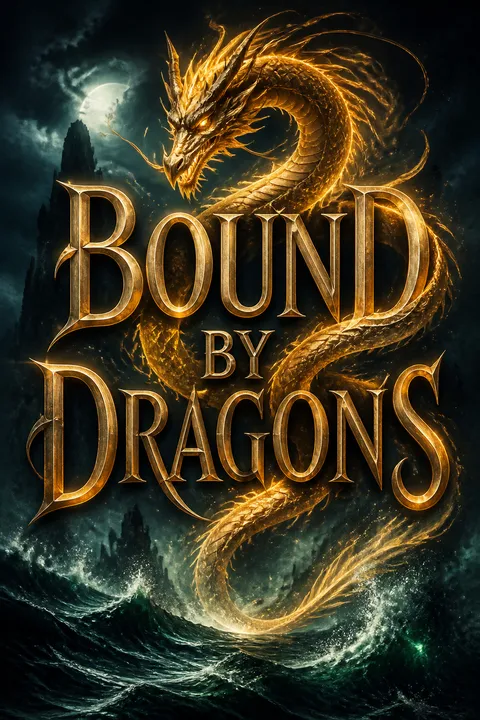
Bound by Dragons builds its romantic fantasy around a conflict between demonstrated capacity and inherited permission. Tahlia1 can ride, fight, read dragons, and risk herself for other competitors, yet the Mist Knights’ blood test treats ancestry as a prior verdict on what she can do. Her false identity is not presented as harmless; it endangers Fara3 and undermines Marius’s2 trust. But the lie also exposes an institution that makes honest access impossible for someone of Tahlia’s1 standing. The novel’s central question is not whether rules matter, but what happens when a rule mistakes pedigree for competence.
The dragons complicate that hierarchy. They are powerful enough to refuse human assumptions, and the Seabreak’s9 response to Tahlia1 offers a form of recognition that the Bloodworkers cannot control. Still, the dragon bond does not magically make Tahlia1 flawless. She loses control in the mock battle and has to risk her own safety to stop the harm. Her growth therefore comes through accountability as much as courage. She earns trust by acting, adapting, and accepting the consequences of her choices.
Marius’s2 arc offers a parallel critique of duty. He has arranged marriage and advancement around bloodline, rank, and repayment of his sister’s12 sacrifice. Those values give shape to grief, but they also let him avoid asking what he wants. Tahlia’s1 unguarded joy unsettles that arrangement, while the crystals’ spell forces a distinction between desire and decision. Their later kiss matters because it is chosen after the enchantment has passed.
The ending offers a real but incomplete victory. Royal power saves Tahlia1 by inventing a lineage the order will accept, rather than persuading the order to abandon its exclusionary test. Her place is secured, but trust remains unfinished and the poisoning goes unexplained. That unresolved danger prevents the conclusion from becoming a fairy-tale cure. Tahlia1 changes her fate, but the mountain’s rules will continue to test what her courage has already proved.
Review Summary
Characters
Tahlia
Hungry dragon-riding aspirantTahlia is a resourceful young squire whose ambition grows from years of hunger, loneliness, and being treated as lesser because of her ancestry. She sees dragon riding not as a decorative fantasy but as a route to security, dignity, and a life chosen for herself. Her humor and fierce optimism help her approach people who expect her to fail, though she can mistake boldness for preparation. She is especially attentive to dragons and vulnerable riders, often acting before authority can catch up with her. Tahlia’s defining tension is between her gift for decisive action and the discipline needed to make that action safe. She wants recognition, but she also wants to deserve it through the care she gives others.
Marius
Mist Knight commanderMarius is the young High Captain of the Mist Knights, an exacting leader who measures readiness through preparation, care of equipment, and respect for dragons. His reserve hides a deep attachment to Ragewing8 and a sense of duty shaped by his family’s sacrifices. He has organized his future around advancement, tradition, and preserving the Mistgold bloodline, believing that a well-ordered life is a form of loyalty to those who helped him. Tahlia1 unsettles that certainty because her warmth and courage expose motives he has not examined. Marius is not naturally expressive, and his strictness can shade into judgment, but his leadership is rooted in responsibility rather than cruelty. His central struggle is learning to separate inherited obligation from freely chosen commitment.
Fara
Fierce loyal squireFara is Tahlia’s1 closest friend, a full Fae with a sharp temper, a worried imagination, and an appetite that frequently punctuates her anxieties. She questions Tahlia’s1 schemes but repeatedly chooses to stand beside her, even when doing so places her own safety at risk. Her practical loyalty is more powerful than her complaints: she lends the blood that makes Tahlia’s1 entry possible and stays attentive to the consequences. Fara’s protectiveness can become impulsive, but it comes from a deep fear of losing the one person she considers family.
Ophelia
Commander's ambitious daughterOphelia is Commander Gaius’s5 daughter and a high-ranking Mist Knight, accustomed to status and confident in her own ability. She has a sharp eye for hierarchy and treats Tahlia1 as an intruder before knowing her well. Her interest in Marius2 is evident, though she often communicates through control and display rather than vulnerability. Ophelia’s relationship with her dragon suggests that command and trust do not always arrive together. She represents the ease with which inherited position can be mistaken for earned authority.
Commander Gaius
Order's hard-line commanderGaius leads the Mist Knights and is Ophelia’s4 father. He values discipline, lineage, and the continuity of the order, and he expects riders to meet exacting standards. His authority is reinforced by family ties, which complicate the supposedly clear hierarchy Marius2 wants to uphold. Gaius can recognize exceptional courage, yet he also trusts the institution’s rules more readily than an individual’s account. He is neither simply a mentor nor simply an obstacle; his judgment shows how a leader can admire talent while remaining bound to a system that excludes it.
Queen Revna
Human queen and strategistRevna is King Lysanael’s7 human queen, sharp-eyed, direct, and comfortable challenging the customs around her. Her past as an assassin has left her observant and unsentimental about danger. At the tournament she watches the riders and dragons rather than merely receiving the pageantry, and she notices how authority is being exercised. Revna’s position gives her unusual leverage in a realm where lineage carries enormous weight. She understands both the vulnerability and the strategic value of being regarded as an outsider.
King Lysanael
Seelie king and patronLysanael rules the Realm of Lights and attends the tournament partly to honor his brother, who once dreamed of becoming a Mist Knight. He is measured in public but decisive when challenged, and his authority carries weight across the order. His marriage to Revna6 places a human queen at the center of Seelie rule, making their partnership a visible counterpoint to the mountain’s fixation on ancestry. He supports the tournament and its riders while remaining alert to the political meaning of the traditions it preserves.
Ragewing
Marius's devoted dragonRagewing is a large, red Heartsworn dragon and Marius’s2 trusted partner. He is intelligent, protective, and closely attuned to his rider, responding to care and familiarity rather than mere command. His status as the herd’s alpha reflects the dragons’ own social order, which does not simply mirror the Fae hierarchy. Ragewing’s gentleness with young dragons shows that power and tenderness can coexist, while his bond with Marius2 gives the High Captain a source of affection that needs no formal language.
The Seabreak
Strong-willed sea dragonThe Seabreak is a swift, four-winged mountain dragon with a strong aquatic nature and a will of her own. She responds to riders selectively and cannot be treated as a piece of equipment. Her speed and endurance make her a formidable partner in the air, while her independent instincts require a rider to listen as well as command. The Seabreak embodies the story’s insistence that a dragon partnership depends on mutual recognition, not simply a rider’s rank or intentions.
Remus
Newly assigned squireRemus is Marius’s2 newly assigned squire, a nineteen-year-old with a talkative curiosity and a willingness to ask questions. His admiration for Marius2 is sincere, but he is not merely a flatterer: he wants to understand why the Mist Knights train as they do. Remus’s eagerness sometimes tests Marius’s2 patience, yet it offers a glimpse of how the High Captain’s conduct shapes the next generation of riders.
Albus
Poison specialist healerAlbus is an experienced healer who treats Tahlia1 after she is poisoned. His knowledge of ghostmint and careful testing make him a practical authority amid the tournament’s chaos. He is brisk, observant, and more interested in evidence than ceremony.
Bellona
Marius's sacrificing sisterBellona is Marius’s2 older sister, whose support helped make his Mist Knight training possible. She gave up her own chance to study healing and used family resources to advance his ambitions. Her sacrifice remains a measure Marius2 uses to judge his choices, binding his private grief to the traditions he hopes to preserve.
Titus
Veteran knight and gamblerTitus is a Mist Knight who trains and competes alongside Marius2. He shares the order’s martial world but can relax into games and humor when duty allows. His presence gives Tahlia1 a small opening into the knights’ social life beyond the tournament.
Maiwenn
Swift Seabreak riderMaiwenn is a Mist Knight who rides an unusually fast Seabreak9. Marius2 uses her speed to challenge the other riders during training, making her a clear example of the precision and partnership the order expects.
Plot Devices
Mistgold blood testing
Lineage as gatekeeperBloodworkers test potential riders for Mistgold, the distinctive blood associated with the old dragon-riding families. The test turns ancestry into an official measure of eligibility, allowing the order to treat inherited status as evidence of likely skill. Tahlia1 and Fara3 exploit this system by submitting Fara’s3 blood under Tahlia’s1 name, creating the deception that lets Tahlia1 enter the tournament. The later examination of Tahlia’s1 real blood threatens to erase everything she has accomplished. The device drives the central conflict between demonstrated ability and the institution’s preferred definition of belonging.
Dragon selection
The dragon's own judgmentDuring the flying trials, each remaining competitor passes the dragons and waits to see whether one accepts them. A dragon’s response cannot be commanded by the judges, so selection introduces a form of judgment separate from blood tests and noble claims. Tahlia’s1 Seabreak9 responds to her, giving her a mount for the trials and a partner whose power she must learn to respect. The later bond becomes crucial because the dragon’s choice supplies evidence that challenges the order’s assumptions about who can ride.
Rose-colored crystals
Desire under enchantmentThe mountain’s rose-colored crystals are connected to breeding magic and are said to encourage dragon mating when numbers are low. Earthquakes activate the crystals’ power during the tournament, affecting people nearby as well as the broader magical environment. Their influence intensifies the attraction between Tahlia1 and Marius2 and leads to a kiss neither can initially interpret with confidence. The spell complicates their choices without deciding them: once its effects are explained, each must distinguish magical impulse from freely chosen affection.
Tournament trials
Skill tested under pressureThe tournament combines weapon combat, dragon selection, structured flight, and a mock sky battle to assess more than raw strength. Each stage exposes a different capacity: Tahlia’s1 timing with a gladius, her response to another rider’s danger, and her ability to regain control when her Seabreak9 attacks too fiercely. The contest also places her under public scrutiny, where one misstep can undermine her candidacy. By making the tests varied and consequential, the tournament lets readers see the difference between talent, judgment, discipline, and inherited reputation.
The royal lineage decree
A political reprieveWhen Tahlia’s1 blood test is used to sentence her, Queen Revna6 claims that Tahlia1 descends from an undiscovered Mistgold line whose blood can resemble human ancestry. The claim contradicts the test and is not established as biological fact; it is a strategic decree backed by the king7. The story uses royal authority to interrupt an execution that Tahlia’s1 proven skill and the Seabreak’s9 choice have not prevented. This device resolves the immediate danger while leaving the deeper prejudice intact, since Tahlia1 still has to earn trust inside the order.
About the Author

Download PDF
Download EPUB
.epub digital book format is ideal for reading ebooks on phones, tablets, and e-readers.








