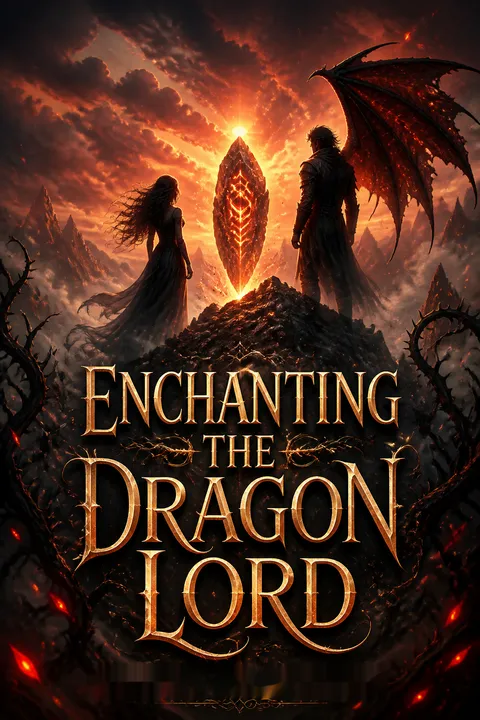


Plot Summary
Prologue
Dorin, heir to the elven kingdom of Balaur, wakes naked in a mountain cave with blood on his hands and no memory of how he got there. He has no idea that night after night he has been changing into a dragon, then waking at dawn without knowing what the creature has done.
The blood makes his new life frightening before he even understands it. His missing memories are not an isolated shock: they are the first sign that his body and mind are slipping beyond his control.
The prologue begins with consequence rather than explanation. Dorin sees the blood before he can recover his identity, making fear of the self the book’s first mystery. The cave isolates him from the court and responsibilities that ordinarily define him, while the vanished clothes and blank night imply a transformation his conscious mind cannot own. This gap between action and memory matters ethically: Dorin fears not simply being monstrous, but having harmed others without the chance to choose. The opening therefore makes his eventual struggle about agency as much as magic.
Brielle Unearths a Summons
Princess Brielle of Wylfen slips past her guards to search the mountains for dragon relics, a pursuit she hides because her father, King Raoul, burns people suspected of magic. She prefers mud, old stories, and freedom to court life, where her father expects her to become a Broyeur, one of his magic hunters.
At a night dig, she uncovers a dark jade stone carved with runes. Its faint hum answers her curiosity, and she asks it for help without understanding the words. She sleeps with the artifact close, unaware that its call has reached a dragon in the mountains. For Brielle, the find is an archaeological wonder; for someone else, it is a summons.
Brielle’s excavation is not a hobby detached from the plot. It is the action through which she refuses the identity her father has assigned her, and the artifact gives that refusal an unforeseen consequence. Her attraction to the past also complicates the kingdom’s official story: Wylfen suppresses magic, while Brielle seeks evidence that its history was richer than the authorities admit. The rune’s response converts private curiosity into responsibility. She has called for help without knowing who will answer, a small act that links her desire for discovery to a dangerous political present.
A Dragon at Dawn
A dragon lands outside Brielle’s window before dawn, but sunrise drops it unconscious into her courtyard. Light and magic then leave an unclothed, bloodied elf in its place. Brielle recognizes that the stranger will be killed if her father’s men find him, so she dresses him and leads him through the castle’s secret escape tunnel.
He gives his name as Dorin, prince of Balaur, Wylfen’s enemy. Guards discover Brielle’s escape route, and Captain D’Aboville, head of the Broyeurs, searches her mountain cabin for a supposed witch. Dorin bursts out of hiding with a shovel, fights the guards, and escapes into the sky. Brielle watches him go, knowing both kingdoms would treat his existence as a weapon.
The rescue reverses the expected relation between princess and captive. Brielle is the one with local knowledge and practical control, while Dorin wakes disoriented and dependent on the daughter of his enemy. His identity immediately turns a strange encounter into a political crisis, but her choice is not made for diplomatic advantage: she acts because she recognizes the danger around him. D’Aboville’s arrival reveals how little privacy she actually has. The secret tunnel can get her out of the castle, yet it cannot keep the state’s violence from following her into the mountains.
The Brand of Wylfen
Raoul turns Dorin’s escape into leverage over his daughter. He orders Brielle to begin training as a Broyeur, then takes her to the dungeon to demonstrate Magebane, an elixir meant to suppress magic. The imprisoned witch cannot cast until Brielle’s rune stone touches her; then she briefly freezes Raoul and the apothecary.
Brielle sees that the artifact can interrupt the new weapon, but her father threatens her maid Celeste if she disobeys. D’Aboville soon has Brielle forcibly branded with the Broyeur symbol, marking her as one of the very people she opposes. She endures the pain, then arranges Celeste’s escape and prepares to break the witch out before Raoul can use Magebane again.
Raoul’s cruelty works through institutions as well as personal force. Magebane gives the Broyeurs a scalable way to make magic workers helpless, while Brielle’s branding tries to transform her resistance into public complicity. The rune offers a countermeasure, but its power does not cancel the immediate cost of defiance: Celeste’s safety becomes a pressure point. Brielle’s response is tactical rather than triumphant. She protects one person and plans another escape, even though she cannot yet dismantle the system that makes both women vulnerable. The mark on her skin will later become evidence others can misread.
Maren Calls the Dragon
Brielle slips into the dungeon, wounds a guard without killing him, and gives his wand to the prisoner, Maren. The witch frees them with a spell, and the two women ride out of the castle. At a riverside camp, Maren reads the jade runes as a call for aid and confirms the stone helped her resist Magebane. Brielle uses it to summon Dorin.
The dragon seizes both women, drops Maren after her magic burns his talon, and carries Brielle to his cave. There, a sick bear attacks, and Brielle kills it with her knives while Dorin shields her. He wakes later in elven form, throws the rune stone off a cliff, and claims Brielle as a prisoner to bargain with Raoul.
Maren’s escape changes the story from a solitary rebellion into an alliance between women with different kinds of knowledge. She can interpret magic, while Brielle knows how to move through a hostile court and fight with ordinary weapons. Dorin’s abduction of Brielle is not romantic trust but fear dressed as strategy: he wants a bargaining chip and cannot yet trust his own dragon body. The bear fight briefly makes their cooperation physical and undeniable, but his decision to imprison her restores the political hierarchy he understands. The stone has brought them together, yet neither has learned how to use its power safely.
Fire Turns Against Brielle
Dorin leaves Brielle tied in the cave while he hunts, convinced confinement will protect her from his transformations. Brielle frees herself, but Broyeurs have tracked them into Balaur. When D’Aboville’s men corner her, Dorin returns as a dragon and releases fire to drive them back. He does not see Brielle in time; the flames badly burn her.
Maren reappears and uses magic to give Dorin wings while he is elven, letting him carry Brielle toward help. He treats her wounds with mountain plants and manages to kindle a fire, then brings her to Balaur Castle. His rescue is real, but so is the injury he caused, deepening his belief that his power makes him unsafe to love or trust.
Dorin’s first major failure is not malice but the mismatch between intention and capacity. He ties Brielle up to prevent harm, then his attempt to protect her from the Broyeurs inflicts the worst injury she has suffered. The distinction matters to him, though it cannot erase her pain. Brielle’s survival depends on care that is improvised rather than heroic: Maren’s spell, Dorin’s knowledge of herbs, and his ability to make fire in a partially elven body. The event gives Dorin a concrete reason for withdrawal, while showing that avoiding power does not automatically prevent harm.
An Enemy at Court
Fae healers tend Brielle in Dorin’s chambers, while he asks his brother Filip to keep his dragon nature secret and chains himself away at night. At her first audience with King Mihai and Queen Sorina, a grieving elven knight, Stephan, throws a knife at Brielle; Drago blocks it. Brielle admits she opposes Raoul’s treatment of magic workers and warns that her father may care more about pride than her life.
Sorina accepts her as a conditional guest and considers using threats to pressure Wylfen into peace. Brielle refuses to reveal the Broyeur brand, fearing it will erase her credibility. Dorin returns to isolation, while his family and friends try to make him accept help instead of treating himself as a danger to everyone.
Balaur does not become morally simple merely because Wylfen is the aggressor. Stephan’s grief is understandable, and his attack is still dangerous; Sorina’s welcome is humane, but conditional on political usefulness. Brielle must navigate this distinction without pretending she is blameless by birth or guilty by association. Dorin’s chains mirror the court’s uncertainty: they protect others, but they also make his self-exile seem like responsible leadership. The scene’s ethical pressure lies in the difference between being welcomed as a person and being retained as leverage. Brielle has received shelter, not yet a home.
The Gods Enter the Library
Dorin searches Balaur’s library for accounts of dragon-shifting elves, but the records offer little help. Exhausted in a secluded alcove, he dreams of the dragon goddess Nix, the earth goddess Vahly, and the elven god Arcturus. They tell him his transformation is not a mistake and urge him to share his struggle rather than hide it from his people.
Maren appears in the vision too, explaining that she can speak with the dead and that ancient artifacts draw spirits toward Brielle. Dorin wakes with no cure, but with a new possibility: his dragon form may belong to his future as a ruler, not simply to a curse he must endure alone.
The dream does not solve Dorin’s transformation; it changes the interpretation he brings to it. His self-concept has narrowed around the danger he poses, so the gods challenge the inference that uncontrollable power must be worthless or shameful. Their counsel is not permission to act carelessly. It asks him to assume a broader responsibility, one that includes learning, relying on others, and accepting the possibility of a future. Maren’s presence links the supernatural revelation to the practical world of artifacts and memory. The encounter gives Dorin hope, but the coming public test will show whether he can bear being seen.
Brielle Blesses Balaur
During Balaur’s spring festival, Dorin wrestles Filip before the court, but his dragon magic flares and forces him to stop. At the mountain’s sacred labyrinth, Queen Sorina orders him to give the kingdom’s peace blessing. Dorin chooses Brielle, despite the crowd’s suspicion of a Wylfen princess.
Before the rite, she tells the elves that he rescued her and asks them to judge him by his loyalty to Balaur, not by his wings. Dorin kneels, places mountain earth in her hands, and gives her the blessing. Brielle accepts the land as a possible home. Their public exchange does not end the court’s mistrust, but it gives Dorin a first experience of being witnessed without being abandoned.
The blessing turns an intimate question into a public one: can a community make room for a leader whose body has changed? Brielle does not minimize the danger of Dorin’s power; she supplies evidence from her own experience and asks the court to weigh it alongside fear. Dorin’s choice to bless her is significant because the rite conveys belonging, not merely political utility. Her acceptance, in turn, is an act of hope rather than a settled guarantee of safety. The crowd’s divided reaction keeps the scene honest. Recognition begins here, but neither love nor ceremony can instantly erase a history of war.
The Willow Tempts D'Aboville
As D’Aboville leads Broyeurs through Balaur, he hears a voice coming from an unnaturally vigorous willow wrapped in dark ivy. He drinks Magebane, but the voice continues, promising power over magic and over Brielle. D’Aboville orders his men to chop down the tree and burns its wood, treating destruction as proof that he has contained the threat.
The promise follows him into sleep. His hatred of magic is tangled with grief for Jacqueline, the woman he lost, and with his wish to keep Brielle under his command because she reminds him of her. He has not yet accepted the voice’s offer, but his certainty that force can control every danger is beginning to crack.
D’Aboville’s encounter gives the antagonist a vulnerability without excusing his violence. He believes magic caused his personal loss, so he treats control as both a political doctrine and a private remedy for grief. The willow defeats his usual logic: Magebane cannot silence it, and chopping it down does not end its influence. His answer is still to destroy what frightens him, but the voice offers a more seductive version of the same desire, power without limits. This scene prepares the later supernatural threat while exposing the emotional need beneath D’Aboville’s cruelty: he wants not merely victory, but an impossible guarantee against loss.
Stejari's Ruins Speak
During the festival, Brielle begins to question her birth after Gytha explains that the lullaby her mother sang is associated with adopted children. She keeps faith with the woman who raised her, even as the possibility of hidden origins unsettles her. Dorin then takes her to Stejari, an elven town destroyed by Wylfen forces.
Brielle sees the ruined homes and bloodstained remains, hears how scar wolves attacked residents, and cuts a braid of her hair and her own arm in a Wylfen rite of apology. Dorin spots D’Aboville’s approaching force on a mountain pass. Brielle urges him to use his dragon form, but he refuses, still afraid he will lose control and burn his own people.
The visit to Stejari replaces inherited abstractions with material evidence. Brielle has been able to reject her father’s brutality without fully grasping what his wars did to ordinary people; the broken town makes that distance impossible to maintain. Her offering cannot repair the dead or speak for every Wylfen, but it is an embodied acknowledgment rather than a political disclaimer. At the same time, her uncertain parentage loosens the identity Raoul imposed on her without diminishing the mother who raised her. Dorin sees the threat approaching yet still cannot act with the power he may need, keeping guilt and courage in direct conflict.
Magebane Silences the Ball
Before the Wylfen army arrives, Dorin and Brielle share a first kiss, and he admits that he has been keeping his distance partly to protect her from court plots. At the midnight ball, D’Aboville’s Broyeurs use Magebane to weaken the magical defenders. He captures Brielle while another man holds Dorin at knifepoint.
D’Aboville exposes the Broyeur brand on Brielle’s neck, turning her coerced mark into supposed proof that she betrayed Balaur. Queen Sorina rejects his claim, but D’Aboville drags the couple out of the castle. He and his men bind them and carry them toward a cave, leaving Balaur’s court without its heir and its most politically useful guest.
The ball makes the private relationship vulnerable to public interpretation. Dorin and Brielle have begun choosing one another, but D’Aboville can exploit the difference between what happened to Brielle and what her brand appears to signify. Magebane turns the court’s protection into a liability by disabling the magic on which its defenders rely. Sorina’s defense matters, yet she cannot stop the capture. The scene shows how authoritarian power manufactures evidence: a mark forced onto Brielle becomes a story of willing allegiance. Intimacy has given the pair something to lose, while political systems decide whose account will be believed.
Brielle Restores the Rune
In captivity, Dorin is chained to a stone slab and weakened by Magebane. Maren reaches Brielle through a magical message and arranges for the jade rune to be hidden in her clothing. As guards take Brielle into the cave, she bites one, breaks free, and runs to Dorin rather than escaping alone. D’Aboville taunts the prince and tries to force Brielle to drink Magebane.
She works one hand loose, reaches the rune toward Dorin, then attacks when a guard notices. Brielle stabs Theron, frees Dorin, and presses the stone into his hand; his strength returns enough for them to flee. She throws a dagger into D’Aboville, apparently mortally wounding him. Left behind, he bargains with the willow voice and revives by sacrificing his men.
Brielle’s return to Dorin is the decisive action: she could pursue a safer escape, but refuses to treat his life as expendable. The rune’s power works through touch and endurance rather than as a simple weapon; she must get it into Dorin’s hand while surrounded by captors. Her attack on Theron and D’Aboville demonstrates that compassion has not made her passive. The apparent defeat of D’Aboville is only temporary because his need for control drives him into a bargain with the very magic he has persecuted. His sacrifice converts the personal escape into a larger threat, preventing the rescue from becoming an easy resolution.
The Abyss Names Brielle
Dorin and Brielle return to Balaur as Raoul’s army advances. On the battlefield, D’Aboville reappears empowered by the willow-born entity he calls the Abyss, which attacks Brielle and tries to take her mind. The entity calls her its daughter, and Brielle recognizes it as the witch connected to Raoul’s past and to her own unknown birth.
Its magic rebounds against her blood, destroying it. Dorin finally accepts his dragon power and burns D’Aboville to ash. Then Rhianne’s gryphon riders weaken a glacier, and Dorin’s fire helps release the avalanche onto Raoul’s army. Raoul dies beneath the ice. Brielle briefly vanishes as grief stirs her own magic, while Dorin holds her and acknowledges the loss.
The climax resolves two forms of inherited violence. Brielle’s hidden ancestry matters not because blood dictates her character, but because the old witch’s power cannot violate the kinship that connects them. Dorin’s decisive use of dragonfire similarly changes its meaning: the same power that once burned Brielle now protects a community, because he acts with intention and accepts help. The avalanche is a collective victory, requiring gryphon riders, magic, and Dorin rather than a solitary hero’s force. Raoul’s death ends his rule but does not make Brielle’s grief simple. She can reject his authority and still feel the rupture of losing a parent.
Brielle Chooses Her Home
A month after the battle, Brielle prepares to marry Dorin, now able to wear her Broyeur brand without pretending it was her choice. Her brother Etienne has become Wylfen’s king and is negotiating a more peaceful future with Balaur. Dorin repays the farmers he robbed while living in the mountains, and Stephan asks forgiveness for attacking Brielle; Dorin accepts his apology and approves his vow to protect her.
At the wedding, the couple join their blood in an elven rite and exchange rings, choosing a shared life despite the wars between their kingdoms. The ceremony does not erase the damage or finish the political work, but Brielle has left her father’s rule behind and gained a home where her curiosity and freedom can survive.
The ending offers repair without pretending that a wedding can settle every consequence of war. Etienne’s rule creates a political opening, Dorin makes amends for his theft, and Stephan takes responsibility for his attempted violence. These gestures are small beside the destruction of Stejari, but they turn reconciliation into conduct rather than sentiment. Brielle’s marriage is a choice of belonging, not a return to the princess role her father designed. The brand remains on her body, now understood as evidence of coercion instead of proof of allegiance. Her new home is meaningful precisely because it does not require her to deny where she came from.
Analysis
The novel builds its romance and political conflict around a shared problem: inherited identities are treated as verdicts. Brielle is expected to embody Wylfen’s persecution because she is Raoul’s daughter, while Dorin reads his dragon nature as proof that he is a danger to everyone he loves. Both initially mistake what they have inherited for what they must become. Their relationship matters because each sees evidence the other cannot yet accept: Brielle recognizes Dorin’s restraint and care beneath his frightening power, while Dorin gradually learns that Brielle’s Wylfen birth does not make her loyal to her father’s violence.
The story does not make reconciliation an act of forgetting. Stejari’s ruins force Brielle to confront what her kingdom has done, and her ritual apology is meaningful because she acknowledges harm without claiming that one gesture repairs it. Likewise, Balaur’s suspicion of her remains understandable after centuries of war. The novel’s better acts of peace are concrete: Sorina offers guarded hospitality, Dorin gives Brielle the mountain blessing, and Etienne begins negotiations after Raoul’s rule ends. Trust is presented as a sequence of choices, not a feeling that politics can announce into existence.
Magic follows the same ethical pattern. Magebane turns fear into state power by making suppression systematic, while Dorin’s dragonfire first causes injury and later helps defend Balaur. The force itself is not a moral identity; its use depends on agency, knowledge, and accountability. Brielle’s rune stone likewise needs interpretation and physical risk before it can help anyone. The book’s fantasy devices therefore externalize questions of control: who gets to wield power, who is made helpless, and whether danger can be managed through relationship instead of domination.
The ending offers a future rather than a completed cure. Dorin remains a dragon prince, Brielle retains the mark of coercion, and the kingdoms still have work ahead. Their marriage matters because it joins people who refuse to let inherited conflict dictate every choice, not because affection alone dissolves history.
Review Summary
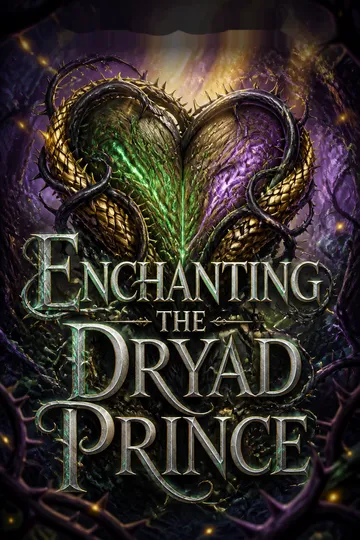
Enchanting the Dragon Lord receives mostly positive reviews, with an average rating of 4.17 out of 5. Readers praise the engaging romance, well-developed characters, and intricate fantasy world-building. Many enjoy the enemies-to-lovers plot and dragon-shifter element. Some criticism includes rushed pacing and underdeveloped conflicts. The book is part of a series but can be read as a standalone. Overall, fans of clean fantasy romance with strong heroines and magical elements find it entertaining, though a few readers felt the writing style was simplistic.
People Also Read


Characters
Brielle
The runaway artifact hunterBrielle is the Wylfen princess who would rather excavate dragon relics, climb out of windows, and sail than submit to courtly expectations. Her father expects her to join the Broyeurs, but she resists their persecution of magic workers and repeatedly risks herself to protect people with less power. She is quick with a knife and quicker to challenge authority, yet her boldness is not indifference to consequences: she worries over Celeste, Maren, and the people harmed by her kingdom. Her fascination with history gives her an independent way of seeing the world, while her irreverence protects a more vulnerable longing for a place where she can act freely.
Dorin
The isolated dragon heirDorin is the crown prince of Balaur, a disciplined warrior who measures himself by duty to family and kingdom. His unexplained transformations threaten that self-image because he cannot initially remember what he does as a dragon. He responds by isolating himself, treating restraint and self-punishment as the only ethical choices. Brielle unsettles that logic: she sees his kindness alongside his danger and refuses to let fear define him completely. Beneath his severe manner is a protective temperament, though his tendency to turn concern into control can hurt the people he means to safeguard. His central struggle is to accept power without surrendering judgment or connection.
Maren
The escaped witchMaren is a witch imprisoned by Raoul’s regime, whose family died defending her. She is observant, guarded, and practical about the risks of magic, but she retains a dry humor that helps her meet Brielle as an equal rather than merely a rescued victim. Her knowledge of spells and ancient runes turns the jade stone from an intriguing relic into a usable tool. Maren understands what it means to survive other people’s fear, so her help comes with clear boundaries and hard-earned caution.
King Raoul
Wylfen's magic-hating kingRaoul rules Wylfen through fear, treating magic as a threat to be destroyed and expecting his children to serve the state’s violence. His authority is personal as well as institutional: he uses Brielle’s loyalty to Celeste, her status, and her future marriage to pressure her into obedience. He frames persecution as order, revealing a deep need to control anything he cannot command. His polished manners and occasional paternal gestures do not soften the cruelty of the choices he makes.
D'Aboville
The relentless Broyeur captainD’Aboville commands the Broyeurs and takes a personal interest in keeping Brielle under his influence. He is calculating, physically menacing, and skilled at turning procedure into intimidation, whether by branding Brielle or using Magebane against magic workers. His grief for Jacqueline has become entangled with a desire to control Brielle, who reminds him of the woman he lost. That grief helps explain his fixation but does not excuse his appetite for power or the violence he inflicts.
Etienne
Brielle's pleasure-loving brotherEtienne is Brielle’s older brother and heir to Wylfen. He enjoys attention, fine things, and social ease, traits that make him seem less suited to rule than his sister might hope. Yet he is not simply an extension of Raoul: Brielle believes he can govern without sharing their father’s appetite for war and persecution. His bond with her rests on affection and a history of shared mischief, even when political pressures keep him from acting as her protector.
Celeste
Brielle's loyal nursemaidCeleste has cared for Brielle for years and knows both her tenderness and her talent for dangerous escapes. She offers affection without pretending the princess’s adventures are sensible, and she carries information about Raoul’s past that helps Brielle understand the roots of his hatred of magic. Her loyalty is quiet and practical, grounded in the daily labor of protecting someone raised inside a hostile court.
Filip
Dorin's steadfast younger brotherFilip is Dorin’s younger brother, a warm and capable prince whose ease with people contrasts with Dorin’s reserve. He uses humor to reach his brother but does not mistake jokes for solutions; when Dorin reveals his transformation, Filip offers support and refuses to leave him alone with it. As a warrior and a political partner, Filip balances loyalty to Dorin with responsibility to Balaur.
Queen Sorina
Balaur's shrewd queenSorina is Dorin and Filip’s mother and the queen who guides Balaur through political danger. She combines warmth toward her family with strategic judgment, welcoming Brielle conditionally rather than confusing hospitality with trust. Her decisions create space for diplomacy while acknowledging that Balaur’s history with Wylfen makes caution necessary. She expects her sons to serve their people, but she also sees the person beneath the royal role.
King Mihai
Balaur's failing kingMihai is Dorin and Filip’s father, a sickly king whose diminishing strength leaves much of Balaur’s urgent work to his family. His presence matters as both a ruler and a father whose mortality weighs on Dorin’s sense of duty. He remains part of the court’s effort to judge Brielle and consider peace with Wylfen.
Werian
The irreverent fae princeWerian is a fae prince allied to Balaur through friendship and family. His teasing manner irritates Dorin, but beneath it is political tact and a willingness to offer help, including healing and historical research. He quietly encourages others to give Brielle a chance while allowing them to reach their own conclusions. His humor makes him seem careless, though his loyalty is serious.
Aurora
The wary Magelord princessAurora is a powerful water mage and princess whose experience of Wylfen’s wars makes her slow to trust Brielle. She is direct, protective of her people, and alert to the possibility that kindness can be exploited. Her suspicion is grounded in real losses, not simple prejudice, and she expects Brielle to demonstrate who she is through choices rather than assurances.
Rhianne
The resourceful fae princessRhianne is a fae princess and skilled witch whose connection to Brielle offers a familiar face in Balaur’s court. She balances kindness with awareness that trust must be earned, and her magic and political connections make her a practical ally. Her willingness to bend rules reflects a belief that institutions should serve people, not trap them.
Gytha
The candid fae healerGytha is one of Aurora’s fae ladies, a healer with a blunt manner and a sharp eye for Brielle’s feelings. She speaks plainly, notices details others overlook, and helps Brielle navigate the customs and suspicions of Balaur’s court.
Eawynn
The eager fae attendantEawynn is a warm, enthusiastic fae attendant who helps care for Brielle after her injury. Her openness contrasts with the hostility Brielle expects from Balaur, offering kindness without demanding that Brielle immediately prove herself.
Drago
Dorin's blunt-eyed knightDrago is a trusted knight in Dorin’s circle, known for blunt humor and practical loyalty. He helps protect the royal household and serves as a steady presence when political tension or danger threatens to overwhelm the court.
Stephan
The grieving elven knightStephan is an elven knight whose hatred of Wylfen is rooted in personal loss. His grief makes him volatile around Brielle, whom he associates with the kingdom responsible for his pain. He represents the difficulty of asking victims to separate an individual from the power that harmed them.
Lisette
Brielle's quiet castle spyLisette is a chambermaid who helps Brielle from within Wylfen Castle. Her usefulness as a spy contrasts with the contempt she has faced from her family, and Brielle’s encouragement gives her a moment of recognition beyond her assigned status.
Brielle's mother
The fierce absent motherBrielle’s mother lives on in her daughter’s memories, practical lessons, lullaby, and training with knives. Brielle remembers her as affectionate but strong, a woman who resisted rules that limited how mothers could care for their children. Her influence gives Brielle a model of love that is not passive and a source of courage independent of Raoul.
Plot Devices
The Jade Rune Stone
Calls and counters magicThe carved jade artifact answers Brielle’s request for help by drawing Dorin to her window. Maren identifies its runes as a call for aid and uses it to explain how she resisted Magebane. The stone’s effect depends on contact and gives Brielle a way to restore Dorin when the Broyeurs suppress his power. It links Brielle’s archaeological curiosity to the central plot, while its uncertain limits prevent it from functioning as an effortless solution.
Magebane
Suppresses nearby magicMagebane is an elixir developed by Wylfen’s apothecary for the Broyeurs. It weakens magic workers within its reach, allowing Raoul’s forces to imprison witches and later restrain Dorin. The rune stone can interfere with its effects, making it a crucial countermeasure rather than a general cure. Magebane gives the state’s persecution a tactical advantage and turns encounters that depend on magic into contests of endurance, proximity, and preparation.
Dorin's Dragon Form
Power without early controlDorin’s ability to change between elf and dragon disrupts his memory and threatens the people around him. At first he interprets the transformation as a curse because he cannot reliably remember or govern his actions. The power changes the balance between Balaur and Wylfen, but it is useful only when he learns to act deliberately and accept help. Its development joins the book’s romantic conflict to its political one: Dorin must decide whether fear will make him hide from his responsibilities.
The Scar Wolves
Wylfen's weaponized fearWylfen trains scar wolves for war and uses them to terrorize its enemies. Their presence gives the conflict a physical cost beyond royal strategy, including the destruction of elven communities such as Stejari. Brielle’s rejection of her father’s offer to command one marks her refusal to participate in his system. The wolves also explain why Balaur’s anger at Wylfen is grounded in lived loss, not merely inherited rivalry.
The Willow-Born Abyss
Turns control into corruptionAn unnatural willow wrapped in dark ivy becomes the channel through which a hidden magical force tempts D’Aboville with power. Destroying the tree does not end the voice, and after D’Aboville is gravely wounded, he bargains with the entity by sacrificing his men. The threat ultimately reaches Brielle through a revelation about her origins. The willow develops the story’s antagonist beyond human cruelty, showing how the desire to dominate magic can make a person vulnerable to a darker force.
Kingdoms of Lore Series

About the Author



Download PDF
Download EPUB
.epub digital book format is ideal for reading ebooks on phones, tablets, and e-readers.








