

Key Takeaways
Replace the balance ideal with the more useful question: what feels satisfying?
Balance is the wrong target. Work is part of life, not a separate rival to it. A worrying day at home can weaken concentration at work, while success on a project can bring good energy back to the family. The author argues that people asking for balance are usually asking for something more substantial: meaningful relationships, worthwhile work, and a life that feels fulfilling. In a survey of more than ten thousand people, he says no respondent chose balance over satisfaction when asked to pick one.
Satisfaction needs attention. It does not mean feeling happy every minute or dividing hours evenly. It means building a life that feels worthwhile across its personal and professional parts. That takes self-awareness, deliberate choices, and ongoing effort, not a perfect schedule.
The shift is useful because balance can imply a static accounting problem: equal time on each side, regardless of what either side contains. Satisfaction asks about quality and meaning instead. That fits psychological distinctions between pleasure and broader well-being, which includes purpose, relationships, and a sense of agency. Still, satisfaction should not become another demand to optimize every hour. Some seasons are genuinely unbalanced because of caregiving, illness, or economic pressure. The more humane use of the idea is as a compass for reflection, not a standard by which people are blamed for circumstances they cannot readily change.
Price the life you envy before mistaking its surface for your dream
The fisherman has a trade-off. The book opens with an investment banker advising a Mexican fisherman to expand his small business into a global company. At the end of that long climb, the banker says, the fisherman could retire to a village, spend time with his family, fish, and enjoy friends. The fisherman already lives much of that way. The story exposes how easily ambition can turn a desired destination into a decades-long detour.
The idyll has costs. The fisherman lacks many comforts, services, and opportunities that the banker takes for granted. The point is not that one life is better for everyone. Every life rules out alternatives, and satisfaction depends on whether its costs fit the person choosing it. Instead of envying a lifestyle from a distance, ask what you would need to give up, and whether the exchange suits you.
This story works as a miniature lesson in opportunity cost: choosing one path consumes time and closes off others, even when the choice is worthwhile. It also challenges the assumption that growth is always the route to freedom. Yet the fable risks making a constrained life look effortlessly serene. Limited healthcare, education, or financial security are not mere lifestyle accessories. Its strongest use is not as a prescription to simplify, but as a prompt to distinguish genuine desire from a borrowed image of success.
Choose fulfillment that lasts beyond the pleasure-producing moment
Pleasure fades quickly. The book distinguishes pleasure, which usually ends when the enjoyable activity ends, from satisfaction, which can continue afterward. Eating can feel pleasurable while it is happening; finishing a workout one did not feel like doing can leave a deeper sense of accomplishment. The author argues that lasting satisfaction often follows effort, patience, and delayed gratification rather than immediate reward.
Notice what remains. A demanding project may include frustration and still leave a person proud of the result. By contrast, repeatedly pursuing an enjoyable experience can produce diminishing returns. The distinction offers a practical test: after an activity is over, does it leave a sense of meaning or accomplishment, or only a craving to repeat the pleasure? Both pleasure and satisfaction matter, but the book treats enduring fulfillment as the more dependable guide.
This distinction echoes the difference often drawn in psychology between hedonic well-being, the pleasant feeling of the moment, and eudaimonic well-being, the sense of living in line with meaningful aims. It helps explain why effort can be rewarding even when it is not enjoyable at every step. The distinction is not absolute, however. Pleasure can sustain relationships, play, and recovery, while arduous work can become exploitation rather than meaningful challenge. The useful question is not whether an activity feels good or difficult, but whether its immediate cost and later value make sense together.
Use self-knowledge, virtue, and self-control to shape a life worth living
Three principles guide choices. The book proposes that a good life involves becoming a fuller version of oneself, practicing virtue, and developing self-control. The first asks whether choices help a person use their abilities and grow. Virtue refers to qualities such as patience, generosity, courage, and humility. Self-control makes it possible to resist immediate impulses when a more important aim requires patience.
Apply them in context. These principles do not dictate one universal schedule or career. What fits a single person may not fit a parent, and priorities can shift across life stages. The author treats the question of how to live as one that needs regular reconsideration, not a puzzle solved once. The principles provide a shared starting point; personal circumstances determine how they are expressed.
The trio gives the book a moral center beyond individual preference. It connects personal development with character and with the quality of relationships, making the argument relevant to families and organizations, not just private ambition. Its strength is that self-control serves chosen values rather than mere productivity. Its vulnerability is that virtue can sound universal while cultures and individuals disagree about which obligations deserve priority. A workable version requires reflection and dialogue: principles can guide choices, but they should not erase differences in circumstance, identity, or legitimate life goals.
Write your priorities down before urgency makes your choices for you
Limits make ranking necessary. No one can pursue every attractive option at once. The book illustrates this through Tom, an executive whose written priorities are faith, marriage, children, health, and work. The list helps him make decisions under pressure, including when a meeting runs long or a promotion demands new commitments. It does not mean work is unimportant. It means work should not routinely displace what he has ranked above it.
Make priorities concrete. The book's Priority Exercise asks a person to name five or six important areas, then compare them in pairs. Repeated choices produce an ordered list. The list can expose a gap between declared values and actual behavior, and help prevent urgent tasks from crowding out important ones. Priorities can change with circumstances, so the exercise is meant to be revisited rather than treated as a permanent verdict.
Writing priorities down converts vague values into a decision aid, much like explicit criteria help a team choose among competing projects. Pairwise comparisons are useful because ranking several abstract goods all at once can feel impossible. But the result should be treated as a draft, not an objective measurement of a person's true values. A forced ranking can hide interdependence: health may support family life, while work may provide security. The list is most useful when it starts a conversation about trade-offs and when real decisions are checked against it over time.
Protect energy, because hours cannot compensate for a depleted capacity
Time is not the whole resource. The book argues that energy determines how much of life a person can engage with. Its Four Levels of Energy describe states ranging from depleted and overwhelmed, through angry or anxious, to calm contentment and finally confidence, enthusiasm, and vitality. People, places, activities, and objects can either replenish energy or drain it.
Manage the pattern. The author does not say to avoid every draining task. Instead, notice what restores you, what depletes you, and where recovery belongs. He contrasts this with time management, which he considers a basic skill rather than the next source of improved performance. He also describes unplugging during a long walking trip and using breaks to sustain effort. The practical aim is not constant high energy, but a more deliberate rhythm of exertion and restoration.
The focus on energy adds a valuable dimension to planning: a calendar can be full yet produce little good work if the person using it is exhausted. This connects with research and practice around recovery, attention, and workload design, where rest is part of performance rather than its opposite. The four-level model is memorable, but energy is not simply a personal attitude. Poor staffing, long shifts, illness, and financial stress can drain people regardless of their habits. Managers should use the model to improve conditions, not to label tired employees as insufficiently positive.
Treat personal and professional satisfaction as one connected system
Life crosses the office door. A sick child, marital strain, or caregiving responsibility can affect attention at work. The reverse is true as well: meaningful work and supportive colleagues can improve someone's life outside work. The author interviewed people nominated as work-life balance champions and found that they worked, on average, nine hours more per week than peers. What stood out was not equal time allocation, but a strong sense of satisfaction in both work and personal life.
Satisfaction has several ingredients. Those employees valued their colleagues, felt respected by managers, saw their work helping customers, and understood what they were working toward in their own lives. The book also cites reports of widespread job dissatisfaction and difficulty juggling responsibilities. These figures support the need to take the issue seriously, though they do not prove that more hours create satisfaction.
The interdependence claim is persuasive: people do not switch off their relationships, health, or worries when they arrive at work. It also gives organizations a practical reason to support humane working conditions. The reported nine-hour difference is more complicated. It shows that the author's selected champions did not fit a simple hours-equality ideal, but it cannot establish that long weeks caused their satisfaction. Selection effects, job autonomy, and financial security may matter. The argument is strongest when it rejects artificial separation, not when it is read as an endorsement of overwork.
Turn intentions into satisfaction with five recurring practices
Build a repeatable system. The Personal and Professional Satisfaction System links intentions to regular actions. It has five parts:
1. Assess personal and professional satisfaction, then identify low-scoring areas.
2. Rank priorities so decisions reflect what matters most.
3. Choose a few Core Habits that support health, focus, and energy.
4. Hold a Weekly Strategy Session to select key work for each day.
5. Conduct a Quarterly Review with someone who can offer accountability.
Improve it gradually. The author reports that people faithful to the full process raised satisfaction scores by 24 percent over three months, compared with 7 percent among those who abandoned parts of it. He recommends taking a long view: build the desired life in manageable increments rather than waiting for a dramatic escape. The reported results are encouraging, but the text does not provide enough study detail to treat them as definitive proof.
The framework's value is its sequence: measure the current state, make trade-offs explicit, establish daily supports, plan the week, and invite another person to notice whether the plan survives contact with life. That resembles a feedback loop in organizational design, where measurement matters only if it informs action. Its weak point is evidential: the reported score gains lack methodological detail here, so they should be read as a promising observation, not a guaranteed effect. Accountability also works best when supportive and voluntary, rather than becoming surveillance disguised as self-improvement.
Analysis
The book's central move is conceptual but practical: replace the image of two competing lives with one life whose personal and professional parts influence each other. That change shifts the question from how to distribute hours evenly to what makes a life feel worthwhile. The opening fisherman story makes this argument vivid by revealing that the apparently ideal endpoint of relentless expansion may resemble the simple life the protagonist already possesses. Its value lies in exposing assumptions about success, not in claiming that poverty or limited options are desirable.
The book then builds a moral and operational structure around satisfaction. Personal growth, virtue, and self-control frame the kind of person one is trying to become. A written priority order turns that aspiration into a tool for choosing. Energy management recognizes that time alone cannot explain performance or fulfillment. Finally, assessment, habits, weekly planning, and accountability turn reflection into repeated behavior. The strongest contribution is the connection among these elements: priorities determine what deserves energy, habits support those priorities, and review helps correct drift.
A significant tension remains between personal responsibility and structural conditions. The book emphasizes that individuals must create satisfaction, yet work schedules, pay, care responsibilities, health, and managerial power can sharply limit available choices. Treating dissatisfaction only as a failure of planning risks blaming people for constraints they did not choose. The argument becomes more compelling when individual agency and organizational responsibility are treated as complementary. Workers can clarify what matters and make deliberate choices; employers can shape workloads, autonomy, and support so that those choices are realistically possible.
The book's promise is therefore best understood as a method for increasing agency, not a formula for permanent contentment. Its measures and routines can reveal patterns and support change, but satisfaction remains contextual, uneven, and sometimes interrupted by circumstances. The enduring lesson is to define success before default incentives define it, then build a life that reflects that definition through small, revisable decisions.
Review Summary
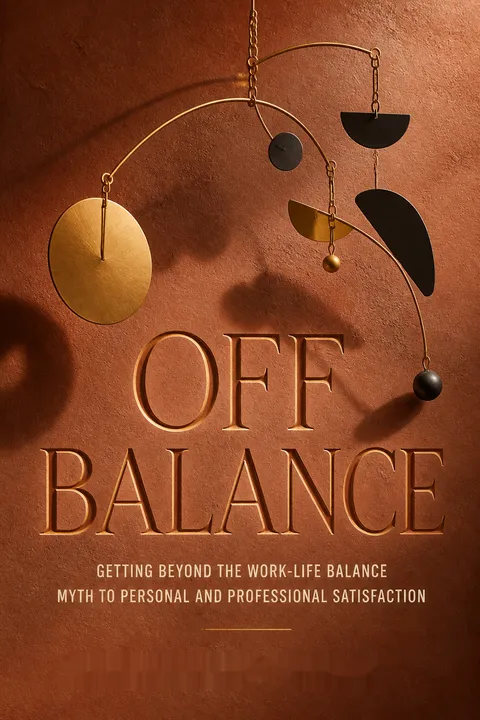
Off Balance receives mixed reviews, with an average rating of 3.84/5. Readers appreciate Kelly's fresh perspective on work-life satisfaction rather than balance, and his emphasis on energy management. Many find the book practical and insightful, praising its focus on personal responsibility and becoming one's best self. However, some criticize the book for being repetitive, lacking actionable steps, and having a corporate-centric view. Critics also note that Kelly's approach may not resonate with those who view work solely as a means to an end.
People Also Read









Glossary
Personal and Professional Satisfaction (PPS)
Fulfillment across life and workThe book's preferred goal in place of work-life balance. PPS describes a satisfying experience across both personal and professional life, which the author treats as interconnected. It does not require equal time for each area or constant happiness. The individual must identify what produces meaningful satisfaction and take responsibility for pursuing it.
Personal and Professional Satisfaction System
Five-part satisfaction processA repeatable process for increasing satisfaction in personal and professional life. Its five parts are assessment, setting priorities, choosing Core Habits, holding a Weekly Strategy Session, and conducting a Quarterly Review. The elements are designed to connect desired outcomes with consistent behavior, while measurement and accountability help people notice progress and adjust.
Personal and Professional Satisfaction Assessment
Twenty-question satisfaction measureA self-assessment that asks ten questions about personal life and ten about professional life. Responses are scored from one to five, producing separate personal and professional totals and a combined PPS score. The author recommends repeating it periodically, reviewing low-scoring areas, and choosing actions that could improve those areas.
the-best-version-of-yourself
A personal growth idealThe author's recurring term for developing one's abilities, character, and potential rather than diminishing them or imitating someone else. It serves as a test for choices: whether a relationship, activity, or commitment supports meaningful growth. The phrase is an ideal to pursue through ongoing choices, not a claim that a person can reach flawless perfection.
Four Levels of Energy
A map of energy statesA four-part model describing emotional and energetic states. Level one involves depletion and overwhelm; level two includes negative states such as anger or anxiety; level three is calm and reflective; level four is positive, confident, and invigorated. The framework helps people notice how their state affects their actions and how people, places, things, and activities influence their energy.
Core Habits
Daily habits supporting good daysA small set of recurring daily actions that the author believes keep a person healthy, focused, and energized. His examples include exercise, meditation, an intentional act of care, managing food intake, and drinking water. The recommended approach is to start with one habit, track consistency, and add another when the first is established.
Weekly Strategy Session
Weekly planning practiceA short planning session, often held over the weekend, to identify the most important projects for the coming week and assign a focus to each day. It is intended to protect meaningful work from being displaced by email, meetings, and other urgent demands. The session also helps people prepare their schedules around existing commitments.
Quarterly Review
Periodic personal accountabilityA conversation held every three months with a trusted person who knows the individual and can offer honest feedback. The review considers what is not working, what the person committed to doing, current objectives, and the plan for pursuing them. Its purpose is to provide accountability for personal development, not merely evaluate job performance.
Priority Exercise
Pairwise priority rankingA method for turning a list of important life areas into an ordered set of priorities. A person first narrows a broad list to roughly five or six items, then compares each item with the others in pairs, choosing which matters more in each comparison. The resulting ranking is a practical aid to decisions and can be revisited as life circumstances change.
About the Author
Other books by Matthew Kelly








Download PDF
Download EPUB
.epub digital book format is ideal for reading ebooks on phones, tablets, and e-readers.








