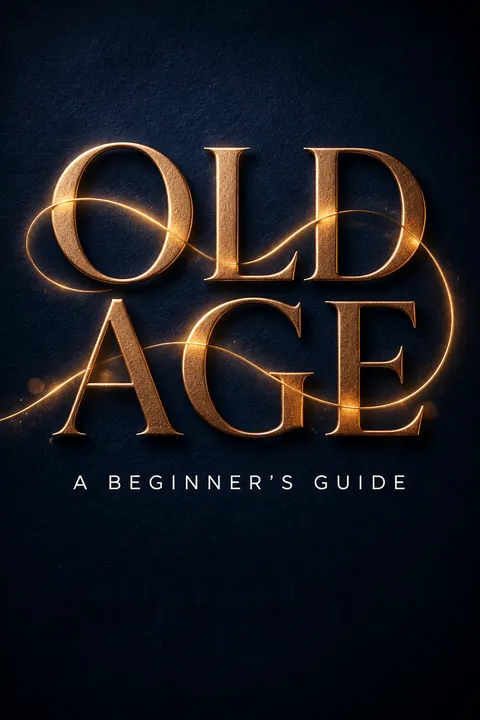


Key Takeaways
The boomer contest shifts from possessions to years, cognition, and reputation
The scorecard changes. Kinsley frames aging as a sequence of contests. Boomers first compete over possessions, a race that looks absurd when death makes every purchase useless. Then the prize becomes more time alive, followed by more time with a functioning mind. Finally comes reputation: what remains after the person is gone. Each contest exposes a different limit. Money cannot buy unlimited years, longevity may come with illness or dementia, and fame usually fades. The book’s central question is not how to win every round, but which prizes deserve the effort while there is still time to choose.
The sequence works because it converts a sprawling subject into a changing set of priorities. Consumer culture treats acquisition as measurable progress; aging makes its limits brutally legible. Yet the scorecard is not universal. People facing poverty, poor health care, or unsafe living conditions may reasonably prize material security and longer life before reputation. The framework is most useful as a personal audit, not a ranking imposed on everyone. Its sharper insight is that priorities change when time becomes finite, and that recognizing this early can keep status competition from consuming the years it claims to reward.
Spend a diagnosis's warning on life, not on endless postponement
Urgency can be useful. Diagnosed with Parkinson’s in 1993, at forty-three, Kinsley received an unwelcome reminder that some choices might not remain available. He took a trip to kayak in Alaska, an activity he had not previously wanted enough to pursue. Later, rising fear made the same adventure feel too risky. His experience does not make illness a gift, but it shows how a warning can reveal which postponed plans are worth attempting. Deep brain stimulation, a procedure that sends electrical pulses to targeted brain areas, later reduced his movement symptoms. It improved daily life, but it did not make Parkinson’s curable or erase uncertainty.
A diagnosis changes the perceived cost of waiting. In decision-making, distant rewards are easy to discount; a visible limit can make a preference suddenly actionable. Kinsley’s example is valuable because the trip was not a grand bucket-list item. It was an experiment in whether a newly available opportunity mattered. Still, urgency can distort judgment as well as clarify it. A serious diagnosis does not require turning every ordinary day into a dramatic final chance. The practical lesson is to revisit postponed choices with honest attention, while leaving room for rest, routine, and plans that remain meaningful precisely because they are ordinary.
Use denial as a coping choice, not a moral failure
Coping has different styles. Kinsley distinguishes acceptance, confrontation, and denial. Acceptance is an aspiration rather than a plan; confrontation puts the disease at the center through activism, research, or intensive study; denial tries to keep it from dominating daily life. He chose the last approach for about eight years after diagnosis, while still seeing doctors and taking medication. Keeping the illness private helped him avoid making every interaction about Parkinson’s, but it also required managing what other people knew. He eventually disclosed his condition publicly. The book treats these responses as personal strategies that can be mixed, rather than evidence of courage or cowardice.
This account separates psychological coping from medical neglect. Avoiding constant attention to illness can protect identity and emotional bandwidth, while direct engagement can create community and agency. Neither approach suits everyone, and a strategy that helps in one phase may become burdensome in another. The harder ethical distinction is between privacy and deception: people have legitimate reasons to control personal information, but concealment can affect partners, colleagues, or family members who need accurate information. Coping is therefore not simply a private preference. Its consequences depend on who else is asked to sustain the silence.
Treat lifespan as luck, not proof of virtue
Survival is not a medal. On a flight, Kinsley met former U.S. defense secretary Robert McNamara, an architect of the Vietnam War. In old age, McNamara described a plan to ski between mountain huts with a friend. Kinsley felt the unfairness of a man connected to immense harm enjoying a long life, but recognized that one person’s longevity does not subtract years from another. He argues that genes, circumstances, and chance shape lifespan at least as much as personal discipline. A tontine, an old investment in which the last surviving member collects the pooled money, becomes his dark analogy for life: people outlast friends, though there is no actual prize.
The distinction between health behavior and moral desert matters. Exercise or avoiding smoking can influence risk, but outcomes remain probabilistic, not a reliable measure of character. Treating survival as proof of discipline can shame people whose bodies fail and flatter those who benefited from luck. Kinsley’s McNamara encounter adds a further complication: longevity is not the same as moral vindication. A long life can allow repair or reflection, but it cannot undo earlier harm. The analogy to a tontine captures the uncomfortable arithmetic of outliving others, while reminding readers that human relationships make survival more than a private score.
Count lucid years, not birthdays, as the real longevity prize
More time is not always better time. Kinsley argues that the desire to live longer becomes harder to defend when cognitive decline removes the abilities that make life recognizable to the person living it. At the time of publication, he cited an estimate that about 28 million of 79 million American boomers might develop dementia, roughly one in three. He also noted that people living beyond eighty-five faced about a fifty-fifty chance of developing Alzheimer’s. These were projections, not certainties for any individual. They sharpen his distinction between competitive longevity, the contest to live longer, and competitive cognition, the contest to retain mental abilities.
The distinction is useful because health systems often count years more easily than they describe their quality. But the language of winning or losing cognition carries a moral risk: it can imply that a person with dementia has become less valuable. A preference for preserving memory and independence is understandable; it should not become a judgment on people who lose them. The numbers also describe population estimates, not personal forecasts. A humane version of the argument holds both truths together: cognitive health is a legitimate concern, and dignity does not depend on cognitive performance.
A diagnosis can age you socially before it disables you physically
Labels change the room. Kinsley says that going public with Parkinson’s in his fifties made others respond as if he were older, even though his condition had changed little. Friends watched for symptoms, and strangers sometimes treated him as more impaired than he was. Work could change too: after he disclosed the diagnosis to the owner of The New Yorker, an editorship offer was withdrawn, though Kinsley could not prove the disease caused the decision. Giving up driving was another dividing line. One study he cites found that older adults who stopped driving were 44 percent more likely to report increased depressive symptoms.
This is a social account of disability as well as a medical one. A condition can restrict movement, but other people’s expectations also shape access to work, mobility, and ordinary conversation. The concept resembles stigma research: a diagnosis becomes a public identity that can overshadow the person’s actual abilities. At the same time, practical limits should not be dismissed as mere prejudice. Driving restrictions can protect people and others from harm, even while reducing independence. The challenge is to preserve agency where possible, rather than assuming either that a diagnosis means incapacity or that every limitation is unfair.
Treat brain tests as evidence, not verdicts on a whole person
A score has a scope. Kinsley undergoes a five-hour cognitive assessment after worrying about Parkinson’s effects on his thinking. In one task, participants judge which of two people might be more upset after being mugged closer to or farther from home. Most people in a control group chose the person mugged nearby; most participants with Parkinson’s said there was not enough information to decide. The contrast concerned the Counterfactual Inference Test, a measure of reasoning about alternative outcomes. Kinsley’s report also found weaknesses in executive functioning, which includes planning, decision-making, and adjusting actions. His strong cognitive reserve, or remaining mental capacity that can compensate for weaknesses, offered some protection.
The episode captures a tension in psychological measurement. Standardized tests can detect patterns that casual self-assessment misses, but no single item represents judgment across the messy conditions of real life. A test’s usefulness depends on whether its tasks predict the abilities needed in a particular role. Kinsley does not dismiss the results: the group difference and his weaker scores were unsettling evidence. The more defensible conclusion is neither that testing is nonsense nor that a score defines a person. Assessment should inform decisions, with attention to context, strengths, and the costs of false conclusions.
Build a reputation through conduct, not fantasies of permanent fame
Memory is selective. Mark Twain once counted dozens of popular humorists from his own era whom later readers had forgotten. Kinsley finds the same pattern in journalism: Joseph Kraft, once a prominent Washington columnist, largely disappeared from public memory. Even literary reputations are shaped by more than talent. Jane Austen’s family helped preserve and promote her work, while the lesser-known Mary Brunton had no comparable memorializing effort. Kinsley distinguishes fame during life from reputation after death, when other people decide what remains worth reading or remembering. For most people, lasting celebrity is improbable; earning a good name through decent conduct is a more realistic ambition.
The examples puncture the comforting myth that history is a perfect meritocracy. Reputation depends on the work itself, but also on institutions, family advocacy, publishing, education, and repeated retelling. That makes posthumous recognition partly a social achievement, not simply a verdict on quality. The more modest alternative, behaving well toward people who can actually be affected, is less glamorous but more controllable. Even that cannot guarantee remembrance. Its value lies in the conduct itself, not in treating kindness as a covert investment in future praise.
Turn generational remorse into a costly gift, not a ceremonial apology
Repair requires sacrifice. Kinsley presents the familiar indictment of boomers as self-indulgent and fiscally careless, then complicates it: the generation also helped advance civil rights, feminism, environmentalism, and gay rights. Rather than settle the score, he asks what a meaningful final contribution might look like. His deliberately provocative proposal is for boomers to help reduce the debts passed to younger generations, partly through taxing inherited wealth. He sketches a national debt near $17 trillion and a possible inheritance levy, but says he is not literally advocating that exact sum or a simple transaction. The point is to make a generational apology tangible, even if the sacrifice is not perfectly fair.
The proposal changes the question from whether a generation deserves blame to whether it can accept responsibility for costs inherited by others. That is a powerful civic frame, but the arithmetic is not the whole argument. Public debt can finance assets as well as obligations, and household inheritances are not interchangeable with government liabilities. A serious policy would need to distinguish productive borrowing from deferred costs and account for who can pay. The book’s stronger claim is ethical: an apology that asks nothing of the apologizer is mostly performance. Shared sacrifice can signal a willingness to leave successors more room to act.
Analysis
Kinsley’s book is built from a useful contradiction: old age is universal, yet its timing and texture are radically unequal. Parkinson’s gives him an early view of bodily vulnerability, but his essay form keeps the disease from becoming a medical manual. A poolside encounter, an airplane conversation, a brain operation, and an exhausting cognitive assessment become portals into larger questions about status, mortality, and what survives a person. Humor does not cancel the fear. It lets the reader look directly at it without pretending that every loss can be converted into wisdom.
The book’s competitive metaphor is both its engine and its limitation. It makes familiar boomer ambitions newly visible by moving the prize from possessions to lifespan, cognition, and reputation. Yet competition is not the only language available for aging. Caregiving, dependence, and disability are relational realities, not merely personal setbacks. A person with dementia may no longer meet the author’s preferred standard for a successful old age, but that does not make the person’s life or relationships a failed contest. The distinction matters because a metaphor can shape how readers value people, not just how they plan for themselves.
Kinsley’s own circumstances also matter. He has access to prominent specialists, advanced treatment, professional work, and the security to reflect publicly on illness. Those advantages do not invalidate his account; they show why his experience cannot stand for every older adult. His treatment of driving and workplace exclusion is particularly valuable because it reveals how aging is produced by both physical change and social response.
The final proposal to make boomers pay down inherited obligations is less persuasive as economic design than as moral theater. Its precise figures are speculative, and debt is not a single kind of burden. But the provocation is coherent: generations should be judged not only by what they achieved, but by what they leave others to maintain. The book’s best lesson is not to win aging. It is to notice which measures of winning collapse under scrutiny, and to make choices with that knowledge.
Review Summary
Old Age: A Beginner's Guide received mixed reviews. Some found it witty and thought-provoking, praising Kinsley's candid discussion of aging and Parkinson's disease. Others criticized it as repetitive, disjointed, and too focused on Parkinson's rather than aging in general. Many readers appreciated Kinsley's humor and insights but felt the book lacked depth or practical advice. The final chapter, proposing that Baby Boomers pay off the national debt, was particularly divisive. Overall, reviewers found the book a quick, sometimes entertaining read, but not as informative or universally relatable as expected.
People Also Read

Glossary
Competitive longevity
The contest to live longerKinsley’s term for treating lifespan as a competition, especially among aging baby boomers. It asks who will outlive peers and frames additional years as a prize. The book complicates that ambition by noting that longevity depends heavily on circumstance and luck, and that extra years may not bring health or independence.
Competitive cognition
The contest to retain cognitionKinsley’s term for the struggle to preserve mental abilities as people age. It shifts attention from simply counting years to asking how long someone can retain memory, judgment, and other cognitive functions. The idea reflects the fear of dementia, while raising a humane question about how to value people whose cognition declines.
Deep brain stimulation
Electrical brain stimulation treatmentA treatment for Parkinson’s disease in which implanted wires deliver electrical pulses to selected brain areas. Kinsley underwent the procedure in 2006. It substantially reduced his movement symptoms and medication-related difficulties, but required surgery, later adjustment, and ongoing care. It manages symptoms rather than curing Parkinson’s.
Cognitive reserve
Mental capacity available to compensateA term used for mental capacity that may help a person function despite weaknesses in particular cognitive abilities. In Kinsley’s assessment, his strong reserve was a potential buffer alongside weaknesses in executive functioning and working memory. It does not mean that deficits are unreal or that future decline can be ruled out.
Counterfactual Inference Test
A test of alternative-outcome reasoningA cognitive task discussed in the book that asks participants to reason about how events might have felt under different circumstances. Kinsley describes a question comparing reactions to muggings at different distances from home. The test is intended to assess counterfactual reasoning, though he questions whether the scenario permits one definitive answer.
Tontine
A pool paid to survivorsA historical investment arrangement in which a group contributes money to a shared fund, with surviving members receiving the proceeds as others die. Kinsley uses the tontine as a dark analogy for longevity and outliving friends. He also compares some features of Social Security to a longevity pool, while noting that the systems are not identical.
Download PDF
Download EPUB
.epub digital book format is ideal for reading ebooks on phones, tablets, and e-readers.








