

Key Takeaways
Make technology serve human development, not endless production and consumption.
Means became ends. Fromm argues that modern industry was supposed to free people from exhausting work and provide the material basis for a fuller life. Instead, production and consumption increasingly became goals in themselves. People learned to judge their worth by market success, possessions, and approval, while work often felt detached from its purpose and leisure was filled with more buying and stimulation. Fromm sees this pattern across capitalist and Soviet industrial societies, despite their political differences.
Prosperity is not enough. He points to anxiety, boredom, suicide, and alcoholism in affluent societies as challenges to the promise that more goods automatically bring well-being. His alternative is not to reject technology or material comfort, but to treat them as tools for creativity, connection, and human flourishing.
What's striking is the distinction between using technology and letting its operating logic define the good life. Contemporary organizations can measure output with great precision while leaving harder questions, such as whether work is meaningful or humane, outside the dashboard. Still, Fromm's contrast between material progress and well-being should not become a romantic case against comfort. Poverty constrains agency too. His sharper point is that prosperity needs a human purpose, and that consumption alone cannot supply one.
Stop worshipping systems and objects that borrow your human powers.
Alienation becomes idolatry. Fromm uses alienation for the condition in which people lose the sense that their own powers and creations belong to them. He links it to the older idea of idolatry: people invest love, judgment, strength, or social belonging in something outside themselves, then submit to that thing as if it were independently powerful. The idol might be a leader, a company, the state, money, or technology.
The projection has a cost. When a person treats a leader as the source of wisdom, or a company as the source of identity, those capacities seem to shrink inside the person. Fromm connects this pattern to psychoanalytic transference, where feelings and expectations are attached to another person. His warning is not against institutions or possessions themselves, but against surrendering one's agency to them.
This account makes a useful bridge between personal psychology and political economy: dependence on an admired figure can resemble dependence on an institution that seems too large to question. Social psychology also shows how group identity can shape judgment, which helps explain why people experience collective symbols as more than symbols. Yet projection cannot explain every form of institutional loyalty. Shared institutions can enable cooperation and rights. The practical test is whether allegiance strengthens people's capacity to act and judge, or replaces it.
Treat indifference, not only cruelty, as a danger to life.
Evil can look procedural. Fromm argues that modern wrongdoing may appear less like personal hatred and more like a refusal to experience other people as living beings. His example is Adolf Eichmann, whose defense presented mass murder as administrative work. Fromm also cites nuclear strategist Herman Kahn's calculations about how many deaths a country might survive. The disturbing link is not that the cases are identical, but that both convert human lives into quantities to be managed.
Calculation needs a conscience. Technical planning is necessary in complex institutions, but it becomes morally dangerous when efficiency and procedure crowd out judgment about what is being done. Fromm's concern is that people can participate in terrible outcomes without feeling personally cruel, because responsibility has been divided among offices, models, and orders.
The argument anticipates what organizational research calls moral disengagement: people can make harmful actions seem acceptable by using neutral language, diffusing responsibility, or treating victims as abstractions. That connection makes the point relevant beyond wartime bureaucracy, including routine institutional decisions. Still, calculation is not itself inhumane. Public health, safety, and resource allocation require numbers. The safeguard is to keep quantitative reasoning answerable to explicit moral limits, transparent responsibility, and the human consequences that totals can conceal.
Change the system that reproduces a problem, not one visible symptom.
Societies are interdependent. Fromm defines a system as parts whose functioning depends on their relationships with other parts. Altering one piece may leave the larger structure intact, allowing the old result to return. His example is slum housing: building better homes does not end slum conditions if economic, educational, and social arrangements continue to reproduce them.
Diagnose before intervening. A society can adapt when its institutions respond to changed conditions. It risks disintegration when contradictions intensify and its parts lose that capacity. Fromm warns that reforms can fail because decision-makers misunderstand the system, because powerful groups resist changes that threaten their interests, or because people mistake a symptom for a cause. Effective change therefore requires studying how parts interact, then coordinating reforms rather than treating each visible crisis in isolation.
This is a strong systems-thinking argument: interventions can be absorbed by the conditions they were meant to change. It resembles feedback analysis in ecology and engineering, where the behavior of a whole system cannot be predicted by inspecting one component alone. The framework also disciplines reformers to ask what keeps a harmful outcome recurring. Its limitation is that system-level language can become so broad that responsibility disappears. Good analysis needs both a map of structural causes and identifiable decisions that can be changed.
Turn awareness into organized democratic action people can practice together.
Awareness must move people. For Fromm, awareness is more than agreeing with a critique. It means recognizing how separate problems, such as war, racism, boredom, and consumerism, can arise from a shared social structure. People also need credible alternatives; otherwise, criticism can leave the status quo looking like the only practical choice.
Make the alternative tangible. Fromm favors democratic reform over passivity or violent revolution. He proposes decentralized, face-to-face groups, generally no larger than about a hundred people, where participants study, deliberate, and take action together. He imagines groups with no central authority, shared commitments, and concrete practices, including giving time to public engagement and limiting unnecessary consumption. These are proposals, not a proven recipe. His central point is that ideas gain force when people can embody them together.
The proposal joins political theory to a basic insight about behavior: participation can turn abstract concern into shared responsibility. Small groups can make deliberation more direct and help members see whether their stated values match their conduct. Their size alone, however, does not guarantee openness; tight communities can become conformist or inward-looking. Fromm's emphasis on plural membership, decentralized authority, and freedom from fanaticism addresses that risk. The broader lesson is to build forms of participation that distribute agency instead of merely recruiting supporters.
Build solidarity by recognizing the stranger as fully human.
Tribal loyalty has a boundary. Fromm argues that nationalism can extend tribal thinking to an entire country: people feel obligations to insiders while treating outsiders as less fully human. He recalls the biblical command to care for the stranger, and traces humanism through religious, philosophical, and literary traditions. In Goethe's play about Iphigenia, she rejects deception and speaks honestly to a king who could punish her. The story suggests a humane response can break through a choice framed as two evils.
Shared humanity is not sameness. Fromm also proposes that the unconscious contains human possibilities suppressed by a particular culture, while conscious thought is shaped by that culture's language and rules. Becoming more aware of one's own capacities, including troubling ones, can make other people less alien. This is his psychological basis for treating humanity as a common inheritance.
Fromm's challenge to tribalism connects with social identity research, which shows how group membership can shape whom people trust and help. His insistence that moral concern cross group boundaries offers a demanding corrective to politics organized around insiders and outsiders. The claim that the unconscious represents universal humanity is more speculative than the ethical conclusion, and should not be treated as settled psychology. Solidarity does not require assuming that everyone shares identical experiences; it requires resisting the move from difference to lesser human worth.
Measure wealth by what you can do and love, not what you own.
Possession is not the problem. In his comparison of the medieval mystic Meister Eckhart and Karl Marx, Fromm distinguishes owning useful things from living through a possessive orientation. Eckhart's spiritual poverty does not mean living without necessities. It means loosening the ego's grip on possessions, status, knowledge, and even religious rewards. Marx similarly criticizes a society that treats ownership and consumption as proof of human fulfillment.
Being means active capacity. For both thinkers, freedom from compulsive possession makes room for action, thought, love, and engagement with the world. Eckhart's ideal is not passivity: he held demanding leadership roles. Marx's alternative is not simply higher wages or more goods for everyone, but meaningful, conscious activity and relationships. Fromm's question is therefore not how little a person owns, but whether possessions serve life or become its measure.
The distinction is more precise than a simple case for minimalism. A person can own very little and still be ruled by envy or status, while someone with substantial possessions can use them without making them the core of identity. This resembles the difference between intrinsic aims, such as learning and relationships, and external markers of success. Fromm's synthesis is philosophically rich, though it risks understating how ownership can provide security and independence. The useful question is what a possession enables, and what claims it makes on attention and self-worth.
Cultivate life through love, reason, and freedom rather than control.
Human beings face a choice. Fromm describes people as part of nature who are also conscious of their separation from it. They seek connection, but can pursue it by giving up independence or by developing their human capacities. He calls love of life and growth biophilia, and uses necrophilia for attraction to death, destruction, and the mechanical at the expense of living processes. His humanistic ideal joins love with reason and freedom.
Watch for regressions. Fromm also names narcissistic attachment to oneself or one's group, and clinging dependence on family or tribe, as ways people may flee uncertainty and responsibility. These tendencies can offer belonging or certainty, but at the cost of development and clear judgment. His proposal is to become more capable of loving, thinking, and acting responsibly, not merely to profess humanistic values.
The contrast between life-oriented growth and attraction to control gives Fromm a memorable way to interpret both personal habits and political systems. It also resembles a broader distinction in psychology between approach toward exploration and defensive efforts to reduce uncertainty. The categories are best used as prompts for reflection, not diagnoses: a preference for machines, order, or group belonging does not by itself imply hostility to life. The deeper test is whether a pattern enlarges people's capacity to develop and relate, or narrows it through fear and domination.
Analysis
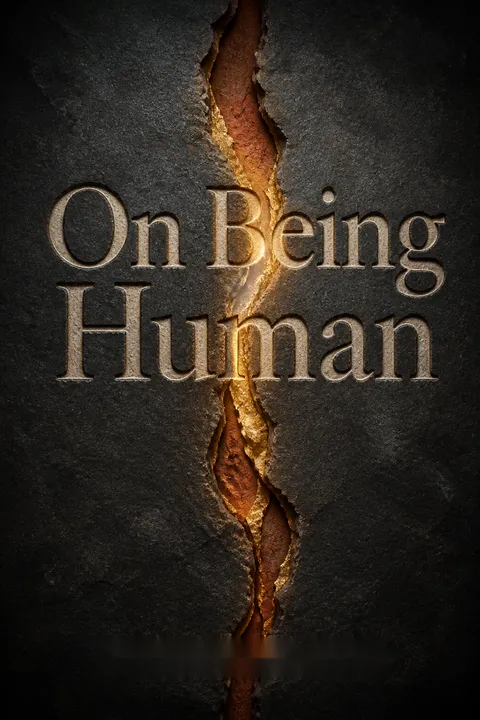
On Being Human is a collection of lectures, political interventions, reflections, and unfinished philosophical work, rather than a single argument built from a continuous narrative. Its unity comes from one recurring diagnosis: people transfer their own powers into the economic, political, and technical structures they create, then experience those structures as masters. Fromm joins social criticism to psychology, arguing that alienation is not merely a bad feeling but a pattern of institutions and character that can make people passive, anxious, and indifferent to life.
The book's most useful distinction is between having as a possessive way of organizing identity and being as active use of human capacities. That distinction prevents the critique of consumerism from collapsing into a rejection of material goods. Fromm does not oppose industry itself; he asks what industry is for and who controls it. His proposed answer combines humanistic values with practical political forms: decentralized decision-making, responsible participation, and small groups that turn critique into shared conduct.
The collection also has limits. Its broad historical account sometimes compresses distinct societies into a single arc, and its claims about prosperous societies, nationalism, or the unconscious are not all supported by systematic evidence in these texts. Its descriptions of industrial life are rooted in the Cold War era, though the central questions remain recognizable. Those limits make the book more useful as a moral and diagnostic framework than as a complete empirical theory.
Its strongest contribution is to connect personal agency with institutional design. Better intentions alone cannot repair systems that reward passivity, but structural reform without transformed habits can reproduce the same relationships under new names. Fromm's humanism demands both: institutions organized around human development, and people willing to participate rather than outsource judgment. The book asks readers to assess progress by whether it makes people more capable of reason, love, and responsible action.
Review Summary
On Being Human explores modern society's impact on humanity, criticizing consumerism, technological dependence, and alienation. Fromm advocates for a new humanism centered on love, peace, and authentic living. Readers appreciate his insights but find some sections repetitive or dated. The book combines lectures and essays, examining Marx, Eckhart, and human nature. While some find the philosophical discussions challenging, many praise Fromm's humanistic approach and its relevance to contemporary issues, inspiring reflection on personal growth and societal change.
People Also Read

Glossary
Alienation
Separation from one's powersA condition in which people experience their own abilities, work, relationships, or institutions as forces separate from and superior to themselves. In Fromm's account, people may create systems and objects, then submit to them as though those creations held the power. Alienation diminishes a person's experience of being an active subject in life.
Idolatry
Submission to created powersFromm uses idolatry to mean more than worship of a religious image. It is the act of transferring human capacities, such as love, wisdom, or strength, onto an external object, person, institution, or idea, then becoming dependent on it. Modern idols can include money, the state, a leader, or technology.
Social character
Society-shaped personality patternsThe shared character traits and motivations that a society encourages in its members. Fromm argues that social arrangements shape people so they come to want and value what helps the society function. These patterns can make social demands feel like personal desires, while discouraging traits that conflict with prevailing institutions.
Humanistic industrialism
Industry organized for human growthFromm's alternative to bureaucratic industrial society. It retains the productive capacity of modern industry but makes human development its purpose rather than maximizing profit, consumption, or organizational efficiency. It involves greater individual participation and responsibility in economic and social life, with technology treated as a means rather than a master.
Biophilia
Love of life and growthFromm's term for an orientation toward living beings, development, and the active unfolding of human capacities. In this book, biophilia is part of the progressive response to human separation and uncertainty. It contrasts with attraction to destruction or the deadened, mechanical ordering of life.
Necrophilia
Attraction to death and destructionFromm uses this term for an orientation toward death, violence, destruction, and the conversion of living processes into lifeless objects or rigid order. In this collection, the concept describes a cultural and psychological tendency, not simply a clinical diagnosis. It is the opposite of biophilia, the orientation toward life and growth.
Having and being
Possessive versus active existenceFromm's distinction between two ways of relating to life. In the having mode, identity and security depend on possessing things, status, knowledge, or even people. In the being mode, value lies in active capacities such as thinking, loving, creating, and participating. The distinction concerns one's orientation, not simply how much property one owns.
FAQ
What's "On Being Human" by Erich Fromm about?
- Exploration of Humanism: The book delves into the concept of humanism, contrasting it with modern societal issues like alienation and consumerism.
- Humanistic Alternatives: Fromm proposes a renaissance of humanism as a solution to the problems of modern man, emphasizing the importance of love, reason, and justice.
- Philosophical and Psychological Insights: It combines philosophical discourse with psychological analysis to explore the human condition and the potential for personal and societal transformation.
- Historical Context: The book places these ideas within the historical development of Western thought, from ancient times to the modern era.
Why should I read "On Being Human" by Erich Fromm?
- Understanding Humanism: It provides a comprehensive understanding of humanism and its relevance in addressing contemporary societal issues.
- Philosophical Depth: The book offers deep philosophical insights into the nature of man, society, and the potential for human growth.
- Psychological Perspective: Fromm's background in psychology adds a unique dimension to the exploration of humanism, making it relevant for those interested in both fields.
- Relevance to Modern Issues: The book addresses current problems like alienation, consumerism, and the loss of individuality, offering solutions grounded in humanistic principles.
What are the key takeaways of "On Being Human" by Erich Fromm?
- Humanistic Renaissance: Fromm advocates for a revival of humanistic values as a solution to modern societal issues.
- Critique of Modern Society: The book critiques the alienation and consumerism prevalent in contemporary society, suggesting they lead to a loss of individuality and meaning.
- Importance of Love and Reason: Fromm emphasizes the role of love, reason, and justice in achieving personal and societal well-being.
- Historical and Philosophical Context: The book situates these ideas within the broader historical and philosophical development of Western thought.
How does Erich Fromm define alienation in "On Being Human"?
- Loss of Self: Alienation is described as a condition where individuals lose their sense of self and become estranged from their own actions and creations.
- Idolatry and Transference: Fromm equates alienation with idolatry, where people transfer their own powers and qualities onto external objects or figures, leading to dependency.
- Modern Manifestations: In modern society, alienation manifests as a focus on having rather than being, where material possessions and social roles define identity.
- Psychological Impact: Alienation results in anxiety, depression, and a sense of powerlessness, as individuals feel disconnected from their true selves and others.
What is the humanistic alternative proposed by Erich Fromm in "On Being Human"?
- Revival of Humanism: Fromm calls for a renaissance of humanism, emphasizing the development of human capacities for love, reason, and justice.
- Focus on Being: He advocates for a shift from a focus on having and consuming to being and experiencing, fostering genuine human connections and creativity.
- Social and Economic Change: The humanistic alternative involves creating a society that prioritizes human well-being over material wealth and technological advancement.
- Personal Transformation: Fromm suggests that individuals must cultivate self-awareness and personal growth to contribute to a more humane society.
How does "On Being Human" address the concept of freedom?
- Freedom from and to: Fromm distinguishes between "freedom from" external constraints and "freedom to" develop one's own potential and make meaningful choices.
- Inner Liberation: True freedom involves liberating oneself from internal and external authorities, allowing for authentic self-expression and creativity.
- Social Implications: A society that fosters freedom must support individual autonomy while promoting social responsibility and cooperation.
- Role of Awareness: Awareness and understanding of one's own motivations and societal influences are crucial for achieving genuine freedom.
What are the best quotes from "On Being Human" and what do they mean?
- "Man is the measure of all things." This quote emphasizes the humanistic belief that human experience and values should be the central focus of society.
- "The less you are, the more you have." Fromm critiques the modern emphasis on material possessions, suggesting that true fulfillment comes from being rather than having.
- "Love is the main key to open the doors to the 'growth' of man." This highlights the importance of love as a transformative force in personal and societal development.
- "Freedom is the capacity to follow the voice of reason and knowledge." Fromm defines freedom as the ability to act according to one's true self, guided by reason and understanding.
How does Erich Fromm relate Meister Eckhart and Karl Marx in "On Being Human"?
- Common Themes: Fromm explores the shared themes of humanism, freedom, and the critique of materialism in the works of both thinkers.
- Atheistic Religiosity: He highlights their non-theistic approaches to spirituality and the emphasis on human potential and self-realization.
- Critique of Possession: Both Eckhart and Marx critique the focus on having and material possessions, advocating for a life centered on being and creativity.
- Philosophical Synthesis: Fromm synthesizes their ideas to propose a humanistic philosophy that addresses modern societal issues.
What role does love play in "On Being Human" by Erich Fromm?
- Transformative Force: Love is seen as a key element in personal and societal transformation, fostering genuine connections and growth.
- Beyond Possession: Fromm emphasizes love as an active, giving force, contrasting it with possessive and ego-driven relationships.
- Foundation of Humanism: Love is central to the humanistic values of empathy, compassion, and cooperation, essential for a healthy society.
- Personal Development: Cultivating love involves developing self-awareness and overcoming narcissism and selfishness.
How does "On Being Human" critique modern society?
- Alienation and Consumerism: Fromm critiques the focus on material possessions and social roles, leading to a loss of individuality and meaning.
- Technological Domination: He warns against the dehumanizing effects of technology and the reduction of human beings to mere cogs in a machine.
- Loss of Values: The book highlights the erosion of humanistic values like love, reason, and justice in favor of efficiency and profit.
- Call for Change: Fromm advocates for a shift towards a more humane society that prioritizes personal growth and genuine human connections.
What is the significance of the title "On Being Human"?
- Focus on Humanity: The title emphasizes the exploration of what it means to be truly human, beyond material possessions and societal roles.
- Humanistic Perspective: It reflects the book's focus on humanism as a solution to modern societal issues, emphasizing love, reason, and justice.
- Existential Inquiry: The title suggests an inquiry into the nature of human existence and the potential for personal and societal transformation.
- Call to Action: Fromm invites readers to reflect on their own lives and consider how they can contribute to a more humane and fulfilling society.
How does "On Being Human" address the concept of alienation?
- Definition of Alienation: Fromm defines alienation as a condition where individuals become estranged from their own actions and creations, losing their sense of self.
- Modern Manifestations: In contemporary society, alienation manifests as a focus on having rather than being, where material possessions and social roles define identity.
- Psychological Impact: Alienation results in anxiety, depression, and a sense of powerlessness, as individuals feel disconnected from their true selves and others.
- Solution through Humanism: Fromm proposes a humanistic alternative to overcome alienation, emphasizing the development of love, reason, and genuine human connections.
About the Author
Other books by Erich Fromm




Download PDF
Download EPUB
.epub digital book format is ideal for reading ebooks on phones, tablets, and e-readers.








