

Key Takeaways
Fromm reads Freud's science as a mission to reform humanity.
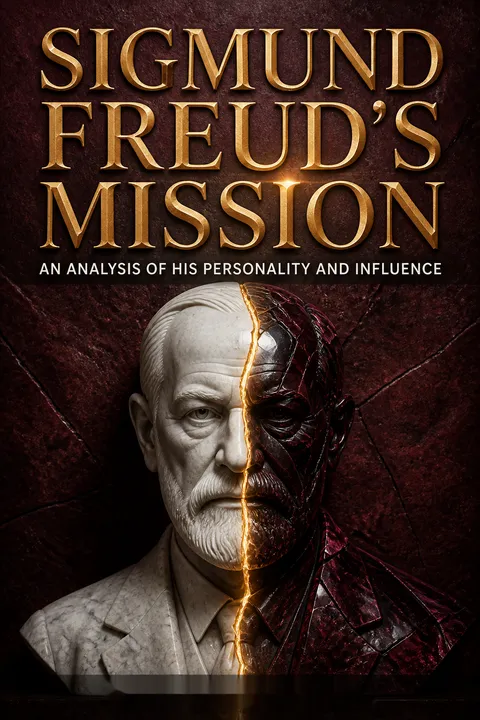
A theory with a destination. Fromm argues that Freud wanted more than to treat neurosis or explain dreams. He believed that understanding hidden motives could help reason master irrational impulses, giving humanity a route toward a more lucid life. Fromm interprets Freud's fascination with leaders such as Hannibal and Moses as signs of this reforming ambition. Freud's long-delayed visit to Rome, which Fromm reads as a symbolic conquest, fits the portrait of a thinker who imagined himself leading a historic advance.
Science becomes a cause. In this account, psychoanalysis gradually takes on the role of a movement, not just a method: it has a leader, an organized following, and a vision of human improvement. Freud publicly rejected the idea that psychoanalysis was a worldview. Fromm's central claim is that this denial concealed a deeper, partly unconscious mission.
The distinction between a research program and a movement helps explain why disagreements about theory could feel like betrayals rather than ordinary scholarly disputes. A shared mission can give difficult work energy and purpose. It can also make evidence serve loyalty. Fromm's interpretation is compelling as a way to connect Freud's biography with the institution around him, but it remains an interpretation of motive, not a fact Freud explicitly endorsed. The useful question is not whether Freud secretly wanted to save humanity, but how any scientific ambition changes when its adherents treat it as a path to salvation.
Keep courage in truth-seeking, but do not mistake certainty for reason.
Truth had a price. Fromm presents Freud's faith in reason and his willingness to endure isolation as defining strengths. Freud pursued ideas that challenged medical convention and public opinion, even when audiences ridiculed them. Fromm connects this independence to a childhood shaped by political instability and his father's loss of economic security, circumstances that could weaken trust in authority and tradition.
A split in the self. Fromm also sees a limitation in Freud's rationalism: Freud often treated feeling as an obstacle to thought. Intellectual insight, he argued, could expose the causes of suffering, but understanding a cause does not necessarily transform the feelings and habits built around it. Courage made Freud capable of resisting consensus; pride in that courage could also make him suspicious of criticism or conciliatory ideas.
Freud's example makes intellectual courage more demanding than simply holding an unpopular view. It requires tolerating uncertainty and allowing evidence to revise a cherished position. Fromm's distinction between reason and feeling also usefully resists the idea that analysis means replacing emotion with logic. Emotions can contain information, though they can also distort it. The tension is that Freud's willingness to oppose convention did not always make him more open to correction. Independence from public opinion is valuable, but it is not the same as independence from one's own convictions.
See Freud's confidence and insecurity as two sides of maternal dependence.
Admiration and anxiety. Fromm depicts Freud as the favored son of a mother whose love gave him lasting confidence. He points to a childhood incident in which Freud's discomfort with his sister's piano practice led to the instrument's removal, and to Freud's regular visits to his mother throughout adulthood. Fromm reads this closeness as a source of both self-belief and dependence on affirmation.
A different reading of childhood. Freud's Oedipus complex explains a boy's attachment to his mother primarily through sexual desire and rivalry with his father. Fromm argues that this interpretation neglects a broader longing for care, protection, and unconditional acceptance. He also links Freud's reported fear of poverty and anxiety about travel to a deeper fear of losing security. These are suggestive interpretations, not clinical conclusions that the anecdotes prove.
Fromm's reading shifts attention from sexual rivalry to the basic human need to feel safe and valued. That makes Freud's theory seem, in part, like an interpretation of a need he may not have fully recognized in himself. The move is illuminating, but biographical evidence can support more than one explanation. A child's response to a sibling, or an adult's travel habits, does not establish a hidden personality structure on its own. The strongest lesson is methodological: explanations of another person's motives should distinguish observed behavior from the story used to interpret it.
Test Freud's theories of women against the prejudices they may disguise.
A conventional blind spot. Fromm contrasts Freud's readiness to challenge sexual taboos with his traditional views of women's roles. In letters to his fiancée, Freud urged her to withdraw from competition with men and imagined her future within the home. Decades later, he still argued that equality between partners was impractical and that male superiority was the lesser problem.
Theory reflects its setting. Fromm sees Freud's claims about women's sexuality and psychology as carrying the assumptions of his patriarchal society, rather than escaping them through science. He also argues that Freud's marriage and private life suggest limited emotional intimacy, but those claims are more speculative than the documented statements about women's status. The distinction matters: a thinker can expose one culture's taboos while leaving its power arrangements intact.
This section is strongest when it compares Freud's explicit opinions with the social norms they reproduce. A theory does not become neutral simply because it uses scientific language; its categories can preserve the assumptions of its time. At the same time, Fromm's psychological conclusions about Freud's sexuality are less secure than the letters he cites. Reading the record carefully means neither excusing sexism as historical convention nor treating personal speculation as proof. The broader test applies to any theory: ask whose experience it treats as normal, and whose it explains as a deviation.
Notice when dependence turns into idealization, then rupture.
Friendship as refuge. Fromm finds a recurring pattern in Freud's relationships with Breuer, Fliess, and Jung: intense closeness followed by estrangement. Breuer had shared the clinical case of Anna O., which helped inspire psychoanalysis, and offered Freud personal and professional support. Fliess became a trusted confidant. Jung was welcomed as the movement's future leader. In each relationship, Fromm sees Freud seeking reassurance while fiercely defending his independence.
The break point. Disagreement or criticism could threaten the bond. Freud's relationship with Fliess deteriorated amid conflicts over criticism and intellectual credit; his alliance with Jung ended amid both personal and theoretical differences. Fromm interprets this pattern as dependence concealed by pride. That reading may explain some of the emotional intensity, but it should not erase the real scientific disagreements between the men.
The pattern Fromm describes is recognizable beyond Freud: a person may need admiration from others while experiencing that need as a threat to autonomy. Idealization can make a relationship feel secure until the other person becomes independent or critical. Still, the same rupture can have more than one cause. Intellectual conflict is not automatically a disguised emotional struggle, and Fromm's account risks reducing colleagues to characters in Freud's inner drama. The useful insight is to keep both levels in view: the argument about ideas, and the relationship that gives the argument its emotional force.
Rebellion against authority does not guarantee freedom from authoritarianism.
A rebel seeks the seat. Fromm distinguishes a rebel, who resists authorities that deny him recognition but may want authority for himself, from a revolutionary, who rejects domination as a principle. He places Freud in the first category. Freud challenged medical convention and valued defiance, yet also sought recognition from established institutions and expected strong loyalty from followers.
Dissent tests authority. Fromm points to Freud's response to Sandor Ferenczi, a close colleague who proposed a more openly caring therapeutic relationship. Freud warned that this approach could deepen patients' dependence, and the exchange ended coldly. Fromm also cites Freud's support for excluding analysts associated with rival views. The evidence portrays a leader who could resist external authority while restricting dissent within his own circle.
Fromm's distinction is useful because opposition alone does not tell whether a person is seeking shared freedom or a new position of control. The most revealing test is often how a leader treats disagreement from allies, not enemies. Freud's concern that a therapist might encourage dependence also deserves to be taken seriously, even if his response to Ferenczi was harsh. Authority can protect vulnerable people and maintain standards; it becomes authoritarian when its judgments cannot be questioned or revised.
Protect scientific inquiry from the rituals of a movement.
A school takes shape. Fromm argues that psychoanalysis acquired the structure of a political or religious movement. Its international association organized analysts across countries, while Freud and colleagues formed a secret committee intended to protect the discipline's future. Members of this group received rings bearing antique stones, a symbol of their close bond with Freud.
Methods harden into markers. Fromm says that practices such as the analyst sitting behind a patient, the couch, and frequent sessions could become tests of orthodoxy rather than tools open to discussion. He also describes theoretical dissent as a reason for exclusion. In his account, loyalty to Freud increasingly mattered alongside the quality of an argument. Organization can preserve a field, but it can also turn its founder's choices into rules that later practitioners are afraid to question.
Communities need shared practices, training, and boundaries; without them, a discipline cannot transmit knowledge or protect its standards. The danger begins when a useful convention becomes a badge of belonging, insulated from evaluation. Fromm's examples invite a practical test: can members explain what a procedure is meant to accomplish, and can they change it when it fails? His criticism of orthodoxy is persuasive, though the existence of hierarchy alone does not prove that a field has become a religion. The key issue is whether authority remains answerable to evidence.
Read Freud's psychology as carrying nineteenth-century middle-class assumptions.
The social model beneath the mind. Fromm argues that Freud often pictured people as isolated individuals driven by competing desires. Freud's account of aggression and competition, and his view of love as a limited resource, resemble a society organized around scarcity and exchange. Fromm also compares Freud's idea of sublimation, in which frustrated instincts are redirected into cultural work, to a middle-class ideal of saving and accumulating.
Politics revealed limits. Freud's early socialist sympathies did not, in Fromm's view, lead him beyond the assumptions of his class. Freud initially responded to the First World War with patriotic enthusiasm, later became strongly opposed to war, and remained skeptical that most people could govern themselves without an elite. Fromm treats these tensions as evidence that a theory of the mind can carry political assumptions even when it presents itself as universal.
Fromm's social reading adds an important question to psychological explanation: are these drives features of human nature, or are they descriptions shaped by a particular society? His comparison between psychic energy and economic scarcity makes Freud's model easier to inspect. But resemblance is not proof of direct influence, and a theory can describe competitive behavior without endorsing it. The productive approach is to test the boundary between universal claim and historical setting. Psychological models become more credible when they explain both recurring human needs and the ways institutions shape their expression.
Analyze society's blind spots alongside the individual's unconscious.
Repression is social, too. Freud's work exposed thoughts and motives that people may not consciously recognize. Fromm argues that this insight should also be applied to shared beliefs. People can push away ideas and feelings that conflict with the assumptions of their society, partly because isolation and rejection are frightening. Fromm calls attention to this neglected social dimension of the unconscious.
Private insight needs context. If an analyst studies only an individual's desires, Fromm warns, the analyst may miss the social rules shaping what that person can admit or imagine. He contrasts psychoanalysis, which he says often neglected social forces, with forms of social theory that neglected individual motives. Neither level is sufficient alone. Understanding a person's inner life requires asking what the surrounding culture makes difficult to see.
This is one of Fromm's most expansive arguments: the hidden life is not only personal, because people learn what is thinkable and respectable in a social world. It connects clinical interpretation to questions about institutions, class, and shared norms without reducing every private conflict to politics. The challenge is to avoid making social context an all-purpose explanation. A careful account should show how a specific norm shapes a specific person's experience, rather than assuming that social influence explains every silence or symptom.
Keep Freud's discovery, but treat his system as revisable.
A lasting disruption. Fromm credits Freud with making the unconscious central to modern thought, including its role in dreams, symptoms, character, and cultural expression. Freud's work also challenged the idea that conscious reason fully governs human behavior. Fromm sees him as joining two traditions: the rationalist effort to understand reality, and the romantic interest in forces beneath conscious control.
A discovery is not a creed. Fromm argues that psychoanalysis lost vitality when followers defended Freud's theories as settled truth and confined analysis too narrowly to individual sexual motives. The lasting contribution is therefore not that Freud answered every question, but that he made self-deception and hidden motivation impossible to ignore. His theories remain most useful when their claims can be tested, criticized, and expanded to include social life.
The book's most balanced conclusion separates Freud's achievement from the institution built around him. A field can owe its central questions to a founder without treating that founder as the final authority. Fromm's portrait also models an important tension: intellectual courage can produce discoveries while personal needs and historical assumptions shape their limits. The same standard should apply to Fromm. His account is a provocative interpretation, not a transparent window into Freud's unconscious. Its value lies in the questions it opens, provided those questions remain open to scrutiny.
Analysis
Fromm's book is both a psychological portrait and an argument about how ideas become institutions. Its central move is to read Freud's character, theories, and movement together: the pursuit of truth reflects genuine courage, while the need for affirmation and authority helps explain the emotional charge surrounding discipleship and dissent. Fromm then widens the lens, arguing that Freud's picture of human nature carries the assumptions of his social class and that psychoanalysis cannot understand private repression while overlooking the pressures of society.
This approach is powerful because it refuses two easy portraits, the flawless founder and the fraudulent charlatan. Freud can be intellectually daring and personally controlling, insightful about hidden motives and limited by the assumptions he inherited. Fromm's best contribution is not a final diagnosis of Freud, but a method of asking how a thinker's biography and social setting might shape a theory that claims universal reach.
The method also has a serious vulnerability. Fromm often moves from anecdotes, dreams, and letters to claims about unconscious motives. Such interpretations can be illuminating, but they are difficult to verify and can become circular: behavior is treated as evidence for a theory, while any disagreement with the theory is treated as resistance. The text itself supplies reasons to be cautious, since Freud's documented statements are stronger evidence than conclusions about hidden emotional causes. Fromm's own conviction that psychoanalysis had become dogmatic makes this methodological tension especially important.
The book is most valuable when read as a challenge to intellectual self-exemption. A discipline that studies self-deception must also inspect its own authority, social assumptions, and habits of loyalty. Freud's discoveries survive that scrutiny not by being protected from criticism, but by remaining questions that can be examined from both individual and social perspectives.
Review Summary
Readers find Sigmund Freud's Mission to be a compelling psychoanalysis of Freud himself, offering insight into his character and the psychoanalytic movement. Fromm is praised for his balanced approach, highlighting both Freud's genius and his flaws. The book explores Freud's relationships, his authoritarian tendencies, and how his personal life influenced his theories. Many reviewers appreciate Fromm's attempt to humanize Freud, moving away from both idolization and demonization. The translation is noted as smooth and accessible, making complex ideas understandable.
People Also Read







Glossary
Oedipus complex
Child's parental rivalryFreud's theory that a young boy feels sexual desire for his mother and rivalry toward his father. Fromm argues that this account narrows a broader attachment to the mother, including the child's need for care, protection, and unconditional acceptance, into an explanation centered on sexual desire.
oral-receptive person
Security through receivingFromm's character description for a person whose sense of security depends on receiving care, love, protection, or admiration. He uses it to interpret Freud's fear of hunger and poverty, and his reported dependence on reassurance. In this book, it is a psychoanalytic interpretation of character, not a neutral or independently established diagnosis.
sublimation
Redirected instinctual energyIn Freud's theory, the process by which instinctual desires that are not directly satisfied are redirected into other activities, including cultural or intellectual work. Fromm criticizes Freud's account for treating cultural achievement as the product of frustrated desire, and compares that model to a middle-class ideal of saving and accumulating.
Id
Unconscious instinctual drivesIn Freud's structural model of the mind, the Id is the domain of instinctual wishes and impulses, much of it unconscious. Fromm highlights Freud's description of psychoanalysis as helping the Ego gain control over the Id, and interprets this aim as part of a wider ethical mission to bring passion under reason.
social unconscious
Shared, socially repressed awarenessFromm's term for thoughts, feelings, or perceptions that people in a society fail to recognize because they conflict with shared assumptions and norms. He argues that fear of isolation can help keep such material out of awareness, and that understanding individuals therefore requires examining the society in which they live.
quasi-political character
Movement-like organizationFromm's description of psychoanalysis as more than a therapy or scientific theory. He argues that it developed features associated with political or religious movements, including a central leader, international organization, rules of membership, disputes over orthodoxy, and efforts to protect a founding doctrine.
rebel
Opponent seeking authorityFromm uses this term for someone who fights existing authorities, especially those that refuse recognition, while still wanting authority or control for himself. He contrasts the rebel with a revolutionary, who seeks independence from domination and from the desire to dominate others.
revolutionary
Freedom from dominationIn Fromm's distinction, a revolutionary is not merely someone who opposes the current holders of power. The term describes a person who has overcome dependence on authority and the wish to control others. Fromm argues that Freud was a rebel, rather than a revolutionary, because he resisted authorities but also sought leadership and loyalty.
FAQ
1. What is "Sigmund Freud’s Mission" by Erich Fromm about?
- In-depth analysis of Freud: The book is a psychological and biographical analysis of Sigmund Freud, focusing on his personality, motivations, and the impact these had on the development of psychoanalysis.
- Exploration of Freud’s mission: Fromm examines Freud’s self-perceived mission to liberate humanity through reason and psychoanalytic insight, likening it to a secular, scientific religion.
- Critique of psychoanalytic movement: The book also critiques the quasi-religious, authoritarian, and political nature of the psychoanalytic movement Freud founded.
- Contextual and historical approach: Fromm situates Freud within the intellectual, social, and political context of his time, exploring how these influenced his theories and leadership style.
2. Why should I read "Sigmund Freud’s Mission" by Erich Fromm?
- Unique psychoanalytic perspective: Fromm, himself a psychoanalyst, offers a critical yet empathetic view of Freud, going beyond hagiography or vilification.
- Understanding Freud’s influence: The book helps readers grasp how Freud’s personal traits shaped not only psychoanalysis but also its institutional culture and legacy.
- Insight into intellectual history: It provides a window into the intellectual currents of the late 19th and early 20th centuries, including rationalism, enlightenment, and the rise of scientific movements.
- Relevance to modern psychology: Fromm’s analysis raises questions about the nature of scientific movements, authority, and the relationship between personal psychology and public mission.
3. What are the key takeaways from "Sigmund Freud’s Mission" by Erich Fromm?
- Freud’s passion for truth: Freud’s relentless pursuit of truth and reason was both his greatest strength and a source of personal isolation.
- Authoritarianism and dependency: Freud’s need for admiration and affirmation led to authoritarian tendencies and dependent relationships with followers.
- Psychoanalysis as a movement: The psychoanalytic movement took on quasi-religious and political characteristics, with rituals, dogma, and a hierarchy.
- Freud’s personal contradictions: Freud’s theories often reflected his own emotional needs and limitations, especially regarding love, authority, and sexuality.
4. How does Erich Fromm analyze Freud’s personality in "Sigmund Freud’s Mission"?
- Passion for reason and truth: Fromm highlights Freud’s unwavering faith in reason and his courage to pursue truth despite opposition.
- Emotional insecurity: Freud’s deep need for motherly love and affirmation led to both self-confidence and profound insecurity.
- Ambivalence toward authority: Freud rebelled against authority figures but also sought to become an authority himself, leading to complex relationships with colleagues.
- Limited capacity for love: Fromm argues that Freud’s relationships, both personal and professional, were marked by emotional distance and a lack of genuine love.
5. What does "Sigmund Freud’s Mission" by Erich Fromm say about Freud’s relationship with his mother and its impact?
- Centrality of mother’s love: Freud’s mother was a dominant, admiring figure, making him the favored son and instilling deep self-confidence.
- Dependency and insecurity: This attachment also fostered dependency and anxiety, especially when unconditional love was not forthcoming.
- Basis for Oedipus complex: Fromm suggests Freud’s own intense, repressed attachment to his mother influenced his formulation of the Oedipus complex.
- Impact on adult relationships: Freud’s need for motherly affirmation was transferred to his wife, colleagues, and followers, shaping his interactions and leadership style.
6. How does Erich Fromm interpret Freud’s views on love, women, and sexuality in "Sigmund Freud’s Mission"?
- Jealous and controlling lover: Freud’s early relationship with his wife was marked by intense jealousy and a need for control.
- Patriarchal attitudes: Freud held conventional, patriarchal views on women’s roles, seeing them as subordinate and less capable than men.
- Limited erotic passion: Fromm argues Freud’s own sexual drive was relatively weak, and his theories about sexuality often rationalized his personal limitations.
- Lack of understanding of women: Freud admitted to not understanding women, and his theories reflected male-centric biases and anxieties.
7. What does "Sigmund Freud’s Mission" by Erich Fromm reveal about Freud’s relationships with men and his followers?
- Pattern of dependency and rupture: Freud formed intense, dependent relationships with male colleagues (Breuer, Fliess, Jung), which often ended in dramatic breaks.
- Need for affirmation: He sought admiration and loyalty from his followers, reacting with hostility to criticism or perceived betrayal.
- Authoritarian leadership: Freud’s leadership style was hierarchical and intolerant of dissent, fostering a quasi-religious devotion among loyal disciples.
- Emotional ambivalence: These relationships were marked by a mix of dependency, pride, and eventual rejection, reflecting Freud’s inner conflicts.
8. How does "Sigmund Freud’s Mission" by Erich Fromm critique the psychoanalytic movement and its structure?
- Quasi-political organization: Fromm describes the psychoanalytic movement as resembling a political or religious sect, with secret committees, rituals, and purges.
- Dogmatism and ritual: The movement became dogmatic, with strict adherence to Freud’s theories and ritualized practices (e.g., the couch, analyst’s silence).
- Suppression of dissent: Dissenters were marginalized or expelled, and innovation was stifled in favor of orthodoxy.
- Movement as surrogate religion: For many followers, psychoanalysis became a substitute for religious or political commitment, providing meaning and community.
9. What are the main criticisms Erich Fromm raises about Freud’s theories and their social context in "Sigmund Freud’s Mission"?
- Middle-class worldview: Freud’s theories reflected the values and anxieties of the 19th-century bourgeoisie, emphasizing self-control, competition, and individualism.
- Economic metaphors: Concepts like libido were treated as fixed quantities, mirroring economic ideas of capital and property.
- Limited social critique: Freud’s focus on individual psychology neglected broader social and political factors influencing human behavior.
- Rationalization of personal limitations: Fromm suggests Freud’s theories often served to rationalize his own emotional and sexual inhibitions.
10. How does "Sigmund Freud’s Mission" by Erich Fromm address Freud’s religious and political beliefs?
- Atheism and rationalism: Freud saw religion as an illusion rooted in the longing for a protective father figure, advocating for reason and self-reliance.
- Early liberal/socialist sympathies: Freud was influenced by liberal and possibly socialist ideas in his youth, but his mature outlook remained conservative and elitist.
- Pessimism about democracy: Freud doubted the capacity of the masses for self-governance, favoring leadership by a rational, self-controlled elite.
- Ambivalence toward war: Freud’s initial enthusiasm for World War I reflected his identification with authority and nation, though he later became more pacifist.
11. What are the best quotes from "Sigmund Freud’s Mission" by Erich Fromm and what do they mean?
- “Freud was a rebel and not a revolutionary.” – Fromm distinguishes between challenging authority to become an authority oneself (rebel) and truly overcoming the need for authority (revolutionary).
- “Psychoanalysis is the instrument destined for the progressive conquest of the Id.” – This encapsulates Freud’s mission to use reason to master irrational drives.
- “The psychoanalytic movement was conceived as, and developed further into, a quasi-religious movement based on psychological theory and implemented by a psychotherapy.” – Fromm critiques the transformation of psychoanalysis into a dogmatic, ritualized movement.
- “He wants to show man a promised land of reason and harmony, and yet he can only visualize it from afar.” – Fromm likens Freud to Moses, leading others toward an ideal he himself cannot reach.
12. How does "Sigmund Freud’s Mission" by Erich Fromm assess Freud’s legacy and historical significance?
- Synthesis of rationalism and romanticism: Freud’s work combined the rationalist quest for truth with the romantic exploration of the unconscious.
- Last great rationalist: Fromm sees Freud as the final major figure in the tradition of Western rationalism, whose mission was ultimately undermined by the rise of irrational forces in the 20th century.
- Enduring influence: Despite the movement’s dogmatism, Freud’s discoveries about the unconscious, childhood, and human motivation remain foundational for psychology and Western thought.
- Tragic figure: Freud’s life and mission are portrayed as tragic—marked by great achievements, personal limitations, and the inability to realize his vision of a rational, harmonious humanity.
About the Author







Download PDF
Download EPUB
.epub digital book format is ideal for reading ebooks on phones, tablets, and e-readers.








