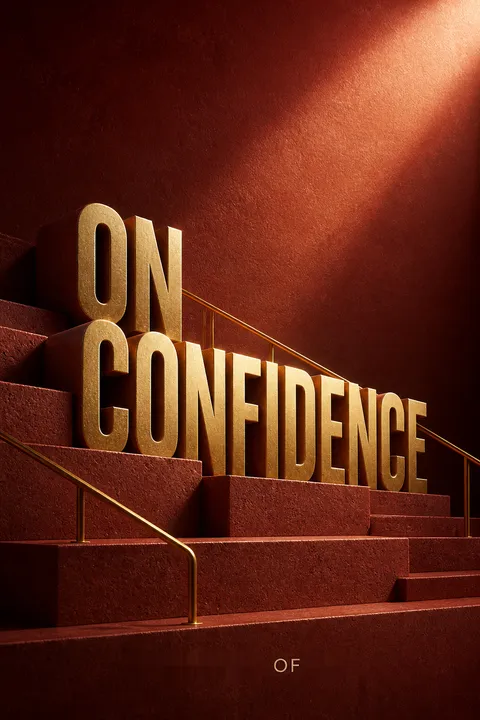


Key Takeaways
Treat confidence as a learnable practice, not a personality lottery
Confidence can be learned. People spend years building skill in technical subjects, yet often assume that confidence in social or professional situations is an inborn trait. This book argues that confidence is a capacity shaped by ideas: what failure means, how authority should be judged, and whether the world is open to change. Those assumptions can be examined and revised, rather than accepted as fate.
Act before feeling certain. The point is not to become fearless or to guarantee success. It is to loosen the beliefs that make ordinary risks feel forbidden, so that ability has a chance to become action. Asking for help, pursuing a role, or approaching someone may still feel uncomfortable, but discomfort need not be proof that the attempt is wrong.
What's useful here is the separation of confidence from temperament. It makes confidence less mysterious and gives readers something to work on: their interpretations of risk, status, and failure. This also suggests a practical test. Instead of asking whether someone feels confident, ask whether they can act while uncertainty remains. Confidence is not expertise, and treating it as a skill should not excuse poor preparation. The strongest version pairs willingness to act with honest feedback, so confidence opens the door without pretending to know what lies beyond it.
Risk looking foolish; dignity is a worse cage than failure
Embarrassment keeps people small. Many missed opportunities begin with the wish to preserve a respectable image: not asking directions, not applying for a promotion, or not expressing romantic interest for fear of seeming ridiculous. The book turns to Erasmus's 1509 essay In Praise of Folly and Pieter Bruegel's painting Dutch Proverbs, where foolishness is not confined to a few outlandish people. It is part of ordinary human nature, including the nature of the learned and admired.
Make room for mistakes. If everyone is fallible, one more awkward moment does not reveal an exceptional defect. The book even recommends a daily reminder of one's own capacity for foolishness. The point is not to celebrate incompetence, but to remove the fantasy that a good life can be lived without ever looking silly.
This is a sharp way to reduce the imagined stakes of embarrassment. Social anxiety often treats a small public mistake as a permanent identity claim, while the book reframes it as an ordinary human event. The move is especially helpful because it does not depend on convincing oneself of special talent or worth. Its limit is that some environments punish mistakes more than others. Accepting fallibility can steady a person, but it cannot by itself make an unfair workplace or hostile community safe.
Assume the impressive are anxious humans, not another species
Status hides the backstage. Impostor syndrome is the sense that one has entered a role meant for more capable people, and will soon be exposed as a fraud. The book traces part of this feeling to childhood, when adults appear to belong to a separate world of authority and competence. That impression persists because people know their own doubts from the inside, while seeing others mainly through their polished public behavior.
Imagine the private person. The book draws on Montaigne's reminders that rulers and thinkers share ordinary bodily needs, and on the perspective of people who knew powerful figures personally. A decorated admiral might look heroic to outsiders, but familiar to those who have seen his debts, clumsiness, and old embarrassments. Those flaws do not bar someone from responsibility. They are part of being human in any role.
The insight rests on an information imbalance: the self is experienced as a stream of doubts, while other people arrive as edited performances. Imagining the hidden person behind status corrects that imbalance and makes authority less supernatural. It can also improve judgment by encouraging curiosity about how decisions are made, rather than deference to a title. Still, shared vulnerability does not mean equal competence or equal power. Humanizing an executive or expert can reduce intimidation without erasing the real consequences of their choices.
Treat institutional rejection as evidence, not a final verdict
Systems are not infallible parents. A manager may reject a proposal with a vague explanation; an adviser may dismiss a product idea; a salesperson may insist that an old phone is unusable. People often absorb these judgments as if they came from a wise, caring authority. The book argues that this trust can be a residue of childhood, when adults sometimes did know more and acted in a child's interests.
Separate ideals from institutions. Augustine's City of God names an imagined realm of perfectly wise and benevolent institutions. The City of Man describes actual human systems, which can be indifferent, careless, or self-serving as well as well-intentioned. This distinction makes a rejection worth considering, but not automatically correct. A decision can reflect bad timing, habit, or limited attention rather than the true value of an idea.
The distinction between ideal institutions and actual ones helps explain why a formal decision can feel more authoritative than its reasoning deserves. It encourages a useful middle position: neither automatic compliance nor reflexive cynicism. A rejected proposal still contains information, but its value depends on the quality of the process and the reasons offered. The book's argument is strongest when it prompts a second look or another source of advice. It is weaker if fallibility becomes a reason to disregard expertise that has earned trust.
The present is unfinished history, so challenge what looks inevitable
The status quo has a short memory. Familiar institutions and customs can seem permanent, especially to someone who has known them only as they are. The book argues that this feeling shrinks ambition: a new business, artistic approach, or social idea can seem impossible simply because it does not yet exist.
Look across time. From a wider historical view, ways of governing, working, worshipping, and living have repeatedly changed. The book uses T.S. Eliot's poem about a quiet English chapel to make a startling point: history is not only a finished record of past upheavals. It is happening in the present, even in places that seem settled. Today's arrangements are often the result of accident and choice, not laws of nature. That means people can take part in changing them, on large or modest scales.
Historical perspective can loosen the grip of inevitability. It changes the question from whether a current arrangement can be imagined differently to how it came to feel unquestionable. That shift is valuable for personal choices and public institutions alike. The argument needs one qualification: contingency does not mean every person has equal power to alter events. Resources, laws, and existing authority constrain action. Recognizing those constraints makes the invitation more useful, not less. It helps distinguish a genuinely difficult change from one that only feels impossible because it is unfamiliar.
Expect struggle; polished success hides the work that made it possible
Difficulty is part of the route. People often interpret early setbacks as proof that they lack talent, partly because successful work is presented as smooth and effortless. A comedian's apparent spontaneity, for instance, may conceal years of rehearsal. Audiences see the finished performance, not the discarded versions and anxious decisions behind it.
Prepare for the rough parts. The book contrasts this concealment with the ancient Greek Temple of Aphaia on Aegina, whose warrior sculptures showed the dangers and confusion of battle. The images presented hardship as part of a serious vocation, not an embarrassing exception. A realistic account of work would similarly include rejected ideas, lonely travel, failed plans, and worry. When difficulty is expected, a setback can look like a normal stage of effort rather than proof that the whole ambition is misplaced.
This argument identifies a hidden cost of polished success stories: they distort the map available to beginners. Seeing only the finished result encourages people to compare their messy process with someone else's edited outcome. More candid accounts can normalize revision and make persistence feel less like personal failure. But realism alone does not teach technique, and some obstacles reflect poor conditions rather than a necessary path to mastery. A good account should help readers tell the difference between productive struggle and avoidable harm.
Compare the cost of acting with the cost of letting life pass
Inaction has consequences too. People may postpone ending a relationship, pursuing a new one, changing careers, or moving toward a life they want because every action carries risk. The book points out that delay is not a risk-free alternative. A person may lose years waiting for a safer moment that never arrives.
Remember the limited time. Mortality is easy to treat as an abstract fact, so the book turns to the Vanitas tradition in art, which uses reminders such as skulls to emphasize life's brevity. A painting by Frans Hals shows a young man holding a skull, making time's limit impossible to ignore. Regular reminders of death are proposed not to induce panic, but to correct the tendency to exaggerate the danger of embarrassment or regret while discounting the cost of never trying.
Mortality changes the arithmetic of caution. It puts the pain of a failed attempt beside the less visible loss of opportunities never pursued. This resembles a decision-making principle: assess the downside of inaction, not only the risks of action. The approach works best as a prompt for reflection, not as a command to make dramatic changes quickly. Fear of wasting life can itself become coercive. A considered choice may include patience, especially when other people depend on the decision or the practical risks are substantial.
Let hostility describe a critic's opinion, not your right to exist
An enemy is not an impartial judge. Hostility can feel devastating when a person's self-respect depends heavily on public approval. The book links this vulnerability to conditional affection: a child who feels loved mainly when successful may grow into an adult who experiences criticism as evidence of personal unworthiness. Yet reviewers, colleagues, and online strangers can be mistaken, resentful, or poorly informed.
Stay steady in the storm. The book compares attacks to violent seas in Dutch paintings of ships. A vessel can look close to disaster while remaining seaworthy because its design and crew are prepared. The parallel is not that criticism should be ignored. Genuine flaws can be corrected. The task is to separate useful criticism of an action from a sweeping judgment of a person's value, and to remember that anger may arise from motives unrelated to its target.
The separation between criticism and identity is psychologically important because it preserves the possibility of learning without turning every error into a verdict on the whole self. The storm image also makes resilience an organized capacity, not a pose of invulnerability. A practical extension is to inspect the critic's evidence, expertise, and incentives before deciding what to absorb. The book rightly warns against giving every hostile voice authority. Its caution is that an unpleasant critic can still be correct about a specific mistake, so emotional distance should make evaluation clearer, not eliminate it.
When success scares you, ask what old fear it is protecting
Self-sabotage is a retreat from desired success. Someone may provoke a valued partner, behave recklessly after a strong presentation, or otherwise damage an opportunity they wanted. The book describes several possible fears beneath this pattern. Success may seem likely to make loved ones feel left behind; hope may feel dangerous after earlier disappointments; or a person may believe that a new role or loving relationship belongs to someone more deserving.
Address the fear, not the opportunity. The proposed response is to notice the pattern and ask what success seems to threaten. Reassurance can matter when a person fears abandoning a caregiver. Past disappointment may need to be understood rather than allowed to dictate every new risk. And apparent undeservingness should be questioned: good fortune and misfortune are not allocated according to a person's moral worth.
This account makes self-defeating behavior intelligible without treating it as a lack of desire or character. It asks what psychological cost a success appears to carry: separation, renewed disappointment, or exposure as undeserving. That question can create room for a less destructive response. The explanation should remain a hypothesis, not a diagnosis. Similar behavior can arise from immediate conflict, poor planning, or pressures not described here. Curiosity about the fear is valuable, but it should be paired with attention to the concrete consequences of the behavior.
Keep confidence kind; self-assertion is not the same as arrogance
Meekness can disguise fear. Some people associate confidence with the loud, demanding person who complains in public or insists that others accommodate them. Religious suspicion of pride and political suspicion of economic success can reinforce the idea that moral goodness requires avoiding self-assertion. The book argues that this confuses confidence with bad manners, selfishness, or cruelty.
Let good qualities become active. A person may be kind, intelligent, and thoughtful, yet fail to bring those qualities into the world because making a request or taking responsibility feels morally suspect. Confidence, in this account, is the ability to act on one's abilities. It can coexist with generosity, tact, and quietness. The useful question is not whether someone asserts themselves, but whether they do so with regard for other people.
This closing distinction matters because confidence is often judged by its most obnoxious examples. Separating assertiveness from entitlement makes room for forms of confidence that are calm, cooperative, and ethically serious. It also exposes a possible defense: modesty can protect a person from the risk of being evaluated while appearing virtuous. Still, confidence is not automatically benevolent. It can amplify good judgment or bad judgment. The book's strongest implication is that self-assertion needs moral direction, while kindness needs enough confidence to become action.
Analysis
On Confidence is best understood as a work of emotional philosophy rather than a step-by-step training manual. Its central claim is that hesitation often comes from mistaken assumptions about human nature: that others are more dignified, institutions more reliable, history more settled, and failure more exceptional than they really are. The book repeatedly lowers these imagined barriers by humanizing authority, normalizing foolishness, and making the costs of delay visible.
Its strongest feature is the way it turns cultural objects into psychological tools. Erasmus and Bruegel make fallibility funny; Augustine offers a vocabulary for institutional disappointment; Eliot makes the present feel historically alive; temple sculpture and maritime paintings make hardship and danger more legible. These are not decorative references. They widen the reader's model of what ordinary life contains, which is precisely the kind of knowledge confidence requires.
The argument is also coherent across apparently separate topics. Fear of looking foolish, impostor feelings, deference to systems, and sensitivity to enemies all share a dependence on imagined authority. The proposed remedy is not simply self-belief. It is a more realistic picture of other people and a less fragile link between external approval and personal worth.
The main limitation is explanatory reach. Childhood experiences and hidden fears can illuminate hesitation, but not every pause is a psychological defense. Sometimes caution reflects genuine danger, unequal power, limited resources, or sound judgment. The book is most persuasive when it encourages readers to question the story attached to fear, rather than to dismiss fear itself. Its practical value lies in making action thinkable: not by promising success, but by removing the illusion that confidence requires perfection, certainty, or universal approval.
Review Summary
On Confidence receives mostly positive reviews for its concise yet insightful exploration of self-confidence. Readers appreciate its accessible language, relatable examples, and philosophical approach. Many find the book's perspectives on universal human experiences comforting. Some criticize the lack of practical solutions or depth. The book's short length is seen as both a strength and weakness. Readers generally recommend it for those seeking a thoughtful reflection on confidence rather than a self-help guide.
People Also Read








Glossary
Impostor syndrome
Feeling unfit for successA sense that a person is not genuinely qualified for a role or achievement, and will eventually be exposed as an impostor. The book attributes this feeling partly to seeing others only through their public appearance while experiencing one's own doubts and flaws from within. Its proposed correction is to recognize that powerful and accomplished people share ordinary vulnerabilities.
City of God
Ideal human institutionsAugustine's name, as presented in the book, for an imagined realm in which institutions are fully wise, benevolent, and aligned with human hopes. It serves as a contrast to the imperfect institutions people actually encounter. The concept helps explain why real organizations can disappoint without proving that a rejected idea or its proposer is inherently mistaken.
City of Man
Imperfect actual institutionsAugustine's name for the worldly institutions people actually build and inhabit. Such institutions may be well-intentioned, but they can also be careless, lazy, corrupt, or indifferent. The term challenges the assumption that a formal decision automatically reflects mature, impartial judgment, while leaving room for institutions to sometimes act wisely.
Vanitas
Art reminding viewers of mortalityA tradition in art that uses reminders of death and life's brevity, often including a skull, to make mortality visible. In the book, Vanitas images counter the habit of living as though there will always be time to act. Their intended force is to clarify priorities, not simply to create despair.
Self-sabotage
Undermining desired successBehavior that damages a person's chances of reaching something they consciously want, such as a loving relationship or professional advancement. The book describes possible motives including fear of outshining loved ones, fear of renewed disappointment, and a belief that success is undeserved. Recognizing the pattern can shift attention from self-blame to the fear or conflict driving it.
FAQ
What's "On Confidence" about?
- Exploration of Confidence: "On Confidence" by The School of Life explores the concept of confidence as a skill rather than an innate trait. It argues that confidence can be learned and developed through understanding certain ideas about the world and our place in it.
- Broad Application: The book emphasizes the importance of acquiring a versatile form of confidence that can be applied across various life situations, from social interactions to professional challenges.
- Overcoming Hesitancy: It addresses the roots of excessive hesitancy and compliance, suggesting that these can be overcome by systematically studying and learning confidence.
- Cultural Insights: The book also draws on cultural and historical references to illustrate how confidence has been perceived and can be cultivated.
Why should I read "On Confidence"?
- Practical Guidance: The book offers practical advice on how to build and maintain confidence in everyday life, making it a useful read for anyone looking to improve their self-assurance.
- Cultural and Historical Context: It provides insights into how confidence has been viewed historically and culturally, enriching the reader's understanding of the concept.
- Relatable Examples: Through relatable examples and anecdotes, the book helps readers see the commonality of confidence issues and how they can be addressed.
- Empowerment: Reading this book can empower individuals to take control of their confidence levels and apply them to achieve personal and professional goals.
What are the key takeaways of "On Confidence"?
- Confidence as a Skill: Confidence is not an innate gift but a skill that can be learned and developed through practice and understanding.
- Embrace Ridiculousness: Accepting one's own foolishness and the inevitability of making mistakes can lead to greater confidence.
- Impostor Syndrome: Understanding that feelings of being an impostor are common and that others are just as flawed can help overcome these feelings.
- Historical Perspective: Recognizing that history is ongoing and that individuals can be agents of change can boost confidence in one's ability to make a difference.
How does "On Confidence" address Impostor Syndrome?
- Common Experience: The book explains that impostor syndrome is a common experience, rooted in a misunderstanding of what successful people are really like.
- Childhood Roots: It suggests that the syndrome often begins in childhood, where children see adults as fundamentally different and more competent.
- Universal Flaws: By recognizing that everyone has flaws and vulnerabilities, individuals can begin to see themselves as capable and deserving of success.
- Leap of Faith: The solution involves making a leap of faith to believe that others are as anxious and uncertain as we are, which can humanize the world and reduce feelings of being an impostor.
What does "On Confidence" say about self-sabotage?
- Fear of Success: The book discusses how fear of success can lead to self-sabotage, as individuals may unconsciously ruin their chances to protect themselves or others.
- Hope and Disappointment: It highlights how past disappointments can create a fear of hope, leading to self-sabotage as a way to avoid potential future pain.
- Modesty and Deservingness: Some may sabotage themselves out of a sense of not deserving success, misunderstanding the randomness of fate.
- Overcoming Self-Sabotage: The book suggests understanding the roots of self-sabotage and reassuring oneself and others of their value to overcome these tendencies.
How does "On Confidence" suggest we deal with enemies?
- Understanding Enemies: The book suggests that enemies can be a source of underconfidence, as their judgments can deeply affect our self-perception.
- Parental Influence: It explores how parental attitudes towards external validation can shape our reactions to enemies.
- Skepticism of Judgments: Developing a healthy skepticism towards the judgments of others can help mitigate the impact of enemies.
- Resilience: By recognizing that enemies often reflect their own issues rather than our worth, we can build resilience and maintain confidence.
What role does history play in "On Confidence"?
- History as Ongoing: The book argues that confident people see history as ongoing and believe they can be part of shaping it.
- Challenging the Status Quo: It encourages readers to challenge the status quo and imagine alternatives, as history is constantly being made.
- Perspective on Change: By studying history, individuals can gain perspective on the constant nature of change and their potential role in it.
- Empowerment Through History: Understanding that the present is as malleable as the past can empower individuals to take confident actions.
How does "On Confidence" view the concept of death?
- Motivation Through Mortality: The book suggests that awareness of mortality can motivate individuals to take action and avoid wasting their lives.
- Fear of Inaction: It highlights the dangers of inaction and the importance of recognizing the finite nature of life.
- Cultural Reminders: The book advocates for cultural reminders of mortality to keep individuals focused on living meaningful lives.
- Balancing Risks: By understanding the inevitability of death, individuals can balance the risks of action against the greater risk of inaction.
What does "On Confidence" say about trust in the system?
- Questioning Authority: The book encourages readers to question the judgments of systems and authorities, which are often flawed.
- Childhood Trust: It explores how childhood experiences of trusting authority figures can lead to misplaced trust in adult systems.
- City of Man vs. City of God: Drawing on St. Augustine's ideas, the book contrasts ideal systems with the flawed reality of human institutions.
- Empowerment Through Skepticism: By recognizing the limitations of systems, individuals can empower themselves to pursue their ideas confidently.
How does "On Confidence" address the fear of looking foolish?
- Embrace Foolishness: The book suggests that accepting one's own foolishness can lead to greater confidence and willingness to take risks.
- Cultural References: It uses cultural references, such as Erasmus's "In Praise of Folly," to illustrate the universality of human foolishness.
- Normalizing Mistakes: By normalizing mistakes and blunders, individuals can reduce the fear of looking foolish and increase their confidence.
- Freedom to Try: Accepting the inevitability of failure can free individuals to try new things and seize opportunities.
What are the best quotes from "On Confidence" and what do they mean?
- "Confidence is a skill, not a gift from the gods." This quote emphasizes that confidence can be learned and developed, rather than being an innate trait.
- "We are idiots now, we have been idiots in the past, and we will be idiots again in the future – and that’s OK." It highlights the importance of accepting one's own foolishness as a path to greater confidence.
- "History is now and England." This quote from T.S. Eliot, used in the book, underscores the idea that history is ongoing and that individuals can be agents of change.
- "Kings and philosophers shit and so do ladies." Quoting Montaigne, the book uses this to illustrate the commonality of human experiences and the flaws of even the most esteemed individuals.
What is the overall message of "On Confidence"?
- Confidence as Learnable: The book's overall message is that confidence is a learnable skill that can be developed through understanding and practice.
- Acceptance of Flaws: It encourages acceptance of one's own flaws and mistakes as a means to build confidence.
- Challenge the Status Quo: The book advocates for challenging the status quo and recognizing the potential for change in the present.
- Empowerment and Action: Ultimately, it seeks to empower individuals to take confident actions in their personal and professional lives.
Download PDF
Download EPUB
.epub digital book format is ideal for reading ebooks on phones, tablets, and e-readers.








