

Key Takeaways
In post-Soviet Russia, wealth bought access, but access never bought control.
A fortune from disorder. Boris Berezovsky began as a mathematician, then built LogoVAZ into a major Lada dealership. His early advantage was timing: he took cars on consignment, paid a small initial sum, sold them, and delayed settling the balance. During runaway inflation, the debt shrank in real value. The book says LogoVAZ made more than 600 percent profit on each car. It was clever arbitrage, but it unfolded in a market where business disputes could bring armed retaliation.
Power had another price. The opening scene jumps to 2000, when Vladimir Putin gathers wealthy businessmen at Stalin’s former home and tells them they may keep their fortunes but must stay out of politics. Their wealth had bought them influence, yet the state still controlled the rules, the courts, and ultimately the force behind them.
The book’s central tension is not simply that some entrepreneurs became rich quickly. It is that wealth and authority were being assembled at the same time, in institutions too weak to keep them separate. Political economy describes this as a problem of credible commitment: investors need confidence that rules will hold, while rulers want assurance that private fortunes will not become rival centers of power. Berezovsky’s early business ingenuity is real within the narrative, but it cannot by itself explain his later reach. Access to officials, protection, and media converted a trading edge into political leverage.
Treat protection as a dependency, not a permanent asset.
The roof was never neutral. In the book, krysha, literally a roof, means protection supplied by a person or institution with power. It could be criminal, economic, political, or personal, and its threat did not always need to be spoken aloud. After a car bomb nearly killed Berezovsky in 1994, he concluded that business alone could not keep him safe. His new protection came from proximity to President Boris Yeltsin’s circle, as well as from Badri Patarkatsishvili and the security networks around them.
Protection creates obligations. Roman Abramovich sought Berezovsky’s help in building an oil company, and Berezovsky expected recurring payments in return for political access and cover. The arrangement helped Sibneft grow, but it also made Abramovich dependent on a patron whose fortunes rested on continued influence.
Protection can resemble insurance, but unlike a policy, a personal patronage arrangement has no clear limits, terms, or reliable exit. It can reduce immediate risk while creating a longer-term vulnerability to the protector’s fortunes. The same pattern appears in organizations where one powerful sponsor opens doors: success may depend less on stable procedures than on keeping that sponsor satisfied. The account is especially useful for showing why informal security can feel rational in a dangerous setting. Its weakness is that protection may also facilitate the very coercive practices that make it necessary.
Control the channel, and you can help decide who governs.
Television became political infrastructure. Berezovsky wanted a stake in ORT, Russia’s vast state television network, not merely another business. He proposed that private investors buy 49 percent while the government retained a majority. ORT had enormous reach and was losing money, but its influence could help shape the 1996 presidential contest. Its celebrated presenter Vlad Listyev, appointed to lead the network, tried to halt advertising while corruption in the ad system was investigated. He was murdered in 1995. The text does not establish who ordered the killing.
A campaign through screens. During the election, ORT and Vladimir Gusinsky’s rival network, NTV, helped frame the Communist challenger as a return to Soviet hardship. The book describes a broad alliance of wealthy businessmen funding Yeltsin’s campaign and steering coverage in his favor.
Media ownership matters politically because it affects which problems become visible, which candidates seem credible, and what voters imagine the alternatives to be. This is agenda-setting power, not simply propaganda: selective emphasis can influence a public without requiring every report to be false. The 1996 coalition also exposes a democratic dilemma. Its members said they were preventing a communist reversal, yet private fortunes and concentrated media helped shape the contest. The book’s strongest point is that political influence can travel through ordinary commercial structures, not only through formal office.
A privatization auction can transfer ownership without creating a fair market.
Selling the state’s assets. Russia’s loans-for-shares program offered company shares as security for loans to private banks. The government failed to repay, and ownership passed to the lenders or their chosen buyers. The policy arose amid fiscal crisis and fear that a future communist government might reverse privatization. Yet the auctions were often arranged so that competition was largely settled in advance.
Sibneft shows the mechanics. Abramovich and Berezovsky helped combine a state oil producer and refinery into a new company. Abramovich won control of Sibneft for about $110 million, while the book says he contributed roughly $17 million of his own money. A bank provided credit, and Sibneft’s own funds helped repay it. The transaction created a powerful private company, but the process left a basic question unresolved: who had a legitimate claim to the value transferred?
Privatization is not synonymous with a competitive market. A sale can establish private ownership while leaving access, information, and bargaining power concentrated among insiders. The book captures the collision between two aims: making state ownership difficult to reverse, and distributing assets through a process that could command public trust. Speed may have helped one political project, but it weakened the legitimacy of the resulting fortunes. That distinction matters beyond Russia: formal title answers who owns an asset, while legitimacy depends on how the transfer occurred and whether others had a meaningful chance to compete.
The 1996 campaign showed how oligarchs could bend, not own, an election.
Rivals joined forces. At Davos in 1996, Berezovsky concluded that Yeltsin might lose to Communist candidate Gennady Zyuganov. He helped bring together seven leading financiers, a group he called the Seven Bankers, despite their competing interests. The coalition combined money, media, and political access. Berezovsky and his allies believed that a communist victory could undo privatization and threaten their businesses, so they presented their campaign as a defense of Russia’s democratic future.
The result was consequential. Yeltsin moved from extremely low approval to a first-round result of nearly 34 percent, narrowly ahead of Zyuganov. The book describes hundreds of millions of dollars spent and coordinated coverage warning that a communist return meant economic and political disaster. The alliance helped shape the contest, but voters still cast the ballots, and the campaign’s stated public purpose overlapped with its members’ private interests.
Coalitions become potent when different resources complement one another. Money funds campaigns, media directs attention, and access helps coordinate action. This is a more precise account than saying wealth simply buys votes. It also reveals how self-interest can align, at least temporarily, with a public objective. The hard question is whether the outcome remains democratically legitimate when a small circle has extraordinary power over the campaign’s information and financing. A vote can be procedurally real while the surrounding contest is profoundly unequal.
Berezovsky’s circle mistook a useful recruit for a controllable ruler.
The successor seemed manageable. Berezovsky supported Vladimir Putin’s rise through the Yeltsin administration and regarded him as efficient, loyal, and unlikely to make trouble. As Yeltsin’s health worsened, Berezovsky helped build support for Putin, including through the new Unity Party. Yeltsin’s unexpected resignation on New Year’s Eve 1999 made Putin acting president before the scheduled election.
The relationship reversed. Once in power, Putin said business leaders should stay out of politics. The book’s opening meeting at Stalin’s dacha gave the message a deliberate historical weight. The state then moved against prominent figures, including Gusinsky, who sold his media holdings and left Russia after his arrest. Berezovsky had helped create the conditions for a new leader, but he could not dictate what that leader would do with state power.
This is a classic principal-agent miscalculation: a sponsor assumes that a subordinate’s past loyalty predicts future obedience. But the balance changes once the recruit gains an independent institution, public legitimacy, and control of coercive power. The book’s narrative makes Berezovsky’s error personal, yet the structural lesson is broader. A political actor can help select a leader, but the office itself gives that leader resources and incentives that may diverge sharply from the sponsor’s. The dacha scene crystallizes the asymmetry: private wealth is negotiable; the state’s authority is not.
Publicity can expose abuses without guaranteeing a whistleblower’s safety.
A public accusation became a shield. Alexander Litvinenko, an FSB officer who had worked for Berezovsky, said he was ordered to arrange Berezovsky’s assassination and witnessed other unlawful operations. He and fellow agents recorded their claims, then went public in 1998. Berezovsky helped stage the press conference, betting that attention would make retaliation harder. Litvinenko was fired, imprisoned, and rearrested after a judge cleared him. He eventually escaped to Britain with his family.
The story ended in poison. In 2006, Litvinenko became gravely ill after meeting Russian contacts in London. Tests identified polonium-210, a radioactive substance. His final statement blamed Putin, while Russian authorities rejected responsibility and the investigation became an international dispute. The book recounts the accusation and the trail of contamination, but does not resolve every question about the plot.
Publicity raises the cost of retaliation by creating witnesses and preserving evidence, but it cannot physically protect a target or guarantee accountability. That distinction is crucial for whistleblowers, whose safety depends on institutions able to investigate and punish reprisals. The narrative also shows the emotional cost of speaking out: exposure can turn a person into a symbol while leaving that person isolated and endangered. The attribution surrounding Litvinenko’s killing should be handled carefully. His own accusation is central to the story, but a charged claim is not the same thing as a universally accepted account of responsibility.
In court, a spectacular fortune could not rescue Berezovsky’s credibility.
An unwritten partnership went to trial. Berezovsky sued Abramovich for $5.6 billion, arguing that they had agreed to share ownership of Sibneft and the aluminum business, and that threats from Putin’s government forced him to sell his interests cheaply. Abramovich denied that Berezovsky owned those shares. He described their arrangement instead as a payment for krysha, or protection and political access. Their disputed relationship had never been set down in a clear written contract.
The judge rejected Berezovsky’s case. After a nine-month trial in 2012, the court ruled for Abramovich. The judgment found Berezovsky an unreliable witness and concluded that his account could not be trusted. The loss was not only financial. Berezovsky had brought the case partly to establish his version of history, but the courtroom tested that story against documents, testimony, and contradictions.
The trial demonstrates a basic lesson in evidence: power to tell a story is not the same as proof. Informal agreements may be workable while relationships are strong, but they become difficult to enforce when memories diverge and incentives change. Documentation cannot prevent every dispute, especially in an environment where formal systems are weak, yet its absence leaves the parties dependent on credibility. The judge’s conclusions concern this case and its evidence, not a general verdict on every feature of Russia’s transition. Still, the courtroom made reputation itself part of the contested asset.
When relevance becomes your identity, even billions cannot cushion its loss.
Money could not restore the center stage. Abramovich agreed to pay Berezovsky $1.3 billion to end their business relationship, an enormous sum that Berezovsky experienced as evidence that he was being bought out of relevance. In exile, he continued attacking Putin, pursued lawsuits, and funded political efforts. His closest ally, Badri Patarkatsishvili, died in 2008. Berezovsky’s legal and financial position weakened, and his 2012 defeat in court struck directly at the story he told about his own importance.
The final scene is quiet. In his last interview, Berezovsky spoke of wanting to return to Russia and not knowing what to do with his life. The book describes his death in 2013 as an apparent suicide. It presents the court judgment as a devastating blow, but his decline also involved financial losses, exile, grief, and isolation.
The ending resists a neat moral. Berezovsky’s hunger for influence helped him survive and thrive in a volatile system, but the same hunger made retreat feel like erasure. The book’s dramatic framing invites readers to connect courtroom defeat with his death, yet no single event can explain a person’s suicide. Financial strain, bereavement, exile, and mental health are distinct pressures, and the available narrative cannot establish their precise weight. The more durable insight is about identity: when self-worth depends on being indispensable, losing a role can become an existential crisis, even amid immense wealth.
Analysis
This is a political history told as a personal rise and fall. Its strongest narrative choice is to make the changing relationship between Berezovsky and Putin the spine of a much larger transition: the collapse of Soviet authority, rapid privatization, elite coalition-building, the capture of media, and the state’s eventual reassertion of control. The book’s recurring question is not merely who became rich, but who could make rules, provide protection, and define what counted as legitimate power.
Berezovsky is a compelling guide because he is both gifted and compromised. His mathematical eye finds inefficiencies, his social energy turns access into leverage, and his appetite for significance repeatedly pushes him into dangerous contests. He is neither a simple self-made hero nor a passive victim. His wealth depends on systems he helps exploit, while his political interventions sometimes serve a public purpose and sometimes protect his own position. The tension between those motives is the story’s real engine.
The account also shows why institutions matter more than personal assurances. Informal bargains help people move quickly when courts and markets are unreliable, but they leave ownership, protection, and memory open to renegotiation. Once Putin controls the state apparatus, the oligarchs’ private resources prove less decisive than they had assumed. The transformation is not simply that one strongman defeats another. It is that authority shifts from a loose network of financiers, officials, media owners, and security figures toward a presidency able to discipline that network.
The book’s scenes are reconstructed from interviews, documents, and other sources, and its author explicitly notes that dialogue and some details were recreated or altered. That method creates momentum, but it also means vivid private conversations should not be treated as verbatim transcripts. The most reliable value lies in the broad political arc and documented public events, while contested motives and intimate recollections deserve caution. Read that way, the book is both a gripping account of a particular oligarch and a study of how quickly market wealth can become political power, and how quickly political power can revoke it.
Review Summary
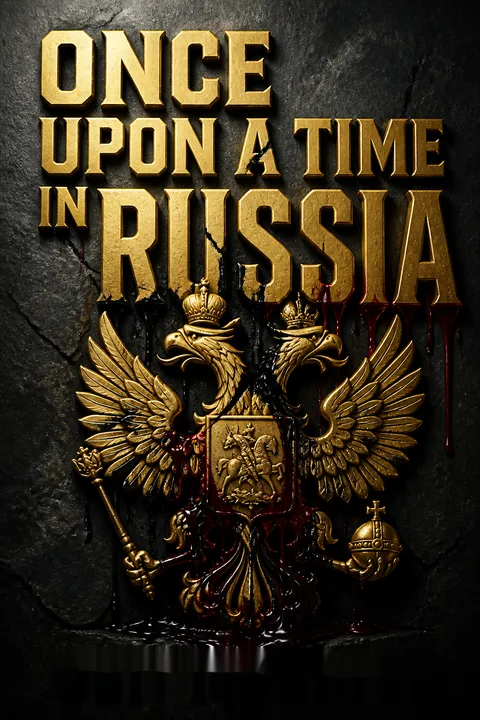
Once Upon a Time in Russia tells the story of Russian oligarchs' rise to power after the fall of the USSR, focusing on Boris Berezovsky. Readers found it a fascinating, fast-paced account of wealth, corruption, and political machinations in post-Soviet Russia. Some praised Mezrich's thriller-like writing style, while others criticized it as too fictionalized for non-fiction. The book provides insight into modern Russian politics and business, though some felt it lacked depth or relied too heavily on conjecture. Overall, it's considered an entertaining, if not entirely scholarly, introduction to recent Russian history.
People Also Read



Glossary
krysha
Protective power or patronageA Russian term meaning “roof,” used for protection supplied by a powerful person or organization. In the book, a krysha may be criminal, political, economic, or personal. It can deter threats through an implied capacity to retaliate, and it often brings obligations: the protected party may owe money, loyalty, or service to the protector.
loans for shares
Loans exchanged for state sharesA Russian privatization program in which the government pledged shares in major state companies as collateral for loans from private banks. When the state did not repay, the lenders or arranged buyers gained control of the shares. The program supplied money to a cash-starved government and accelerated privatization, but auctions were often structured to favor a small circle of insiders.
Red Directors
Soviet-era enterprise managersThe name used for managers who had run large state enterprises under the Soviet system and remained in charge as those firms entered the new market economy. In the book, they are experienced within the old bureaucracy but often poorly suited to the newly emerging commercial environment. Their control of factories and production made them important partners, obstacles, or targets in privatization deals.
Family
Yeltsin’s inner circleAn informal label for the close political and personal circle around President Boris Yeltsin, including trusted officials, relatives, and influential advisers. The group mattered because access to Yeltsin could shape appointments, policy, and business opportunities. Berezovsky’s ties to this circle helped turn his commercial success into political influence, but the circle itself was not a formal government institution.
Seven Bankers
Seven influential financiersBerezovsky’s label for a coalition of seven powerful businessmen and financiers who joined forces during the 1996 presidential campaign. They combined money, media influence, and political connections to support Yeltsin against the Communist challenger. The group was influential across many industries, not only banking, and its members pursued both a stated political goal and their own economic interests.
FAQ
What's Once Upon a Time in Russia about?
- Dramatic narrative of Oligarchs: The book chronicles the rise and fall of Russian oligarchs during the post-Soviet era, focusing on their ambition, wealth, betrayal, and the violent consequences of their actions.
- Key figures and events: It highlights significant personalities like Boris Berezovsky, Roman Abramovich, and Vladimir Putin, detailing their interactions and the political landscape of Russia in the 1990s.
- Themes of power and corruption: The narrative explores themes of power dynamics, corruption, and the moral ambiguities faced by those who navigated the chaotic transition from communism to capitalism.
Why should I read Once Upon a Time in Russia?
- Insight into modern Russia: The book provides a gripping account of how the oligarchs shaped contemporary Russia, offering readers a deeper understanding of the country’s political and economic evolution.
- Engaging storytelling: Ben Mezrich employs a dramatic narrative style, making complex historical events accessible and engaging, akin to a thriller.
- Lessons on ambition and ethics: Readers can reflect on the ethical dilemmas faced by the characters, prompting discussions about ambition, morality, and the consequences of unchecked power.
Who are the main characters in Once Upon a Time in Russia?
- Boris Berezovsky: A key figure in the rise of the oligarchs, Berezovsky is portrayed as a cunning businessman who navigates the treacherous waters of Russian politics and business.
- Roman Abramovich: Initially a protégé of Berezovsky, Abramovich's character evolves as he gains power and influence, significantly impacting the course of events in the story.
- Vladimir Putin: The book details Putin's ascent from obscurity to power, illustrating how he outmaneuvered the oligarchs and established his authority over them.
What are the key takeaways of Once Upon a Time in Russia?
- Power dynamics in politics: The book illustrates how power can shift rapidly in politics, especially in a volatile environment like post-Soviet Russia.
- Consequences of ambition: It highlights the personal and societal costs of ambition, showing how the pursuit of wealth and influence can lead to betrayal and violence.
- The role of media and perception: The narrative emphasizes the importance of media in shaping public perception and political outcomes, particularly through the lens of ORT and its influence.
What are the best quotes from Once Upon a Time in Russia and what do they mean?
- "You can keep your billions. But stay out of my way.": This quote from Putin encapsulates the tension between the oligarchs and the state, illustrating Putin's determination to assert control over the powerful businessmen.
- "A good man, maybe. But it’s best to shoot him.": This old Russian proverb reflects the brutal reality of the political landscape, suggesting that in the world of power, mercy is often a liability.
- "Two bears can’t live in one cave.": This proverb signifies the inevitable conflict that arises when two powerful entities vie for control, foreshadowing the struggles between the oligarchs and Putin.
How does Once Upon a Time in Russia depict the relationship between the oligarchs and the government?
- Mutual dependence: The book illustrates a complex relationship where the oligarchs relied on the government for legitimacy and protection, while the government depended on their wealth and influence to stabilize the economy.
- Tension and conflict: As the oligarchs grew in power, the government, particularly under Putin, began to see them as threats, leading to a series of confrontations and power struggles.
- Shift in power dynamics: The narrative shows how Putin's rise marked a significant shift, as he systematically dismantled the oligarchs' influence, asserting state control over the economy and politics.
What role does media play in Once Upon a Time in Russia?
- Instrument of power: The book highlights how media, particularly ORT, was used by Berezovsky to shape public opinion and influence political outcomes, demonstrating its power in the new Russia.
- Manipulation and control: It illustrates the ways in which media narratives were crafted to serve the interests of the oligarchs, often blurring the lines between truth and propaganda.
- Impact on democracy: The narrative raises questions about the role of media in a democratic society, particularly how it can be used to manipulate public perception and undermine genuine democratic processes.
How does Once Upon a Time in Russia address the theme of betrayal?
- Personal and political betrayals: The narrative is rife with examples of betrayal among friends and allies, showcasing how ambition can lead to treachery in the pursuit of power.
- Consequences of betrayal: The book illustrates the often violent repercussions of betrayal, both personally for the individuals involved and politically for the broader society.
- Moral ambiguity: It raises questions about the morality of the characters' actions, forcing readers to consider the complexities of loyalty and betrayal in a corrupt system.
What impact did the events in Once Upon a Time in Russia have on modern Russia?
- Shaping the oligarch class: The rise and fall of the oligarchs during this period laid the groundwork for the current political and economic landscape in Russia. Their influence continues to be felt in contemporary politics.
- Public perception of power: The events depicted in the book have contributed to a public perception of corruption and manipulation within the Russian government. This perception shapes how citizens view their leaders and the political system.
- Legacy of fear: The narrative illustrates a legacy of fear among those who challenge the government, impacting political dissent and activism in Russia today. The consequences faced by characters in the book serve as a warning to others.
How does Ben Mezrich's writing style contribute to Once Upon a Time in Russia?
- Engaging narrative: Mezrich's storytelling is fast-paced and engaging, making complex political and economic concepts accessible to readers. His ability to weave personal stories into the broader historical context enhances the narrative.
- Character-driven: The focus on character development allows readers to connect with the individuals involved in the story. This connection adds emotional depth to the political drama unfolding throughout the book.
- Vivid descriptions: Mezrich's use of vivid descriptions brings the settings and events to life, immersing readers in the world of Russian oligarchs. His attention to detail helps create a rich, atmospheric backdrop for the narrative.
What is the significance of the title Once Upon a Time in Russia?
- Fairy tale framing: The title suggests a narrative that resembles a fairy tale, but with a dark twist, highlighting the fantastical elements of wealth and power in Russia.
- Historical context: It evokes a sense of nostalgia for a time of great change, while also hinting at the tragic outcomes that often accompany such transformations.
- Cautionary tale: The title serves as a reminder that the story of the oligarchs is not just a tale of success, but also one of caution, illustrating the dangers of unchecked ambition and power.
How does Once Upon a Time in Russia conclude regarding the future of the oligarchs?
- Uncertain future: The narrative suggests that the future of the oligarchs is precarious, as their power is increasingly challenged by the state, particularly under Putin's leadership.
- Lessons learned: It implies that the oligarchs must adapt to survive in a changing political landscape, learning to navigate the new realities of power in Russia.
- Reflection on legacy: The book leaves readers pondering the legacy of the oligarchs, questioning whether their wealth and influence will ultimately lead to lasting change or be swept away by the tides of history.
About the Author
Download PDF
Download EPUB
.epub digital book format is ideal for reading ebooks on phones, tablets, and e-readers.








