

Key Takeaways
Meditation did not cure the addiction Griffin was unwilling to name
A polished practice hid pain. Griffin had meditated for years, including a three-month silent retreat, and expected spiritual growth to make drinking harmless. At a 1982 wedding, he drank wine, gin, and beer, blacked out, and woke covered in vomit. Still, he blamed the food and his friend’s lack of marijuana. In 1985, after another failed bar gig, seeing himself among the drunks he despised finally made denial harder to sustain. He stopped drinking.
Insight needed an honest partner. Meditation had real value, but it did not make him acknowledge addiction or change destructive behavior. He had used spiritual practice as a private refuge from problems that needed direct attention and help.
What's striking is the difference between insight and behavior change. A person can become skilled at observing thoughts while keeping the life organized around those thoughts intact. Contemporary psychology makes a similar distinction between awareness and action: noticing a pattern creates an opportunity, but accountability, changed routines, and support help turn that opportunity into different conduct. Griffin's story does not indict meditation. It shows why contemplative practice should not be treated as addiction treatment by itself, or as proof that someone is well. The measure of spiritual practice here is not how peaceful the cushion feels, but whether clarity reaches the choices causing harm.
Join Buddhist mindfulness to Twelve Step accountability for fuller recovery
Each tradition fills a gap. Griffin found that Buddhism taught him to notice craving, emotion, and thought without automatically following them. The Twelve Steps made that awareness practical through admitting addiction, attending meetings, working with a sponsor, examining past actions, and making amends. Buddhism frames craving as a source of dukkha, or unsatisfactoriness; recovery turns that understanding into daily choices and relational repair.
Integration keeps both honest. Meditation alone had allowed Griffin to hide damaging behavior behind spiritual language. At the same time, the Christian language of some Twelve Step materials did not fit his beliefs. Buddhist ideas helped him find a personal interpretation of a Higher Power without altering the Steps or using spirituality as an excuse to skip their difficult work.
The pairing resembles a useful division of labor: mindfulness improves observation, while a recovery community supplies feedback and commitment. This matters because private experience is easy to misread, especially when shame or craving is involved. A sponsor or group can challenge a self-serving interpretation; meditation can help someone hear that challenge without immediately defending against it. The traditions also check each other's excesses: detached observation can become avoidance, while rule-following can become rigid or shame-driven. Neither combination is automatically safe or effective for every person, but Griffin's account makes a strong case for matching inner practice with interpersonal accountability.
Admit what you cannot control, then take responsibility for your next choice
Powerlessness is not passivity. Step One asks people to recognize that they cannot reliably control an addictive pattern. Griffin had counted drinks, paced his use, and set limits, yet sometimes craving overwhelmed those plans. The effort to manage every dose was itself evidence that control had become the central problem. Accepting this reality opened a route to sobriety.
Agency remains in the next action. Griffin distinguishes being unable to control a craving from being unable to choose a response. A person may not choose which desire arises, but can seek help, leave a risky situation, or decline to act on it. Buddhist karma, in his account, means that actions have consequences, though they operate among many causes beyond any one person's control. The challenge is to balance responsibility with acceptance.
This distinction avoids two damaging extremes: blaming people for every condition shaping addiction, and treating them as incapable of meaningful action. Addiction can constrain choice without erasing it, and support can widen the range of choices available in a high-risk moment. The distinction also matters beyond substance use. A person cannot command every emotion or circumstance, but can often influence preparation, environment, and response. One caution is that responsibility should not be mistaken for moral blame. The useful question is not whether someone deserves their suffering, but what actions and supports make a safer next step possible.
Test spiritual beliefs through practice, wise counsel, and real-world consequences
Faith can begin provisionally. Step Two invites a person to consider help from something greater than personal will, without requiring a fixed theology. Griffin describes a skeptical friend who came to treat the Higher Power as a mystery, and his own early willingness to behave as if help might be possible. Buddhist teaching offers a related approach: try a practice and examine its effects, rather than accepting it solely because tradition, logic, or a teacher endorses it.
Urgency deserves suspicion. Griffin recalls abandoning his life to follow a spiritual teacher who promised rapid enlightenment and demanded unquestioning trust. He became homeless and disillusioned. His caution is not against faith, but against surrendering judgment. Confidence should grow through practice, study, and trusted guidance, while wisdom checks whether a belief is improving conduct and reducing harm.
This is a pragmatic account of faith, closer to an experiment than a creed. Its strength is that it gives skeptics room to participate without pretending certainty. Its safeguard is equally important: personal experience can be distorted by wishful thinking, charisma, or temporary relief, so trusted observers and consequences matter. A practice that feels powerful is not necessarily wise if it isolates someone, pressures them into abrupt decisions, or excuses harm. The combination of openness and verification is broadly useful in therapy, education, and leadership, where curiosity invites learning but unchecked authority can exploit it.
Write your inventory, then share it with someone trustworthy
Honesty changes the angle. Step Four asks for a searching account of personal conduct. While writing his, Griffin stopped viewing every painful event only as something done to him. He recalled, for example, slamming a door on a girlfriend's hand during a drunken rage. The inventory required him to acknowledge his action and its effect, without using the other person's behavior to excuse it. Seeing the suffering he caused also helped him recognize the pain driving his own behavior.
Speaking breaks isolation. In Step Five, he read the inventory to his sponsor. The sponsor's recognition that many of the stories were familiar helped Griffin see that he was not uniquely depraved. Shame eased, and sharing in meetings became less frightening. In Buddhist terms, this work examines karma: how thoughts, words, and actions affect oneself and others.
The inventory combines two processes that are often separated: self-accountability and perspective-taking. It does not ask a person to deny their own pain, but to include another person's experience in the moral picture. Sharing the account adds a social reality check, which can interrupt both self-exoneration and exaggerated self-condemnation. The method depends on choosing a trustworthy listener; disclosure to an unsafe or coercive person can cause harm rather than relief. The deeper principle is not confession for its own sake. It is making hidden patterns visible enough to understand, discuss, and change.
Change harmful habits without turning your identity into a defect
Ethics are practice, not punishment. Griffin connects recovery with sila, a Buddhist term for ethical conduct and restraint. The Five Precepts include training against harming, stealing, sexual misconduct, false speech, and intoxicants. He argues that their purpose is to reveal the effects of behavior, not to label a person as bad. A recovering person may also examine subtler harms, such as taking others' time or attention through chronic lateness or self-centered conversation.
Neither excuse nor self-attack helps. Griffin warns against declaring every action spiritually pure, as he once did while drinking and betraying a partner. He also rejects the opposite conclusion that a harmful habit defines someone's essence. The Middle Way asks for honest recognition and steady change without perfectionism, dramatic self-denial, or spiritual bypassing.
Separating conduct from identity is psychologically useful: behavior can be specific, observable, and changeable, whereas a global label such as defective can make change seem impossible. Ethical precepts function well as attention prompts when treated as training rather than a scorecard. They become less useful if applied without context, especially in complicated questions of sexuality, culture, or competing duties. Griffin's emphasis on intention and consequences helps keep the framework flexible. The key test is whether a moral standard makes people more careful and compassionate, not whether it gives them a new vocabulary for judging themselves or others.
Make specific amends, then let changed conduct carry the apology forward
Repair begins with precision. Step Eight lists people harmed and builds willingness to address the damage; Step Nine makes direct amends when doing so will not injure anyone. Griffin's first major amends involved calling a brother whose house had been raided after Griffin's drug use and impulsive departure contributed to the family's legal trouble. His apology could not undo the past, but it allowed both brothers to speak honestly about the harm and their continuing bond.
A changed life is part of repair. Griffin describes living amends as sustained conduct that reduces future harm and serves others. He also treats forgiveness as an inner release from resentment, not absolution of the person who caused harm. Some amends should not be made directly if contact would hurt the recipient or someone else.
The distinction between apology and repair is essential. Words can acknowledge responsibility, but they cannot guarantee forgiveness, restore lost time, or erase consequences. A credible amends therefore combines truth-telling with restitution where possible and changed behavior over time. The recipient's interests must guide whether contact is appropriate; an apology that mainly relieves the offender's guilt can impose a fresh burden on the person harmed. Griffin's account is strongest when it treats repair as a responsibility rather than a transaction. Forgiveness may help the injured person, but it is neither owed nor a substitute for accountability.
Keep practicing through ordinary days, not only retreats or breakthroughs
Maintenance is the path. Step Ten calls for ongoing self-examination and prompt admission of mistakes; Step Eleven supports prayer and meditation. Griffin compares meditation to repeated returning: attention wanders, the practitioner notices, and begins again. A retreat can deepen concentration and mindfulness, but its calm may fade when daily responsibilities return. He warns against treating retreats as a way to preserve a spiritual high or judging ordinary practice as worthless beside a peak experience.
Make room for changing conditions. Griffin describes a new parent whose meditation was weakened by exhaustion, while love and patience were growing. Practice includes those capacities, not just time on a cushion. He also notes the tedium of routine care, from brushing teeth to sitting daily, and argues that modest consistency matters more than an idealized, flawless performance.
The emphasis on maintenance counters a familiar bias: people prize dramatic transformation and overlook the repeated actions that keep change stable. In behavioral terms, routines reduce the need to renegotiate a valued choice each day. The book also wisely broadens the definition of practice, since illness, caregiving, work, and grief alter what sustained attention can look like. The caution is that persistence should not become another perfectionistic demand. A practice that ignores sleep, health, or mental distress can be counterproductive. Consistency is valuable when it supports life, not when it becomes a new test of worth.
Carry recovery into relationships, service, and the next ordinary moment
Awakening has outward consequences. Step Twelve asks people to share recovery and apply its principles throughout daily life. In Buddhism, Griffin finds a parallel in the Bodhisattva Vow, a commitment to help beings move beyond suffering. Service can be as modest as making coffee at a meeting, listening to a newcomer, or sharing meditation with people in a homeless program. Such acts make recovery relational rather than a private achievement.
Use attention before acting. Griffin's Clear Comprehension offers a practical decision check: examine purpose, available means, alignment with ethical teachings, and results. Daily mindfulness can also reveal automatic judgments, cravings for distraction, or impatience with a partner. The aim is not perfect serenity. It is to notice the impulse and choose a response that better reflects care and responsibility.
Service turns personal recovery into a reciprocal practice: people receive help, then become able to offer it, while the community sustains the conditions for both. This is more than altruistic decoration. Responsibility to others can give a person concrete reasons to remain engaged when private motivation is weak. Yet service can also become overextension or a route to status, so examining motives and capacity remains important. Griffin's decision check provides that pause. Its final question, what actually happened, is especially valuable because good intentions do not guarantee good outcomes.
Analysis
Griffin's central argument is not that Buddhism and the Twelve Steps are interchangeable. It is that each tradition exposes a blind spot in the other. Mindfulness makes craving, aversion, and self-justifying thought observable; Twelve Step practice insists that observation must lead to abstinence, honest disclosure, repair, and mutual responsibility. His own history gives this claim narrative force: intensive meditation and spiritual seeking coexisted with years of addiction because insight had not yet become an accountable way of living.
The book's most useful reframing is powerlessness without helplessness. A person may be unable to control addictive craving reliably, yet still take practical actions that reduce danger and invite help. Likewise, a Higher Power need not be a fixed supernatural doctrine. It can name a source of guidance beyond the isolated ego, provided that openness is balanced by discernment. Griffin's cautionary experience with a charismatic teacher shows why surrender needs limits, community, and time.
The synthesis also resists a common spiritual error: treating difficult emotions or ethical consequences as illusions to transcend. Inventory and amends return spiritual practice to relationships, where compassion must meet specific harm. At the same time, the Buddhist account of non-self softens the tendency to turn wrongdoing into a permanent identity. People can be responsible for actions without being reduced to them.
The argument is strongest as a reflective guide, not as clinical evidence. One person's recovery cannot establish that the same combination suits every addiction, belief system, or mental health condition. Nor should meditation, meetings, or spiritual language replace professional treatment when it is needed. The book's durable contribution is a practical test for spiritual growth: does attention become more honest, does honesty produce repair, and does repair make a person more available to life and other people?
Review Summary
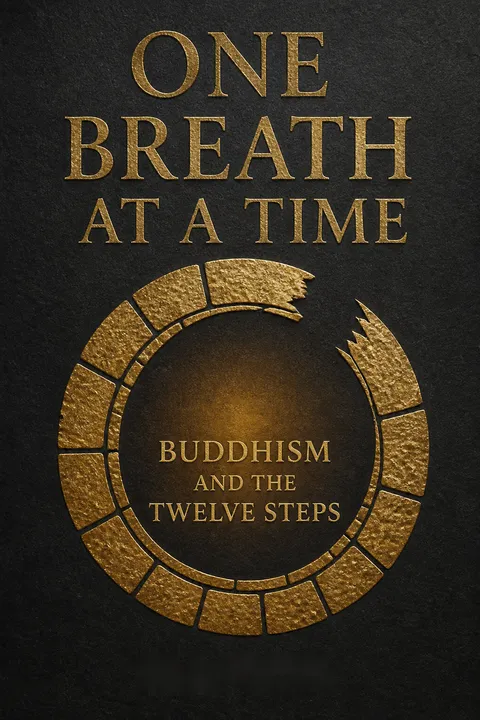
One Breath at a Time is highly praised for integrating Buddhism and the 12-step program, offering a non-theistic approach to recovery. Readers appreciate Griffin's personal anecdotes, practical insights on meditation, and accessible writing style. Many found it helpful in understanding the concept of a higher power and deepening their spiritual practice. The book is seen as particularly valuable for those struggling with traditional interpretations of the 12 steps. While some critics found it too focused on the 12-step framework, most reviewers consider it a transformative and essential read for anyone in recovery.
People Also Read






Glossary
Vipassana
Insight meditationA Buddhist meditation practice that develops clear observation of present experience. Practitioners attend to the breath, bodily sensations, thoughts, and emotions, often using quiet mental labels to notice what is happening. The purpose is not to eliminate thought, but to understand experience more directly and see how reactions arise and pass.
Sila
Ethical conductA foundational element of Buddhist practice, usually translated as morality or virtue. Sila means training in conduct that reduces harm to oneself and others. The book connects it with sobriety and the Five Precepts, presenting ethical behavior not as a test of personal worth, but as a basis for clarity, trust, and further spiritual development.
Four Noble Truths
A map of suffering and freedomThe Buddha's framework describing life's unsatisfactoriness, its cause in craving and attachment, the possibility of release, and a path of practice toward that release. Griffin links the first truth to admitting suffering in recovery, the second to addiction's repeated craving, the third to the hope of freedom, and the fourth to ethical living and meditation.
Hindrances
Obstacles to clear attentionFive recurring states identified in Buddhist meditation that obstruct calm and insight: desire, aversion, sloth and torpor, restlessness and worry, and skeptical doubt. The practice is to recognize these states as they arise, observe their effects without self-condemnation, and return attention to present experience rather than being carried away by them.
Three Refuges
Buddha, dharma, and sanghaThe three traditional sources of orientation in Buddhism. They refer to the awakened example of the Buddha, the truth and teachings called dharma, and the community of practitioners called sangha. Griffin also interprets them as capacities within practice: awareness, seeing truth, and acting with generosity and connection.
Middle Way
A path between extremesThe Buddhist principle of avoiding extremes of indulgence and self-denial. In the book, it guides a person toward a sustainable balance: neither obey every craving nor punish the self through harsh austerity. The Middle Way requires responding to actual conditions with discernment rather than following a rigid formula or seeking dramatic spiritual escape.
Clear Comprehension
A framework for wise actionA Buddhist approach to understanding the broader context of an action and making decisions with care. Griffin describes examining one's purpose, available means, consistency with ethical teachings, and the results afterward. The method slows impulsive choices, tests motivation, and turns experience into feedback for future conduct.
Metta
Lovingkindness practiceA Buddhist quality and meditation practice of cultivating goodwill toward oneself and others. Practitioners use phrases or recollection to develop kindness, extending it to loved ones, neutral people, difficult people, and all beings. Griffin presents metta as both formal meditation and a practical response to resentment and judgment.
Living amends
Repair through changed conductAn ongoing effort to address past harm through how one lives now, especially when a direct apology or repayment cannot undo the damage or is not appropriate. In the book, living amends includes avoiding further harm, serving others, and demonstrating sustained change rather than relying on a single apology.
Download PDF
Download EPUB
.epub digital book format is ideal for reading ebooks on phones, tablets, and e-readers.








