

Key Takeaways
Practice for the music itself before anyone promises you a career.
The instrument came first. Summers’s uncle gives him a battered Spanish guitar when he is thirteen. A lodger helps him restring and tune it, then shows him a D7 chord. The sound enthralls him. At first, other schoolboys teach him chords; later, he hunts down jazz records and learns solos by replaying them at half speed. Summers describes long sessions alone, not as a strategy for fame but as a way of entering music completely.
Work precedes recognition. He takes newspaper routes and other jobs to buy better guitars, and practices for hours even when the prospect is only a local gig. That focus carries him through years of uncertain bands and, much later, a period of poverty in California. The career is never guaranteed by effort, but the craft remains available when guarantees disappear.
What’s striking is that practice serves two functions: it develops skill, and it gives Summers a private place to return to when the public world becomes unstable. That distinction matters. A craft can be a source of identity without being a reliable source of income or recognition. The memoir also hints at a risk: when self-worth depends entirely on the quality of the latest solo, work can become a verdict on the person. Devotion sustains him, but it does not make him invulnerable.
Let chance find you prepared, but do not mistake it for destiny.
A small collision matters. After a rehearsal for a one-off project, Summers is unsure whether the musicians will ever work together again. On a London train, he broods over whether to join Sting and Stewart Copeland. At Oxford Circus, Copeland unexpectedly gets off the same train. Summers tells him that Sting and he have discussed making the Police a trio, with Summers as the sole guitarist. The conversation helps move an uncertain possibility toward a decision.
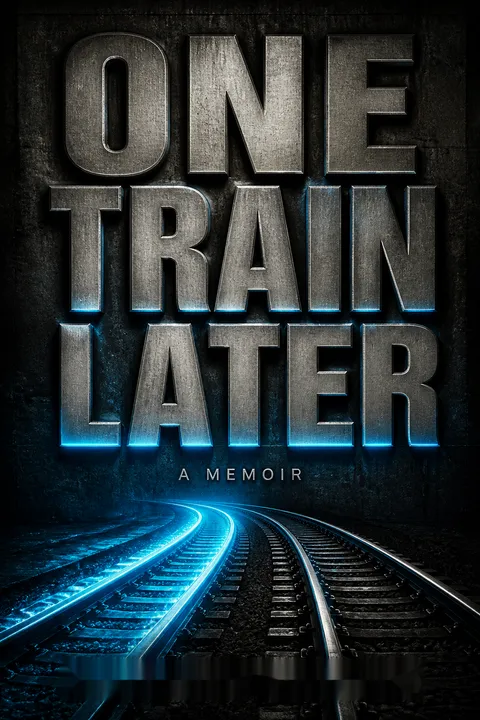
Preparation gives chance somewhere to land. This encounter matters because Summers has spent years playing in bands, learning jazz, and developing his own approach. The meeting does not magically create a career: Sting and Copeland still have to agree, and the group must find songs and a sound. The title’s one-train-later idea captures how contingent a life can feel without erasing the choices that follow.
The episode avoids two familiar distortions: the claim that success is entirely self-made, and the opposite claim that it is merely luck. Summers has no control over the train encounter, but his years of work make him capable of recognizing its significance and acting on it. Chance is best understood here as an opening, not an explanation. The memoir’s counterfactuals are vivid, though no one can know whether a different train would truly have produced a different life.
Keep your own musical voice when a scene rewards imitation.
Fashion can narrow the ear. During London’s blues boom, Eric Clapton’s playing inspires a wave of guitarists to copy his sound. Summers admires Clapton, but his own interests run through jazz guitar, Monk, Indian music, and unusual harmonies. He experiments with open, unsettled chords rather than adopting the standard blues vocabulary. Seeing Jimi Hendrix perform later is another test: Summers recognizes Hendrix as a revolutionary player, yet resists becoming one more imitation of him.
Influence is not surrender. Summers’s refusal to follow the crowd does not mean he rejects other musicians. He studies their work closely, borrows ideas, and keeps searching for combinations that feel personal. The discipline is to absorb influences without letting a scene’s definition of credibility dictate every musical choice. That path can be lonely, especially when the prevailing style is easier to sell or understand.
Summers offers a useful distinction between learning from a model and becoming trapped inside one. His sound grows from listening widely, not from pretending to be untouched by influence. Originality here is a process of selection and recombination. Still, resistance can become its own pose: rejecting a popular style is not automatically more authentic than adopting it. The meaningful test is whether the choice serves the music, rather than merely proving distance from the crowd.
Make room for collaborators to turn individual skill into a signature.
The trio finds its shape. Sting brings songs and a distinctive voice; Copeland supplies forceful, unpredictable drumming; Summers adds jazz-informed harmony and texture. Early on, the Police have too few songs to fill their sets, so they stretch sections into improvised passages. Summers’s Echoplex, a tape-delay device that creates repeating echoes, lets him build interlocking rhythms and spacious guitar parts. The group combines these with reggae-influenced bass lines and sharp, sometimes dissonant accents.
Arrangement becomes identity. Summers describes the band’s informal process of reshaping material until it sounds like them, a practice they call policifying a song. The result is not simply three strong players performing side by side. Their differences create a recognizable musical language. The same friction can also become painful: the band’s arguments sharpen ideas, but its members’ competing ambitions strain their connection.
The Police’s sound illustrates a broader creative principle: a group’s identity can emerge from the relationships among parts, not from any one part in isolation. Constraints help, too. A thin repertoire pushes the musicians to extend, respond, and discover arrangements onstage. But friction is not automatically productive. It generates invention when members share enough trust and purpose to keep listening; without those conditions, disagreement can become a contest over control.
Choose the right audience, not just the biggest available stage.
Reception depends on the room. Summers and Zoot Money leave a successful R&B act to form the psychedelic Dantalian’s Chariot. In London clubs, audiences respond to their extended jams and light show. Outside the capital, many listeners want the familiar R&B act and meet the new music with silence. In a Scottish village, the band finally wins over the crowd by playing traditional tunes after its psychedelic set fails to connect.
A different room changes the verdict. Years later, the Police play CBGB’s in New York and find listeners who respond to their mix of punk energy, reggae, and unusual guitar parts. At one cold gig in Poughkeepsie, only four people attend, but the band plays as if the room were full. These episodes suggest that a poor reception may reveal a mismatch between the work and its setting, not a definitive judgment on its value.
The memoir is sharpest when it shows reception as relational. A piece of music meets a particular audience, venue, moment, and set of expectations; the same experiment can feel thrilling in one place and alien in another. That does not make audience response irrelevant. A performer who dismisses every negative reaction as incomprehension risks refusing useful feedback. The practical question is whether the work is failing on its own terms, or whether it has not yet found a context that can hear it.
Treat success as a pressure test, not proof that life is working.
The numbers soar. By August 1983, the Police have held the number-one album spot in the United States for four months, and their number-one single has stayed there for eight weeks. They are preparing to play Shea Stadium, a landmark venue associated with the Beatles. From the outside, the band appears to have reached the summit. Summers, however, wakes that morning knowing the group is close to ending.
Applause cannot settle private conflict. The band’s success brings money, attention, an enormous touring operation, and constant demands from the press. It also intensifies old tensions among Sting, Copeland, and Summers. The public triumph and private strain coexist. Six months after Shea, the Police play their final show in Melbourne. The contrast is central to Summers’s account: achievement can be real and exhilarating without repairing relationships or making the people who achieved it feel whole.
The Shea Stadium frame works because it places public achievement beside private knowledge. Success is not exposed as false; the band really has made something powerful and reached an extraordinary audience. The more difficult insight is that external validation cannot answer every internal question. A career may be thriving while its participants are becoming unable to work together. The memoir’s caution is not to distrust acclaim, but to avoid using acclaim as a substitute for examining what the work is costing.
Protect the relationships and judgment that fame cannot replace.
Absence has consequences. Summers leaves Kate and their young daughter, Layla, for long stretches of touring. He knows Kate is carrying much of family life alone, yet he keeps choosing the road, including an extended trip through Asia when she needs his support. During the making of Ghost in the Machine, Kate tells him she wants a divorce. Summers recognizes that his absence and self-absorption have helped make the marriage untenable.
Success distorts decisions. The band’s world is full of pressure, travel, drugs, and people seeking access to its members. Summers describes how hard it is to return from that intensity to ordinary family life. His account does not present the divorce as a simple consequence of fame, nor does it excuse his choices. The loss is personal and specific: he misses daily life with his daughter and has to face what his ambition has displaced.
This part of the memoir makes the cost of ambition concrete by showing who absorbs it. Touring may appear to be the musician’s sacrifice, but the absent partner and child carry a different burden, often without the glamour or public recognition. Summers’s retrospective honesty gives the account moral weight, though insight arrives after damage has accumulated. The relevant question is not whether a demanding career is permissible, but whether its demands are being openly negotiated or quietly transferred to someone else.
When a career collapses, return to the craft before reinventing yourself.
The fall is sharp. After the Animals break up, Summers’s promised solo career in Los Angeles fails to materialize. He loses his house and car, is briefly jailed after a marijuana arrest, and has little money. For years he studies classical guitar, practices intensely, and meditates, even while living precariously and questioning whether he belongs in California.
A familiar instrument restarts him. When a student offers him a battered 1961 Telecaster, Summers plays it and finds his appetite for music returning. He joins a local band, starts writing and performing again, and gradually rebuilds a life around music. The instrument does not solve his financial or personal problems by itself. It reconnects him with a capacity he had nearly lost sight of, and renewed work helps create the next opening.
The return to the Telecaster is compelling because recovery begins with an activity, not a grand declaration of a new identity. Summers plays, then finds ways to play with other people. That sequence makes the episode feel earned rather than miraculous. It also keeps the lesson modest: returning to a craft can restore direction, but it cannot guarantee stability, recognition, or emotional repair. The memoir presents practice as a foothold, not a complete rescue plan.
Do not let a triumphant band end without naming its goodbye.
The final show is hidden. After the Police’s last concert in Melbourne, fans congratulate the band without knowing they have just seen its final performance. The group does not give a farewell tour. For years, Summers feels the ending as an unresolved wound, in part because the band’s potential seems unfinished and its breakup is not acknowledged publicly at the time.
Closure is not automatic. Summers describes the difficulty of moving on, the years of dreams about the band, and the gradual return to recording solo music. He also finds his way back to Kate in 1986, and they begin raising a family again. Neither event erases the past. The memoir closes on a distinction between the group’s end and the music that remains: the relationship can stop, while the work continues to matter.
The missing farewell is more than a publicity detail. It leaves fans with one story, the performers with another, and the band members without a shared public account of what has ended. Naming an ending cannot make it painless, but it can make the transition legible. Summers’s experience also complicates the idea that closure means forgetting: the music retains value even when the partnership does not survive. Some endings are integrated rather than solved.
Analysis
One Train Later is structured around a contradiction: Andy Summers reaches the most visible success of his life while sensing that the band behind it is coming apart. The Shea Stadium morning supplies the frame, but the memoir’s real subject is not the rise of the Police alone. It is the long, uneven formation of a musician, and the way a calling can both sustain a person and consume the attention needed for other parts of life.
The early chapters give music a nearly physical origin. Summers’s fascination begins before he has a guitar, then becomes a disciplined private practice shaped by schoolmates, records, clubs, and work that pays for instruments. His career advances through repeated dissolutions: the Big Roll Band, Dantalian’s Chariot, the Soft Machine, the Animals, and a precarious solo period. This pattern makes the Police feel less like a predestined destination than a convergence of skill, timing, need, and interpersonal chemistry. The train encounter is meaningful because there is a prepared musician on it, not because fate guarantees an outcome.
The memoir also refuses a clean success narrative. The Police develop a singular sound and become globally popular, yet the scale of that achievement worsens the pressure on the trio and pulls Summers away from Kate and Layla. He does not treat fame as an uncomplicated prize, nor does he make himself innocent of its costs. His hindsight is emotionally forceful, though it remains one participant’s account, shaped by memory and by the desire to make sense of a life whose defining group ended without a public goodbye.
The book’s strongest conclusion is modest: a band can end, a marriage can break, and a career can stall without invalidating the work that came before. Music remains a practice, a source of connection, and a way to begin again. That is not a tidy redemption. It is a more credible form of continuity.
Review Summary
One Train Later receives mostly positive reviews, with readers praising Summers' eloquent writing style and engaging storytelling. Many appreciate the detailed account of his musical journey before joining The Police. Some criticize the book for being self-indulgent or lacking depth about the band's dynamics. Fans of The Police generally enjoy the insider perspective, while others find the pacing slow or the focus on pre-Police years excessive. Overall, reviewers commend Summers' wit, honesty, and ability to capture the essence of his rock and roll experiences.
People Also Read




Glossary
Synchronicity
Meaningful coincidenceA term Summers connects to Carl Jung’s idea of an acausal connecting principle: events that seem meaningfully related despite lacking a direct cause-and-effect link. Sting draws on Jung while writing songs for the Police album Synchronicity. In the memoir, the term also evokes the unexpected meetings and convergences that shape Summers’s career.
Echoplex
Tape-based sound echoA tape-delay device that creates repeating echoes by sending a recorded guitar signal through tape and playback heads. Summers uses it to add repeated rhythmic patterns, sustain, and spatial depth to his guitar sound. In the Police, its echoes help fill out the trio’s arrangements without relying on a second guitarist or dense instrumentation.
space jams
Extended group improvisationsA label used for the Police’s expansive live passages, where the musicians stretch beyond fixed song sections and respond to one another in real time. Summers describes the sound as combining delay, reggae-influenced rhythms, dissonant guitar harmony, and Sting’s voice. The approach developed partly because the band initially had too few songs for long sets.
policify
Give a song Police characterThe band’s informal term for rearranging a piece of music until it fits the Police’s distinctive sound. Summers describes rejecting familiar or clichéd approaches and combining Sting’s songs with Copeland’s rhythmic choices and his own spacious, harmonically unusual guitar parts. The term captures arrangement as a collective act of interpretation, not merely faithful performance.
Download PDF
Download EPUB
.epub digital book format is ideal for reading ebooks on phones, tablets, and e-readers.








