

Key Takeaways
Notice the voice in your head without appointing it your identity.
Thoughts are objects of awareness. Tolle distinguishes the stream of inner commentary from the awareness that notices it. A complaint, memory, or prediction may feel like the self speaking, but noticing it creates a little distance: the thought is happening, and it is being observed. He calls this awareness Presence, a clear attention that is not absorbed in thought. The practice is not to silence the mind by force. It is to recognize a thought as a thought, especially when it is repeating an old reaction.
Awareness changes the relationship. When the inner voice is no longer treated as unquestionable truth, thinking can still help with planning and problem-solving without defining a person’s worth or identity.
This resembles cognitive defusion, a technique used in acceptance-based therapies: people learn to see thoughts as mental events rather than commands or facts. That shift can reduce the grip of rumination without requiring a person to argue with every thought. Tolle gives the practice a spiritual interpretation, identifying awareness as a deeper self. The useful exercise does not depend on accepting that metaphysical claim. It can be tested in ordinary experience: does noticing a thought create more choice about what to do next? The distinction also matters because some thoughts signal genuine problems. Observing them is a first step, not a reason to ignore them.
Separate what happened from the mental verdict that compounds it.
Facts are more workable than stories. Tolle argues that distress often grows when an event is fused with a sweeping interpretation. He contrasts a concrete financial fact, such as having only a small balance left, with the conclusion that one’s entire life is ruined. The first describes a problem; the second turns it into a total identity and can make useful action harder. His suggested move is to name the observable situation, then notice the thoughts and emotions added to it.
This is not denial. A difficult fact may demand urgent decisions. The point is to meet it without letting a prediction or self-condemnation masquerade as the fact itself. Clearer distinctions can leave more attention available for responding.
Separating observation from interpretation has close ties to cognitive behavioral approaches, which examine how appraisals shape emotion and behavior. It is a practical diagnostic: what can be verified, and what is a conclusion about what the event means? Still, the claim that the situation itself is always neutral needs care. A loss, threat, or injustice can be objectively serious, not merely a story created by the mind. The distinction is most useful when it preserves both truths: the circumstances may be painful and consequential, while catastrophic predictions can add avoidable suffering and obscure the next concrete step.
Meet the present moment before deciding how to change it.
The Now is the point of contact. Tolle uses Now to mean the immediate reality of experience, not a ban on remembering or planning. The past appears as memory in the present; the future appears as anticipation in the present. He calls the mind’s habitual preoccupation with past and future psychological time, especially when it becomes a way to resist what is happening now.
Acceptance does not mean approval. Tolle describes an inner yes to the facts of the moment: stop adding resistance before choosing a response. A person can accept that a task is difficult, a loss has occurred, or a plan has failed, then take practical action. In his account, treating the present as an enemy makes attention reactive; meeting it directly makes action less tangled in resentment or fear.
Present-focused attention can interrupt rumination and help people notice what a situation actually requires. The distinction between accepting a fact and endorsing it is essential: acceptance can be the precondition for effective change, not its opposite. Yet a present-centered practice should not erase time. Learning from the past and planning for future risks are valuable human capacities. The sharper question is whether reflection serves a decision or has become repetitive mental rehearsal. Tolle’s test is useful when it returns a person to the available choice, but it should not be mistaken for a complete account of trauma, uncertainty, or structural constraints.
Let awareness shape your goals, rather than asking goals to define you.
Purpose has an inner and outer dimension. Tolle calls awakening the inner purpose: becoming conscious of the way one is living and acting. Outer purpose is the visible direction, such as a job, project, or responsibility. He does not ask readers to abandon goals. Instead, he argues that the quality of attention brought to the work matters more deeply than the destination alone.
Make the current step primary. A person can know where a project is headed while giving full attention to the task in front of them. Tolle’s image is a journey made of individual steps: the destination matters, but the way each step is taken shapes the work. In this view, achievement becomes an expression of awareness rather than a substitute for self-worth.
The distinction helps untangle purpose from status. Research and practice in motivation often distinguish goals pursued for external rewards from goals experienced as meaningful or self-directed. Tolle’s formulation adds a contemplative criterion: whether attention is present in the doing itself. That can make ambition less brittle, especially when outcomes are uncertain. There is a useful limit, though. A meaningful inner state cannot replace material conditions, skill, or sustained effort. People also need concrete aims to coordinate work and measure progress. The strongest reading treats awareness as the quality of pursuing goals, not as a guarantee that goals will succeed.
Bring acceptance, enjoyment, or enthusiasm to the task in front of you.
Awakened doing joins attention and action. Tolle uses this term for work carried out with awareness rather than as a mere escape toward a future payoff. He identifies three ways to approach an activity: accept what must be done for now, find enjoyment through full attention, or combine enjoyment with a goal to create enthusiasm. These are not three career strategies; they are qualities of consciousness brought to ordinary action.
Try it on routine work. Tolle suggests using repetitive activities, such as laundry, shopping, or commuting, as chances to notice the task and one’s own alertness. He also draws a boundary: if an activity cannot be accepted or enjoyed, it may be time to stop or change it when possible. Presence is not an excuse to endure every condition indefinitely.
This framework offers a practical alternative to treating motivation as something that must arrive before action. Attention can make routine work less fragmented, while a goal can add direction without making the outcome the sole source of satisfaction. The distinction between enthusiasm and stress is particularly helpful: intensity need not mean strain if the activity remains worthwhile in itself. But the advice to accept a task has limits. In exploitative, unsafe, or deeply misaligned settings, reframing alone may protect the conditions causing harm. The key is to distinguish temporary inconvenience from a situation that calls for boundaries, support, or change.
Use inner-body attention to return from mental spin to direct experience.
The inner body is felt aliveness. Tolle uses this term for sensing the body from within, rather than concentrating on its appearance or on thoughts about it. The practice begins with a few conscious breaths, then shifts attention to sensations in the hands, feet, or other parts of the body. As attention widens, the whole body can be sensed while a person continues reading, listening, or moving.
Let sensation anchor attention. Tolle presents this awareness as a way to remain connected to the present instead of being swept away by thought, emotion, or external events. It need not involve elaborate meditation. Briefly noticing breath or bodily sensation while waiting or listening is enough to create a pause between an impulse and a response.
This is a grounded feature of the book because it turns an abstract spiritual claim into a sensory exercise. Interoception, the perception of internal bodily signals, also matters in contemporary psychology and neuroscience, though its effects vary across people and contexts. For some, body attention can feel calming; for others, particularly during panic or trauma, close monitoring of bodily sensations can intensify distress. A flexible practice therefore matters: attention can rest on the breath, a sound, or an external object instead. The aim is not to force a special feeling, but to notice experience with a little more choice.
Let impermanence loosen your grip on possessions, roles, and appearance.
Identity can cling to changing forms. Tolle uses ego for a sense of self built from roles, possessions, the body, and recurring thought patterns. These things matter, but they change. When a person depends on them to prove who they are, the threat of loss can bring anxiety or a sense of collapse. Tolle recommends noticing attachment rather than trying to force detachment. A strong reaction to possible loss can reveal how much identity has been invested in an object or role.
Care without making things the self. The book does not advise neglecting the body or refusing to enjoy possessions. It argues that appreciation becomes less fearful when value is not confused with identity. Loss may bring grief and practical consequences, but it can also expose assumptions about what makes a life worthwhile.
The focus on impermanence has a long history in Buddhist thought, and it can help people hold valued things with less possessiveness. It also offers a useful distinction between caring deeply and making one relationship, role, or achievement the sole foundation of self-worth. The risk is that detachment can be misread as emotional distance or as a demand to feel serene during grief. That is not necessary for the insight to work. Attachment can be observed while love, mourning, and practical responsibility remain fully present. A less rigid identity may make commitment more resilient, not less sincere.
Give people your attention before replaying their role in your story.
Presence changes how relationships unfold. Tolle describes a genuine relationship as one in which attention is directed toward the other person, rather than dominated by image-making, self-protection, or a hidden demand. Shared history can make this difficult: old grievances and expectations may cause people to respond to a familiar story instead of the person in front of them.
Listen without dropping practical needs. The book applies this to ordinary encounters, from helping a child to speaking with someone at work. Full attention does not mean forgetting the purpose of a conversation or surrendering boundaries. Tolle also treats forgiveness as a release from the self-image sustained by grievance. In practice, this can mean declining to let resentment dictate every interaction, while still naming harm and taking steps to protect oneself.
The emphasis on attention is compelling because relationships are shaped not only by what is said, but by whether another person feels heard. Listening can reduce defensive escalation and reveal information that a rehearsed grievance filters out. But attention should not be confused with agreement, reconciliation, or equal responsibility. Some harms require distance, accountability, or outside help. The book’s spiritual account of forgiveness is most useful when it frees a person from being organized around resentment; it becomes less useful if imposed as a duty on someone who has been harmed. Presence supports discernment, rather than replacing it.
Create small gaps in thought through breath, stillness, and direct perception.
Inner space is awareness between mental events. Tolle uses space consciousness for noticing not only objects, sensations, and thoughts, but also the quiet awareness in which they appear. He suggests that even a brief pause can interrupt repetitive thinking. One method is to feel a breath, including the small pause between exhaling and inhaling. Another is to look at an ordinary object or listen to a sound without immediately naming, judging, or comparing it.
The point is attention, not blankness. The practice does not require eliminating thought or seeking a dramatic experience. A few seconds of direct perception can make the familiar seem fresh and create room around an emotion or event. The book presents this spaciousness as a route to peace and a less reactive relationship with daily life.
The exercise resembles mindfulness practices that train attention to return to sensory experience. Its strength is its low threshold: it can be done during daily routines, without special equipment or a long meditation session. The instruction to stop labeling should be understood as a temporary experiment, not a rejection of concepts. Naming helps people communicate, categorize danger, and learn. The practice instead reveals how quickly labels can replace perception. A useful check is whether the pause increases clarity and responsiveness. If it becomes a way to avoid decisions or suppress emotion, the exercise has lost its purpose.
Recognize your awareness as part of the life connecting all forms.
Oneness is the book’s spiritual horizon. Tolle argues that people and other forms of life are not ultimately separate, even though they appear distinct. He uses nature to suggest this: a forest may look chaotic when judged by tidy human categories, yet decay and new growth belong to one living process. Attending quietly to a flower or another creature can make the boundary between observer and observed feel less absolute.
Abundance begins as a way of seeing and giving. Tolle asks readers to notice ordinary signs of life and to offer attention or help, rather than treating possessions as the source of fullness. In his account, love is the recognition of shared Being through difference. The practical invitation is to participate in life with care, without demanding that it certify one’s identity.
The vision of interconnectedness has an ethical force: if other lives are not merely background objects, care becomes more than a transaction. Ecology supports a concrete version of interdependence, showing how organisms rely on networks of other organisms and environments. That evidence does not establish Tolle’s broader claim that consciousness is the fundamental substance of the universe. This distinction lets readers value the practice without confusing spiritual interpretation with scientific conclusion. The idea is most persuasive as an orientation toward humility and kinship, especially when it leads to attention, generosity, and responsibility rather than a claim to possess ultimate knowledge.
Analysis
Oneness With All Life is best read as a collection of contemplative prompts rather than a conventional argument. Its short passages return repeatedly to one proposed shift: stop identifying with the changing contents of experience, and recognize the awareness in which those contents appear. The movement runs from observing thought, to meeting the present, to acting and relating from a less defensive sense of self. This repetition is deliberate. Tolle asks the reader not merely to understand an idea but to test a different mode of attention in ordinary moments.
The book’s strongest contribution is practical and psychological. Separating an event from the story built around it, noticing a reaction before acting, and bringing attention to breath or bodily sensation are accessible exercises. They give readers a way to interrupt automatic thought without demanding that every problem be solved internally. The contrast between inner purpose and outer achievement also offers a useful corrective to identities built entirely around status or productivity.
The central metaphysics require a different standard of judgment. Tolle describes awareness as universal, timeless, and fundamental to the cosmos. Those claims are spiritual interpretations, not conclusions established by the exercises themselves. A reader may experience stillness or connectedness without thereby proving that consciousness exists independently of the brain or that all events belong to a comprehensible cosmic order. The distinction matters because the book sometimes moves from a helpful attentional practice to a sweeping account of reality without marking the transition.
A careful reading therefore preserves the methods while holding the metaphysical claims with curiosity rather than certainty. Presence should not mean passivity, acceptance should not excuse preventable harm, and detachment should not invalidate grief. Understood with these limits, the book offers a coherent discipline: notice what is happening, distinguish it from the mind’s added narrative, and choose a response with more attention than reaction. Its deepest promise is less a new doctrine than a repeated invitation to experience life before reducing it to a story about the self.
Review Summary
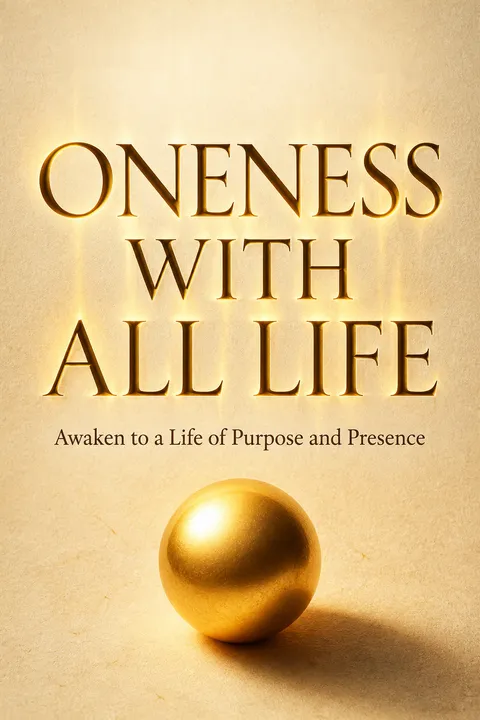
Oneness With All Life by Eckhart Tolle receives mostly positive reviews, with an average rating of 4.36 out of 5. Readers appreciate its inspirational and comforting messages, finding it a valuable companion for spiritual growth and self-reflection. Many consider it a powerful tool for dealing with anxiety and finding inner peace. Some critics find it repetitive or overly simplistic, but most readers value its wisdom and practical guidance for living in the present moment. The book is often described as a collection of impactful passages from Tolle's previous work, "A New Earth."
People Also Read




Glossary
Presence
Aware attention nowPresence is Tolle’s term for alert awareness that is not wholly absorbed in thought. It involves noticing sensations, emotions, and thoughts as they arise, while remaining aware of the attention that perceives them. The book treats Presence as both a practical state that can be cultivated in everyday activities and a manifestation of a deeper spiritual identity.
Now
Immediate lived experienceThe Now means the present reality in which experience occurs. Tolle distinguishes it from clock time and from the events that pass through it. Memories and plans can be useful, but they are experienced as thoughts in the present. Making peace with the Now means acknowledging current facts before responding, rather than becoming consumed by resistance or imagined alternatives.
ego
Identity built from formsTolle uses ego for a sense of self created by identification with changing forms, including the body, possessions, social roles, thoughts, and emotions. Ego is not simply ordinary competence or personality. It is the mistaken belief that these changeable contents fully define the self, often accompanied by reactivity, comparison, and a persistent sense of lack.
Being
Formless sense of existenceBeing is Tolle’s name for the formless dimension of identity beneath thoughts, emotions, bodily appearance, and social roles. It is described as prior to the changing contents of life and accessible through stillness or Presence. The term carries a spiritual meaning in the book and should not be confused with a scientific description of a measurable entity.
inner body
Felt bodily alivenessThe inner body is Tolle’s term for sensing the body from within as a field of aliveness, rather than focusing on appearance or thoughts about the body. The practice directs attention to sensations in areas such as the hands and feet, then broadens awareness through the body. Tolle presents it as an anchor in the present and a bridge toward formless Being.
space consciousness
Awareness beyond objectsSpace consciousness is awareness not only of objects, thoughts, emotions, and sensations, but also of the quiet background in which they appear. It balances what Tolle calls object consciousness, or absorption in the contents of experience. Brief attention to breath, silence, or unlabelled perception can help a person sense this spacious quality.
psychological time
Compulsive past-future focusPsychological time is the mind’s absorption in past and future when that movement displaces contact with present experience. Remembering, planning, and anticipating are not inherently problems. In Tolle’s usage, psychological time becomes limiting when a person dwells on what should have happened or imagines that fulfillment can exist only in a future moment.
awakened doing
Action guided by awarenessAwakened doing describes action performed with Presence rather than solely as a means to a future reward or identity. Tolle associates it with acceptance of what a situation requires, enjoyment rooted in full attention, or enthusiasm that combines enjoyment with a goal. It applies to routine tasks as well as larger projects, without requiring a person to abandon practical aims.
inner purpose
Awakening through awarenessInner purpose is Tolle’s term for becoming conscious and remaining present. He treats it as primary because it concerns a person’s state of awareness, rather than a particular achievement or role. Inner purpose can accompany many different outer lives, and the book presents it as the foundation from which meaningful action can arise.
outer purpose
Goals expressed through actionOuter purpose refers to the changing activities, projects, responsibilities, and goals pursued in the world. Tolle does not reject these aims, but describes them as secondary to inner purpose. The distinction asks a person to pursue goals without making future success the sole source of identity, fulfillment, or permission to be present.
FAQ
What's "Oneness With All Life" about?
- Companion Volume: "Oneness With All Life" by Eckhart Tolle is a companion to his earlier work, "A New Earth." It distills key insights for inspirational or meditative reading.
- Spiritual Awakening: The book focuses on awakening to a life of purpose and presence, emphasizing the importance of transcending thought and ego.
- Inner Transformation: It aims to guide readers toward inner transformation by recognizing the timeless dimension of consciousness within themselves.
- Not a Condensed Version: While it includes powerful pointers from "A New Earth," it is not a condensed version and lacks detailed discussions on the ego and pain-body.
Why should I read "Oneness With All Life"?
- Deepen Understanding: If you've read "A New Earth," this book helps deepen your understanding and experience of its teachings.
- Inspirational Passages: It offers passages suitable for meditation and inspiration, encouraging readers to pause and reflect.
- Awakening Consciousness: The book aids in awakening consciousness by helping readers become more present and aware of their inner selves.
- Spiritual Growth: It supports spiritual growth by pointing to the truth already within you, fostering a sense of peace and presence.
What are the key takeaways of "Oneness With All Life"?
- Transcendence of Thought: The book emphasizes rising above thought to access a dimension within yourself that is more vast than thought.
- Present Moment Awareness: It highlights the power of being present and the liberation that comes from realizing the "voice in your head" is not who you are.
- Inner Space and Consciousness: Tolle discusses the importance of inner space and consciousness as the essence of who you are.
- Oneness and Interconnectedness: The book underscores the interconnectedness of all life and the illusion of separateness created by the ego.
What are the best quotes from "Oneness With All Life" and what do they mean?
- "The primary cause of unhappiness is never the situation but your thoughts about it." This quote emphasizes the importance of separating thoughts from situations to find empowerment and peace.
- "The ultimate truth of who you are is not I am this or I am that, but I Am." It points to the essence of being beyond labels and identifications.
- "The joy of Being, which is the only true happiness, cannot come to you through any form." This highlights that true happiness emanates from within, not from external circumstances.
- "Life is the dancer, and you are the dance." This metaphor illustrates the idea of being one with life and the present moment.
How does Eckhart Tolle define "ego" in "Oneness With All Life"?
- Identification with Form: Ego arises when your sense of "I Am," or formless consciousness, gets mixed up with form, leading to identification with thoughts and physical forms.
- Illusion of Separateness: The ego creates an illusion of separateness, turning reality into a fragmented experience.
- Source of Suffering: Ego is the root of suffering, as it resists the present moment and creates a false sense of self.
- Overcoming Ego: Awareness and presence are key to transcending the ego, allowing the true self to emerge.
What is the "present moment" according to "Oneness With All Life"?
- Only Reality: The present moment is the only reality, as life unfolds in the constant Now, not in the past or future.
- Confusion with Content: People often confuse the present moment with what happens in it, leading to the illusion of time and ego.
- Gateway to Consciousness: Being present is a gateway to consciousness, allowing you to align with the intelligence of life.
- Inner Peace: Embracing the present moment brings inner peace and freedom from the ego's reactivity.
How does "Oneness With All Life" suggest we deal with negative emotions?
- Awareness of Negativity: Recognize negative emotions as a product of the ego and become aware of them without identifying with them.
- Shift in Identity: Awareness allows a shift from ego to consciousness, reducing the power of negativity.
- Intelligent Response: Realizing that negativity is unintelligent opens up possibilities for more intelligent responses to situations.
- Presence and Acceptance: By being present and accepting what is, you can dissolve negativity and find peace.
What role does "inner space" play in "Oneness With All Life"?
- Beyond Thought: Inner space is the awareness that exists beyond thought, providing a sense of peace and stillness.
- Balance and Sanity: It balances object consciousness, bringing sanity and fulfillment to life.
- Source of Peace: Inner space is the source of peace that is not of this world, as it transcends form and thought.
- Connection to Being: It connects you to your essence, allowing you to experience life without being lost in form.
How does "Oneness With All Life" describe the relationship between "form" and "formlessness"?
- Interpenetration: Form and formlessness interpenetrate, with formlessness being the essence of who you are.
- Beyond Identification: By moving beyond identification with form, you access the formless dimension of Being.
- Essence of Life: Formlessness is the essence of life, the unmanifested Source from which all manifestation flows.
- Spiritual Dimension: Recognizing the formless dimension brings true meaning and freedom from materialism.
What is "awakened doing" in "Oneness With All Life"?
- Alignment of Purposes: Awakened doing aligns your outer purpose with your inner purpose of awakening and staying awake.
- Flow of Consciousness: It allows consciousness to flow through you into the world, empowering your actions.
- Modalities of Doing: Acceptance, enjoyment, and enthusiasm are the modalities of awakened doing, ensuring you are present in your actions.
- Creative Power: Awakened doing connects you with the creative power of the universe, enhancing the quality of your life.
How does "Oneness With All Life" address the concept of "suffering"?
- Purpose of Suffering: Suffering serves the evolution of consciousness and the burning up of the ego.
- Acceptance and Transmutation: Accepting suffering accelerates the process of awakening and transforms it into consciousness.
- Ego's Resistance: The ego resists suffering, prolonging it, but awareness allows you to transcend it.
- Conscious Suffering: Suffering consciously leads to the realization of your true identity beyond the ego.
What is the ultimate purpose of human existence according to "Oneness With All Life"?
- Awakening Consciousness: The ultimate purpose is to awaken consciousness and bring its power into the world.
- Inner and Outer Purpose: Your inner purpose is to awaken, while your outer purpose varies and is secondary.
- Alignment with Life: Aligning with the present moment and the whole of life fulfills your purpose.
- Conscious Participation: By becoming a conscious participant in the evolution of consciousness, you contribute to the awakening of humanity.
About the Author
Other books by Eckhart Tolle

Download PDF
Download EPUB
.epub digital book format is ideal for reading ebooks on phones, tablets, and e-readers.








